Baidu unveils integrated AI4S solution linking compute, data, and research agents
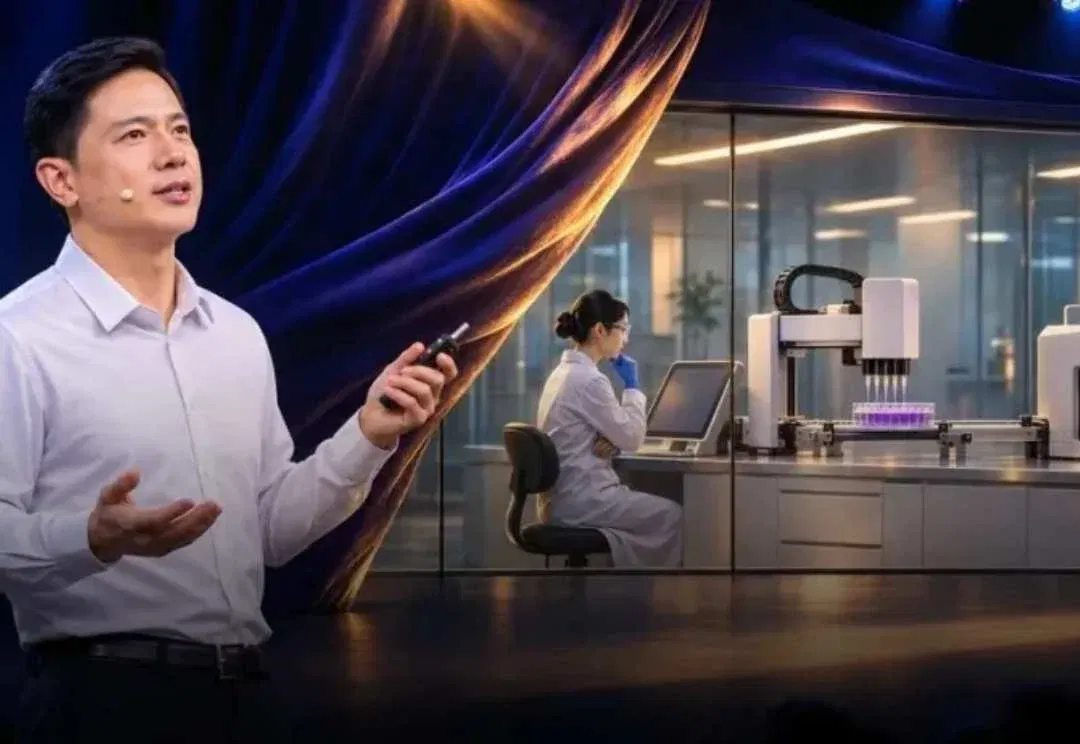
Baidu World introduces intelligent organizations, algorithm optimization, and laboratory equipment integration for research, alongside sandbox and infrastructure tests. Each application still requires validation.
Editorial correction (November 13, 2026) The research and infrastructure figures were disclosed by the companies presenting them and their partners. They cannot be compared without considering experimental, hardware, and workload conditions, and certainly do not amount to proven clinical efficacy.
The pace of AI research over the past few days has been fast enough to make you restless!
Fable 5.2 sent out a team of 1,000 agents and fully formalized Fermat’s Last Theorem in just 30 hours.
With its network connection unplugged, Claude took less than half an hour in a blind chemistry test to write a complete synthesis route for each of four undisclosed molecules.
Meanwhile, OpenAI moved the test into a wet lab, having GPT-6 Astra directly interpret gel images, photos of culture dishes, and raw instrument data.
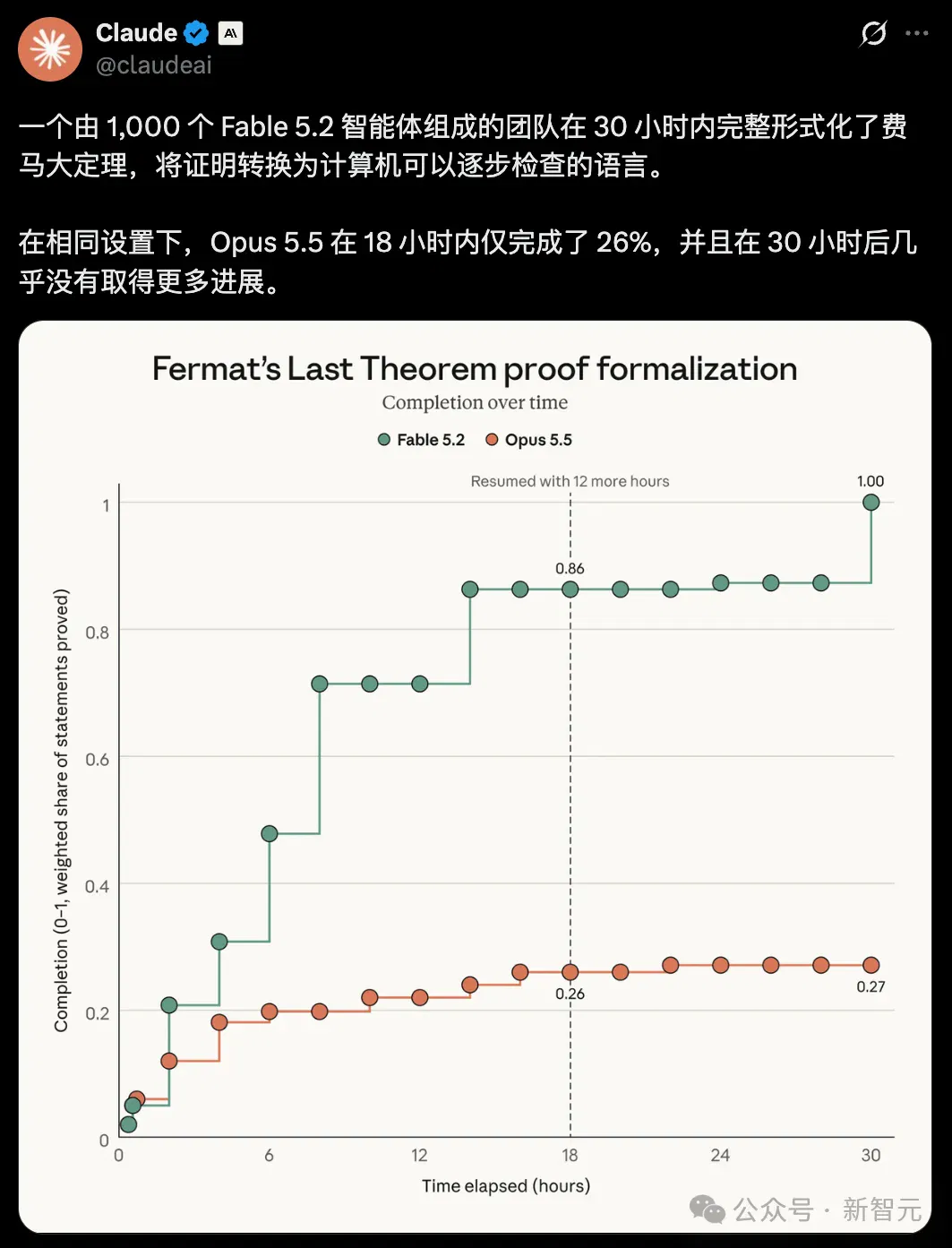
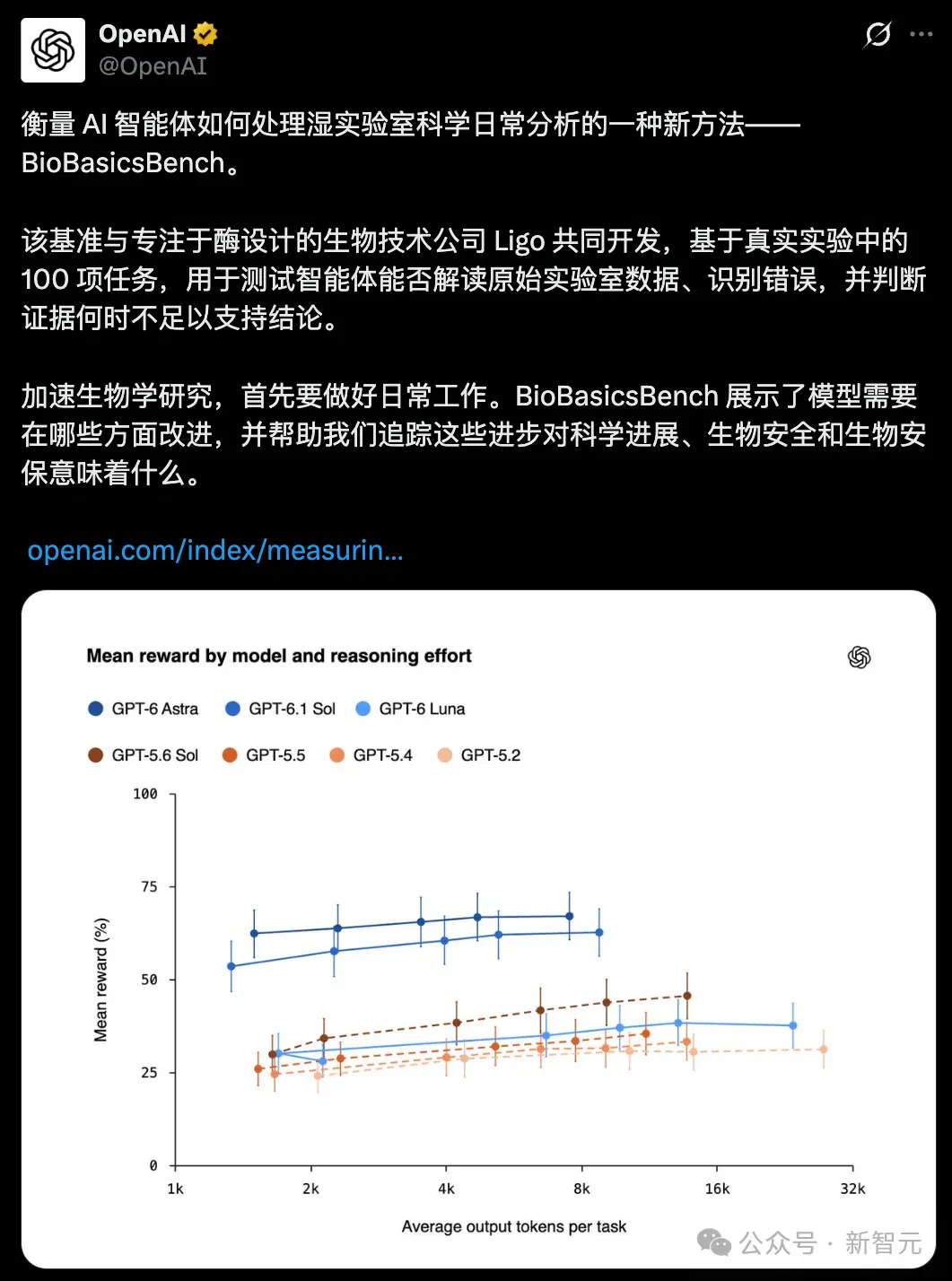
People suddenly realized that AI’s role in the laboratory had changed completely. It was no longer just running simulations, nor merely calculating individual protein structures as AlphaFold does.
AI research has now entered a new phase of “task coordination.” From searching the literature and building models to conducting experiments, groups of agents are beginning to take over entire workflows, while scientists turn their attention back to setting directions and making judgments.
But integrating hundreds or thousands of agents into day-to-day experiments takes far more than a few smart large models.
How people and AI cooperate, how experience is retained, and how computing power and instruments operate together—every step tests an entirely new way of organizing.
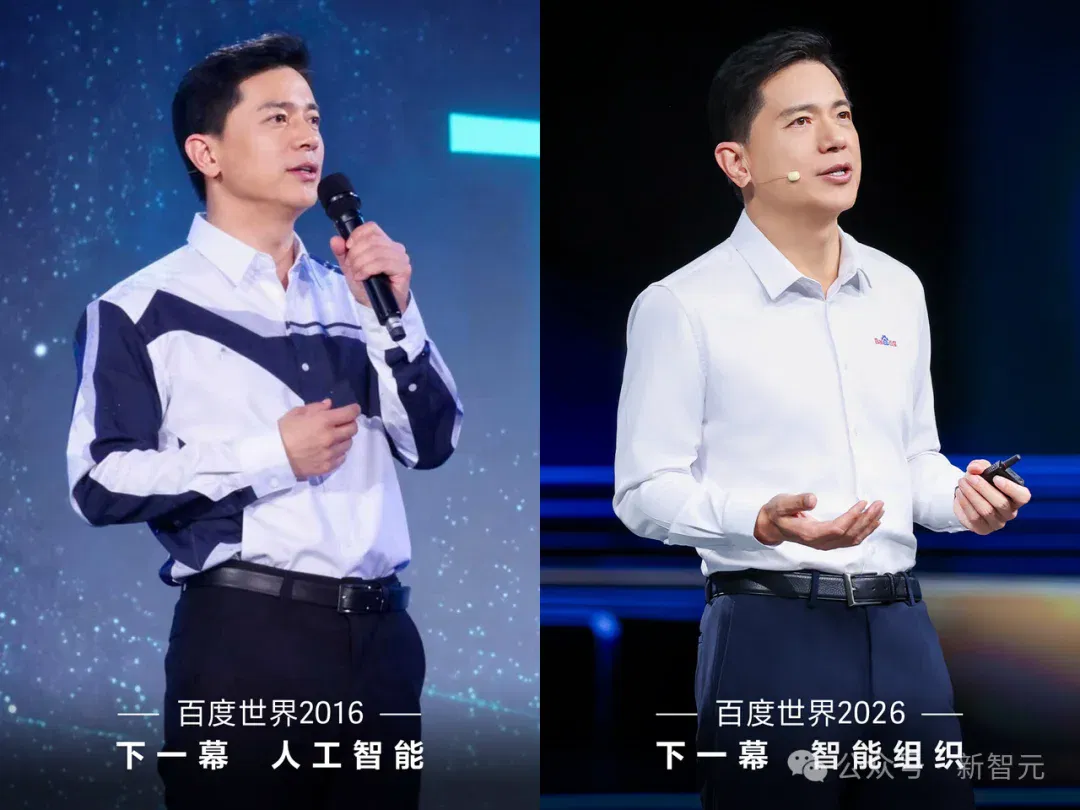
At Baidu World 2026 on November 12, Robin Li captured this relationship in one sentence:
The next act in AI’s development is intelligent organizations!
Ten years ago, Baidu proposed that “the next act for the internet is artificial intelligence.” Ten years later, the spotlight has shifted from individual technologies to the organizational structures that support them.
Intelligent organizations
are the AI era’s “new factories”
But this raises a question: why have so many companies and laboratories bought the most advanced large models, only to find their core output still going nowhere?
Open the doors of most laboratories and the answer is right in front of you. Computing resources are locked away in server rooms, data is scattered across a few portable hard drives, and laboratory instruments each operate on their own, disconnected from one another.
In a workflow where everyone works in isolation, giving each person even the strongest AI assistant does little more than speed up individuals’ actions. The team’s overall efficiency undergoes no qualitative change.
Robin Li offered an analogy at the conference: AI has not yet produced the expected economic benefits because we have only replaced the “motor” without redesigning the “factory.”
For this “new factory,” Baidu set out three core principles for intelligent organizations:
First, break down job boundaries. Jobs are the unit of the industrial era; tasks are the unit of the intelligent era. Future organizations will primarily consist of Builders who create new things and Sellers who establish connections of trust.
Second, capture tacit knowledge. Make the personal experience in employees’ heads explicit and retain it on a platform, so it can be called on at any time and used by everyone.
Third, design closed-loop processes. Measurability + Looping = continuous evolution. When results are measurable and processes cycle automatically again and again, an organization grows stronger with each cycle.
On reflection, the places where these three principles most urgently need to be implemented are precisely the research laboratories exploring the unknown every day.
But the new factory cannot remain just a blueprint. Shen Dou, executive vice president of Baidu Group and president of Baidu AI Cloud Group, then pointed out that these three principles of organizational evolution are also new standards for intelligent cloud services.
In other words, the cloud of the future cannot merely manage IT systems. It must directly serve “specific tasks,” allowing agents to call on an organization’s computing power, models, data, and tools on demand at any time.
With this thinking, Baidu AI Cloud officially launched its integrated “Chip–Cloud–Model–Agent” solution at the AI4S subforum that afternoon.
The solution has three layers. At the bottom, Kunlunxin and Baidu Baige provide ample computing power. In the middle, trusted data spaces and a data platform manage data. At the top, three types of agents—general-purpose, specialist, and custom—help scientists with their work.
Rather than being split into components and sold separately, the three layers are assembled into a complete system and delivered together to the front line of research.
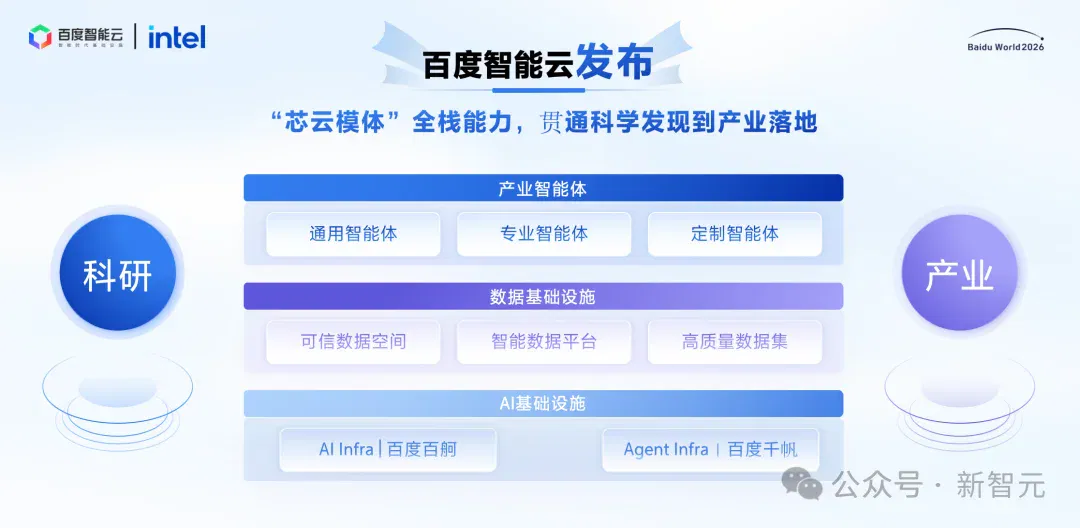
“Chip–Cloud–Model–Agent” goes into action
preserving a senior student’s experimental “feel”
The first task for the new system in the laboratory is helping supervisors solve one of their biggest headaches: “when people leave, their experience leaves too.”
Almost every research group has experienced this frustration. Once the senior student who best understands parameter tuning graduates, newcomers have to stumble through all the same pitfalls from scratch, even if they pore over every historical document.
After all, the intuition developed through countless failed attempts is what practitioners call “feel.” It is neither written into papers nor found in laboratory notebooks.
Ecosystem partner BioMap has had the same experience in industry. A great deal of crucial experimental context in life sciences still resides in scientists’ heads and handwritten notebooks, often leaving AI like “blind people trying to understand an elephant by touch.”
To keep the “feel” in individuals’ heads within the team, Wu Chao, general manager for healthcare and education at Baidu AI Cloud, introduced an approach combining data and agents.
First come routine group meetings. The general-purpose agent “Baidu Dazi” automatically records the consensus and action items from each discussion, preserving the team’s scattered memories.
Then, when experiments begin, the various data they produce no longer stay on separate computers, but are centrally archived on the data platform.
As with BioMap OS, which BioMap provides to multinational pharmaceutical companies such as Sanofi, contextual knowledge, model calls, and experimental data are brought into the same system so AI can understand the background and consequences of experiments.
More importantly, the distinctive parameter-tuning rules and bioinformatics toolchains developed by senior students are packaged into Skills and installed in laboratory-specific custom agents such as the “bioinformatics agent (HPC Agent).”
When a new cohort joins the group, they can simply call on custom agents and the specialist agent “Baidu Famou” to quickly reproduce previous work and carry it forward using the technical assets their predecessors left behind.
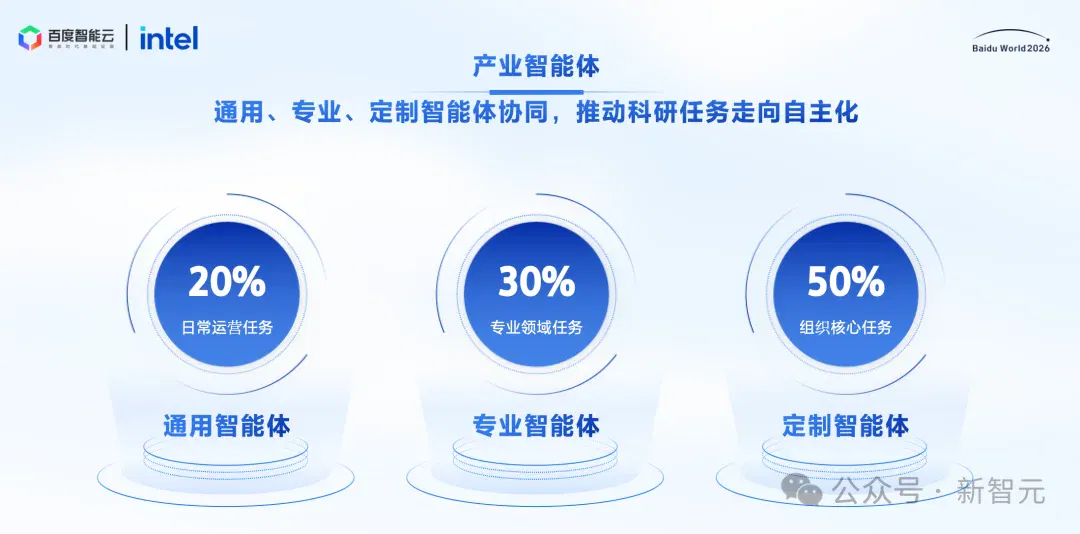
Even if the senior student takes graduation photos and leaves tomorrow, the parameter-tuning experience he accumulated over six years remains in the cloud, helping the next cohort of labmates around the clock.
Sleepless trial and error, 24 hours a day
closing the loop between “dry and wet experiments”
Once experience has been retained, the next step is to put agents to work, gradually taking over two core types of laboratory task, from simpler to more complex.
Leave algorithm optimization on computers to specialist agents
The first type requires no external hardware, focusing on algorithm tuning, feature selection, and sequence design on computers.
In everyday research, many teams already have data and have written the first version of an algorithm, only to get stuck on the final tuning. With thousands of dimensions to consider, choosing parameter combinations and deciding which features to retain used to depend entirely on students trying again and again.
Now, in many partner laboratories, people have developed a new habit when faced with the most painstaking optimization work: “When in doubt, ask Famou.”
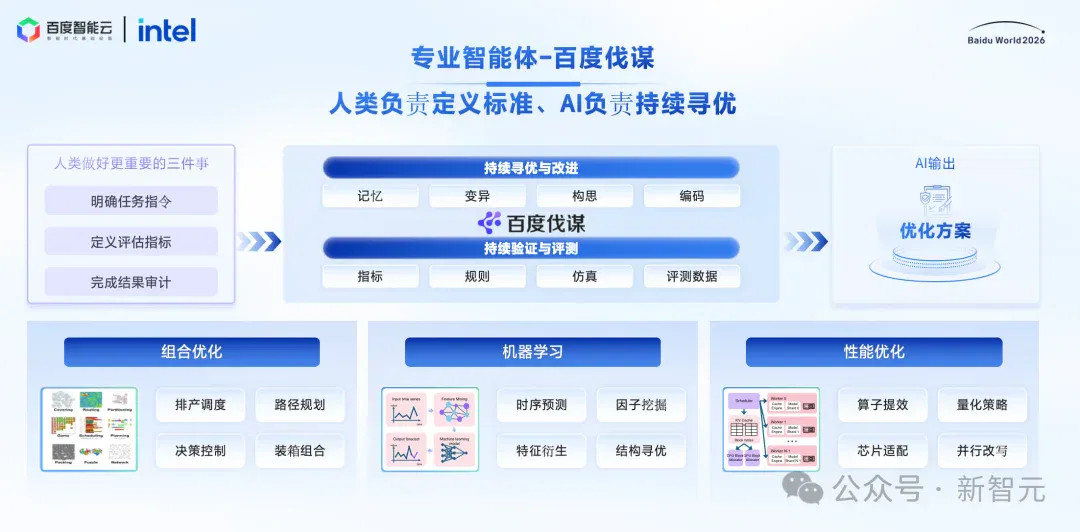
For example, in breeding research, a well-known national laboratory asked “Baidu Famou” to identify plant phenotypic traits. It automatically pared down a vast number of dimensions to find the optimal sampling combination, helping the team save 60%–70% of field data collection costs.
From multimodal MRI classification in brain science, with accuracy improved by another 5%, to gas chromatography column flow-field optimization at Beijing University of Technology and aerial confrontation research at Nankai University, it is taking on more and more interdisciplinary parameter optimization work.
Further upstream in biomedicine, computational complexity grows exponentially.
Researcher Xie Zhi of Guangzhou Laboratory presented a comparison: an mRNA sequence of 1,000 nucleotides has as many as 10^159 potential encodings, while the total number of atoms in the known universe is only 10^79.
Selecting one sequence from such an enormous combinatorial space to advance into clinical development is simply impossible through manual exhaustive search.
Researchers at Guangzhou Laboratory presented experimental results from a sequence optimization project, including improvements involving neutralizing antibodies and doses. The original report did not fully describe the species, sample sizes, or trial stages, so these results cannot establish human clinical efficacy or justify changing a dose independently.
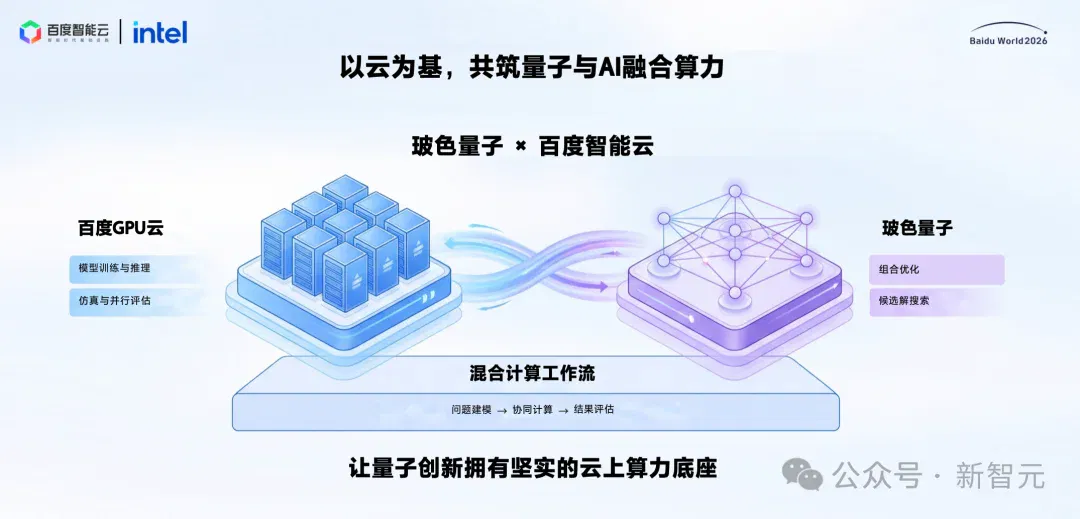
For combinatorial spaces so large that even conventional computers cannot handle them, ecosystem partner Bose Quantum offered another approach: using quantum computing to break through.
They connected their “Quantum Cloud Hub” to Baidu AI Cloud, using the PyTorch interface familiar to researchers to abstract away the barriers of quantum physics. Together with Guangzhou Laboratory, they have now completed millisecond-level cloud-based prescreening for single-cell characterization and molecular docking.
Connect laboratory instruments so agents can perform experiments automatically
Of course, computing quickly and screening accurately are only the first step. If it stops at calculating parameters on a computer, at best only half of the research process has been sped up.
The bigger divide is the separation between dry and wet experiments. Students still have to stand at the bench and manually prepare solutions to validate the plans computed on a computer (dry experiments) in wet experiments. If the data from the two sides do not match, they have to start over.
In a life sciences laboratory at Peking University Shenzhen Graduate School, agents connect directly to equipment such as liquid-handling workstations and high-throughput testing instruments, turning experiments into a three-step automated process.
First, researchers enter goals and literature into a general-purpose agent as though chatting, then discuss and iterate toward an experimental plan.
Second, on the “Baidu Dazi Development Platform,” the agent automatically arranges the plan into a visual “operation canvas.” Which instrument to call at each step and how many microliters of reagent to add are immediately clear and can be checked at a glance.
Third, the experimental equipment automatically prepares solutions and performs tests according to the canvas. The real data it produces is sent back to the cloud in real time, automatically revising the plan for the next round.
This approach to closing the dry–wet loop is also being implemented more rapidly in industry.
For example, XtalPi points out that a round of cell experiments can easily take one or two weeks, while animal experiments require several months. Even the smartest model at the front end is slowed by wet experiments. It therefore connects molecular design, robotic synthesis, and testing into an automated pipeline, aiming to increase the speed of the entire iteration cycle tenfold.
In new materials, Hongzhiwei also warns that if large models train repeatedly on synthetic data alone over the long term, it resembles biological “inbreeding,” and the results will sooner or later become distorted.
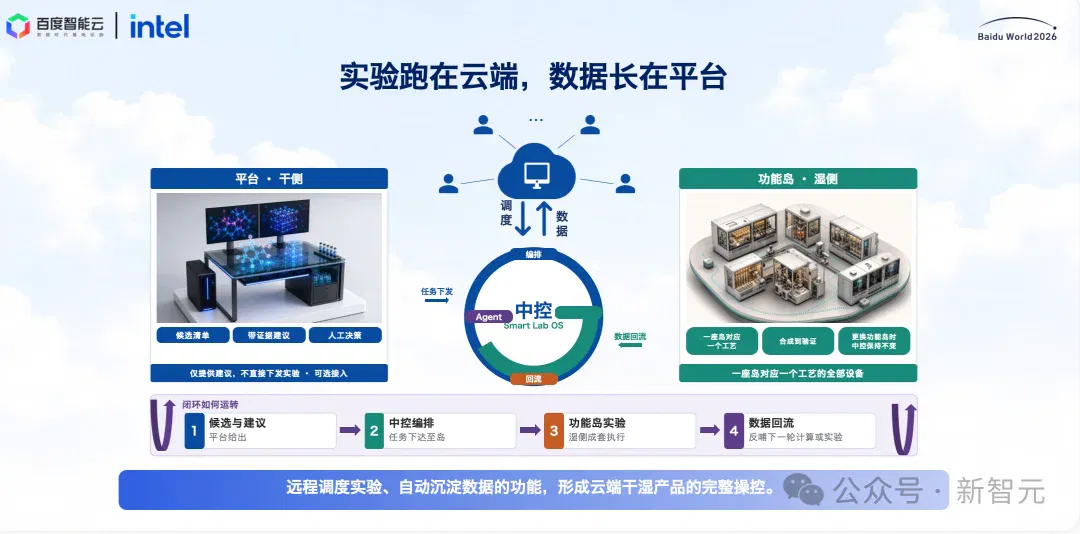
By jointly building a cloud-based automated laboratory with CATL, they have completed validation of dozens of molecular materials, continuously feeding models with AI-ready data produced by real experiments.
When dry and wet experiments truly form a closed loop, young researchers no longer have to stay up at instruments performing repetitive operations. Instead, they can devote their energy to new research questions and crucial judgments.
Beyond the laboratory
loosening the “double-ten rule” of ten years and US$1 billion
The flow within the laboratory may be smooth, but take one step outside and academia and industry face the same problem.
Over the past two years, papers have indeed been written faster and individual computations have become faster. Yet, as Baidu vice president Shi Qinghua candidly acknowledged, “Drugs are still hard to develop; clinical trials are still hard to enter; research results are still hard to translate into practical applications.”
Why is it still so difficult to turn impressive laboratory data into real new drugs and industrial outcomes?
Wu Chao cited DeepMind as an example. When it developed AlphaFold, its internal researchers and engineers were in a ratio of almost one to one.
By contrast, most universities and pharmaceutical companies often have academics devoted to research but lack a supporting AI engineering team. Even if researchers devise a good algorithm, they find it difficult to build an industrial-grade system themselves, leaving the results stuck in the laboratory.
To bridge this gap, Baidu AI Cloud’s approach is to station FDEs, or forward-deployed engineers, on-site, working alongside scientists to form a “science–engineering partnership.”
For example, the national-level “China Digital Lung” intelligent analysis and early-warning platform jointly built by Guangzhou Laboratory and Baidu is a typical “science–engineering partnership.” The laboratory defines the frontier scientific questions, while Baidu handles their engineering implementation.
Along this path linking industry, academia, and research, Baidu AI Cloud works with institutions including the Science and Technology Innovation Development Center of the Chinese Academy of Sciences and Zhongguancun Academy to jointly build research corpora and an AI computing foundation. At the other end, its GBI Health pharmaceutical dataset serves more than 100 pharmaceutical companies and research institutes, helping businesses assess pipeline directions and driving joint research efforts.
Ultimately, faced with the “double-ten rule” of ten years and US$1 billion for new-drug development, Baidu is not developing drugs itself. Its role is to build the road from the laboratory bench to industry.
Handling a 315-fold surge
starting two million sandboxes in one minute
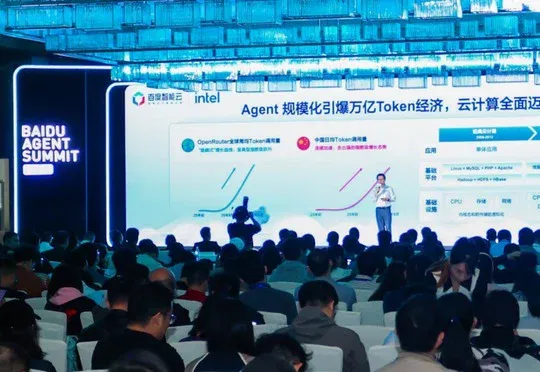
When hundreds or thousands of agents run code and control instruments around the clock in laboratories, the underlying Baidu Qianfan Agent Infra and Baidu Baige AI Infra must first withstand the sudden increase in concurrent demand.
Baidu’s internal large-scale validation shows that, over the past year, its number of daily active agents grew sixfold and the number of effectively completed tasks grew elevenfold.
The change in resource calls was even more dramatic: cloud sandbox concurrency surged sixtyfold, while total calls soared 315-fold.
Why would sandbox demand suddenly multiply by hundreds? Because humans type commands in a single thread, while once “Baidu Famou” starts an optimization task, that single task instantly branches into 1,000 parallel trial-and-error paths.
To meet these bursts of computational demand, the upgraded Baidu Qianfan Agent Infra supports concurrent sandboxes on the scale of a million and can start more than 1,000 securely isolated sandboxes within 100 milliseconds. They start on demand and are destroyed when the work is finished.
Besides speed, experiments must also be traceable. The platform gives every agent a “unique digital identity.” Any reasoning step that went off course or call that returned an error can be replayed frame by frame for troubleshooting at any time, preventing faulty scripts from contaminating experimental data.
For allocating computing power and models across organizations, Baidu Qianfan also launched “Ciyuansuo,” a neutral, trusted large-model trading platform. It connects token suppliers directly with buyers, allowing flexible allocation of computing and model resources.
Further down the task flow, at the stage of large-scale reinforcement learning (RL) training, Baidu Baige can start two million training sandboxes within minutes.
Baidu disclosed throughput of approximately 52,000 tokens per second under its specified training configuration. With different models, hardware, and workloads, this cannot directly be treated as an unconditional industry-wide record.
At the lowest hardware layer, the newly released “Baidu Tianchi 1,024-card supernode” increases optical interconnect bandwidth between cards threefold. A single unit can support training an enormous model with five trillion parameters.
Paired with GPU-memory and KV Cache acceleration cabinets, time to first token (TTFT) for multi-turn long-text inference is reduced by 90%, and inference throughput increases sevenfold.
Bringing the shoulders of giants to the cloud
Newton once said that he could see farther because he stood on the shoulders of giants.
In a sense, the scientific community that has continued for centuries was the earliest prototype of an “intelligent organization” in human history.
Unfortunately, traditional ways of passing on research knowledge move too slowly. It can take years for a new discovery to enter textbooks, while the experimental feel a senior scholar develops over a lifetime may never have a chance to make it into a paper.
This also bears out Shi Qinghua’s judgment that competition in AI4S ultimately comes down to full-stack AI cloud capabilities. Whether computing power is strong enough, data flows freely enough, and agents can finish the work—all three are indispensable.
Today, Baidu AI Cloud’s “Chip–Cloud–Model–Agent” is bringing the shoulders of giants to the cloud. Every trial-and-error attempt will be properly retained, and every bit of experimental feel can be used by those who follow.
Ten years ago, Robin Li said that the next act for the internet was artificial intelligence. Ten years later, intelligent organizations have become the protagonists of the next act.
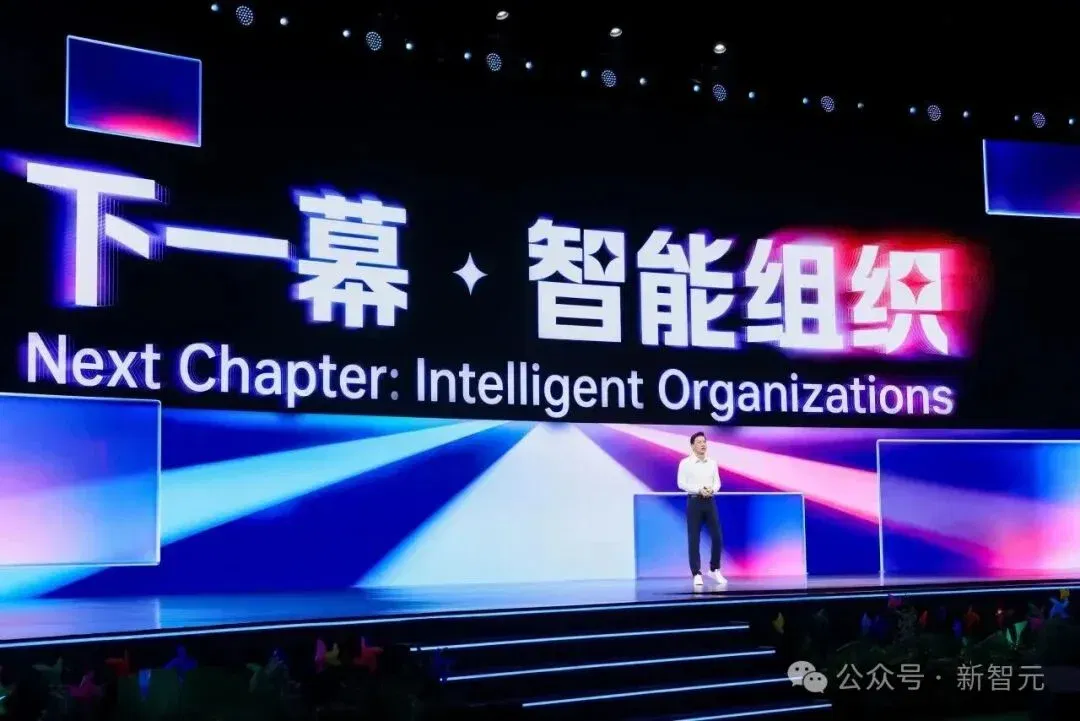
And research may well be the first factory in that act to turn its lights on.
This article comes from the WeChat public account “Xinzhiyuan,” and was written by “Moxi and Taozi.”
Related topics
After reading
Join the AINRK community
Read how to join the community and connect with people working in AI.
Related articles
Continue reading related topics and articles in this category.
百度智能云介绍 AI Infra 与 Agent Infra,支撑产业智能体运行 (opens in a new tab)
百度智能云推出AI Infra与Agent Infra双层基础设施,通过百舸AI计算平台6.0提升资源与Token效率,支撑智能体长期稳定运行及产业场景落地。
Baidu Famou 3.0 debuts, bringing continuous optimization into enterprise R&D and production (opens in a new tab)
Baidu World presents materials, chip and apparel cases that connect data, algorithm search, independent validation and human review in feedback loops. Results are those disclosed by the teams.

ERNIE 5.5 Flash Preview launches, showcasing long-horizon coding and creative work (opens in a new tab)
Baidu reports model architecture, API pricing, and game and animation demos, with weights planned for November 25. Media trials cover 3D scenes and science videos.
百度开放文心 5.5 Flash Base 权重,主打长上下文推理效率 (opens in a new tab)
百度开源文心 5.5 Flash Base(ERNIE 5.5 Flash Base)权重,该模型总参数280B、每token激活14B,采用稀疏MoE与混合稀疏注意力,微调和推理上下文外扩至1M tokens。
百度发布 ApolloWorld,探索多智能体交互的自动驾驶闭环仿真 (opens in a new tab)
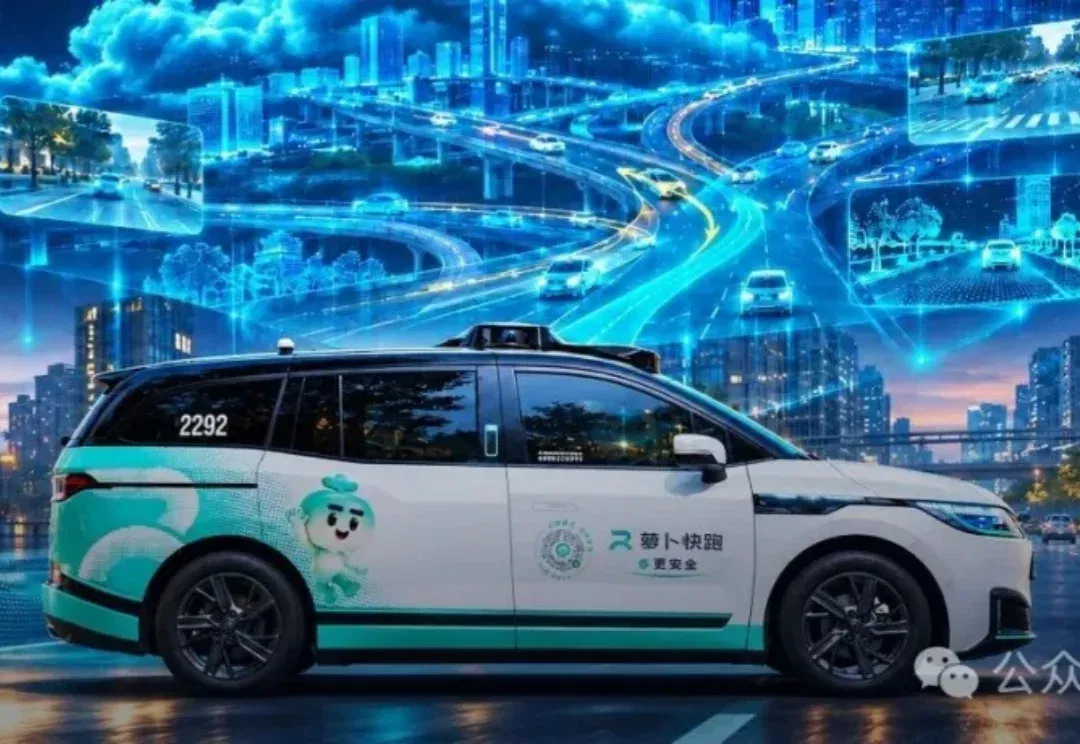
百度介绍ApolloWorld世界模型,面向L4驾驶训练同步生成相机画面与点云,并模拟交通参与者对车辆动作的反应。文中日行十万公里及33毫秒响应属于公司披露的仿真指标,不能直接替代真实路测或证明通用智能已经实现。