ChinaVenture: GeneSight raises over RMB 100 million and advances clinical R&D partnerships
ChinaVenture reports that GeneSight raised over RMB 100 million in a Huagai Capital-led round. Its founder says it has signed a Phase II drug-development partnership with a listed Chinese pharmaceutical company; the model's practical value still needs experimental and clinical validation.
Exploring applications of AI in scientific research.
ChinaVenture has learned that AI virtual cell (AIVC) company GeneSight has completed a new financing round of over RMB 100 million, led by Huagai Capital, with participation from Huafang Capital, Huaying Capital, Meihua Capital (and Zhongzhu Medical), Tongxin Fund, iFlytek Ventures and Qifu Capital. Xiangyang Capital serves as its long-term exclusive financial adviser. Founder Du Runshi told me that interest in this round exceeded his expectations.
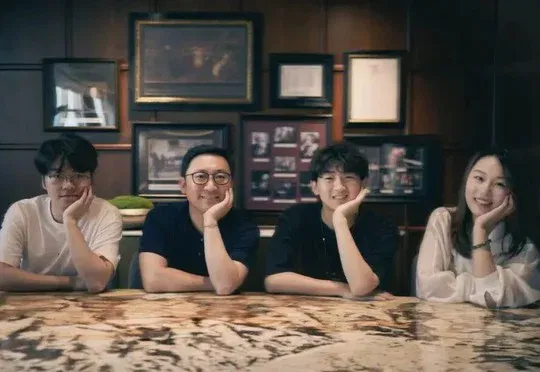
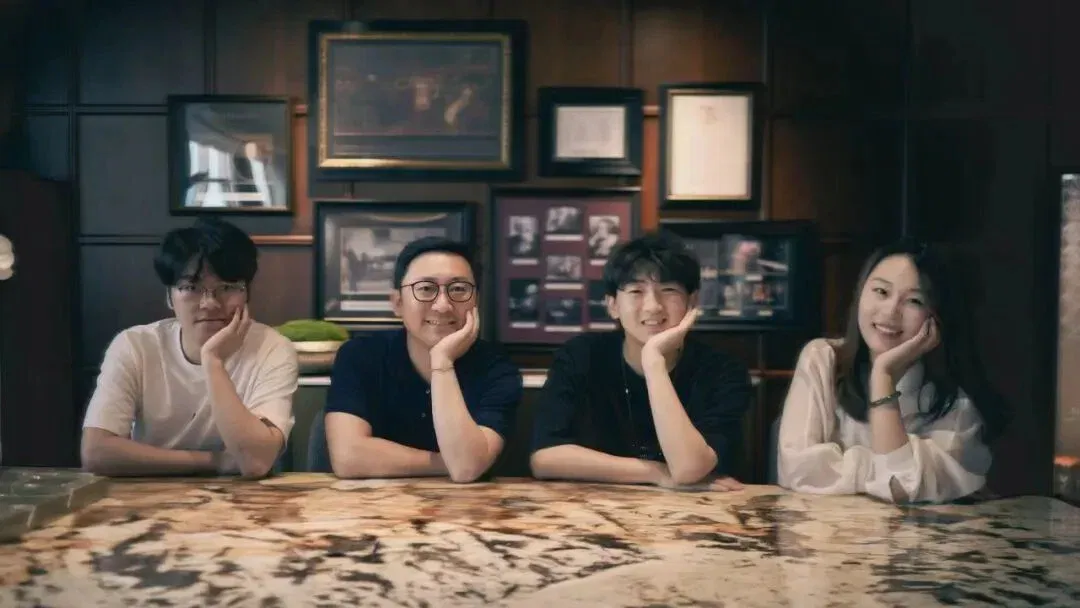
Born in 2004, Du Runshi is perhaps the youngest entrepreneur currently in AI4S. I first spoke with him and the team's other co-founders several months ago, when they had just completed a seed round worth tens of millions of renminbi. They had a relatively complete technical vision for how AI could simulate human cells, predict drug responses and eventually change new-drug development. But for an entrepreneur still at such an early stage, these ideas inevitably sounded somewhat distant.
At that time, AI for Science was still a concept that had to be explained to investors over and over, and many startups were still discussing how to build more powerful models. Du Runshi, however, had already thought through how to turn it into a business.
Half a year later, interest across the AI4S sector has continued to grow, and GeneSight has new achievements to show. Alongside its latest financing round, it has formally signed an agreement with a publicly listed Chinese pharmaceutical company and begun applying virtual cell models to an actual Phase II drug pipeline. Its work includes predicting drug effects in humans, analyzing mechanisms and subsequent molecular patient subtyping, with close involvement in the details of study design and execution. Meanwhile, it has brought leading experts in the field onto the team to further strengthen its technical capabilities.
Talking with Du Runshi about the past few months, you can sense that life has not been easy for him or his team. A series of seemingly mundane issues, including sample transport, cell culture, data standardization and how to earn pharmaceutical companies' trust, are realities that startups must confront once they genuinely enter the front lines of industry.
Of course, they have also come up with some ways to address them.
From building models to entering clinical research
Du Runshi's entrepreneurial story has something in common with those of some Silicon Valley founders.
He studied computer science and economics at the University of California, Los Angeles. While at university, he became involved in AI entrepreneurship and ultimately chose to take leave from his studies, assembling a team to work at the intersection of AI and the life sciences.
In an earlier interview with ChinaVenture, he spoke about a family member's ten-year battle with cancer. During treatment, different doctors proposed different approaches, and his family asked him which one they should choose. He could not give them an answer at the time. He worried about how he would face the consequences if he made a decision for his family and it did not produce a good outcome.
That experience led him to wonder whether technology could turn drug treatment from an experience-based choice into a process that could be predicted through data. He sums up that ambition as replacing the 'gamble' in treatment with 'calculation.'
While looking for a technical approach, Du Runshi met the equally young Wang Yixuan. A computer science doctoral student at the Chinese University of Hong Kong, she has long worked on single-cell AI and drug perturbation prediction and has participated in the development of several virtual cell models.
One focused more on business and strategy, while the other specialized in algorithms and the life sciences; together, they formed GeneSight's core founding team. Chen Cong later joined, bringing years of experience in healthcare industry and investment, and taking responsibility for capital and industry resources.
The problem this young team is trying to solve is nevertheless highly complex. In simple terms, a virtual cell uses AI to learn the biological patterns within cells and simulate how cells change under different environments and drug interventions, thereby predicting the effects a particular drug might produce.
If the technology becomes sufficiently mature, pharmaceutical companies could obtain more information about a drug's efficacy and mechanism of action before undertaking some costly experiments, and even identify more suitable patient populations for clinical trials. Of course, there is still a long way to go from model predictions in a laboratory to actually influencing drug-development decisions. GeneSight initially chose to start with hospitals, working with clinical institutions to explore access to biological data closer to real conditions in the human body, then applying those data to model training and drug-effect prediction.
When Du Runshi described the business model to ChinaVenture in July this year, the logic was already fairly clear. At that time, however, the company was largely still validating its technical capabilities and pursuing early commercial partnerships. Now, that vision is beginning to enter more concrete clinical R&D settings. Du revealed that GeneSight had signed an agreement with a publicly listed Chinese pharmaceutical company to collaborate on its Phase II drug pipeline. Under the partnership plan, GeneSight will use AI models to predict patient drug responses and participate in target analysis related to First-in-Class drugs. Later, the pharmaceutical company also hopes to use the models to identify more narrowly defined patient populations that could potentially benefit, providing a reference for Phase III trial design. It also hopes GeneSight can continue participating in related research and regulatory submission preparations as the drug progresses from Phase II toward Phase III.
'Our aim isn't to build a model that people praise. It's to enable virtual cell models to be used in real settings,' Du Runshi emphasized. The company hopes to help pharmaceutical companies make more accurate decisions and thereby improve the success rate of new-drug development. In his view, reducing some experimental costs is valuable, but helping pharmaceutical companies judge more accurately whether a drug will work clinically and which patients might benefit would have a more direct impact on R&D decisions.
Obtaining high-quality biological data
Du Runshi's understanding of the industry is also changing compared with several months ago.
'The most fundamental issue is actually trust,' Du Runshi said. Over the past year, the team has kept talking with hospitals and pharmaceutical companies, gradually demonstrating the model's capabilities through real research settings and a succession of small-scale validation cases. Once they actually entered laboratories, hospitals and pharmaceutical companies, more and more details obscured by the technology narrative emerged before them.
'It looks very simple, but actually, even details as small as how you transport your samples, or how you culture them, are all things you need to examine much more closely.'
In the past, AI companies were accustomed to starting with existing data, training a model and then looking for applications. In the life sciences, however, that logic has an obvious limitation: the data a model needs may simply not exist in reality. For example, predicting a drug's actual effects in the human body requires data that reflect differences in the states of real human cells. Yet much public data comes from cell lines cultured in vitro, whose biological environment differs substantially from the human body. Complicating matters further, different research institutions may use different experimental procedures, culture methods and sequencing instruments. Even with similar subjects of study, the resulting data can have significant shortcomings.
These problems cannot be solved simply by increasing a model's parameter count. With respect for the complexity of biology, GeneSight has become more committed to exploring a particular route: first identify the clinical problem to solve, then work backward to determine the data needed, and finally design experiments to produce those data.
This can be understood as a change in what drives R&D. Companies used to consider the resources they had and the data they could obtain before deciding what they could do. Now, they start with the biological problem they ultimately want to solve and work backward to select experimental tools and methods of data production.
This is also the competitive barrier GeneSight is currently working to build.
Du Runshi believes the virtual cell industry is at a very early stage, and that genuine competition between models has not even fully begun. One reason is that many companies still rely on similar public data. As more companies enter the field, basic data-production capabilities may gradually become widespread. What will truly be scarce is high-quality data that comes closer to real conditions in the human body and can be used to address specific problems.
GeneSight hopes that partnerships with hospitals and other clinical institutions will help it build a more standardized, large-scale data-production system, enabling AI to learn biological information from actual human-derived samples. The company disclosed that, in some internal prediction tasks, using organoid data rather than cell-line data could produce a performance improvement of nearly 50%, while human-derived data showed larger improvements across different tasks.
However, these remain preliminary evaluation results on specific tasks and cannot be used to directly infer the model's effectiveness in real clinical settings. Du Runshi is relatively cautious about this as well. He believes the extent to which higher-quality data will ultimately improve virtual cell models must await the results of further model development and validation.
At the broader industry level, he has also gradually realized that a general-purpose virtual cell model capable of solving every problem may be difficult to achieve in the short term. Different drugs have different mechanisms of action, and cells respond differently to them. Even if a model can learn the effects of small-molecule drugs on cells, it may not be able to directly predict the effects of peptide drugs. In other words, many companies may eventually enter the field along different technical paths, each building data systems and models suited to specific tasks.
Competition is inevitable, but there is room for collaboration too. For an early-stage startup, the more realistic choice is to identify the problems it can solve best, and that have the most commercial value, within its limited resources. Chen Cong revealed that GeneSight currently focuses primarily on small-molecule drug applications while preparing to expand into other types of drugs. These ambitions also place greater demands on the team: beyond algorithms and models, it must understand biological experiments, hospital partnerships, industry needs and medical-data compliance.
Du Runshi admits that only after actually doing the work do you understand where the difficulties lie at each stage. 'A change in understanding is, in essence, not really a change, but a correction,' he said, reflecting on the year.
Investors begin scrutinizing commercialization
In the second half of this year, AI for Science suddenly became a hot topic in the private investment market. From foundation-model companies to life-science startups, more and more participants have begun exploring applications of AI in scientific research.
On the one hand, AI has already demonstrated broad applicability in text, images and code, and capital markets are looking for the next set of applications that could unlock greater commercial value. On the other, the complexity of life-science research and its high R&D costs leave ample room to imagine what AI for Science might achieve.
But as interest grows, the way investors view the industry is also beginning to change. Du Runshi recalls that, when speaking with investment institutions in the first half of the year, some investors first wanted to know whether a company's technical concept was sufficiently cutting-edge and whether it had entered the field early. In the second half, the questions became more specific. Some investors began examining AI for Science companies' commercialization prospects at an earlier stage. Chen Cong believes that, as company valuations keep rising, the industry applications that can genuinely attract paying customers, and the sources of future revenue, become unavoidable questions.
That change was also apparent during GeneSight's latest financing round.
An investor's question at one roadshow left a deep impression on him. At the time, GeneSight was preparing to produce several new types of drug-related data. One type was relatively expensive to generate, and after weighing the options, the team decided to put it aside for the time being. An investor with a pharmaceutical background asked him in return: 'Are you doing the right thing, or the cheaper thing?' The investor then explained their own assessment, drawing on market demand for the relevant types of drugs, future trends and why pharmaceutical companies would choose those drugs.
The question struck a chord with Du Runshi. Startup teams have limited resources, so controlling costs is a natural choice. But if a technical approach has important long-term value, might abandoning it simply because it is currently expensive mean missing future opportunities? Du said that, beyond funds focused on AI, the company places particular value on institutions with biomedical investment experience. It hopes investors can bring a deeper understanding of the industry, in addition to technological insight.
Of course, increasingly specific investor expectations also mean that companies must deliver interim results more quickly.
GeneSight's team expansion has accelerated noticeably in recent months. Chen Cong recalls that, at the beginning of this year, the company's full-time employees could still be counted on one hand. Recruitment and team-building picked up substantially starting in June and July. Less than two months after moving into a new office, the company is already close to filling it.
The team's youth is also particularly striking. Chen Cong said that, apart from himself, the founders were all born in the 2000s. For these young people, advancing the company's business and growing personally are happening almost simultaneously. Du Runshi also acknowledges that he has changed considerably from a few months ago. 'I can accept anything happening,' he said. 'If something happens, it happens. I can solve it tomorrow.'
Of course, GeneSight's entry into pharmaceutical companies' clinical R&D processes is only a beginning. Whether its model predictions can remain accurate over time and genuinely improve drug-development decisions will ultimately require a long process of experimental and clinical validation.
For AI for Science, this may also be a shared process of growth. Young entrepreneurs are venturing deeper into industry, investors are reassessing the commercial value of technology, and seemingly grand technological visions must ultimately find answers in specific scientific problems, one by one.
This article comes from the WeChat public account ChinaVenture, and was written by ChinaVenture.
Related topics
After reading
Join the AINRK community
Read how to join the community and connect with people working in AI.
Related articles
Continue reading related topics and articles in this category.
Stanford's Le Cong on AI for Science: From Gene Editing to Acelegen (opens in a new tab)
Acelegen co-founder Le Cong describes how REVO connects AI molecular design, live-cell experiments and automation, and why progress in AI for Science depends on physical feedback, reproducible data and open research infrastructure.
Yuanshi Technology announces nearly RMB300M Pre-A funding for AI virtual cells (opens in a new tab)
Yuanshi Technology says it raised nearly RMB300 million in a Pre-A led by Legend Capital. Funds target cell perturbation and response data, automated experiments, model updates and R&D hiring, linking predictions with experimental feedback.

Qingxi Zhiyan raises nearly RMB 100 million in angel funding for AI materials R&D and pilot production (opens in a new tab)
Z Potentials reports that Qingxi Zhiyan is gathering real experimental data through equipment upgrades and advancing rare-earth permanent magnets toward pilot production, targeting mass production in 2027.
深度原理 DeepPrinciple发布科学模型 Hydrogen-1.0,开放全部权重 (opens in a new tab)
DeepPrinciple 以 GLM-5.3 为底座后训练 Hydrogen-1.0,开放权重并介绍领域数据、实验记录和发现轨迹的训练方法。团队展示多步科研工具使用及内部评测,也披露NMR任务落后于对照模型;能力仍需第三方复现和真实实验验证。
对话科理新序张载熙:在最冷门时入局AI4S,他想构建科学原生基座模型 (opens in a new tab)
科理新序创始人张载熙讨论 scientific token、科学基座模型与干湿实验闭环。他分享STELLA靶点候选和蛋白设计案例,也强调计算结果与湿实验间的差距。SSI是团队设定的后续目标,自动化实验室及更大模型能力仍在规划和验证。