Stanford's Le Cong on AI for Science: From Gene Editing to Acelegen
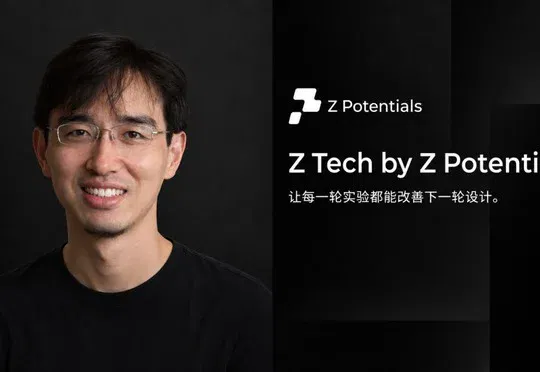
Acelegen co-founder Le Cong describes how REVO connects AI molecular design, live-cell experiments and automation, and why progress in AI for Science depends on physical feedback, reproducible data and open research infrastructure.
Editor's fact-check (November 22, 2026): The descriptions of REVO, in-cell compute and early preclinical comparisons come from the interviewee and his team. They do not establish demonstrated benefits for patients, nor do they establish a scaling law in the life sciences or fully autonomous RSI. The statement that Alzheimer's disease has 'no truly effective treatment' should not be read as meaning that no treatments have been approved. The FDA has approved Kisunla for certain patients at an early stage of the disease and reports that it slowed clinical decline relative to placebo; there are explicit limits on the eligible population and the scope of its effects. The allegation of academic misconduct by an unnamed professor lacks an identifiable individual and an investigation that can be checked. This article does not treat it as an established finding. Sources: FDA approval and scope of the study (opens in a new tab), Official Stanford profile (opens in a new tab), Acelegen's platform vision (opens in a new tab).
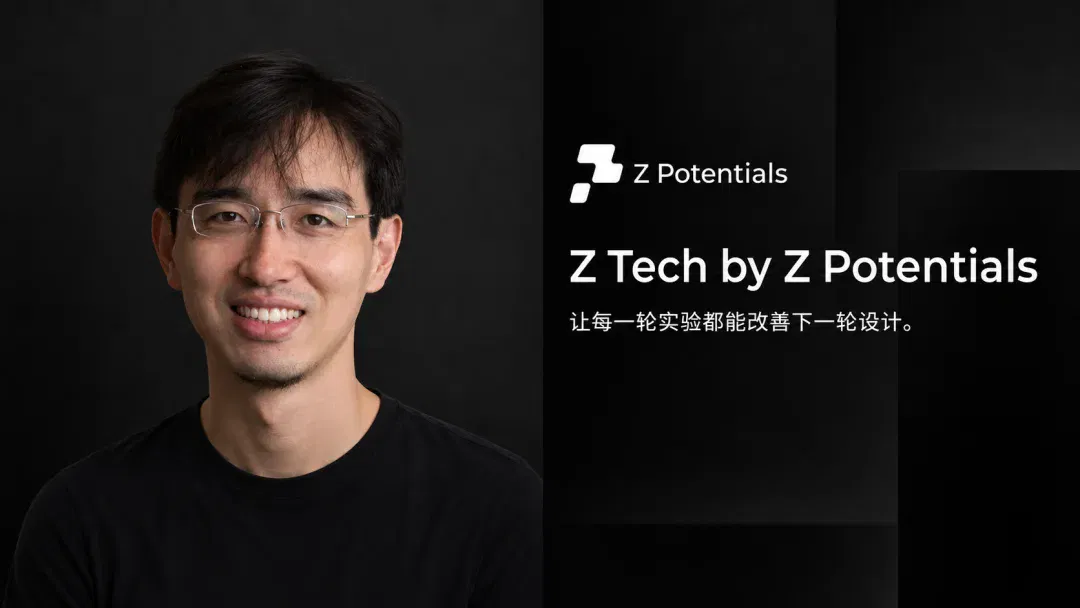
Editor's introduction
If you are looking for a researcher who understands frontier life sciences, AI technology and Silicon Valley's research and startup ecosystem, Le Cong is a representative example. Today, he is a tenured professor in the Departments of Pathology and Genetics at Stanford School of Medicine and a co-founder of the life sciences company Acelegen.
After completing his undergraduate degree in 2009, Cong went to Harvard for his doctorate and undertook postdoctoral research at the Broad Institute. Along the way, he joined the laboratories of three leading scientists, George Church, Feng Zhang and Aviv Regev, experiencing the development of CRISPR gene editing and single-cell biology firsthand. From interdisciplinary entrepreneurship and gene editing to computational biology, this distinctive experience spanning different research paradigms and commercialization established the central thread he has consistently followed: finding fundamental questions genuinely worth answering and opportunities for innovation from zero to one.
Today, he stands at another intersection.
As large models and AI for Science take off, organizations such as Google DeepMind continue to bring AI more deeply into scientific discovery. During his time in the Stanford laboratory, Cong and his team initiated exploratory projects including CRISPR-GPT and LabOS, seeking to introduce AI into gene editing and research workflows. That academic groundwork led him to think more fundamentally about combining AI and the life sciences: The endpoint of scientific exploration is by no means a piece of software or an automation tool. The real breakthrough lies in how AI can be used to understand life systems anew and reshape those systems themselves.
Building on that thinking, Cong extended his deep academic assessment into industry and co-founded the life sciences company Acelegen.
Cong wants each round of experiments to improve the next round of design. The drug discovery and development platform Acelegen is building, REVO, connects AI molecular design, live-cell experiments and laboratory automation. The team uses CRISPR and molecular engineering tools to screen candidate molecules in living human cells, then feeds experimental data back to AI to guide the next round of optimization. Cong calls the process of testing designs through cells' own molecular recognition and selection mechanisms 'in-cell compute.' At present, the team primarily focuses on therapeutic molecules such as proteins, peptides and RNA, with early research concentrated on immunology and stem cells.
Behind this effort is a question that remains to be tested: Is there also a scaling law in the life sciences? In Cong's view, the prerequisites are that experimental data reflect real biological function, results are reproducible and different experiments can be compared. As such data accumulate and computational investment and the scale of effective experiments increase, one measure of the platform's progress is whether, when facing a new problem, it can draw on previously learned principles to find better candidate molecules with fewer experiments.
In this conversation with Z Potentials, Cong looks back at his decisions to move from electrical engineering into the life sciences and from gene-editing research into entrepreneurship. We also discuss his longer-term hopes for scientific AI. Today, researchers use CRISPR to conduct experiments and AlphaFold to predict protein structures. Might AI one day help create the next tool of that kind, giving researchers a way to pursue questions that are still difficult even to tackle today?
Z Highlights
- I have always believed that truly valuable opportunities often arise at the intersection of different fields.
- Once research reaches a certain stage, what really matters is not just publishing papers, but how to organize research results and help them make a greater impact.
- What we would rather build is an operating system for the entire scientific research process, rather than simply another AI agent.
- What truly constrains the development of AI for Science is not the model, but the entire research infrastructure.
- Ultimately, scientific validation must take place in the physical world. That feedback, whether you call it a reward or a signal, is what truly closes the loop.
01 From Gene Editing to an AI for Science Startup: Finding Zero-to-One Innovation Where Fields Meet
ZP: As an undergraduate, you initially studied electrical engineering, then moved into biology and later gradually focused your research on AI for Science. What led you to change direction several times?
Le Cong: I did start out in electrical engineering as an undergraduate. I grew up in Zhongguancun and could sense very early on that the computer age had arrived. When choosing a university major, I was interested in computing, electronics and software alike. Of course, I was not someone who had been especially gifted since childhood; I was a fairly ordinary student. But I really loved playing games as a child. If I had not been so absorbed in gaming, perhaps I could have made a bit more of whatever talent I had (laughs).
When I actually chose my major, I did not have a particularly clear idea of what electrical engineering involved. I just thought it was a really cool, terrific subject. Only after entering university did I gradually begin to understand the field and meet many outstanding classmates. The electrical engineering department itself was a very good environment, but I later decided to move into biology, primarily for three reasons.
The first reason was my family. During my first year at university, two older relatives died suddenly, one after the other. That made me take a serious interest in disease for the first time and start thinking about how much remained unknown in medicine and the life sciences. I discovered then that even today, our understanding of many diseases remains very limited. Take Alzheimer's disease: even now, there is no truly effective treatment, and even many of the most basic questions have not been fully understood. Later, as people know, foundational Alzheimer's research by a very well-known Harvard professor was also found to involve fabrication, affecting the direction of research across the field for many years. These things made me realize that there is an enormous amount we still do not know about the life sciences, and that those unknowns mean there are many questions truly worth exploring.
The second reason was my thinking about the way research itself is done. Electrical engineering is a very important field that I also really like, but much of the work I encountered then felt like continuous optimization of existing technologies. Improving display resolution, for example, is very valuable work, but at the time I felt it was more a matter of incremental innovation. Looking back, that was rather a narrow view. My undergraduate electrical engineering roommates went on to do pioneering work, but being young and full of yourself comes at a price. At the time, I felt there were many unsolved zero-to-one questions in the life sciences. I have always felt that curiosity is the most important factor driving my research and my greatest motivation. If many fundamental questions in a field remain unanswered, that means there is more room to explore. So, although it is a bit of a shame that I missed opportunities to take part in pioneering work in electronics and computing, such as deep learning, at the time I felt biomedical research was full of exciting possibilities.
The third reason concerned my career plans at the time. Initially, I seriously considered studying medicine at Peking Union Medical College, because being a doctor seemed to me the most direct way to help people. Later, I realized that doctors often need to focus intensely on one particular area, such as lung cancer, diabetes or neurological disease; everyone has a specialty. Biological research, by contrast, would allow me to understand the life sciences from a more holistic, broader perspective, rather than being restricted to one disease. Of course, there is no absolute right or wrong here, and everyone makes different choices. For me, research seemed more in keeping with my interests and with the way I wanted to explore the unknown, so I ultimately moved from electrical engineering into biological research.
ZP: It sounds as though what really attracted you all along was the questions themselves. Compared with medicine, you felt biological research would give you a broader perspective on those questions. How did you subsequently encounter AI and gradually bring it into biology and scientific research?
Le Cong: Looking back, I actually made the decision to move into computation before starting my postdoc. My doctoral work was very experimental. Whether in George Church's lab or Feng Zhang's, we did some computation, but the work was mainly wet-lab experiments. One very important reason I later chose Aviv Regev's lab was that I wanted to enter computational biology in earnest. Aviv herself came from computer science and then moved into computational biology. That was a path I had always identified with.
Another reason was my increasingly strong sense of how slowly the life sciences develop. When I was studying electronics, I thought hardware was slow enough; once I actually entered biology, I found it was even slower than hardware. Many experiments take years to complete, and many results themselves remain highly uncertain. After four or five years of experiments, I increasingly wanted to return to a research approach that was more digital, could iterate faster and could scale.
At that point, my goal was not yet AI, but computation itself. Single-cell genomics was just emerging, and I wanted to combine my earlier CRISPR experience with single-cell technology to work on Perturb-seq. But then something unexpected happened. After completing my doctorate, I was ready to join Aviv's lab as a postdoc, but my visa went into administrative processing, which took eight or nine months.
During that period, I even began seriously looking for work in China and contacted many universities. I emailed everyone I could think of, including senators and representatives from Massachusetts, hoping to move the visa approval forward. It was finally approved, but by then I had missed some of the core projects the lab had originally planned. By the time I actually joined, much of the early work was already complete. As a result, I moved more toward immunology and somewhat more applied research, rather than taking part in some of the foundational technology work I had originally envisaged. Looking back, I do feel some regret, but many things in life are like that: not every step can go exactly as you plan.
Still, that experience reinforced one belief for me. I have always believed that truly valuable opportunities often arise at the intersection of different fields. I had studied electronics as an undergraduate and then spent years doing biological experiments. So after my doctorate, when I had the chance to combine computation and the life sciences, I barely hesitated. I have always believed that truly exciting zero-to-one innovation often occurs where two fields meet. If you can genuinely combine two different fields, new opportunities often emerge. I think that remains true today.
ZP: During your doctorate and postdoc, you worked in the laboratories of George Church, Feng Zhang and Aviv Regev. All three are highly representative scientists in their fields. How would you describe their respective research styles, and what influence did each have on your development?
Le Cong: I think those three mentors represent three very different research styles, as well as three different kinds of principal investigator, or PI. Having the opportunity to work in all three of their labs was an exceptionally valuable experience for me.
Let me start with Feng Zhang. What most distinguished him was his youth. His lab was still at an early stage of development then, which had advantages and disadvantages. The biggest challenge was that you had to do many things yourself. When I first joined, much of the basic infrastructure was not yet fully in place. From moving laboratory equipment and finding sequencing providers to buying all kinds of supplies for the lab, there was a lot you had to handle yourself. You could not simply walk in and immediately start doing research. It was rather like joining a startup in its earliest days: you had to take a hands-on approach to many things.
But seen from another angle, that is also a young laboratory's greatest advantage. Because the lab is relatively small, the supervisor can devote more time to each person. You get to see up close how they think about research questions every day, and can constantly discuss specific research details with them. Early in their careers, many professors still conduct experiments and drive projects personally, so they are deeply involved in every part of the research process. For students, that direct interaction is extremely valuable. So I think the biggest benefit of joining a young PI's lab is receiving more one-on-one guidance and gaining a deeper understanding of how an excellent researcher thinks about problems.
George Church had a completely different style. His lab was enormous and had already established tremendous international influence. At the time, if Feng Zhang was a young scientist growing rapidly, George Church was already one of the most representative scientists in the entire field. The two were almost beyond comparison. One thing I remember very clearly is that another student, like me, moved from George Church's lab to Feng Zhang's. A few months later, though, he decided to go back. We talked for a long time that evening, and he told me he still preferred the environment of a mature lab like George Church's. There, you meet many outstanding people every day, can always find someone to discuss a problem with and continually get new ideas. In a small, recently established lab, there are few people and you have to figure out many things on your own. Different people adapt to that very differently.
The greatest advantages of George Church's lab were its resources and opportunities. It brought together many outstanding people and had many opportunities to collaborate with industry. While I was there, large companies and startups often came to discuss collaborations. Many laboratories simply do not have resources like that. George himself is also a very visionary scientist. He is extremely open-minded and does not confine himself to one specific direction. He might work on gene sequencing today, and if a new opportunity emerges in AI tomorrow, he will immediately give serious thought to whether it is worth pursuing. That ability to keep embracing new technologies and new directions also had a very strong influence on me.
Finally, there is Aviv Regev. If I had to describe Aviv, I would say she is perhaps the scientist I have met who comes closest to having no weaknesses at all. She has exceptionally high intellectual and emotional intelligence and works extremely hard: the kind of child, or boss, everyone else is told to emulate. More importantly, she can both attend to very fine details and coordinate the overall direction of a team. That is actually very difficult. Precisely because her lab was so large, she could not personally guide everyone through every experimental detail as a young PI might. Instead, what she more often provided was direction, organizational ability and the design of the entire research system. Her role in co-founding the Human Cell Atlas is an example. Individual researchers still had to drive their specific projects forward.
Looking back, I think these three mentors taught me three completely different kinds of ability. Feng Zhang showed me how an outstanding young scientist personally drives research and rapidly establishes a laboratory. George Church showed me how a world-leading lab brings together resources, organizes collaborations and continually explores new research directions. Aviv Regev helped me truly understand how a mature research leader manages a large team, builds a long-term research system and combines organizational capability with scientific capability. None of them was better than the others; they represented three different paths of development. Experiencing all three environments had a profound influence on my subsequent research, my team leadership and even my entrepreneurship today.
ZP: George Church and Feng Zhang are not only leading scientists; they have also founded many successful companies. You later became an entrepreneur yourself. How did their experiences influence you, and when did you really start thinking about founding a company?
Le Cong: I think what influenced me more was not just any one mentor, but the broader innovation environment in Boston and, later, the Bay Area. Feng Zhang's lab was at a particular stage then. Because CRISPR itself was such a new field, the lab naturally had ties with many startups and investment firms. I also participated in some early startup projects, and at one point seriously considered joining a startup and had some opportunities to do so. Even now, I remain an advisory board member of a gene-editing company Feng Zhang founded a few years ago, so entrepreneurship has never been very far removed from my research.
Still, if you ask which of my three mentors most directly made me feel the importance of combining entrepreneurship with industry, I would point to the two different paths represented by George Church and Aviv Regev. George Church is more of a scientist with a very strong vision. He constantly proposes new directions and ideas and keeps driving the creation of new technologies. Aviv is more of an organizer. In advancing a major international collaboration like the Human Cell Atlas, she is essentially organizing teams around the world to accomplish something together. She is exceptionally good at building systems, organizing resources and coordinating collaboration, which is an extremely important ability in its own right. Their styles are completely different, but both made me realize that once research reaches a certain stage, what really matters is not just publishing papers, but how to organize research results and help them make a greater impact.
Of course, what really prompted me to think seriously about entrepreneurship was moving to the Bay Area later on. The Bay Area has a very distinctive feel. Its most striking feature is not the number of startups, but that almost everyone takes for granted that people can move back and forth between research and entrepreneurship. Here, many professors are themselves building companies, and many entrepreneurs retain strong research abilities. People do not see these as two completely separate paths. Rather, they believe that good research should have an opportunity to make its way into industry.
More importantly, the startup ecosystem here is very mature. You keep meeting founders, venture capitalists and people from industry, and see new companies continually emerging. After spending a long time in such an environment, you naturally start asking yourself: Could I try doing something of my own? That influence works gradually, almost without your noticing. If you remain in a more academic environment, conversations often revolve around papers, experiments and the projects themselves. In the Bay Area, though, many discussions ultimately come down to one question: What value can this technology actually create? Could it become a product, or even a real company? That way of thinking had a very strong influence on me later.
ZP: Why did you ultimately choose to found Acelegen?
Le Cong: People have their limitations, and machines have theirs. From the internet in the 2000s to AI, autonomous driving and flying cars in 2026, technology has been exploding for more than 20 years. Has technological development really made us happier?
Ultimately, we live in a world of humanity and emotions, a world full of contradictions and conflicts. Why not try to move beyond the limits of natural evolution, beyond human limitations and beyond the limitations of machines? Helping carbon-based life keep pace with silicon-based systems could be very meaningful. Acelegen hopes to take that step.
ZP: When you co-founded Acelegen, how did you decide that a life sciences problem was worth pursuing over the long term through a startup?
Le Cong: Along the way, I have increasingly come to believe that what really matters is not starting a company for its own sake, but finding a problem truly worth committing to for the long term. A very specific, narrowly focused product can certainly become a good company. But if you can address a more fundamental, longer-term problem, the impact it could have in the future will be greater.
Our later work on AI for Science, CRISPR-GPT and LabOS developed along the same lines. AI's value in science is not simply to make a particular laboratory more efficient. It should act like an operating system, connecting the entire research process and making AI easier for more scientists to use. At the same time, we also need super apps like Apple Music and Apple Health. Releasing CRISPR-GPT and creating a super AI gene-editing tool are ways to advance platform technologies through entrepreneurship.
02 Putting AI Designs into Living Cells: Searching for a Scaling Law in the Life Sciences
ZP: Could you introduce what Acelegen mainly does today?
Le Cong: Acelegen is connecting AI molecular design, live-cell experiments and laboratory automation to build a drug discovery and development platform that can learn continuously. At present, we mainly focus on designing and optimizing therapeutic molecules such as proteins, peptides and RNA.
Today, AI can quickly propose large numbers of molecular designs, but whether those molecules work in a real biological environment and have sufficient selectivity still requires experimental validation. The bottleneck we want to address is the gap between proposing a design and obtaining reliable validation.
The core of our platform is REVO. REVO uses the CRISPR and molecular engineering tools we have developed to vary, screen and continuously optimize candidate therapeutic molecules in living human cells. At the same time, the full data from the evolution experiments can be fed back to AI to guide the next round of design, enabling scientific RSI, or recursive self-intelligence. Currently, our early research focuses on immunology and stem cells, the two areas where we believe there is the greatest potential for major breakthroughs in biological science and drug discovery. We hope to keep validating and expanding the platform's capabilities, eventually moving deeper into more areas of science, health and disease.
ZP: You have mentioned a scaling law in the life sciences and 'in-cell compute.' How should we understand those two concepts?
Le Cong: At the heart of what we call a life sciences scaling law is a question that must be answered experimentally: As computational investment, the scale of effective experiments and high-quality data keep increasing, can the ability to make scientific discoveries and design drugs improve steadily along with them? The life sciences have a distinctive feature: More data do not necessarily mean a better model. Whether the data reflect real biological function, whether experiments can be repeated and whether different experiments are comparable are all critical. So our focus is not just on expanding the volume of data, but on generating functional data useful for scientific breakthroughs at scale.
'In-cell compute' is one technical route toward that goal. Cells themselves have complex mechanisms for molecular recognition, signaling and selection. We hope to use those mechanisms to test different candidate molecules in living cells, identify the molecules that perform better and use them in the next round of optimization. To give a simple example, AI can propose a set of protein designs, but it is hard to fully assess how they will actually behave inside cells from their sequences alone. We put these designs into the relevant cellular environment, observe whether they achieve the intended function and feed the experimental results back to the model. Here, 'compute' means using molecular processes inside cells to carry out search, selection and optimization.
We hope to connect AI's design capabilities with cells' biological feedback. However, a scaling law in the life sciences still requires rigorous validation: Can we identify key biological regulatory genes and molecules more accurately, find better drug candidates with fewer experiments and transfer that capability to new tasks?
ZP: How might this research be applied to new drug development in the future? What do you most want to validate next?
Le Cong: The most direct application is helping research and development teams find candidate molecules that balance efficacy, selectivity and safety more quickly. Take immunomodulatory drugs: We want a molecule to act more effectively on its target cells while reducing its effects on other cells. That involves balancing multiple objectives and requires repeated validation in the relevant biological environment. We hope to use REVO to generate functional data and combine that with AI design to shorten this optimization process. We already have some early signals. For example, one drug candidate optimized by REVO has produced very good results in preclinical human-derived models, far outperforming a Phase I molecule tested in parallel. Of course, taking our designs to the point of demonstrating benefits for patients requires much more validation.
Next, we are most interested in two questions. First, can the combination of biological REVO evolution and iterative large AI models expand to other, more open-ended biological problems, forming an 'AI-native evolutionary engine' that can advance a life sciences world model and become a reusable platform capability? Second, as data accumulate, is AI actually learning transferable principles that allow subsequent projects to produce better results with fewer experiments and in less time, moving from a scaling law to genuine life sciences RSI? Ultimately, we believe that the problems the most powerful scientific AI systems can solve will go beyond the limits of conventional biomedicine. The ability to model and transform the living world at a fundamental level can advance not only drugs that treat disease and save lives. We should also be considering how to create new tools like CRISPR, mRNA and AlphaFold to tackle the hardest problems, such as neuroscience and brain science.
ZP: Why did Acelegen choose to pursue a more foundational, general-purpose platform?
Le Cong: You can understand it on three levels. The first is research in AI for Science. It requires both AI and a genuine understanding of scientific questions. So we have always felt that if you want to create a truly influential AI research product, the best starting point is a scientific problem you know well. That is also the methodology we developed through our own research. We start by genuinely understanding a scientific problem and then consider what role AI could play, rather than using AI for its own sake.
Later, though, we increasingly realized that simply building one AI for Science model after another was not the ultimate goal. The second level is LabOS. We have kept asking what AI's role in scientific research should be. Many people discuss an AI scientist or a co-scientist. In our understanding, at least at the present stage, co-scientist is the more realistic role. To take that further, what we would rather build is an operating system for the entire scientific research process, rather than simply another AI agent.
That is because real scientific research does not take place solely in the digital world. Ultimately, it must cross the boundary between the digital and physical worlds. Today, everyone discusses world models and world simulators, and those are all very exciting directions. But objectively, I do not think anyone today can say we truly have a complete world simulator. Even if we narrow the scope to a biology simulator, I think it would be hard to say that has been achieved. So research still needs to return continually to the real world, using experiments for validation and iteration.
That is precisely why we believe the most important role of LabOS + CRISPR-GPT is to provide an infrastructure layer connecting AI and science to create products of exceptional value and impact. It is not intended to replace scientists, but to help them use AI more naturally and efficiently, truly integrating AI into the entire research process rather than stopping at a single model, tool or task. That is why we have always understood it as a scientific operating system, rather than simply an AI scientist.
Another point we have always particularly emphasized is the ecosystem. LabOS has never been just one laboratory's research project. Our goal is for it to become a genuinely open community, somewhat like the way open-source software develops. Many foundational capabilities should be built jointly by the whole community rather than by a single institution. If more and more scientists can work together around such an open platform in the future, I think the value it creates will far exceed that of any single model.
03 Science Needs a More Open Ecosystem That Empowers Scientists with Distinctive Ideas
ZP: Do you think AI's opportunity in science today is to become research infrastructure first, rather than immediately replacing scientists?
Le Cong: Yes. People often discuss whether an AI scientist can conduct research independently, but at the current stage, doing a good job of supporting science is itself very important. Just as autonomous driving and large models depend on underlying infrastructure, so does scientific research.
Today, AI can already help scientists read papers, propose hypotheses, generate molecules and analyze data. But it mainly accelerates work that used to require a great deal of time and effort. It still cannot fully replace scientists across the entire research process.
Some people say AI can already do things humans cannot, such as reading a million papers. But does that mean it can make the most important scientific discoveries? I do not necessarily think so. If reading more automatically led to Nobel Prize-level research, scientific research would have become something else entirely long ago. What really matters is still asking questions, understanding them and finding the right research direction.
Many people now discuss laboratory world models. But the reality is that the data in most scientific fields are nowhere near sufficient. Apart from a few relatively data-rich areas, such as protein structure and certain imaging tasks, the scale of data in the vast majority of scientific fields has not yet reached the level needed to support a true world model. Meanwhile, wet-lab experiments are very expensive and iterate very slowly.
So the most valuable thing to do at this stage is to build sound research infrastructure: truly integrate AI into experimental workflows and help scientists conduct experiments, manage data, organize knowledge and connect different tools more quickly.
Once that infrastructure is in place, it is like having laid a building's foundations. The building only needs to be built once, and many things can then continue to develop on top of it. I think that is where AI can truly create tremendous value in science at the current stage.
ZP: Is the large-scale, centralized approach of an organization like Google DeepMind the right path for AI for Science?
Le Cong: Personally, I think a centralized approach certainly has value. Building strong benchmarks and recruiting large numbers of PhD scientists, for example, are worthwhile things to do. But I do not think it is the only path, especially when it comes to science.
Science encompasses too many questions. Even within biology alone, there are so many diseases. Even with 10,000 people, it would be difficult to cover every direction. And the nature of science itself means that different fields will not progress at the same pace.
By contrast, I think we need a more open ecosystem that empowers scientists with distinctive ideas around the world to accelerate their own work using tools such as AI agents and robotics. That is how we can develop a more powerful ecosystem across the entire system, whether in datasets, tooling or domain-specific know-how. This is not intended to replace DeepMind-style centralized investment, but to serve as a very important complement to it.
ZP: In your research, you have also tried using AI for stem-cell gene editing. What can accumulating data from different laboratories bring to models in that field?
Le Cong: We built an AI agent system for stem-cell gene editing. Stem-cell research has a relatively unified set of techniques, and the basic technologies used by different laboratories are fairly similar. Many researchers work in this field, and the experiments are difficult. People have an incentive to use tools to improve efficiency and are also more willing to share data.
As we release the tools, we hope to gradually build an open database. The Protein Data Bank, PDB, collects structural data. We want to keep collecting experimental data from stem-cell gene editing so that models can learn from more experimental results. This still needs to be validated in that field first.
ZP: What are the central challenges for an open community in the biological sciences? Can the experience of computer science open-source communities be transferred directly?
Le Cong: I think there is a crucial question worth thinking through: Why can computer science have such strong open-source communities? One reason, of course, is the absence of IP barriers. But another is that people in computer science use the same systems and environments, and the cost of uploading code is extremely low. That is a more practical reason.
Scientific fields face two additional challenges. The first is conflicts of interest. Every lab will ask: Should I disclose my experimental know-how? That dilemma is real. The second is batch effects and reproducibility. Data quality varies enormously between laboratories and operating conditions. Even if everyone is willing to share, whether the data are usable remains a problem.
But I do not think this is a dead end. The key is to find an opening: a particular field where the technology is sufficiently mature, the community sufficiently active and everyone can see the benefits of sharing, and make it work there first.
ZP: So in your view, openness and commercialization are not mutually conflicting for LabOS?
Le Cong: Right, I do not think they are completely at odds. Open source is important and should be advanced, and we should work on it together with others. At the same time, though, a commercial approach also makes a lot of sense in some specific application and business contexts.
For example, we are also working with pharmaceutical companies. Some solutions do not originate with us, but with groups of scientists or actual commercial needs at pharmaceutical companies. Those kinds of solutions can become companies that can be incubated commercially.
So I think there will be different paths. On the one hand, LabOS itself can be an open community that everyone builds together. On the other, when very specific application or commercial needs emerge, pursuing them through a startup is entirely reasonable.
ZP: Why might the application layer not be suitable for being entirely open source?
Le Cong: Because some applications arise from commercial needs in the first place. Certain workflows at pharmaceutical companies, for example, may inherently be unsuitable for open source, or may not be possible to open-source at all. If they come from a commercial setting, they should be addressed through commercial methods.
So I think what really matters is making a clear distinction: Which parts should advance through an open community, and which parts should be pursued through startups or products in specific application and business contexts? The two are not mutually exclusive.
ZP: Will AI accelerate different fields at the same pace?
Le Cong: Definitely not. Structural biology is a good example. Instruments for X-ray crystallography and cryo-electron microscopy are extremely standardized. Around the world, people are essentially using equipment from the same company or of the same kind, so the technology is very consistent. That makes people willing to share data, and it is on that foundation that AlphaFold was able to make such a major breakthrough.
But most fields are still far from that point. How much AI can contribute to a field depends on two things: first, the quality and consistency of its data; second, how many people work in it and the scale of what has accumulated. The larger the field, the easier it is to create a positive flywheel. Only with high-quality data can AI learn something; only when people can see the benefits will they be willing to keep sharing.
Put simply, find fields where data quality is relatively reliable and the community is relatively mature, and get the flywheel turning there first. That is what I see as the most viable path.
ZP: You previously mentioned that LabOS might have a version two. Looking ahead, which areas would you want to strengthen?
Le Cong: For example, robotics is one of the areas we hope to strengthen in version two. If there is a laboratory world model in a scientific setting, it can enable a very powerful application: using laboratory automation to drive a stronger and genuinely exciting AI co-scientist system.
Of course, we can see that direction, but it is not so simple. As people know, many robotics companies have impressive demos, while their actual products are still being developed. So I think this is a very meaningful direction, but it is certainly not a problem that has already been completely solved.
04 Without Feedback from the Physical World, AI Struggles to Make Real Scientific Breakthroughs
ZP: What do you make of the 'philosophical trap of reproducibility'?
Le Cong: I think this is a very important question. Until we can get AI to begin iterating in a closed loop in the real world and create a genuine environment, in most cases today's AI, whether an AI scientist, agentic AI or a co-scientist, will still find it very difficult to truly replace humans or make a scientific breakthrough that we find extremely impressive.
The reason is that real-world feedback loops are the foundation of scientific iteration in physical settings. The real world is inherently imperfect. Even if you have a relatively perfect robotic system or a fairly perfect AI scientist system and ask it to iterate on a medical problem in a hospital or a materials problem in a materials laboratory, it will still encounter real-world randomness and many particular circumstances that are not easy to model completely.
So if we think that we can already solve truly complex scientific problems with a purely AI system, one that is digitally perfect, I really do think that is too difficult, an event with an almost vanishingly small probability.
ZP: In programming, after AI writes code, it can run tests and revise it based on the results. Can AI do that in the life sciences? What is the hardest link in enabling it to receive feedback from real experiments and keep improving?
Le Cong: We have not reached that stage yet. The fundamental reason is that AI has not yet truly captured, learned or distilled many scientific processes in the physical world. There has already been a great deal of progress in digital iteration, but ultimately, scientific validation must take place in the physical world. That feedback, whether you call it a reward or a signal, is what truly closes the loop.
We feel there has been considerable progress on this bottleneck, but we have not yet seen proof at the level of an end product, such as eliminating cancer or achieving a room-temperature superconductor.
To draw an analogy with autonomous driving, Waymo's and Tesla's systems have reached their current level because they have sensors and cameras and can keep learning from vast quantities of real driving data. Science is the same. Only when AI can truly understand the end-to-end process of an experiment, and feedback comes back from the physical world, can a self-evolving loop actually begin to work.
ZP: Each round of trial and error in a wet lab consumes real samples. Is there a methodological way to shorten that bottleneck?
Le Cong: The core issue is that iteration cycles in the digital world can be very short, whereas the feedback path for scientific validation is long. And the success rate is naturally low for a variety of reasons: inherent scientific uncertainty, operational factors and variability in physical experiments all make success a low-probability event.
Even if you increase resources a hundredfold, if the goal is to 'win 100 times' rather than 'win once,' simply piling up centralized resources will not necessarily solve the problem.
I think a more promising path is to empower more scientists to participate in a more open way. Whether through AI agents, robotics or spatial intelligence, that can genuinely increase the density of iteration across the ecosystem and make it easier to accumulate datasets and tooling at scale.
ZP: How will the profession of scientist change in the future?
Le Cong: I hope we can achieve two things. First, if you want to graduate earlier, it might become possible to finish in one or two years rather than slogging through five or six. Second, the way each student works will begin to resemble how a professor works today. Just as we now have one-person startups, we might have one-person labs in the future. If you have 10 AI Jarvises and 10 LabOS assistants, then as a student you have essentially become a PI. The professor's role would be more like that of a true mentor: pointing the way and providing resources and infrastructure.
That would accelerate science as a whole. Major scientific discoveries are inherently low-probability events. If every student can advance multiple projects efficiently, and every laboratory can try new ideas three times as often or more, those low-probability events will become more within reach, giving us more opportunities to see truly transformative discoveries.
ZP: So do you think long-term scientific training is still valuable today?
Le Cong: Yes. I think long-term scientific training remains extremely valuable in the current era. The understanding of someone who truly knows science is valuable.
That is because many things in science have not yet been truly digitized. It is somewhat different from images and video. We have already taken enormous numbers of pictures and videos, so to some extent digitization has gone reasonably well in those areas. A platform like YouTube, for example, has itself accumulated vast digital assets.
Science is different. There were very few digital assets in science to begin with. So I think this remains a very interesting undertaking, and it requires more scientists to genuinely believe in AI. It is not easy for it to be carried out entirely by AI specialists from the outset. Often, the question is not whether people resist AI, but one of judgment. People may think AI will certainly be capable of this in 100 years, but whether it can do it now and whether it is worth doing require judgment.
ZP: If AI performs very well, could it create greater technological inequality, or even scientific inequality?
Le Cong: I think that is a question very much worth discussing. Technology itself is having an increasingly large impact on society. Many competitive relationships do not necessarily arise because someone is particularly bad, but because the technology is so important that everyone has to compete.
That technological competition between China and the United States will remain intense, at least for a while. It will pose challenges for research itself. But I also think the process may move a little more slowly in science, because science still has a physical barrier.
An interesting question is who will be the first to break through that physical barrier. Will places with stronger manufacturing capabilities have an advantage, or will those with the strongest digital AI systems? I think it is still difficult to say. China, for example, has strong robotics hardware, while the United States has advantages in frontier digital AI systems and talent. How things will develop remains an open question in my view.
This article was originally published on the WeChat public account 'Z Potentials,' by Z Potentials.
Related topics
After reading
Join the AINRK community
Read how to join the community and connect with people working in AI.
Related articles
Continue reading related topics and articles in this category.
Qingxi Zhiyan raises nearly RMB 100 million in angel funding for AI materials R&D and pilot production (opens in a new tab)
Z Potentials reports that Qingxi Zhiyan is gathering real experimental data through equipment upgrades and advancing rare-earth permanent magnets toward pilot production, targeting mass production in 2027.
深度原理 DeepPrinciple发布科学模型 Hydrogen-1.0,开放全部权重 (opens in a new tab)
DeepPrinciple 以 GLM-5.3 为底座后训练 Hydrogen-1.0,开放权重并介绍领域数据、实验记录和发现轨迹的训练方法。团队展示多步科研工具使用及内部评测,也披露NMR任务落后于对照模型;能力仍需第三方复现和真实实验验证。
对话科理新序张载熙:在最冷门时入局AI4S,他想构建科学原生基座模型 (opens in a new tab)
科理新序创始人张载熙讨论 scientific token、科学基座模型与干湿实验闭环。他分享STELLA靶点候选和蛋白设计案例,也强调计算结果与湿实验间的差距。SSI是团队设定的后续目标,自动化实验室及更大模型能力仍在规划和验证。
港科大助理教授张载熙投身AI4S基模×物理AI创业,科理新序获近5000万元首轮融资 (opens in a new tab)
港科大助理教授张载熙创立的AI4S公司科理新序(Scinetics)近日完成近5000万元人民币首轮融资,资金将用于AI4S科学基座模型研发、自动化实验平台建设及团队扩充。
中科大少年班95后造“AI科学家”,融资近5000万 (opens in a new tab)
打通“认知—设计—实验—反馈—再学习”的干湿闭环。