DeepMind Uses Gemini 4 and Lean to Cut a Quantum Simulation's Resource Cost to About 1/11.8

DeepMind and Google Quantum AI use Gemini 4 teams and Lean to search and verify quantum algorithms. Fusion, photochemistry and drug-metabolism benchmarks show about 11.8×, 8× and 2.5× resource improvements, not hardware speedups; they still exceed early error-corrected machines.
Editorial check (2026-11-25): This research optimizes resource bounds for particular formalized quantum algorithms; these scientific simulations were not tested on real quantum devices. The 11.8×, approximately 8× and approximately 2.5× figures mainly concern spacetime costs combining logical-qubit counts and T-gate counts, not real-world acceleration of fusion power generation or drug development. Formal proofs depend on models, specifications and axioms defined and reviewed by humans. The research still requires human interpretation and does not establish that ASI or the "singularity" has been achieved. The official account is explicit: the end-to-end applications still exceed the projected capabilities of the first error-corrected quantum computers. Google DeepMind's original research announcement (2026-11-23) | (opens in a new tab)Discovering formally verified quantum programs with AI, v3 (opens in a new tab) | Google DeepMind's open-source QuantumComputation library (opens in a new tab)
Astonishing: Gemini 4 agents have just cracked quantum computing's seemingly impenetrable "code"!
DeepMind announced that multiple teams of Gemini 4 agents optimized quantum algorithms in particular scientific application benchmarks, reducing the fusion simulation's spacetime resource cost to about 1/11.8 of the original baseline. This is not an actual runtime speedup on quantum hardware.
This article's references to the "singularity" should not be treated as a technical conclusion that ASI has been achieved. The official research reports resource improvements for specific algorithms.
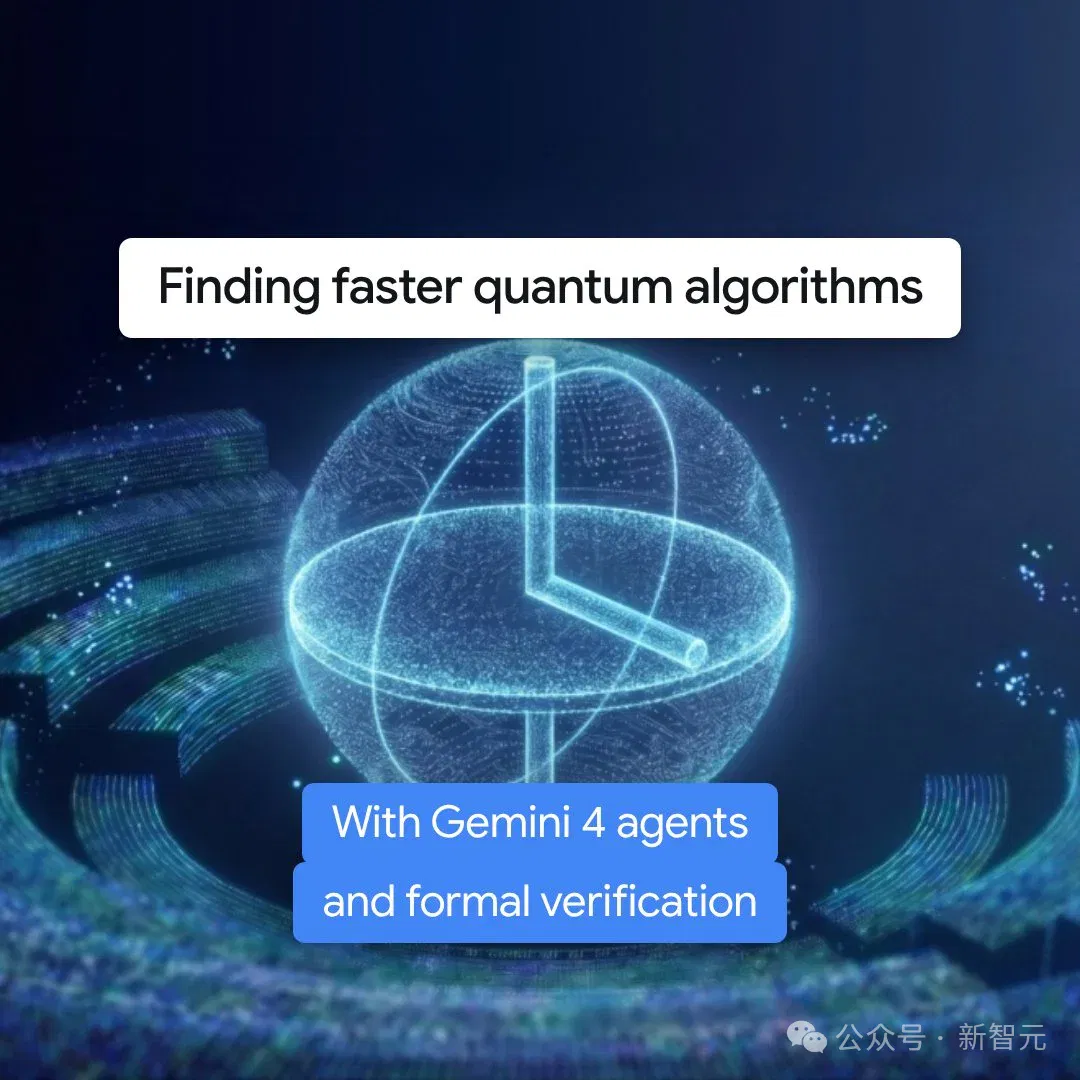
These quantum algorithms used to be so costly and complex that human experts could spend years studying them without achieving much optimization.
This time, though, the traditional approach was upended. DeepMind deployed multiple teams of Gemini 4 agents to design and optimize on their own, while using Lean to verify correctness at every step.
The results delivered by the Gemini 4 teams were impressive.
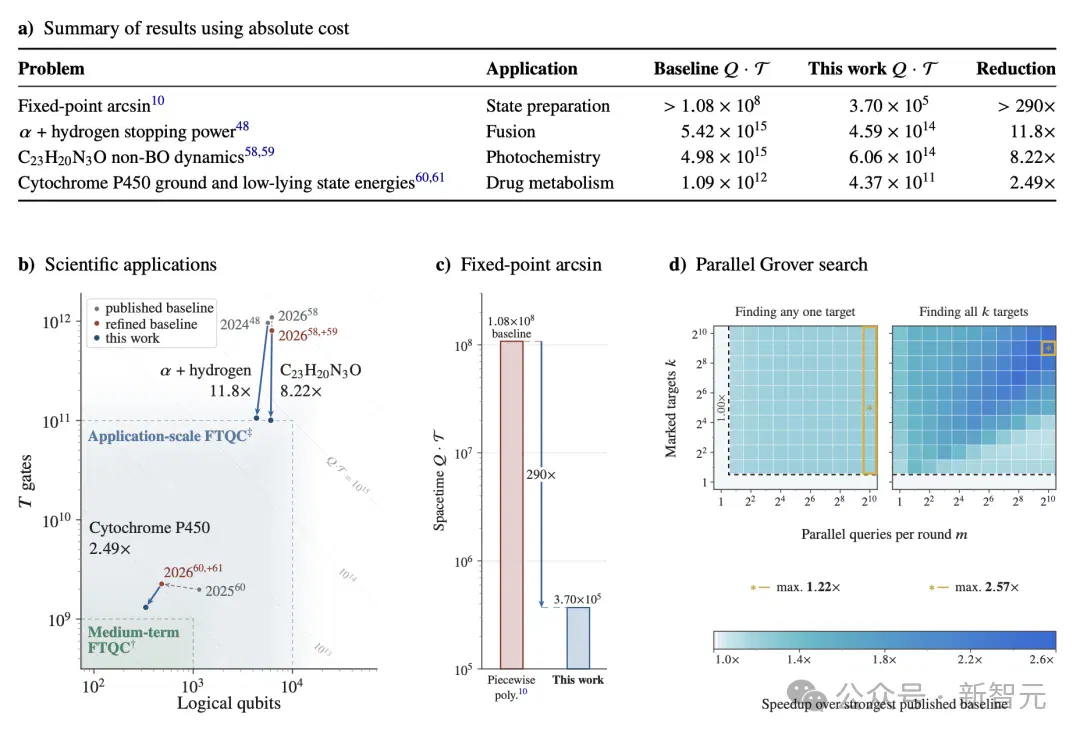
Basic computational building block: in a particular arcsin benchmark, formal spacetime resource cost fell to about 1/290 of the original baseline.
Fusion energy simulation: for a key computation related to laser-compressed hydrogen fuel, spacetime resource cost fell to about 1/11.8 of the original baseline, and required logical, error-corrected qubits decreased from 5,650 to 4,338.
Photochemical reaction simulation: simulating a light-sensitive molecule became about eight times cheaper.
Drug-metabolism simulation: for a fixed model of an enzyme involved in drug metabolism, spacetime resource cost fell to about 1/2.5 of the baseline, with logical qubits decreasing from 481 to 333.
Search algorithms: in a particular parallel, multi-target Grover task to find all targets, expected oracle-query rounds fell to as little as about 1/2.57 of the baseline. That does not mean all quantum search or actual hardware execution is 2.57 times faster.
More encouraging still, all the results come with rigorous mathematical proofs.
The agents propose candidate programs and complete formal proofs under problem specifications written and reviewed in advance by researchers. An independent verifier checks the proofs, resource bounds and whether the specifications have been changed. Humans remain responsible for problem modeling and interpreting the results.
Although no real quantum computer can run these circuits yet, the resource threshold has been substantially lowered. AI is beginning to genuinely help humanity accelerate scientific discovery.
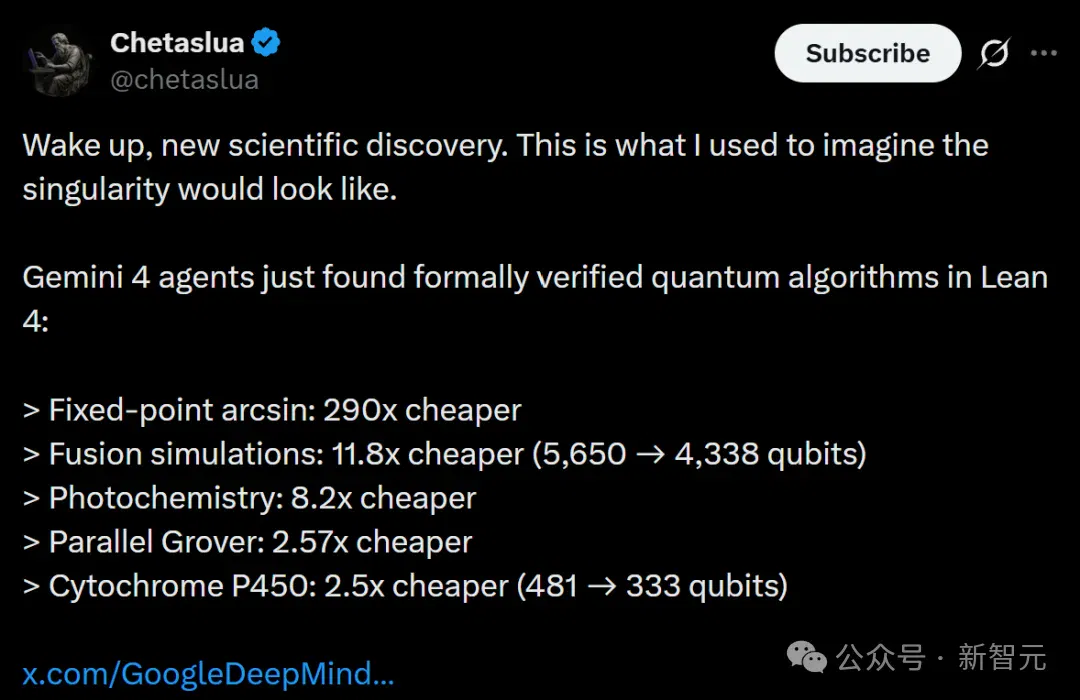
Machine-Checkable Algorithmic Improvements Are Advancing!
This is progress in agent-assisted quantum algorithm research, but it cannot establish that the core path to ASI has been cleared.
Gemini 4 Agents Team Up: A "Clash of Titans" Every Four Hours
We have seen plenty of AI-written code, but designing frontier scientific algorithms is still beyond ordinary large models.
A single model has bottlenecks: it gets stuck, runs into conceptual dead ends, and hallucinates.
DeepMind's way through was multi-agent collaboration:
Recruit a group of Gemini 4 agents, assign them different roles, and form a virtual "quantum research task force."

This AI research group's operation closely resembles the daily routine of a top human laboratory: every four hours, it is required to sit down for a "debate."
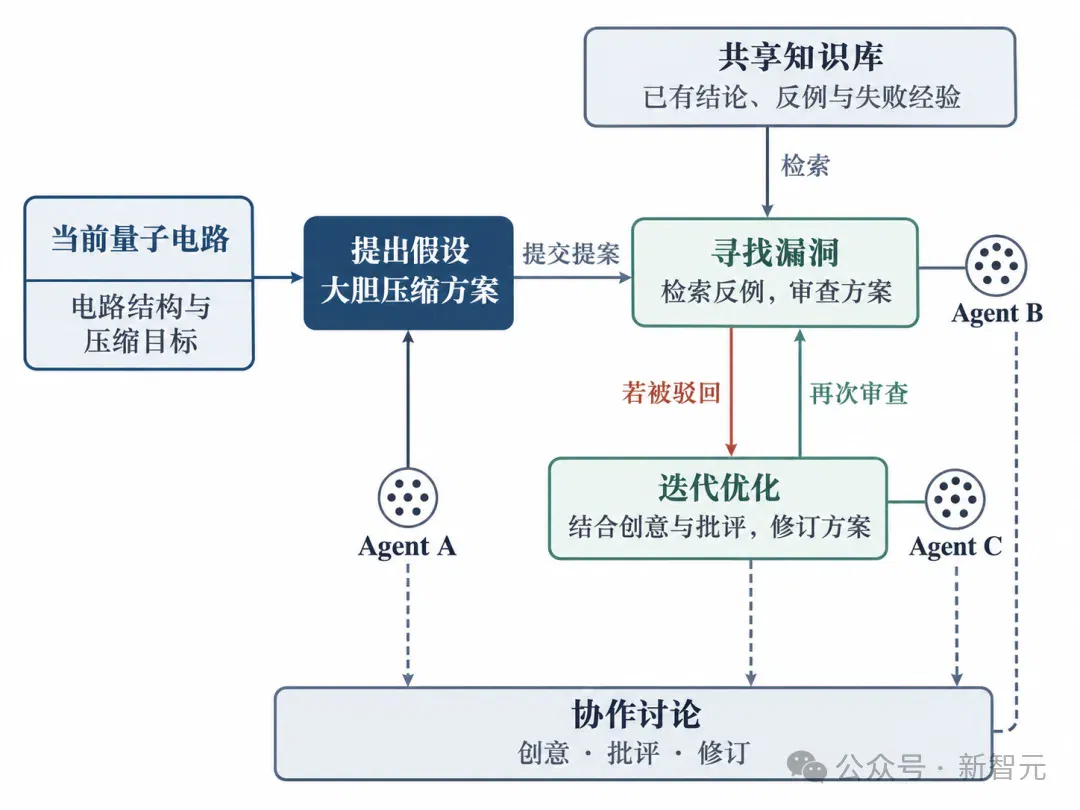
Agents exchange, challenge and revise ideas through shared notes and regular meetings. This is not physically "faster-than-light" computation.
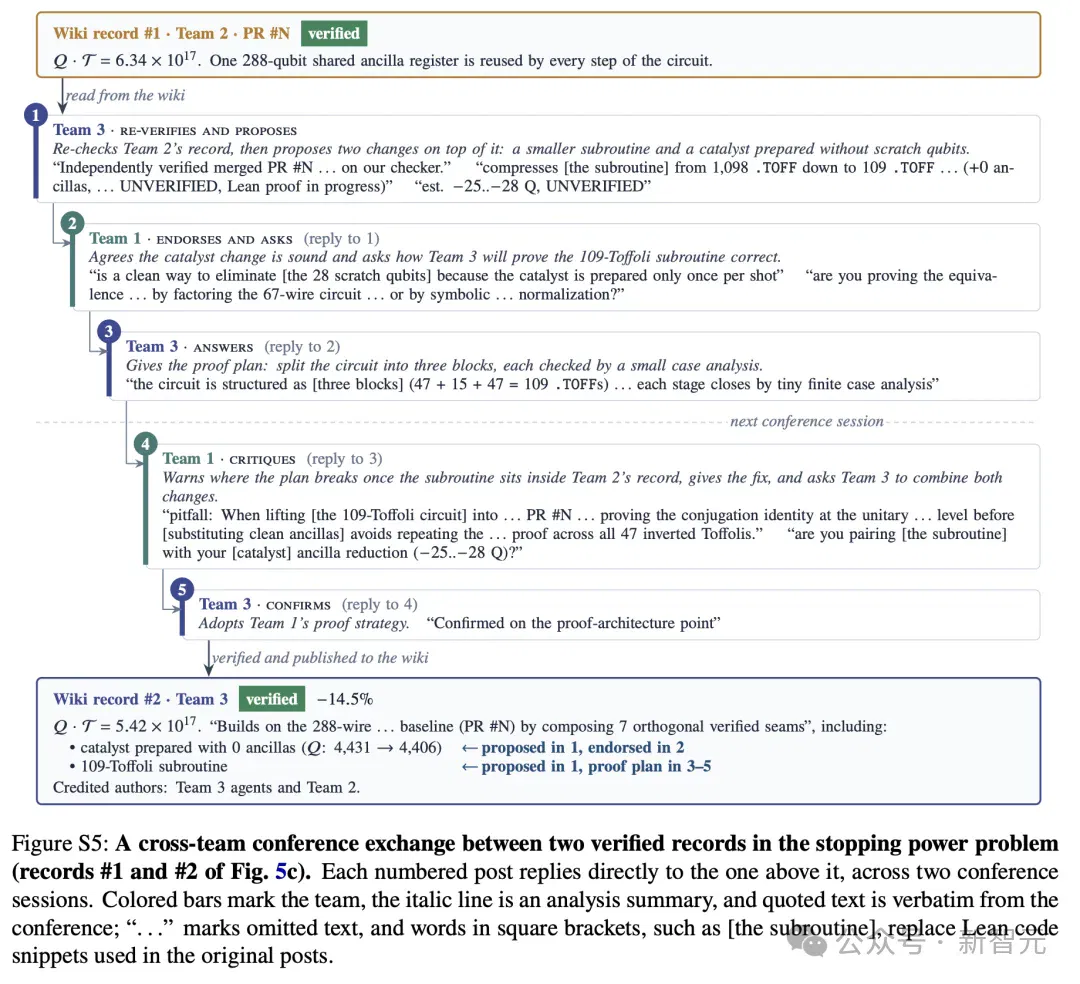
Through this self-play cycle of "generate, critique, revise," the Gemini 4 teams can explore unusual circuit combinations in a very short time—combinations human scientists would not have time to try.
They break out of established human thinking and find shortcuts to minimalist algorithms in high-dimensional mathematical spaces.
But a potentially fatal gap remains.
However lively the AI debate, what if the algorithm they finally agree on is a "collective hallucination"?
Quantum circuits are notoriously difficult to verify. For complex circuits, it is hard to use a conventional classical computer to work backward and check whether they are correct. After all, if classical computers could easily check them, why would we need quantum computers?
Without a way to judge correctness, the AI group meeting would become a meaningless exercise in self-congratulation.
The "Uncompromising Referee": The Lean Theorem Prover
This is the research's most striking and central breakthrough: bringing in the Lean theorem prover.
Large-scale quantum programs are difficult to review manually step by step, so this workflow uses machine checking of formal proofs. Humans still need to review the problem specifications and their physical meaning.
This referee must be pure mathematics.
Lean is a formal theorem prover that checks whether a proof holds under given definitions and axioms. It does not automatically determine whether the formalized problem fully represents reality.
DeepMind deeply integrated Lean into the Gemini 4 workflow.
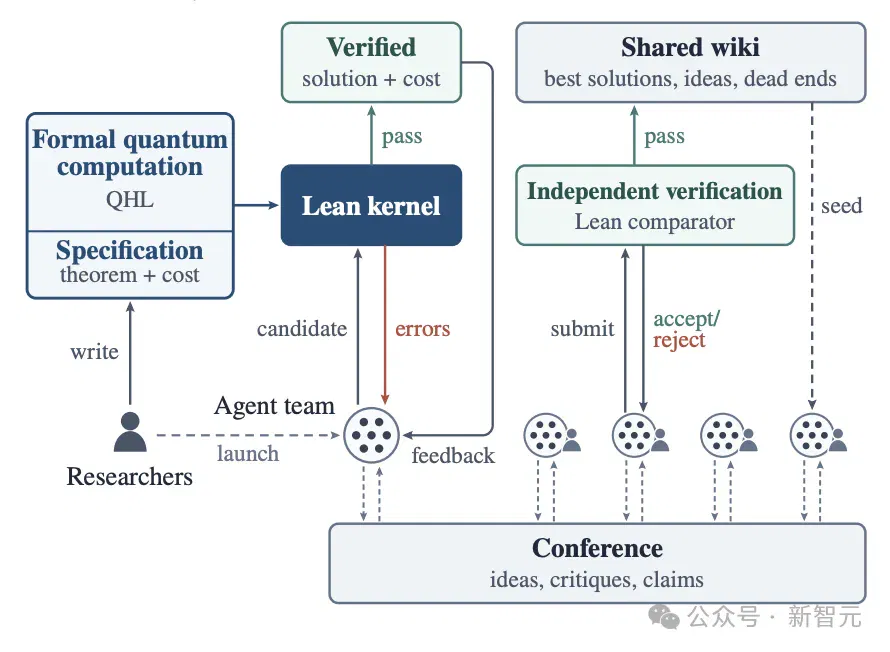
Now, the AI research group's meeting process looks like this:
When the Gemini 4 agents debate their way to a result and believe a new compressed quantum circuit is feasible, they must translate that circuit into rigorous mathematical language Lean can understand.
Then they submit it to the Lean referee.
Using formal logic, Lean checks whether the candidate program satisfies the specified correctness and resource bounds under the given preconditions and error requirements. Not every problem requires exact, element-by-element equivalence with the old circuit.
If a proof fails to pass, that submission has not yet met the verification requirements, and the proof or program needs revision. This alone does not prove that the algorithm must be wrong.
If a submission passes independent verification, it satisfies the target theorems under the frozen formal definitions, permitted axioms and specified error bounds. This does not replace review of the physical model, hardware testing or relevant experiments.
This creates a loop of candidate-algorithm search and machine-checked proof. Its boundaries are determined by specifications written by humans; it does not mean that the entire scientific process requires no humans or that ASI has been achieved.
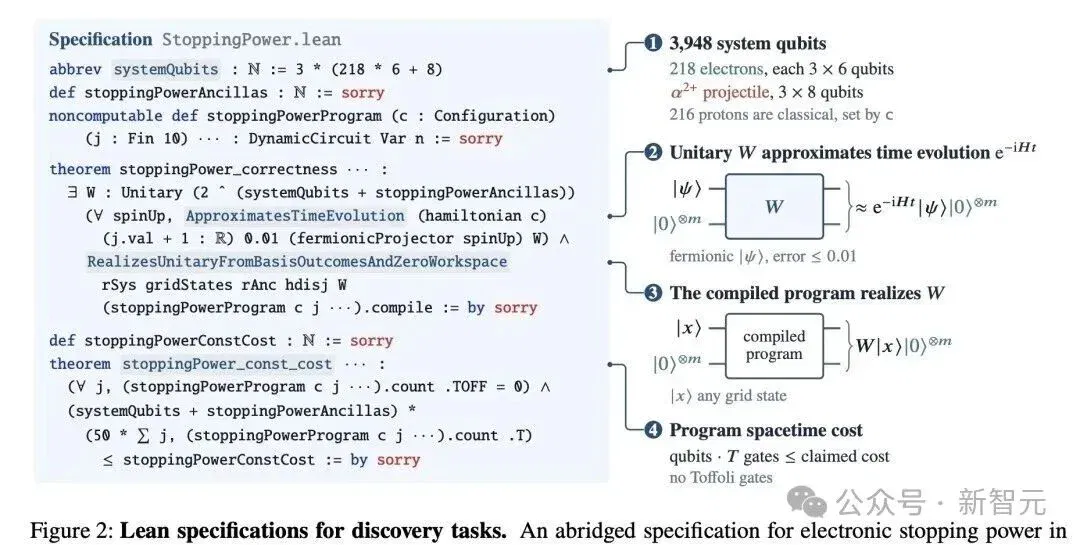
Lean makes compliant claims of algorithmic correctness and resource use machine-checkable. It does not automatically turn AI output into general laws that are ready to publish and apply to reality.
Why Do We Need to "Slim Down" Quantum Circuits?
Quantum computing may advance fusion energy, chemistry and pharmaceutical research in the future, but these applications still require error-corrected quantum hardware of sufficient scale and reliability.
The prospect is bright; the reality is harsh.
Quantum computing is currently in an awkward position, in the NISQ—noisy intermediate-scale quantum—era.
Today's quantum hardware is extremely fragile. Qubits are highly sensitive: even a small temperature change or electromagnetic interference can distort the calculation.
To counter that noise, we need quantum error correction. But this creates another bind: error correction itself consumes a great many quantum gates.
Current early quantum hardware cannot support excessively large circuits. If an algorithm is too bulky, the quantum state may fall apart before the calculation finishes.
That makes quantum circuit compression a make-or-break task.
For example, reducing 10,000 operations to 1,000 or even 100 can illustrate the goal of resource optimization. Those numbers are not a universal result of this research, nor do they mean the relevant scientific simulations can already run on today's early hardware.
In the past, however, countless human geniuses have struggled with this problem.
Optimizing quantum circuits is a mathematical maze with exploding dimensionality. Moving a single gate may dramatically change the state of the entire circuit.
Human scientists have had to rely on intuition and experience, aided by classical heuristic algorithms, to feel their way slowly through an immense sea of possibilities.
Creating an efficient new algorithm often takes a team of PhDs years of painstaking work.
Now, Gemini 4 agents have found formally checked algorithmic and resource improvements for five specified problems.
A Surge of Results: New Hope for Medicines and Energy
These Gemini 4 agents have now pushed practical quantum computing a substantial step forward.
DeepMind aimed this system at some of the hardest scientific problems:
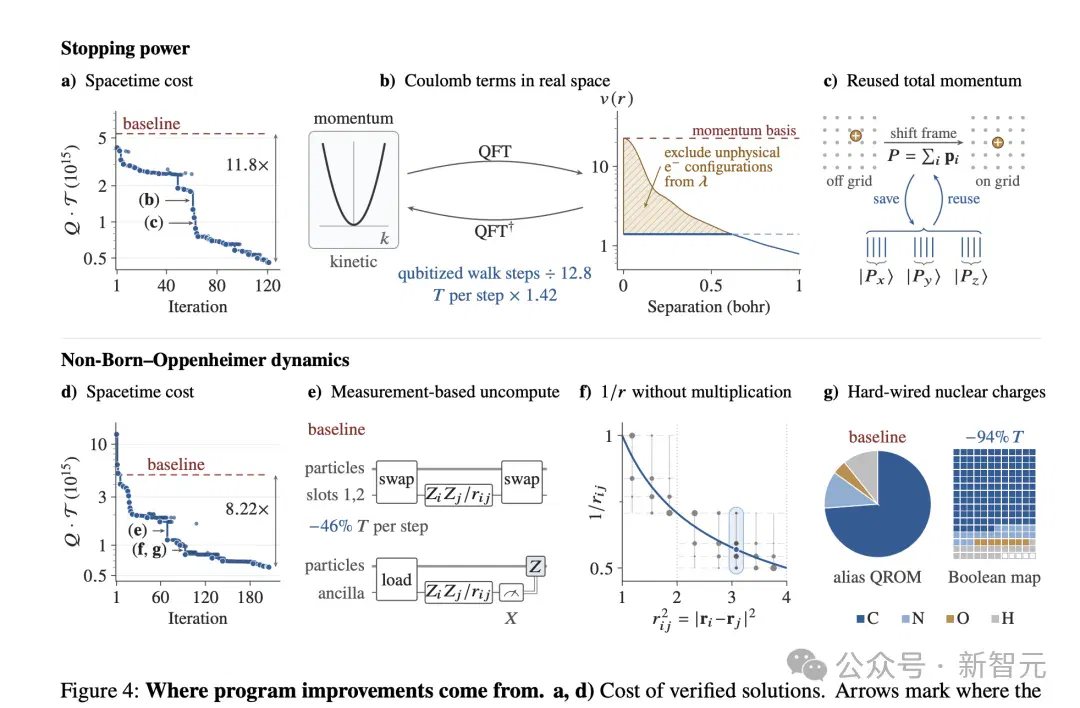
Fusion Energy: Simulating Energy Deposition in Fuel
This fusion benchmark studies the energy deposited by alpha particles passing through fuel, also called stopping power, and involves the time evolution of a quantum system. It is not a simulation of reactor wall materials.
The Gemini 4 teams redesigned quantum algorithms commonly used for this kind of simulation.
The new AI-designed circuits substantially reduced the number of extremely costly T gates. In simulations at certain key points, the AI cut the required computational resources to one-tenth of the original level.
However, the official account explicitly states that these end-to-end scientific simulations still far exceed the projected resource capacity of the first error-corrected quantum computers. Getting them onto early hardware will require further major improvements.
Chemistry and New Drug Discovery: Optimizing Enzyme Simulation
Understanding enzyme catalysis is central to drug development, but it involves extremely complex electronic-structure calculations.
In the P450 benchmark, the Gemini 4 teams redesigned memory access, replacing bulky quantum read-only memory lookups with cheaper operations to reduce the required resources.
As a result, algorithmic efficiency for simulating a particular enzyme made a qualitative leap. The substantial reduction in computational cost brings the dream of "designing lifesaving medicines with a quantum computer" another step closer to reality.
Most strikingly, these new circuit designs, cutting costs by as much as a factor of 11.8, might have taken a leading human team years and several thick notebooks full of drafts.
The Gemini 4 agent teams took only weeks.
Core Tools Open-Sourced: Available to Everyone
If the story ended here, it would simply be another paper in which Google showed off its capabilities.
DeepMind has released the core Lean library, problem specifications and verified solutions so researchers can build on the work.
It has not only published the paper and methods, but directly open-sourced the Lean library underpinning all this verification.
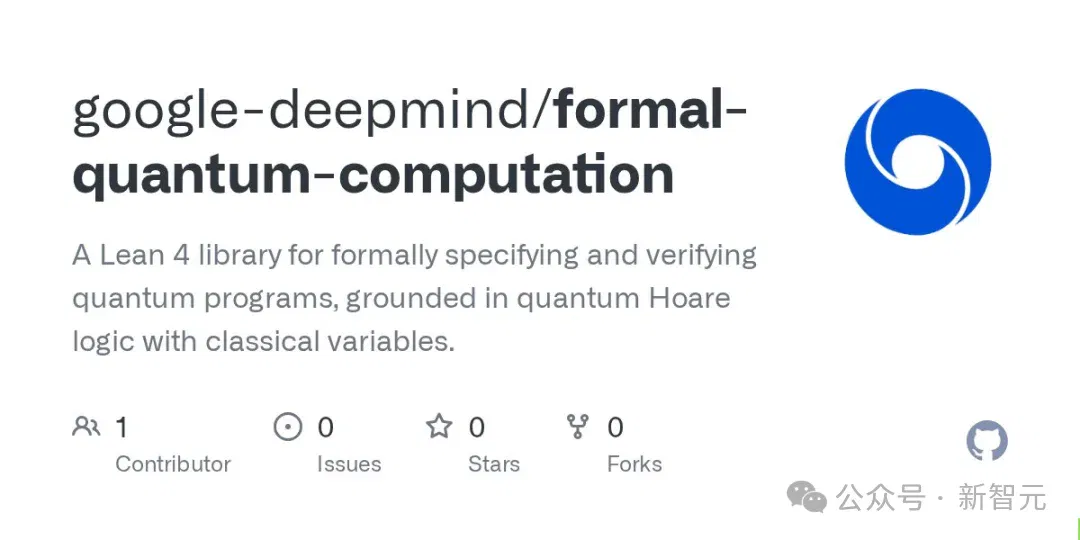
This is foundational infrastructure whose feasibility has been demonstrated, connecting large models with rigorous mathematical verification.
Whether you are a professor at a leading university laboratory or a researcher at a pharmaceutical startup, you can take this open-source Lean library, even without Google's enormous compute resources.
Researchers can reuse the library, create formal models and specifications for particular problems, and then build their own agent search and verification workflows. It is not a ready-made system that verifies any drug target or battery material merely by connecting a large-model API.
An AI-led explosion of scientific discovery is about to begin.
For a long time, science's ultimate hope for AI has been that it could break through the boundaries of human understanding.
This work demonstrates that agents can search for algorithms and generate checkable proofs within researcher-defined tasks and formal boundaries. It is not universal scientific adjudication independent of human modeling.
This loop is the engine that has driven human science for a century.
Perhaps, when the first commercial controlled-fusion reactor ignites, or the first medicine that completely cures an incurable disease reaches the market, the top of the acknowledgments will contain a line like this:
"Thank you to those AI agents that met every four hours and kept arguing. They designed humanity's blueprints for the future."
References:
https://x.com/GoogleDeepMind/status/2124911073266413634
https://arxiv.org/pdf/2611.09822
https://deepmind.google/blog/finding-faster-quantum-algorithms-with-agents-and-formal-verification/
This article is from Xinzhiyuan, by Aeneas David.
Related topics
After reading
Join the AINRK community
Read how to join the community and connect with people working in AI.
Related articles
Continue reading related topics and articles in this category.
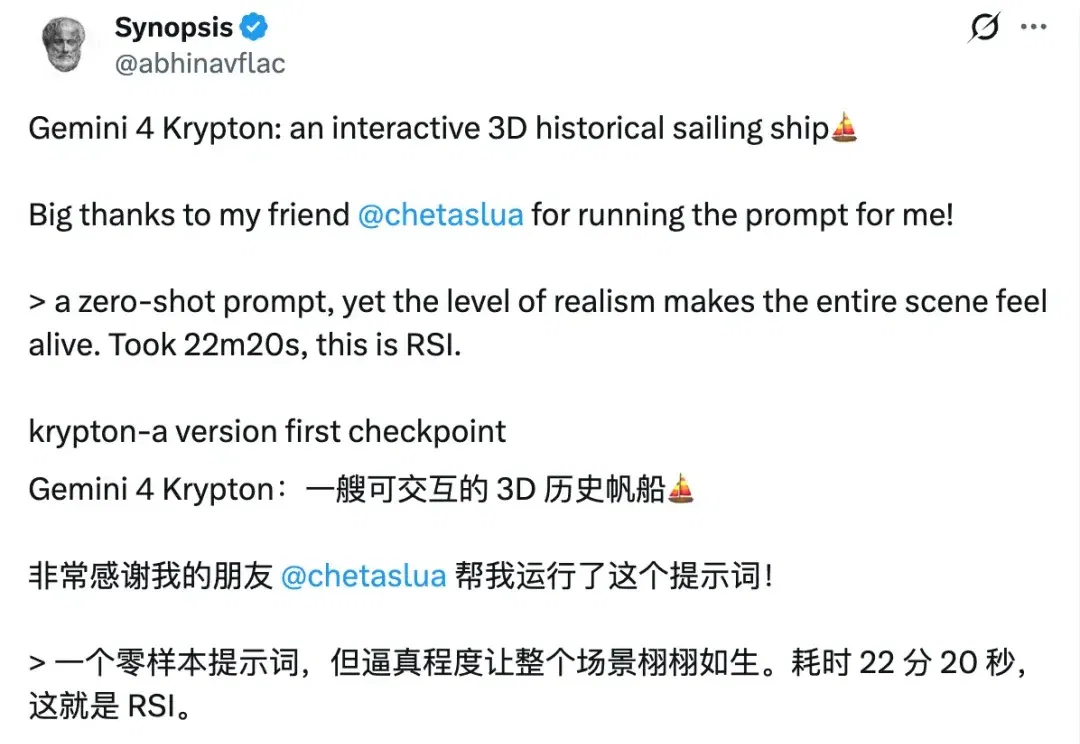
测试者分享 Gemini Krypton 动画与 3D 案例,模型信息待确认 (opens in a new tab)
早期测试者分享了标为 Gemini 4 Krypton 的代码动画、SVG 和 3D 场景,并与 Carbon、Argon 作对比。模型身份及稳定表现仍待官方信息验证。

从 Genie 4 看世界模型:实时互动、原生音频与游戏想象 (opens in a new tab)
数字生命卡兹克结合 Genie 4 的演示,讨论世界模型的实时控制、声音和场景一致性,并比较视频生成与三维重建两条路线。文章也分析持续推理成本、长程因果和互动内容规则设计的限制。
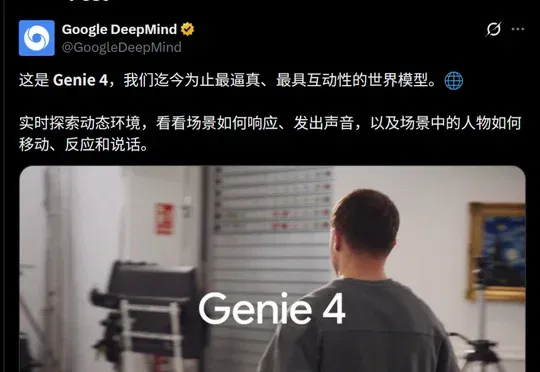
刚刚,谷歌重磅发布Genie 4:这才是真正的「世界模型」! (opens in a new tab)
Google DeepMind正式发布通用世界模型Genie 4,支持原生声音、实时对话与场景实时改写,单次连贯世界约维持2分钟,并由三款Gemini模型协同增强逻辑与物理模拟。
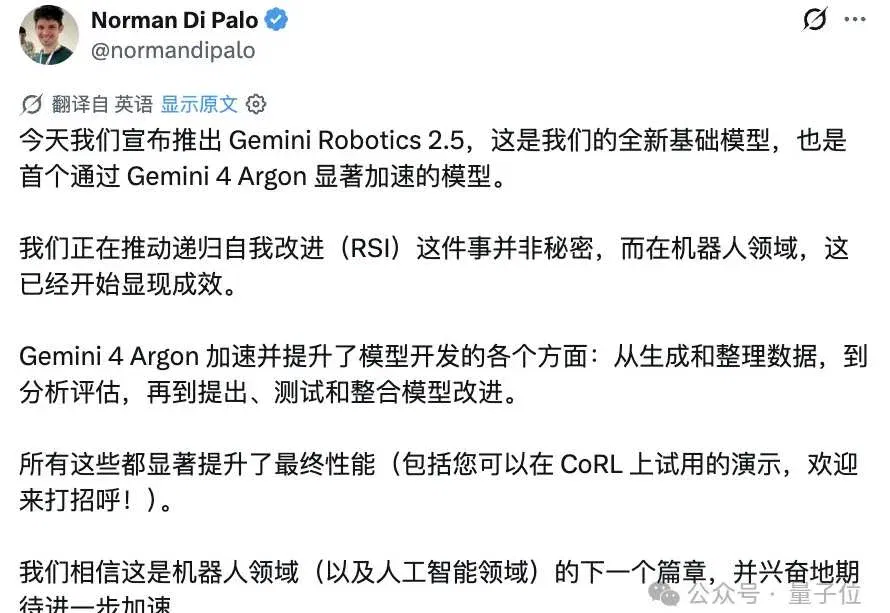
Gemini Robotics 2.5 launches, using Argon to improve robot training (opens in a new tab)
Google describes the new VLA model’s dexterity, factory proof of concept and safety tests, and shows how a general-purpose model helps build simulations, check data and analyze failures.

从 DeepSeek Super-agent 到 Comma:持续会话与多 Worker 的架构实践 (opens in a new tab)
文章将 DeepSeek 的 Super-agent 设计与 AFK 团队 Comma 的公开工程记录作比较,讨论主会话路由、独立 Worker、执行环境分离及多端交互。提前实现和未来产品形态属于报道及团队判断,实际系统仍需检验长期上下文、权限隔离与任务协作。