Ant Ling launches the LingSante health-model family and releases two core models’ weights
Ant introduces LingSante, releasing weights for 560B flash and 124B air-VL alongside Afu video interaction and doctor tools. The article’s examples and developer benchmarks do not establish clinical validity; deployment needs suitable hardware and professional review.
Editorial fact-check (November 24, 2026): The cases, photos and video interactions here are the author’s experiences or simulated examples, without clinically confirmed ground truth. They cannot establish diagnostic accuracy or superiority to other products. Official model cards for the two open-weight models specify research use and review by qualified professionals; they are not medical devices and cannot independently make diagnoses, prescribe or determine treatment. Benchmark results do not establish clinical efficacy either. Local deployment requires checking precision, GPU memory and inference settings; it does not mean full 560B- or 124B-parameter models can all run on ordinary laptops. Predicting six-year risks for 150 diseases remains an exploratory direction reported in the article. The public Pulse asset is a signal encoder without a task-specific prediction head, not a complete disease-risk prediction product ready to use. Ant’s official model-family announcement (opens in a new tab)LingSante-3.1-flash model card (opens in a new tab)LingSante-3.1-air-VL model card (opens in a new tab)LingSante-Pulse-1.0 public asset description (opens in a new tab)
Helping AI think like a doctor.
What! AI could tell at a glance that I was sleep-deprived?
This is what happened: after staying up all night the previous day, I had slept only three hours, then rushed to the airport just after six the following morning. Across two consecutive days, I had slept only eight hours in total.
Then I made a video call to Ant Afu.
To my surprise, Afu noticed my tired appearance and pronounced bags under my eyes, and reminded me to rest properly.
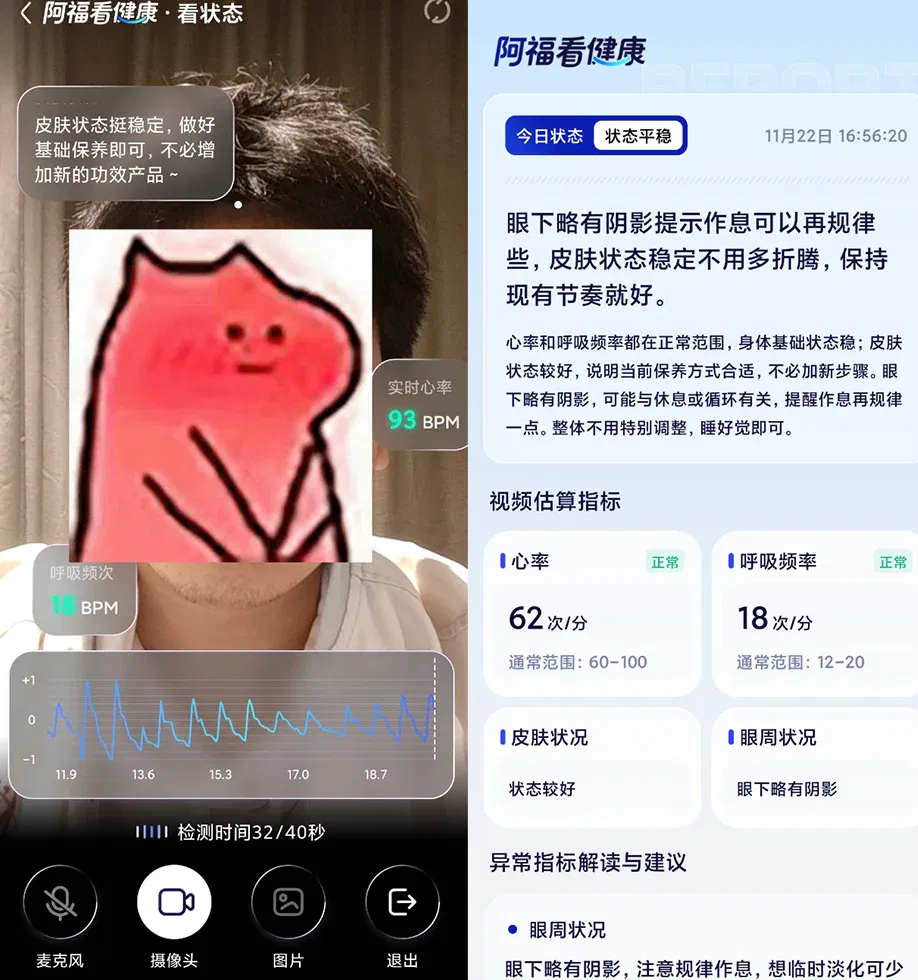
It was rather interesting. Communicating while looking directly at the user really does feel different from traditional text questions and answers.
This is the video-calling feature in the new Ant Afu app, supported by LingSante Live’s real-time multimodal interaction technology.
And it is just the tip of the iceberg of Ant’s work in healthcare AI.
On November 22–23, the Ant Afu Healthcare Ecosystem Conference took place in Guangzhou. Ant presented a series of advances from underlying healthcare foundation models to AI applications and intelligent hardware.
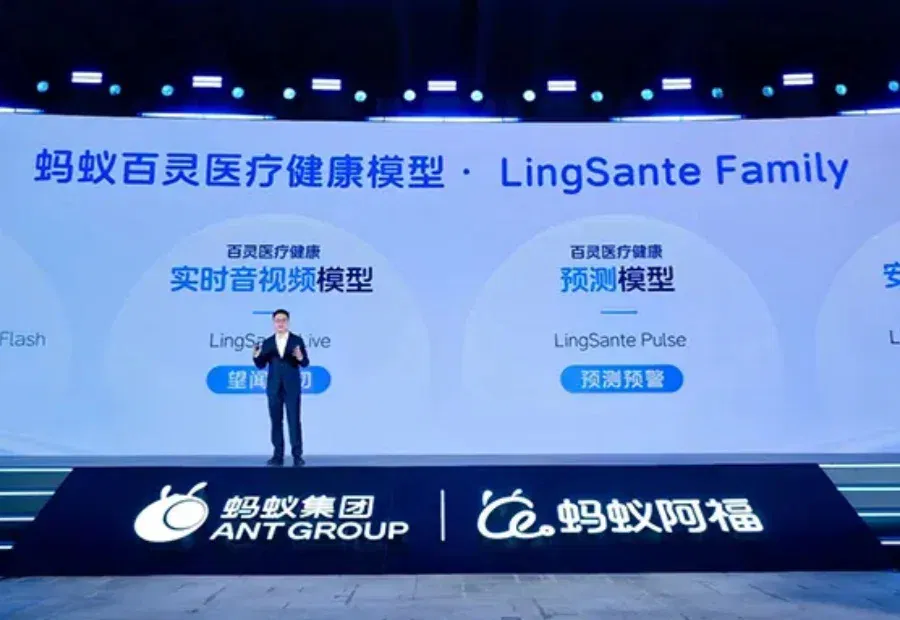
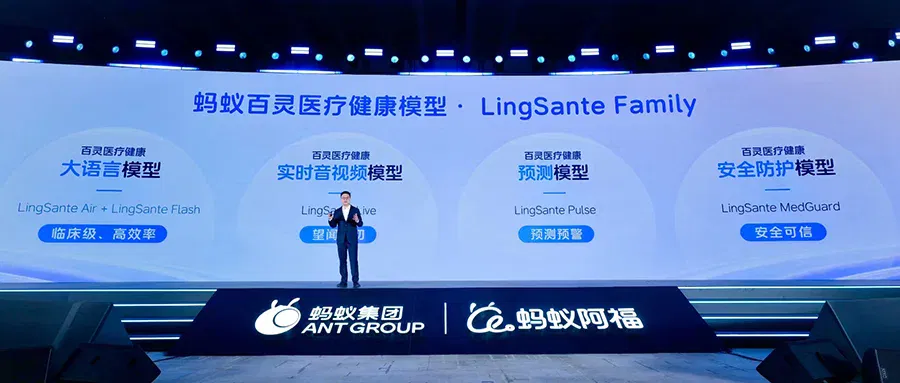
Among them, Ant Ling’s LingSante healthcare model family formally debuted, spanning large language models, real-time audio-video models, health-prediction models and safety models, among other areas.
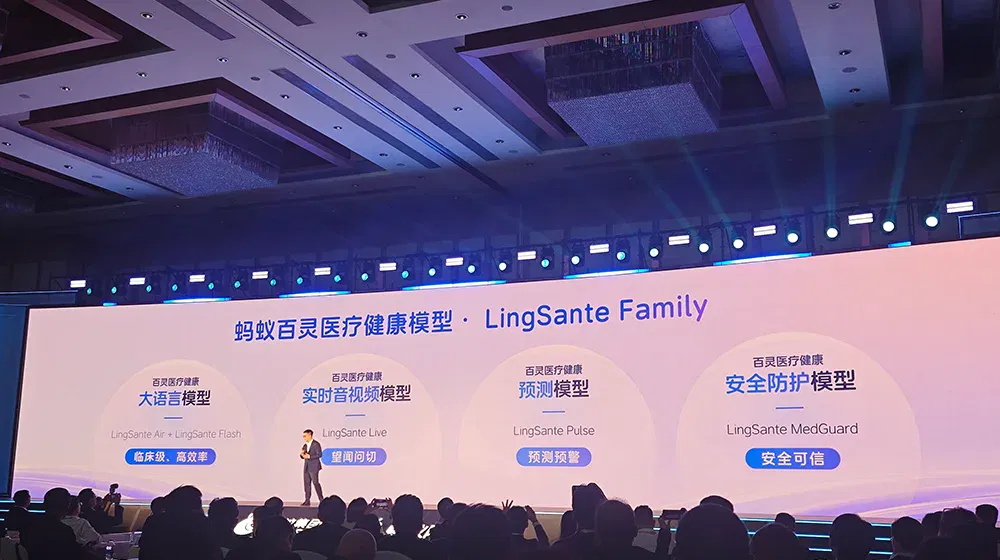
On the model side, the main highlights were two newly released open-weight core healthcare models: LingSante-3.1-flash has 560B total parameters and specializes in complex medical reasoning; LingSante-3.1-air-VL has 124B total parameters and primarily targets medical multimodal understanding.
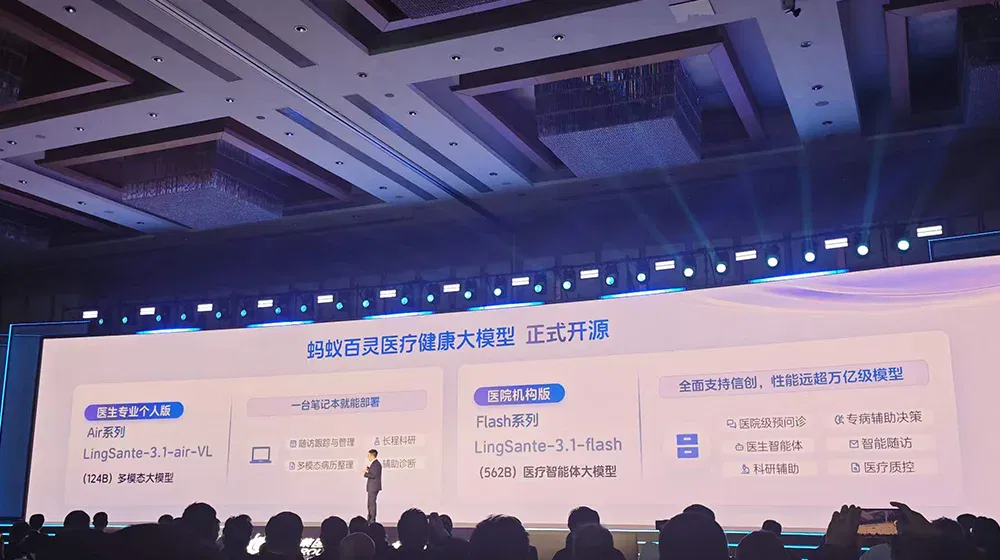
On the application side, Ant Afu was upgraded to version 2.0, moving further toward a Personal Health Agent. Beyond using real-time audio and video interaction to offer a digital counterpart to traditional medical observation, listening, questioning and examination, Afu can collaborate with human doctors and connect users to online consultations, appointment bookings, medical care and medicine purchases.
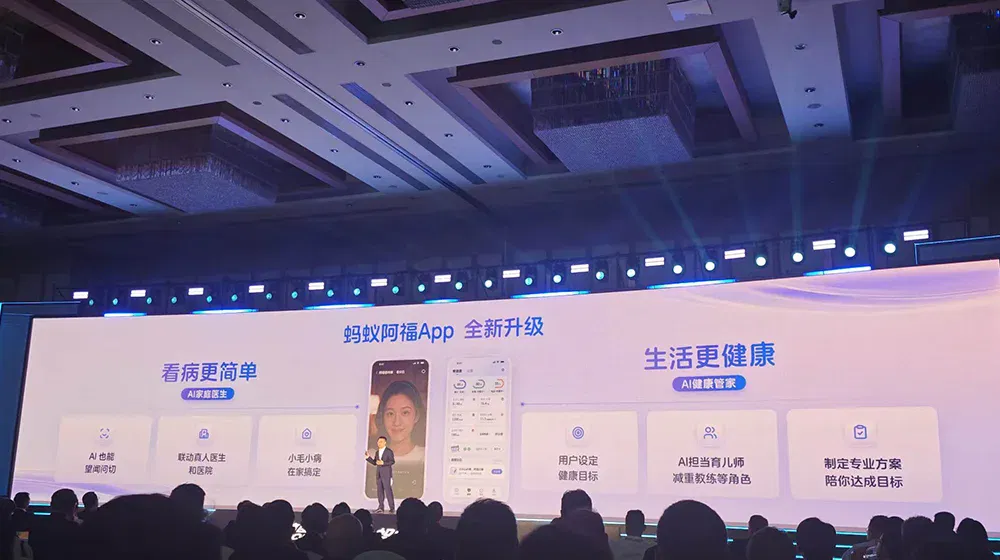
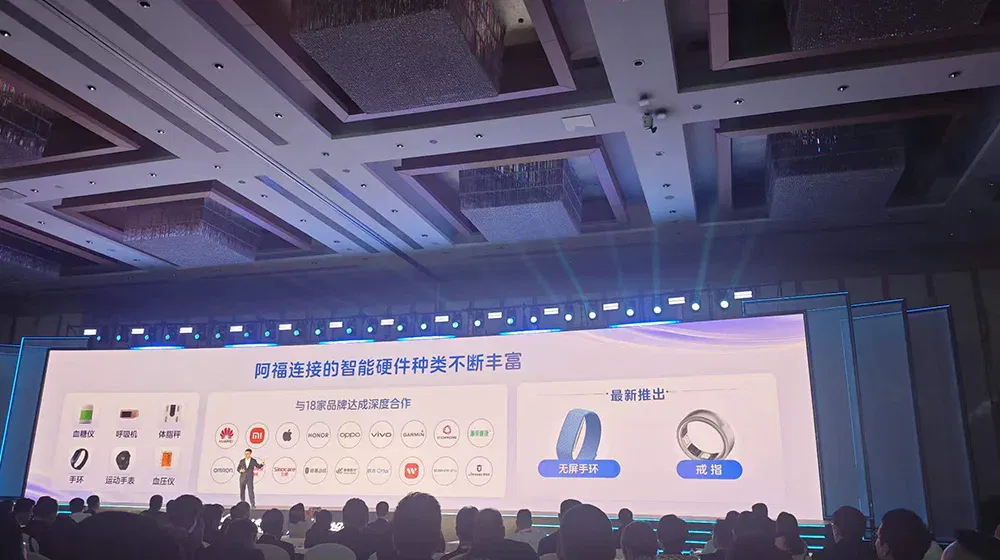
Ant also introduced two new wearables—a screenless wristband and a ring—as well as an Afu PC workspace for doctors, aiming to extend AI health services into daily monitoring and clinical work.
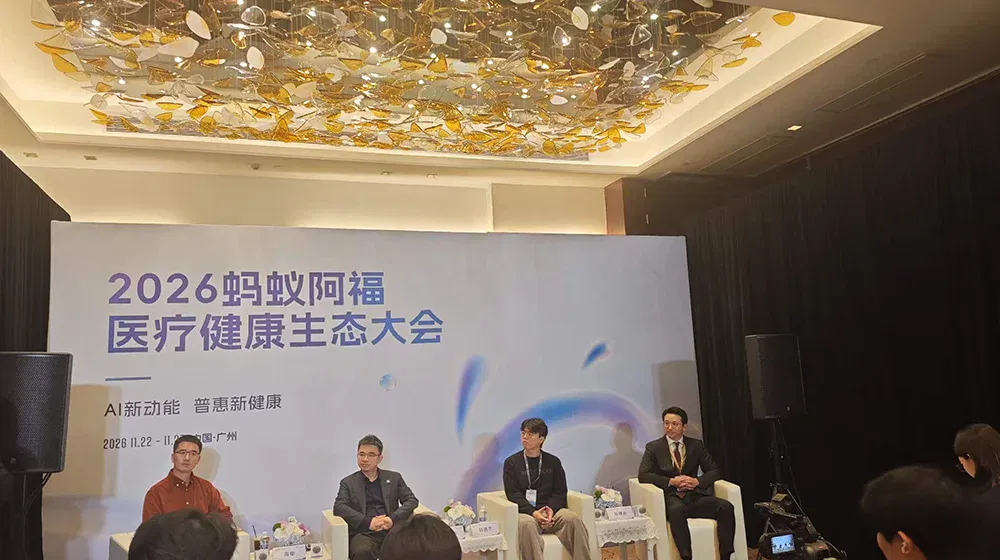
In an interview with Zhidx and other media, Ant Group CTO He Zhengyu said Ant hopes to use the best technology to make products accessible to the widest population.
From consumer health assistants and intelligent wearables to professional tools for doctors and deployable healthcare foundation models, Ant is indeed trying to build a system of AI technologies and services covering different health needs.
With considerable curiosity, Zhidx also conducted hands-on trials of Ant Afu’s agent and the two core healthcare models, examining their capabilities from an ordinary user’s perspective.
01.
Trying Ant Ling’s healthcare models:
Video health consultations and complex medical reasoning
First, consider ordinary users’ most familiar health-consultation scenarios.
Besides the fatigue example at the beginning, we prepared an ultrasound report concerning a finger-joint cyst and asked Afu and ChatGPT to explain the findings separately, observing their understanding of medical terminology and report information.
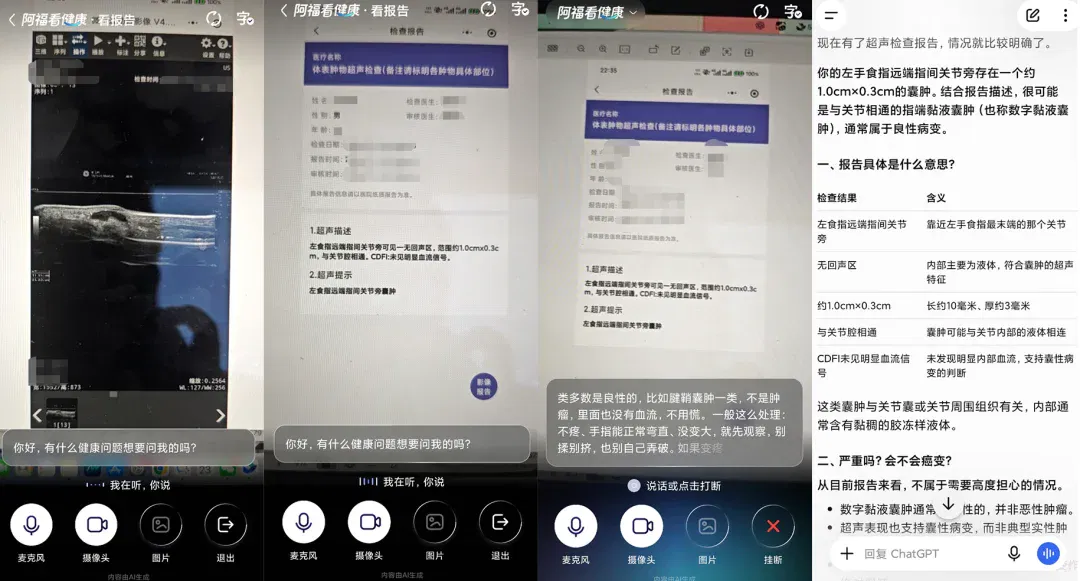
Both products recognized the report’s main information and explained it. One advantage of Afu, however, is its support for video interaction.
We can show Afu reports, test results or body parts directly over a video call and ask questions while looking at them. Compared with conventional text-based interaction, this feels closer to a face-to-face conversation.
Next, we uploaded a scalp photo showing scattered small red bumps, white pustules and localized redness, asking each product what the problem might be.
Combining the photo with information such as my age and gender, Afu suggested that folliculitis was likely, then offered care, medication and medical-visit suggestions, along with an option to invite a doctor from a Grade III Class A hospital for further confirmation.
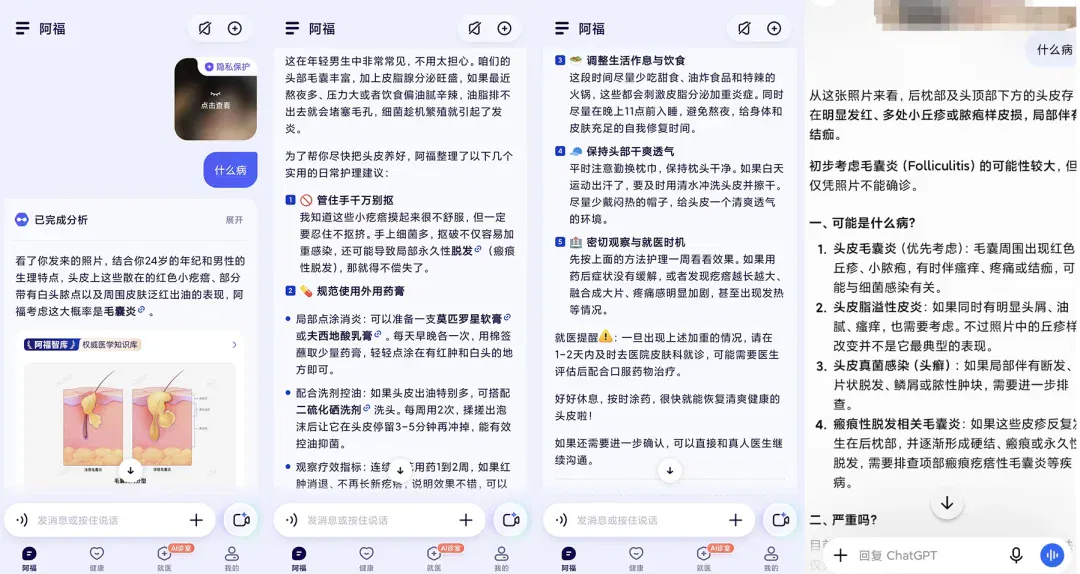
To me, Afu felt like a face-to-face health consultation, with service entry points from assessing the issue to seeking a solution. ChatGPT’s response, by comparison, leaned toward academic medical analysis, discussing more possibilities in broader terms.
In the second round, our photo showed a patch of dark-red to purplish rash and scabbing. We provided no specific medical history, asking Afu to analyze it directly.
It initially suggested eczema and herpes simplex, leaning further toward herpes simplex.
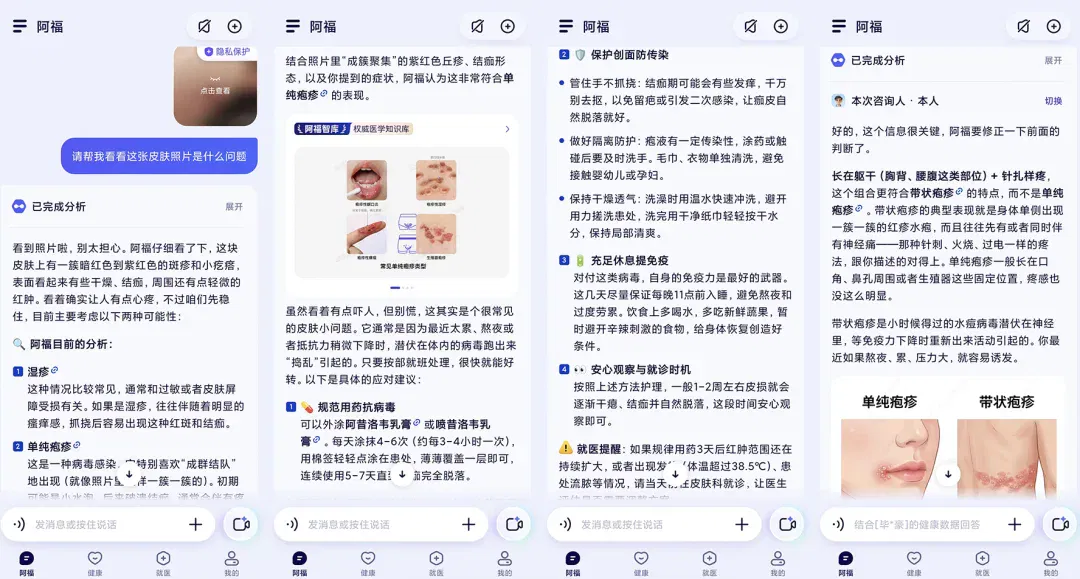
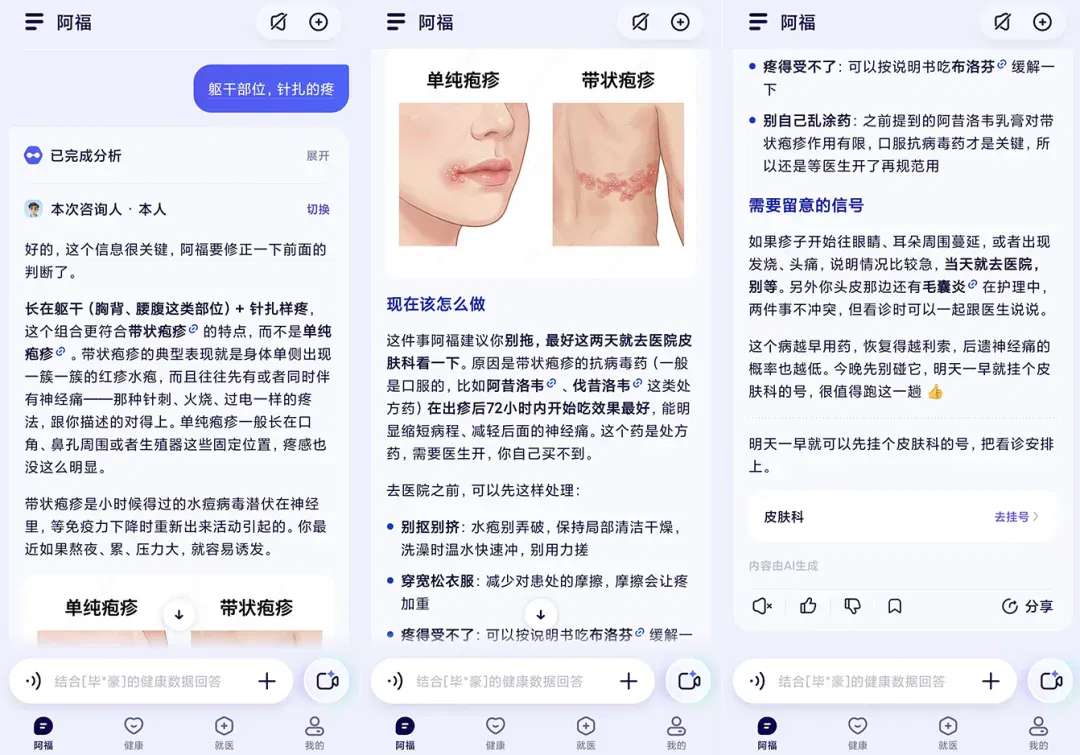
We then added two details: the rash was on the torso and accompanied by needle-like pain. Afu immediately said, “That information is important,” proactively revised its earlier assessment and suggested considering shingles, recommending prompt dermatology care and providing an appointment-booking option.
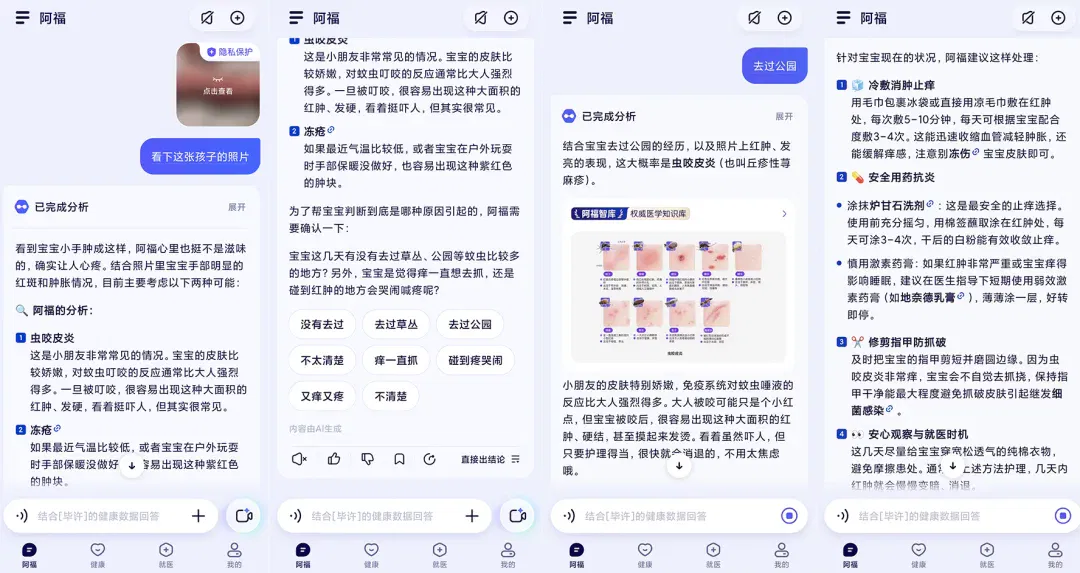
We also uploaded a photo of a child’s swollen, red finger and asked Afu to analyze possible causes.
Afu initially suggested insect-bite dermatitis or chilblains, and proactively asked whether the child had visited a park, grassy area or similar place, and whether the affected area mainly itched or hurt.
After we selected “visited a park,” Afu leaned further toward insect-bite dermatitis, or papular urticaria, offering suggestions such as cold compresses and avoiding scratching, along with advice about seeking medical care.
Next, we tested Ant’s 560B healthcare model, LingSante-3.1-flash, creating a simulated 57-year-old male patient for a progressively more detailed clinical consultation. We gradually supplied medical history and simulated test data, observing whether the model could investigate underlying causes further.

In this example, LingSante-3.1-flash continually picked up new symptoms during the conversation and revised its assessment. Even with some misleading and ambiguous information, it could organize the symptoms clearly.
Beyond complex cases, we also asked LingSante-3.1-flash to search medical literature on the same question, prioritizing professional guidelines and PubMed papers, citing sources and comparing different studies’ conclusions.

In the output, LingSante-3.1-flash listed seven relevant pieces of medical evidence, further distinguished their contents and organized them into an evidence-based medicine briefing.
The overall hands-on impression was that Ant’s healthcare AI is trying to combine multimodal interaction, professional medical capabilities and actual health services, covering needs from consumer health advice to specialist medical research.
However, the practical performance of medical AI still has unresolved problems.
In on-site interviews, Zhidx asked about errors in recognizing rare skin diseases and the precision of video-image recognition.
Gu Jinjie, CTO of Ant’s healthcare business group and head of the Ling healthcare models, acknowledged that visual-model resolution remains limited and some complex skin conditions are difficult to judge from one photo alone. Accordingly, Afu emphasizes proactive follow-up questions, gradually refining assessments with additional symptoms, pain locations and other information.
He Zhengyu added that models still handle many unusual cases poorly. Therefore, Afu’s design encourages users to contact human doctors for a second or further checks to reduce misjudgment risks.
This means Afu does not aim to give instant conclusions on every issue. It seeks to reduce the risk of AI mistakes through proactive questions, repeated checking and referral to human doctors when necessary. For healthcare products, knowing when not to draw a conclusion solely from AI is also an important capability.
02.
From “answering questions” to “thinking like a doctor”
Ant reveals its healthcare-model technology
Ant announced a striking set of evaluations of its healthcare models’ professional capabilities.
Across a combined set of 17 healthcare evaluations, LingSante ranked third with 61.1 points, close to GPT-6 Astra’s 62.3 and slightly above Claude Opus 5.5’s 60.9.
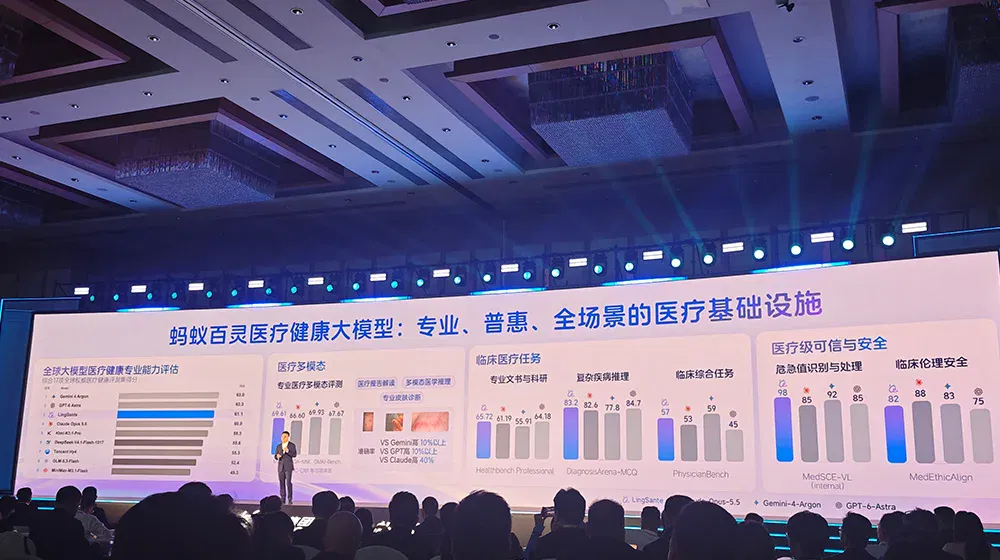
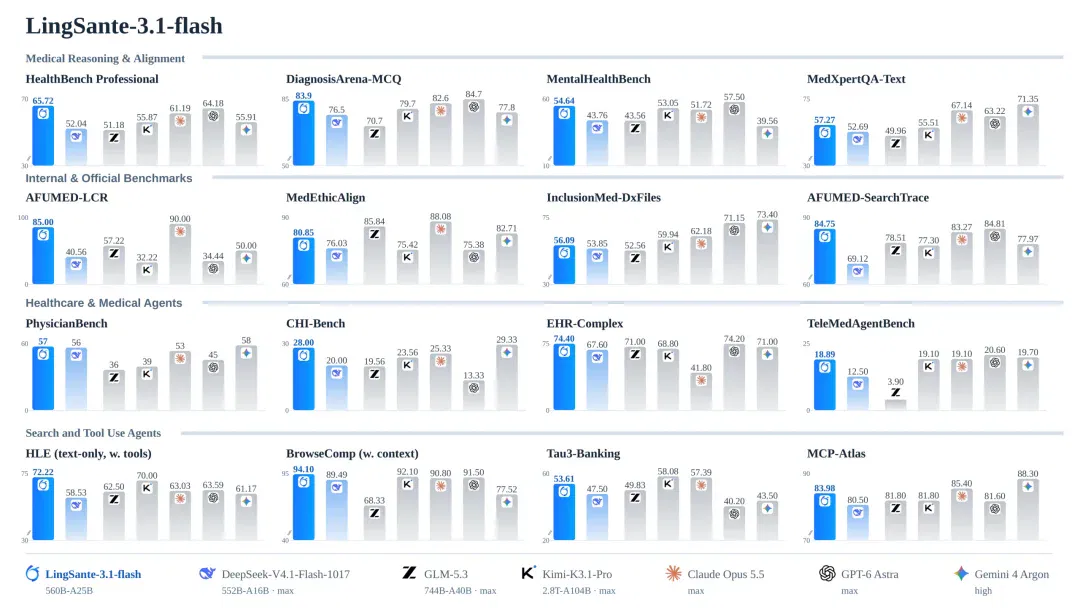
Specifically, on HealthBench Professional, LingSante-3.1-flash scored 65.72, above GPT-6 Astra’s 64.18 and Claude Opus 5.5’s 61.19. On DiagnosisArena-MCQ, an evaluation of complex disease reasoning, it scored 83.9, close to GPT-6 Astra’s 84.7.
The 124B LingSante-3.1-air-VL showed some advantages in medical visual understanding. On the skin-disease recognition evaluation AFUMED-Derm, it scored 70.01, ranking first ahead of several leading overseas models. On the medical-report understanding evaluation AFUMED-Report, it scored 90.70, also ahead of GPT-6.1 Sol and Claude Opus 5.5 and in first place.
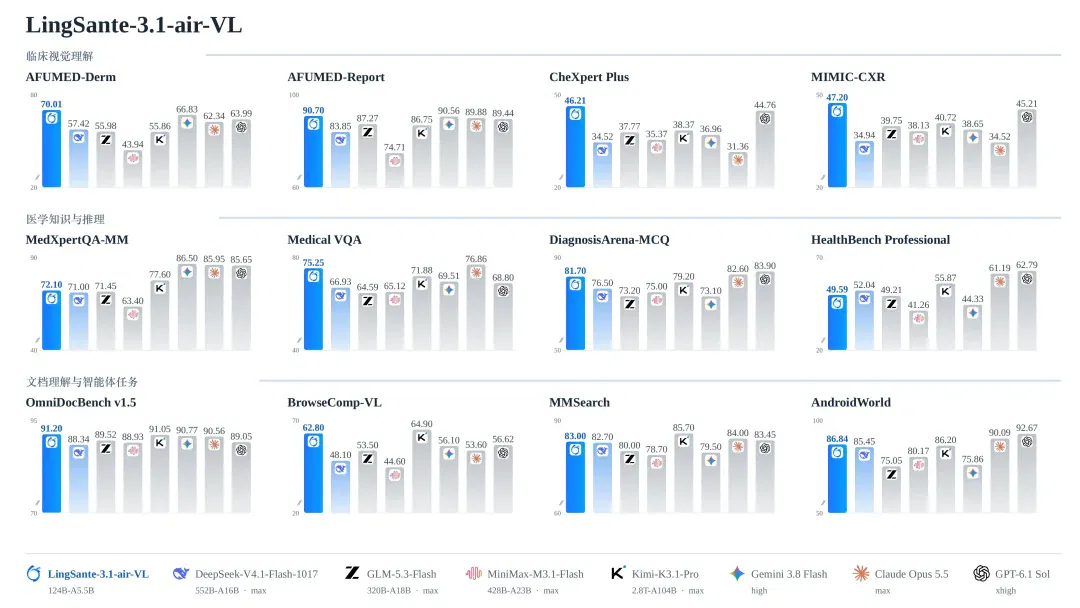
According to the introduction, both healthcare language models were trained on Ant’s Ling model system and specialized for medical settings. The 560B model focuses on complex medical reasoning, while the 124B model emphasizes medical multimodal understanding.
High scores on medical evaluations do not, however, mean a model can independently undertake clinical diagnosis and treatment.
Professor Chen Xiuyuan, an associate chief physician in thoracic surgery at Peking University People’s Hospital, said doctors value the truthfulness of information most when using AI. Moving from medical-knowledge evaluations into actual hospitals also requires addressing human-AI collaboration and practical efficiency.
Besides professional medical capabilities, real-time interaction is a key focus of this upgrade.
We already tried Afu’s video-calling feature. The underlying LingSante Live supports full-duplex interaction, continuous multimodal perception, dynamic guidance and background agent planning.
Specifically, AI can not only respond while listening to the user, but also continually understand video and speech, adjusting its questions to the user’s condition and conversation and calling background agents when necessary to help with subsequent tasks.
Health prediction is another direction worth watching.
The Ling-Pulse-1.0 health-prediction model disclosed by Ant is exploring prediction of the risk of developing 150 diseases over the next six years, spanning eight major areas including cardiovascular, neurological, respiratory and infectious, and mental and psychological conditions.
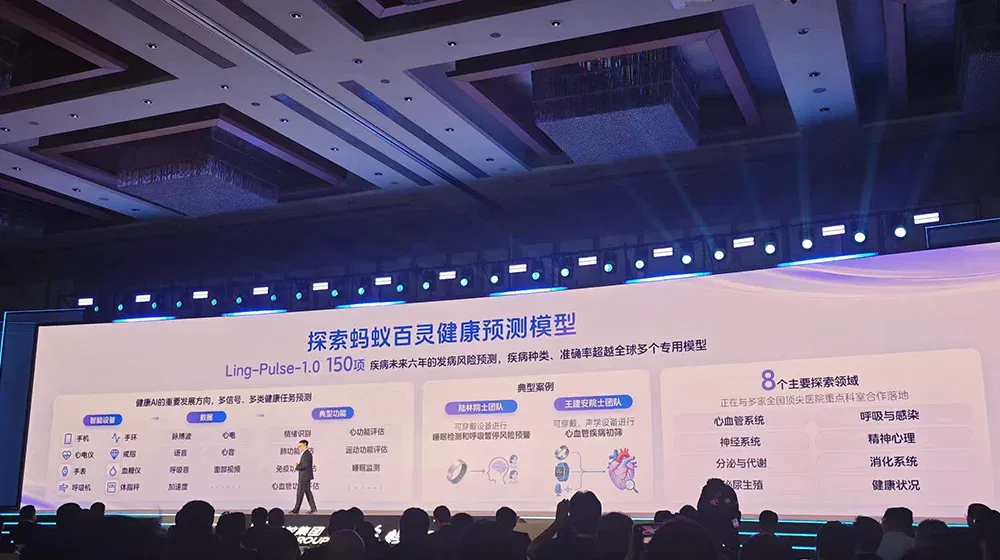
Finally, for medical safety, Ant also demonstrated the LingSante MedGuard safety model, addressing risk identification, compliance and ethical safety in medical content.
From real-time audio-video interaction and multimodal understanding to complex medical reasoning and safety protection, the conference presented a combination of technologies for different healthcare tasks.
03.
Specialist healthcare models move toward real-world use
Ant Ling maintains its capability-to-efficiency approach
Beyond model capability, another focus of the announcement was open release and deployment of healthcare models.
At the conference, Ant formally released open weights for LingSante-3.1-air-VL and LingSante-3.1-flash, addressing different settings such as individual doctors and medical institutions, respectively.
For healthcare institutions and developers, opening the models enables customization for actual business needs and creates more deployment choices for specialist healthcare AI in different environments.
Asked why release them openly now, Gu Jinjie explained in the interview that broad access to healthcare foundation models is approaching a turning point.
He said some hospitals’ previously purchased all-in-one large-model appliances had been underused because of high computing requirements and inference costs.
Now, as model execution becomes more efficient, some smaller medical institutions may also gain model inference capabilities through laptops or local equipment, while better protecting patient privacy.
Gu sees open release as a commitment to developers and partners, meaning Ant will continue investing in healthcare-model research, development and iteration.
Beyond underlying models, Ant is also improving practical medical-AI applications.
For doctors, Afu’s physician edition introduces a PC workspace with 12 medical skills, including intelligent medical-record generation, AI clinical decision support and a paper-writing assistant, and integrates the evidence-based clinical decision-support tool UpToDate.
For ordinary users, the upgraded Afu app strengthens collaboration with human doctors and works with 18 hardware brands to connect wearables and monitor health data further.

However, taking these models and products into real settings still requires balancing model capability and execution efficiency, the issue Ant Ling has consistently described as its “capability-to-efficiency ratio”.
Rather than simply pursuing parameter counts or leaderboard scores, this approach focuses on the relationship between capability, computing resources, inference efficiency and actual cost.
Ant Ling has already made some progress with general-purpose models.
This October, it released Ling-3.1-flash-1019 with approximately 560 billion total parameters and about 25 billion active parameters per token.
On the leaderboard of independent model evaluator Artificial Analysis (AA), Ling-3.1-flash-1019 achieved strong results, placing among the leading open models.
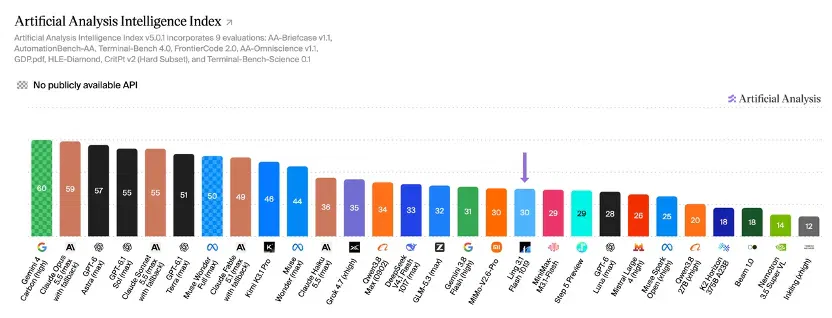
The open release of healthcare models is Ling’s latest attempt to maintain its capability-to-efficiency approach while addressing practical deployment in a vertical field.
This balance is particularly important in healthcare. Real-time consumer health consultations need fast responses; professional medical reasoning requires sufficient model capability; and deployment in hospitals and similar institutions must account for computing costs and data security.
For Ant, healthcare is both a specialist application for Ling models and a concrete setting in which to test its technical approach.
But with general-purpose large models already fairly mature, why does Ant continue developing Ling itself?
He Zhengyu said Ant is an application-centered company, and Afu’s user health consultations and real-time audio-video scenarios place specific demands on models.
Not every problem requires a trillion-parameter model. What matters more is choosing an appropriate model to complete the task with reasonable resources and time.
In addition, Afu’s need to perceive physiological signals such as breathing rate and heart rate is driving continued innovation in underlying models.
Ant Group vice president and head of Ling models Zhou Jun further explained that capability-to-efficiency is not merely a cost issue but a technical choice. Optimizing model architectures and improving training methods can give users better capabilities in less time and with fewer resources.
Especially in professional fields such as healthcare, if deployment cannot scale at reasonable cost, even the strongest capabilities will struggle to benefit more users.
04.
Conclusion: from models to applications
Ant’s medical-AI strategy takes shape
The healthcare-model family, new Ant Afu app and intelligent hardware showcased together outline Ant’s ongoing technical approach to healthcare AI.
Overall, Ant is trying to connect the underlying healthcare models, professional tools for doctors and health services for ordinary users.
For Ant, developing Ling and specialized healthcare models must ultimately translate into actual applications. Models need not only to solve sufficiently complex, specialist problems, but also to enter real business processes with reasonable cost and efficiency.
Healthcare’s requirements for professional competence, safety and reliability will continue testing whether this technical approach can truly create value.
This article comes from Zhidx, written by Bi Weihao.
Related topics
After reading
Join the AINRK community
Read how to join the community and connect with people working in AI.
Related articles
Continue reading related topics and articles in this category.
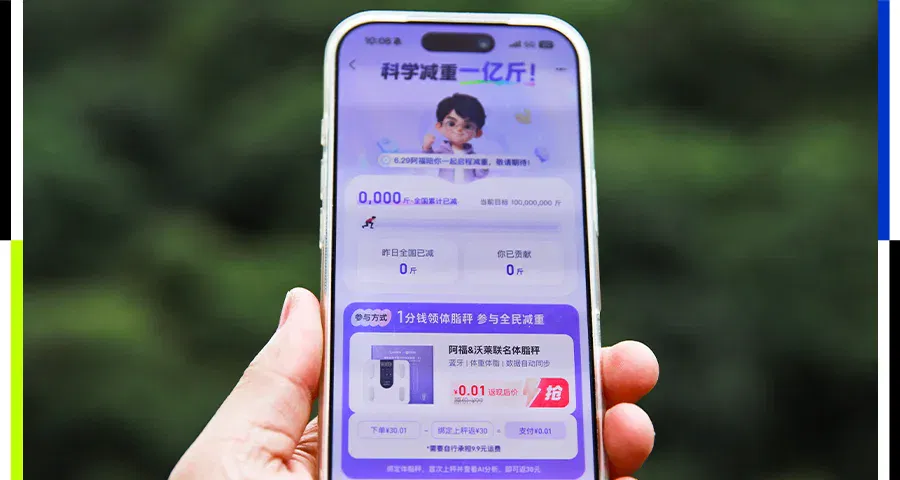
抢体脂秤、AI做「搭子」,第一批网友冲向阿福减重 (opens in a new tab)
普通人减肥不用焦虑了。 减重1亿斤,是什么概念? 简单算一笔“热量账”。按医学建议的安全减重速度(每周1-2斤)计算,一个人单打独斗,全部减完大概要花100多万年。 但如果把它拆分到全国人民身上,再加上专业健康AI“带减”,这个几乎不可能完成的目标就变得触手可及。 在国家卫健委等16部门联合倡议的“体重管理年”行动背景下,6月25日,AI健康应用“阿福”宣布正式上线“科学减重1亿斤”健康行动,包含三项核心动作:1分钱便能领的体脂秤,升级阿福的AI解读功能、为用户定制饮食和运动方案,以及即将开启的减重挑战赛。 如果按照阿福现有的1亿用户体量来算,平均每人只需减重1斤,就能实现“1亿斤”的小目标。

TEA AI Explores Companionship and Gamified Health Management; Long-Term Effects Remain Unverified (opens in a new tab)
Starting from funding news, the article examines immediate feedback, logging and reminders, while questioning habit formation, user pressure and medical boundaries. Long-term effectiveness data is still missing.

银行Agent上岗:4200万小微经营者可用,信贷、票据、财税一把梭 (opens in a new tab)
网商银行在2026外滩大会首次披露AI银行落地进展:全球首个小微普惠金融Agent百灵2.0已面向4200万小微商家开放,复杂需求办理从3天缩短至10分钟;后台AI全面进入风控、人审、营销、产研等核心生产环节,搭建千里眼、定海针、宝莲灯、筋斗云等八大AI工作台。
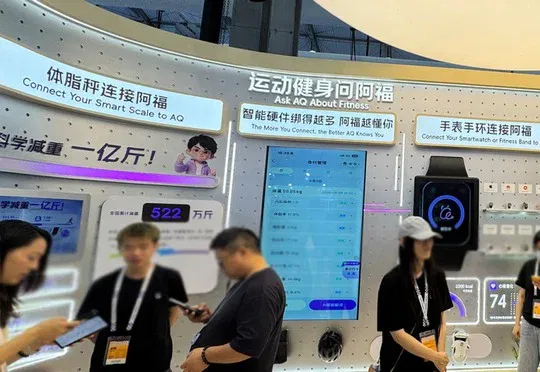
直击外滩大会:帮全网减了500万斤的阿福 硬件厂商排队“找上门” (opens in a new tab)
在2026外滩大会期间,蚂蚁集团旗下健康AI应用"蚂蚁阿福"公布最新用户数达1.5亿,单日健康咨询近2000万人次,已接入华为、苹果健康、小米等18大主流品牌智能硬件,成为全球用户量最大的健康AI App。

两个被慢性病折磨多年的年轻人,做了个“记住你全部病史”的 AI,Juno8个月15万下载 (opens in a new tab)
Juno 2025年10月公开上线,上线前8个月,Juno 已经获得约15万次下载和1.5万个五星评价。Juno 官方现在明确把自己定义为一个面向慢性病患者的健康管理和陪伴工具。它不会提供诊断、治疗或替代专业医生的医疗建议。Juno 想解决的是另一个问题,比如你过去半年: