Lovekey Keyboard highlights AI dating assistants’ subscription business and retention questions

Using third-party estimates, marketing and user comments, the article examines Lovekey’s iOS billings, short subscriptions and expansion among women, alongside Rizz’s distribution. Stable billings do not establish profit, cohort retention or better relationships.
Editorial fact-check (November 24, 2026): Lovekey’s billings and user demographics cited here are third-party estimates, not the company’s net revenue or profit. Download and MAU trends alone cannot establish cohort retention, and social-media renewal comments do not prove the main reason for renewals. The 150,000 creators associated with Rizz refer to the distribution platform’s network as described by its founder, not a verified number of Rizz’s long-term partners. This review could not verify the reported 15 million downloads on a comparable basis; that figure should not be confused with the publicly claimed US$15 million in revenue. The caption “January 2025 to January 2026” does not match the body’s discussion extending to July 2026. This article has not independently recalculated retention or revenue from those figures. Public introduction by Rizz co-founder Roman Khaves (opens in a new tab)Affiliate Network creator platform (opens in a new tab)

The crush on the other side of your screen might be AI.
In late 2024, we examined Chinese AI wingman apps in “Have dating keyboards been the first to find a way to commercialize AI apps in China? (opens in a new tab)” Our judgment then was straightforward: users downloaded them during the flirtation stage, spent impulsively and left after a few days. With limited product experiences, they would most likely enjoy only a brief burst of popularity.
But two years later, we find that Lovekey Keyboard, a representative product in this category, has seen its income rise rather than fall. Its estimated monthly iOS billings alone have stabilized above US$600,000, even reaching around US$760,000 in July. That is a substantial increase from the monthly billings below US$200,000 that supported the “tens of millions of yuan a year” description when we looked two years ago.
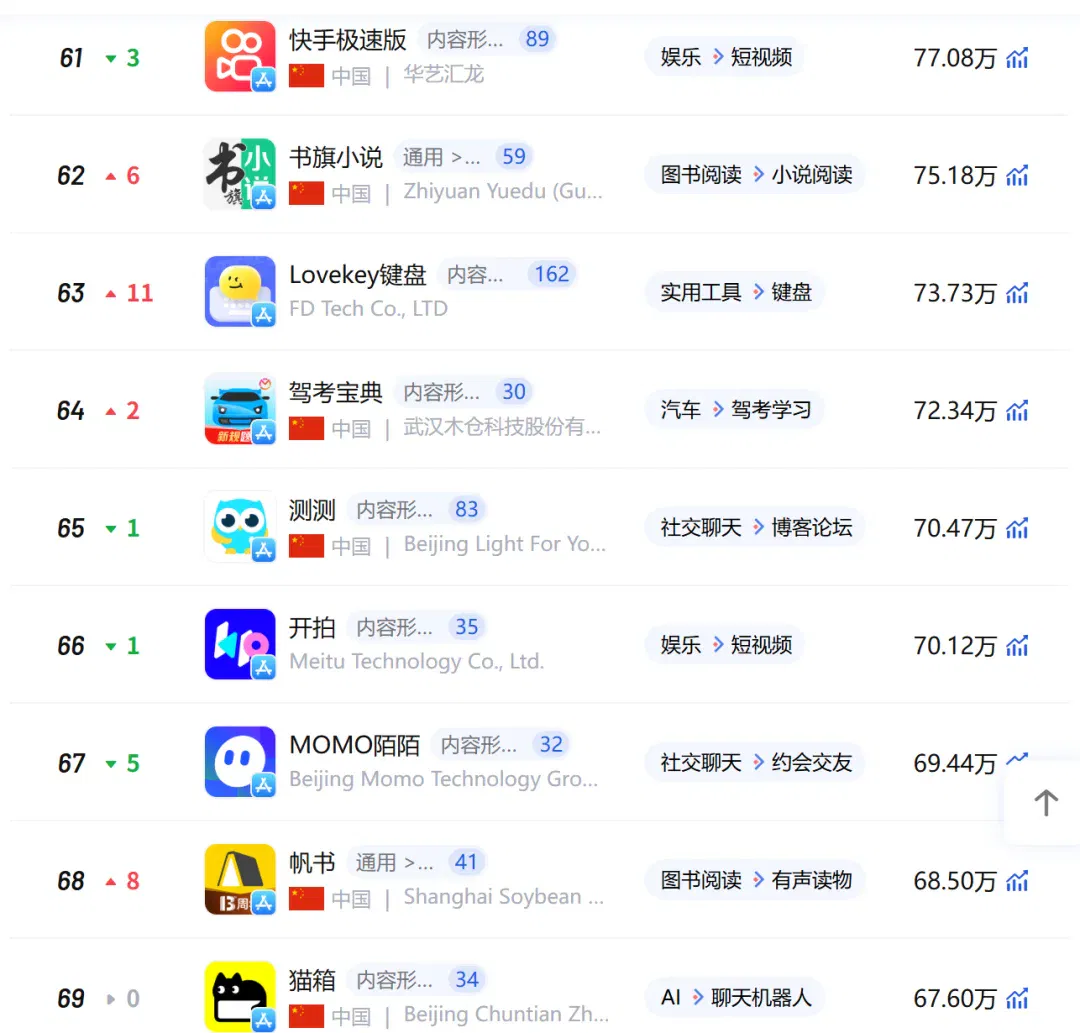
Selected figures from October’s China iOS app revenue ranking,
with Lovekey Keyboard at No. 63, on a similar level to
novel-reading apps | Source: Diandian Data
Has the AI wingman category, which sounds like an invented need, really become a stable business with substantial billings?
1. Turning a short-lived need into a lasting business
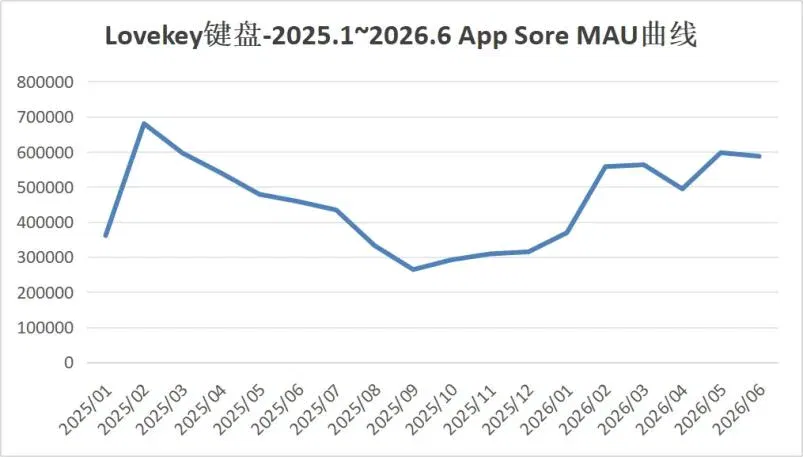
The following are Lovekey Keyboard’s monthly downloads and monthly active users over roughly a year from our previous observation through July.
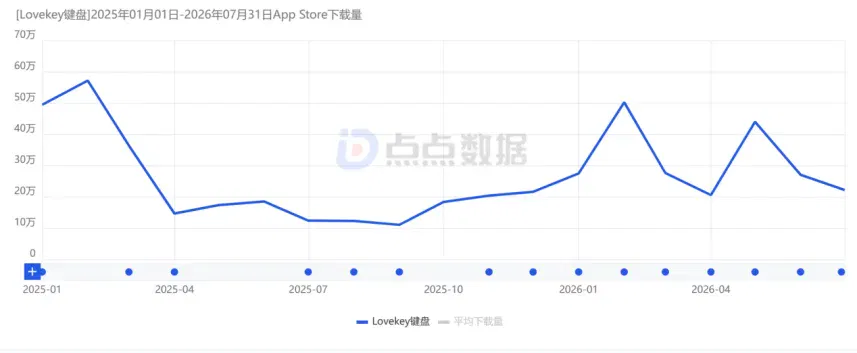
Lovekey Keyboard, January 2025–January 2026
App Store download and MAU trends | Source: Diandian Data
Lovekey Keyboard saw pronounced download peaks in February 2025, February 2026 and May, with the MAU curve broadly tracking downloads. The encouraging signal is that new downloads did not stop at installation, but translated into active users.
There is, however, a clear difference before and after the start of 2026. Before 2026, downloads became MAU, but when downloads fell, MAU fell too, suggesting weak retention in the author’s interpretation. After the start of 2026, downloads declined while MAU remained relatively high, which the author interprets as substantially better retention.
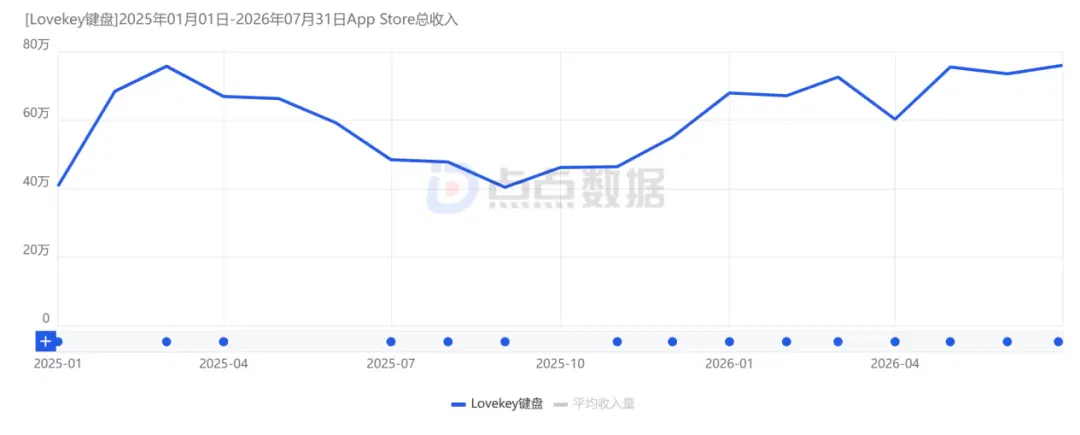
Lovekey Keyboard’s App Store revenue trend, January 2025–
July 2026 | Source: Diandian Data
The revenue trend looks relatively healthy, remaining in a higher range. It more closely resembles the MAU curve, suggesting relatively stable payment conversion. Yet social-media discussion offers less positive signals as well: the author identifies “forgetting to turn off auto-renewal” as the main reason users renew.
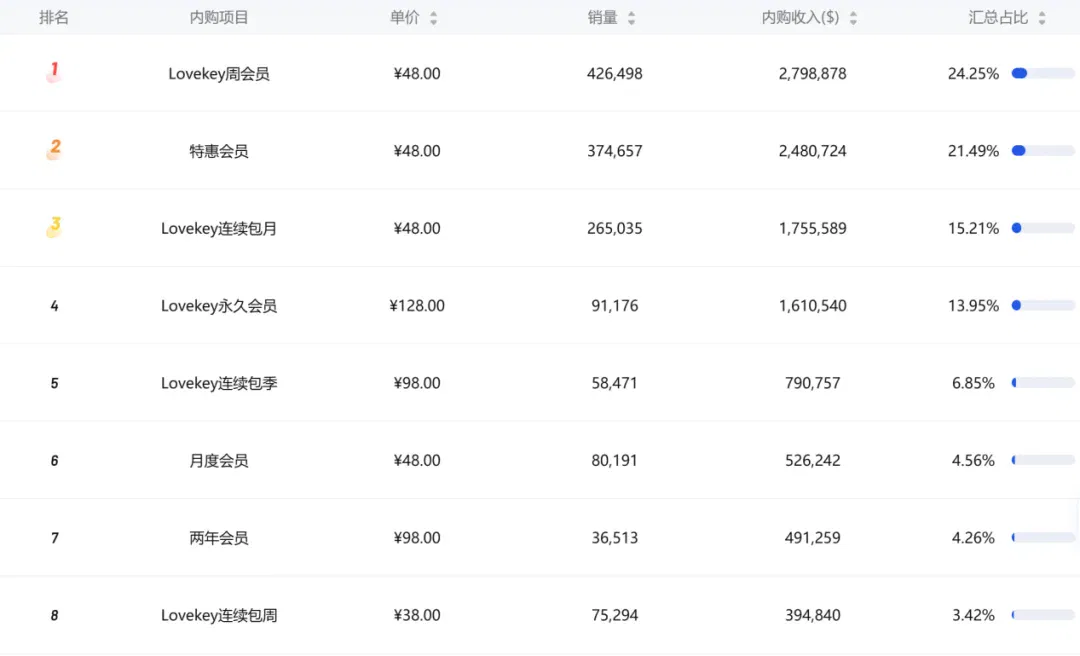
In-app purchase data further amplify the less positive signal. According to Diandian Data, since January 2025, Lovekey Keyboard’s largest revenue contributor has been the RMB48 weekly membership, at about 45% of revenue. Its discounted membership is also weekly. The auto-renewing monthly subscription, which has the same price as the weekly membership and is clearly better value, accounts for only about 15%. The author takes this to mean that Lovekey Keyboard’s core paid use is strongly tied to particular periods, with users mainly paying for short-term dating needs.
Lovekey Keyboard on iOS, January 2025
to the present: sales, revenue and revenue shares of major in-app purchases.
The discounted membership is also weekly | Source: Diandian Data
Taken together, the author sees a fairly clear explanation for Lovekey Keyboard’s revenue increasing since the previous review and remaining stable in a relatively high range: continuously acquiring new users with temporary needs, rapidly monetizing them through the expensive weekly subscription commonly chosen for a first purchase, and extending the paid period through auto-renewal. These combine into an apparently stable reservoir.
The author argues that the stable business is rooted less in product iteration aligning with needs and more in Lovekey Keyboard continuously finding users with temporary needs and monetizing them efficiently, turning brief needs into an enduring business. The two growth waves in 2026 also differed from the past: downloads fell without a corresponding fall in MAU, supporting stronger billings.
2. AI wingmen reach out to female users
We tried the product and found no obvious iteration or substantial improvement in experience. The payment design had not changed either: core features were largely behind a paywall, with users usually reaching the payment screen after trying three to five replies for free.
If there was a new development in 2026, the marketing materials suggest the product had turned its attention to the other side of a romantic relationship: women.
Two years ago, AI dating keyboards were mostly seen as a “dating cheat code” for men. Overseas Rizz and Chinese products such as Lovekey Keyboard and Mi Xiaoyu generally marketed from a male perspective: how to respond when a woman says something, make a man more attractive in conversation, or win over his dream woman.
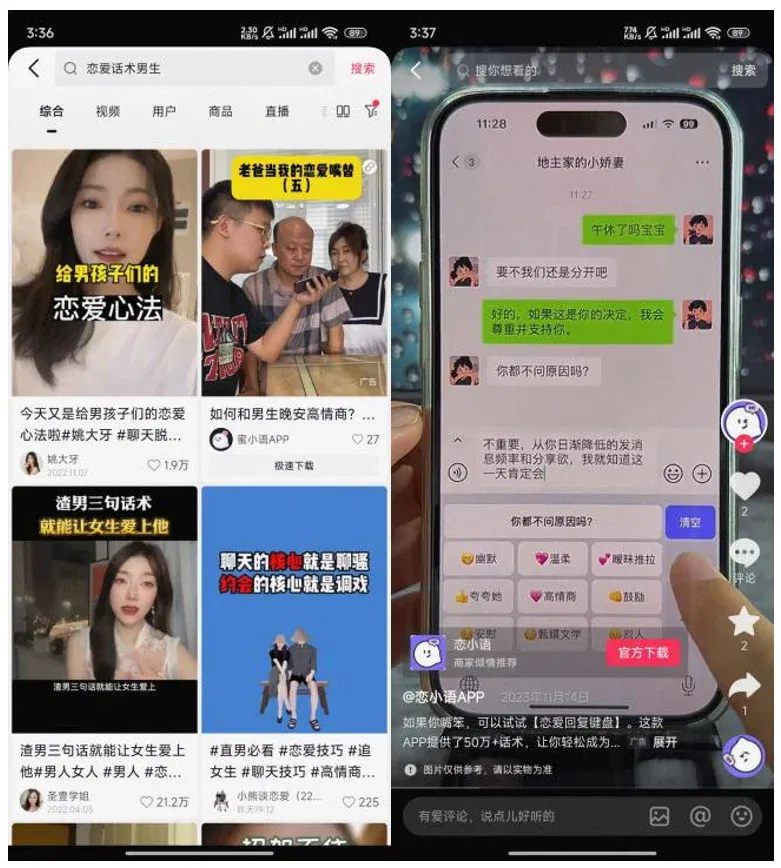
An advertisement for an AI dating keyboard on a short-video platform two years ago
From January 2026—the earliest publication date of relevant image-and-text posts we found on the platform—the product clearly began increasing text posts from women’s perspectives. Most addressed women’s romantic concerns, with topics such as “tips to turn up the heat while flirting” and “sweet words to charm your crush,” appearing widely on Xiaohongshu and other platforms with a higher proportion of female users.
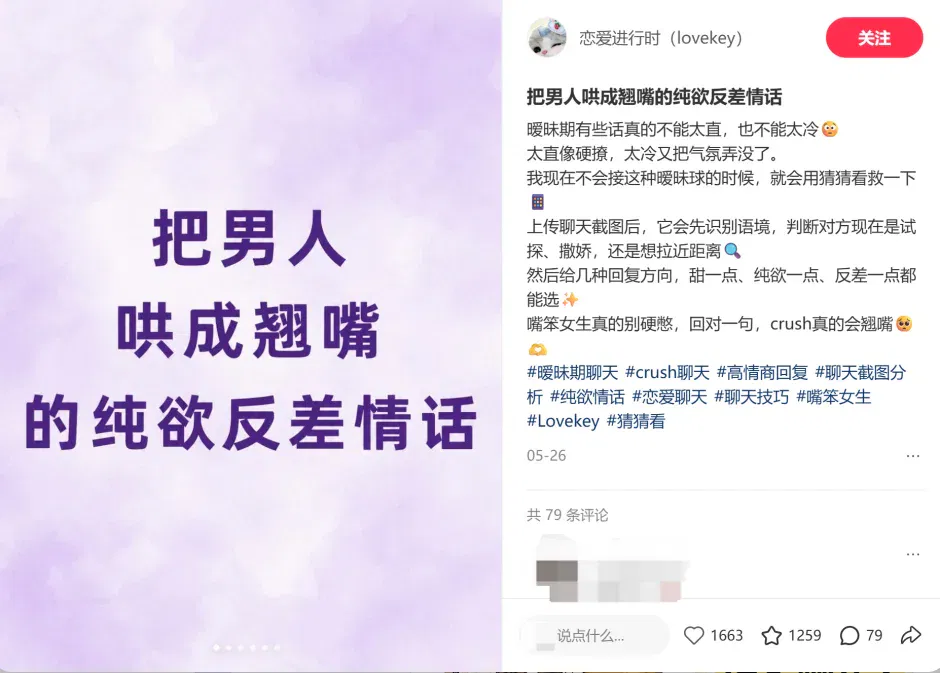
A popular text post marketing Lovekey Keyboard
among female users | Source: Xiaohongshu
As for the apparent results, according to Diandian Data, Lovekey Keyboard’s share of female users rose from 6.83% in November 2024 to 18.99% in July 2026, about 2.8 times its earlier level and an increase of approximately 12.16 percentage points.
Young people today are no longer limited to relationships in which men pursue and women are pursued. The author suggests that women’s supposedly greater attention to emotional matters may “temporarily” account for stronger MAU.
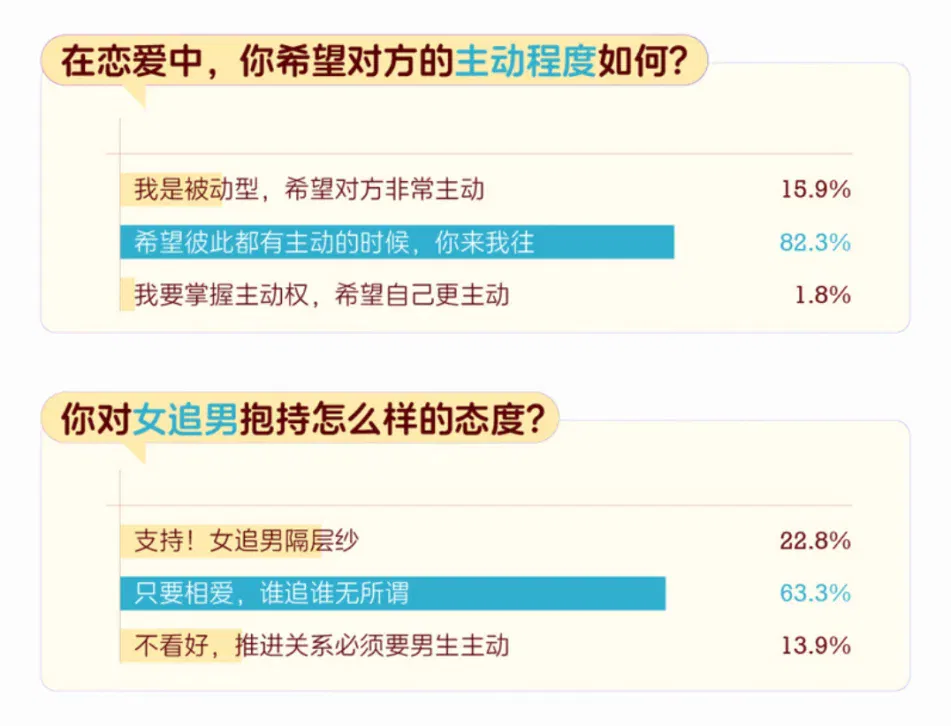
The 2025 Comprehensive Report on Young People’s Views of Marriage and Childbearing in First-Tier Cities indicates that
young people today no longer insist on who must pursue whom; the traditional
“men pursue women” pattern is weakening | Source: Shangguan News
We still cautiously use the word “temporarily” because marketing materials, data and user comments suggest a real need among users of all genders. They hope AI wingmen will produce tangible progress in relationships, and the data suggest users are willing to pay for that outcome. User comments, however, indicate that after years of development, these products still fail to provide effective solutions.
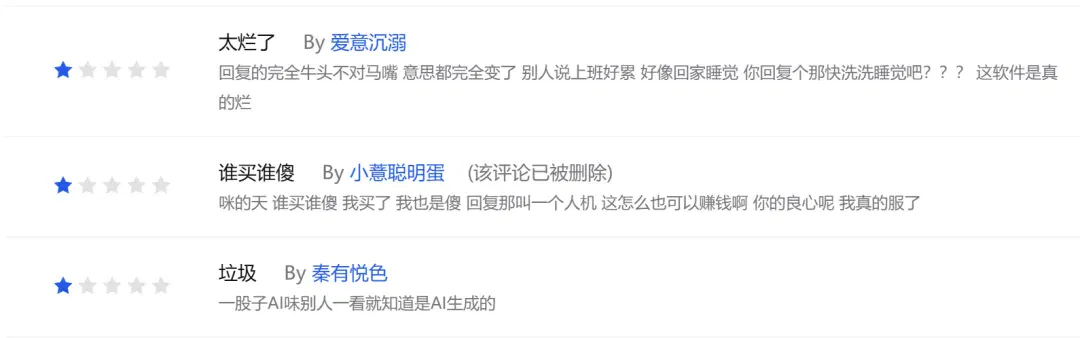
Lovekey Keyboard users call its replies “terrible,”
“AI-sounding” and “robotic” in comments, saying it cannot
advance relationships as the marketing suggests | Source: Diandian Data
AI wingmen remain a marketing-driven category, including overseas.
The founder of Rizz, a leading overseas AI wingman product, recently disclosed that it had reached US$400,000 in MRR. He attributed its success to “distribution.”
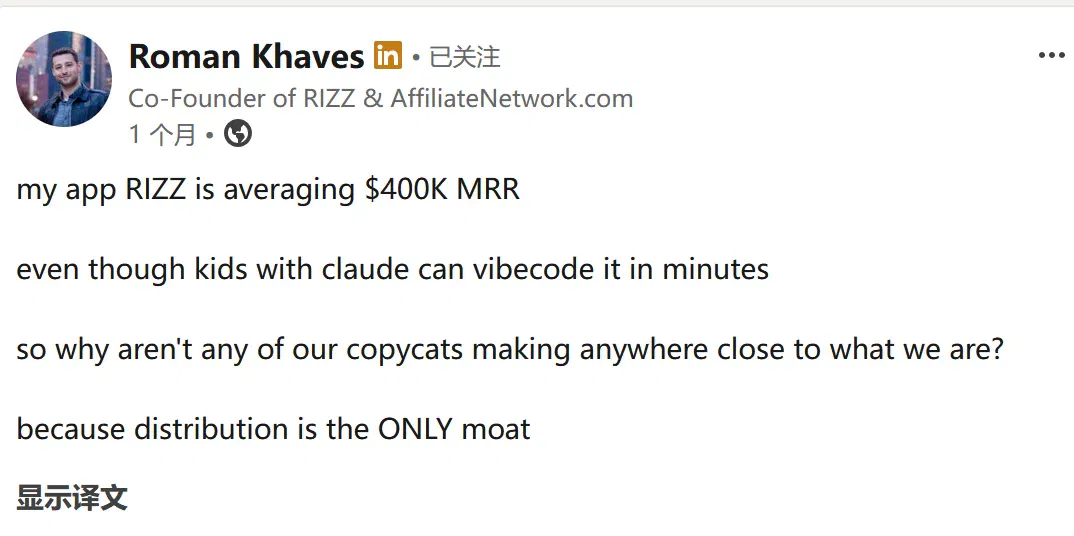
Rizz’s features are simple: users upload chat screenshots
or the other person’s profile, and AI recognizes the content, analyzes the context
and generates personalized replies or advice. What made Rizz
a major player was the content-distribution system behind it | Source: LinkedIn
The original report says Rizz built its own content-distribution mechanism, working long-term with more than 150,000 video creators to continually produce short videos about “reply dilemmas” and similar subjects. It cites a company claim that these videos brought the product more than 15 million downloads.
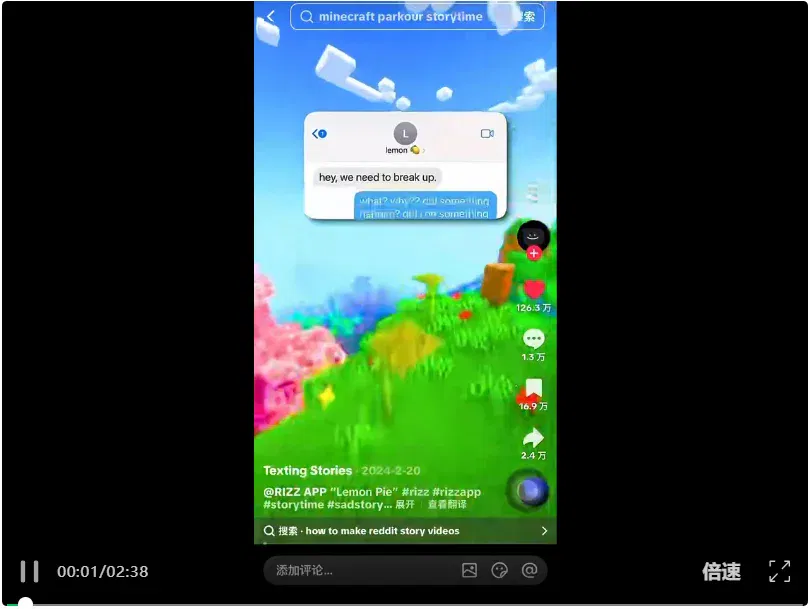
A highly liked Rizz “texting story” video;
the product achieved explosive growth through videos like this | Video source: TikTok
Final thoughts
From Lovekey Keyboard to Rizz, the greatest value of AI wingmen is demonstrating that “dating dilemmas” really exist and that people will pay to resolve them. Yet feedback from users in China and abroad suggests that even now these products struggle to actually solve their problems. If a so-called wingman remains limited to cringe-inducing replies and cannot offer substantive relationship advice, it will never deliver the tangible romantic progress users expect from the marketing.
But in the comments for both products, we found that some users who had tried AI wingmen had already turned to large models for help, frequently saying things such as “better to use Doubao” and “ChatGPT is better.”
Posts on social platforms also show users applying AI flexibly in relationships: analyzing chats, assessing the other person’s attitude, reviewing arguments and trying to repair relationships. AI’s role has gone well beyond a “wingman” to become an all-purpose romantic strategist. The second article we republished today, “I Use AI to Date,” is a real account of one couple using AI to support their relationship. The translated third article describes some young people’s actual attitudes toward AI’s involvement in dating. Some answers for AI wingmen may lie in these accounts.
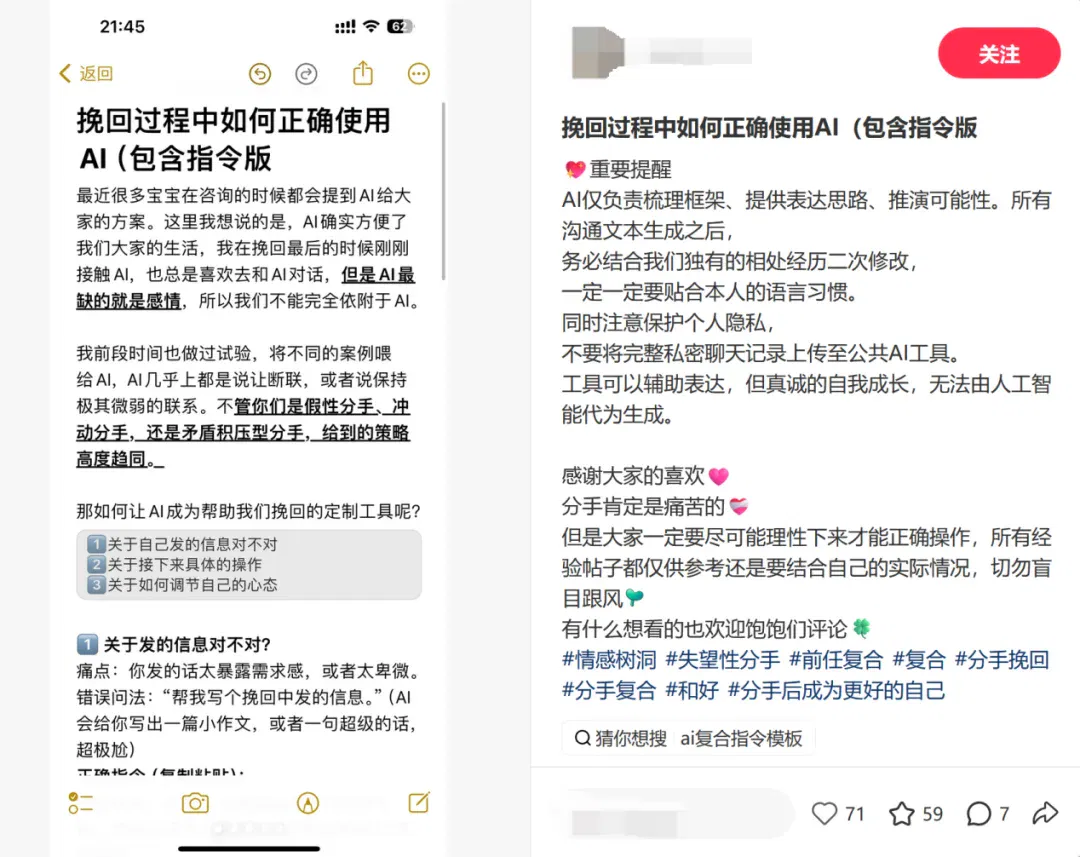
A post sharing prompts to “repair a relationship” with AI | Source: Xiaohongshu
This article comes from Beluga Global, written by Pei Zhengkai.
Related topics
After reading
Join the AINRK community
Read how to join the community and connect with people working in AI.
Related articles
Continue reading related topics and articles in this category.

Xiaohongshu reportedly tests Dada app with experience-based AI roles and group chats (opens in a new tab)
Dujia tries the private-test product’s role creation, text-and-image conversations, group chats and account authorization, exploring how creators’ experience can become interactive AI companions.
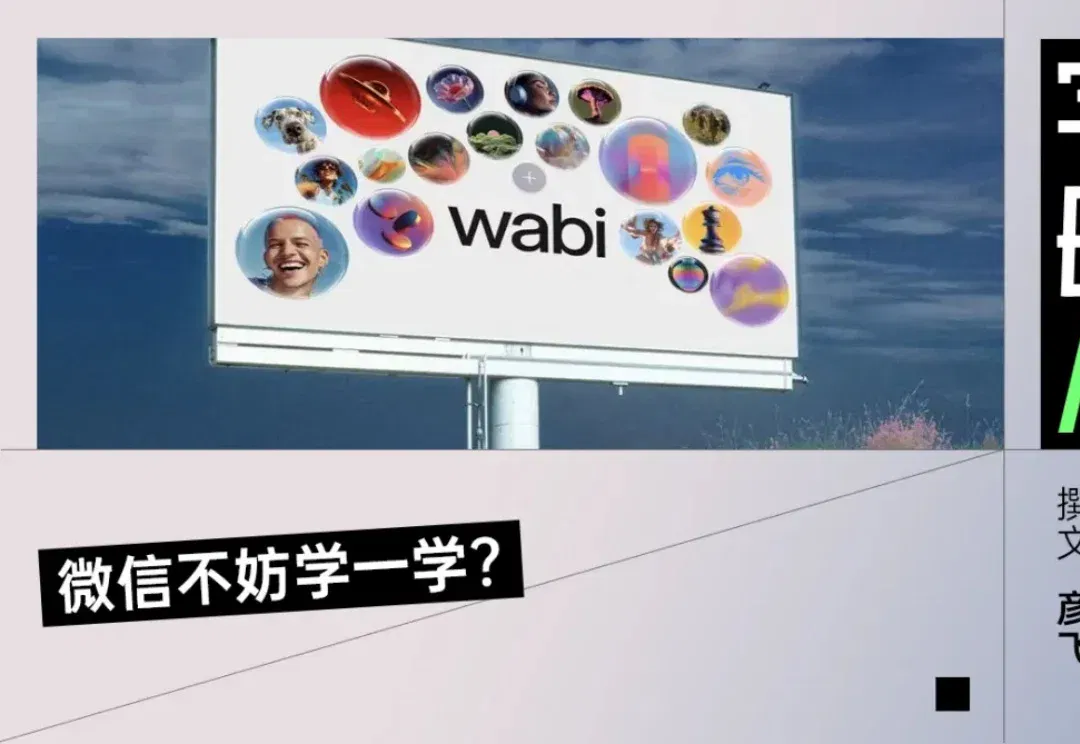
Wabi 把共享 AI 助手和小应用放进多人群聊 (opens in a new tab)
Wabi 的多人空间可以围绕旅行、投票或计划生成轻量工具。文章对比微信小微的使用入口,并回顾 Wabi 从应用生成转向多人协作的过程。

AI 社交的另一种生意 (opens in a new tab)
上周六(10 月 17 日),在十字路口 × Table for Six 联名活动的 After Party 上,我们在 AI Hacker House 邀请到 Table for Six 的创始人 Jeff 和投资人汪天凡 Will 进行了圆桌对话。

揭秘Tipsy:千万美金的赛博牛郎店 (opens in a new tab)
可能很多人还不知道Tipsy,我来简单介绍下:一款可能已经超出「擦的边界」的AI 陪伴产品,收入和利润的增速直追冕神。

日本 130 万中产,正在用 AI 疯狂婚外恋 (opens in a new tab)
十年前,我们用 Soul、陌陌这类 App 认识陌生人,单身交友,不敢明目张胆发挥荷尔蒙。