Siltok on local AI video workstations: Tiered inference, generation time and cost trade-offs

Siltok says Token Station runs H3 by coordinating VRAM, RAM and SSD storage. Its internal test generates 5 seconds at 1344×768 with 20 sampling steps in under 8 minutes. The interview examines workstations starting above RMB20,000, cloud costs and payback conditions.
Editor's verification (2026-11-24): This is an interview with the founder. Device speeds, procurement, and economic claims are company disclosures and have not been independently retested under matched configurations. Under eight minutes refers to a five-second video at 1344×768 with 20 sampling steps; 16GB refers to VRAM, and operation also relies on system RAM, SSD storage, and tiered scheduling. MiniMax currently provides H3-Base weights, while the official full 2K workflow also involves the unreleased Context-IR and Regenerate-2K services. This does not mean the entire pipeline is locally available and open. Payback calculations must also include depreciation, maintenance, generation waiting time, and labor. Claims of "absolute privacy" and local processing by all third-party tools must be understood in light of actual configuration, network calls, and permissions. MiniMax H3's official architecture, released components, and workflow (opens in a new tab) | Original founder interview (opens in a new tab)

This article focuses on the computing and cost pressures of AI video generation. The report argues that per-generation model-service charges are in tension with downstream delivery of finished videos, but provides no unified industry statistics establishing that video ranks first in China's AI compute consumption or that all downstream producers lose money.
Model providers sell individual generation services. Once the computation is finished and a video is produced, the billing system charges you even if a character's limbs are misplaced or their face changes when they turn around. Studios accepting commissions, however, must deliver finished videos the client approves. This "drawing cards" mechanism has become a bottomless pit consuming producers' profits. In actual delivery, it often takes five to ten attempts to find an acceptable shot and accumulate a minute of usable footage.
The most direct way out of this cycle of working for the model provider is to deploy open-source video models on local machines: replace some cloud-generation spending with an upfront hardware investment, while still accounting for electricity, depreciation, maintenance, waiting, and labor costs.
But making this approach work requires overcoming two hurdles at once:
First, you need an open-source video model that genuinely performs well enough for commercial delivery. Many teams previously avoided local deployment because early open-source models produced rough imagery and stiff motion, making them little more than toys. But with the emergence of MiniMax H3 and other open-source omni-modal models, that hurdle has been cleared. As MiniMax's first open-source, locally deployable omni-modal generative model, H3 supports 2K super-resolution and up to 15 seconds of native synchronized video and stereo audio, as well as precise video motion transfer (V2V). Its generation quality can compete directly with closed-source models such as Seedance. H3-Base weights are available for local deployment under the license, but H3-Context-IR and H3-Regenerate-2K are not included in the current open-source release: the complete 2K workflow cannot be treated as entirely local, open components.
Second, and more difficult, you need hardware that can run the full model, make economic sense, and generate fast enough for delivery. Large memory capacity addresses whether the model fits, but an ordinary 16GB consumer graphics card alone does not solve the execution problem. Video studios must also calculate production costs: how long a shot takes, how many versions can be tried in a day, and how much a minute of finished footage costs after repeated revisions. Staged loading and memory offloading let consumer devices run models at their original precision. But moving weights back and forth between RAM and VRAM takes time. The model may run, while waiting becomes the most time-consuming part of production.
If a cheaper machine also reduces how much footage can be delivered each day, local deployment still does not add up economically.
Siltok, founded by former Xiaomi executive Bai Peng and others, identified this gap. It hopes a desktop AI workstation can bring some video generation back to local devices for small and midsize teams.
The team focused on the inference system. Its in-house Siltok Speed coordinates model data storage and use across VRAM, RAM, and SSDs, so the entire model need not fit in VRAM at once. This system lets an RTX 5070 Ti with 16GB of VRAM run MiniMax H3 while keeping its 33-billion-parameter generation backbone at BF16 precision.
Once it runs, speed still matters. Company-disclosed internal tests show that generating a five-second H3 video at 1344×768 resolution with 20 sampling steps takes under eight minutes.
For deployment and use, the machine comes with preinstalled models and storyboard, canvas, and batch-task tools. Team members can submit jobs over a local network and share one device.
Let's look directly at the output: an advertisement generated separately with Seedance 2.5 and Siltok Token Station.

Seedance 2.5

Siltok Token Station
Visually, Seedance 2.5 still has a slight edge, but Siltok Token Station retains the advantage of no additional generation charge. So how many videos must a machine costing more than RMB20,000 produce to pay for itself? And as cloud models continue to evolve, how should buying hardware be weighed against paying for APIs?
We discussed these questions with Siltok founder Bai Peng.
Bai previously held group executive roles at Xiaomi, including vice president of Xiaomi TV and general manager of its internet business. He oversaw internet monetization and helped drive annual internet revenue above RMB20 billion.
Hardware products, software ecosystems, and commercialization—the three mainstays of a technology company's survival—are all areas he has worked through from end to end.
His goal with this venture is to put computing power back in ordinary people's hands.
Why build a local AI workstation?
Guixingren: When you worked on smart TVs at Xiaomi, you caught a wave of device upgrades. After leaving Xiaomi, there were so many possible AI directions. Why choose local AI video workstations? H3 was not available then—what did you see?
Bai Peng: I was at Xiaomi from 2014 to 2023, working on Xiaomi TV and Xiaoai speakers, then the internet business. Many of Xiaomi's internet content businesses were in my department: Xiaomi Video, Duokan Reading, livestreaming, short videos, and pictorial content. After leaving, I wanted to join the wave of AI entrepreneurship.
There were already many models. Consumers using cloud text models such as DeepSeek, Qwen, or Doubao might mainly chat or ask knowledge questions. I wanted to do something with commercial value. Specialized industries such as law and finance need on-device systems, mainly because of company privacy and data security. But the key problem is that model quality on a device differs from the cloud. A small on-device model's expertise and depth on a task may still be insufficient for commercialization.
We also researched many video professionals, including creators on YouTube and TikTok who use video models. What is the problem? The cloud is too expensive. It is useful for ad assets, short dramas, micro-dramas, and animation, but too expensive. Some creators wanted to buy servers and deploy models themselves, but the equipment was costly. If you assemble a machine, you still need to install the operating system and inference engine. After the model, you must install workflows and agents. For creators, the experimentation and learning costs are rather high.
There were open-source video models then too. I did not think their results were especially good, but they could handle ads and animation. I expected a continuing supply of open-source models—not just H3 in the future, but models from other providers too.
When we formed the company last December, there were probably only a few core research, development, and product people, many introduced through one another. Our CTO, Dr. Shen, who has a PhD from Tsinghua University, joined around then too.

Produced by Siltok
Who uses AI to generate video?
Guixingren: Some people say that all those tokens spent making videos in China produce "AI slop." What do you think?
Bai Peng: We came from the internet industry, and we have been through this before. Portals were mainly text at first, followed gradually by Youku and iQIYI. Look at ByteDance: it began with Toutiao, focused on text and images, then came Douyin. Kuaishou and Hongguo are also developing video. I think video is the content format users encounter most.
I do not really accept "slop" as a label for an entire generation of content. When portals first appeared, traditional media said everything online was rubbish. When short videos emerged, everyone called them "lowbrow," "fragmented," and "a waste of time." Every democratization of content is first labeled "slop."
When the barrier to expression suddenly falls, supply inevitably explodes before taste catches up. As we see, the silt arrives before the gold. AI is the same: it solves whether something can be made. Whether it is worth watching is for humans to judge. But without large-scale, low-cost trial and error, good storytelling, good taste, and new industrial standards will not emerge from nowhere.
Our job is not to decide which video is sophisticated on users' behalf. It is to bring the cost of trial and error from RMB0.50 to RMB0.05, so people with good ideas do not lose their chance to express them because they cannot afford repeated generations.
I have always held this view: technology is not responsible for creating greatness; it is responsible for making greatness available to more than a privileged few.
Guixingren: How many assets do the advertising teams you encounter produce each day? What do clients such as iQIYI do with the equipment?
Bai Peng: Many video professionals upload to platforms every day, and there is a lot of advertising among those videos. A piece of fruit, a phone, a laptop, a schoolbag—one product might need 100 ad assets in a day. Those 100 run across different video platforms. If the ROI is poor, an asset is withdrawn immediately and a new one replaces it. This rotates daily to maximize click-through and conversion rates.
You ask why we pursued this when H3 was not available at the start of the year and short dramas could not be made. Many industries need it, especially advertising, which generates large batches of assets daily.
There are advertising teams, micro-drama teams, and teams making animated dramas. A major video company signed with us to buy several hundred units. They are optimistic about the technology platform and use the equipment for micro-dramas and promotional materials. We also have an internal-testing group of nearly 500 people, with close to 200 active organizations. They include directors and producers making Hongguo short dramas, as well as people making advertising assets in the US and Japan.
The deeper and more professional an organization's work, especially batch production of micro-dramas and ads, the greater its need for on-device equipment. Costs can fall substantially and optimization can continue. They really do have that need.
Buying a machine versus using the cloud: How do the numbers work?
Guixingren: You said one product might need 100 ad assets a day. How do you work out the costs for users? Could you use cloud generation fees as an example?
Bai Peng: Take the Station with 16GB of VRAM: we might sell it for more than RMB20,000. Let's calculate backward. MiniMax's cloud costs RMB0.50 per second. If I have calculated correctly, RMB30,000 should generate 16 or 17 hours, less than 20 hours. If the usable-to-generated ratio is one in five, that might leave only four hours of actual finished footage. I think working backward this way may be more accurate.
It depends on the user. A heavy user could use up those dozen-plus hours in one day, two days, or a week. If you generate only a dozen or so clips a month, each 15 seconds—or even calculate it as ten clips—I do not think you need to buy, however far you stretch the payback period. We want to make a production tool that lowers costs for heavy video users, or video professionals.

Produced by Siltok
Guixingren: That calculation used RMB0.50 per second. What if cloud prices fall to RMB0.05 someday, whether through a price war or a technical change that cuts costs, as with DeepSeek? Would that undermine buying the machine?
Bai Peng: The cloud mostly uses NVIDIA cards, such as H100, H200, and B300. Accelerator and VRAM costs are rising, and equipment is in short supply. Cloud operations are expensive too. Providers need their own data centers, temperature control, cooling, electricity, and people for operations and maintenance.
If cloud equipment prices genuinely fall, that is actually good for us. If VRAM and graphics-card costs decline, our equipment could also become cheaper.
At a deeper level, we have been doing these calculations all along. Over the past decade and more, cloud computing has kept most of the gains from efficiency improvements on the platform side. The harder creators work, the more "compute tax" they pay the cloud. We want to reverse that direction, or tilt the balance even slightly toward creators.
In the name Siltok, "silicon-based" is the physical foundation of computing, while "token" is the smallest unit through which AI understands the world. I believe everyone should have their own personal computing power in the future. This is worth spending ten years to achieve.
How do you use a workstation after buying it?
Guixingren: You said people who do not generate much need not buy. For those making videos daily, could they set up their own machine? I have deployed H3 with GPT, and might get it running in an evening. If someone buys your machine, what have you already done for them?
Bai Peng: With 16GB or 32GB of VRAM, generating 15 seconds might take over an hour, at very low resolution. Many users also need video workflows such as ComfyUI. After installing the model, they still need workflows and agents. Even for me, deploying the entire setup might take two or three weeks.
Why do we use Windows? Many people cannot use Linux, and they need Word, Photoshop, and Outlook every day. Windows offers relatively broad compatibility, and this is fundamentally a high-performance x86 PC. We have deployed a multimodal inference engine on Windows that runs text, image, and video models. You can still use your office software and entertainment applications on the computer.
For example, install WorkBuddy and point its token source to this device. We configure the engine and models for you. There is a built-in model list that is updated in real time, and nine models are already deployed when the machine ships, ready to use at startup.
Our system is continually evolving, and we update promptly when new models arrive. If MiniMax releases H3's successor, for example, we push it from the backend and you decide whether to accept. It cannot be H3 when you buy it and still H3 two years later.
Graphics-card supply, compatibility, and selection
Guixingren: You have configured the engines and models. Why choose the 5070 Ti and 5090 for hardware? If I buy the same card and assemble my own PC, what is different about your machine?
Bai Peng: A graphics card has three components to consider: VRAM, bandwidth, and compute. Diffusion models depend on compute and bandwidth. That is why we chose the 5070 Ti and 5090.
We asked how to run a full video model with one consumer graphics card and 64GB of RAM. Seedance is closed-source; H3 is open-source. We wanted to run H3 locally without quantization or pruning. Generating 15 seconds in the cloud might take four or five minutes, or five to six with queuing. Could we generate 15 seconds locally on a 5090 in five minutes too? Quality, performance, and speed should be as close to the cloud as possible. I think that is what makes it a video-production tool.
A high-performance PC, such as a machine with a 5070, has office software, games, and multimedia editing software. We provide an AI ecosystem for it. How does it run? We have deeply optimized the whole stack, from low-level drivers through the inference engine and system. Streaming computation and heterogeneous coordination, for example, require people with deep systems-development expertise. We have applied for six invention patents.
We have a Pro and a Base version, priced from more than RMB20,000 up to RMB60,000. Both can run MiniMax H3.

Produced by Siltok
Guixingren: In the cost discussion, you said cheaper graphics cards would also make local equipment cheaper. Conversely, are these two cards readily available now? How do you stock the 5090? What alternatives do you have if consumer graphics-card prices keep rising?
Bai Peng: I can buy the 5070 Ti now. We can also buy 5090s and have stock, purchasing overseas and importing them through customs.
We are not adapting only for NVIDIA. We are also working on AMD, Intel, and some domestic accelerators. For the same VRAM capacity, a 16GB 5070 Ti might now cost RMB15,000 or RMB13,000, while an AMD 16GB card might be only RMB6,000 or RMB7,000. To lower users' costs, should we support AMD cards? We are working on that too.
Users do not really care much which graphics-card brand we use. What matters is whether it meets their personal multimodal token needs.
The next step for personal AI devices
Guixingren: The calculations suggest daily video producers have a reason to buy. But if someone does not need to generate much video, why would they want an AI device at home? What could they use it for?
Bai Peng: That is a good question, and it helps explain exactly what we are doing.
Video is indeed the Token Station's first target, because it currently consumes the most compute and has the sharpest cost pain points. But fundamentally it is not a "video machine." The underlying multimodal inference engine is general-purpose: we can run text, image, video, and audio models, and the factory-installed set includes multimodal text, video, image, and audio models. So there is no issue of it being useless without video work.
What would an ordinary person or household use it for? Let me give some real scenarios. First, a personal information library: keep more than a decade's documents, photos, and materials locally, and have a text model help retrieve, summarize, and write. Second, family data: keep family photos, videos, and records of your child's growth on a machine at home, with AI helping organize and find things. The data is absolutely private.
Third, everyday office work: whether you use WorkBuddy, Feishu, or Codex, all these tools' token sources can point to the device, and your questions and materials are processed locally.
Think of it this way: the video workstation is its "production tool" side, addressing professional users' costs; the multimodal personal AI device is its "AI infrastructure" side.
Guixingren: We have discussed what an AI device at home can do today. Looking further ahead, with models still changing, what developments do you think will encourage ordinary people to use AI on their own machines?
Bai Peng: I think on-device deployment is a trend now. Video models are still developing, so take text models first. Some current 35B and 27B models are already comparable to models with hundreds of billions of parameters from previous years. I think models are getting smaller, and on-device deployment is particularly suited to that.
When I worked in mobile internet, there was a period when I hardly used a laptop or desktop, trying to do all my office work on a phone.
If you want to make a good phone or television, you have to return to actual use like that. In theory, you may think all office work can be done on a phone. Only by using it every day do you discover the pitfalls and what needs changing.
This article is from "Guixingren Pro," by "Dong Daoli."
Related topics
After reading
Join the AINRK community
Read how to join the community and connect with people working in AI.
Related articles
Continue reading related topics and articles in this category.

Yoroll Launches Interactive Short-Drama Adaptation Tool; Guaranteed Deals Depend on Project Terms (opens in a new tab)
Yoroll adapts finished short dramas with branches, generated shots and compositing, illustrated by the 30-episode Clutch Time. Platform guarantees depend on tiers, exclusivity and other terms; one-click adaptation does not ensure a guarantee, reliable output or distribution income.
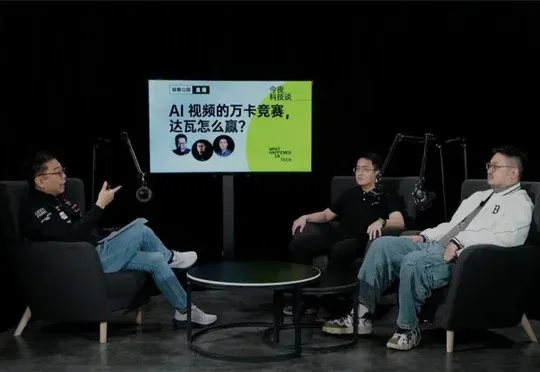
Dawa Technology discusses AI video's control layer: FilmOS production and Scenes AI interaction (opens in a new tab)
GeekPark interviews Dawa Technology CTO Zhu Ziwei and CPO Li Zongxing about Latent Stage, production-process data, FilmOS and Scenes AI. Local editing is said to reduce retries; revenue, cost and performance figures are company-reported, while future use cases remain plans.

Seedance 2.5 flash launches; Zhidx tests a 15-second cat parkour video (opens in a new tab)
ByteDance reports faster generation and lower prices. Zhidx tests shot transitions and text stability in a 480P clip, finding that some background signs still lose parts of their characters.
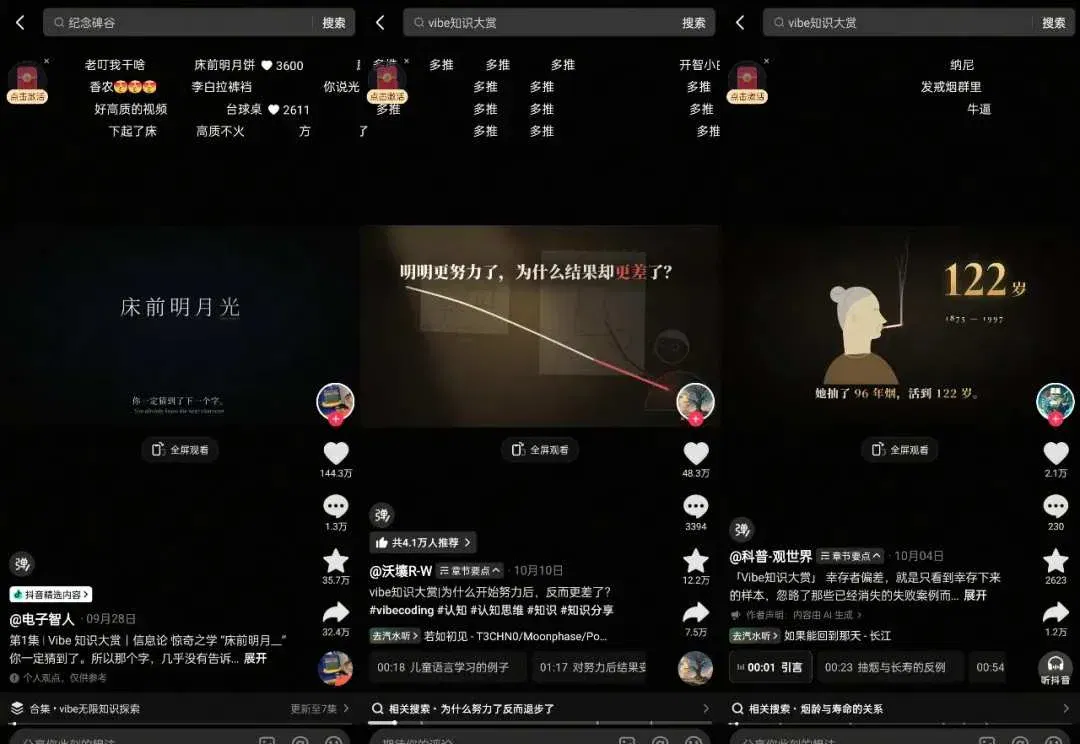
Jimeng launches Motion Studio: Synced tries making knowledge videos (opens in a new tab)
Synced tests code-driven animation with entropy, the laws of robotics, recursive self-improvement and Chinese character evolution, recording generation times, revisions and errors in specialist knowledge.
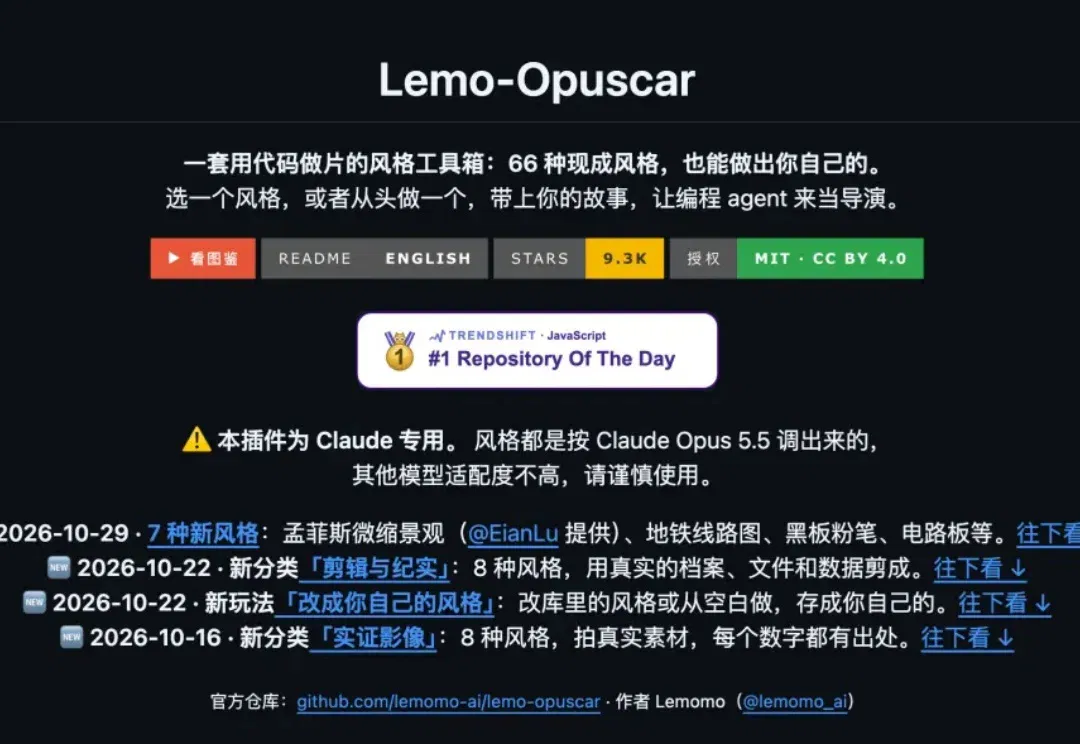
九个开源动画项目,从代码绘画到视频编排 (opens in a new tab)
文章整理九个制作动画、讲解短片和产品视频的项目,介绍风格模板、分镜、可修改工程及本地渲染环境。项目热度采用报道时点的数据。