Jimeng launches Motion Studio: Synced tries making knowledge videos
Synced tests code-driven animation with entropy, the laws of robotics, recursive self-improvement and Chinese character evolution, recording generation times, revisions and errors in specialist knowledge.
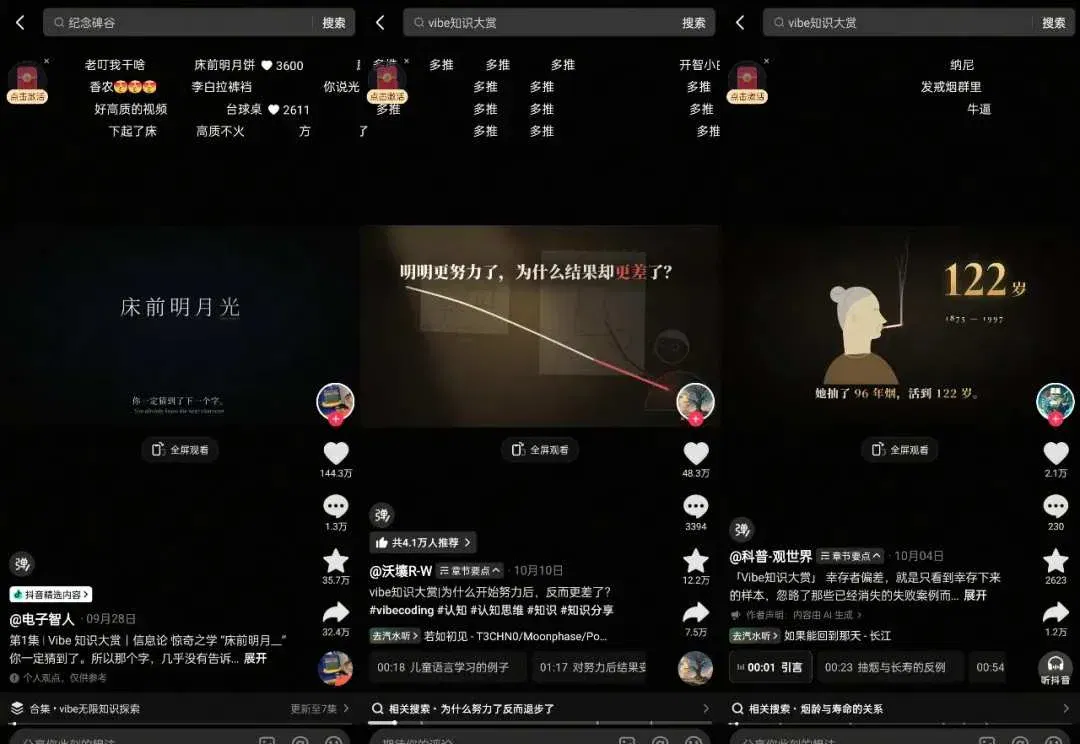
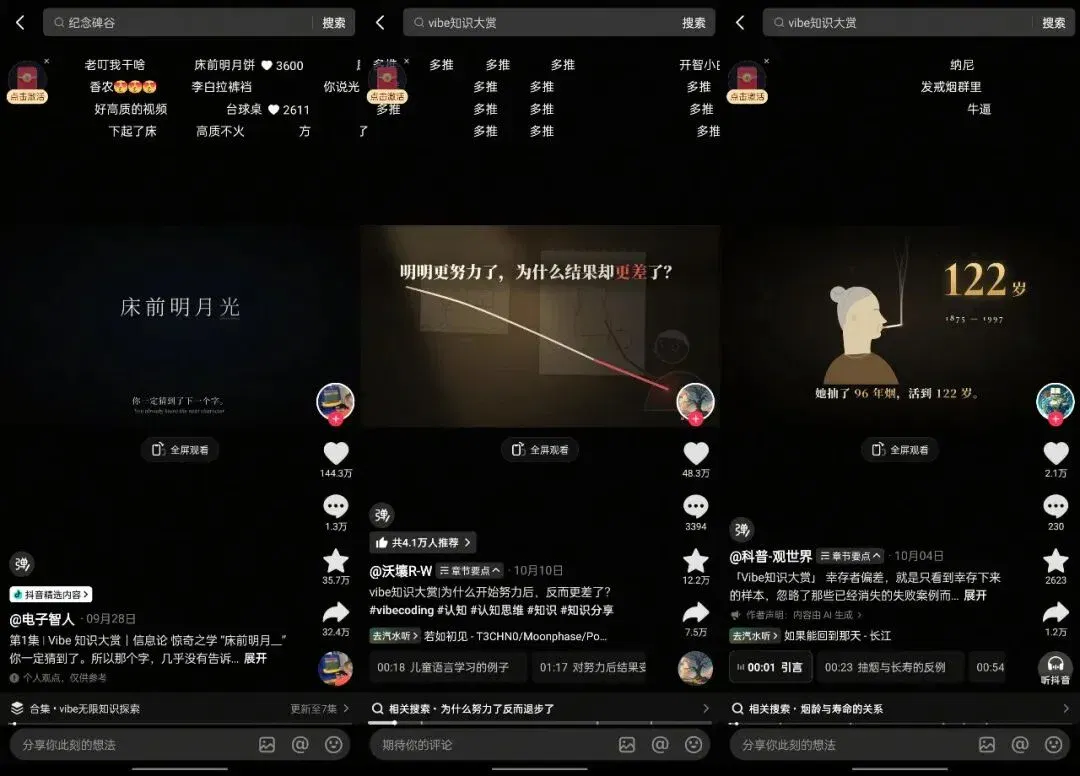
Recently, scrolling through Douyin, it has become easy to encounter a particular kind of video: three to five minutes long, with no live presenter or live-action footage, just text and graphics constantly growing, breaking apart and recombining on-screen. For example, the familiar poetic line “Bright moonlight before my bed” is used to explain “surprisal,” leading into the concept of information theory. A few stick figures and simple drawings explain “Why do the results get worse even when you work harder?” The story of someone who smoked for 96 years and lived to 122 is used to interpret “survivorship bias.” These videos explain concepts through simple, clear animation accompanied by electronic music precisely timed to the visuals. By the end, you have understood a point of knowledge and also feel as though you have watched a music video.
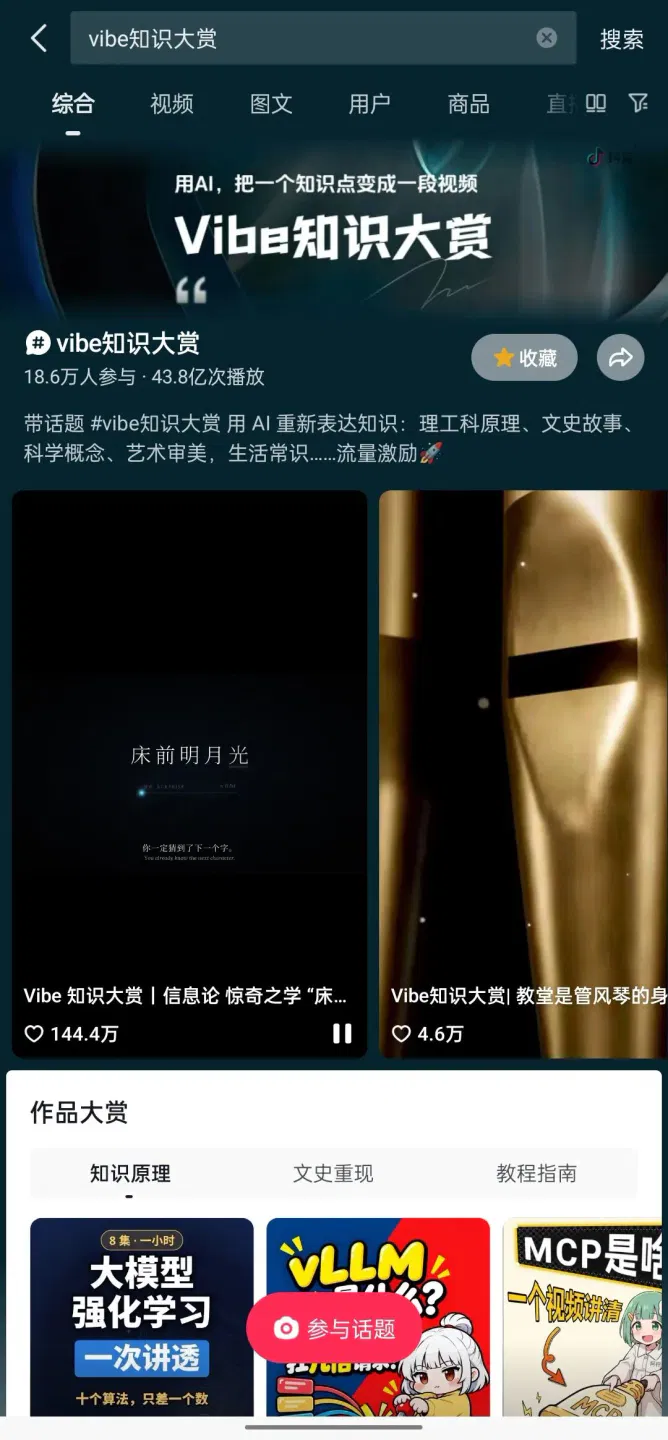
This kind of content already has a name: Vibe Knowledge. So far, Douyin’s “Vibe Knowledge Awards” hashtag has attracted 186,000 participants and 4.38 billion cumulative views. On Bilibili, the creator “Bite Xinyu,” who only started posting in early October, gained 650,000 followers in half a month, including 108,000 on October 19 alone.
Why is Vibe Knowledge so popular? The reason is actually quite simple.
In the past, turning abstract knowledge into visual animation required specialist skills. Figures disclosed in earlier years by knowledge-animation team PaperClip, for example, indicated that a roughly five-minute video took four or five people two to four weeks. After Claude Opus 5.5 was released in late September, the practice of using natural language to have a large model write HTML and JavaScript code to generate animations spread rapidly. Knowledge creators could use prompts to generate visuals segment by segment and match sound effects, allowing one person to handle everything from script to finished video.
However, being able to do it alone does not mean it is easy. Between a model producing animation code and a video ready for publication, plenty of manual work remains. On November 10, Jimeng launched “Motion Studio”, built around “describing ideas in words and compiling visuals through code,” in an effort to bridge this gap. Could it make a decent Vibe Knowledge video? We tried it immediately, working our way from a 60-second physics concept to a four-minute humanities short.
Hands-on testing
Generate a Vibe Knowledge video from a single sentence
We conducted four sets of tests, increasing the difficulty step by step. Length grew from 60 seconds to four minutes, and subjects ranged from physics concepts and science-fiction premises to frontier AI and the history of Chinese characters. We tried both long and short prompts, from storyboards written out scene by scene to a single sentence.
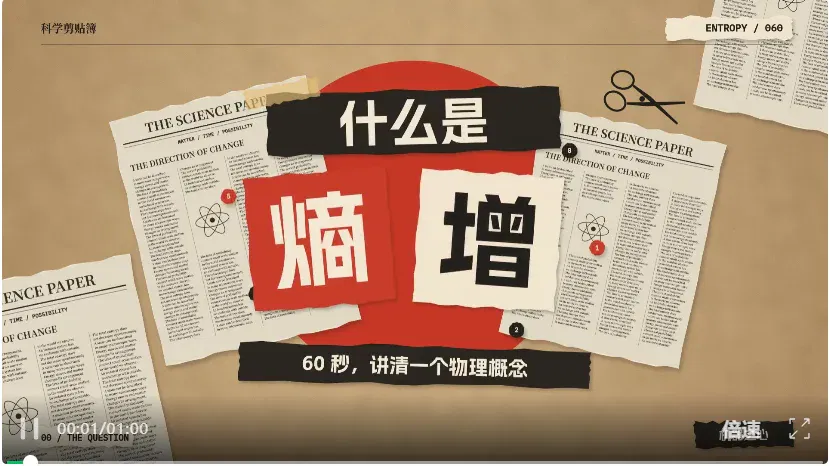
For the first test, we chose a typical Vibe Knowledge subject: increasing entropy. We wrote a fairly long prompt specifying the opening image, the central analogy, the formula that brings the point home and the memorable closing line. We also deliberately asked it to avoid Vibe Knowledge’s most common “glow on a black background” aesthetic:
Explain clearly in 60 seconds what increasing entropy means. Open with a glass of water containing ice cubes. The ice slowly melts, and the water molecules go from orderly arrangements to moving around everywhere. Next, use a room going from tidy to messy to introduce how an isolated system always spontaneously moves toward disorder. Then show the formula S = k·ln W to make the point, with the number after W continually jumping upward. End with the narration: “Life is a local victory in the struggle against increasing entropy.” Use an off-white background with contrasting orange and blue geometric shapes, not glowing lines on black. Use a calm male voice and light electronic music.
After we clicked Generate, Motion Studio ran for about eight and a half minutes, used 82 credits and delivered a finished 60-second video.
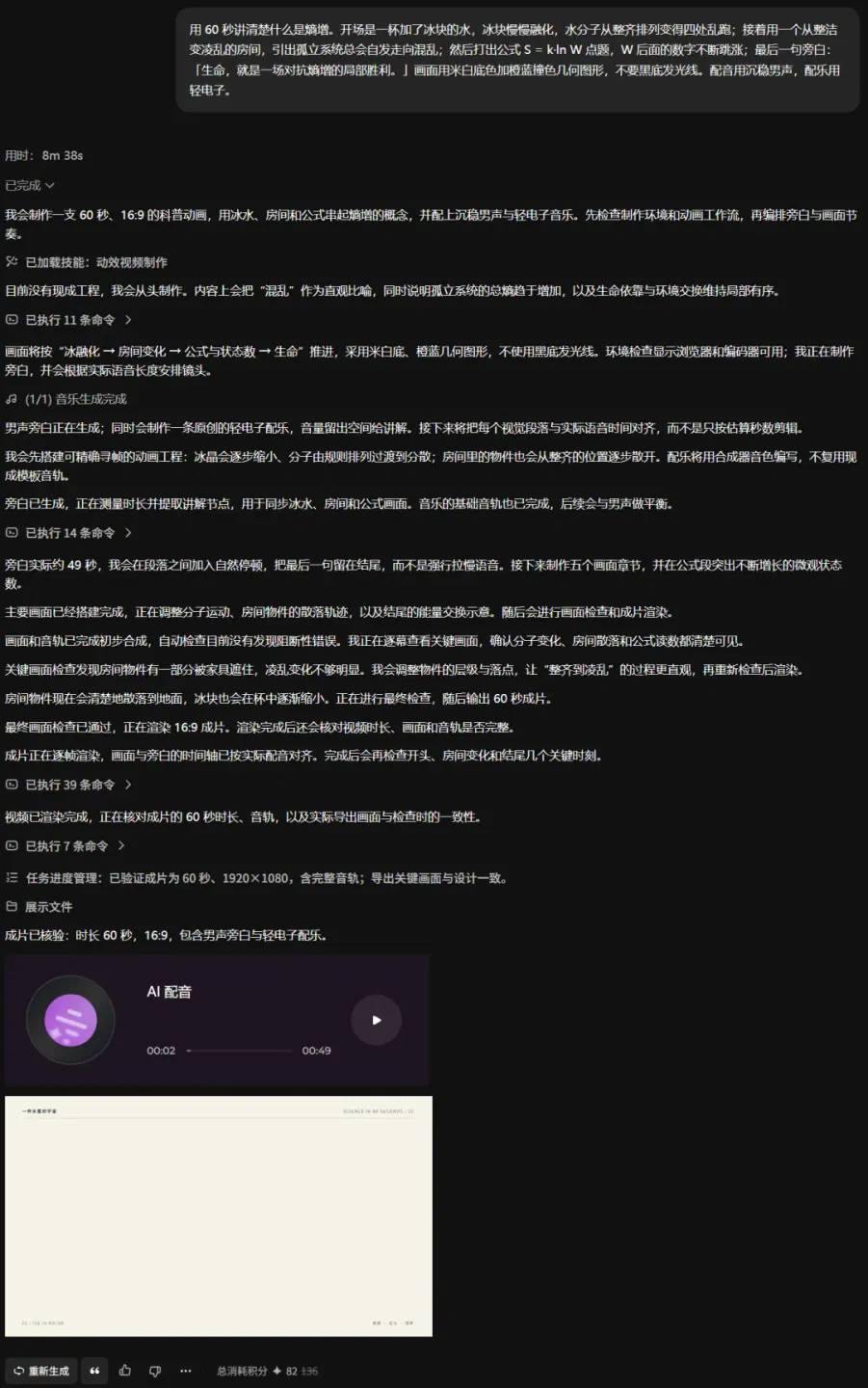
As can be seen, Jimeng Motion Studio first analyzes and understands the user’s intent, then plans and invokes the relevant skills. It generates the voice-over and visuals separately, renders them together and finally verifies that the generated video meets the requirements.
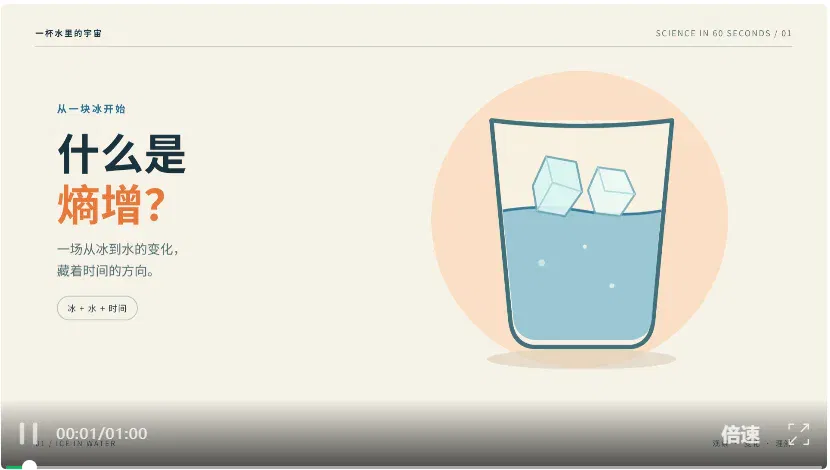
Overall, both the melting-ice and messy-room analogies were presented very well. The formula S = k·ln W rendered accurately, the colors matched the requirements, and the voice-over and visual transitions aligned closely.
From entering the prompt to receiving the finished video took less than ten minutes. Visuals, voice-over and music arrived together in one pass, with no need to open a browser for screen recording or find audio assets separately. Of course, a 60-second short like this may still fall short of work a professional team has polished for weeks. But for an individual creator wanting to quickly test a topic and see the result, the barrier is already low enough to “make it as soon as you think of it.”
We can also directly use preset templates to reuse artistic styles already vetted by Jimeng itself. For example, we chose the “Glowing Particles” style and reused the prompt above, obtaining a more aesthetically appealing explainer about increasing entropy:
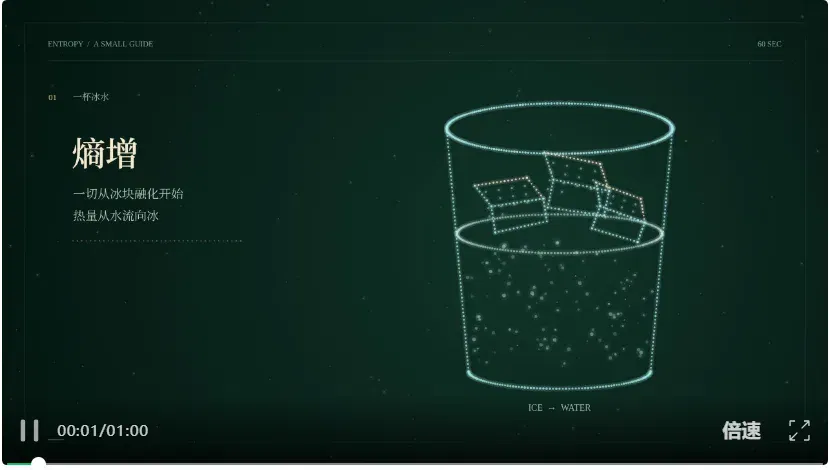
Of course, we can go further and refine the prompt, style and other details—for example, specifying content, adding the Synced logo, or supplying existing assets and narration.
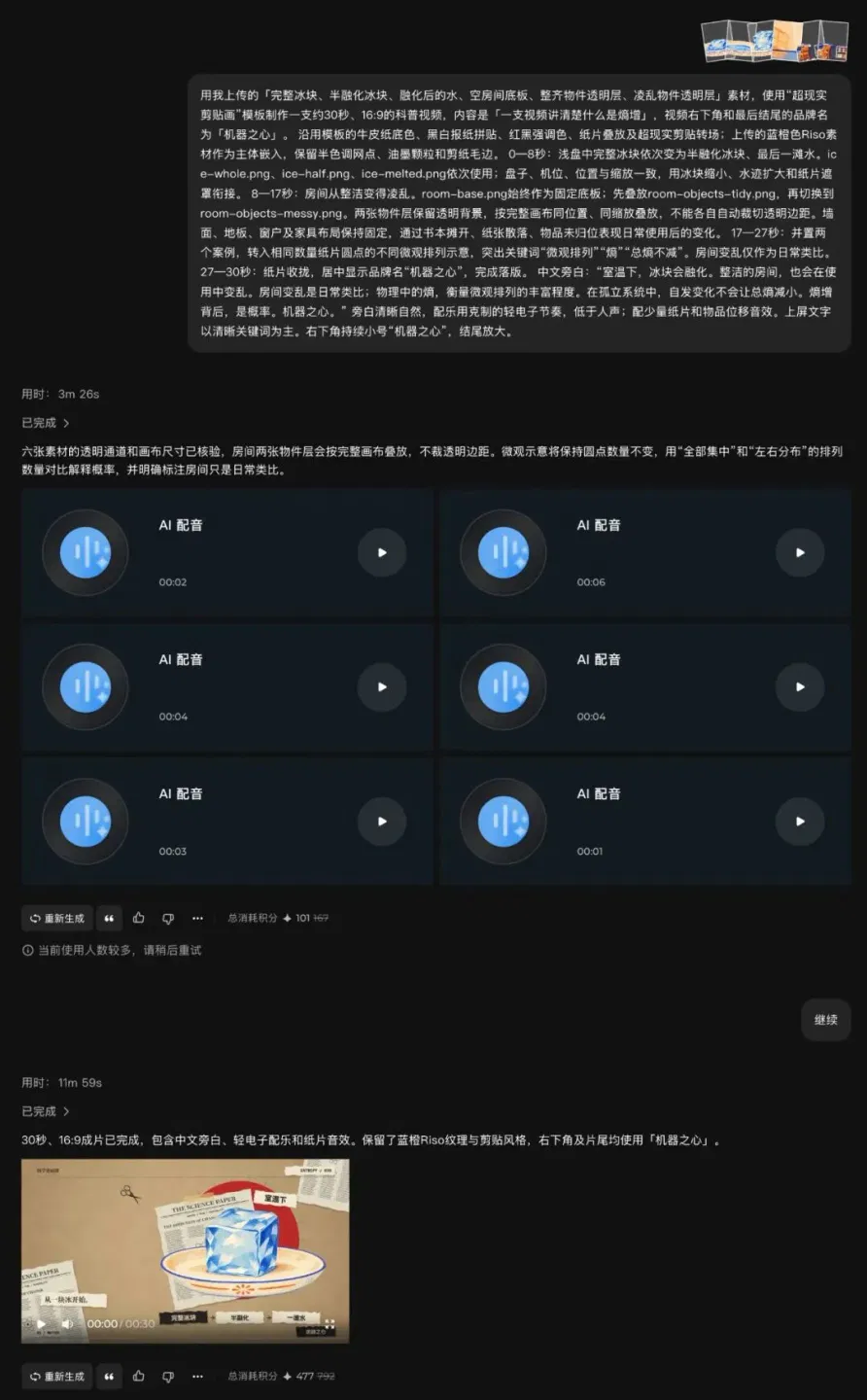
This produces a more pleasing, eye-catching version:
Next, we extended the length to three minutes and switched to Asimov’s “laws of robotics”: from the Three Laws first presented in full in the 1942 short story Runaround to the Zeroth Law added in 1985’s Robots and Empire.
This time, we approached the prompt like a storyboard and made it extremely detailed. The video had five acts, each timed to the second, with specified visual elements, exact narration, colors and music. We even explicitly described how the three laws should stack like blocks into a tower and in which act the robot should go round and round a selenium pool.
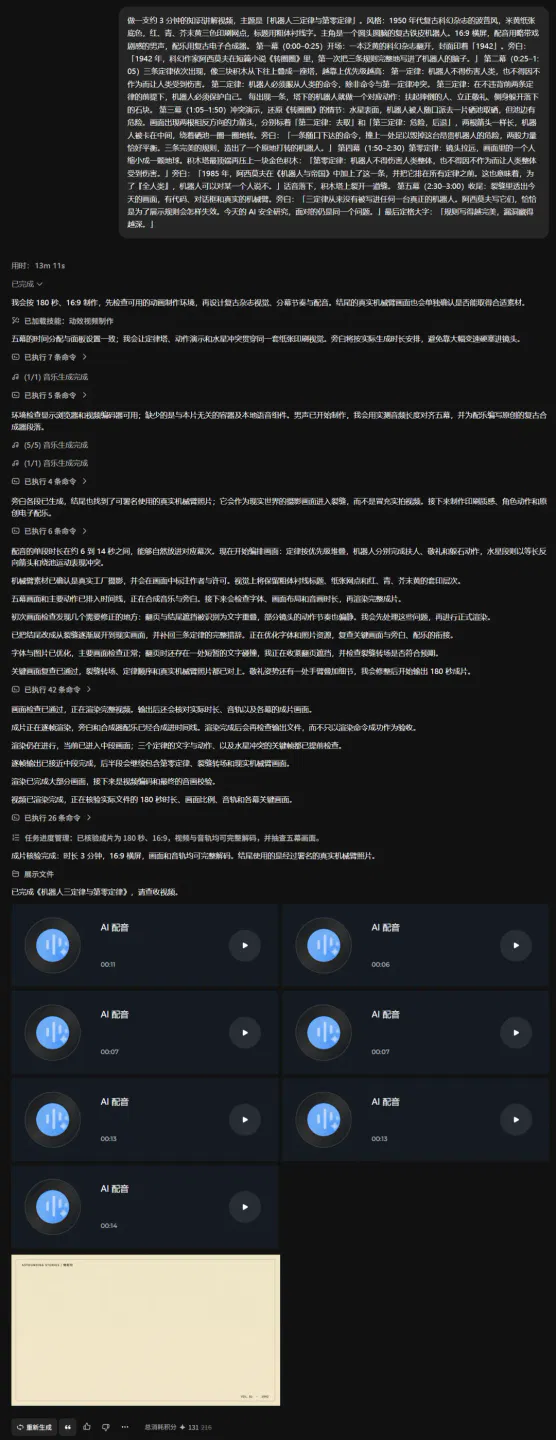
After Motion Studio ran for about 13 minutes, we received the first version.
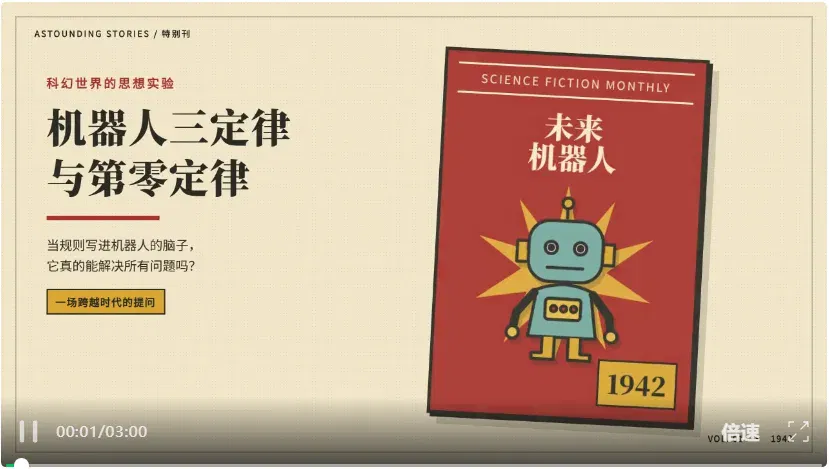
The result matched the prompt, but the problems were obvious too. The prompt locked down each act’s length and content, leaving Motion Studio very little room for creativity; it could basically only execute the instructions as given. The resulting three-minute video was loosely paced, with long gaps between several stretches of explanation, and was not tight enough overall.
Fortunately, Motion Studio also supports multi-turn conversation. We added a single sentence of feedback in the same conversation, and Motion Studio rearranged the entire video.
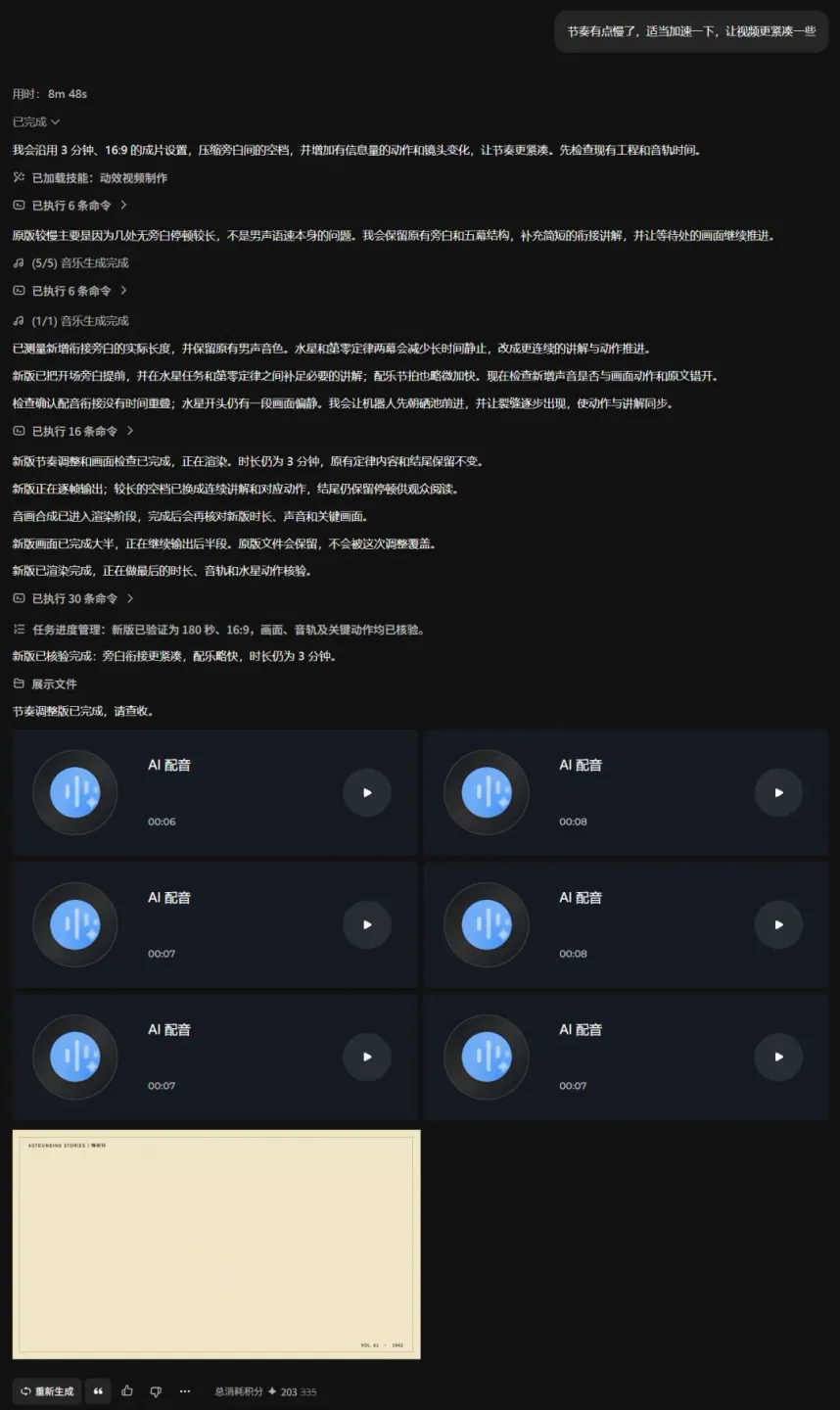
More interesting was how it interpreted that feedback. As can be seen, we originally only asked for faster pacing. But it judged that simply shortening the gaps between narration would not be enough, so it added informative movement and shot changes where there had been empty space, ensuring the visuals kept advancing alongside the explanation. This went beyond merely following an instruction to understanding the intent behind it.
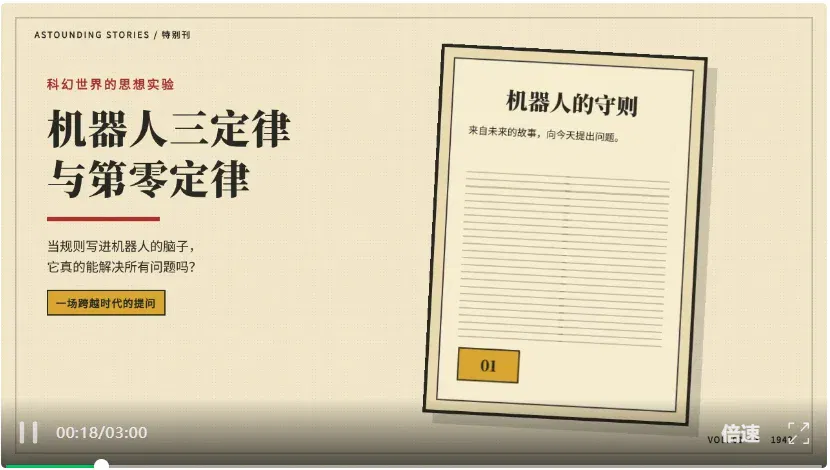
This round also taught us a lesson: with Motion Studio, a more detailed prompt is not necessarily better. Locking down the storyboard means taking on the entire director’s job yourself. Giving it the topic, key points and style while leaving room for it to arrange the presentation may actually produce better results.
So next we went in the opposite direction, choosing a “Pixel Adventure” style template and giving it one sentence:
Make a knowledge-explainer video two and a half minutes long explaining RSI (Recursive Self-Improvement).
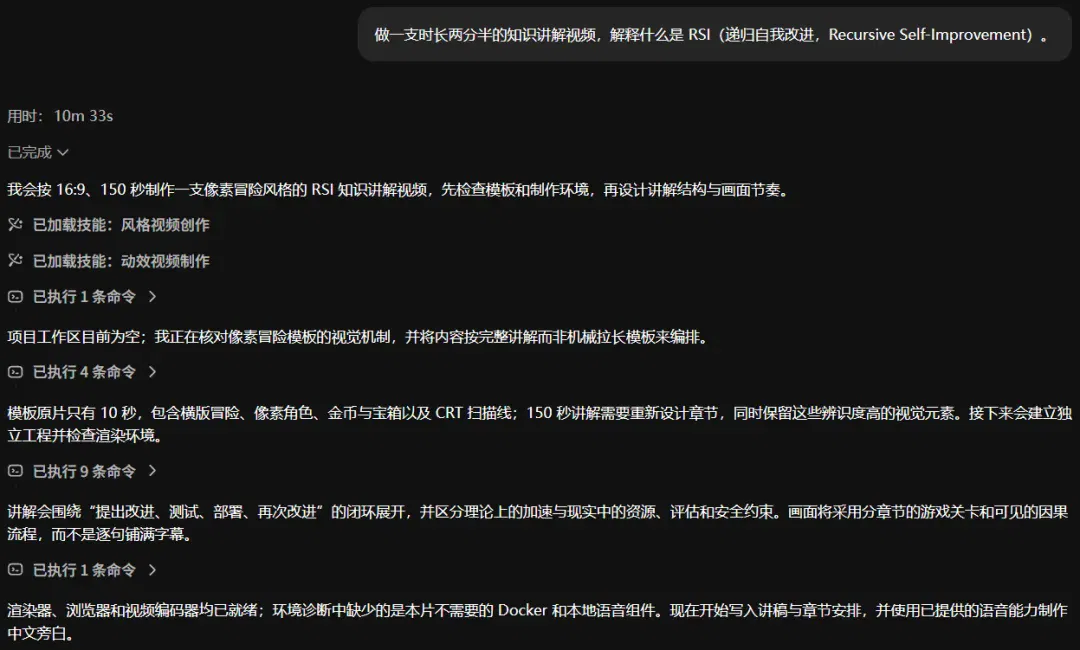
That sentence contained no structure, key points or color scheme; we had only selected a preset template. For RSI, we supplied only its name and Chinese translation. This choice of topic was deliberate: recursive self-improvement is a relatively frontier and abstract concept in AI, making it a strong test of Motion Studio’s ability to “understand content and organize its expression.” We wanted to see whether it could independently break a concept down into an explanation ordinary viewers could understand.
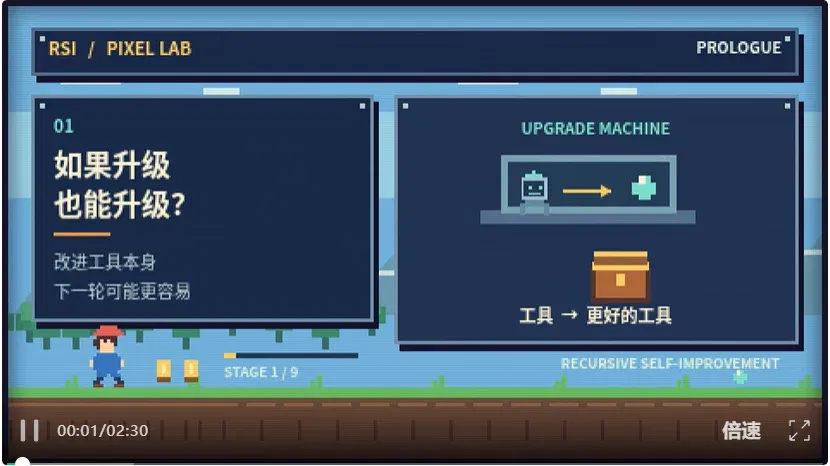
The result substantially exceeded our expectations. Motion Studio not only followed the “Pixel Adventure” template’s style well but also explained RSI’s basic concepts and logic clearly and concisely. It also showed the practical difficulties RSI faces, offered the measured view that “scores do not equal safety” and placed particular emphasis on RSI’s safety boundaries.
The final test was the hardest: a four-minute humanities short tracing more than 3,000 years of Chinese character evolution through “马” (“horse”). This prompt fell between the previous approaches: it gave a narrative outline and stylistic direction without specifying each act’s length and visuals:
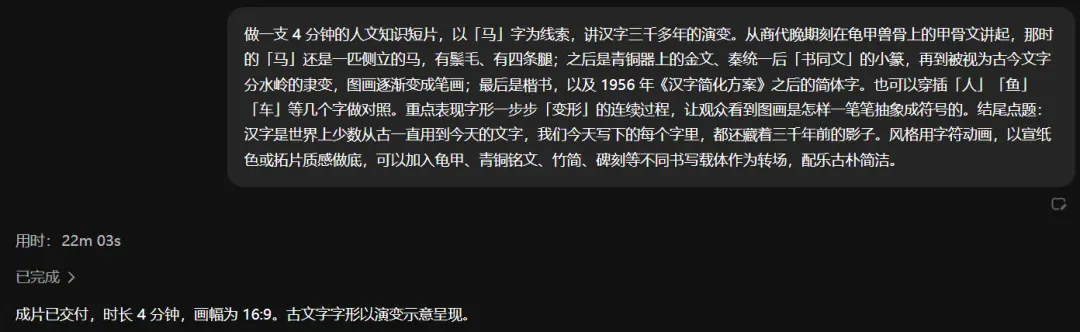
The challenge of a humanities subject differs from the previous tests. Explaining increasing entropy or RSI depends on explaining a concept clearly. Explaining Chinese character evolution depends on specific knowledge: exactly what “马” (“horse”) looks like in oracle-bone inscriptions, bronze inscriptions and small-seal script. Even one wrong stroke is unacceptable.
The result confirmed this. In the first finished version, the character “馬” (“horse”) was written incorrectly.
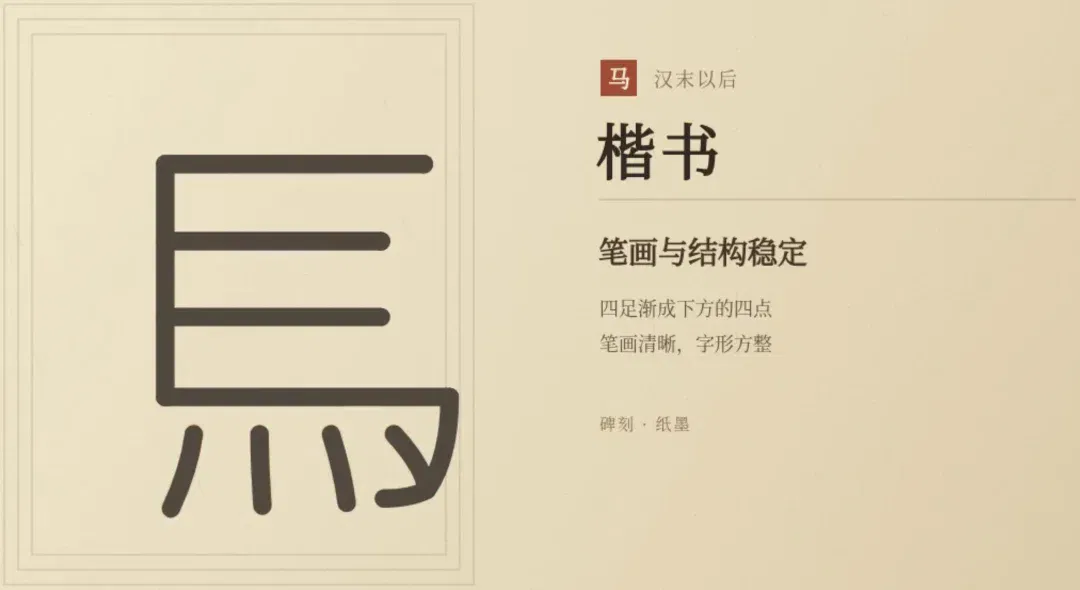
We then supplied some reference materials, which Motion Studio used to make corrections.
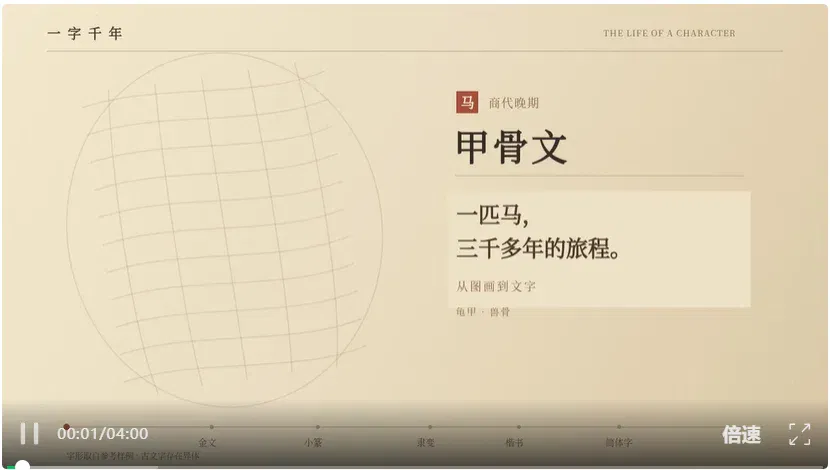
This episode illustrates one feature of the code-driven approach. Text is typeset and rendered directly through code, avoiding the garbled or blurred lettering common in generated imagery. But whether a character’s form is actually correct still depends on the model’s knowledge. Fortunately, the erroneous part can be precisely located and modified on its own, without starting over. For serious knowledge content, the creator’s review remains irreplaceable.
After four sets of tests, we had a rough sense of how Motion Studio works:
- Prompts should provide direction without locking down the storyboard;
- Multi-turn conversation is one of its most practical capabilities: a single sentence of feedback can bring a complete rearrangement;
- Details involving specialist knowledge require creators to provide references and check them personally.
Beyond the hands-on tests, two further questions deserve attention: Why are videos such as Vibe Knowledge naturally suited to being made with code? And what gap is Motion Studio filling?
Vibe Knowledge
is really video created through “choreography”
Look closely at these videos and you will find that they are basically not “filmed.” Their visual elements are text, formulas, charts and geometric shapes. Where they sit, when they appear and the rhythm of their motion are all essentially designed and choreographed.
This differs from what video-generation models do best. Video models generate consecutive frames in pursuit of realistic lighting, materials and natural motion, making them suitable for lifelike scenes. Knowledge explanation needs something else: symbols in formulas must be correct, arrows in flowcharts must point the right way, every character in a title must be crystal clear, and information must unfold layer by layer in the order of the explanation. This demand for precision and order is exactly where code excels. Every element’s position, size and entrance timing are written into code, leaving a clear path for revisions. This is precisely what allowed the correction of “馬” (“horse”) in the earlier Chinese-character test to be so targeted.
But between “a model writes animation code that runs” and “a video ready to post on Douyin,” a great deal of manual work still remains. The code must run in a browser and then be screen-recorded or exported. Narration must be produced separately, music found separately, and the rhythm of sound and visuals aligned manually. Changing one detail often means going through the entire process again.
Another problem is homogeneity. Many Vibe Knowledge videos use similar dark backgrounds, glowing lines, particle effects and electronic background music, making them increasingly difficult to tell apart. Tools have lowered production barriers without also providing aesthetic judgment. This was also why we deliberately requested “no glowing lines on black” in the entropy test.
In other words, this trend has already demonstrated the demand. What is needed next is a product connecting “understanding content, arranging visuals, voice-over and music, and exporting the finished video,” while offering more diverse visual languages. This is exactly the position Motion Studio is targeting.
Motion Studio
Describe ideas in words and compile visuals with code
Motion Studio follows the October 26 launch of Short-Drama Studio as another professional tool from Jimeng for a specific creative workflow.
According to Jimeng’s definition, Motion Studio offers video creation through “describing ideas in words and compiling visuals through code”, with preset templates to help users get started quickly. Its scope extends beyond Vibe Knowledge. It includes text animation such as title openings and animated memorable quotes; event promotion such as previews and promotional posters; product introductions such as selling-point demonstrations and brand shorts; knowledge explanation such as concept diagrams and process explanations; and creative effects such as transitions, 3D rendering and code-inspired styles.
How does it relate to Jimeng’s existing video-generation capabilities? According to the product introduction, Motion Studio videos center on precisely arranging text, images and graphics, emphasizing distinctive visual styles, controllable motion effects and coordination between sound and visuals; video models such as the Seedance series generate consecutive frames to depict scenes, lighting, materials and natural movement resembling live-action footage, focusing more on realistic texture and visual expressiveness.
In our view, these are two approaches on the same platform: one pursues “looking real,” while the other pursues “explaining clearly.” Video generation addresses visual expressiveness, whereas Motion Studio demonstrates the expressive power of information.
From an idea to a finished video
The first problem Motion Studio wants to solve is this: many people have something to say but do not know how to present it.
After users provide a topic, text or materials, the system helps organize the content structure, highlight key points, arrange the pace of the explanation and generate narration. Its goal is first to organize the information into a coherent presentation. For many creators wanting to try Vibe Knowledge but stuck at the scripting stage, this may be more useful than the visuals themselves.
For example, in the earlier RSI explainer, we supplied only a term. The system independently chose laboratory records as its background setting and built the explanatory structure “introduction → concept → mechanism → reality → safety → summary.”
The second problem is control. Motion Studio uses code to arrange the layout, entrance order and movement rhythm of text, images and graphics, making the visuals follow the unfolding content. Because text is typeset and rendered directly through code rather than “drawn” pixel by pixel by a model, titles, formulas and data labels do not blur into a mess. This is especially important for Chinese content. The character test reminds us, however, that a character being “written clearly” and being “written correctly” are different things. The latter still depends on the model’s knowledge and the creator’s review.
The third problem is style. Motion Studio offers preset styles including animated typography, retro pixels, geometric animation and creative collage. Its visual languages range from geometric abstraction and ASCII characters to pop art and Y2K, while the music also responds to the mood and rhythm of the visuals.
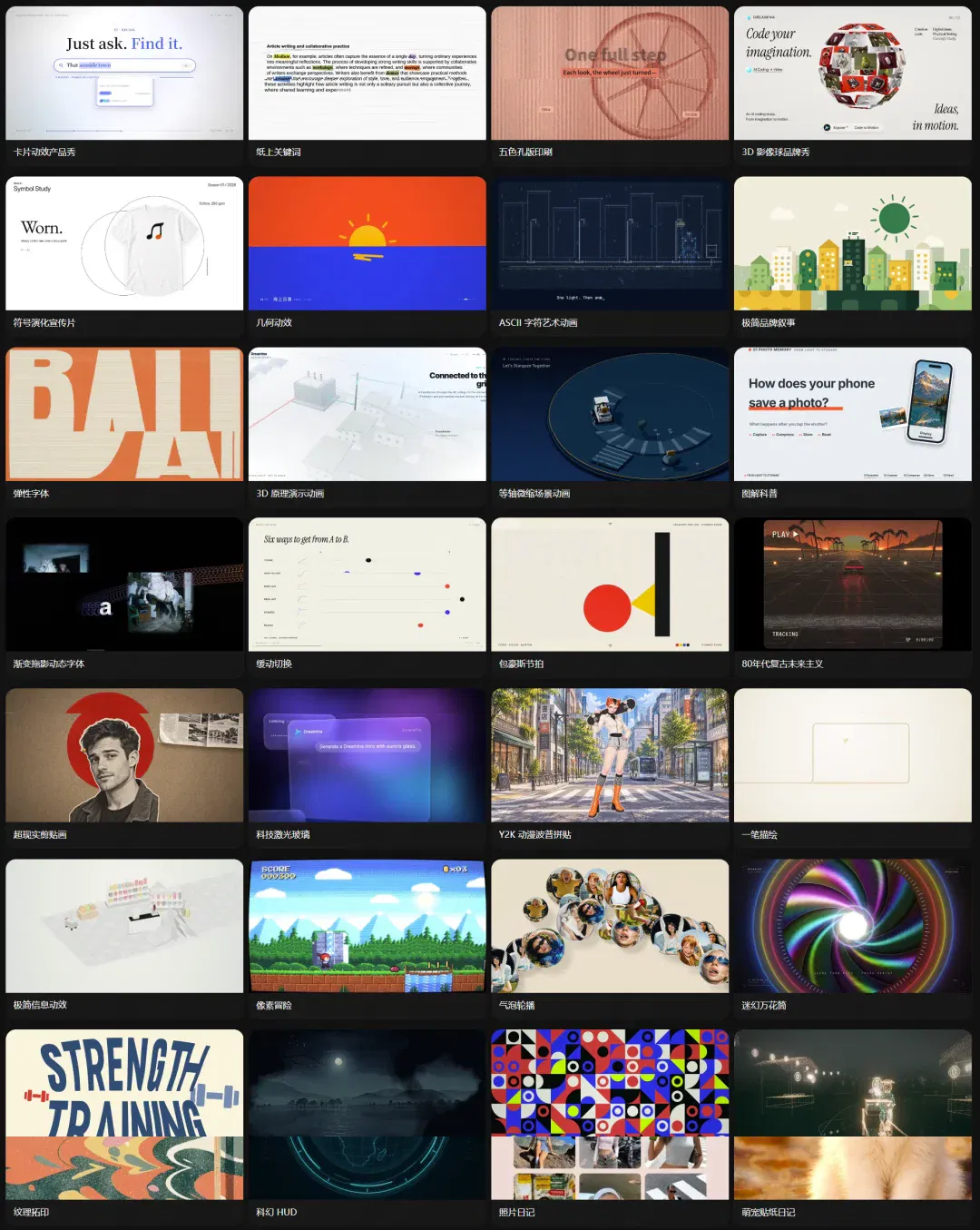
Users can incorporate their own elements into a template, then keep adjusting content, style and pacing through multi-turn conversation to gradually polish the work. This responds to the earlier problem of homogeneity to some extent: with enough visual languages available, “glowing lines on black” is no longer the only answer.
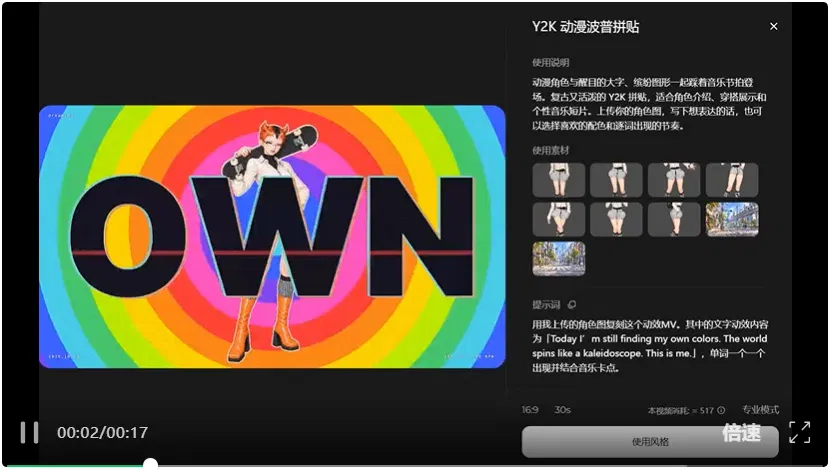
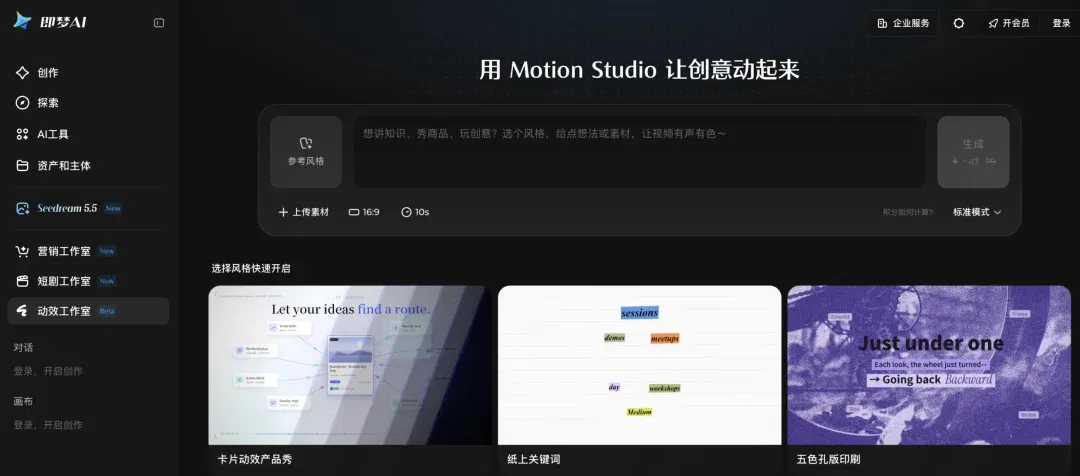
Getting started is not complicated. Sign in on Jimeng’s homepage in a desktop browser and click “Motion Studio” on the left. Under “Choose a style to get started quickly,” pick a style card you like and click “Use”; the system automatically fills in an example prompt. Then change the topic, text and colors, upload materials as needed, and set the aspect ratio and duration. After confirming the estimated credits, click “Generate.” Not satisfied with the result? Describe the requested changes directly in the current conversation to generate it again. Once satisfied, click “Download” on the video.
The automatically filled example prompt is a thoughtful touch. Instead of confronting new users with an empty input box, it lets them start by modifying an example that already works.
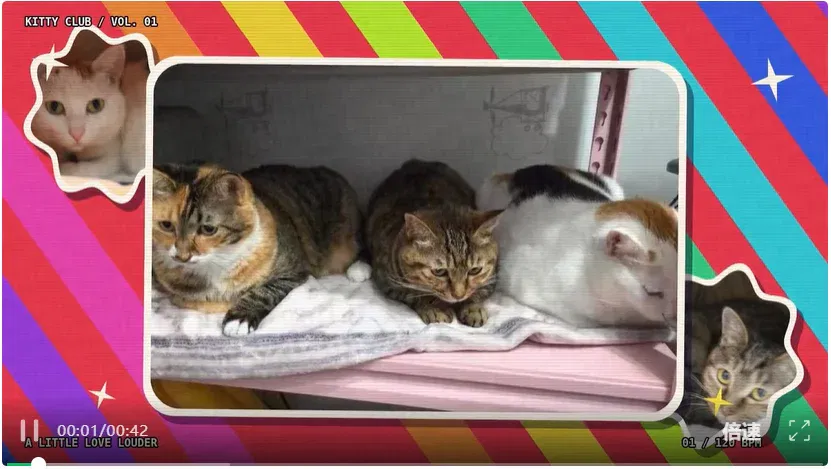
For example, we used the “Y2K Anime Pop Collage” style template shown above and seven cat photos to create an animated music video:

Jimeng’s toolbox
is expanding into more use cases
It is easier to understand Motion Studio’s position by placing it within Jimeng’s product history.
Jimeng started with AI image and video generation, then progressively added intelligent canvas, story creation, digital humans and motion imitation. Short-Drama Studio, launched on October 26, integrates script organization, character and scene management, storyboard generation, video production and postproduction adjustments into the same project. It also provides the in-house script model DreamScript, image model Anycook and storyboard model DreamShot.
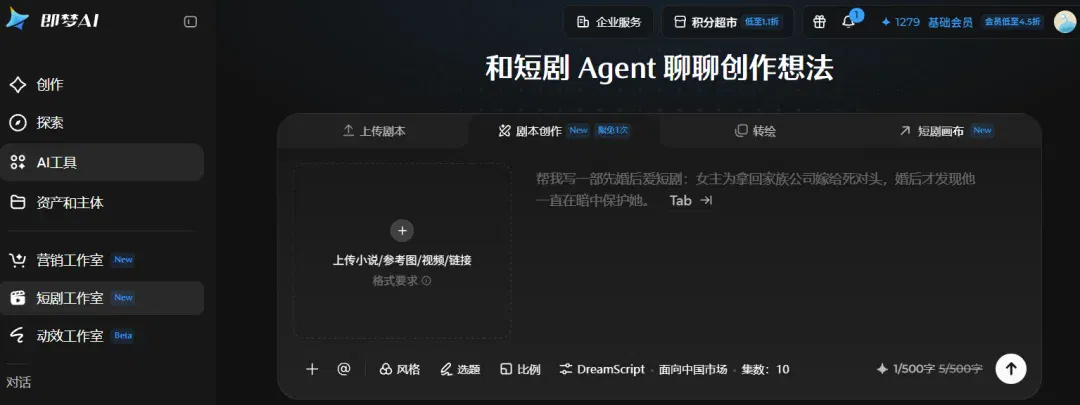
Looking at Short-Drama Studio and Motion Studio together reveals a clear product approach: package models, workflows and professional tools into individual “studios” for specific creative use cases.
Short-Drama Studio serves creators who want to tell complete stories, with a focus on keeping characters, settings and plots consistent across dozens or hundreds of episodes. Motion Studio serves creators who want to explain information clearly and with a sense of design, focusing on precise coordination among text, graphics and sound. These two kinds of content have very different production methods. A single platform accommodating both means its spectrum of creators is clearly broadening.
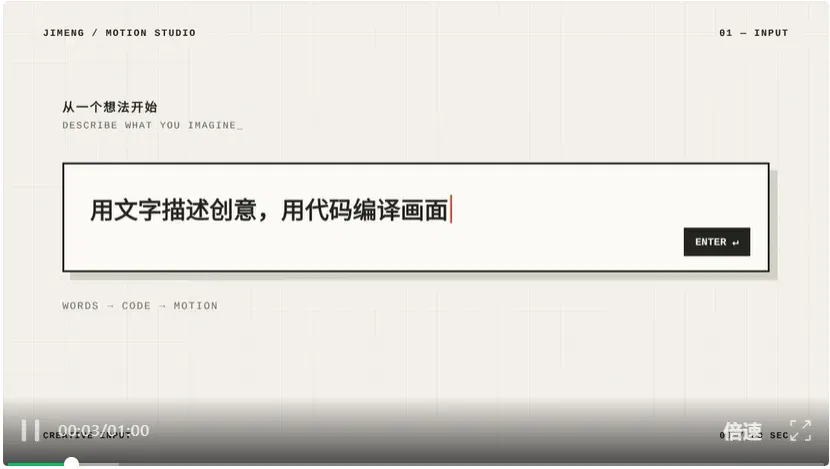
Below, we also had Motion Studio generate a short video introducing itself:
And this spectrum continues to expand. According to Jimeng, it will also soon launch “Marketing Studio” for marketing content production in e-commerce and for brands.
As we understand it, Marketing Studio continues the idea of “describe it to create it.” Users can add “products” and “characters” in the creation area, describe their desired marketing video in a single sentence, and set reference content, style, aspect ratio and duration. The studio will also offer a series of quick functions for marketing use cases, including video recreation, product replacement, product photography, product advertisements, multiple image sizes, video aspect-ratio changes, image translation and advertisement-poster recreation. These cover common stages from generating product images and finished video ads to adapting them to multiple sizes and distributing them in multiple languages.
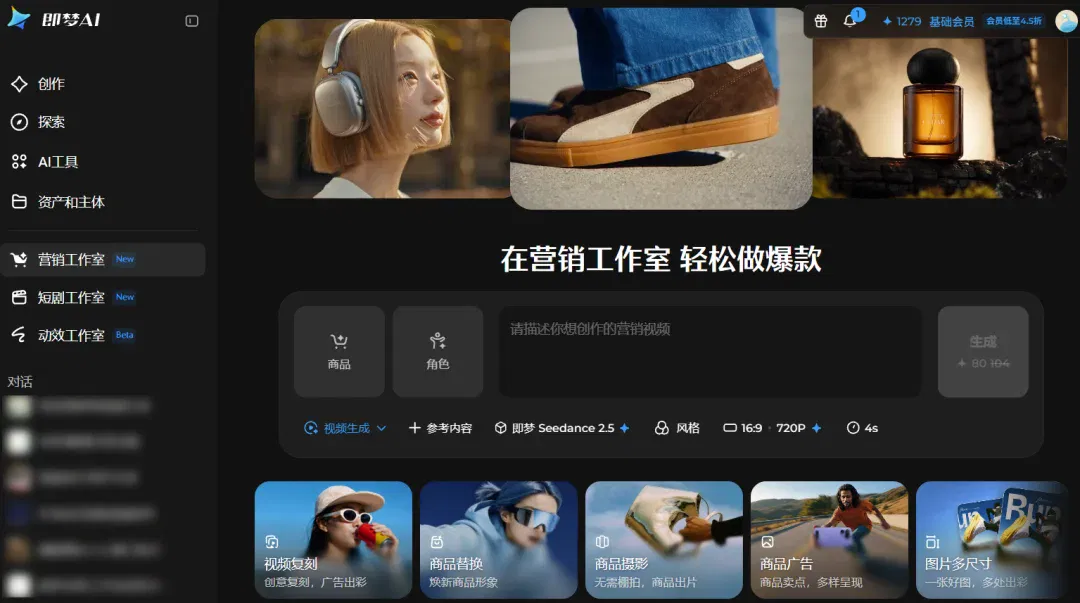
To sum up, Short-Drama Studio addresses “telling a good story,” Motion Studio addresses “communicating information clearly,” and Marketing Studio will target “selling products.” The three studios correspond to three very different kinds of creative needs.
Closing thoughts
The popularity of Vibe Knowledge provides a useful illustration. At its core, it represents an unlocking of supply. Demand for knowledge content has always existed; turning abstract concepts into appealing animation was simply too expensive in the past. Once tools lowered that barrier, large numbers of people previously unable to enter this field poured in.
But Vibe Knowledge is only one kind. Creative needs themselves are diverse. Some people want to tell a story serialized across hundreds of episodes; some want to explain a concept clearly; others want an opening for an event or a demonstration of a new product’s selling points. Still others need to produce dozens of advertising assets in different sizes and languages within a short time. The production methods behind these needs differ, making it hard for one workflow to meet them all.
Jimeng’s answer is to separate them by use case, with one studio for each kind of creation. Short-Drama Studio tells complete stories; Motion Studio communicates information clearly and with design flair; the forthcoming Marketing Studio focuses on products and advertising. Model capabilities form the foundation, while studios translate them into workflows and tools familiar to each type of creator. The richer the supply of tools, the more content can be made that people previously “wanted to make but couldn’t.”
Good tools free creators from tedious execution, leaving them to devote their energy to what truly matters: the idea itself.
This article comes from “Synced,” by Panda.
Related topics
After reading
Join the AINRK community
Read how to join the community and connect with people working in AI.
Related articles
Continue reading related topics and articles in this category.

Seedance 2.5 flash launches; Zhidx tests a 15-second cat parkour video (opens in a new tab)
ByteDance reports faster generation and lower prices. Zhidx tests shot transitions and text stability in a 480P clip, finding that some background signs still lose parts of their characters.
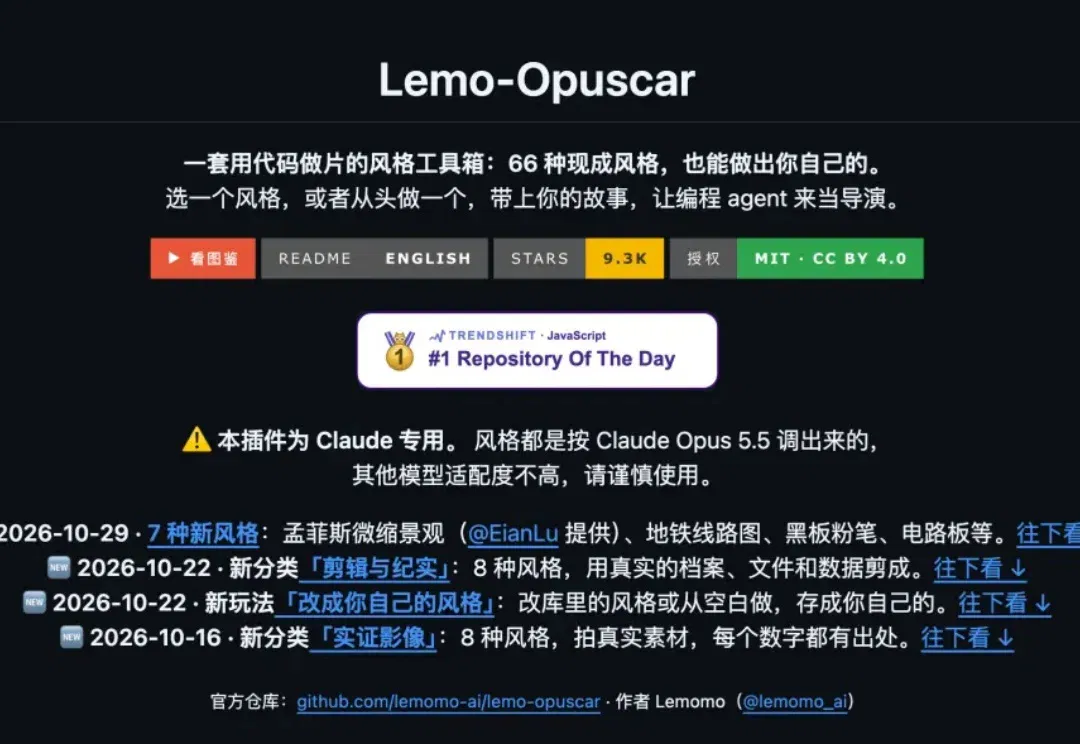
九个开源动画项目,从代码绘画到视频编排 (opens in a new tab)
文章整理九个制作动画、讲解短片和产品视频的项目,介绍风格模板、分镜、可修改工程及本地渲染环境。项目热度采用报道时点的数据。

Sand.ai 完成 2 亿美元 A+ 轮融资,10 个月累计融资 3 亿美元 (opens in a new tab)
智东西报道,视频模型公司 Sand.ai 宣布完成 A+ 轮融资,并计划继续投入模型、推理基础设施和海外业务。报道还梳理了 MAGI 系列路线及 VidMuse 的公司披露数据。
Viggle 推出 Remake:用文字修改视频角色、场景与风格 (opens in a new tab)
Viggle推出AI视频二创新界面Remake,用户上传视频并用一句话即可替换人物、服装、道具和背景,调整特效与风格,同时尽量保留原有动作和镜头节奏,支持最长2分钟视频及对话式修改。
深度|Sand.ai融资2亿美元,资本押注视频模型的开源未来 (opens in a new tab)
Sand.ai宣布完成2亿美元A+轮融资,并继续推进MAGI系列视频模型与开源生态。文章介绍MAGI-2 Preview的114B总参数、约6B单次激活参数及后续正式版计划;开源商业回报与赶超闭源模型仍需后续验证。