Kimi's Tang Feihu on restrained harness design and open-source diversity

Baijing Lab interviews Tang Feihu, who works in developer relations at Kimi. He discusses unwanted public attention and argues for restrained harness design, more fundamental benchmarks and diverse open-source approaches. These are his personal views.
Editor's verification: This is a public interview with Tang Feihu. His personal statements and technical opinions are not Kimi company announcements. The judgments about Coze's future, drug development timelines and mathematical problems are not accompanied by verifiable announcements, papers or experimental scope, and should be read as the interviewee's views. NVIDIA's announcement confirms Jensen Huang's departure on November 12, but does not confirm the political reasons speculated about in the interview. The source does not provide a complete interview timeline linking the event date with the subsequent background. Original public interview report; (opens in a new tab)NVIDIA CEO transition announcement (opens in a new tab)

On October 18, Kimi engineer Tang Feihu appeared in a maid cosplay outfit at the 2026 Yunqiao Conference, organized by Jiepeilian. During the multi-person discussion at Roundtable π, he wore a cobalt-blue wig with blunt bangs and long curls, a long ruffled dress, and elaborate makeup.
There is an intriguing contrast about Tang. Rather than calling him Tang Feihu, friends and colleagues are more accustomed to calling him Xiaodao or Daoniang. A few months ago, he gave an interview wearing women's clothing. The video was unexpectedly rediscovered recently and quickly made him famous online, introducing more people to Kimi's 'cross-dressing tech star.'
The advantages and frustrations of that attention are both obvious. He has gained more opportunities for exposure, and his repeated appearances at industry conferences make him seem like a walking ambassador for Kimi's culture. In private conversations and online discussions, people cannot help wondering what kind of company allows employees to express themselves so freely at public events.
Today, Tang's cosplay is DeepSeek's signature whale outfit. He tells us that his Kimi costume is not ready yet, so he could not wear it in time. At home, he has not only a DeepSeek whale costume but also a Claude holy-maiden outfit.
The article's author believes his public expression may encourage young people with similar interests in clothing or cosplay. No specific, verifiable family cases are provided here, and no one's identity or experiences should be inferred from this.
Of course, much of the attention comes from outsiders' curiosity about something unusual. One Kimi user even told Tang that a neighbor, a trader in Chinese medicinal herbs, had begun asking about him. Tang receives three or four private messages like that every day.
This bothers Tang somewhat. He only wants to enjoy his interests within his own small circle.
Tang has been wearing women's clothing and doing cosplay for more than a decade. He is also obsessed with algorithms and competitions, having competed in or coached at dozens of international computing competitions. In the interview, he says advances in AI coding led him to shift his work focus to serving developers at Kimi. This does not mean AI has surpassed every programmer's ability to write code by hand.
On the eve of the Yunqiao Conference, Tang spoke with us for nearly two hours. He addressed some controversies about his identity and offered several less conventional judgments about the large-model industry: Harnesses are not that important; models should tackle more fundamental benchmarks rather than obsess over scoring contests in office applications. What matters most for the open-source ecosystem is retaining enough different technical approaches.
In an era when everyone is busy chasing model iterations and competing for industry positions, Tang seems to preserve a part of himself that refuses to be tamed by work.
01
I've become a case of survivorship bias
Baijing Lab: You've recently attracted attention beyond your usual circles for wearing women's clothing. Last year, Dify engineer Zhou Yu also came to public attention. People discussed programmers wearing women's clothing in the early mobile internet era too. Why has the discussion suddenly picked up again?
Tang Feihu: I'd like to know too. That video was recorded a few months ago. I don't know why it suddenly started getting shared everywhere. It's actually been bothering me.
Baijing Lab: Why does it bother you?
Tang Feihu: I don't want unrelated circles to see me. This outfit has nothing to do with people outside the community. For example, look at this. (He shows us a WeChat conversation on his phone with a Kimi user. It turns out that the user's neighbor, a merchant selling Chinese medicinal herbs, had been asking the user about him.) That feels a little intrusive, and it bothers me.
I get lots of messages like this every day. It feels like I'm being stared at. Do you understand?
I don't want to open most of the reports, because I feel they're distorted. It leaves me feeling rather powerless. Maybe that's just how the internet is.
Baijing Lab: Public reports show you giving a talk in women's clothing as early as 2017. But it seems you've appeared at fewer events dressed that way in recent years?
Tang Feihu: No, I've always attended events wearing women's clothing. Isn't this kind of dress perfectly normal for a trans—transgender—person? When I'm overseas, I don't face so many problems. People don't look at it as some kind of curiosity.
Baijing Lab: Have you read the comments on the video that later went viral?
Tang Feihu: I don't dare look. I just want to enjoy my interests within my own small circle.
Baijing Lab: I looked at the comments on X, and I thought the overall response was fairly positive. Some asked whether it was being treated as a curiosity. Others said they hadn't expected Kimi's culture to be so inclusive—no wonder Kimi is called Moonshot.
Tang Feihu: In China, if someone has an income and can get things done, people may be a little more tolerant of them. Recently, I've also seen young people in situations similar to mine use my example to persuade their parents. But these things aren't actually that strongly correlated.
Baijing Lab: What do you mean isn't strongly correlated?
Tang Feihu: Being transgender and working in computing aren't strongly correlated. People are applying survivorship bias to me. Can you understand that?
Baijing Lab: You previously did a podcast with a former Google colleague about yuri. You just said people were applying survivorship bias to you. Are there quite a lot of people in situations like yours?
Tang Feihu: We were discussing appreciation of yuri works—stories about romance between women. That has nothing whatsoever to do with your sexual orientation or your gender identity.
Deng Yu, the mathematician who recently won a Fields Medal, also likes yuri works. Again, those are completely unrelated things.
02
Large models all have their own 'AI girls'
Baijing Lab: What I also wanted to ask is that Whale Girl has become popular in the DeepSeek community, and the 'AI girl' narrative has taken off. That includes you and Zhou Yu. It may not have been intentional, but from another angle it has happened. One interpretation is that competition in large models is so fierce that companies can only rely on these unusual tricks?
Tang Feihu: That's an interesting question to answer.
First, the premise combines two separate things. Zhou Yu's case and mine are entirely independent of Whale Girl.
Whale Girl is part of anthropomorphism in anime and manga culture, which has existed for more than a decade. When artists see something abstract, they draw it as an anime character based on its characteristics. It could be a girl or a man. Anything can be personified, such as guns. Chinese games like Azur Lane and Girls' Frontline depict personifications of guns. Then there is Touken Ranbu, which personifies bladed weapons. Many 'a-you'—a term for members of China's anime and manga community—also draw foods or cultural artifacts as people. Even programming languages such as C++ and Python have their own personified characters.
Turning large models into female characters fits the anime and manga community's established habits very well. At a convention last year, I even saw someone cosplaying a male version of DeepSeek, but that character didn't attract much attention outside the community.
From a creative standpoint, personifying something without a concrete form, like a large model, is very interesting. Almost all large models now have their own anime characters, except Doubao. Some shops are making costumes and plush toys of these characters. They may spread more widely than the official images.
This also reflects another cultural phenomenon: meme culture. Whale Girl has become a meme. Jensen Huang has become one too.
Baijing Lab: Why have they become memes while Kimi hasn't?
Tang Feihu: Kimi has one too. You can find the character in lots of Bilibili videos. It's just that DeepSeek has reached more people outside the community. Its Flash version is inexpensive and has more users. The more people use it, the farther the corresponding meme spreads.
Baijing Lab: You also wore a whale outfit at the Yunqiao Conference. As the person responsible for developer relations at Kimi, you're wearing DeepSeek's whale costume? (Laughs.)
Tang Feihu: Because Kimi's isn't ready yet. It'll take another month. I don't just have a DeepSeek whale costume; I also have Claude's holy-maiden outfit.
Baijing Lab: So, returning to the original question, do you think competition in large models has reached a point where everyone needs to try something new to get attention?
Tang Feihu: I'm not doing that. I'm just being myself.
Baijing Lab: Why has it become popular now?
Tang Feihu: That's not on me. I've always been this way and never changed. Something interesting happened recently. Someone I met at an anime convention more than ten years ago, whom I hadn't spoken to since, saw me after I went viral and added me on QQ again. They said they hadn't expected me to still be active in anime and manga culture after all these years.
03
Harnesses aren't that important
Baijing Lab: That's another thing I'm very curious about. I feel many people around me change as they grow older, surrendering their interests, life and hobbies to work, particularly in an industry as competitive as large models. Yet you seem very carefree.
Tang Feihu: I think the key is that, after switching to DevRel, I don't need to 'Touch Production,' so I'm actually under less pressure than my colleagues. But if you're an engineer and want to grow faster and better, you do need to Touch Production. Working with a production environment means you can make mistakes and face the pressure of potentially causing the company losses.
Baijing Lab: You joined Kimi around 2024. Before that, your research enthusiasm had focused on blockchain applications. Why did you choose Kimi?
Tang Feihu: Because I wanted somewhere with compute where I could train large models. I interviewed at several companies. Only Kimi got back to me quickly, so I joined.
Baijing Lab: Why did you later move into developer relations?
Tang Feihu: For one thing, the pressure of engineering development was too great. We were working on open-source large models and needed someone to maintain developer relations. No one happened to be doing it, so I took it on.
Baijing Lab: How much pressure was there?
Tang Feihu: You can refer to the ByteDance data-poisoning case that attracted so much attention recently. Our situation was different, but it can serve as a reference.
Baijing Lab: When did you start doing developer relations?
Tang Feihu: Around the time K2 was released.
I've actually been learning while doing developer relations. Large models change very quickly, and it's a new technology, so the community accumulates lots of questions. You need to answer them, while new questions keep emerging. Some are things you've never encountered before: You realize, wow, you can do that too. It's a continuous process of learning and growing alongside the community.
A lot of users in our community are really amazing. Their questions and what they build with large models give me tremendous inspiration. Talking with these impressive users makes you better too.
Baijing Lab: Could you give an example?
Tang Feihu: For example, one of our users didn't have enough tokens and tried every possible way to save them. Using his own on-device hardware and the K3 model, he built a Subagent with very good performance, about as good as when he called the large model directly himself. He made a lot of inference optimizations within it.
Baijing Lab: How do you judge whether developer relations is being done well? Is DeepSeek's developer ecosystem more mature?
Tang Feihu: Not necessarily. It's hard to measure a developer ecosystem through KPIs. Developer relations is difficult to quantify because it's more about service and reputation. In China, Shenwang is doing well at the moment. Overseas, Amazon may be the best.
In China, developer relations is a luxury, particularly for small companies. It takes a large investment, and immediate results are hard to see. In fact, not many Chinese companies offer such positions. It was only after K3's release, when we had a larger user base and community, that we began organizing developer activities systematically, including recent Kimi community ambassador events in Shenzhen and other cities.
Baijing Lab: As a Kimi evangelist, have you noticed any new changes through your contact with developers?
Tang Feihu: After K3 came out, users had more questions and requirements. As model capabilities change, the questions change every month. That includes changes in how harnesses are used.
Even before DeepSeek released Harness, someone in our community was using Codis, the architecture it depends on, to access models through something like plugins. You'll notice that the ways people use models are changing, while the problems they hope to solve remain the same.
Baijing Lab: DeepSeek Harness was quite controversial when it first appeared. Many people couldn't understand its business model. They felt that, if it was meant for geeks, those users would just build their own specialized agents. Right now, what people use may mostly be plugins made by content creators. What do you think?
Tang Feihu: The plugin format isn't unusual. Lots of software sectors do things that way.
From a community developer's perspective, my core idea is that the open-source community should have more diversity. More product formats and categories benefit everyone in the community.
Baijing Lab: From a model vendor's perspective, Kimi launched managed agents on November 5, effectively providing enterprises directly with a harness foundation. That seems to be a different approach from DeepSeek Harness.
Tang Feihu: In the large-model era, whatever plugins or skills you need, just ask the model to install them. There's no need to make so much of plugins. Something you build today might be obsolete tomorrow. I think the more important question is how to subtract. For example, a recent Codex version update actually removed a lot of what had previously been there.
That's why building a harness is very difficult. You're grappling with something that changes dynamically. Many things you design today may stop working tomorrow. Coze, for example, can be considered a harness too. Many of its designs now look somewhat redundant, so it's already on its way to being taken down.
Baijing Lab: Do you favor the DeepSeek Harness approach?
Tang Feihu: I think it's good simply to offer users different choices. If everyone's technical approaches converge on the same thing, that's not a good ecosystem.
These approaches are different, and I don't think one is better or worse. Even if there is a difference, we can't tell at this point.
Baijing Lab: DSH seems to prioritize serving developers and appears unconcerned with commercialization.
Tang Feihu: You actually expect a harness to make money? Isn't a harness purely a public service?
Baijing Lab: How does Kimi's harness differ from DeepSeek's?
Tang Feihu: I don't think you can compare us with DeepSeek like that. Every company is in a different situation. For now, these are simply different choices of technical approach. We're not yet at a stage where we can say which is better or worse. Harnesses really are changing a lot. Many of our users, for example, can use Kimi Code to build their own harness to suit their needs, then adjust it. A customized harness may fit user needs better.
But is bigger and more comprehensive necessarily better? Coze has lots of plugins too, and isn't it now close to being taken down? This is difficult to judge. A model version update can also leave many plugins unusable. That isn't good either, is it?
Baijing Lab: Why have harnesses suddenly become so popular? What do they mean for model vendors?
Tang Feihu: They can be better adapted to a company's own models, allowing the models to perform better.
In any case, I don't think harnesses are as important as current community discussions make them out to be. They're constantly changing, a temporary, transitional solution.
Baijing Lab: Models are improving their agents' ability to handle long-running tasks, including collaboration among multiple agents. Is that shrinking the room for harnesses?
Tang Feihu: Yes. I've made several judgments, all of which have held up. First, I don't think harnesses are that important. People are overestimating their importance. Second, I think harnesses will always exist. As long as they exist, they can improve the end-user experience, whether by saving tokens or better constraining behavior. Third, harnesses themselves will keep evolving to fit models that are also evolving. Heavy design at this point isn't necessarily right. Harness designers need restraint and subtraction.
From the end user's perspective, having lots of choices is a good thing. You might face situation A today and situation B tomorrow. If there's something ready-made to refer to, you can use it directly. Building an Evaluation framework lets you immediately determine which harness to use in that scenario. For now, more choices are definitely better.
04
Targeting product-level benchmarks such as office work is shortsighted
Baijing Lab: Model capabilities are currently evolving toward agents handling long-running tasks. What trends and changes will that produce?
Tang Feihu: We're more focused on fundamental benchmarks. When we push up scores on those underlying benchmarks, improvements in agent performance are simply a side effect.
Baijing Lab: What do you mean by fundamental benchmarks?
Tang Feihu: Making the models smarter. OpenAI tackles unsolved mathematical problems to show that its models are smarter. Company A also experiments in drug discovery. Performance on these benchmarks has actually already surpassed human ability. Only producing good results on benchmarks like these is meaningful for models. The agent product-level benchmarks you mention are relatively shortsighted.
Baijing Lab: So the competition now is over benchmarks in areas such as AI for Science?
Tang Feihu: I think so. We need to look for benchmarks that truly matter, rather than restrict our attention to the product level. If pushing up scores on these fundamental benchmarks also improves the office-work and other product benchmarks you mentioned, that shows the model's capabilities have genuinely improved. That's what it means to improve benchmark performance in a generalizable way.
On many benchmarks, you'll find people reaching scores of 63 or 64, but you can't really see the underlying differences. Some of the truly fundamental differences between today's models aren't reflected very well in benchmarks.
Baijing Lab: What about the AA leaderboard that practically every model release mentions now?
Tang Feihu: I think those benchmarks may be too weak.
Baijing Lab: So model vendors all have benchmarks for their own new scenarios, but just haven't published them?
Tang Feihu: I think each vendor probably has some better benchmarks, but I don't know. If Kimi had a benchmark where improving the score from 30 to 40 also raised scores on every other benchmark, that would show this Kimi benchmark was more fundamental, because it affected all the others.
05
Global models are in a 'Twilight Struggle'
Baijing Lab: Part of your work involves training enterprise clients. From those contacts, what do you think enterprises care about most when choosing models this year?
Tang Feihu: I think they care most about the ceiling of a model's capabilities, cost and inference speed.
Baijing Lab: Some people in the market argue that most work and ordinary jobs don't need very powerful models. Many Chinese models have released Flash versions this year. Why hasn't Kimi?
Tang Feihu: That should be coming soon, I suppose. Kimi puts more emphasis on getting work done. But that is fundamentally a question of value for money too. Even if output tokens are cheap, if the model keeps making mistakes during a task and triggers lots of repeated inference, it may end up consuming more tokens. There's still a trade-off. Once large companies' purchases reach a sufficiently high level, they'll definitely consider that cost accounting.
Baijing Lab: This also seems to support a conjecture you posted on X in April 2023. You said there would be two kinds of AI: one consisting of large models controlled by big companies such as OpenAI and Google, the other of small open-source models and models deployed on local devices. You thought these two types of AI would go to war. What stage has that reached?
Tang Feihu: The war is already white-hot. It even got Jensen Huang pushed out. (Laughs.) It's a Twilight Struggle, you know? Huang wasn't pushed out for the reasons presented in the media. Fundamentally, he registered a Twitter account and supported open-source models. And of course, there was turning a blind eye to chip sales to China. So they went after him.
Huang is now on the front line of that Twilight Struggle.
There's a board game called Twilight Struggle, and its situations are similar to what's happening now. Players can represent the American and Soviet blocs. They don't fight directly, but each has many proxies and projects influence points into different spheres of influence. It's very much like someone wanting to project influence within a company such as NVIDIA—almost exactly the same.
You could use a large model to imitate that board game and help design a chip-war board game. It might even make one directly for everyone to play.
(Additional background: Interestingly, after our conversation, Jensen Huang's official verification on X was removed. Musk, who strongly supported Huang, subsequently restored it for him free of charge.)
Baijing Lab: What effect does the controversy surrounding Huang have on Chinese model vendors?
Tang Feihu: The impact on model vendors is still unclear, but it's definitely good for Chinese chips. They want to propose that NVIDIA chips should only run closed-source models. That's a bit absurd. To us developers, it's like people working in cryptography demanding that cryptographic algorithms be banned.
Baijing Lab: Have you met Jensen Huang?
Tang Feihu: I've heard him speak in person several times. He feels like Steve Jobs, a visionary leader. Without his willingness to develop graphics cards and build compute centers at any cost, there wouldn't be so many achievements.
For example, Anthropic helped drug researchers reduce the development time for a cancer drug from ten years to three. OpenAI found and proved solutions to more than 300 mathematical problems. Someone at Shandong University also published a paper proving Goldbach's conjecture under the assumption of the Riemann hypothesis. These achievements advancing human civilization all benefited from Huang's early foresight. This industry needs more visionary leaders like him.
06
Learn to use models as a lever
Baijing Lab: You and Yao Shunyu both graduated from Hefei No. 1 High School. Have you met since then?
Tang Feihu: I don't think so. I was in the school's experimental science class. Now our classmates are spread throughout the large-model industry, upstream and downstream—from investment to compute, tokens and models. Some are even at OpenAI.
Baijing Lab: You were admitted to Harbin Institute of Technology through a recommendation, unlike Yao Shunyu, who entered Tsinghua University directly through the entrance examination.
Tang Feihu: I didn't want to study then. I was a bit rebellious. I regret it a little now. I should have studied properly.
Baijing Lab: You really were rebellious. You dropped out of Harbin Institute of Technology after three months. But you eventually made your way along an unconventional path. Young people now have very narrow paths upward and almost no opportunities. That makes your own path seem a luxury.
Tang Feihu: I benefited from many favorable conditions in that era. When I graduated, finding a job was particularly easy. Before I had even graduated, I had five or six offers and could work wherever I wanted. The emergence of large models has reduced junior positions, making it harder for many new graduates to find their first jobs. Yet new graduates are precisely the people who most need the support of a first job, so their career path becomes a steeper climb. This is a very bad phenomenon, and I don't know how to solve it.
Baijing Lab: We were already seeing this last year.
Tang Feihu: It's become more obvious this year.
Baijing Lab: We recently reported that, in this autumn's recruitment season, many computer science students from China's Project 985 universities with model-training or infrastructure experience were getting fewer offers. How do you think young people, still in school or already graduated, should respond to a career environment being squeezed by AI?
Tang Feihu: I think the most important skill now, whatever work you do, is learning to use large models as a lever. You mustn't let the tool take over, deprive you of the ability to think, and make decisions for you. Even if you train models, you need to know how to use large models—for example, to optimize operators and build an evaluation framework that can judge differences in model capabilities.
Specifically, use AI more to find the things it cannot replace you in, and put less emphasis on execution-level skills. Many problems now aren't beyond AI's ability to solve; they're simply expensive for AI to solve. This is really a buffer period. Model tokens will get cheaper and cheaper in the future.
Second, domain expertise remains very important. Could an ordinary person use GPT-6 to discover and prove mathematical theorems the way Terence Tao does? Definitely not, because they lack the relevant expertise. You'll find that models become a lever, widening the gap between what specialists and ordinary people can create.
You also need to try more things and build a broad knowledge structure. I've competed in many contests. I once thought the algorithms I learned in competitions might never be useful throughout my working life. But when we encountered a bottleneck during model training, I supplied algorithms and data structures you would only learn in competitions and quickly resolved it. Being able to help colleagues with algorithms I knew made me very happy. The knowledge I kept using afterward turned out to be what I had learned in competitions.
This article originally appeared on the WeChat account Baijing Lab, by Baijing Lab.
Related topics
After reading
Join the AINRK community
Read how to join the community and connect with people working in AI.
Related articles
Continue reading related topics and articles in this category.
17岁天才少年陈广宇,宣布离开Kimi (opens in a new tab)
今天,曾因 Attention Residuals 论文走红的 AI 少年陈广宇(Nathan Chen),宣布离开 Kimi。
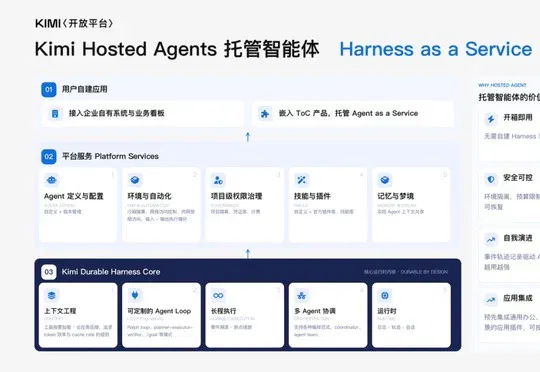
Kimi Hosted Agents 正式发布:Harness as a Service (opens in a new tab)
Kimi Hosted Agents 正式发布,以 Harness as a Service 提供7×24小时托管环境,支持长程任务、多智能体协作、安全控制、审计及140+ Skills、30+插件和8个金融Agent模板。
物理学家尹希宣布离开 OpenAI,下一步方向尚未披露 (opens in a new tab)
报道援引尹希告别帖,称其结束在OpenAI的首份企业工作,准备探索新方向,并回顾其物理研究及AI使用观点。离职去向未获本人披露,网友关于新公司的猜测不应作为任职消息;研究提速数字属于个人经历。
Kimi 发布游戏开发方案,连接专业引擎、建模与运营工具 (opens in a new tab)
Kimi 介绍基于K3.1 Pro、Kimi Code和Kimi Work的游戏开发方案,连接Unity、Unreal、Blender等工具,展示原型、工程修改与试玩验证。官方演示的耗时与完成度依赖任务及环境,不代表任意用户都能在一两天完成商业游戏。
Kimi商业和模型都想要,但卡是有限的 (opens in a new tab)
月之暗面发布2.8万亿参数后训练模型Kimi K3.1 Pro,其综合智能指数领先DeepSeek V4.1 Flash-1017和MiniMax M3.1 Flash,但API费用最高,并正研发Flash版本以平衡能力、成本与商业化。