Mei Tao proposes agentic world models linking planning and feedback
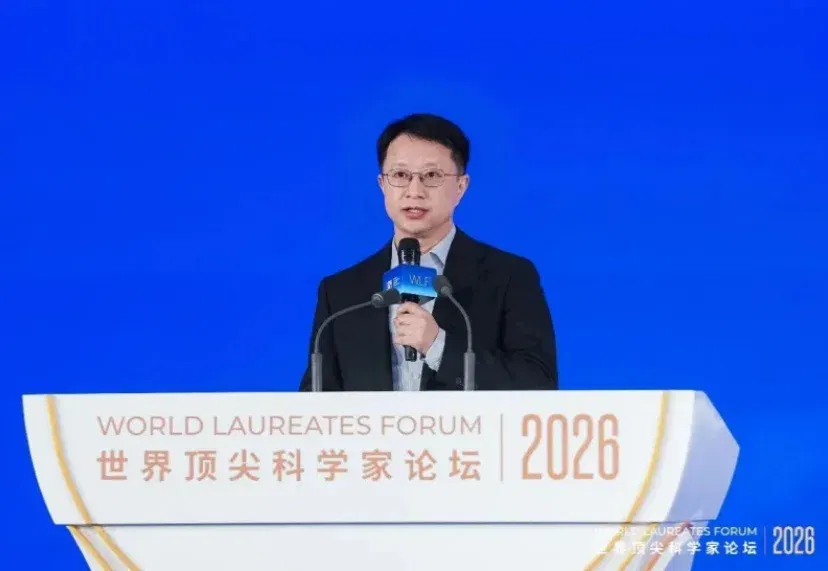
AI Tech Review outlines Mei Tao's AWM concept, connecting language models, multimodal representations and embodied feedback. Team demos illustrate the idea; visual consistency does not establish physical accuracy or reliable real-world execution.
Editorial correction (November 19, 2026):The framework is presented as a proposal from a talk. Claims generalizing a platform sample to global usage have been corrected. Generated video is not equivalent to precise physical simulation or real-robot validation.
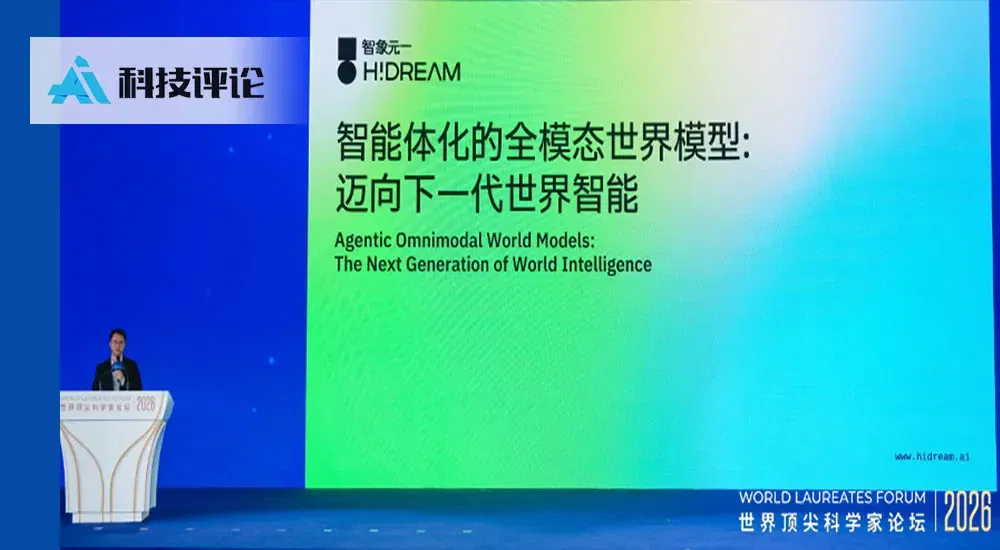
World models attempt to learn environmental states and how they change, supporting prediction, generation or action. The ability to generate realistic representations does not automatically demonstrate an accurate grasp of real physical causality.
Nearly seventy years have passed since the Dartmouth conference first introduced the concept of artificial intelligence. Large language models have now opened the door to Digital AI, but the path toward AI in the physical world remains full of challenges.
As artificial intelligence continues to advance rapidly worldwide, new avenues of exploration are emerging for problems that have long remained unresolved.
Recently, at the 2026 World Laureates Forum, Mei Tao, a foreign member of the Canadian Academy of Engineering and founder and CEO of HiDream, gave a talk proposing the concept of Agentic World Models built around an omni-modal representation, offering a new technical path for the transition from Digital AI to Physical AI.
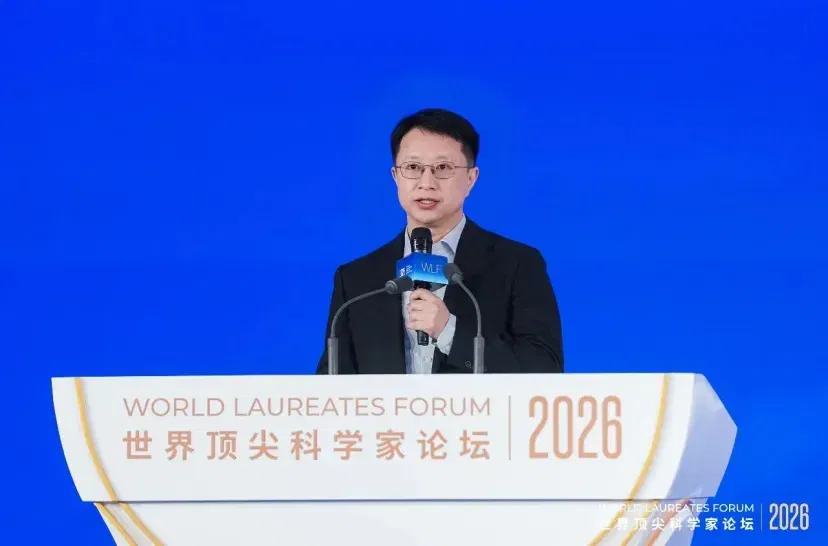
Mei Tao, foreign member of the Canadian Academy of Engineering and founder and CEO of HiDream
01
The evolution and divergence of AI
AI is everywhere, and the world changes every day.
The original report used OpenRouter's platform call statistics to discuss model-usage trends. A platform sample, a model's country of origin and total actual global usage are different measures. These statistics cannot directly represent all Chinese and US model usage or global market shares. The long-term growth forecasts in the article are also research judgments.
The structure of growth deserves more attention than the total alone. A Goldman Sachs research report argues that enterprise agents will become the main consumers of tokens before 2030. After 2030, Physical AI is expected to open a second growth curve with even stronger momentum.
Behind these figures is a broader change: AI is gradually evolving from a tool into a new form of social infrastructure, comparable to water and electricity.
As the AI economy grows, model iteration is accelerating. In 2023, large models were updated on roughly twelve-month cycles. Those cycles subsequently shortened to six months, three months, one month, and now weekly advances. Yet this evolution is uneven: AI capabilities in the digital and physical worlds are diverging significantly.
Digital AI has developed rapidly. Its capabilities in text conversation, logical reasoning and multimodal generation have approached the highest human levels. AI has recently made notable advances in mathematics: in October, OpenAI announced 377 mathematical results at once, while DeepMind independently solved nine Erdős problems, including two that had remained open for fifty-six years. AI also shows considerable potential in other scientific disciplines. Leading scientists have begun using it extensively to assist discovery; in the United States, some researchers consume more than a thousand dollars' worth of tokens in a day.
Physical AI, by comparison, has progressed more slowly. Put simply, it combines an intelligent brain with a physical embodiment capable of intelligent behavior. It is now moving from understanding the world to acting on it, but deployment at scale still faces three common challenges: insufficient understanding and prediction of the physical world; limitations on obtaining real-interaction data and learning at scale; and inadequate generalization and reliability in closed-loop execution.
How to bridge the divide between Digital AI and Physical AI is a question the next generation of artificial intelligence must address.
World models, a major focus across the industry, have attracted high expectations.
02
Three paths toward world models,
each with limitations
There is still no universally accepted definition of a world model. In a 2018 paper, AI researchers David Ha and Jürgen Schmidhuber proposed a framework for understanding the idea: World model = observing the world (V) + predicting the world (M) + learning to act within an internal world (C).This framework later became a frequently cited theoretical foundation in academic and industry discussions of world models.
Interest in world models rose markedly from 2024. Many video-generation, robotics and autonomous-driving companies began emphasizing them. Yet the industry still lacks a clear, shared definition of the core capabilities a world model should contain.
At the World Laureates Forum, Mei Tao again explained HiDream's understanding. He summarized a world model's core as representation, simulation and reconstruction: enabling AI to understand how the world works and reason about what may happen next. By jointly understanding and generating text, images, video, sound, actions, poses and other modalities, it models world states, physical laws and causal relationships, supporting perception, simulation and prediction of the real world.
Mei Tao's experience spans research and industry. He conducted basic research at Microsoft Research Asia before leading practical AI deployment in industry. This allows him to consider world models from both frontier theory and engineering practice.
From this perspective, a world model must model more than language: it must address world states, physical laws and causal relationships themselves. Its applications therefore span virtual and physical settings, making its development more complex.
Major AI companies worldwide are exploring world models. Broadly, the industry has developed three technical paths, each emphasizing a different foundation of capabilities:
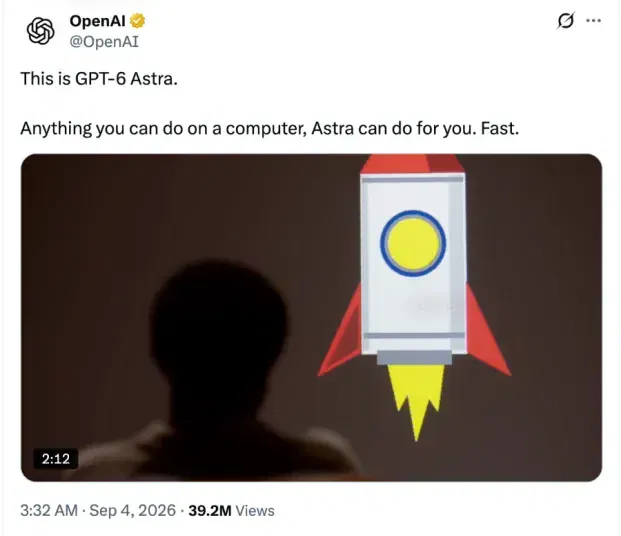
The first is the large-language-model path. It centers on language symbols and develops natural-language understanding, logical reasoning and structured-knowledge processing, with ChatGPT as a prominent example. GPT-6 Astra arrived this September, extending language models from language tasks toward robot manipulation. Unitree's team soon integrated GPT-6 into a humanoid robot and tested it across several scenarios. According to public remarks by Wang Xingxing, Unitree did not provide dedicated embodied training for the model, yet it could still control the robot to identify a palette, replace paints and wash a brush, with encouraging results. This suggested further possibilities for language models to reach the physical world.
The second is the multimodal-model path. It focuses on images, text, audio and video, developing understanding, perception and content generation. Examples include Tencent Hunyuan HY-World, Alibaba's Happy Oyster and HiDream's O1 series.
The third is the embodied-foundation-model path, emphasizing physical perception, closed-loop interaction and executable action generation. Examples include Gemini Robotics and NVIDIA GR00T. GR00T has moved from simulation training toward deployment on real robots. Google's Gemini Robotics has demonstrated control over a full humanoid robot, covering whole-body degrees of freedom from legs to fingers.
Each path has its own technical logic, but pursuing any one in isolation brings limitations. LLMs primarily use discrete text symbols and struggle to establish complete perception of the physical world directly. Video models can generate two-dimensional pixels, but visual generation alone cannot readily provide causal reasoning in a three-dimensional world. Embodied intelligence participates directly in physical interactions, yet effective ways of gaining broader general capabilities remain under exploration.
There is no standard answer yet to what world models will ultimately become. What is clear is that they need capabilities across modalities, tasks, scenarios and hardware. A single modality or embodiment cannot cover the complexity of reality. More specifically, a world model needs a unified state space that captures not only changes in people, objects and environments, but also temporal evolution, spatial relationships, physical constraints and causal structure..
Mei Tao therefore argues that the three paths will eventually converge in omni-modal models. The real world is a continuous system involving space, time, physics and causality, so a model must jointly process text, images, video, space, actions, poses, force, touch and sensor inputs. This addresses representation, but a world model must also support simulation and reconstruction.
An omni-modal foundation must be combined with agentic capabilities: goal-driven behavior, active exploration, multistep planning and external feedback. Rather than making a single prediction, an agent can use a world model to simulate, compare and choose among possible futures, then test them through real actions. A world model must also turn perception into state estimates, preserve objects' identity through space and time, and learn how the world evolves under actions.
At the forum, Mei Tao built on three core elements—omni-modality, agentic learning and world models—to propose Agentic World Models, abbreviated here as AWM.
03
What is an agentic world model?
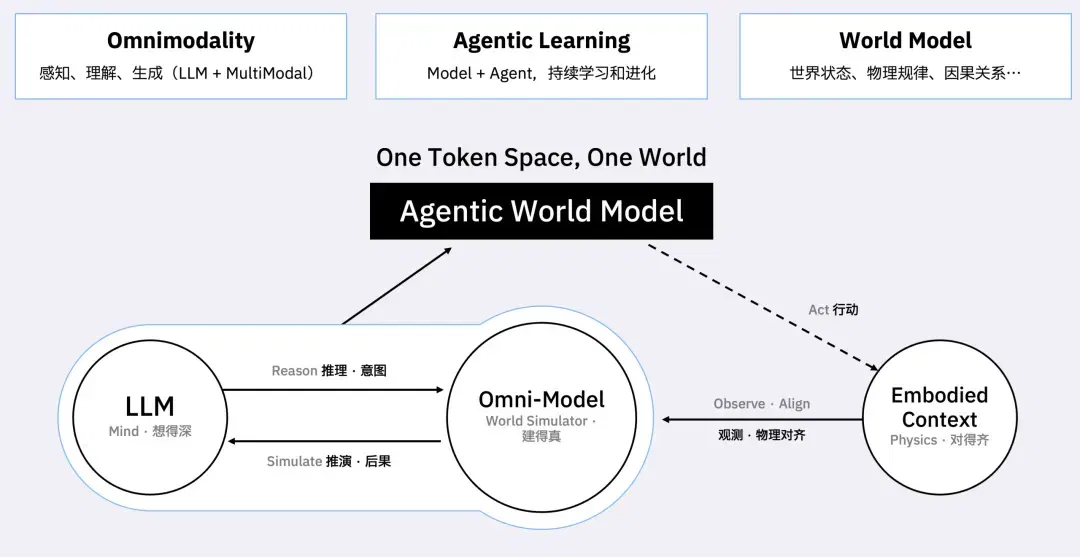
How should AWM be understood? Mei Tao explained that, when given a task, it can simulate the potential consequences of an action and actively break down the task around a goal, compare different action plans and adjust subsequent steps in response to environmental feedback during execution.The model thus participates in a continuous process of planning, action and feedback-driven adjustment rather than providing a one-off prediction. Mei Tao summarized this path as One Token Space, One World: exploring how a shared representational system can connect reasoning, world simulation and physical interaction.
AWM has three components with distinct roles. The LLM serves as the agent's decision-making brain, understanding intent, reasoning and planning tasks. The Omni-Model simulates the physical world in line with the LLM's intent, exploring consequences and predicting the next action. Embodied Context executes embodied actions and returns real-world observations to calibrate the world model's representation of physical laws and causal relationships.These components do more than form a simple linear chain. As they operate, they create coupled inner and outer loops.
In the inner cognitive loop, the LLM and Omni-Model work together: the LLM produces an intention, the Omni-Model previews its consequences, and the LLM revises the plan. This creates a decision process of planning before acting. In the outer physical loop, real actions provide environmental feedback, supporting closed-loop alignment with physical causality. AI can thereby imagine possibilities while continually testing them against reality.
Consider video generation. Traditional video models mainly learn statistical relationships among pixels from large datasets. Given a prompt such as "a cup falls to the floor," a model generates a plausible-looking sequence based on probabilities, but the physical process shown may not obey real-world laws.
In AWM, the model would first internally simulate the cup falling, previewing the process as a person might and constructing a digital world containing the cup and its fall. The agentic system would then keep analyzing that world: is the cup metal or plastic? Is the floor concrete or wood? At what angle does it fall, and from what height? How long does gravity take to bring it down? How high does it bounce on different surfaces, and what impact sound results? How does its orientation change in the air? These factors must be considered in the simulation before corresponding frames are generated.
At the 2026 World Laureates Forum, Mei Tao presented three demos organized around the three core world-model capabilities, providing concrete examples of HiDream's next-generation approach.
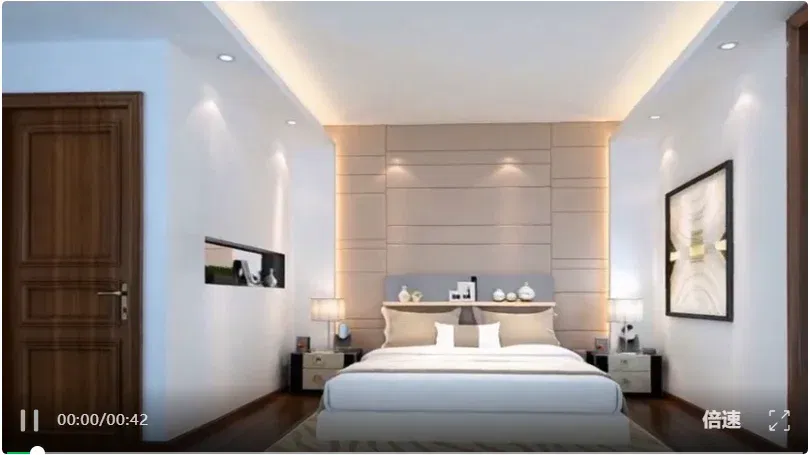
First, reconstructing the world.
Prompt: Generate a continuous video, construct a 3D world, open the door, look around the room, open a drawer, take out a cup and fill it with water, put the cup down, then leave.
The generated video shows room exploration and actions such as retrieving a cup. The author observed good spatial and visual continuity. However, visible consistency does not establish that the model recovered a complete three-dimensional state or accurately knew everything in occluded areas. These applications still require independent evaluation.
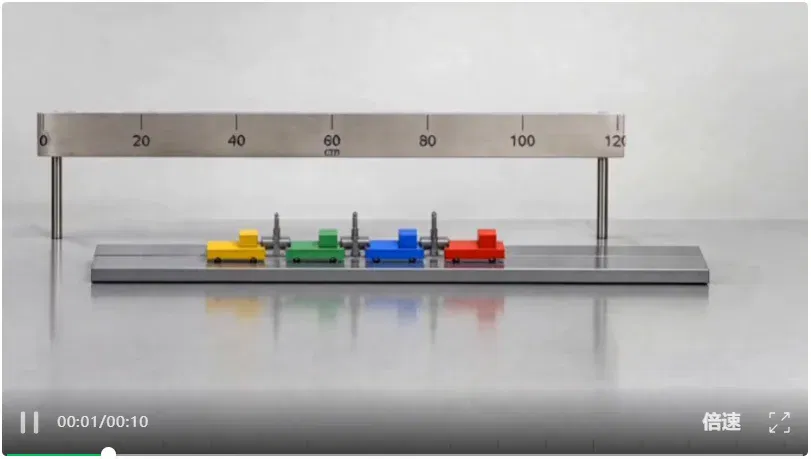
Second, simulating physical laws.
Prompt: Generate a continuous ten-second video at 832×480 and 24 fps, using the supplied image as the first frame. Keep the camera fixed. Four carts are connected in series by latches and rigid rods on a horizontal track. The rightmost is cart 1; carts 2, 3 and 4 follow to its left. Only cart 1 is powered. Each cart is 0.12 m long and 0.06 m wide, with 0.04 m between adjacent body surfaces. Keep everything stationary for the first second. Between seconds 1 and 3, automatically release the connection between carts 3 and 4 without pushing the bodies; do not operate the other latches. From seconds 3 to 7, drive cart 1 smoothly 0.30 m to the right and brake to a stop, then turn off its drive until the end.
The demo attempts to show the unlatching and movement under these constraints. The article provides no frame-by-frame measurements of position, speed, force or error. The images alone cannot establish precise compliance with every stated dimension or with real physical laws.
Unlike ordinary video generation's pursuit of visual spectacle, world models seek physical plausibility. Strong physical-simulation capabilities could accelerate applications in robot decision-making, autonomous-driving simulation and scientific computing, opening substantial industrial value.
Third, spatial interaction.
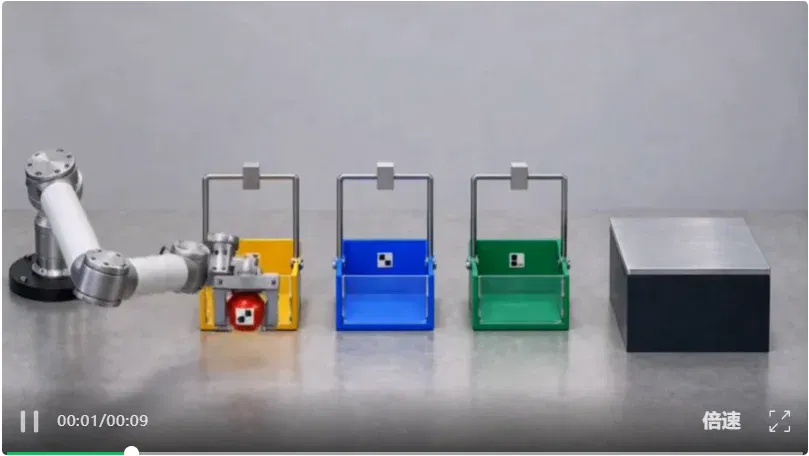
Prompt: Generate a continuous nine-second video with a fixed camera and a single unbroken shot. Preserve the initial geometry, object identities and dimensions. Objects not assigned an action must remain stationary. First place the red ball in the green basket and release it completely so that the basket supports it. Then grasp the same basket, move it together with the ball onto the raised platform on the right and release it. At the end, the ball must remain in the basket, with the basket's base stably supported by the platform, for at least one second.
The generated sequence shows placing the ball and moving the basket. Relative stability of visual identity and layout does not mean a real robot arm completed the task, nor does it establish fully correct causality. Its effectiveness for embodied training still requires independent validation.
Following the AWM approach, HiDream has developed the native omni-modal UiT architecture. HiDream-O1-Image starts with still images to explore spatial understanding. HiDream-O1-Video moves from static images toward dynamics and physically plausible temporal generation. HiDream-O1-World addresses three-dimensional spaces and interactive environments to explore continuous changes in world state. HiDream-O1-Embodied targets physical environments, exploring coordination among perception, action and feedback.
The related development of these four models sketches an early form of an agentic, natively omni-modal world model. As an independent startup, HiDream's work shows both determination to build world models and the broad, forward-looking ambitions of its scientist-led founding team.
04
Frontier applications:
three perspectives from embodiment, life sciences and film
Beyond progress in the models themselves, industrial applications are also an area worth watching. HiDream is advancing engineering validation of the relevant technologies across several fields.
In embodied-intelligence development.
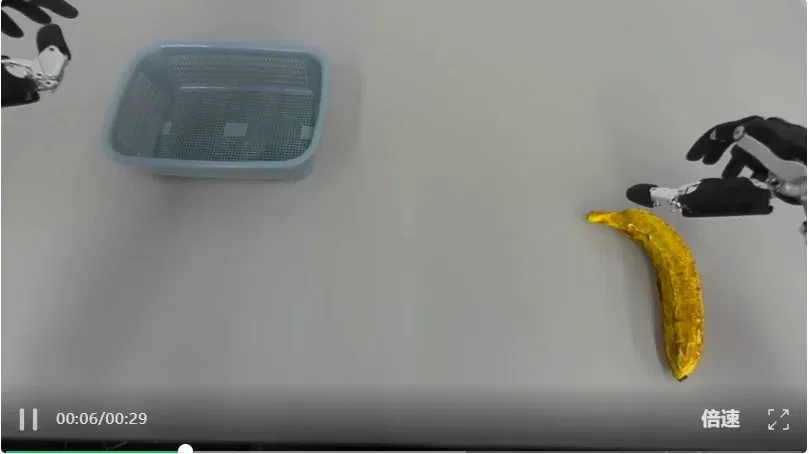
A major bottleneck for embodied intelligence is data: high-quality real-robot data is expensive to collect, limited in scale and narrow in source, and changes in lighting or scenes readily introduce a vision gap. World models offer a new way to reduce real-data collection costs and expand datasets.
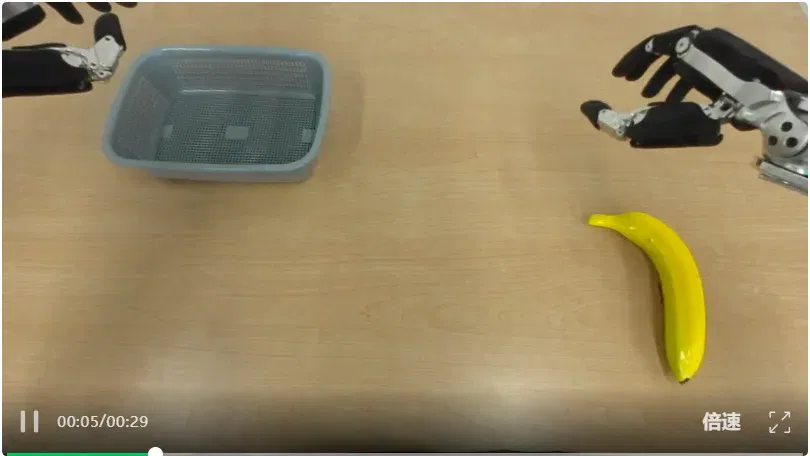
Original data collected from a real robot
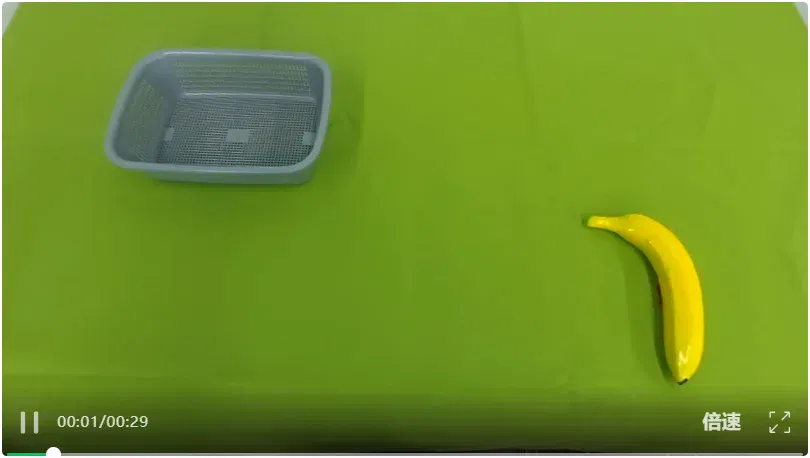
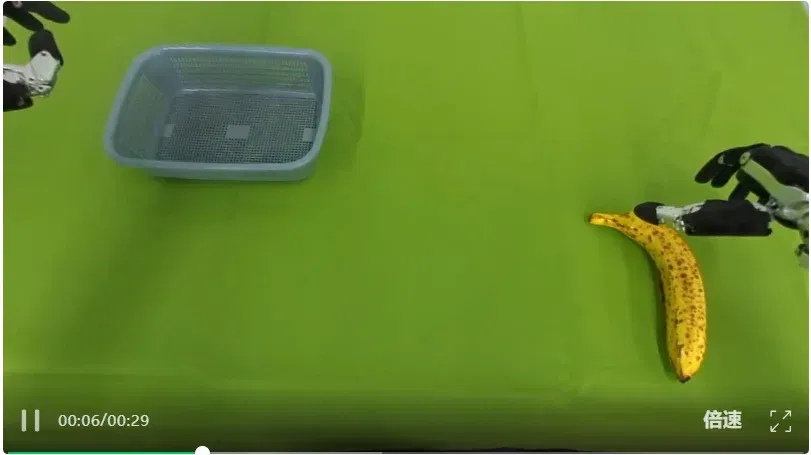
Physics-level simulation generating high-fidelity data at scale
The first demo shows a robotic-arm scenario using real-robot data. Such collection is costly, limited in scale and constrained in generalization across scenes. The next three demos show HiDream using world models to simulate arm operations under different lighting, backgrounds and object materials, generating new training data.
The approach has three advantages. First, generating physically consistent data could enable precise expansion at scale. Second, changing lighting, backgrounds, materials and other conditions increases diversity. Third, matching each frame precisely with underlying operation data aligns visual observations with actions. These datasets can then be used for real-robot training.
In microscopic life science.
Life-science research often struggles to compare cell, tissue and organ imagery across scales, while sample screening remains heavily dependent on people. HiDream and BioMap jointly developed BioVisual Foundation Model, which maps biological images at different scales into a shared representation, turning morphology into computable features. It supports comparisons across samples, over time and before and after interventions, helping researchers find differing samples and providing guidance for subsequent experiments.
Costly trial and error in drug development is another longstanding challenge. HiDream and BioMap jointly developed Bio Flow Model, which predicts how cells evolve from observed cell images and intervention conditions. For example, given images of AU565 breast-cancer cells, it can simulate changes after approximately 2.5 days of treatment with 30 μM gemcitabine. This helps researchers anticipate trends and prioritize hypotheses for experimental validation, improving efficiency.
Original cell-image data
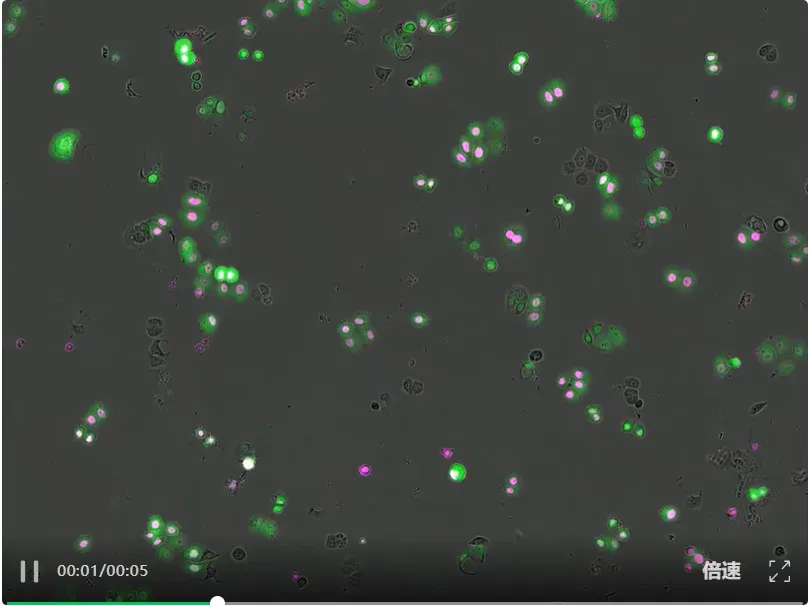
Prediction video generated by the Bio Flow Model
(Video note: These are model predictions, not footage of a real experiment. The predictions still require experimental validation.)
In film and television.
At the Golden Rooster and Hundred Flowers Film Festival, HiDream brought world models into demonstrations for the film industry.
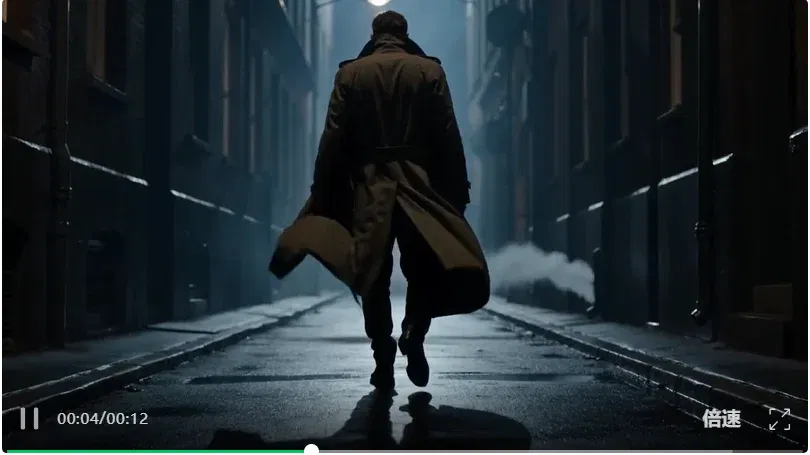
A well-known video-generation model
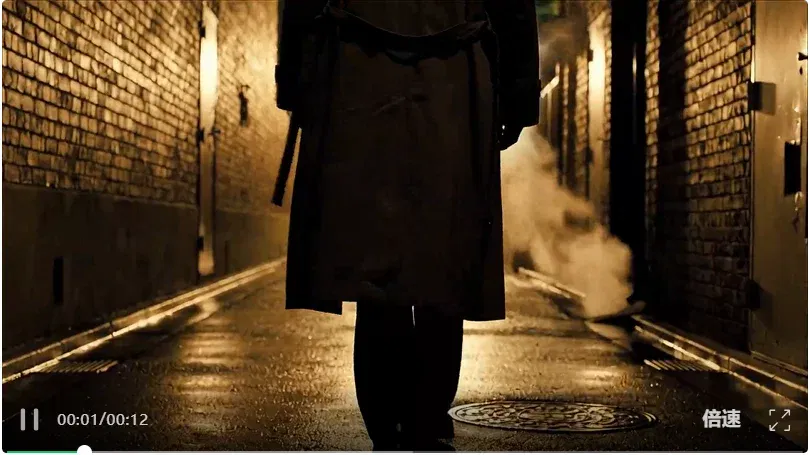
HiDream's next-generation world model
Prompt excerpt: Generate a twelve-second, 16:9 cinematic photorealistic video, in one shot at normal speed. At night in a narrow street, an adult wearing an open, dark, heavy cotton-twill trench coat walks slowly away from the camera. Seconds 0–3: only a light breeze. Seconds 3–6: a gust blows from the right side of the image toward the left. Seconds 6–9: the gust continues as the person turns approximately 90 degrees left and takes one step. Seconds 9–12: the person stops and the wind gradually weakens.
HiDream showed outputs from two models using the same prompt.
In the first video, a detail between seconds 3 and 6 conflicts with everyday physics: although the wind blows in only one direction, the clothing swings from side to side.
In HiDream's video, the coat's movement and direction correspond to changes from a breeze to a gust and then weakening wind. The trajectory of steam along the street changes with the wind direction too.
Both examples are generated videos. The visual responses of clothing and steam can be compared as image behavior, but these differences should not be interpreted as a real wind-field experiment or as completed validation of physical accuracy.
These examples reflect an attempt to incorporate physical laws and causal relationships into video generation. In traditional filmmaking, a director first imagines a complete story world, but viewers ultimately see selected and edited images. Space beyond the shot often exists in the script, production design and audience imagination rather than as a fully constructed environment.
World models instead attempt to organize characters, scenes and physical environments into a rule-governed system. Changing the camera position, character actions or environmental conditions would let the model simulate and generate corresponding frames. If these capabilities mature, the same virtual scene could be filmed from different angles while maintaining consistent actions and spatial positions. Directors could repeatedly adjust complex scenes during production. World models could therefore change not just individual shots' plausibility but the organization and production of an entire virtual set.
It must be acknowledged that world-model development paths are still evolving, and predicting their future is more complex than judging the early direction of large language models. Yet each shift in AI's history has involved prolonged exploration. Deep learning went through repeated ups and downs, and CNNs spent years out of the spotlight before AlexNet renewed interest. Many important technical ideas emerge precisely when paths and directions remain uncertain.
There is no ready-made route toward world models.Progress in any direction requires sustained exploration.
This article was originally published by AI Tech Review. Author: Li Xi.
After reading
Join the AINRK community
Read how to join the community and connect with people working in AI.
Related articles
Continue reading related topics and articles in this category.
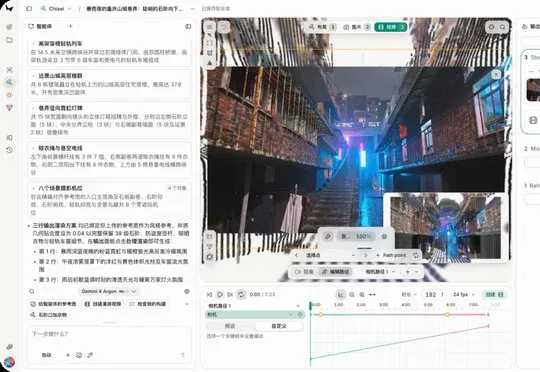
Atlas opens its web app and API; APPSO tries 3D scene generation and export (opens in a new tab)
World Labs connects generation, set design, lighting and mesh export into a toolchain. APPSO describes sketch and Chongqing-style scenes, while noting that finished films or games still require further work.
英伟达公布 GR00T 2,展示人类示范向机器人迁移 (opens in a new tab)
GR00T 2 联合预测视频与动作。英伟达展示跨本体迁移和少样本适配测试,首批 10 万小时人类视频已开放,其余资源计划陆续发布。

世界模型融资趋于分化,部分团队仍获大额投资 (opens in a new tab)
量子位采访投资人和创业团队,梳理世界模型项目的融资门槛变化,以及自然意志、LiberAI、逆矩阵等公司的进展。文中名单来自采访样本。
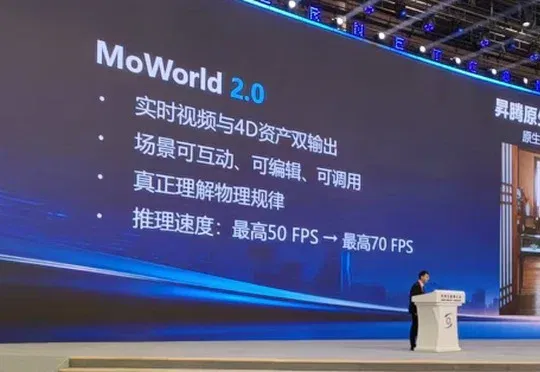
魔芯发布 MoWorld 2.0,将多类物理要素纳入世界模型 (opens in a new tab)
MoWorld 2.0 统一建模重力、柔体、流体等要素,可输出可编辑的 3D 或 4D 高斯资产。团队称,经昇腾多卡优化,实时视频推理速度约为 70 帧每秒。
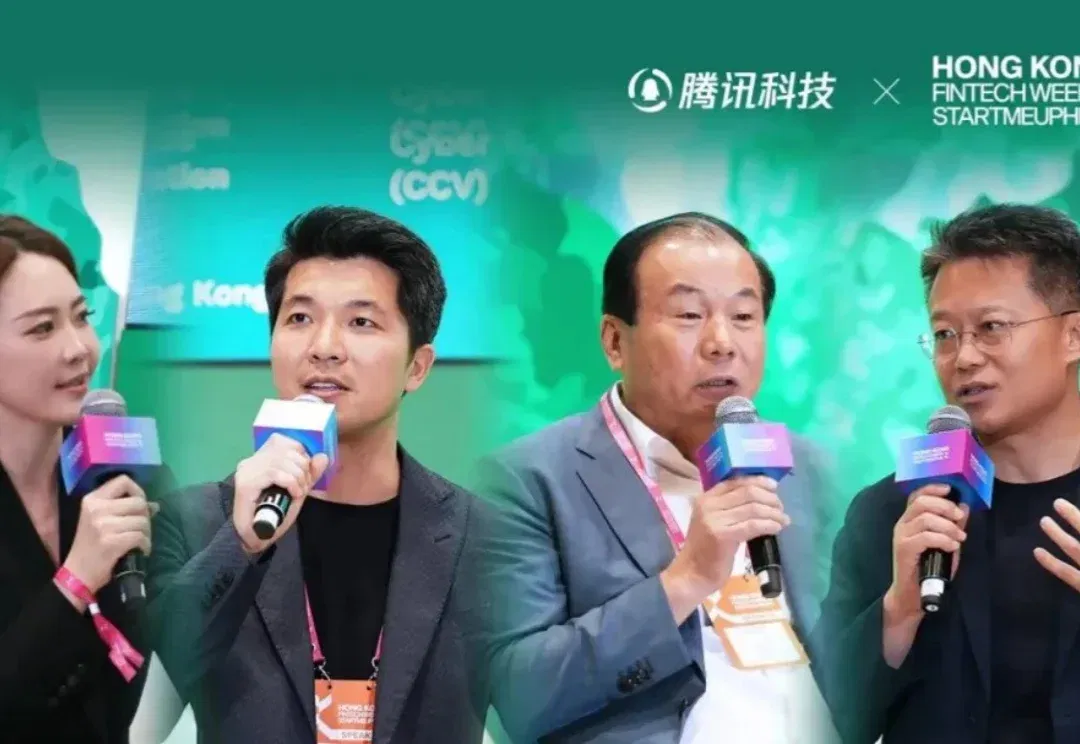
席宁、周炜、骆怡航同台:世界模型的下一步怎么走? (opens in a new tab)
香港金融科技周对谈中,席宁、周炜和骆怡航从工业控制、投资和产品研发三个角度讨论世界模型,并比较视频生成、物理预测和机器人行动的落地条件。