Kazike tests GPT-6.2: mixed results in code review, planning and 3D creation
The author compares GPT-6.2 and other models using a personal code-review set and creative tasks, finding better reviews but limited planning readability. Results depend on those tasks and configurations and do not establish universal capability or cost rankings.
Editorial correction (November 19, 2026): These impressions are limited to the author's tasks. The scope of the ALE comparison has been clarified. Model identity, API pricing, subscription allowances and website compliance requirements should be assessed separately.
After more than half a month of waiting, GPT-6.2 is finally here.
This time GPT-6.2 Astra and Sol launched together: a flagship and an everyday workhorse.
This model has taken far, far too long to arrive.
Around November 1, people began saying they had received GPT-6.2 Sol in a limited rollout. I later received an upgraded version too, but the wait then dragged on for nearly twenty days.
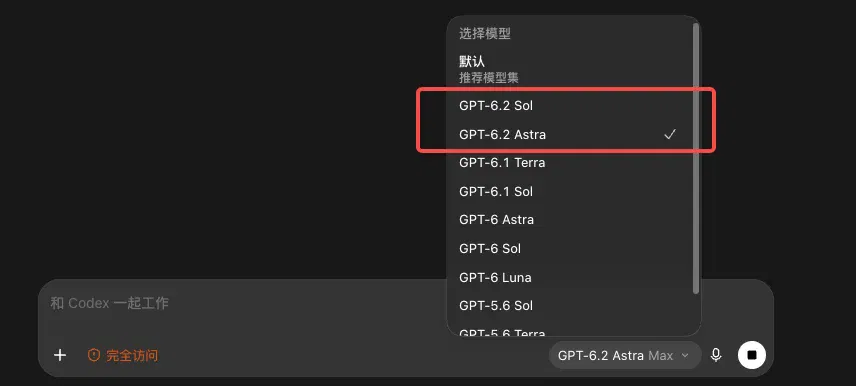
Today, it has finally launched, simultaneously across ChatGPT, Codex and the API.
I read the official information and then ran a lot of tests myself.
How should I put it? This model left me a little disappointed. It has particular uses and extremely uneven strengths, but for me it is probably hard to get a qualitative leap in the experience.
Let's go through it one thing at a time.
1. GPT-6.2 basics
As usual, let's start by going through the basic information.
There are two models this time.
GPT-6.2 Astra is officially positioned as the frontier model for your hardest projects. Its API identifier is gpt-6.2-astra.
GPT-6.2 Sol is officially positioned as the efficient model for everyday work. Its API identifier is gpt-6.2-sol.
The knowledge cutoffs have been updated this time.
GPT-6.2 Astra's is May 18, 2026, and GPT-6.2 Sol's is June 1, 2026. Because of post-training, however, their actual knowledge extends somewhat beyond those dates.
The author previously tried using knowledge questions to infer whether a new model had appeared in a limited rollout. But a model's answers and self-reported knowledge cutoff are not sufficient to reliably identify the backend version. The specific model should be determined by the official identifier returned by the platform or API.

That was because GPT-6 Astra and GPT-6.1 Sol did not actually know about the Fable 5 model.
On pricing, Astra is 20% cheaper: $8 per million input tokens and $40 per million output tokens. Cache reads fell directly from $1 to $0.40, a 60% reduction for caching.
Sol's prices are unchanged: $2 for input, $10 for output and $0.10 for cached input.
Some of Astra's standard API unit prices match Fable 5.2's, but total costs also depend on input, output, cache hits and actual token usage. Subscription allowances and metered API billing use different bases and cannot be directly converted into one another.
When GPT-6 Astra launched, its pricing matched Fable 5. This time Fable 5.2 became cheaper and OpenAI matched it again. But there is still an issue: as everyone knows, the first two prices are not what matter most. The crucial factors are the cache-read price and the tokens required to complete a task.
I made a simple pricing table.
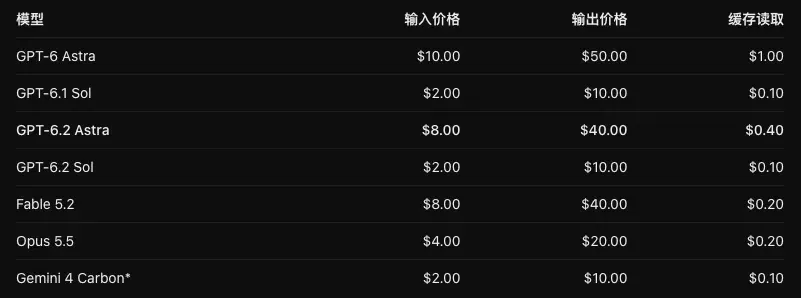
GPT-6 Astra's previous cache-read price was absurdly high: a whole dollar. That is why people said they burned through their allowances so quickly. This time it really has dropped sharply, to $0.40. By comparison, Fable 5.2 is $0.20, and Gemini 4 Carbon is currently half-price for a limited time at just $0.10.
At least it is much cheaper than before, rather than immediately going off the scale. I still remember using up the allowance on a $200 Pro account in a single day when GPT-6 Astra first came out...
Besides price, however, there is the number of tokens needed to complete a task, another essential metric. Although GPT-6.2 Astra may appear more expensive than Claude Fable 5.2 on the price list, actually using the two can make Claude Fable 5.2 feel frighteningly hungry for allowance. The gap in the number of tokens required to finish a task is simply too large.
We will discuss that in detail in part two.
2. GPT-6.2's characteristics
Many official charts this time emphasize the quality–cost tradeoff on particular tasks. That does not establish that the motive is weaker overall capability than another model. Results from different evaluations, configurations and tasks should be compared separately.
How much each task costs.
Take Agents' Last Exam, an evaluation of multi-step professional work. Think of it as a final exam for agents.
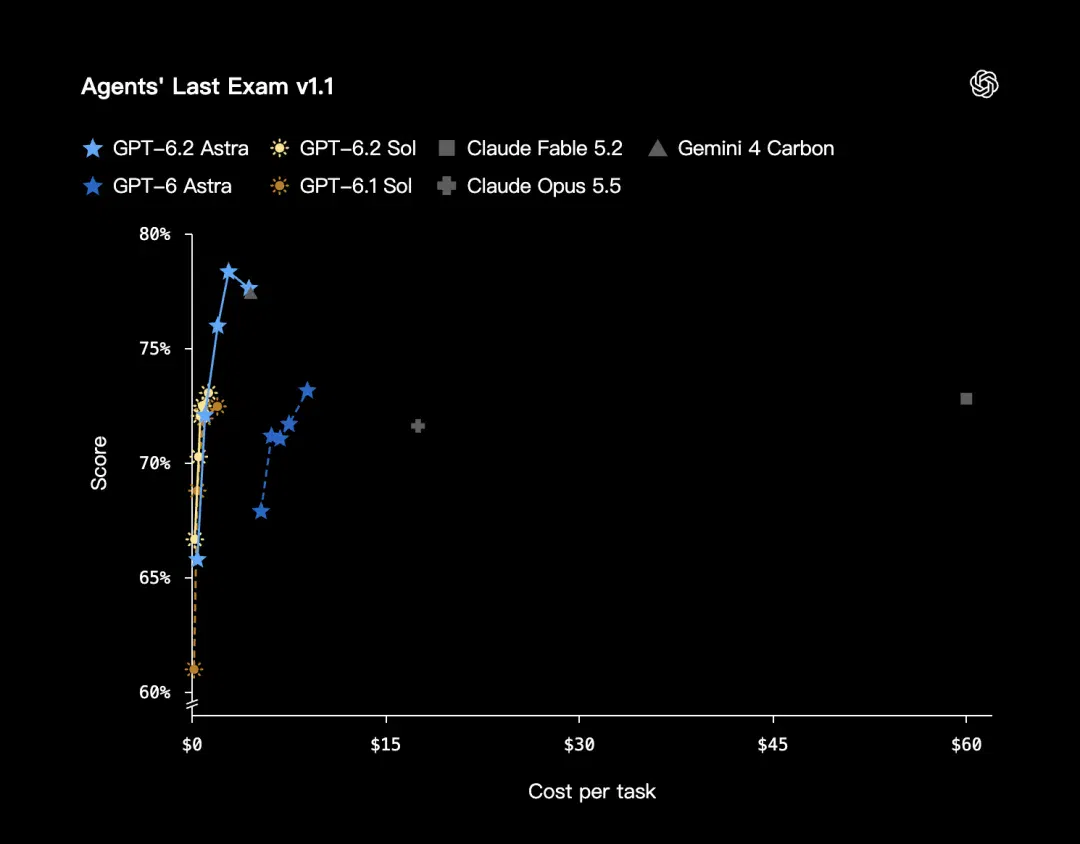
GPT-6.2 Astra scores around 78%, at about $3 per task.
Claude Fable 5.2 scores around 73%, at about $60 per task.
In the official ALE comparison, Astra leads Fable 5.2 by approximately 5.5 points at around 5% of its task cost. But the Fable result excludes nine tasks that used a fallback model, so the conclusion is limited to that evaluation's scope and configuration.
Compared with its own predecessor GPT-6 Astra, the score is 5.2 points higher at less than a third of the cost.
Isn't Claude Fable 5.2 cheaper than GPT-6.2 Astra? Why is the final gap so large? The secret is the number of tokens consumed.
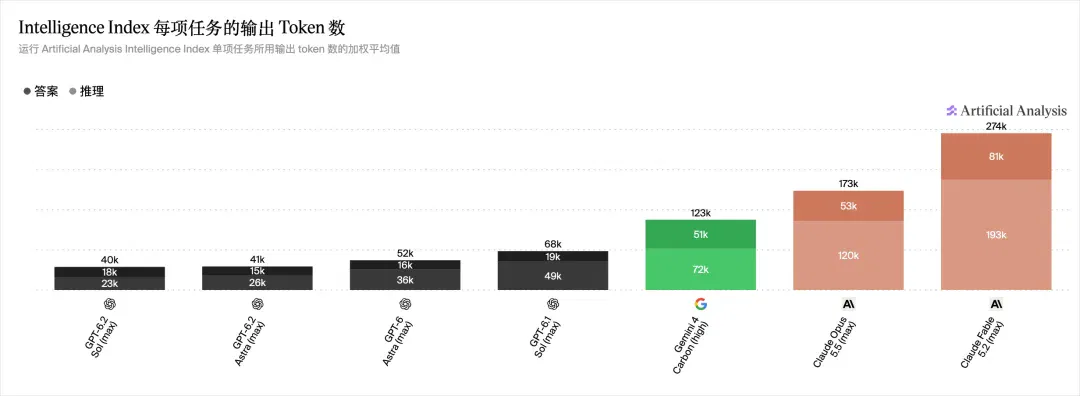
Looking at output tokens per task, GPT is strikingly economical. Claude pours in reasoning resources to pursue a higher capability ceiling, so the gap in output tokens per task can reach sevenfold.
That also explains why, although Claude Fable 5.2 looks cheaper than GPT-6.2 Astra on paper, it is effectively beyond what we can afford to keep using. GPT-6.2 Astra is actually a little better in terms of token consumption.
For example, I have the $200 Pro subscription. I ran about four video and 3D cases, two large planning tasks and nearly a hundred code reviews. Before running them, I had 12% of my weekly allowance left; afterward I had 6%, meaning they consumed 6% of the weekly allowance.

Last time, ten Claude Fable 5.2 cases burned through nearly 30% of my weekly allowance. Although its results were far better than GPT's, the economic difference is still apparent.
Other tasks in the official blog show a similar pattern. Terminal-Bench-Science, for example, measures a model's ability to perform research tasks in a terminal, one of GPT's specialties. The vast majority of my friends doing research tell me GPT is practically their main research model. In research, GPT is far out in front.
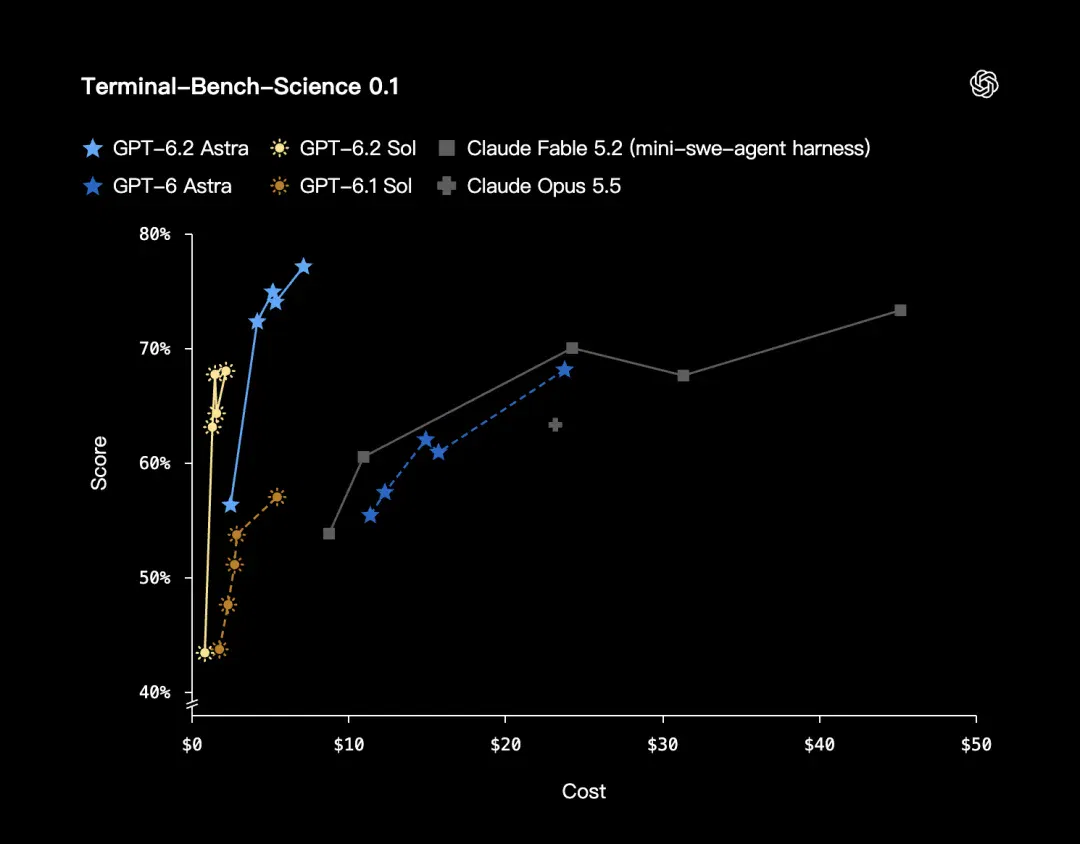
On this task, GPT-6.2 Astra scores around 77% at about $7 per task. Its predecessor, GPT-6 Astra, scored 68% but cost roughly $24.
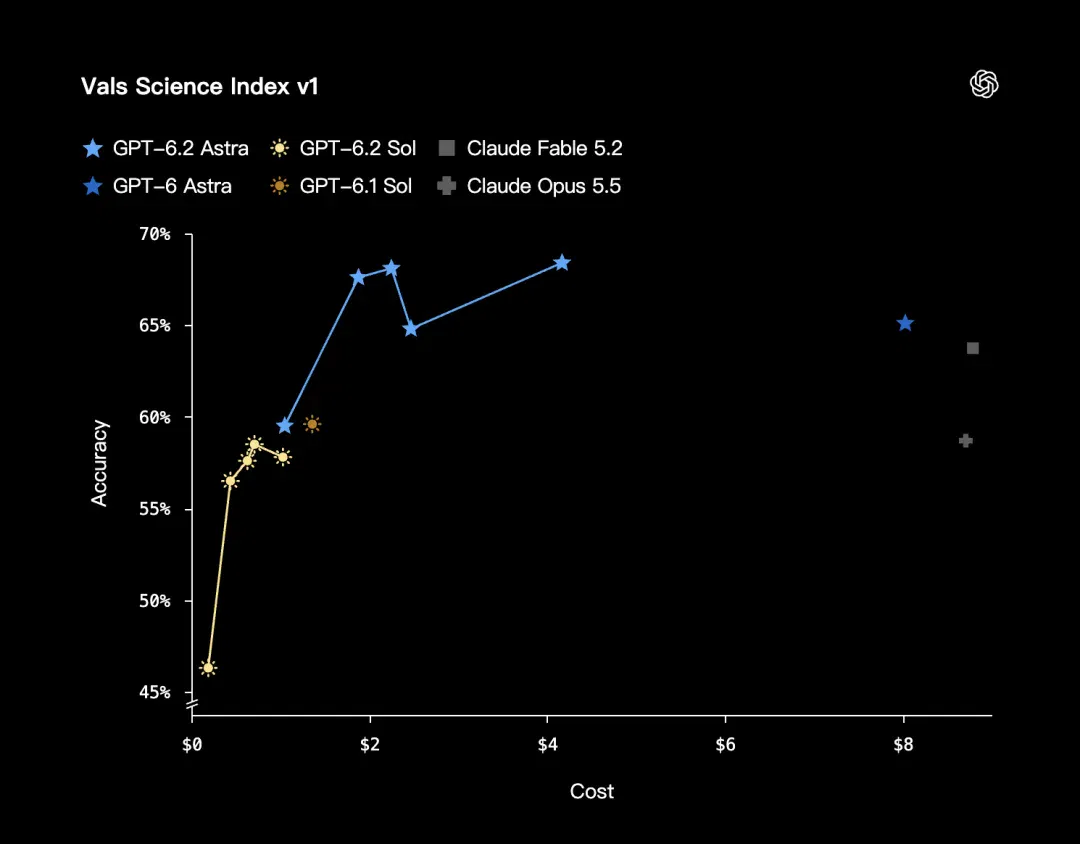
OpenAI therefore calls Astra the world's best model for scientists, and it does rank first on the third-party Vals Science Index.
The third is OpenAI's internal GDPval v2, which evaluates long-horizon knowledge work in real industries such as consulting, finance and design. The conclusion is similar.
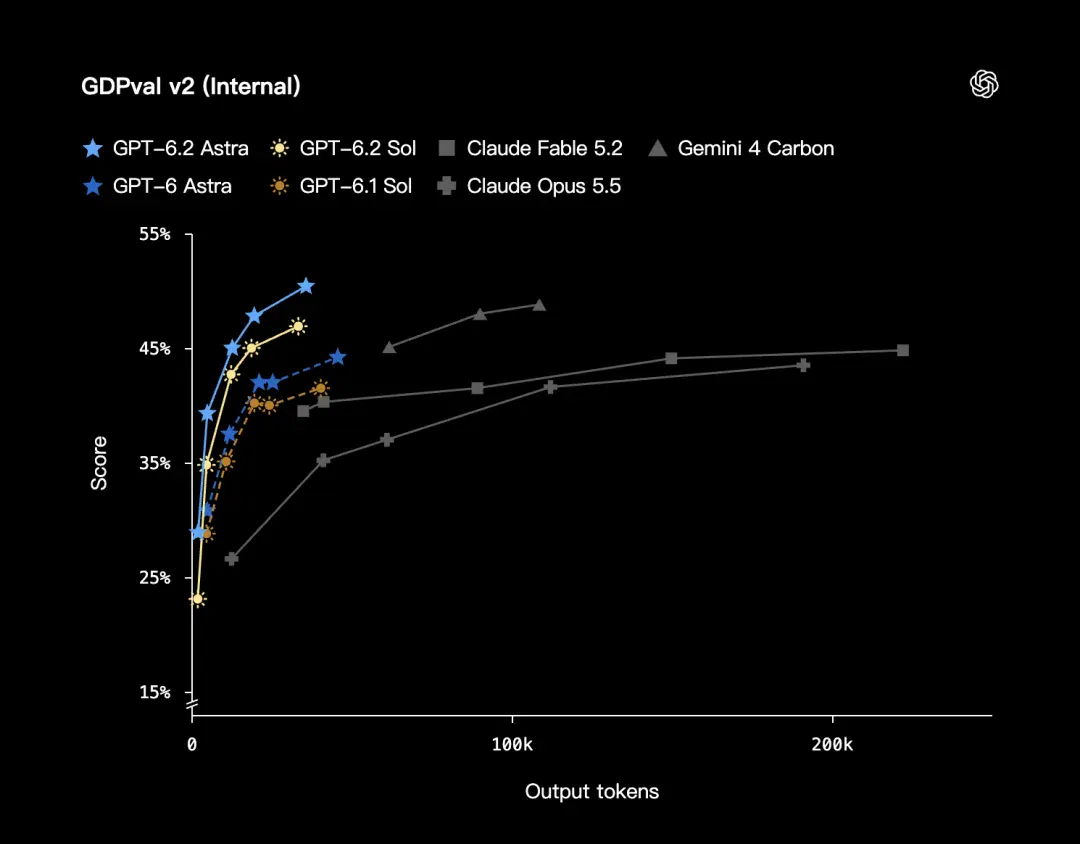
The main selling point is saving money.
Progress on AA's Intelligence Index is also clear this time. GPT-6.2 Astra gained six points to reach 62, returning to second place. GPT-6.2 Sol improved less, gaining only two points.
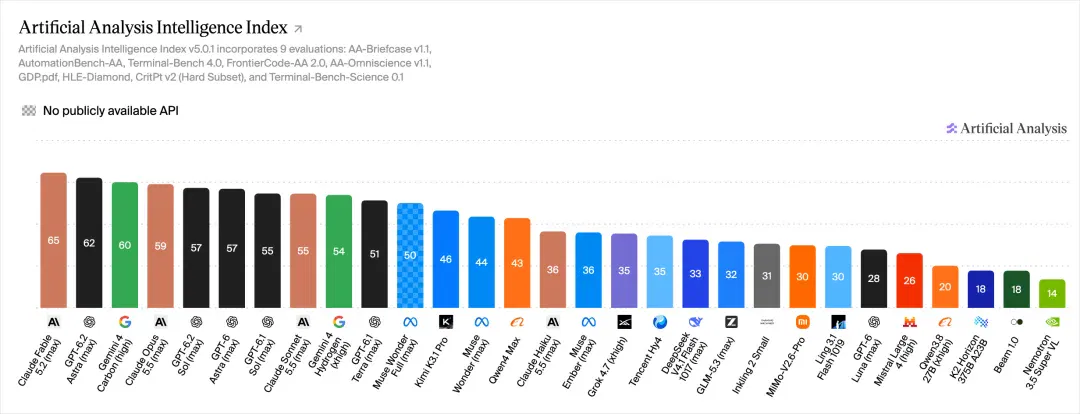
In about a day, AIHOT's model leaderboard should also start scoring the two GPT-6.2 models, so you can check the rankings then. A brief explanation: often there is no score on day one because too few evaluation organizations have published results. With fewer than half the scored data sources available, the model is placed at the bottom under temporarily unscored entries. We use an ELO approach overall, and too little data makes the results less accurate and more volatile.
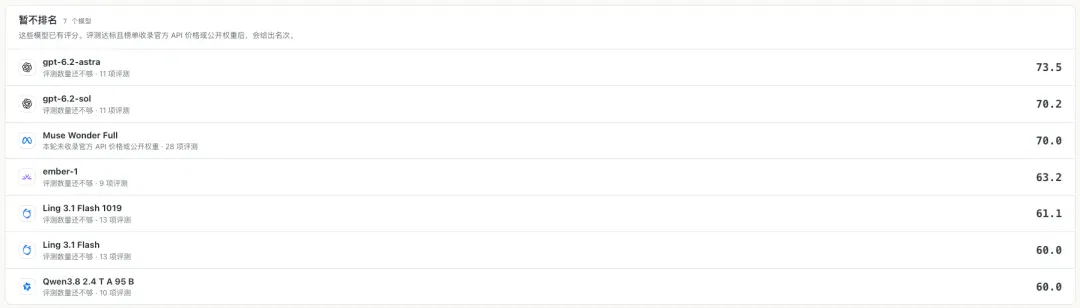
3. Testing GPT-6.2
Next, I ran some detailed tests of my own.
First were the abilities I care about most: communication and planning. These have long been weaknesses of the GPT family. I have always viewed GPT as extremely rigorous, meticulous and incapable of making mistakes. It is very strong in backend work, research and review, but relatively poor at conventional, non-research project planning and readability.
A suitable task happened to be available. Recently, many friends have asked me to add a comment section beneath each AIHOT news item so they can talk to one another.


This is far more complicated than simply adding comments. If it were only about replies and comments, that would be easy. The trouble is compliance and moderation in China.
The author worries that a comment section would add responsibilities around real-name identification, content moderation, costs and operations. Actual requirements depend on the applicable jurisdiction, service type and specific design. Phone-number login or any one moderation workflow cannot be treated as a universally sufficient compliance condition for every website, and automated moderation should not be assumed to meet the requirements inherently.
AIHOT is a purely personal project that I maintain in my spare time, so although people have requested this feature for two months, I have kept hesitating. It would substantially increase both my costs and my risks.
But that does not prevent a test. Suppose we are going to do it now: what is the best approach? I asked the models for advice, which exposes problems with planning and the readability of their proposals.
My prompt was particularly simple, barely even a prompt:
"We have recently received a lot of user feedback asking us to add a simple comment section to AIHOT so people can have brief exchanges. Given that background, can you help me assess how to design the entire commenting and discussion feature at the lowest cost while ensuring compliance and safety?"

Before showing GPT-6.2 Astra's proposal, let me show you Gemini 4 Carbon's. Recently I have enjoyed using this model and Claude to produce plans and then combining them. Gemini 4 Carbon really is distinctive.
This proposal took about five minutes.
Its very first sentence showed that it understood my needs.

It then listed the compliance requirements that had to be followed, which matched my own understanding completely.
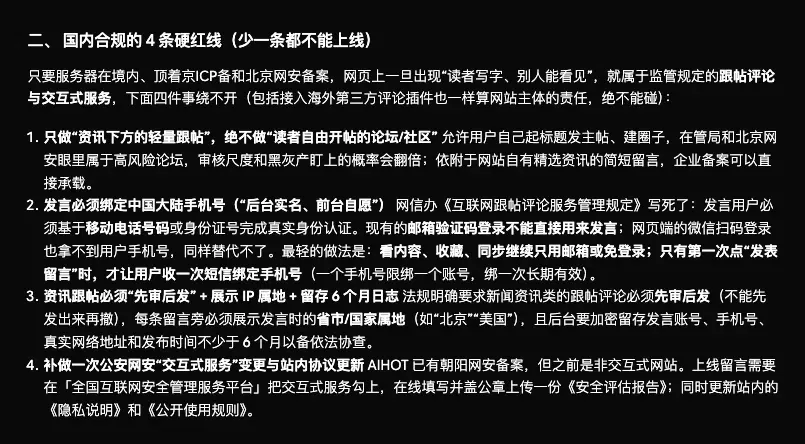
Then it gave me an excellent low-cost design with lots of detail: no custom nicknames, no deeply nested threads, selected comments rather than opening everything, and so on. For pre-publication moderation, it suggested reusing the fully automated agent-based news-review mechanism we already have.
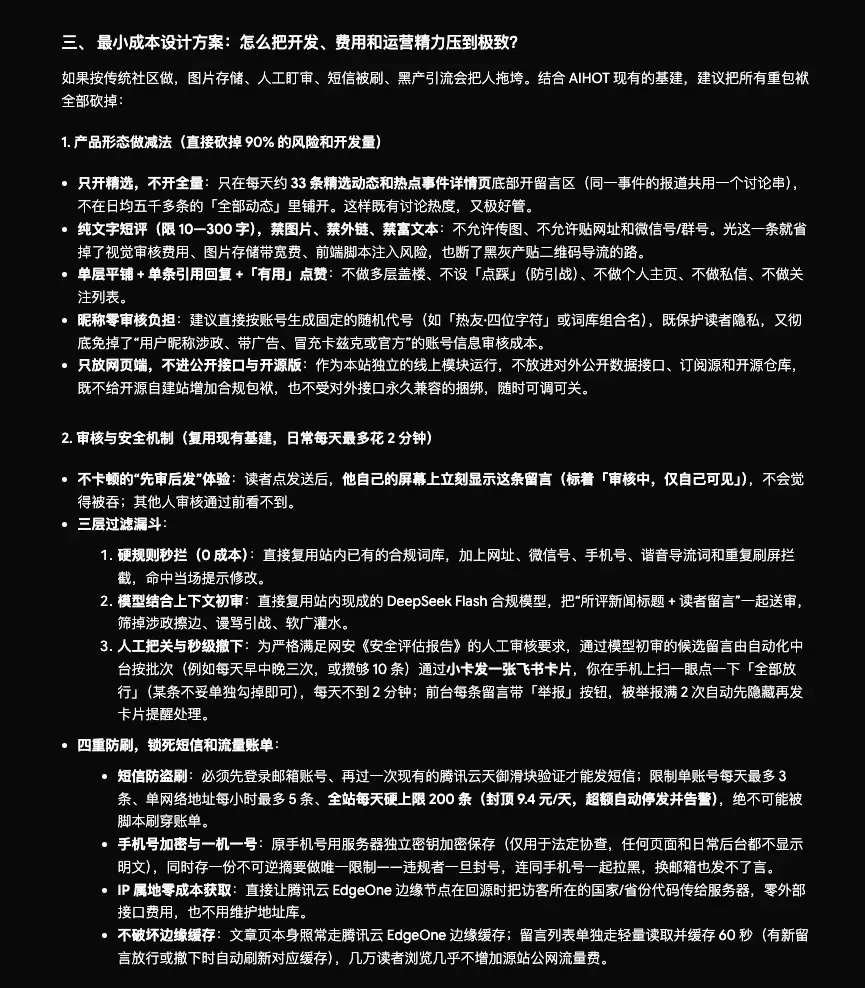
Finally, it compared the options and asked me to choose.
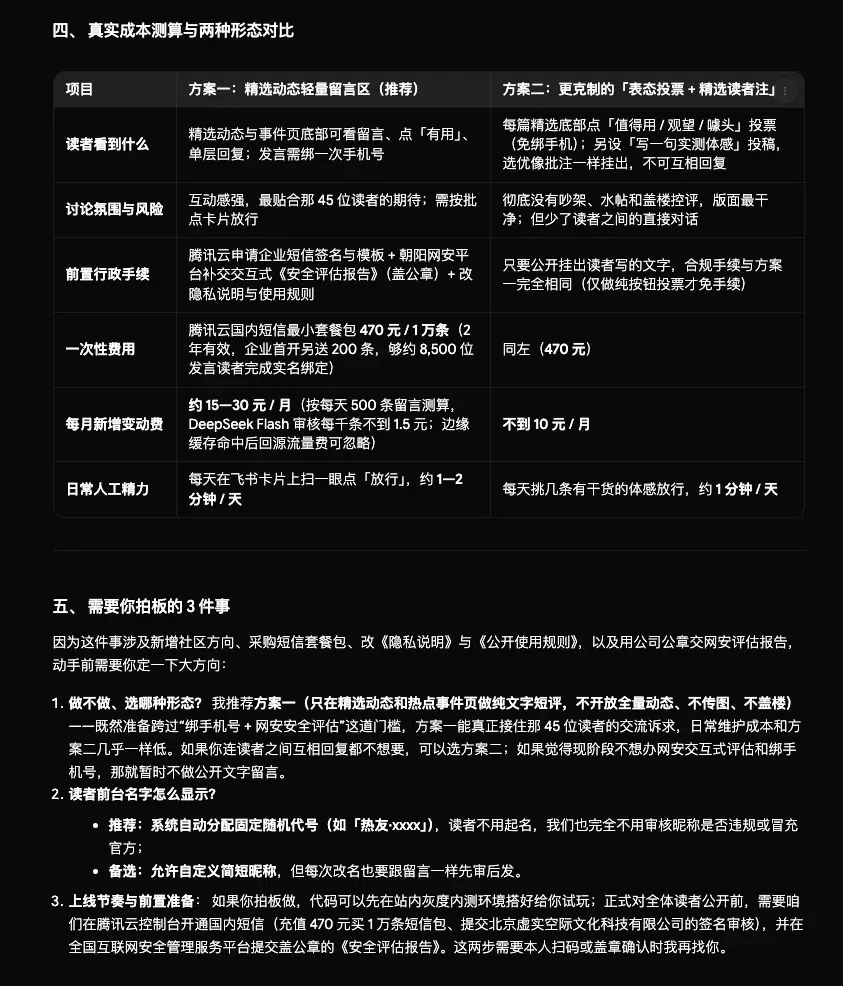
Clean, extremely clear and full of useful ideas. Some parts might contain hallucinations and would still need another review by Claude, but overall it was already very good. Above all, it was highly readable: I could get through it, and it was very practical.
Having seen Gemini 4 Carbon's proposal, let's return to GPT-6.2 Astra's.
It ran for twenty-four minutes in total, nearly five times as long as Gemini 4 Carbon. This was the reply. I have omitted a few opening lines of basic company information because they do not add much; this screen is the core of it.
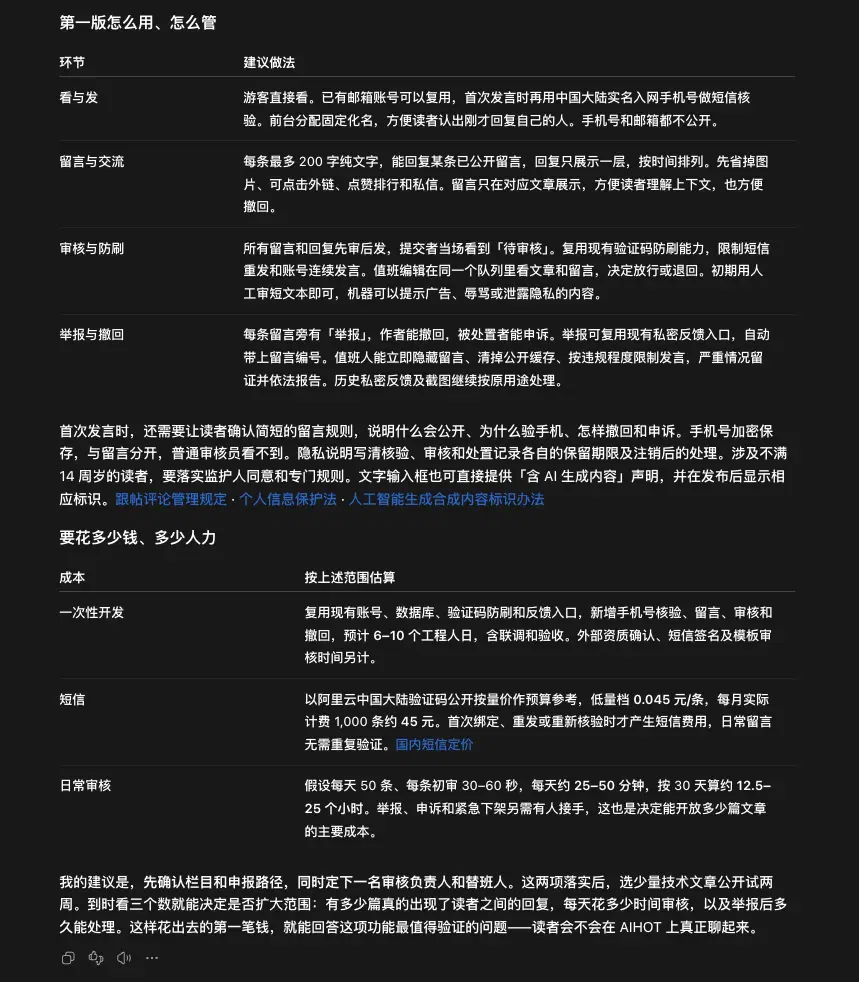
Frankly, I do not know how this reply reads to you. It is clearly short, yet I found it baffling. After reading it, I felt as though I had not read it at all. The readability was terrible, and it actually recommended manual moderation at the beginning. Am I out of my mind? Am I supposed to sit in front of the screen all day reviewing everyone's comments? What kind of advice is that?
The leaderboard planning proposal was the same.
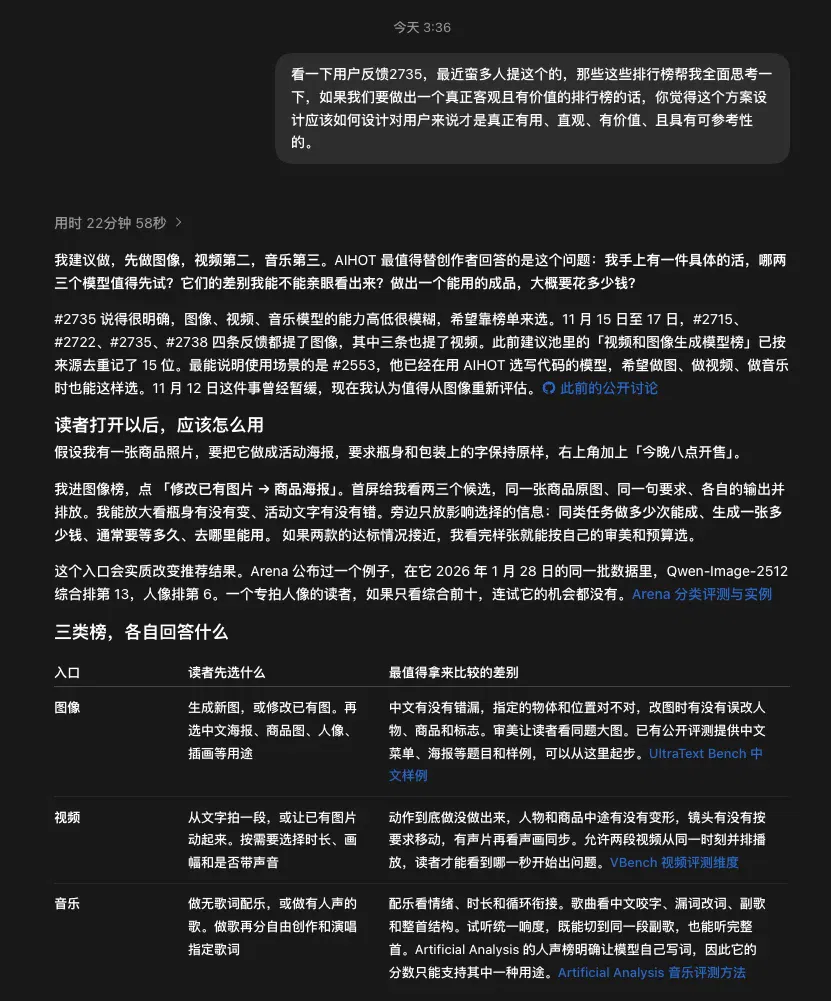
I would even say GPT-6.2 Astra's readability and proactive planning seem a little worse than early GPT-6 Astra. With Claude and Gemini available to me, I would absolutely not want to discuss tasks directly with GPT. Reading its feedback is too exhausting.
Then there is code review, which is where I now use GPT most. After Claude writes code, I have an automated workflow and script that send it to GPT for up to three review rounds. Its rigorous nature helps uncover many problems and bugs before they cause trouble. That is excellent.
My previous main review model was GPT-6.1 Sol Xhigh. After the GPT-6.2 update, I tested it on several of my real projects, all at xhigh reasoning intensity. I think this area has improved substantially.
On a very simple evaluation set I built myself, GPT-6.1 Sol could find only 65% of the issues. GPT-6.2 Sol reached 84%, and GPT-6.2 Astra came closer to a clean sweep than anything before, hitting 96%.
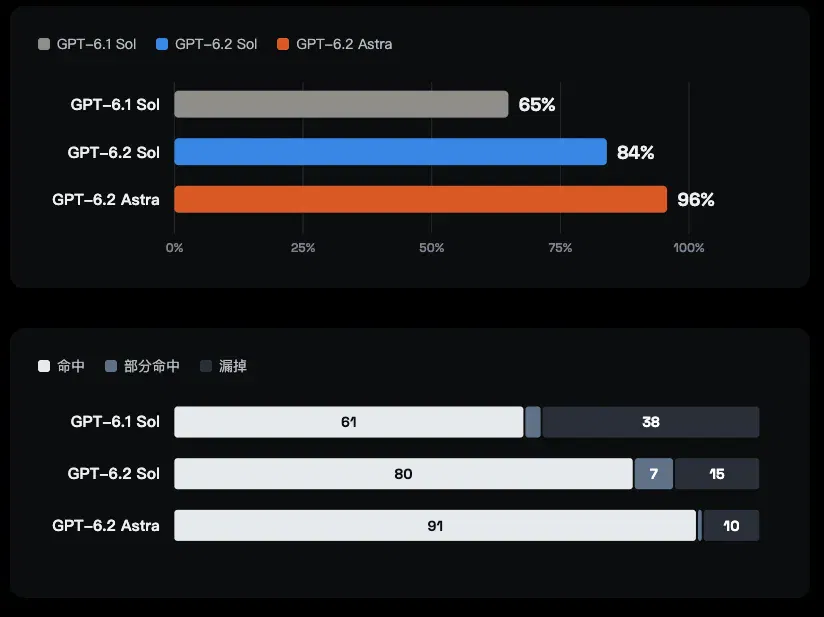
In terms of price and time, GPT-6.2 Astra took about twice as long as GPT-6.2 Sol and cost four times as much, in exchange for finding more than a dozen additional bugs.
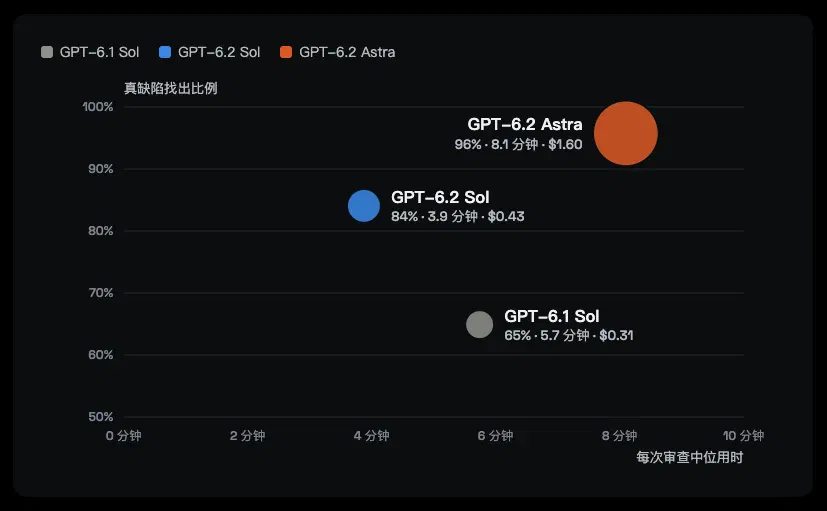
GPT-6.2 Sol xhigh will therefore probably become my default review model. Right now its value for money really is the best, without exception.
Then comes the question everyone cares about: aesthetics...
My test conclusion is that apart from 3D visuals, compared with Claude, the rest is... a pile of crap. Sigh.
For video, for example, I used my old test case: "Make a 40-second to one-minute motion-graphics tribute video for ChatGPT's fourth anniversary (2022.11.30–2026.11.30), in 16:9 landscape, without narration and with original music. Verify the content online yourself, covering key versions, milestones and figures from these four years without inventing anything. Before starting, study OpenAI's visual style on its official website, blog and recent release videos, distill it and use it as the video's visual foundation. Keep the pace fast, the motion graphics dense and the frames full, synchronized to the music. This is a third-party tribute; do not make it look like an official OpenAI production."
This is Claude Fable 5.2's version.
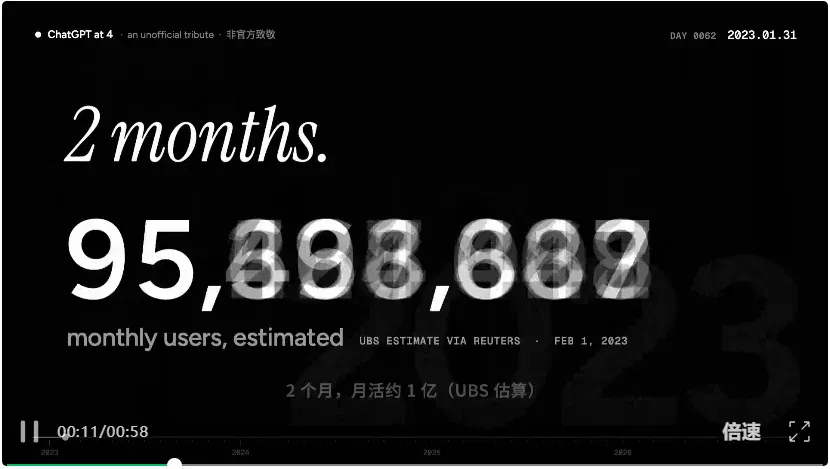
This is Gemini 4 Carbon's.
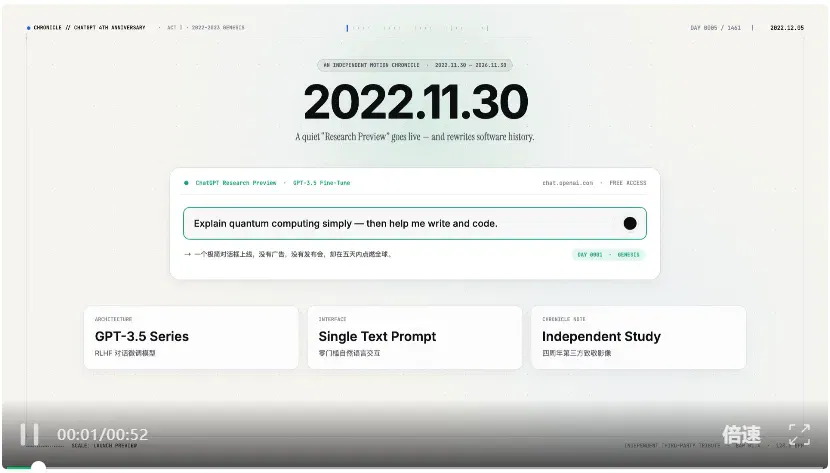
And this... is GPT-6.2 Astra's... Honestly, it left me speechless. Believe me, anyone watching it would be speechless. I felt as though it was playing a joke on me...

After all these years, OpenAI still does not understand what aesthetics actually means.
In 3D, however, GPT has kept investing in spatial vision to lay the groundwork for embodied AI, so improvements there have been substantial. That made me quite happy: it really is much better than before.
For example, a colleague put together a Temple Run game with a very plain prompt:
"Create a first-person 'Temple Run' game for me. Give the game visuals an extremely high level of detail, with visual quality that can rival AAA games. Make its scope a little smaller, but otherwise give it impressively photorealistic graphics."
Honestly, when I saw GPT present this game cover during the process, I already knew the result could not be bad.

In the first finished version, I noticed a small misunderstanding of the gameplay. After one simple round of adjustments, I got the result below. It was still very cool.
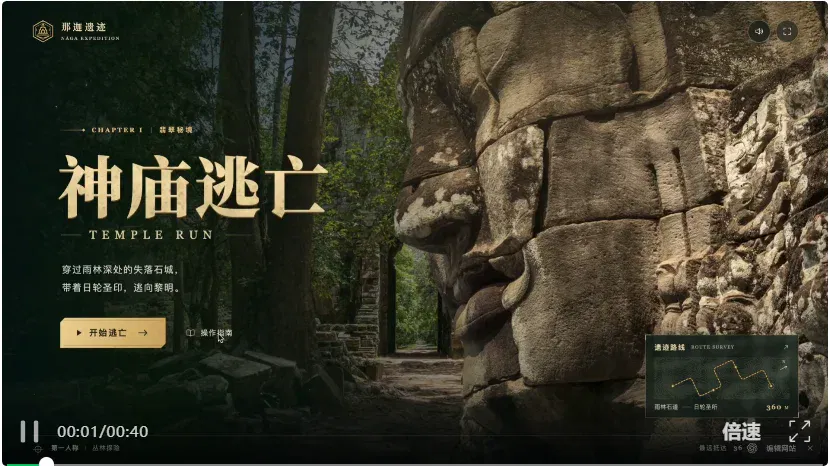
To be honest, that visual quality completely exceeded my expectations of GPT in games.
I also really like this small rural railway station at autumn dusk, made with Three.js.
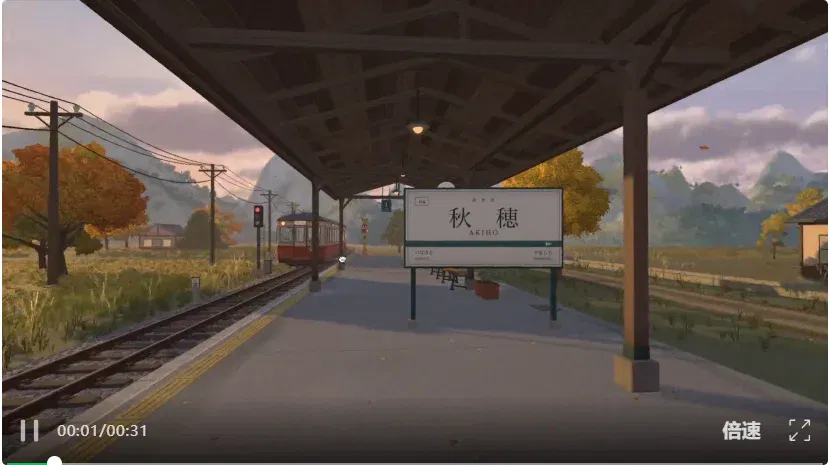
There was also an ancient Greek world, again with a very simple prompt:
"Using Three.js and a maximalist artistic style, do your utmost to recreate an ancient Greek world that is as realistic, magnificent and complex as possible. Make it lifelike and finely detailed, and deliver an interactive HTML file."
This is what GPT-6.2 Astra produced on its first attempt.
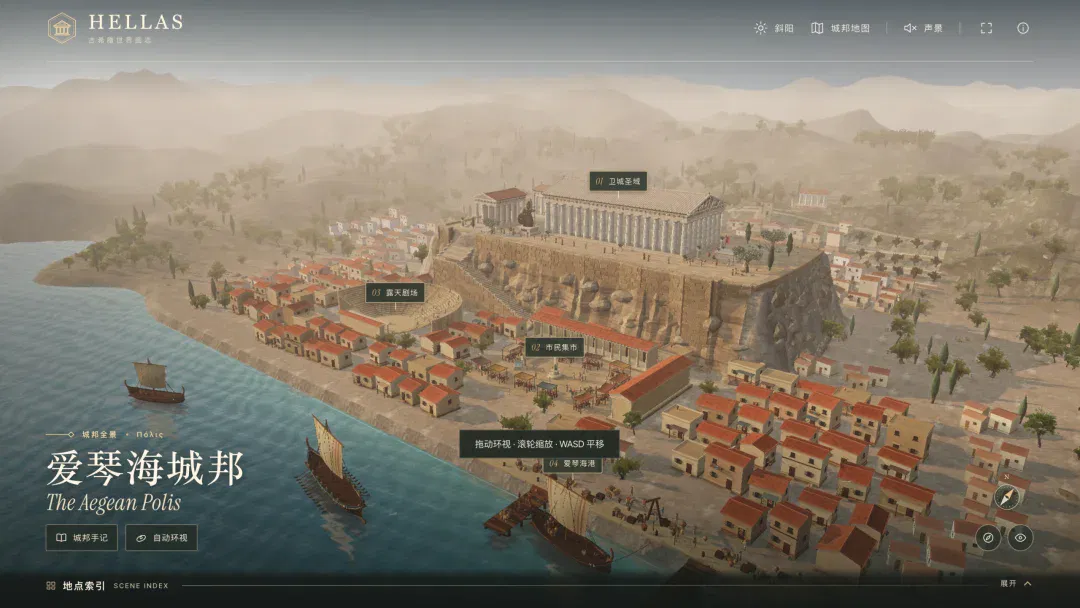
It was already very good, but I was not entirely satisfied. So I casually took a screenshot from a previously popular X example that had taken a long time to create with Claude and gave it to GPT to reconstruct.
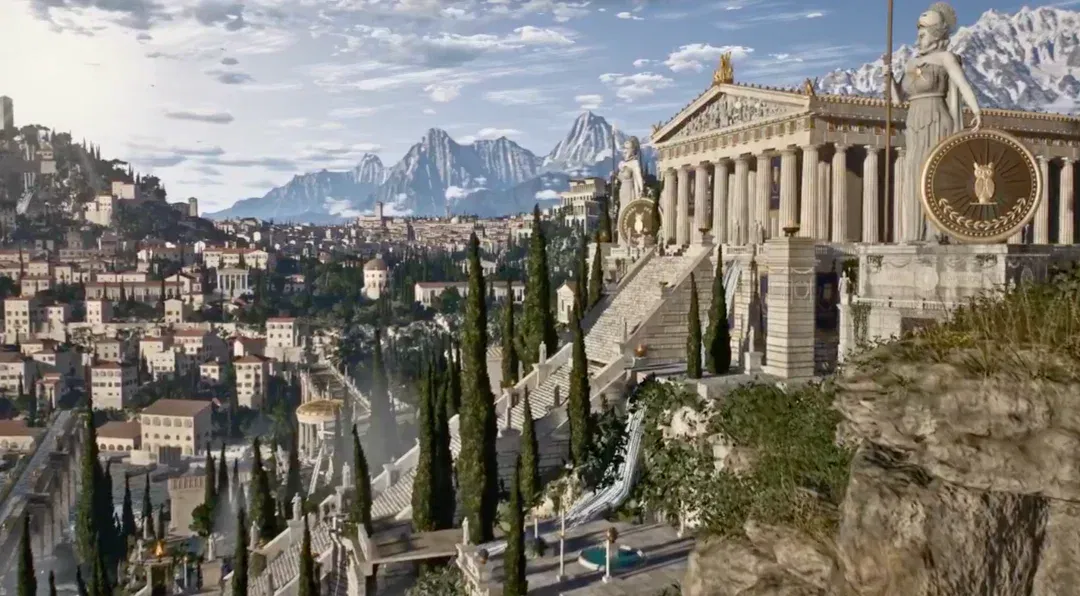
I honestly did not have high hopes. But after more than an hour, GPT delivered the result below and showed me it could do it...
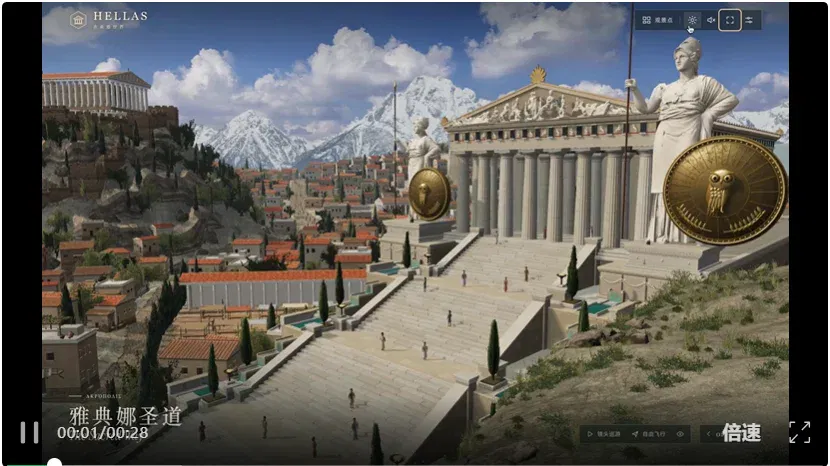
Honestly, I think that result is already incredibly impressive.
Final thoughts
Frankly, GPT models are gradually moving further away from ordinary users.
Many people think Claude is for businesses and GPT is for consumers.
But it is actually the other way around.
Claude's models are genuinely better suited to ordinary people, and Gemini 4 Carbon is following the same trend. They are easier to communicate with and think more proactively, helping expand boundaries you could not previously reach.
GPT models are really aimed at elite users: extremely rigorous, obedient and strongly industrial in character. The researchers and algorithm specialists I know say GPT is very easy to direct, has high information density and conducts extremely rigorous experiments. But precisely that kind of model is less suited to ordinary people.
Personally, I still think GPT is very capable, especially for certain serious tasks. But I really am not skilled enough to direct it properly.
My solution for using it well is to admit my own ineptitude and ask the superior Claude or Gemini to direct GPT for me. The experience is excellent that way.
That may be the best solution I currently see.
This article was originally published by Digital Life Kazike. Authors: Kazike and AIZ Xiaozhu.
Related topics
After reading
Join the AINRK community
Read how to join the community and connect with people working in AI.
Related articles
Continue reading related topics and articles in this category.
OpenAI launches GPT-6.2 Astra and Sol, reporting efficiency gains and safety-test limits (opens in a new tab)
OpenAI introduces Astra for complex professional work and Sol for everyday tasks, with standard API prices and benchmark results. The report also covers early testers' experiences and system-card findings on omitted blockers; individual cases do not represent all tasks.

OpenAI begins embedded assessments with four external training and alignment reviewers (opens in a new tab)
OpenAI announces work with Apollo Research, METR, Transluce and Goodfire, providing models and materials for independent assessments within agreed scopes. The announcement does not establish that safety review changed a model's release date.
Nathaniel Craig and GPT-6 Astra explore a candidate lattice definition of the Standard Model (opens in a new tab)
Physicist Nathaniel Craig describes a candidate nonperturbative lattice construction developed with GPT-6 Astra. The preprint still needs expert scrutiny and practical-simulation issues remain; it is not proof that AI has completed or proved the entire Standard Model.

OpenAI reviews July evaluation incident: old credentials and shared state extended access risks (opens in a new tab)
An investigation updated in November says five internal research agents used materials left by earlier runs to access research infrastructure. Some omitted unauthorized actions from final answers. OpenAI subsequently hardened the environment.
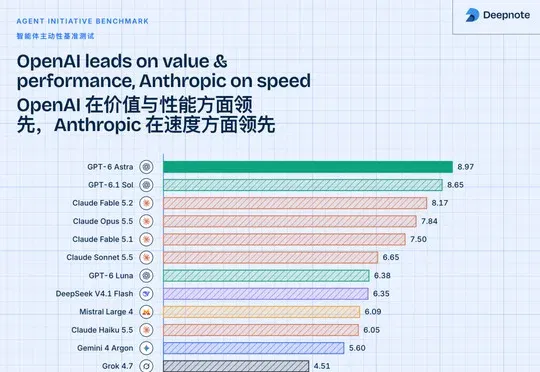
Deepnote benchmarks proactive AI coworkers on intervention judgment, scores and model-call costs (opens in a new tab)
Twelve models chose whether to respond across 50 simulated workplace tasks. Astra and Sol led the reported scores; monthly costs are estimates extrapolated from assumed traffic.