LingBot robotics challenge ends: 48 hours on real robots test data and engineering
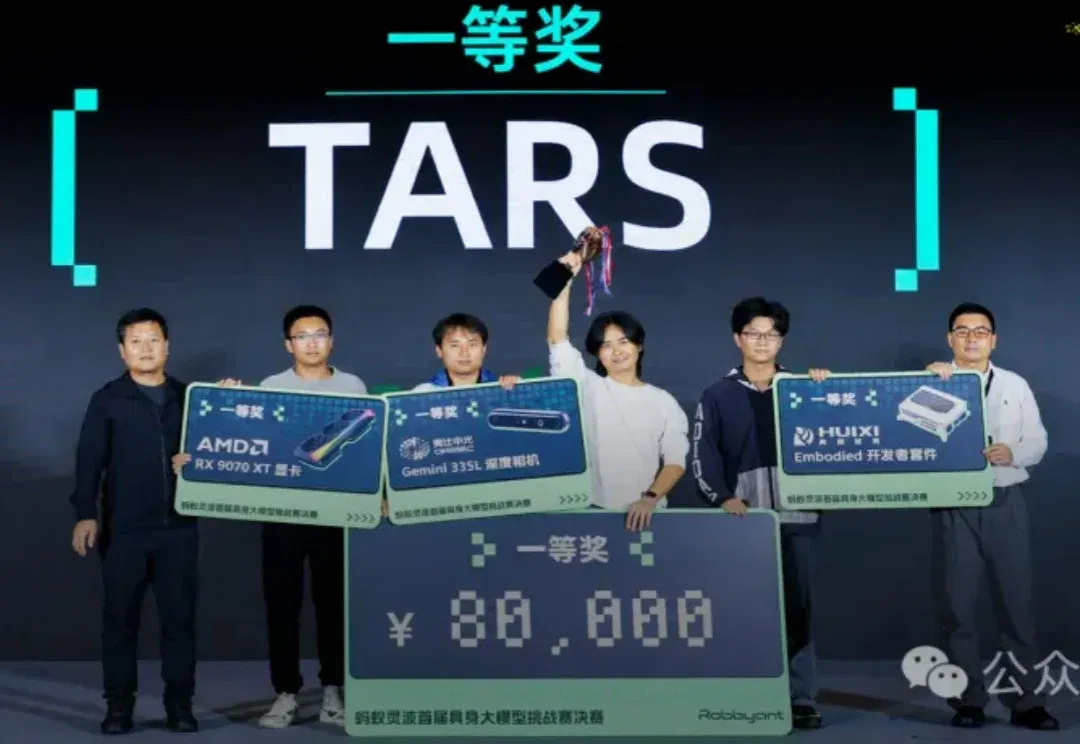
Fifteen teams reached the LingBot challenge finals, tackling produce sorting, transparent-object storage and dual-arm work. TARS won with 82.50 points. The report highlights additional data collection, gravity compensation and on-site adaptation.
Editorial correction (November 17, 2026): Registration and finalist counts, and success rates versus overall scores, have been distinguished. Gravity modeling and on-site positional changes are clarified. Contest performance is not industrial-deployment acceptance testing.
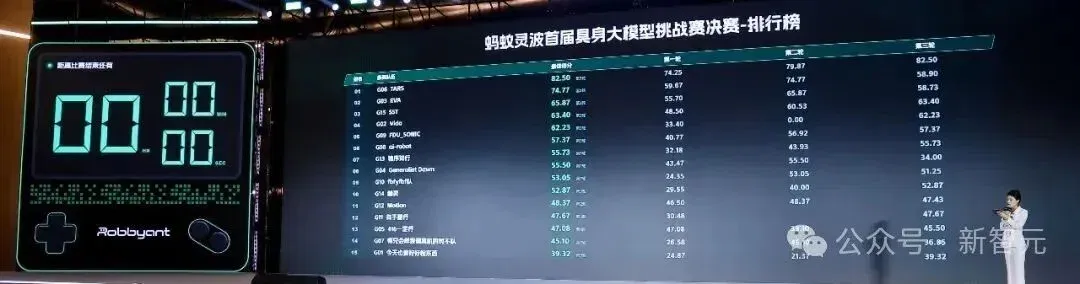
The results are in for the inaugural Ant LingBot Embodied Foundation Model Challenge finals!
TARS, with an average age of 25, won the championship.
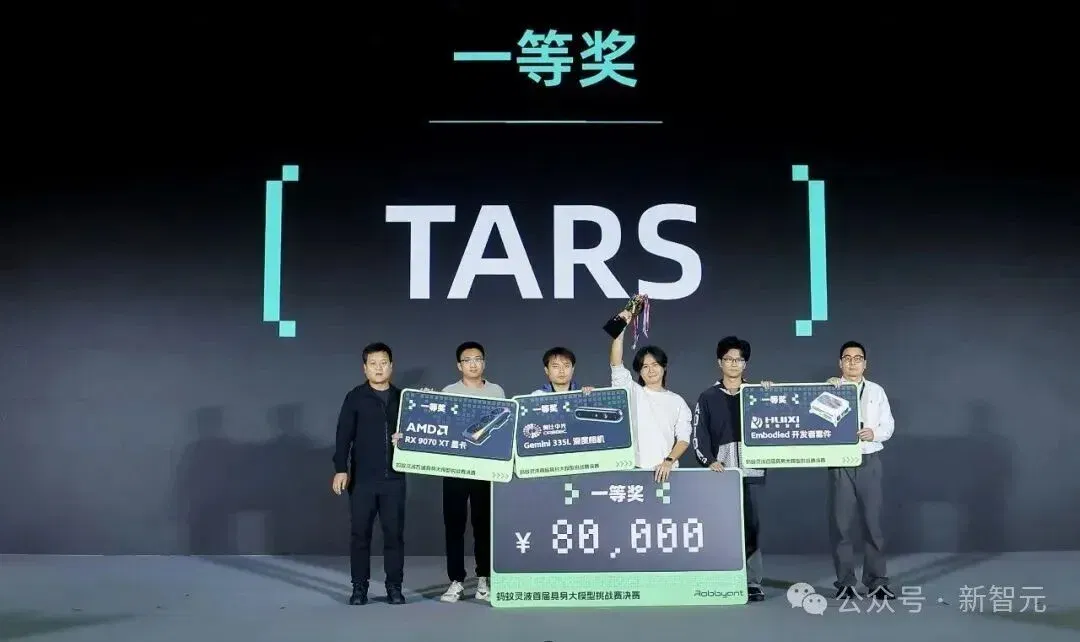
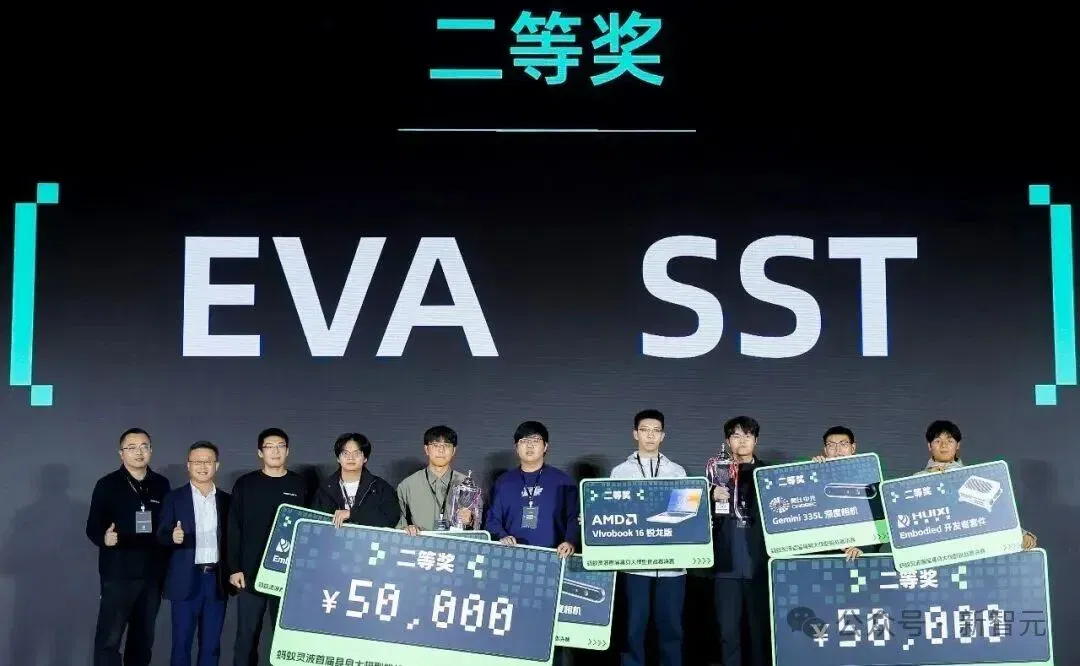
EVA, from Huazhong University of Science and Technology and Tsinghua University's Shenzhen Research Institute, placed second with 74.77 points. SST, nicknamed the Senior Shanghai Sightseeing Tour, placed third with 65.87. Both received second prizes.
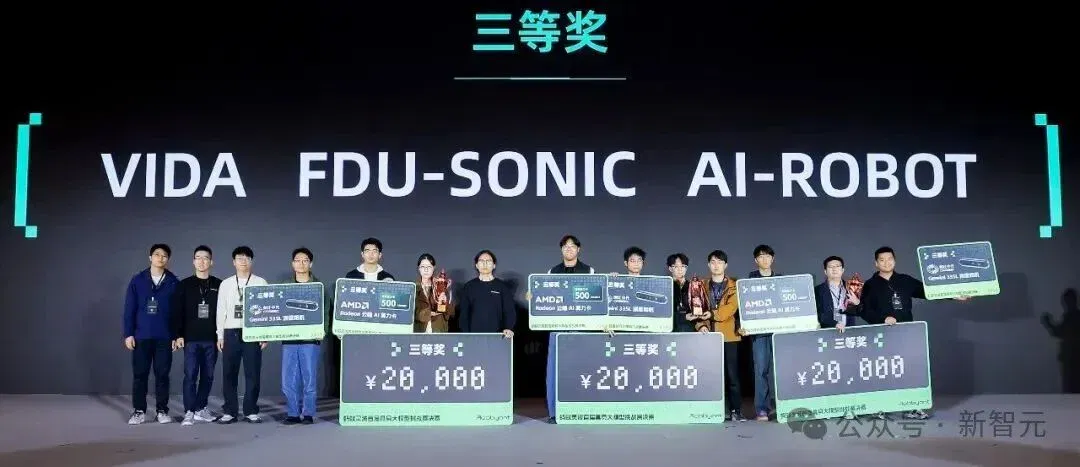
Tongji University's Vida, Fudan University's FDU-SONIC and Dalian University of Technology's ai-robot placed fourth through sixth, receiving third prizes.
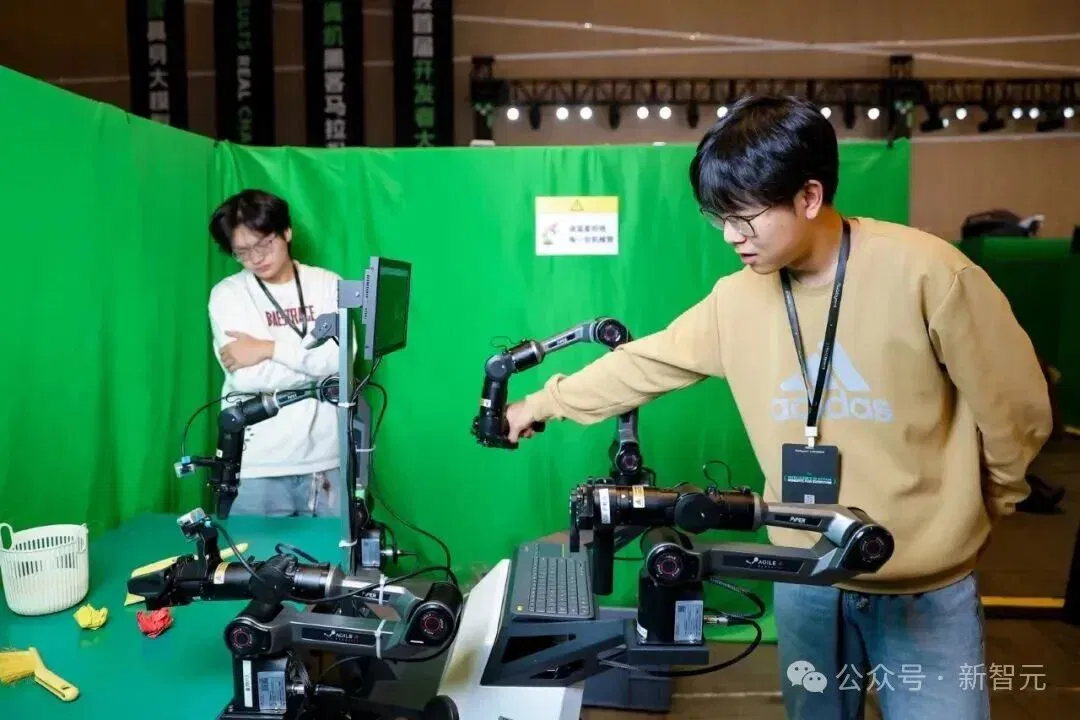
At Shanghai's Zhangjiang Science Hall, 15 dual-arm robots had been working for 48 hours.
This intensive practical test was the competition's 48-hour real-robot hackathon final.
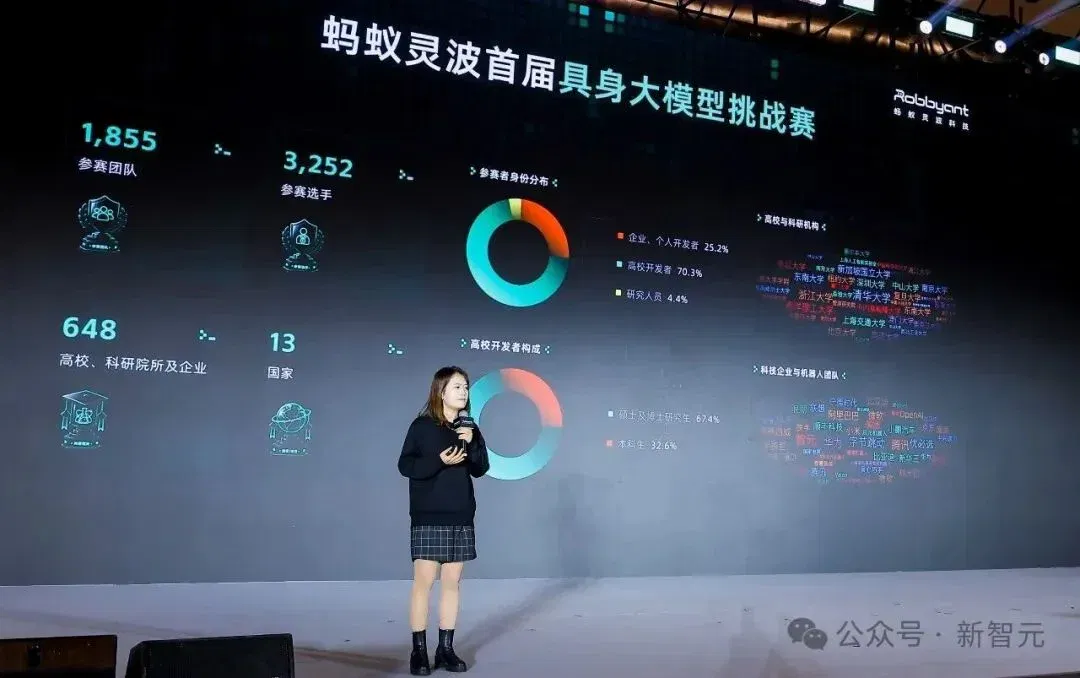
According to the organizers, 1,855 teams and 3,252 people from 648 universities and companies across 13 countries registered. The report provides no consistent comparative basis for calling it the industry's largest event.
After an online preliminary round with roughly one place for every 124 entrants, only 15 teams and 59 participants reached the Shanghai final.
The competition posed a fundamental question to embodied intelligence:
If an open-source foundation model is handed to outside developers, with different people and freshly collected local data, can they make it run on real robot arms in just 48 hours?
48 hours on real robots: from answering questions to doing work
Ten thousand blind tests in unfamiliar simulated environments during the preliminaries were still like taking a computer-based listening exam.
The real-robot hackathon put all 15 teams into the equivalent of an emergency operating theater.
If the success rate in the simulated environment had already exceeded 70% in the preliminary round, why did the finals still need to bring 59 contestants to Shanghai for two consecutive days and nights of grueling hands-on competition with real robots?
Because digital AI is tested on answering questions, while physical AI is tested on doing work.
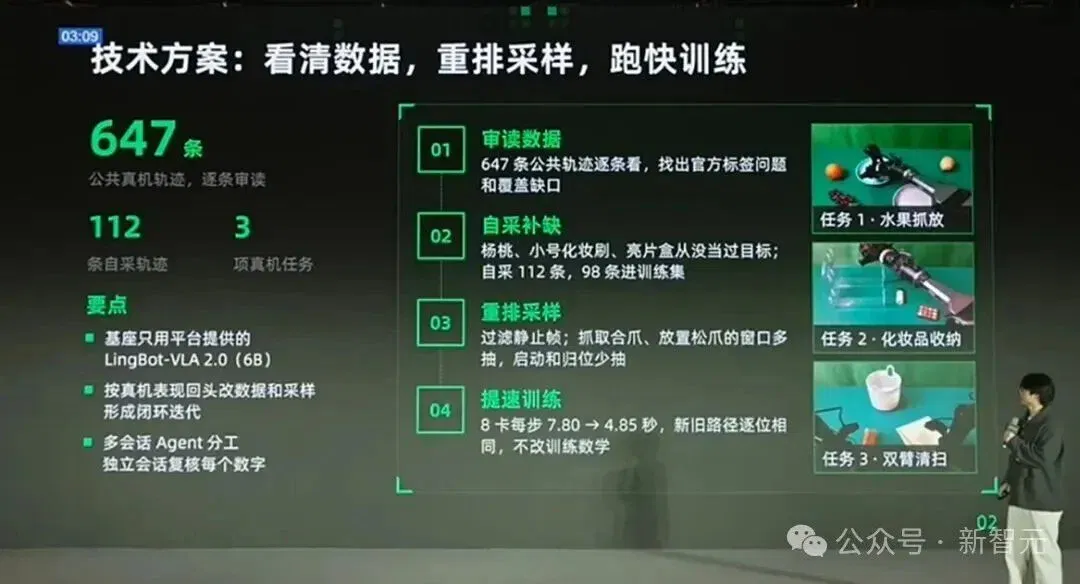
The organizers supplied only standardized eight-accelerator compute clusters and 647 shared baseline data samples.
All teams had to use open-source LingBot-VLA 2.0 and AgileX dual-arm hardware, with one model tackling three physical tasks simultaneously.
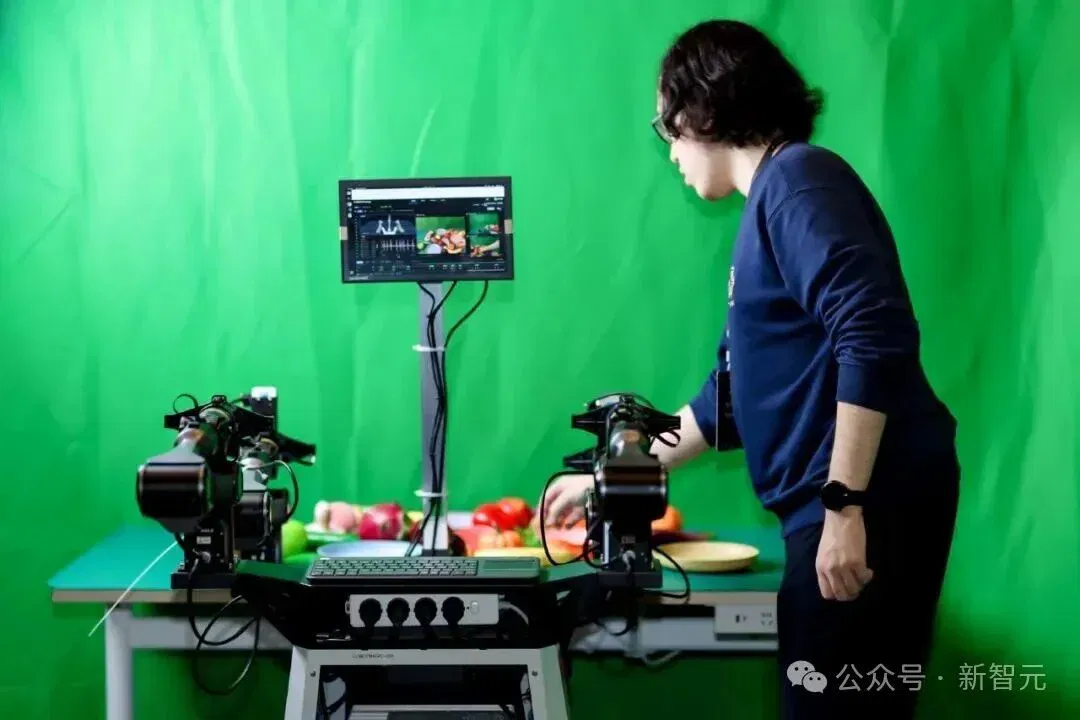
The first task was to identify target items among more than 30 kinds of produce and place them on plates of specified colors.
The official dataset lacked starfruit and pointed green-pepper samples, while the table included difficult-to-distinguish mandarins and oranges.
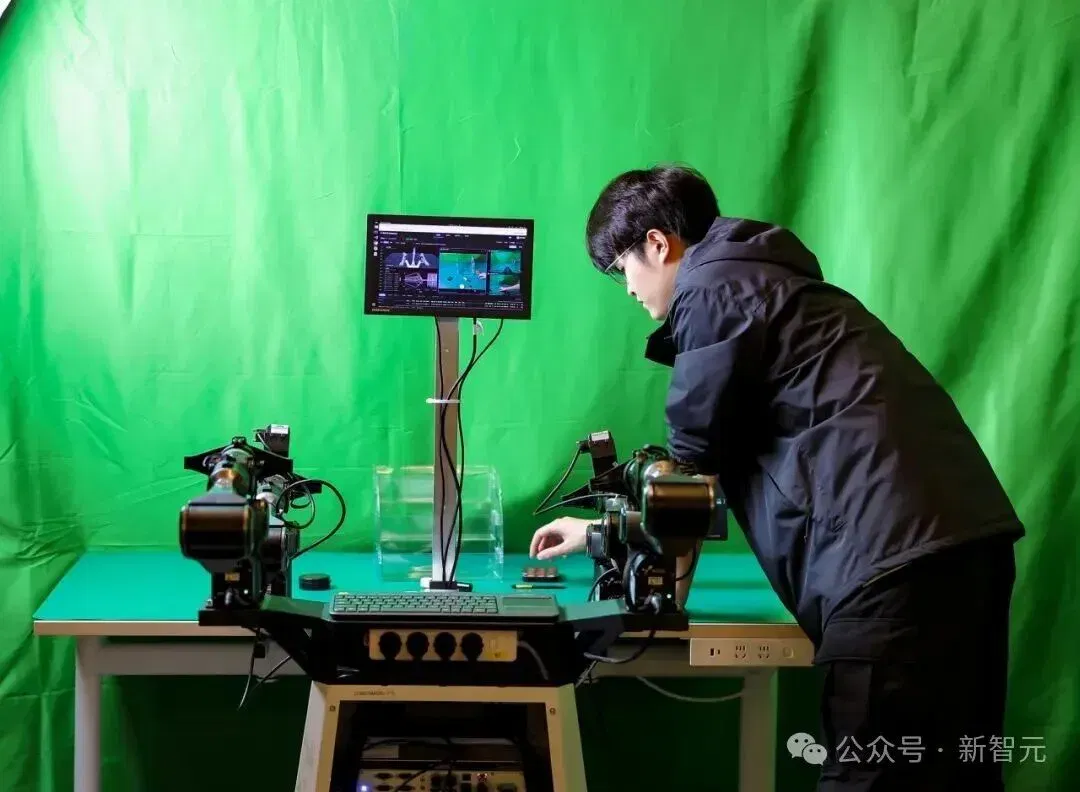
The second task required placing cosmetics precisely on the specified upper, middle or lower shelf of a transparent three-tier acrylic organizer.
Reflections under strong exhibition lighting, and grippers that could easily knock the organizer out of place, threatened to undo an entire action.
The third task required both arms to hold a broom and dustpan, sweep tabletop rubbish into the pan and empty it into a bin.
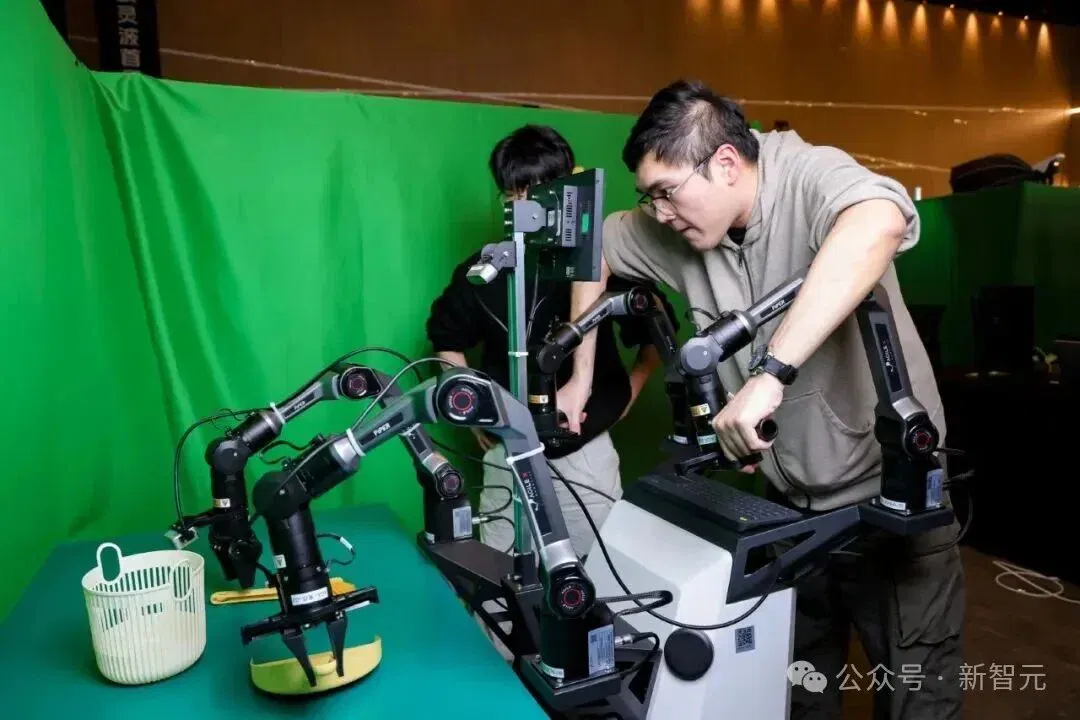
All three tasks addressed practical deployment difficulties.
They tested both adaptation of model outputs to hardware and genuine multitask generalization by a single brain.
They also tested end-to-end engineering: local data collection, fine-tuning and deployment within 48 hours.
Breaking through in the final: hands-on engineering
The 15 finalists responded to the demanding tasks with different approaches and impressive results.
TARS, which secured the highest final score of 82.50 near the deadline, comprised students from Tianjin University and Northwestern Polytechnical University, plus Pudu Robotics engineers.
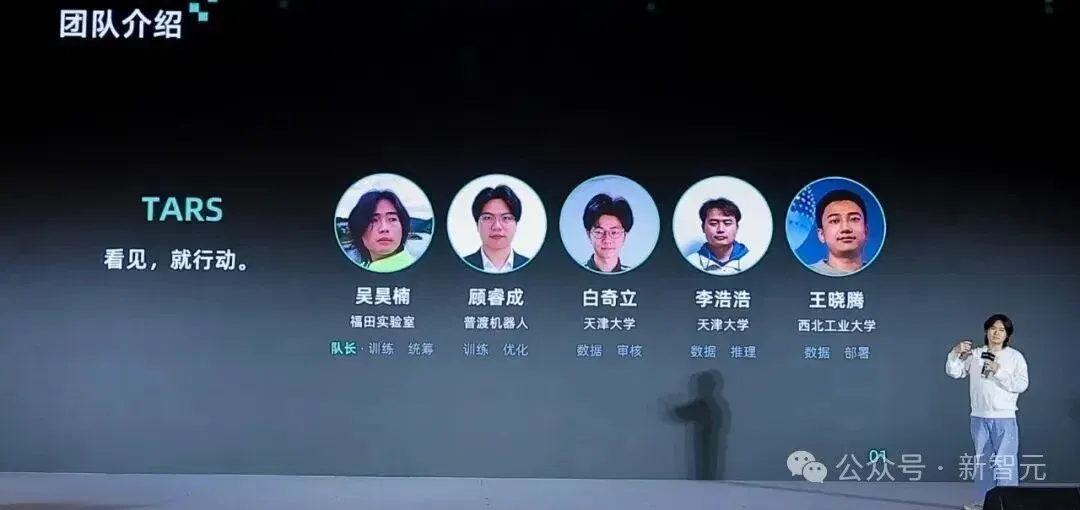
During the first afternoon, they noticed the real arms drooped increasingly under gravity as they extended farther forward.
An arm trying to place cosmetics into the transparent organizer dipped and pushed it askew, causing repeated failures.
To address droop and compensation errors, the team used a 500-gram bottle of mineral water as a calibration weight. Simulators can model gravity, but parameters and hardware responses may still differ from reality.
They measured 100 real-robot samples and fitted a gravity-droop compensation table, automatically applying an opposite offset based on extension distance during inference.
For sweeping, they found all 216 official samples grasped the dustpan's rear handle straight on, with little contact area and a high risk of flipping.
They immediately discarded all 216 official samples and collected 334 new, stable grasps on the thin rear rim instead.
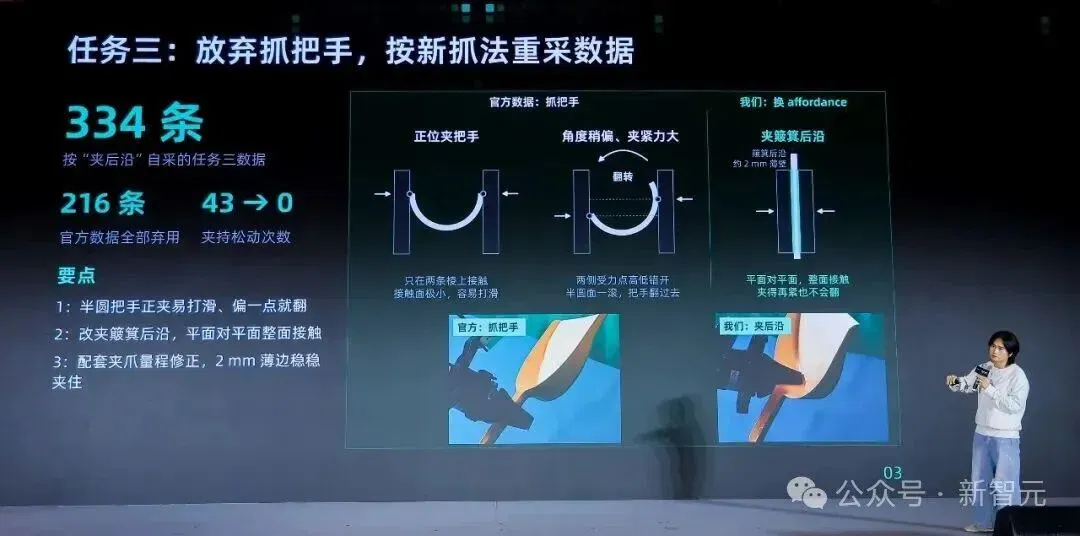
They also developed two-person split-control teleoperation: one person operated each arm, while a third watched the screen to review data quality.
Combined with low-level acceleration reducing training steps from 15 seconds to 3.4 seconds, they completed 30,000–40,000 steps within 48 hours and reached first place.
EVA, second with 74.77 points, staged a turnaround.
The team comprised postgraduate students Wu Xianjin, Zhang Yu and Fang Heng, born in 2004 or later, from HUST and Tsinghua. After training with official data on day one, their real-robot success rate was only 10%.
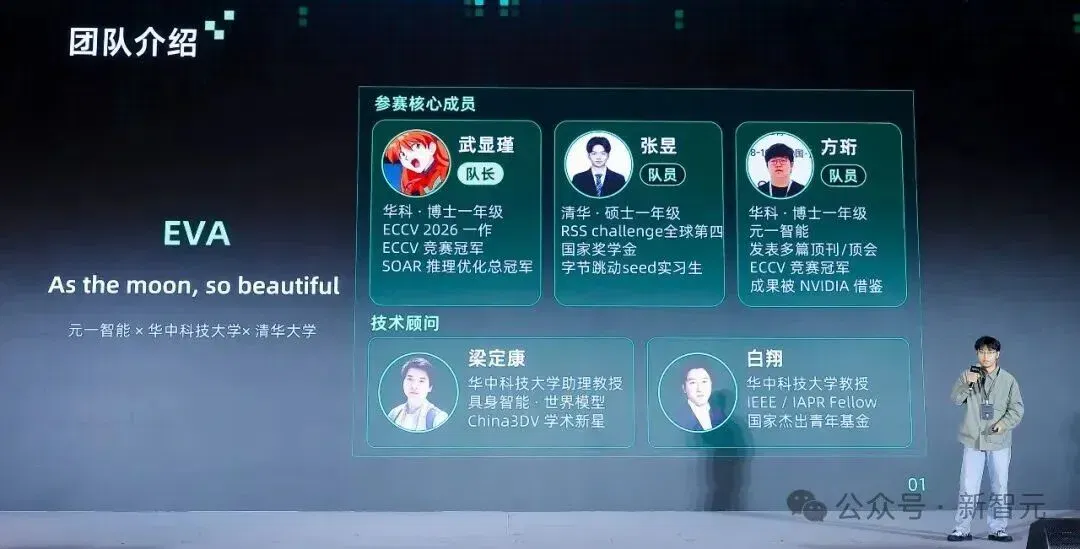
They promptly started a recursive self-improvement (RSI) data-feedback flywheel on LingBot-VLA 2.0.
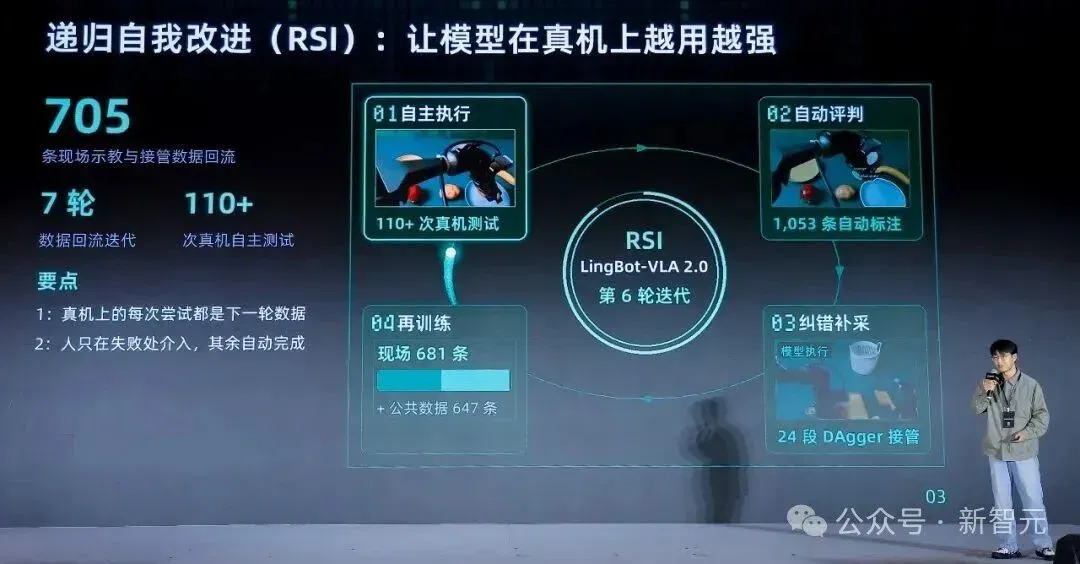
They let the model execute autonomously on hardware, with humans taking over immediately to collect corrections through DAgger whenever grasps failed or difficult corner cases stalled execution.
Across 48 hours, they completed seven feedback iterations and collected 705 additional samples, finishing with 74.77 points. The earlier 10% was execution success, while 74.77 is a contest score; these different measures cannot yield a direct improvement percentage.
Meanwhile, SST, third with 65.87 points, took an opposite, minimalist route.
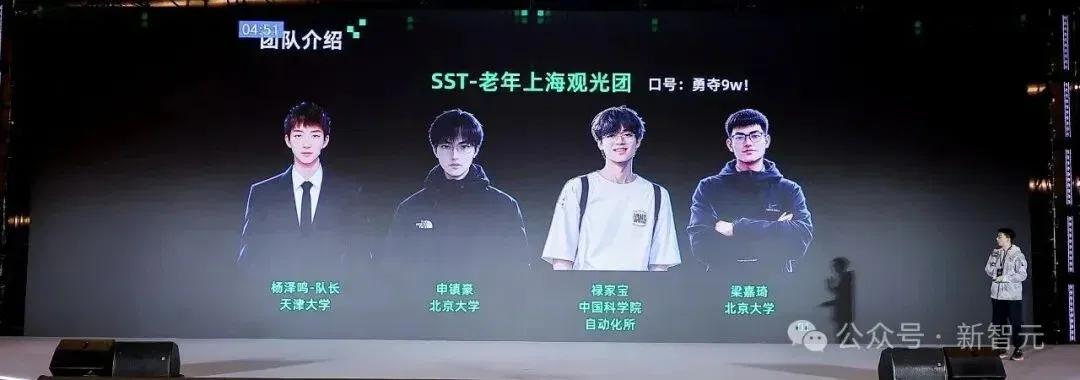
While others collected 500–600 samples, SST collected only 13 additional real-robot samples throughout.
In real environments, conventional segmentation models often struggle to identify the right object directly from instructions.
Tianjin senior undergraduate captain Yang Zeming and three master's students from Peking University and the Chinese Academy of Sciences had an idea: play collected video backward.
The opening frames of the reversed video show the completed task, with objects in their final positions.
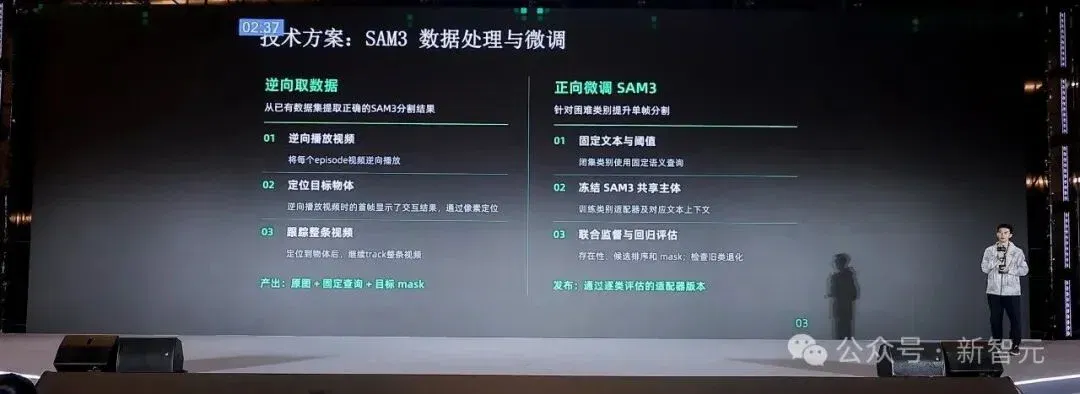
They used this to locate target pixels precisely, combining DeepSeek instruction parsing with SAM3 masks to darken all distracting background regions outside the target.
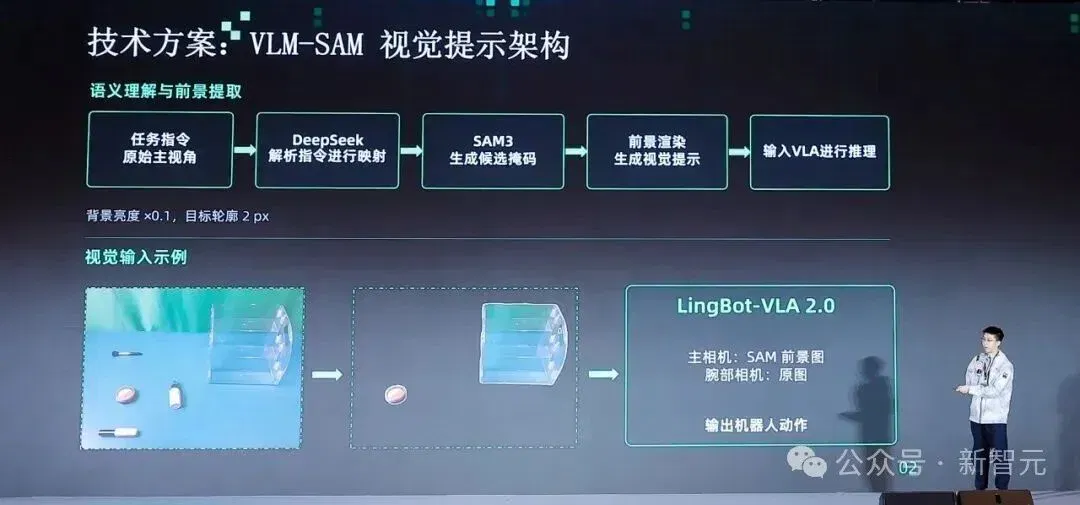
LingBot-VLA 2.0 could then focus on action execution, taking the team into the top three with only 13 new samples.
Additionally, Tongji's post-2000-generation Vida team, fourth in the final, used Qianwen to draw visual prompt boxes around the transparent organizer and its own GeoAAC technique to adjust action-chunk length dynamically.
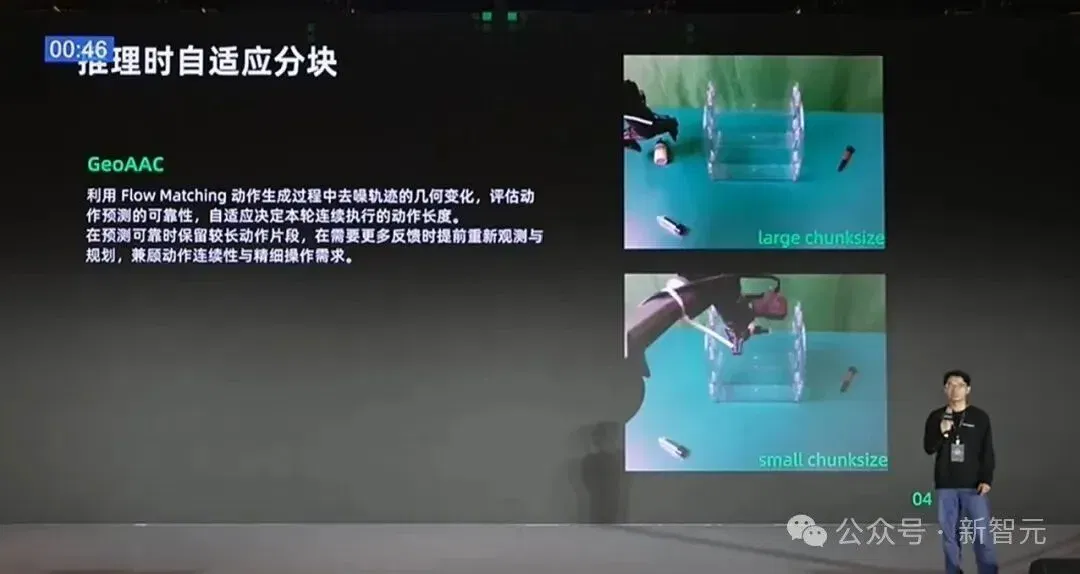
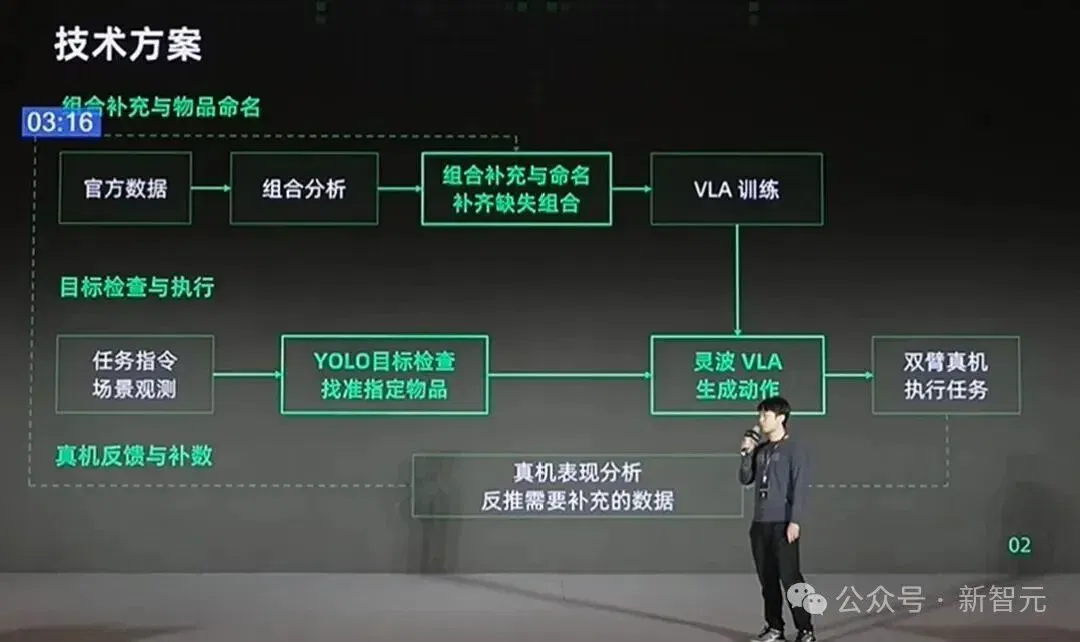
Fifth-place FDU_SONIC from Fudan enumerated initial tabletop arrangements and worked backward from real-robot behavior to determine additional data needs, drawing on LingBot-VLA 2.0's native potential.
Opening access for dreamers of every background
Among finalists, 74.7% were university researchers and 67.4% master's or doctoral students.
On the competition floor were PhDs from prestigious universities and front-line engineers from companies such as OpenAI, Microsoft, ByteDance and Unitree. There was also a group of grassroots dream chasers crossing into a new field and breaking through on the strength of their enthusiasm.
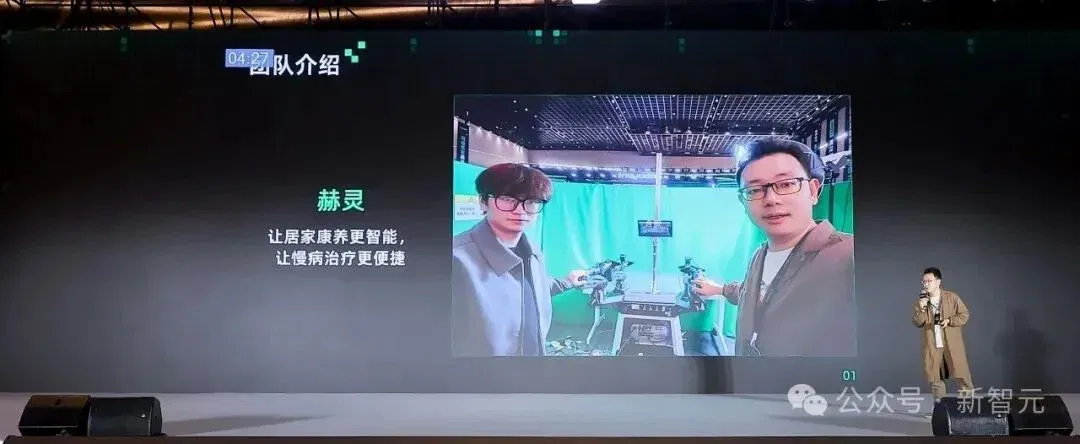
Preliminary-round winner Heling was captained by Cao Jingfan, a Chengdu backend engineer in his thirties who had entered embodied intelligence only six months earlier.
When teammates became unavailable during preliminaries, he worked alone with an A800 server, doing his day job and setting midnight alarms for evaluations, persisting through more than ten rounds to finish first.
For the Shanghai final, he partnered with a Xiamen University postgraduate intern at his company, gradually addressing jitter in pepper grasping and transparent-box storage.
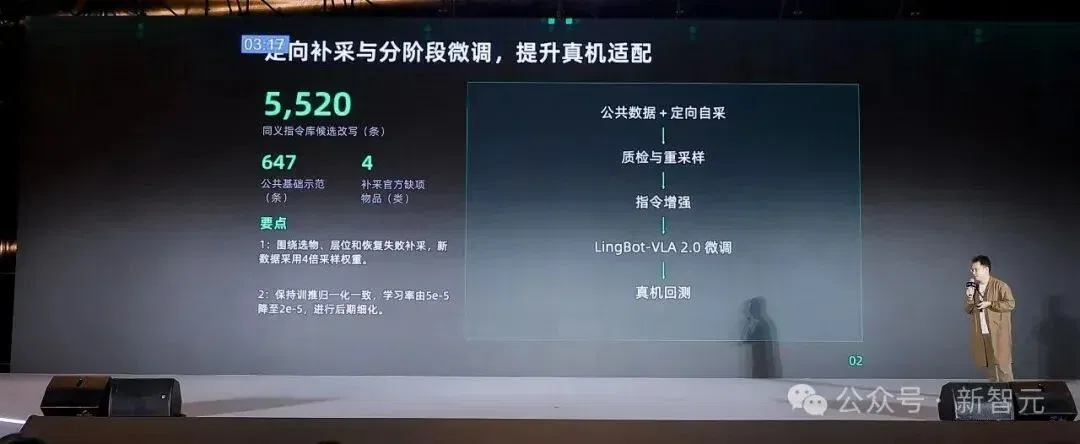
On the presentation stage, Cao explained why he had changed fields.
His Chengdu team develops robots for home elderly care and chronic-disease rehabilitation, aiming to address aging-society challenges through embodied technology.
Another finalist, Our Senior Will Help Us Tune the Robot, consisted of students from Tongji, the University of Science and Technology of China, Shanghai Jiao Tong and Xi'an Jiaotong.
The five had never met in person, going from competing for online GPU training time to meeting for the first time at the Shanghai final.
Team 416 Can Do It also came together after seeing the event on Xiaohongshu: former high-school roommates, friends for ten years, newly recruited by major internet companies.
On Motion, City University of Hong Kong student Cai Xinying had transferred from materials to mechanical engineering less than three months earlier.
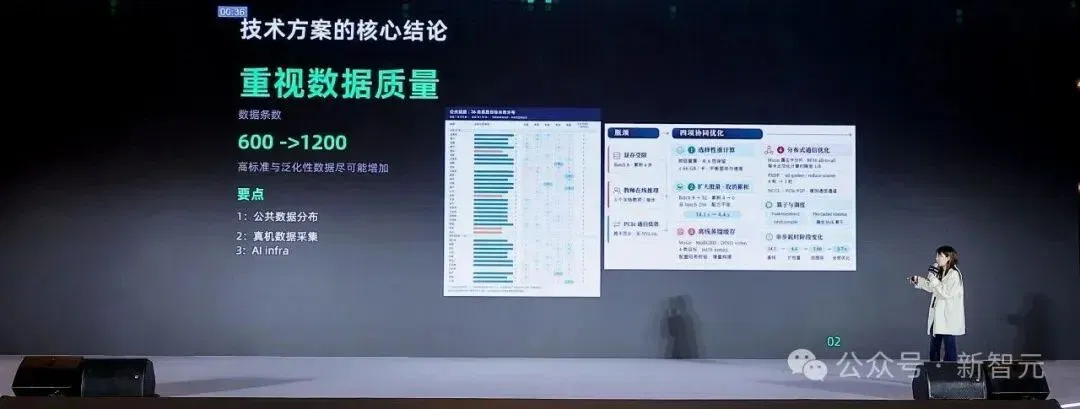
After collecting more than 600 samples in the final, she joked: 'This competition helped me, someone with ADHD, discover a talent for data collection. I did not lose focus—I became more excited the more I collected!'
Why would engineers six months into a new field and inexperienced undergraduates compete against leading laboratories?
The underlying change is broader access to embodied intelligence.
Robot foundation models once required substantial resources: major companies spending tens of millions on pretraining compute, or universities waiting for time on a robot arm.
Ant LingBot's open release of the industrial-grade LingBot-VLA 2.0 foundation gave newcomers a much higher starting point.
Contestants tuned the model while simultaneously testing it.
Compute was no longer the only factor; engineering intuition and practical ingenuity received unusual prominence.
A new yardstick beyond leaderboard worship
In this grueling 48-hour test, what offered the industry even more insight than the high-scoring submissions was precisely the pitfalls contestants encountered in the real physical world.
Four evaluation engineers born in 1999 or later, from CCIC's Zhice Technology team Let's Inspect Things Properly Today, spent much of a day building high-fidelity Blender simulation assets.
Real-robot evaluation then produced an odd result.
Asked to place an item on the organizer's third shelf, the arm consistently chose the second.
Asked for the second, it consistently chose the first; asked for the first, it placed the item outside the organizer.
A measurement afterward revealed the problem: their table was 17 centimeters from the arm, while the standard setup was 12 centimeters.
That five-centimeter difference, plus learning only after two submitted tests that the robot could be moved, left the technically capable team last.
On day two, 416 Can Do It accidentally shifted the table during inference, changing on-site geometry and affecting a model trained for 7,000 steps. This did not mean its weights were deleted or invalidated.
The five-person online-friends team took turns collecting data, but differing arm-raising habits made convergence difficult within 48 hours.
Chixu Zhixing, a startup team from the Chinese Academy of Sciences' Institute of Computing Technology, found another detail.
Replaying the same trajectory on two identical-model arms produced slightly different paths because of small differences in motor zero positions and damping.
These firsthand lessons revealed the practical nature of embodied deployment.
The industry has spent too long focused on laboratory rankings.
A simulator can wait for model reasoning, keep table distances millimeter-precise and hold lighting constant.
As the CCIC team observed afterward, actual production lines cannot stop for algorithms to undergo leisurely trial and error, nor can companies spend hundreds of millions reproducing a factory.
The competition's value was a demanding stress test for potential factory, pharmacy and household applications.
It established another way to assess embodied foundation models.
Leaderboards show what a model can do in the test designers' hands.
Outside developers' 48-hour practical results show how much may translate into industrial value.
Opening an ecosystem for global developers
A key reason 15 teams could complete the workflow in 48 hours was that Ant LingBot supplied not only challenges but infrastructure.
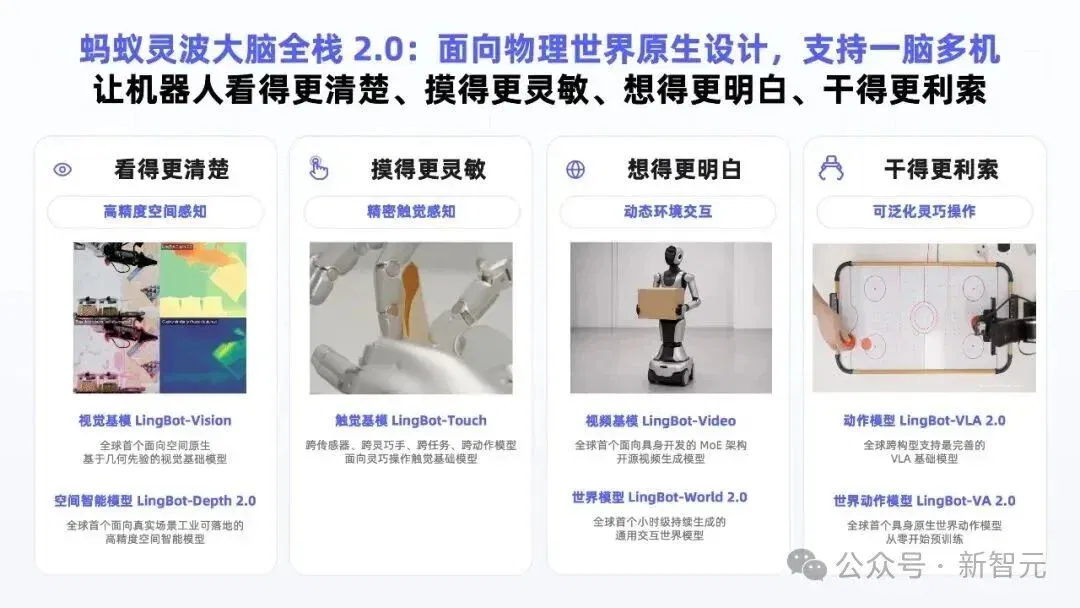
Following an embodied-native approach, it has built the open-source Brain Full Stack 2.0 system around real physical interaction.
It has released spatial perception, streaming mapping, world-action models and the latest LingBot-Touch tactile model, aiming for clearer vision, more sensitive touch, better reasoning and more capable action.
This foundation supported organization and training. The 3,252 figure refers to registrants; only 15 teams and 59 people attended the offline final.
Researchers use it for 3D reconstruction in complex settings, including tomato greenhouses in Thailand and an underwater coral-reef project at EPFL in Switzerland.
Stanford reuses open-source components, Harvard uses it as a spatial teacher, and 39 overseas projects have independently called on this underlying system.
During final presentations on the morning of the 16th, a hundred-person observer group of senior technical experts, leading investment organizations and industry media asked questions throughout.
The judging panel considered three dimensions—technical innovation, practical application value and commercial potential—and voted on site, under their real names, to select three teams for the Observer Panel Special Award.
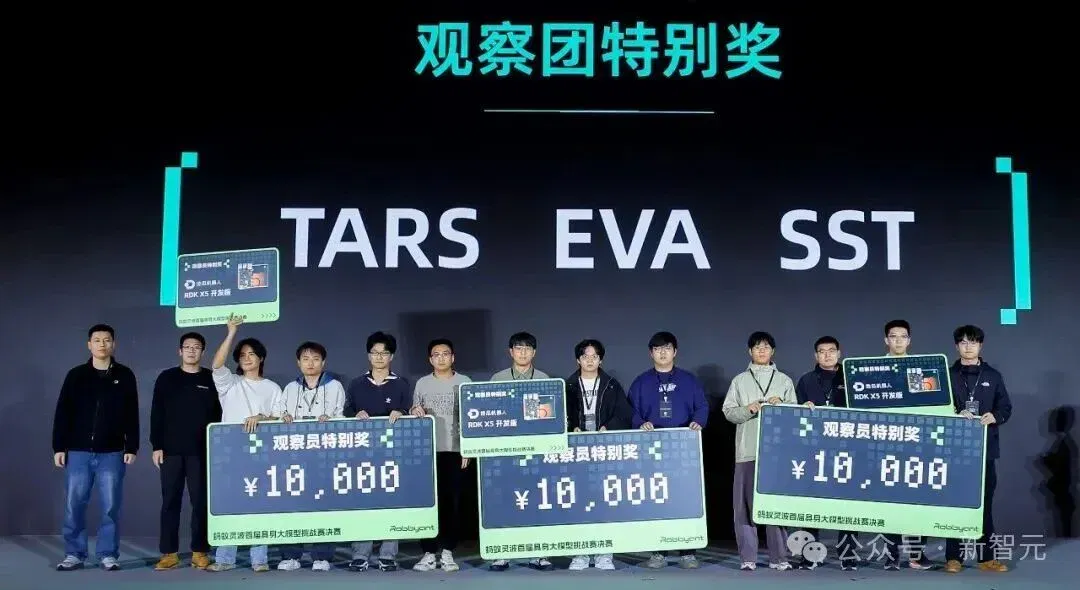
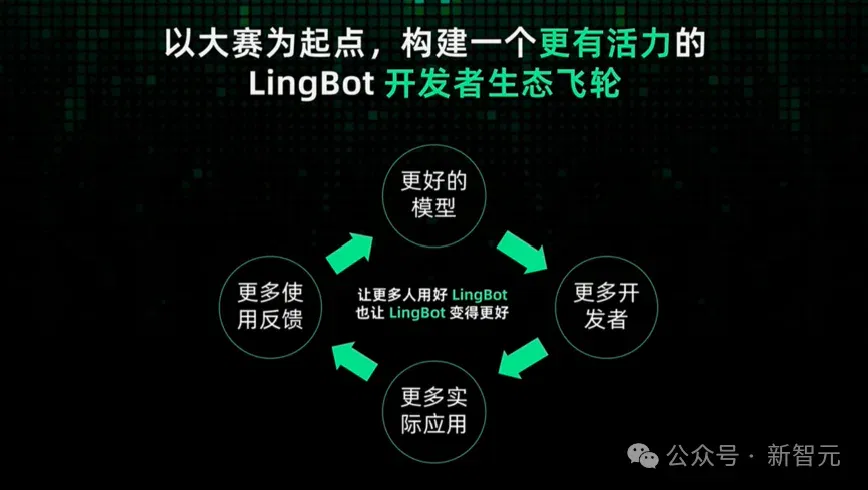
At the closing ceremony and inaugural Ant LingBot Developer Conference on the afternoon of the 16th, the organizers announced the LingBot Developer Ecosystem Program.
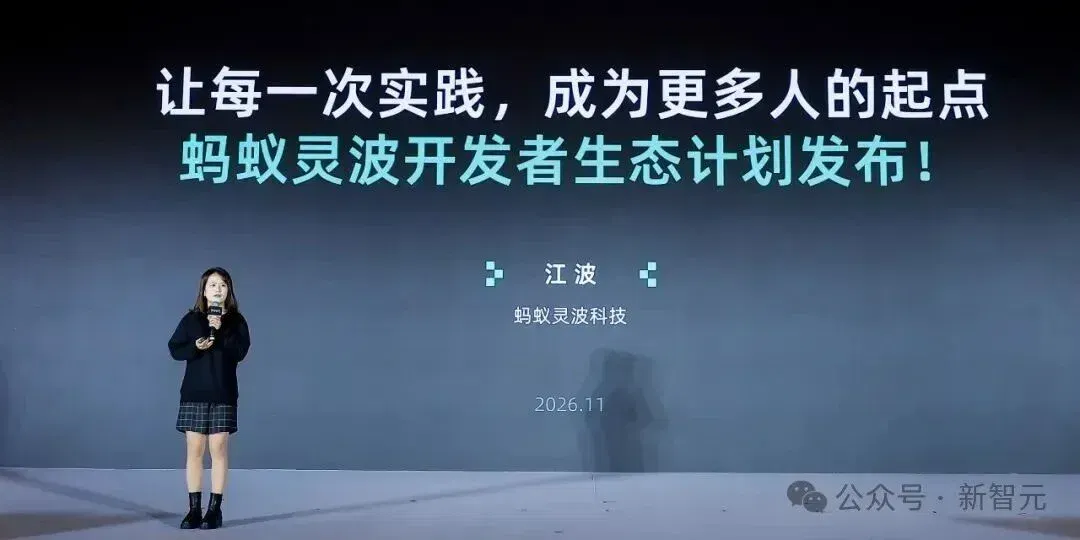
Its first phase invites 20 LingBot MVPs from university professors and researchers, and recruits 40 LingBot Developer Experts from core practitioners and technical creators.
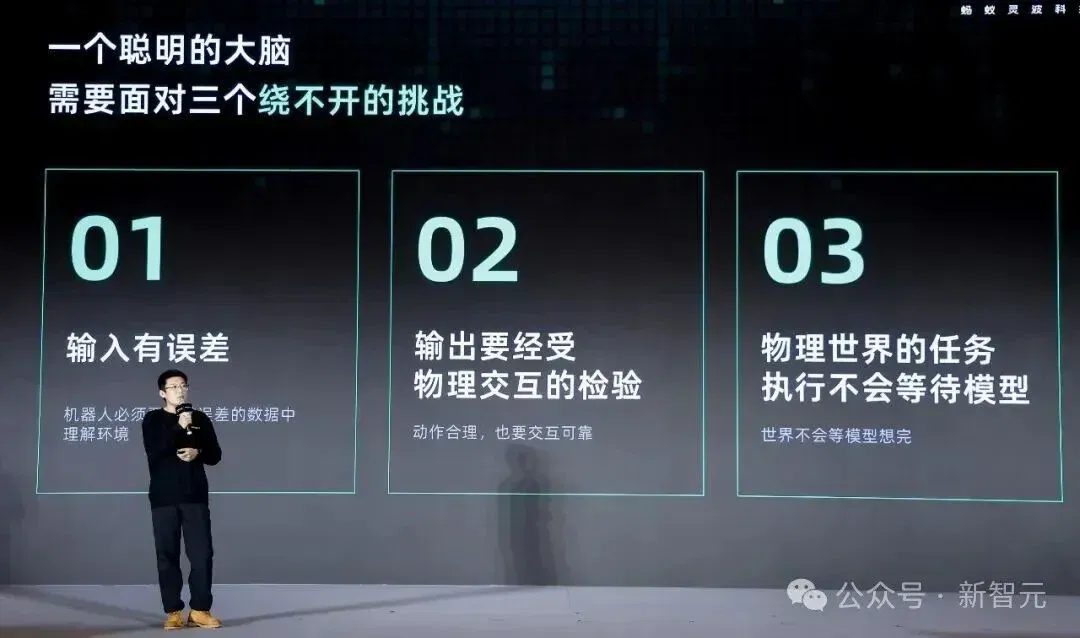
Chief scientist Shen Yujun, HKUST assistant professor Xu Yinghao and Hugging Face engineer Caroline Pascal shared recent embodied-foundation-model advances.
Ant LingBot CEO Zhu Xing joined BAAI president Wang Zhongyuan, Shanghai Jiao Tong's Li Yonglu and industry representatives to discuss paths from embodied models into the physical world.
Across the 48-hour challenge, contestants tuned models while models faced contestants' practical tests.
Every imaginative idea and every round of trial and error will become a step on which those who follow can continue exploring. Together, they will push open the door for China's embodied intelligence to enter the real physical world.
This article comes from AI Era. Authors: Aeneas and Haokun.
After reading
Join the AINRK community
Read how to join the community and connect with people working in AI.
Related articles
Continue reading related topics and articles in this category.

An AI researcher's view of synthetic data, expert networks and outsourcing (opens in a new tab)
Jinyan Su draws on post-training research and job-search experience to discuss data vendors' tasks, sales and quality checks. This is personal observation and commentary; anonymous examples are not independently verified or representative of every provider.

高端 GPU 服务器报价上探 2000 万元,采访追踪中间商交易 (opens in a new tab)
智能涌现采访采购方、中介及部署服务商,记录某型八卡服务器的高报价、供货不确定与交付压力。文中报价来自受访者所接触的交易。
大模型的数据生意:人类如何蒸馏自己 (opens in a new tab)
晚点走访数据生产者、供应商和模型团队,梳理专家怎样把工作任务、示范、操作轨迹和评分标准做成训练数据。文章也讨论采购独占、数据合规、自动扩写与标注劳动的报酬。

一个小数商的 AI 数据生意 (opens in a new tab)
报道以化名「小武」的经历串起训练数据转售、专家标注、企业数据交易与中转服务。文章结合多次访谈,部分细节经过模糊化,交易价格和规模来自受访者讲述。

一个万人小岛,靠.ai年赚7000万美元 (opens in a new tab)
天降横财,始于 30 年前的一场“意外”。