Inside Ulanqab's data-center boom: deadlines, operations and local returns
LatePost interviews construction workers, suppliers, operators and residents in Ulanqab, documenting the gap between computing investment and limited permanent jobs, alongside changes in electricity, rents and tax revenue.
Editorial correction (November 16, 2026)This is field reporting; individual cases do not represent all data centers. Depreciation is an accounting allocation, not an equal cash or output loss. Availability conversions, UPS endurance and generator startup must also be distinguished.
Building the best infrastructure humanity can provide for AI.
In the Bayin area of Ulanqab's Chahar High-Tech Zone, a shop selling instant noodles and biscuits operates from a shipping container. Its owner, in his sixties, does not know how to use Doubao but knows the construction workers are involved in big data. Over the past year, he has followed new construction from Kuaishou to CICC Data and then VNET, moving six times. Each crane-assisted move costs RMB 300.
The busiest construction phase usually lasts only three or four months. Once a building is complete, thousands of workers move to the next site, and the shop must follow. When the servers begin running, one campus manager estimates that fewer than 20 people are needed for shifts and maintenance in a building.
The owner has felt the area growing quieter. Several projects began together last year, bringing crowds and traffic jams after work. Night shifts to meet deadlines meant longer shop hours. By October, those facilities were finishing interior work and worker numbers had fallen sharply. 'I can still sell cigarettes and water, but not even a case of instant noodles a day. I can only make RMB 200 a day.'
The campus behind the shop occupies 200 mu and represents over RMB 3 billion of investment, with electricity use equivalent to 1.45 million households. More than 5,000 cabinets stand over two meters tall, each holding dozens of GPUs worth over RMB 500,000 apiece, stacked like drawers. Wiring connecting the GPUs often stretches tens of kilometers, and fiber exceeds 1,000 kilometers. Dissipating their heat requires nearly 1,000 air-conditioning units and over 2,000 tonnes of copper sheets.
From copper cables to high-bandwidth memory, every part of the supply chain has seen prices rise over the past two years. Global suppliers are running at full capacity, producing one of this era's most extraordinary capital-spending booms.
The Chahar High-Tech Zone covers an area equivalent to nine Shanghai Disneyland parks. Twenty-two data centers are under construction here alone, with nearly 30,000 blue-collar workers, described as earning over RMB 300 a day, racing across sites. A building must be completed every three months. They work ten-hour days and earn RMB 200–400.
Two months ago, Goldman Sachs said Ulanqab had emerged as the Asia-Pacific region's largest and fastest-growing AI compute cluster. This northern border city of only 1.5 million people, previously known for potatoes, volcanoes and astronauts, is becoming a frontline of the AI compute race.
Yet data centers have not transformed people's lives here.
Trucks brought GPUs—and Mixue
Travel no more than 10 kilometers from central Ulanqab and you will see data centers. Huge white boxes rise from the flat ground of the grassland, with diesel generators on either side. Like prisons, they are surrounded by fencing and barbed wire that is also electrified at high voltage. There is a camera every 10 meters. A column emitting a white plume stands in a corner; this is the data center's cooling tower, not a chimney.
They are the grassland's newest, most imposing and mysterious buildings.
Taxi drivers know the campuses well. Hearing that we had come specifically to see data centers, one became animated: 'You should go to Bayin. To see where the workers live, go to Zhanggaiying.'
Zhanggaiying, in Baihaizi Town in the high-tech zone, contains campuses for Huawei, Alibaba, Apple and UCloud. These were among the earliest companies to build here, and the municipal government named roads after them.
We crossed Apple Avenue to Alibaba Avenue at two in the afternoon. Only the three of us were on the broad road stretching into the distance, with few cars and enormous low, rectangular data centers on either side, their plain walls behind orderly fences. Inside, thousands of servers ran continuously. Outside, only the Siberian wind and industrial fans were audible. UCloud's giant rooftop blades, turning at 900 rpm, sounded like a helicopter taking off.
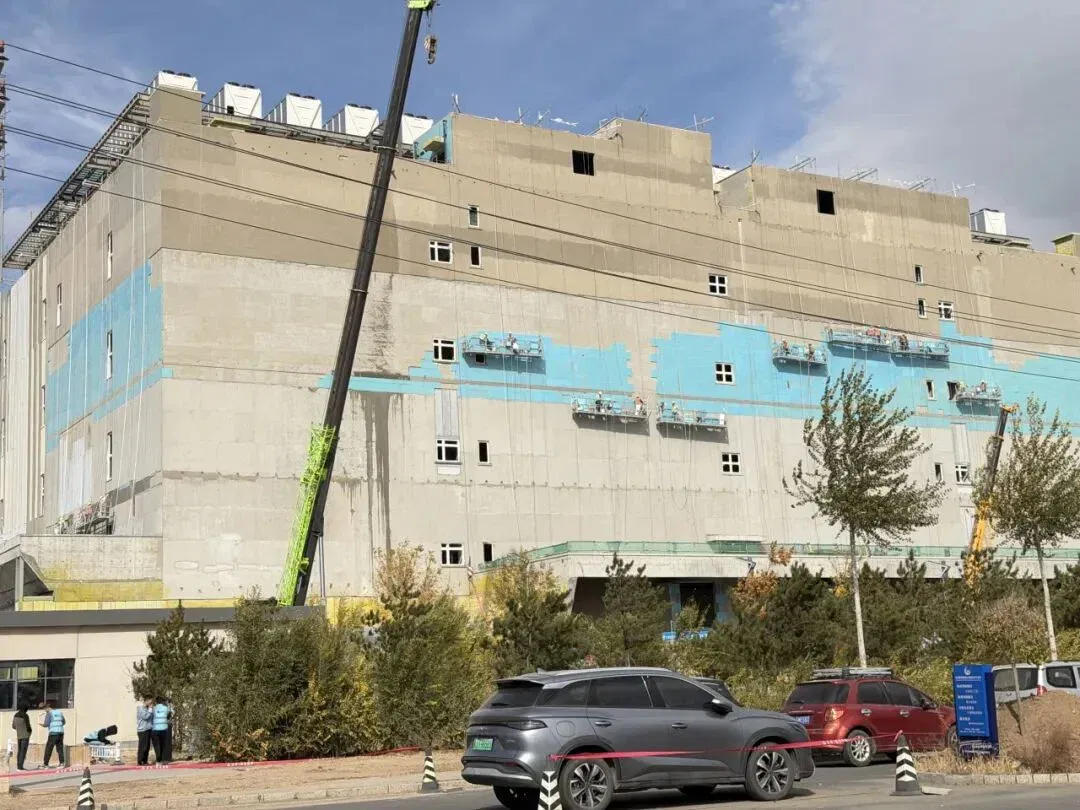
A data center under construction.
A Didi driver pointed out CICC Data, Huawei and Kuaishou to the east, and Alibaba, Zhonglian and Apple to the south. Every building mattered, he said: a fire in one would erase China's car-insurance data; a problem in another would stop him watching short videos. He did not know those data had off-site backups.
He casually described clients' data inside, information that was confidential. We were told not to approach gates or take photographs: posting images on social media could cost guards their jobs, and guards would pursue photographers and demand deletion. Apple's security was the strictest.
We walked around a campus not yet operating. It covered 200 mu, and twenty minutes took us only halfway around. Five warehouse-like four-story buildings stood inside, with cranes still turning beyond them and further buildings unfinished. We had no entry permission. At five meters from the gate, alarms sounded on both sides, but nothing happened: the campus was unused, without GPUs or guards.
Five kilometers away, Bayin was one vast construction site. This is the center of Ulanqab's second building wave, where CICC Data, Zhonglian, Huawei, Kuaishou and VNET are establishing new compute bases, with over ten thousand workers.
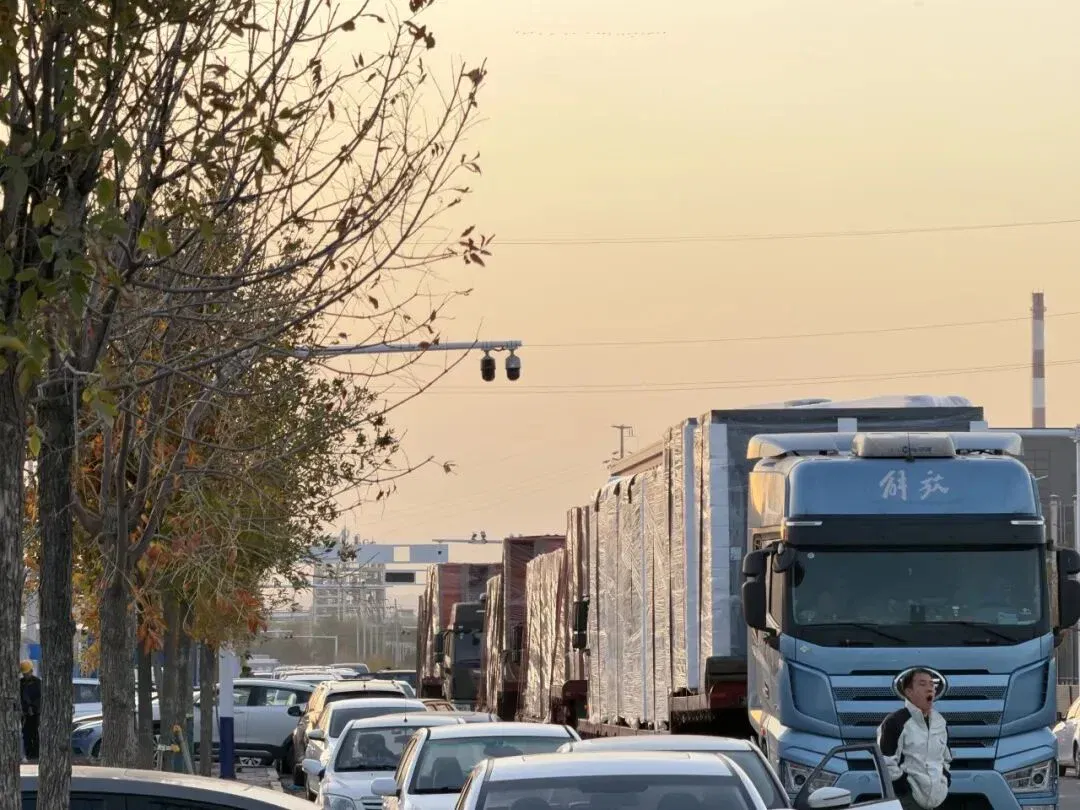
Freight trucks waiting to enter data centers line roads in Bayin.
On one main road, over a dozen flatbeds tens of meters long formed a queue along one side, carrying hundreds of plastic-wrapped cabinets. Four centers were being built along the road. Crane lights came on at dusk, excavators kept working and sites remained busy. Workers left in groups for dinner, while taxis waited at a nearby junction to collect them.
Everything came by truck. Knife-cut noodle shops, Longjiang pork-knuckle rice and Mixue operated from containers, offering a filling meal for RMB 13. Container convenience shops filled with four or five customers; shelves held noodles and biscuits, and stoves were already burning just after October began. One owner said business had worsened and he might move a few kilometers to a new, larger campus where ground was being broken.
Only a few years ago, the area was desolate. Even after several centers appeared, it had only roads and the power grid: no streetlights, traffic signals without power, and freshly painted road markings. Container shops supplied basic needs. For better food, workers traveled two kilometers to Bayintala Town, which had grown from a few restaurants to more than 30, plus over ten supermarkets.
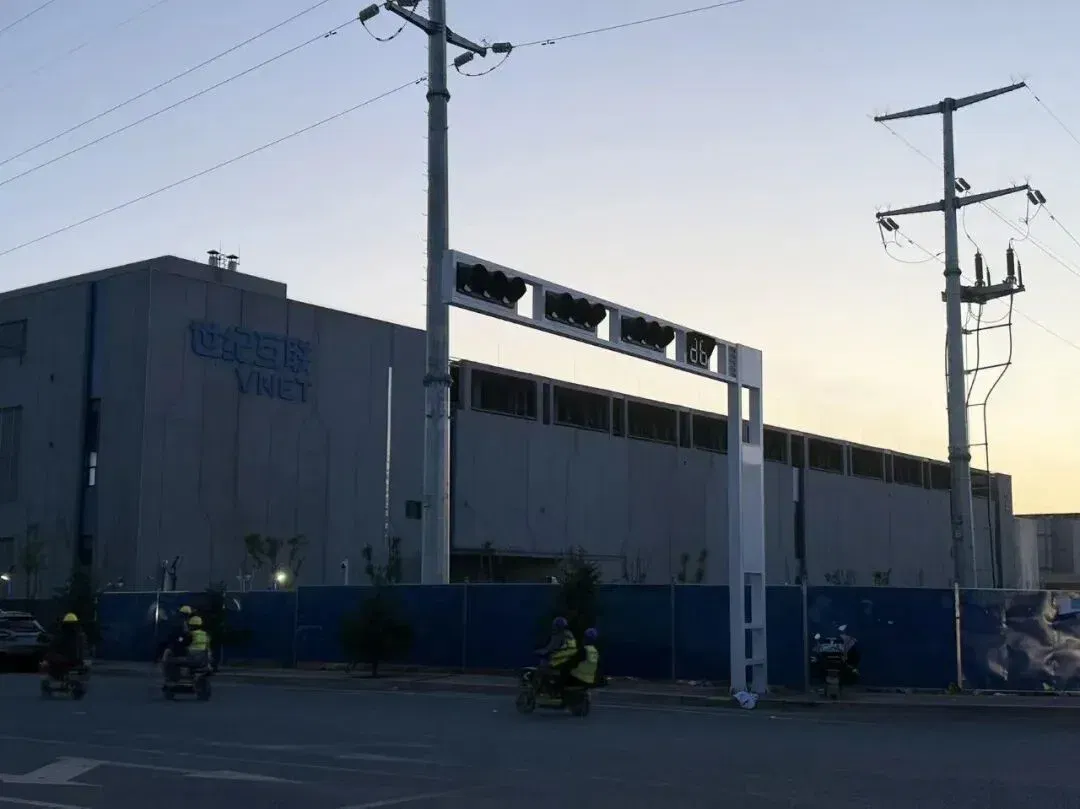
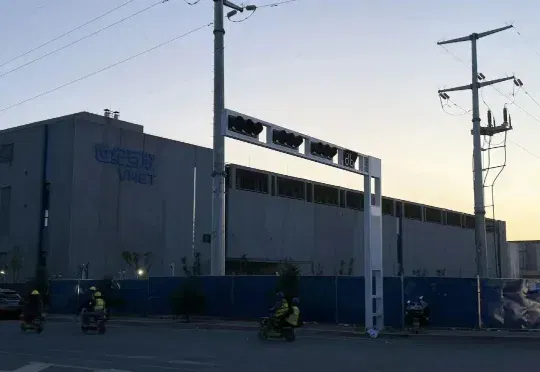
After dark, several workers ride electric scooters home along unlit roads near the campus.
'It is so lively. People's products and labor still command a premium,' an investor with years in power and new energy told us outside VNET's Ulanqab No. 1 base. He felt prosperity he had not experienced in a long time.
'A month late means RMB 15 million in compensation'
Time is extremely expensive in Bayin.
Ulanqab has only eight or nine months of construction weather. By mid-October, civil works enter a final prewinter rush. Later, grassland soil freezes, and an excavator bucket can throw sparks. 'You cannot work.' Everyone is racing.
Four truck drivers had slept in their vehicles for three nights after bringing dozens of tonnes of air-conditioning equipment from Zhangjiagang, Jiangsu. The access road had been damaged. The client would pay an extra RMB 2,000 daily for them to wait, ensuring delivery immediately after repairs.
Customers cannot wait. 'They wish they could order today and receive delivery tomorrow,' a construction engineer said.
Assuming RMB 6 billion depreciated straight-line over five years with residual value temporarily ignored, daily depreciation allocation is about RMB 3.29 million. It is not equivalent to idle-asset or cash loss; actual revenue effects of delays depend on utilization, contracts and demand.
Delivery pressure appears in contracts. Envision AI Computing Center CTO Hu Xingzan said customers once accepted 12 months, then demanded nine, six and now even two or three. Another project manager told us missing a contractual server-room handover costs RMB 500,000 per day in compensation.
The delivery periods we heard in Ulanqab kept shortening. In August, Envision announced its Xinghe base with a planned total of 3 GW; phase one took 12 months to enter operation. Alibaba claimed to have built an entire center's infrastructure in 100 days. By comparison, the Musk-led SpaceX Memphis Colossus project took 122 days to convert an old factory and install GPUs.
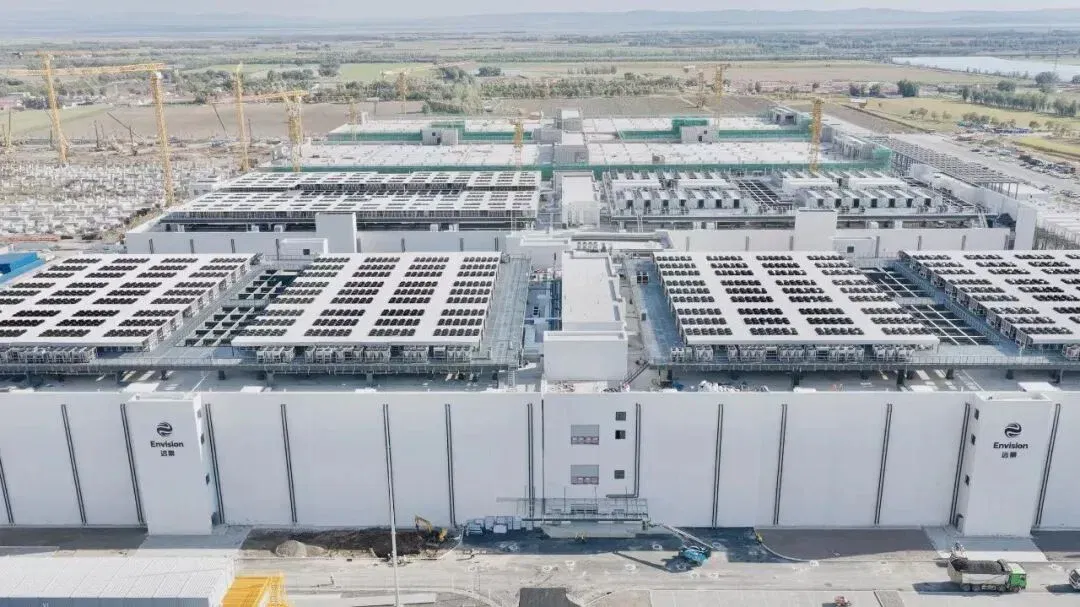
Overview of Envision's Xinghe base.
To accelerate delivery, civil works, mechanical/electrical installation and procurement proceed together. Developers build moderately ahead of demand: acquire land, erect buildings and secure major equipment orders first. Once customers finalize technical specifications and dates, internal installation and adaptation can be completed in two or three months.
Time is squeezed out a little at a time. In the power distribution room of a data center under construction, a layer of silver-colored steel structure runs across the ceiling. Under the normal process, after the main building is completed, designers issue drawings and finish the three-dimensional modeling of equipment and pipelines. Only then can construction workers install cable trays and supports according to the drawings, before moving equipment into the server room one piece at a time. They came up with a way around this: installing a steel transfer layer made up of 1.2-meter-square grid cells in advance, so workers could finish the overhead installation work early. Once the drawings are finalized, the cable trays and equipment supports can be connected to this steel structure without having to drill holes in the floor slab again.
In the past, after a set of power distribution equipment arrived at the site, workers first had to fix the cabinets to their bases, then connect the cabinets one by one, install copper busbars, lay cables and complete the crimping. Now, manufacturers can assemble this equipment into modules at the factory in advance, including connecting the internal cables. Once the modules reach the data center, they only need to be hoisted into place and secured, and the wiring between modules connected. On-site work that originally took 10 days can now be compressed to two days, running in parallel with civil construction, partition walls and other work on the campus.
'Costs are certain to increase,' said a data-center project manager. If prefabrication is taken further, with more mechanical and electrical connection work completed in advance at the factory, a project that originally required 12 months has a chance of being shortened to six or seven months. But it is not unusual for a prefabricated approach to cost 50% more than traditional on-site construction.
Another approach is to add more people: increase the number of construction crews, keep working at night, and operate three shifts. Costs may rise by 10%–20%. Comparing how data centers are built in China and the United States, the manager quoted above said that American labor is expensive, so there is a greater preference for factory-prefabricated modules. Chinese labor is relatively cheap, so more installation work can be left to the site.
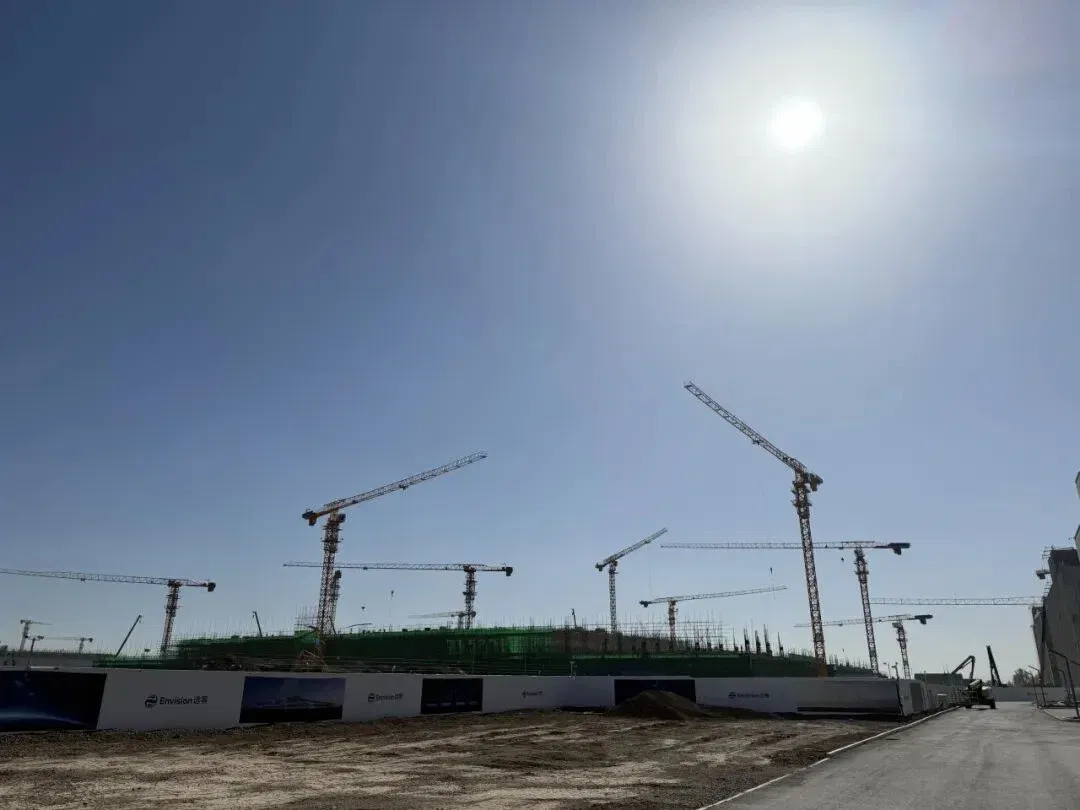
A data-center construction site.
Worldwide, suppliers' capacity is the real limit on the construction race. JLL's midyear 2026 report puts North American data-center IT capacity under construction at 66 GW, with almost all critical equipment unable to meet demand. 'To use servers sooner, some North American centers energize without redundant backup.'
An engineer recalled a project with only three months remaining when a high-rate battery supplier said its production schedule extended to the following February. Another operator faced shortages of cabinet power plugs and plate heat exchangers, eventually finding new suppliers to make molds and manufacture replacements, taking a month.
Some industrial materials that seem utterly ordinary are also starting to fall short of demand. For example, the water-distribution fittings used in liquid-cooling systems are mainly machined stainless-steel pipes. Manufacturing them requires no cutting-edge technology, and the manufacturers are not short of production capacity either. But data centers purchase very large quantities at once and require delivery within two months. The factories say that, if given three months, there is no problem at all; with two months, delivery is difficult to guarantee.
Tight supplies bring price rises and competing bids. 'North American giants offer five times the price to secure Chinese capacity. Google and AWS have placed orders worth hundreds of millions of dollars with some Chinese liquid-cooling suppliers,' one industry participant said. Already scheduled orders may be displaced by larger clients offering higher prices and urgency. 'Nobody wants their order displaced, but everyone chasing delivery wants to displace somebody else's,' a construction manager said. They even station staff at supplier factories to monitor handover.
In Bayin, trucks bring equipment from elsewhere, workers install wiring inside buildings, and a building in the distance has only just been topped out while another group of workers has already begun laying its internal pipelines. Time is being accelerated here. We saw a rural road on Baidu Maps, but the map had not been updated in time: where the road used to be, a five-story data center had already been built.
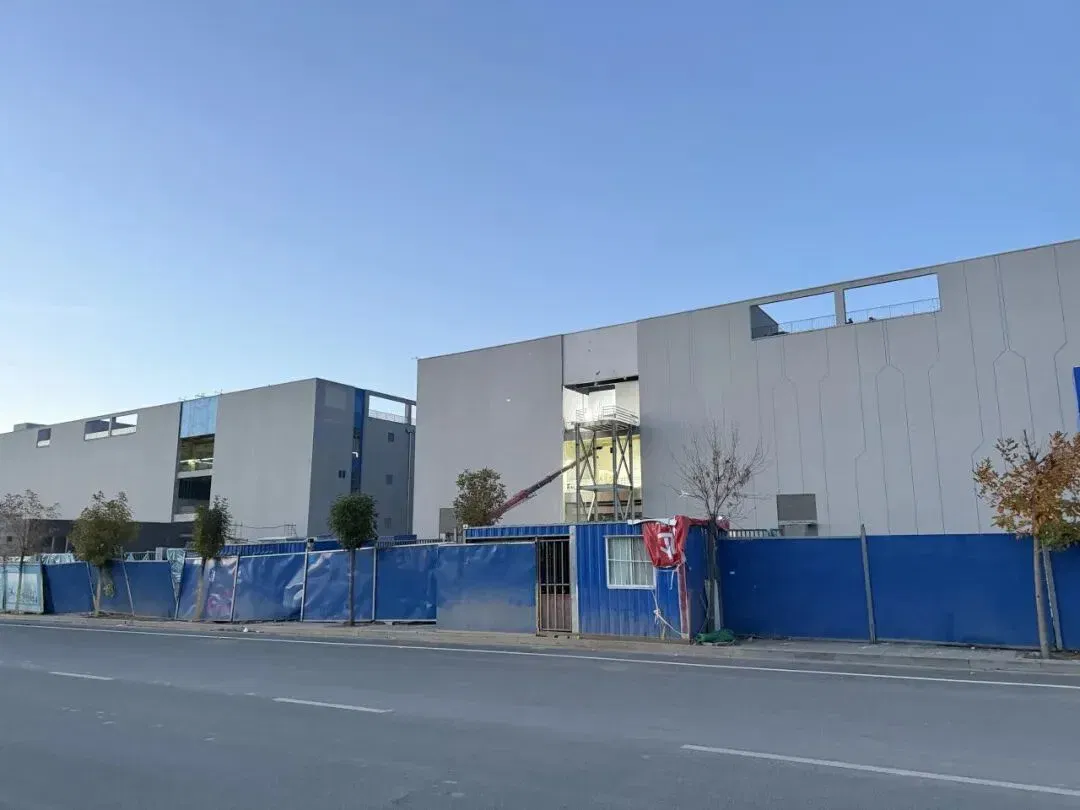
On the map, this should be the Y202 country road.
Hundreds of generators on standby, with only 26 minutes of annual downtime
A center for a 100,000-accelerator cluster occupies over 20,000 square meters, but its server room may be only 1,500—slightly larger than a large Haidilao restaurant. More than 90% of the area holds supporting equipment. 'A large center costs roughly RMB 4 billion to build, while customers' accelerators are worth at least ten times the buildings,' an engineer said. Everything else exists to keep electricity uninterrupted and servers running at controlled temperature and humidity.
Once operating, time is measured in seconds: a few seconds of fluctuation can cause losses in the tens of millions of yuan. 'Uninterrupted power and cooling around the clock are the foremost goals. Stability comes first,' said Feng Yongcheng, head of UCloud's Ulanqab center.
At 99.995% annual availability, a 365-day calculation yields about 26.3 minutes unavailable. This is a mathematical conversion, not evidence of an industry average or a downtime guarantee for any project.
Everyone still seeks to address that remaining 0.005% risk. 'Once a project is agreed, the customer sends a file governing design, construction and operation—hundreds of megabytes to cover every detail.'
Engineers must think through every possible failure scenario in advance, including situations they may never encounter in a lifetime: plastic bags or kite strings getting caught on power lines and causing a short circuit, or a cable unfortunately being severed by an excavator.
A 100,000-accelerator center uses electricity equivalent to 500,000 ordinary households. Operators build their own substations to support it. Transformers resemble giant boxes with high-voltage bushings and thick cables above. Grid power first passes through them, stepping down from 220 kV to 10 kV before reaching the server rooms.
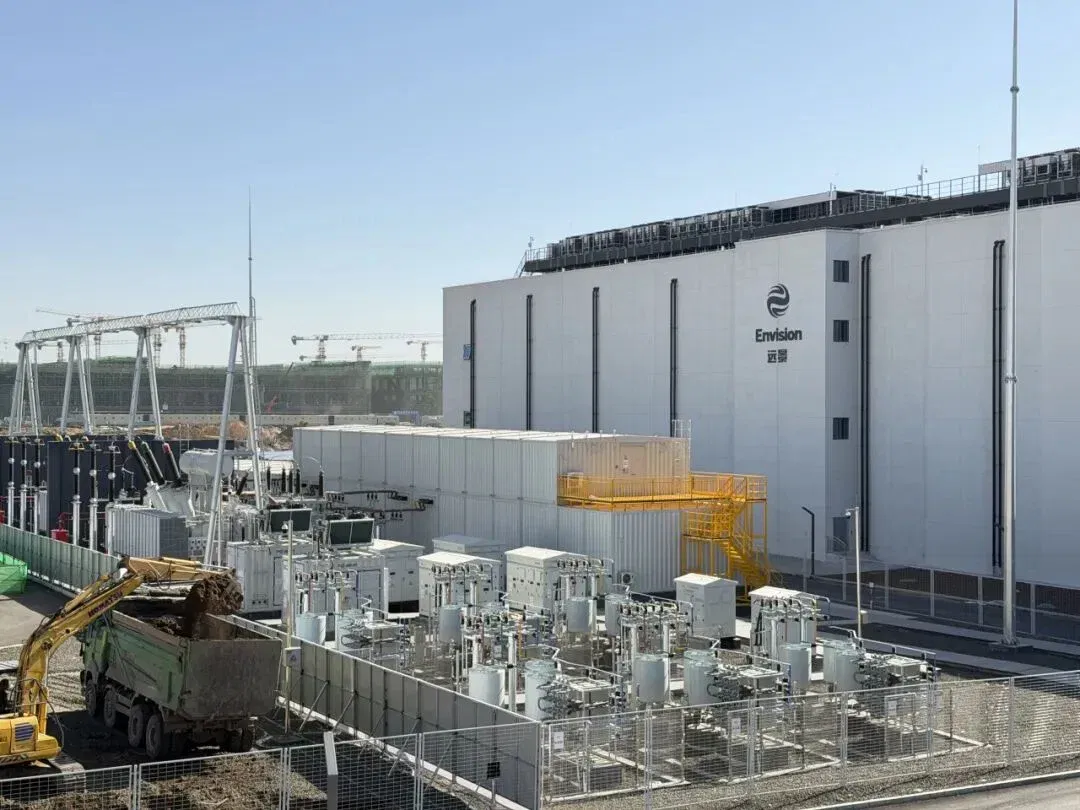
A substation within a data-center campus.
The electricity then enters the power distribution room. Rows of gray metal cabinets stand here, their doors covered with meters, indicator lights and operating buttons. Inside the cabinets are circuit breakers and protection devices that control whether different lines are connected or disconnected. When faults such as short circuits or overloads occur, they promptly cut off the circuit to prevent the fault from spreading.
The scale is enormous: wiring, transformers and distribution cabinets alone consume thousands of tonnes of copper. Rising demand has indirectly helped push copper prices to record highs.
Through substations, transformers, distribution cabinets and uninterruptible power systems, electricity reaches racks. Distribution units feed individual servers, whose supplies convert it to the DC required by chips. Numerous switches, cables and devices lie along the path; a failure anywhere can cause downtime. Centers therefore provide two power paths.
The extreme scenario is complete failure of both external circuits, leaving the entire center dependent on diesel generators until power returns.
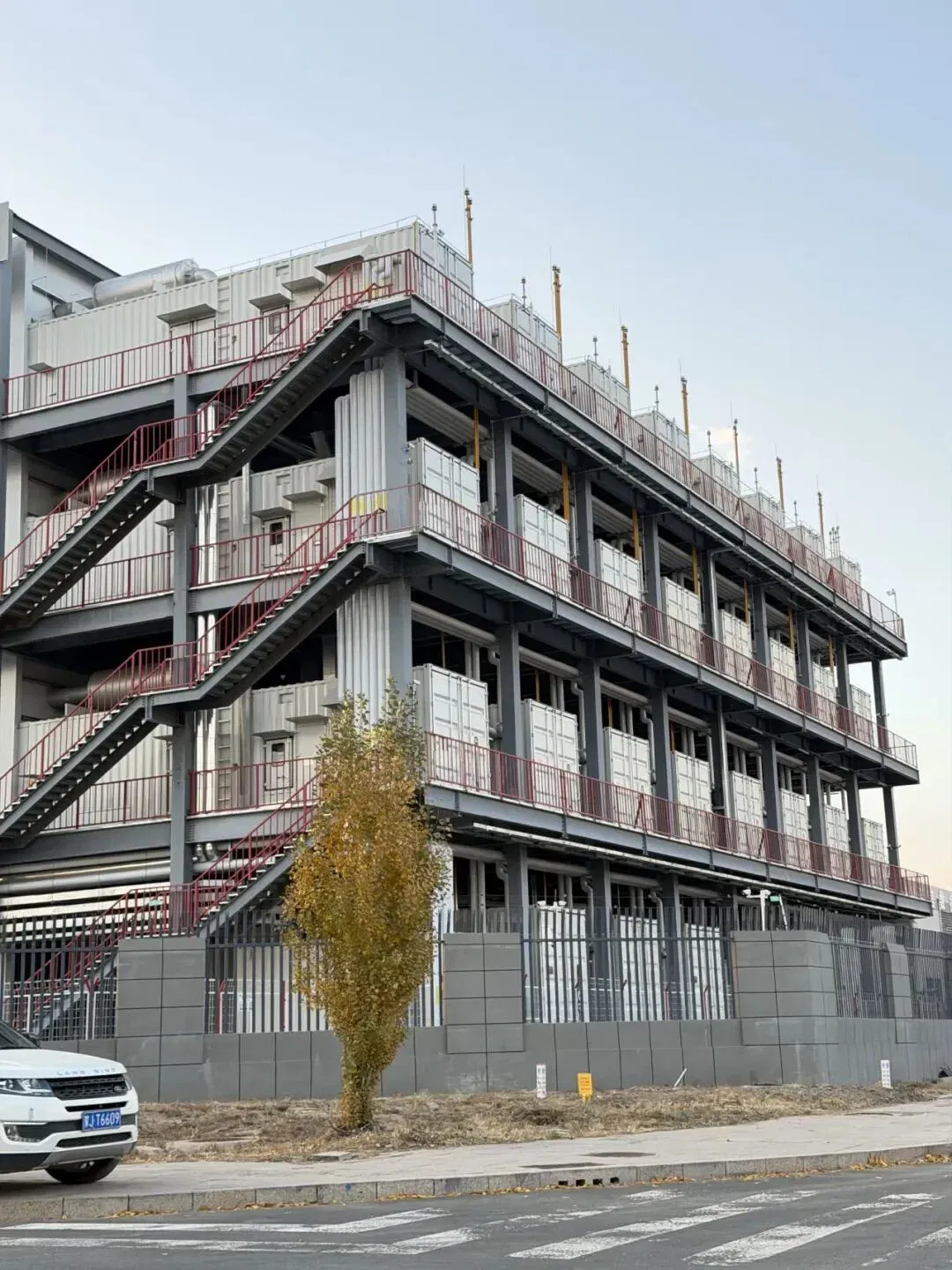
White containerized diesel generators stand in orderly rows on a four-level steel platform.
Dozens of containers outside a large center each hold a state-of-the-art Cummins diesel generator. Prices rose over 50% in the past year and at one point exceeded RMB 3 million. One campus under construction alone planned hundreds. Some hospitals also require over 12 hours of stable backup generation, but their generators cost half as much.
Under normal circumstances, a data center's diesel generators only need to run for five minutes each month to demonstrate to engineers that they still work properly. In the basement of a data center that had been operating for more than seven years, we saw diesel generators the size of locomotive engines that looked brand-new, with their paint still gleaming. According to the person in charge, these generators had never been started because of a power outage.
To keep them running, fuel tanks and fuel pipelines are buried beneath the campus. Each fuel line connects to the corresponding generator set, and the tanks have level gauges so the amount of fuel can be checked at any time. To prevent impurities from blocking the pipes, construction workers must also purge, flush and inspect them for flaws after welding is completed; filters are installed in the fuel-supply system as well. Data centers sign agreements in advance with nearby gas stations and fuel-supply companies. If power is not restored for a long time after an outage, tanker trucks must make repeated trips into the campus, delivering diesel to the generators. Even if the entire city's power grid stops operating, the servers in the server rooms continue to roar.
The roughly 15 minutes mentioned here is the backup duration of a particular UPS or battery system. It provides switching and emergency-response time; it is not a normal 15-minute requirement for diesel generators to start and take over.
Lithium-battery thermal runaway makes fire control and prevention of reignition harder, but not every lithium-battery fire is impossible to manage. Adoption and safeguards depend on the facility's professional design and emergency plan.
One person in charge said that testing the power distribution system requires simulating 62 scenarios. Problems can still occur even after power reaches the racks, so every rack has two rows of sockets, with an alternative available if one feed fails. To prevent the wrong connection from being unplugged, sockets and cables are distinguished by two colors. Every card is connected to two power feeds. The sockets have additional latches that tightly lock the plugs in place to prevent them from coming loose—tethering every card so it works until it is scrapped.
At an operating center, we saw the other crucial system: cooling.
The engineer's office was nearly 100 meters from the server room. We followed a narrow, dim corridor beneath water pipes over half a meter in diameter: blue for cold, red for hot. With shoe covers and earplugs, we passed fire doors as the noise grew. Heat hit us on entering. Earplugs alone were insufficient for over 100 decibels. This was storage; GPUs would be louder.
Most noise comes from cooling. An eight-H100 server can draw about 10 kW, equivalent to five 2,000-watt heaters. Hundreds of cabinets hold several servers apiece. Electricity enters continuously and almost all becomes heat. In mid-October, outdoor temperatures were only a few degrees Celsius, but indoors exceeded 20°C. Server waste heat also heats the building through winter without separate heating.
In air-cooled rooms, cabinets face each other across cold aisles, with hot aisles behind. Air-conditioning supplies cold air, server fans draw it across GPUs, CPUs and other hot components, then exhaust it rearward. Enclosed hot aisles return air overhead to cooling rooms, where it exchanges heat with chilled water before recirculating, keeping intake air at 18–27°C. Water enters in the twenties Celsius and leaves near 40°C, flowing through red and blue pipes to outdoor cooling towers.
To dissipate heat more quickly, there is an air-conditioning room on each side of the server room. Large numbers of fans form a fan wall connected to heat-exchange equipment, pipes and control systems, continuously drawing back the hot air discharged from the adjacent server room. These fans adjust their speed according to server load. At full load, they turn alongside the cooling fans inside the servers, and the whole server room roars continuously. One data center put rubber between the walls and the air-conditioning equipment to prevent vibrations from the operating air conditioners from damaging the wall finish.
In Envision's liquid-cooled room, water removes heat directly. Underfloor pipes feed racks, distribution lines carry it toward servers, and warmed water returns to heat exchangers. Including cooling hardware and pipes, a rack weighs over 800 kilograms. The concrete slab below is 30 centimeters thick, with five times an ordinary residential building's load capacity.
Large numbers of dry coolers line the roof of the data center. Metal pipes and densely packed fins increase the heat-dissipation area, and fans continuously carry heat away; after the water cools, it flows back into the server room. If the return-water temperature is too high, the dry coolers can also activate auxiliary spraying, using water evaporation to remove more heat. This approach saves 95% of the water used by traditional cooling towers.
Rooftop pumps keep water circulating. Envision has two circulation systems, each in a 7+1 configuration: seven pumps and one spare. Containers house pumps, electrical cabinets, controls and a small air conditioner. Ulanqab winters are so cold that pump rooms need heating to prevent freezing.
Besides dissipating heat, engineers also need to control humidity and dust. Humidity that is too low readily creates static electricity, while humidity that is too high causes water vapor to condense into droplets. Servers contain large numbers of fine, closely spaced heat-sink fins and electronic components. Dust adhering to them is like covering a radiator with a blanket, obstructing airflow and heat exchange. Over time, a greater volume of air is needed to keep the equipment running.
This caution extends to the most ordinary work of all: cleaning the server room. A tiny piece of metal debris falling into a power distribution cabinet is enough to cause a short circuit once it is energized. At a server-room building nearing handover, we saw that before work began, the distribution cabinets were first disconnected from power. Experienced cleaners then cleaned them one by one, with professional engineers standing by and supervising the entire process. Before handover, Envision's data center hired hundreds of cleaners for the post-construction cleanup, using vacuum cleaners to remove all the dust.
Fire is the worst-case scenario. Data centers are filled with cables, batteries and power distribution equipment, and a short circuit or overheating anywhere can cause a serious accident. Engineers need to configure different fire-extinguishing systems according to the room's purpose: for example, server rooms use preaction water-sprinkler fire-protection systems, while power distribution rooms and battery rooms use gas-based fire suppression. Once operations begin, lighters, cigarettes and power banks must all be left outside. Security screening at data centers is stricter than at airports. On some campuses, an engineer has to spend half an hour on screening and safety training between entering the gate and standing in front of a rack. One data center stipulates a fine of RMB 1,000 for any engineer who smokes on the campus.
One person in charge told us that he hopes these facilities will never have to be used. He has seen situations in which diesel generators had to be started, but has never seen a data center activate its fire-extinguishing system. Nevertheless, all this power-supply, cooling and fire-protection equipment must maintain ample redundancy and be ready to start at any time, ensuring the server rooms do not stop for even a second.
'Because GPUs are money-printing machines,' a campus manager told us over the noise.
'An operations job can cut the marriage gift by RMB 100,000'
Servers are so important that data-center operations staff have almost developed an occupational ailment: a fear of answering the phone, especially at night. Their professional habit is to make calls about things just after work starts or shortly before it ends, because any call outside those two periods means "something serious."
'A racing heart when you receive a call is the conditioned reflex of a qualified operations worker.' When the phone suddenly rings, the mind is already racing through possible problems: Is something wrong in the server room? Which piece of equipment has raised an alarm? Is the fault serious? Do I need to rush to the site immediately?
Many operations workers eventually become deeply superstitious, going to temples to pray that nothing will go wrong on their shift. Sometimes they also worry for no apparent reason: 'Looking at the forecast, there may be thunderstorms today, so I silently repeat: please, no power outage. When I see strong winds, I hope no plastic bag gets tangled in the wires and no two wires touch.'
But alarming calls cannot be avoided forever. One operator recalled an electrical incident.
It was early in the project's handover period when a group of 10 kV power distribution cabinets suddenly began making a continuous humming sound, like a washing machine running at high speed. The voltage began fluctuating abnormally, and some currents were also rising. Most unsettling of all, the protection devices never activated and the breakers did not trip. For a time, the people on site could not locate the fault. Then someone discovered that a fire had already started near the cables and electrical arcs were flashing on the cabinets' sheet metal. Flashes of fire kept appearing along with vibrations.
This power feed had to be disconnected. But before opening the breaker, there was a more difficult problem: disconnecting the faulty line would leave only one power feed. If the other feed also failed at that moment, the servers would go down.
There was no time. 'I just switched it off,' the person said. Reaching the controls, he realized he had forgotten insulating footwear. Fortunately, the control selector could be set locally, and he operated a plastic button without directly touching the cabinet.
Review found two causes. The cable termination's semiconductive layer had not been fully cleaned during installation, leaving an insulation defect that developed partial discharge. Meanwhile, rushed handover meant relay protection had not been fully reviewed; the zero-sequence protection circuit's link was not actually engaged.
Data centers are enormous human-built systems and cannot be flawless. Uptime Institute's 2025 outage survey found nearly 40% had experienced a human-error-related interruption over three years. Despite sensors everywhere, operators still record readings in person daily and compare them with system logs. 'An alarm threshold of 60 will not trigger at 59. For us, that is already a signal worth investigating so we can solve problems early.'
In this process, operations personnel are divided into three levels: first-line staff carry out inspections and report any abnormalities they find; second-line engineers assess the problem and issue operating instructions; when a complex fault is encountered, third-line experts then intervene.
The final safeguard is third-party testing. The operator selects a suitable testing organization from several qualified companies with experience on large projects, and it must pass an interview with the client. The third-party organization prepares complete test scripts based on the server-room architecture and equipment configuration, putting everything into the plan: what will be tested each day, how it will be tested, and which equipment manufacturers need to be present.
The relentless pursuit of safety leads IDC providers and their customers to maintain a tacitly understood distance and boundaries. Server rooms have 360-degree monitoring without blind spots, so customers far away in Beijing or Shanghai can check the status of their servers at any time. At one data center, the entrance and exit were piled with cardboard boxes and miscellaneous items. We asked the staff why they did not tidy up, and the answer was, 'Those are the customer's things.'
Customers also take part in recruiting and interviewing operations staff. They require one crew for every 20 MW, and the server-room manager role must have a primary and a backup so that absence from a key post does not leave a gap in management.
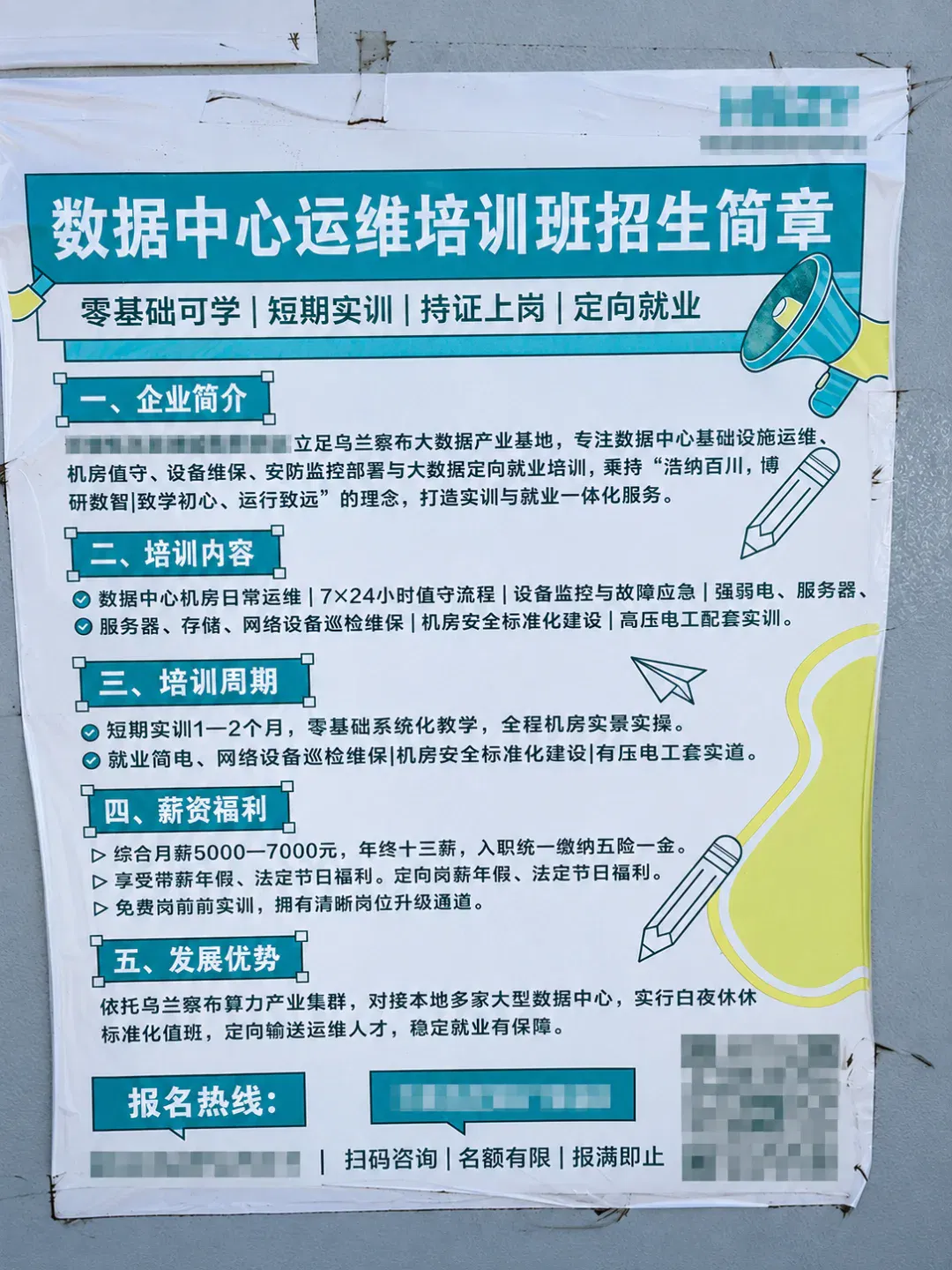
A data-center operations training course's recruitment brochure.
Demand for professional operations staff has also given rise to a new business: data-center training courses advertised as '19,800 with a guaranteed job.' Wang Man, head of the 1024 training center, told us that at least 15 data-center training schools had opened in Ulanqab over the past year. At her institution, about 70% of students are local, and the highest educational qualification among them is postgraduate. To many young people, data centers represent an emerging new industry that sounds stable. They may not know exactly what they would do after joining, but they still think it is a good job.
Some expect RMB 3,000 monthly, then earn far more. Of about 120 placed graduates in the school's records, Wang said 10% earned over RMB 7,000, 30% around RMB 6,000 and 50% RMB 5,000–5,500. Leading operators also cover clothing, meals, accommodation and transport.
Even here, current demand does not exceed 500 jobs. A manager estimated one person per megawatt after operation begins: 'Fewer than 20 per building for shifts and maintenance—eight shift staff, two electrical, two HVAC, one low-voltage systems specialist and half a distribution role, since one engineer covers two buildings.'
Scarce and well-paid, data-center operations is gaining status. 'On a marriage introduction, even saying you are a shift operator may reduce the bride-price by RMB 100,000 and get you a seat at the main dining table. Development-zone social events now always invite some young data-center employees.'
A more direct local assessment: 'If you are exceptional, take the civil-service exam. If not, a data center is also a good option.'
The city left behind by data centers
Ulanqab spans both sides of the Yin Mountains. Northward, plateaus, hills and grassland extend toward Mongolia. Winters are long, summers short, with only a little over 100 frost-free days. Cold air from Siberia and the Mongolian Plateau flows south over open terrain, bringing winter cold and spring dust. Temperatures can fall below −30°C. Dry springs and summers allow only one annual crop, with potatoes, naked oats and a few others suitable.
A local saying describes planting a hillside, harvesting a cart, threshing a basket and cooking a pot. This was long among northern China's poorest areas. As late as 2018, eight of its 11 county-level areas were nationally designated poor counties. Permanent population fell by a quarter over 15 years; the 2020 census found one in three residents over 60.
People leave while AI compute arrives. Wind, cold and sunshine, once inhospitable, have become advantages. DeepSeek has advertised operations jobs at RMB 30,000 monthly this year. Goldman Sachs called Ulanqab one of China's and Asia-Pacific's largest, fastest-growing AI compute clusters. Nationwide media attention has put the border city in the spotlight and made residents proud.
Ulanqab is mobilizing funding at different levels to build complete compute infrastructure quickly, but the city and its people cannot match construction's pace.
If you ask local people what impact data centers have actually had on their lives, most cannot say. The owner of a malatang shop said that a friend of hers had worked at a data center: 'Cleaning, but only for a few days.' At Chunxiaqiudongyuan, a large residential compound near Zhanggaiying, the gatekeeper often hears residents complain: the homes were already in a school catchment area, and over the past two years data centers have pushed rents up by another half, making it more expensive for parents to live there while accompanying their children at school. Data-center operations is a respectable new profession, but the number of jobs is limited.
House prices have not risen. Most data-center staff are outsiders, often on business trips; even those spending most of a month here stay in hotels. Ji Hotel and Atour near the station cost much more than downtown hotels. Most visitors say they come only to work and do not want to settle.
Workers also complain of few nearby amenities. One operator had worked in Zhanggaiying seven years; only last year did a bus to downtown begin, without entering the campus. The last service leaves at 6:15 p.m., too early for some finishing at six to reach the junction.
Construction, guarding and cleaning provide the most jobs, yet recruitment is difficult. Few want security or cleaning work for a little over RMB 3,000 monthly. Recruits tend to be older; many cannot drive or read well enough to pass the driving theory test. Winter ice makes scooter commutes hazardous, with many fractures every year.
Centers came for cheap electricity, but their contribution to local power consumption is limited. 'Some local projects have still not recovered their power investment,' a power-system source said. In 2025, citywide use was 83.7 billion kWh; data centers consumed only 4.3 billion, roughly 5%, while ferroalloys used over 46 billion.
Under a 2N redundancy design, both mutually independent power systems take up electrical capacity. At the same time, installing servers in racks takes time, so the electrical facilities do not immediately operate at full load once the campus is completed. We learned that transformer utilization rates at some projects are only in the teens, below 20%. A project with a load rate above 35% can be praised as one of the better performers.
Centers' growing capacity claims also raise industrial electricity prices. One manager said spot prices reached RMB 0.42/kWh, previously RMB 0.30–0.35. Companies must contract ahead with suppliers to secure cheaper power. Grid access is now a major constraint: capacity approvals are hard to obtain, and prices less favorable.
Taxes are also less abundant than imagined. Compute-industry tax revenue was nearly RMB 100 million in 2024 and RMB 368 million in 2025. Local tax sources said construction generates more local tax, while operational compute sales usually occur through headquarters elsewhere. These were peak construction years. In operation, even leading operators with many server rooms reportedly pay only several million yuan annually.
By comparison, 2024 ferroalloy output exceeded RMB 80 billion, generating RMB 768 million in taxes and about 18,000 jobs. It may lack AI's promise, but a trained local worker without a degree can earn RMB 5,000–6,000 monthly.
The submerged-arc furnaces at ferroalloy plants run day and night without stopping and also require many workers. After a data center is completed, construction crews gradually withdraw, and rows of servers remain. Electricity flows into the campus without end, while fewer and fewer people pass through its gates.
In Ulanqab, some people have gained a respectable job through data centers, some have enjoyed a few months of good business, and some still ride electric scooters every day, carefully traveling back and forth between the campuses and the city on roads that freeze in winter. Many more watch the data centers in the distance keep expanding, knowing that their hometown is becoming important while their own lives go on as usual.
Zhao Zixin also contributed to this article.
Lead image: Blade Runner 2049.
This article comes from LatePost. Authors: Liu Yilun and Li Zinan.
After reading
Join the AINRK community
Read how to join the community and connect with people working in AI.
Related articles
Continue reading related topics and articles in this category.
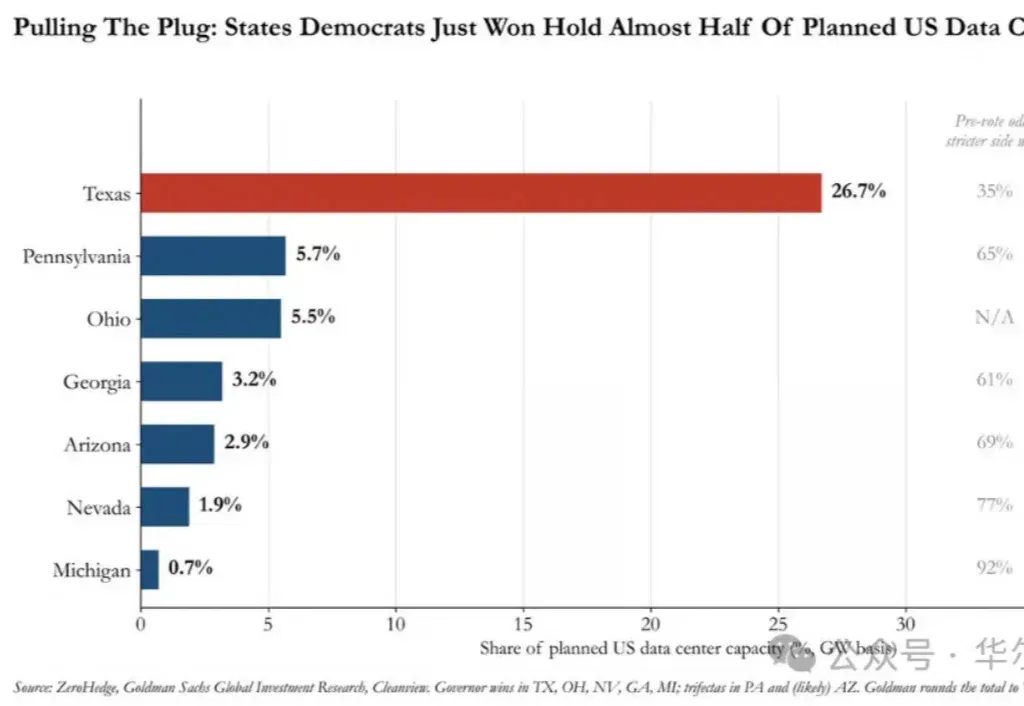
得州选举后的数据中心审批变数,高盛估算涉及美国约 45% 规划容量 (opens in a new tab)
报道汇总州长选举后多家机构对数据中心审批、电力设备和融资的判断。约 45% 指所涉州的规划扩张容量,分析师对暂停范围及延迟时间使用不同情景。

大量数据中心恐烂尾,新兴AI云厂商面临大洗牌,马斯克发出警告 (opens in a new tab)
过去几年,随着 AI 大模型快速发展,算力成了一门越来越热门的生意。

10万亿美国AI基础设施受阻!47个大型数据中心停摆,债务危机要爆发了? (opens in a new tab)
万亿美元AI大饼,烙到一半卡住了。 智东西10月20日消息,据英国《金融时报》10月18日报道,美国总规模达10万亿美元(约合人民币66.9万亿元)的AI基础设施建设热潮正遭遇现实阻力,2026年以来已有至少47个大型数据中心项目被延期、撤回或阻止。 美国AI基建投资规模超过多轮历史基础设施建设高峰,但融资市场正在收紧,全球AI相关债务发行额较6月高点下降约80%。 ▲美国AI基建投资占GDP比例与AI债务发行额对比,图源:英国《金融时报》 据路透社10月19日报道,标普全球(S&P Global)预计,亚马逊、微软、Alphabet、甲骨文、Meta和SpaceX这6家大型科技公司,2025
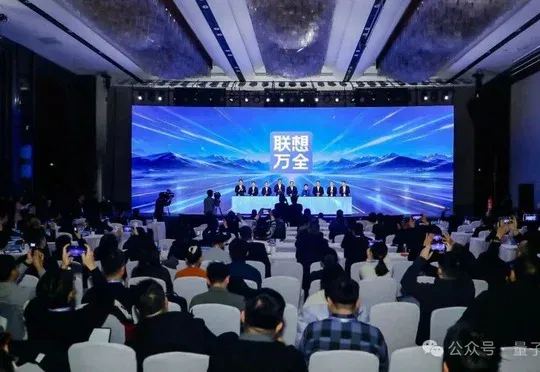
Lenovo Plans a Hybrid Token Factory in Zhangjiakou, Combining Green Power and Heterogeneous Compute (opens in a new tab)
The first phase targets a 15,000P cluster and roughly 100 MW AI computing center, with construction planned for 2027. The report details hybrid routing, resource scheduling and vendor-disclosed cost targets.

Mercor announces $750 million Series D, reaching a $20 billion valuation (opens in a new tab)
According to the company and investors, the round includes employee share sales. The funding will support model evaluation, post-training infrastructure and work environments for agents.