ACE Music v1 leads a vocal-music ranking as QbitAI tries multiple styles

QbitAI records an Artificial Analysis blind-listening snapshot, three comparisons and hands-on generation, then discusses ACE Studio, symbolic scores and team-reported creative data. Rankings are task-specific; commercial use still requires rights checks.
Editorial correction (November 16, 2026): Ranks and scores reflect the snapshot at reporting time, not leadership across every music task. March 2025 to November 2026 is approximately twenty months, not eighteen. Commercial use still requires checking licenses and rights in the material.
Has Suno been overtaken?
A Chinese dark horse has suddenly appeared in AI music.
ACE Music v1, a previously unfamiliar name to many, entered Artificial Analysis’s vocal-music leaderboard for the first time and pushed Suno’s latest flagship v6 into second.
ACE Music v1 scored 1160, ahead of Suno v6 by sixteen points.
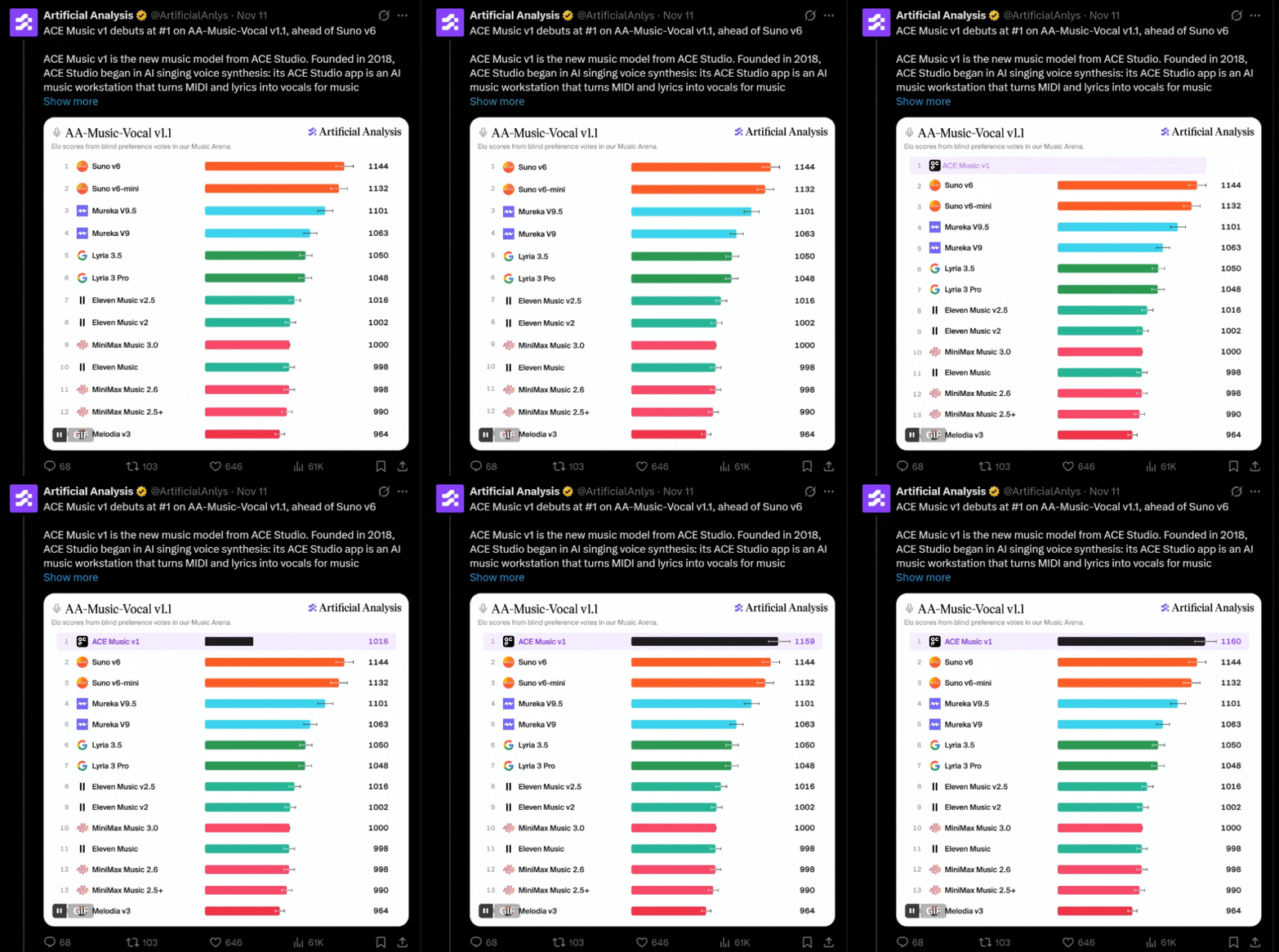
Suno has long been a key reference in AI music. Rankings change with versions, samples and votes; this article lacks complete historical data to claim no model had ever led before.
Earlier claims of outperforming Suno sometimes used old versions or vendors’ internal tests.
This time, judges heard the same prompts’ outputs with model names hidden.
ACE Music v1 earned the highest score 🤯.
On X, some were already bidding Suno farewell:
R.I.P. Suno

More surprisingly, the company only began developing a music-generation foundation model in March 2025.
That is only a little over a year.
How did a first-time entrant move ahead of Suno?
Rather than talk, let us listen—
How good is it? Listen for yourself
Here are three pairs of tracks, one from ACE Music v1 and one from Suno v6 in each.
Both receive the same prompt, but I will not identify them initially.
Be the judge and see which your ears prefer.
First, something energetic:
Math Rock.
It sounds academic, but means rock with restless rhythms and changing meters.

Feeling energized? Next, some K-pop.

After years following girl groups, I felt this round had a fairly clear winner.
I will hold that thought while moving to the final round: Roots Reggae.
This old-school Jamaican style became popular in the 1970s, with heavy bass and relaxed rhythms that invite swaying.

That completes the three pairs.
I wonder which you preferred. I genuinely hesitated several times.
Now the reveal—
ACE Music v1 generated tracks 1, 2 and 1; Suno v6 generated 2, 1 and 2.
Whose tracks did you pick? (doge)
To my ears, ACE’s vocals were more natural, especially the clear female K-pop voice, with smooth articulation and breath, even recalling some familiar singers.
Suno’s vocals in these examples felt more floating, as though covered by an electronic layer.
But music is subjective; either preference is valid.
The interesting part is that this closely reproduces AA’s evaluation logic:
same prompts, hidden model names, direct listening and choices, with rankings calculated from many blind comparisons.
Compared with machine scores alone, this more directly reflects what people enjoy hearing.
That helps explain the attention to ACE overtaking Suno v6.

Hands-on with ACE Music v1
As a level-nine NetEase Cloud Music enthusiast, I promptly tried it myself.
I wanted to know:
what can an ordinary person without theory or arrangement skills make with it?
ACE—also the company’s name—already offers the consumer music-generation product ACE Music.
The website, acemusic.ai, is simple, with Inspiration and Custom modes.
Inspiration focuses on convenience.
Type what you want to hear.
You can also hum, play a few keyboard notes, supply an image or upload video for AI to score.
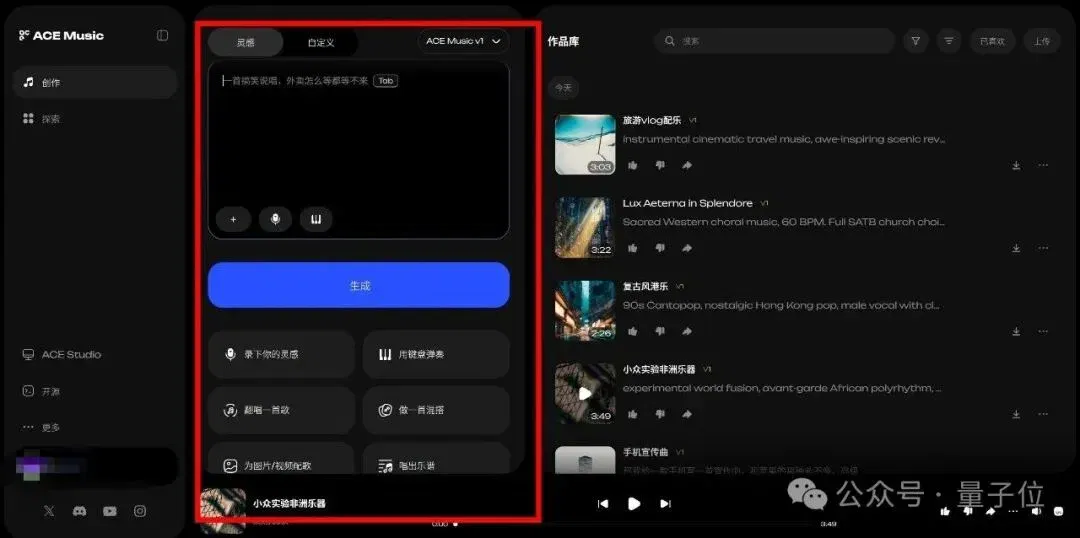
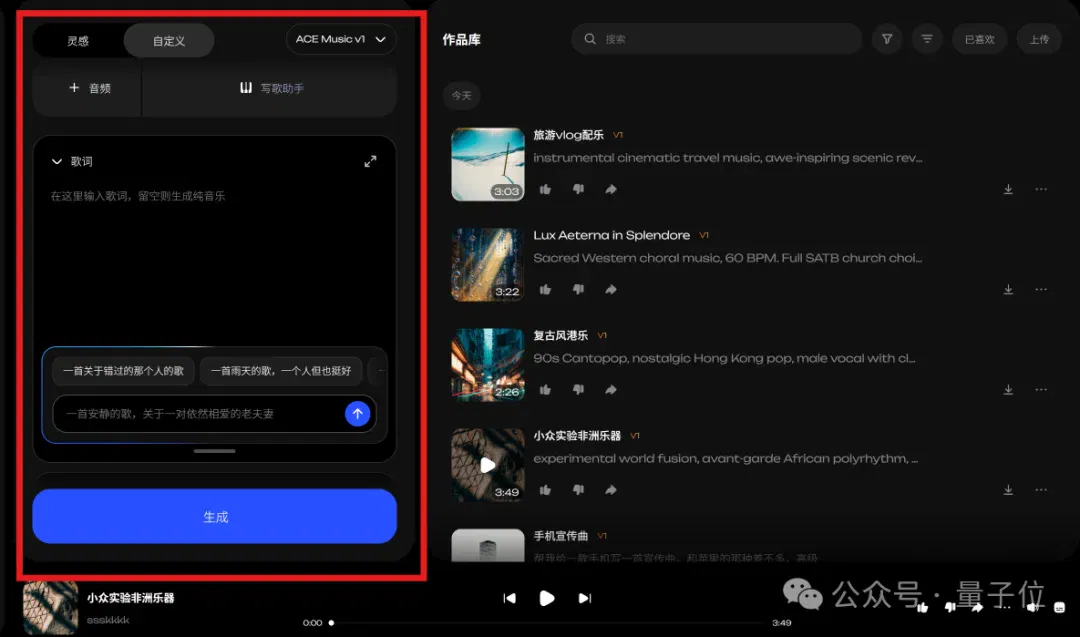
Custom suits people wanting more creative control.
Write lyrics and choose genres, or use the adjacent AI songwriting assistant.
You can even specify melodies and chords, feeling somewhat like a producer. (doge)
Free trials currently provide twenty daily credits for up to ten songs.
Downloads or commercial use require Creator: $9.90 monthly, about 66 yuan, or $7.90 per month billed annually, about 53 yuan, with up to five hundred songs monthly.
Let us keep it simple initially.
I tested four directions to explore its capabilities.
Round one: an international singer
First, how well can the music model sing?
Can it sing in English naturally? Do Japanese anime theme songs have that fired-up energy? And when it comes to samba, can it bring out the rhythm and emotion?
A global product must venture internationally.
I used Custom mode, had AI write lyrics and gave rough style descriptions.
Each generation returns two songs; I selected whichever I preferred.

Do they capture the style?
The three styles sounded distinct to me, recognizable almost from the first vocal.
And it was not just these three tracks. I later tried several other foreign-language musical styles—from Thailand, Singapore and Indonesia—and overall, they all sounded quite convincing.
Of course, not understanding them well may make problems harder for me to detect. (laughs)
Round two: stop singing and put AI to work
Listening alone may not reveal AI’s practical uses.
The most useful everyday application may be instrumental music.
Hotels, restaurants and cafés need background music.
Do not underestimate this: playing music at a place of business also involves copyright issues. Although someone may not normally come knocking about it, as a business operator, why leave a risk in place when you can avoid it in advance?
I generated a restaurant background track.
It felt very familiar—perhaps something I have heard in a clothes shop?

The same applies to content creation.
Product ads, travel vlogs and especially expansive shots without narration need background music.
AI generation can provide new material for musical accompaniment, but whether it is suitable for commercial use still requires checking the service license, the input and output content, and the relevant rights. The fact that something was generated by AI alone is not grounds for concluding that copyright risks have been ruled out.
Two benefits at once! It feels useful for Media Storm’s sample films too.

Round three: unfamiliar genres
After singing and practical work, time to surprise—or frighten—the model.
Pop is common; can it handle obscure, unusual styles?

Time for a mischievous challenge:
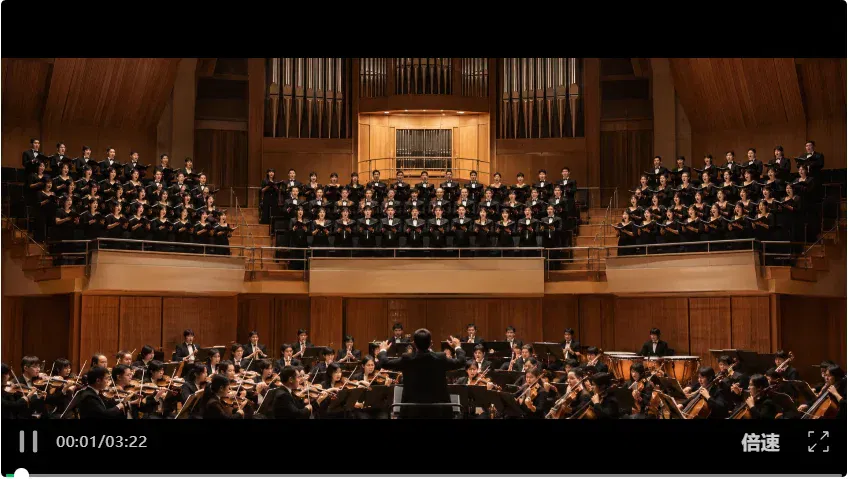
I requested niche African instruments, avant-garde psychedelic space rock and a sacred choir.
The results were quite good.
The African instrumental rhythm made me sway, ideal for writing, with thoughts seeming to flow along.

The instrumental space rock immediately brought early Pink Floyd to mind.

As for the choir...
Deep voices began, then the choir expanded, creating a strong solemn atmosphere.
Why did it feel spiritually cleansing?
Round four: Chinese as the finale
First, an official ACE example of a Hong Kong-style song for Chinese listeners.

The familiar Hong Kong sound appeared immediately, especially the period-feeling vocals.
My main test, though, would be articulation.
I may miss faults in foreign-language songs; Chinese is different.
I chose an ambitious challenge:
a densely worded song about the Li Na meme.
As for genre...
It had to be rap.
The kind I might not fully understand even from a human performer. Go big!
Here is the result for you to judge—

The words were surprisingly clear, and the hook brought an infectious rhythm that became rather catchy.
Three impressions after all these tests:
1. Very fast generation. It generally returns two tracks in under a minute, so retries do not require long waits.
2. Simple operation and varied possibilities. Core production stages are largely available as ready-to-use tools.
3. Vocals exceeded expectations overall, but Chinese songs still have room to improve relative to foreign-language tracks.
ACE is not alone in that final issue.
The wider AI-voice industry, beyond music, still struggles to eliminate an artificial sound.
High-quality singing data is scarce and lyric–audio alignment difficult. Tonal Chinese adds another challenge.
The industry still has work to do...
The stated March 2025–November 2026 interval is about twenty months; eighteen months is not accurate for this report.
How did it happen?
Who is ACE, the challenger to Suno’s dominance?
“Ace” itself suggests a top performer, almost a name destined for first place.
But the beginning was far from effortless success.
Founder and CEO Guo Jing first heard discouragement.
In a conversation with LatePost in July of this year, Guo Jing recalled that when he first heard a complete song made by someone else in high school, he felt as though he had been struck by lightning.
A melody in your head could really become a song.
He asked to learn arranging, but after a listening test was told:
No talent.
Arranging supposedly required childhood instrument practice and theory; a late starter like him had little chance.
He believed that for years.
At university he formed a band, wrote songs and sang lead, but software, plugins and theory again became a wall.
He could write songs but not turn them into finished work.
During a post-graduation gap year in Silicon Valley, he taught himself English, advanced mathematics, machine learning and coding, then realized:
if these difficult subjects could be learned gradually, why should music creation belong only to a few?
Perhaps overly complicated tools were what discouraged ordinary people.
“No talent” became ACE’s earliest product principle—people should not adapt to tools; tools should adapt to people.
He pursued that path for eight years.
In 2019 the team launched ACE Virtual Singer to help ordinary people make music.
It reached two hundred thousand daily users before external pressures forced removal. Just as it worked, it was paused.

△Xiaoye, one character in ACE Virtual Singer
Fortunately, the team persisted and discovered that
some remaining users were professional musicians, using ACE for demos and vocal edits as a real production tool.
The mobile virtual singer was rebuilt as desktop ACE Studio.
Compared with ACE Music, which targets ordinary users, ACE Studio is an AI music workstation aimed at professional creators. Users can generate vocals and instrument sounds, and can then continue adjusting pitch, articulation, emotion and the details of the arrangement.
One helps ordinary users make songs quickly; the other supports detailed professional revision.
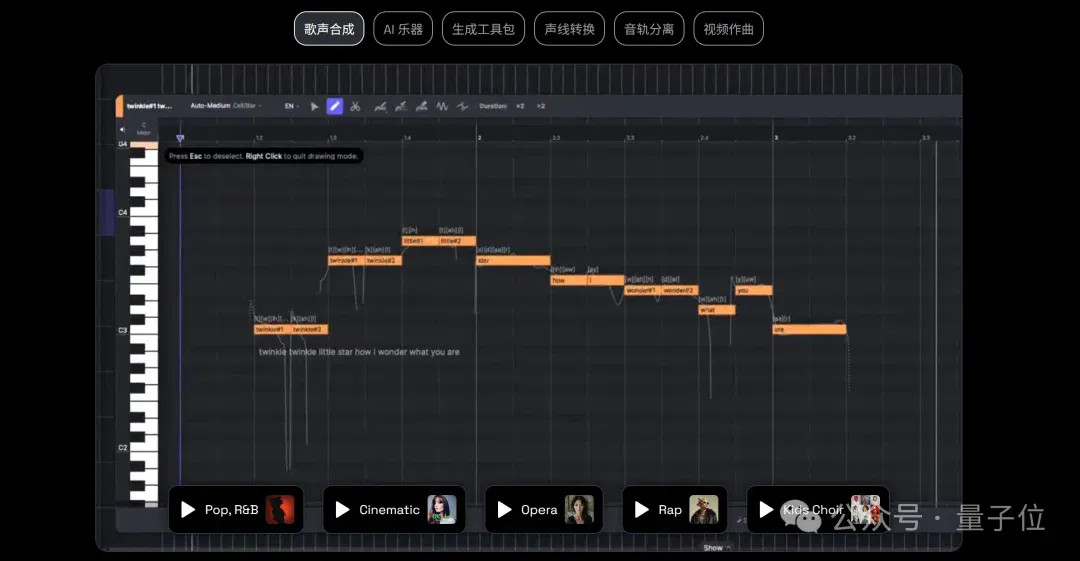
△ ACE Studio interface
The direction clarified, but reality delivered another setback.
Early commercial Studio revenue fell to a few hundred dollars daily.
The team immersed itself in North American music communities, attended shows, met producers and reworked pricing and workflows, gradually recovering.
Suno was the real catalyst for Guo.
A complete song from one sentence turned AI music from a specialist tool into a mass-market plaything.
His greatest regret was not training a music foundation model earlier.
He did not want to miss it again.
ACE formally began music-foundation-model R&D in March 2025.
That led to the opening scene:
about twenty months later, ACE Music v1 entered and led the cited AA vocal-music ranking, a result for particular versions and preferences.
The apparently sudden dark horse had actually spent eight years preparing.
Determination alone cannot train a leaderboard winner.
ACE also resembles an unusually accomplished band.
- Guo, a former lead singer, connects product and market;
- Cofounder/CPO Conger Sheng, among Warner Music China’s youngest signed songwriters, guides musical taste;
- Chief scientist Ruibin Yuan researches music AI, played lead guitar and led MERT, ChatMusician and YuE.
They are joined by synthesis specialist, cofounder/CTO Wenxiao Zhao, professional producers and major-tech engineers.
The distinction is clear:
musicians build AI, and the AI specialists really play music.
In a word: professionals.
That musical background shapes the technical approach.
Most music models generate audio directly once they receive a prompt. It can sound stunning, but as soon as users are dissatisfied with a particular chord, rhythm or note, they find it difficult to reach inside and change it.
ACE calls its original approach Symbolic CoT, resembling language-model chains of thought.
It first creates an editable score and then generates audio from it.
Notes, beats and chords are symbolic, so language models can read and change them. Agents such as Claude can compose and revise scores before calling ACE.
The team once asked Claude to write a medley of classic turn-of-the-millennium Chinese songs.
It researched eight songs including Sunny Day, Fairy Tale and Jiangnan, selected choruses, aligned tempo and key and arranged transitions into an eighty-eight-bar score, then independently called ACE to make a five-minute medley.
Users only need explain what they want to hear, without knowing ACE’s controls.
That illustrates music creation in the agent era.
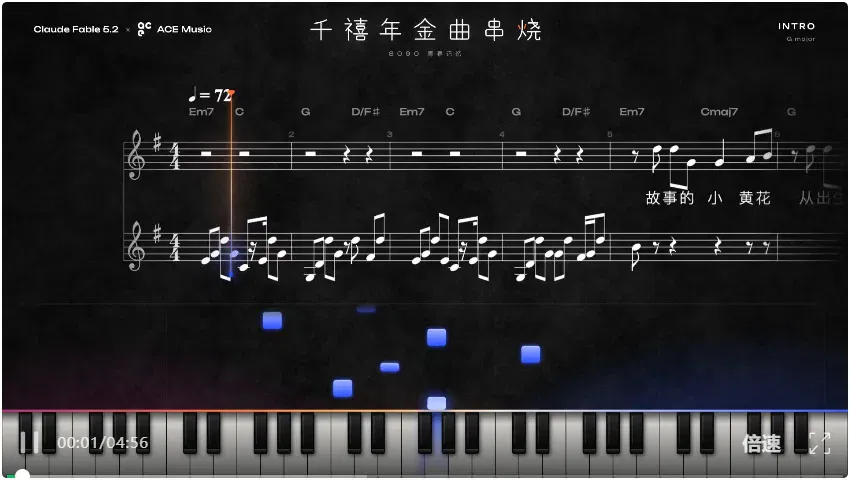
The pieces behind its ranking now come together:
A group of people who understand both music and AI; a technology that can first write a score and then generate audio; and two products aimed at ordinary users and professional creators.
How do these become lasting advantages?
The answer—
a flywheel.
Under the flywheel, first place may be only the start
Data fuels flywheels.
But quality varies, especially in an aesthetic domain.
Music is plentiful online; the scarce information is why professionals make particular edits and choices.
Technique sets a floor, while taste often sets the ceiling.
A finished song can tell a model only the final answer. As for how many versions the producer tried, which section of vocals they deleted, or which chords they changed, you cannot hear any of that just by listening to the finished work.
With user authorization, ACE Studio can record those decisions.
Experience and taste become a learning process AI can study.
ACE reports over three million such professional trajectories accumulated by September.
That starts an internal flywheel:
better models → better products → more professional users → more quality data → better models.
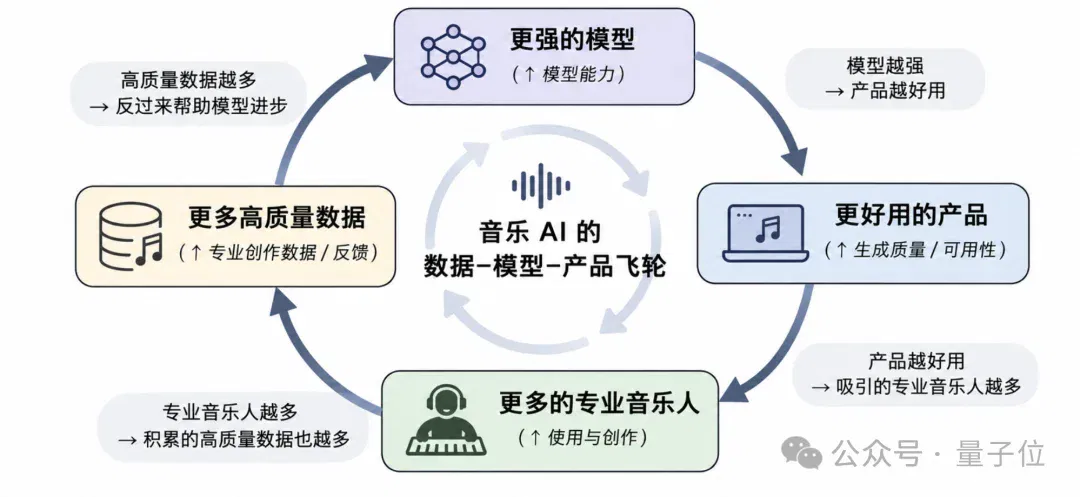
△ AI-generated image
The ecosystem also extends into open source.
ACE-Step, ACE-Step 1.5 and the team-associated YuE had collectively gained over 33,000 GitHub stars by November.
Developers increasingly experiment with local deployment and workflow integration.
Popularity attracted capital.
In September, ACE raised nearly $40 million from investors including a major technology company’s strategic arm, CCV, Shunwei Capital and Alphaist.
According to the company, this makes it one of the highest-funded Chinese-founded AI-music teams.
Two months later, ACE Music v1 topped AA.
Rankings remain competitive.
ACE moved Suno to second today; Suno may return with a new model tomorrow.
For this moment, a previously unfamiliar Chinese name reached the front.
Suno has been overtaken.
And this dark horse may only be getting started...
Links:
https://acemusic.ai
https://acestudio.ai
This article was originally published by QbitAI. Author: Yishui.
Related topics
After reading
Join the AINRK community
Read how to join the community and connect with people working in AI.
Related articles
Continue reading related topics and articles in this category.

Alibaba’s HappyShrimp launches a mobile app; media trial explores songwriting and sharing (opens in a new tab)
Zhidongxi tried mood prompts, original lyrics and reference styles, recording generation times of about one to two minutes while noting limitations in vocal nuance and melody.
通用大模型要「降维打击」具身智能?首个AA-Robotics榜单来了 (opens in a new tab)
具身智能公司辛苦训练的「机器人大脑」,要被 GPT、Claude、Gemini 抢饭碗了?

Suno最强开源对手来了:4090一分钟出歌,把AI音乐从抽卡变成可编辑工程 (opens in a new tab)
近期,香港科技大学联合M-A-P、NOIZ AI、斯坦福等机构发布并开源了一个统一符号与音频音乐生成的模型YuE2,将开源音乐生成的质量推向与前沿闭源模型正面竞争的位置。

刚刚,中国AI占领全球前四! (opens in a new tab)
AI视频,已经开始挑战「实时造世界」了!

深度|完成4000万美金融资,ACE成为AI音乐赛道融资额最高的华人团队 (opens in a new tab)
AI音乐公司ACE完成近4000万美元融资,成为AI音乐赛道融资额最高的华人团队之一,资金将用于自研音乐基础模型研发、全球团队扩张及面向大众市场的新产品Miya。