As AI coding accelerates, hiring data reveals shifting roles and skills
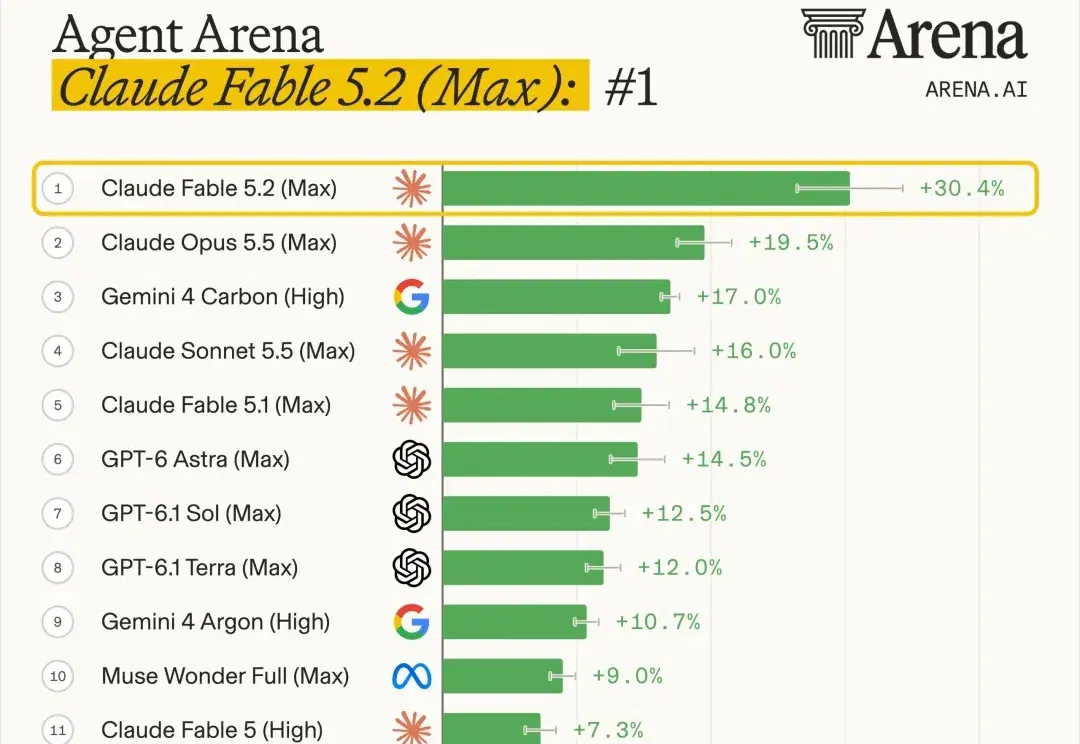
APPSO combines model demonstrations with a tech-jobs report, distinguishing vacancies from actual hires and comparing engineering, design, FDE and security roles. Historical hiring trends cannot be attributed directly to a newly released model.
Editorial correction (November 16, 2026): A change on one leaderboard is not a uniform increase across all model capabilities. Hiring observations cannot be directly attributed to a newly released model.
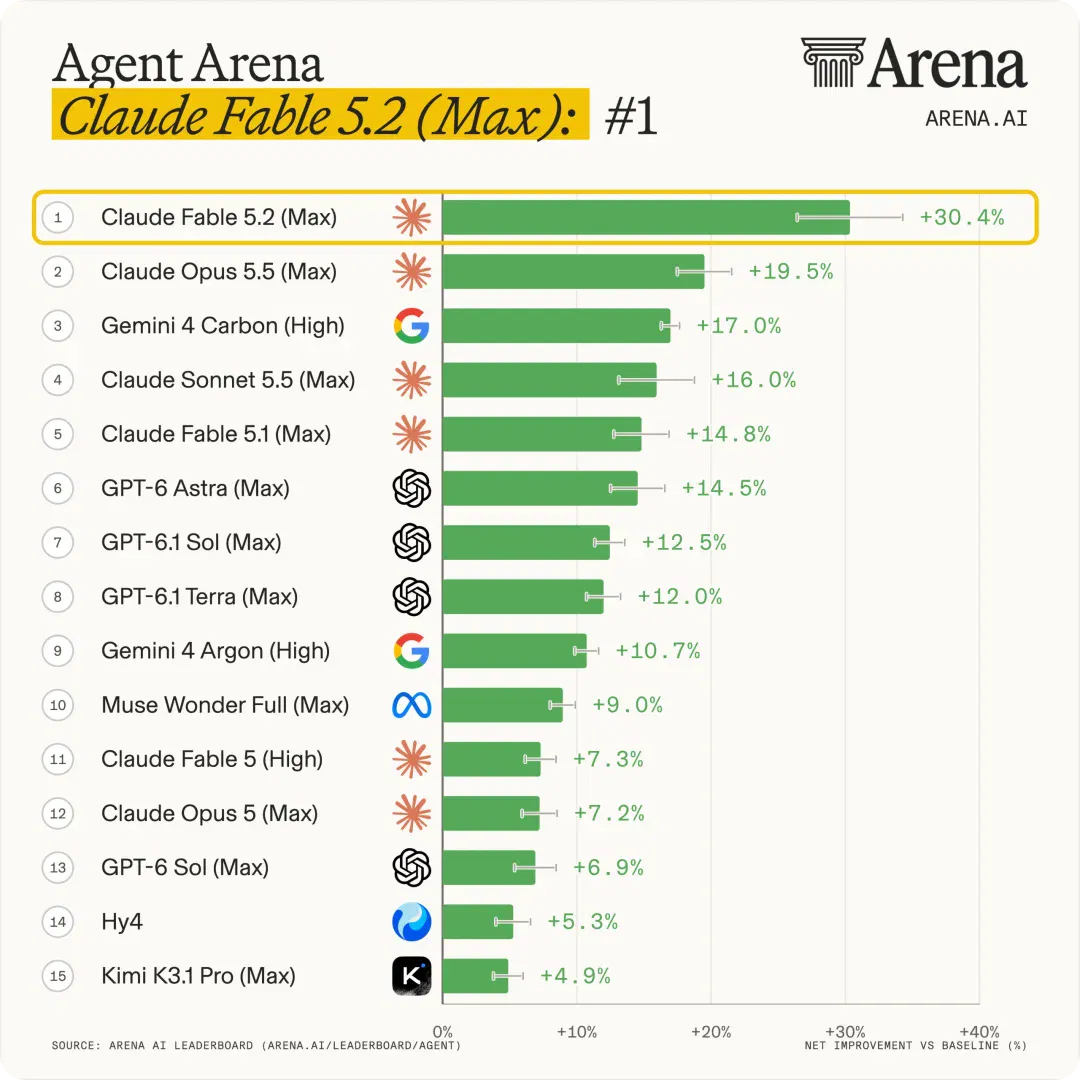
Claude Fable 5.2 has again expanded expectations for AI coding.
Saltline, developed by Claude engineering lead Felix Rieseberg, became popular on X. From one initial prompt without subsequent human feedback, Fable 5.2 generated models, sounds and textures for an intense first-person shooter.
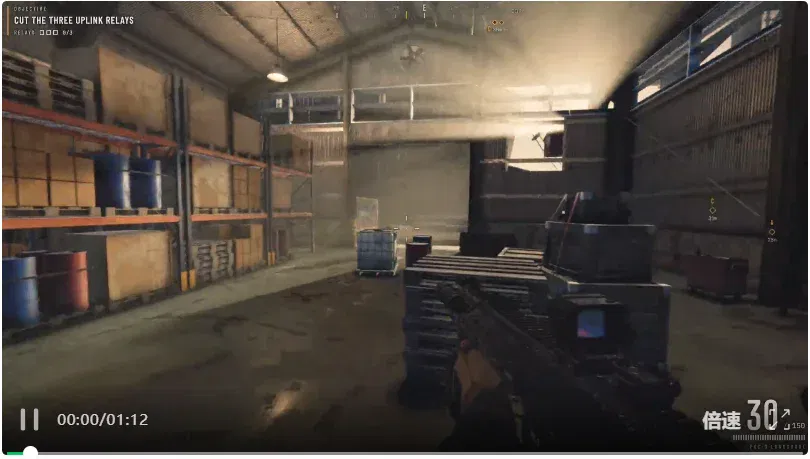
Figure | Try it: https://claude.ai/artifact/BGY1SztrAYcJQHSsnHHGmp
In an Anthropic experiment, an engineer requested an operating system from an empty folder. The model coordinated over a thousand subagents through eight days of coding, testing and review, producing a laptop-bootable prototype.
Anthropic also says Claude writes over 90% of merged changes in its core codebase under human guidance. Agents helped migrate a key production service from Python to Rust, improving startup speed around twenty-sixfold.
The 30.4% cited in the original report corresponds to a specific leaderboard and basis of comparison; it cannot simply be taken as a uniform performance increase for the model across all tasks. The operating-system demonstration is also a prototype experiment and remains different from a mature product.
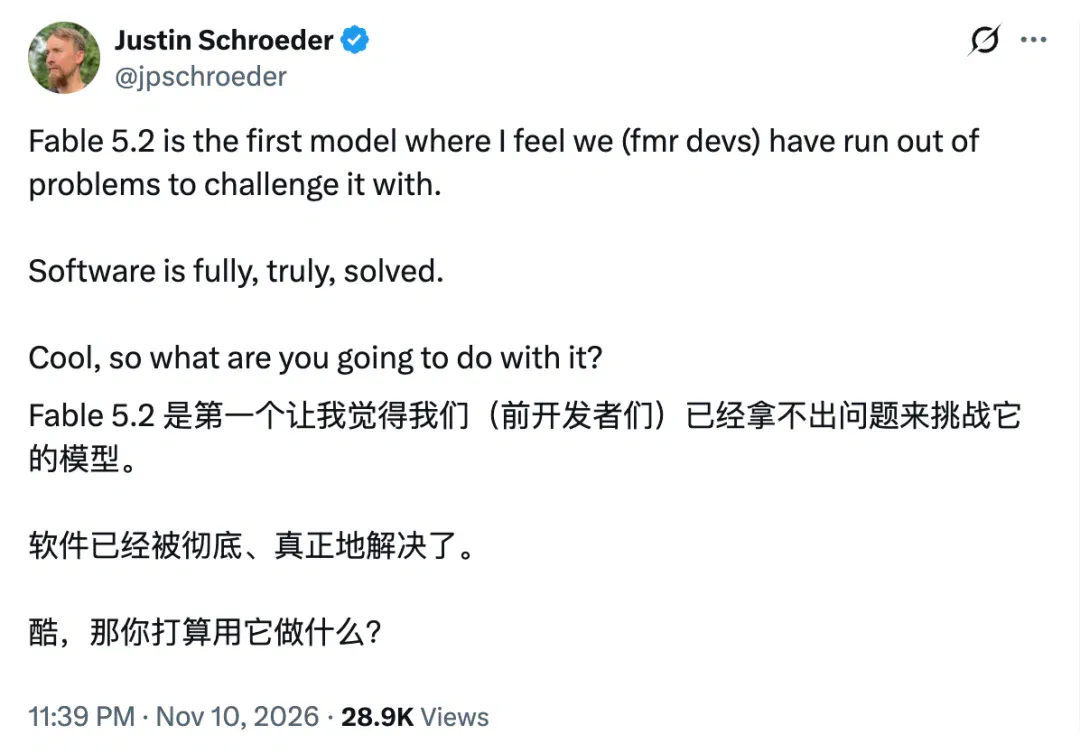
When AI can already develop games, write operating systems and even take on the vast majority of everyday coding work, how much work is left for software engineers to do?
Lenny’s Newsletter’s State of the tech job market: late 2026 may offer answers from actual hiring.
It combines vacancies tracked by TrueUp across over nine thousand global technology companies with about 124 million career profiles from Live Data Technologies, examining demand and actual US hires.
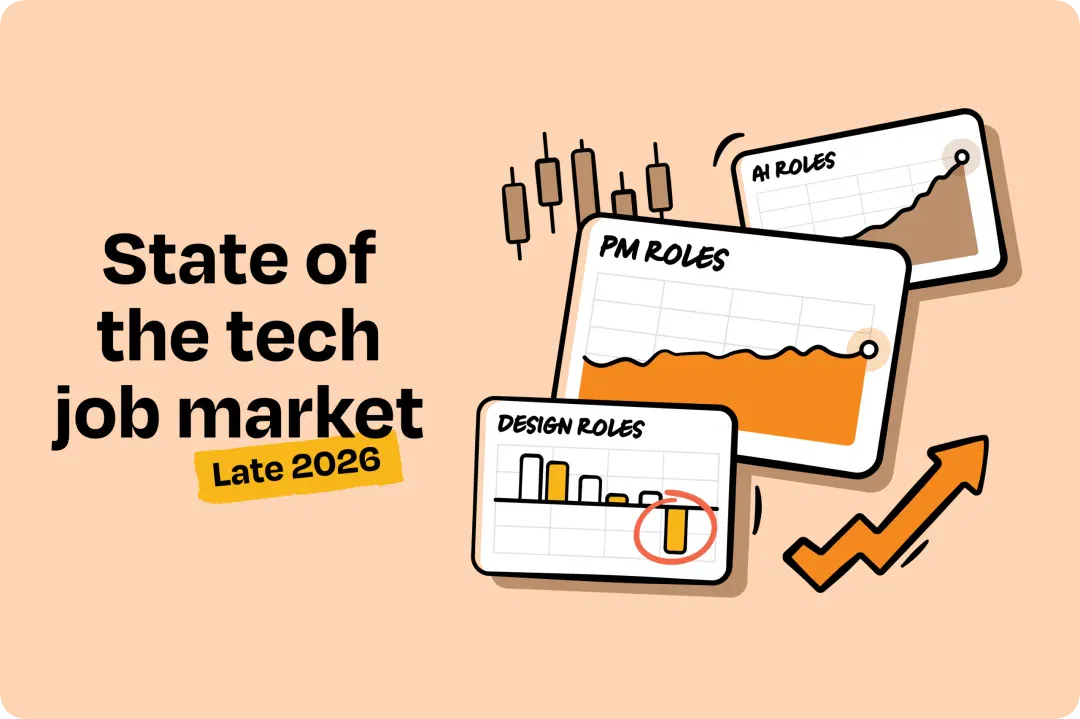
Figure | Original report: https://www.lennysnewsletter.com/p/state-of-the-tech-job-market-late
The data reveal an interesting contradiction: technology companies worldwide currently have more than 281,000 open positions, up 17% year on year. Yet the three most familiar job categories—product managers, engineers and designers—have grown by only 2% combined.
Software engineers remain the largest occupational group in technology companies' recruitment, but the number of people actually starting these jobs has already fallen below half the peak reached in 2022. Meanwhile, roles such as product design and user research continue to contract, while FDE and security engineering roles have seen rapid growth.
As software becomes easier to build, talent requirements change.
Hiring roles are being reshaped
The most notable aspect of this report is that it distinguishes “job openings” from “actual hiring.” Looking only at job openings, the technology industry appears to be continuing to expand: since the start of 2023, product manager (PM) openings have increased by 56%, and engineering openings have also risen by 43%.
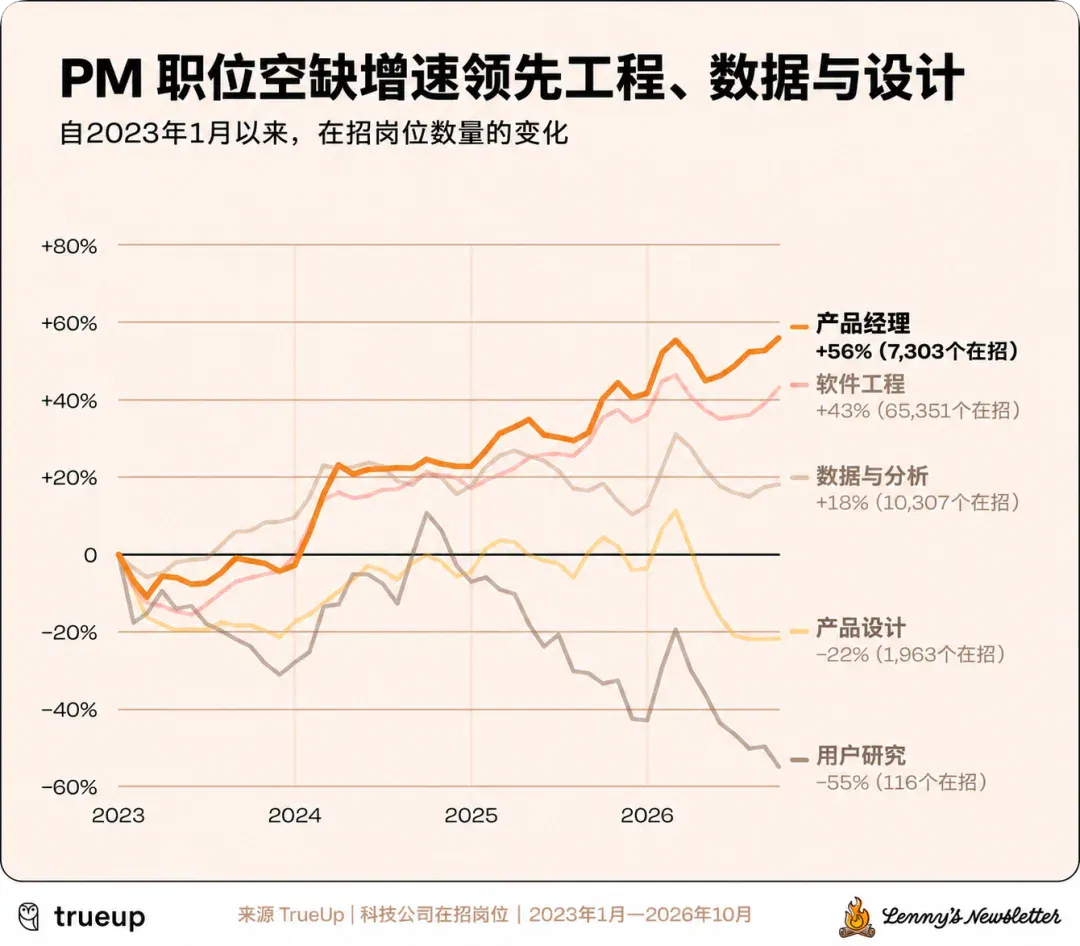
Actual hiring across core product roles is flat or falling. Engineering-vacancy growth slowed from 29% in 2024 to 15% in 2025 and 2.5% over the past year; openings are now below March’s level.
From May 2025 to April 2026, US companies hired about 113,000 software engineers, under half the 239,000 peak in 2022. Since January 2024, engineering openings rose 44% while actual hires fell 17%.
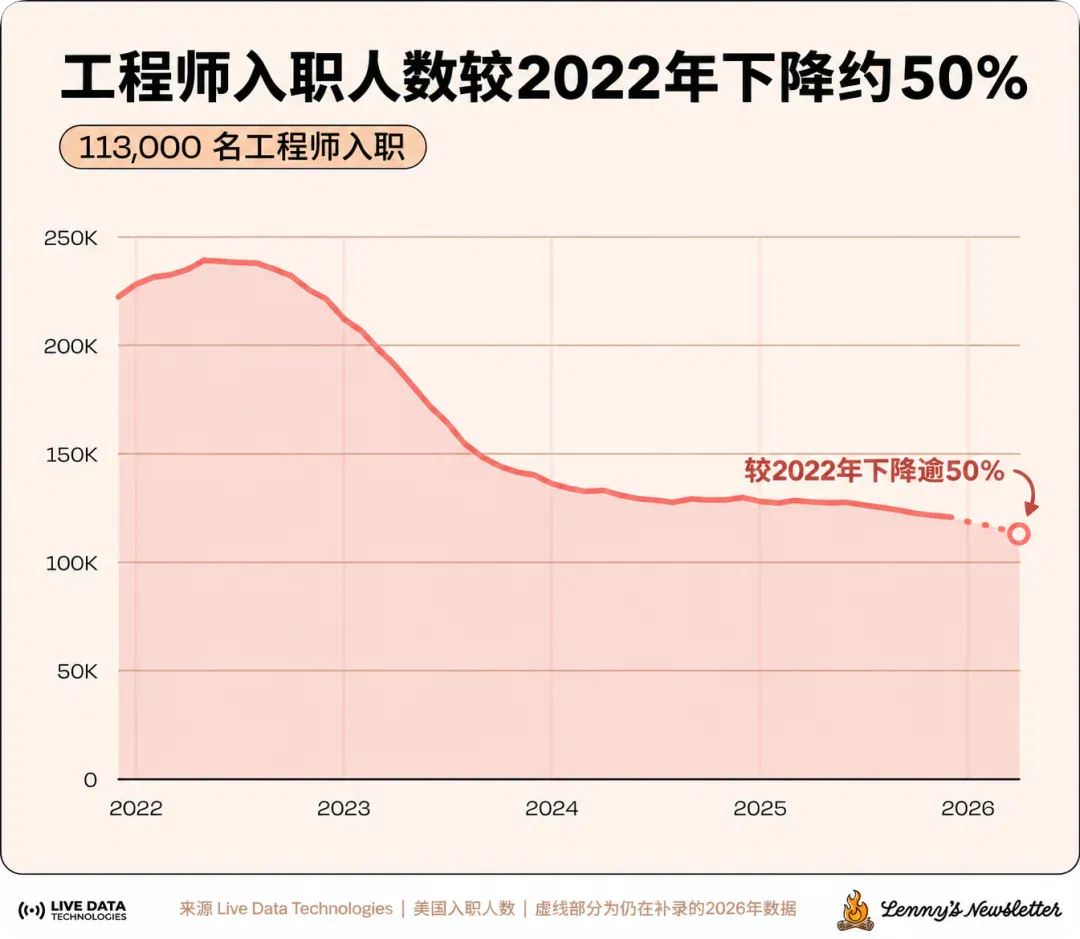
Companies are still advertising positions they want to fill, but the number of people actually hired has not kept pace. There may be several reasons for this, such as longer hiring cycles, companies raising their hiring standards, or some hiring requirements taking a long time to turn into actual hires.
But at least one thing is clear: the earlier phase in which technology companies constantly expanded their engineering teams and increased software output by adding people has cooled considerably.
Engineers remain the largest category in technology hiring, with more than 65,000 positions currently open worldwide. What has changed is that companies seem increasingly cautious about deciding which kinds of work they should add people for.
Differences between occupations are widening.
Design contracts sharply; PMs have not won outright
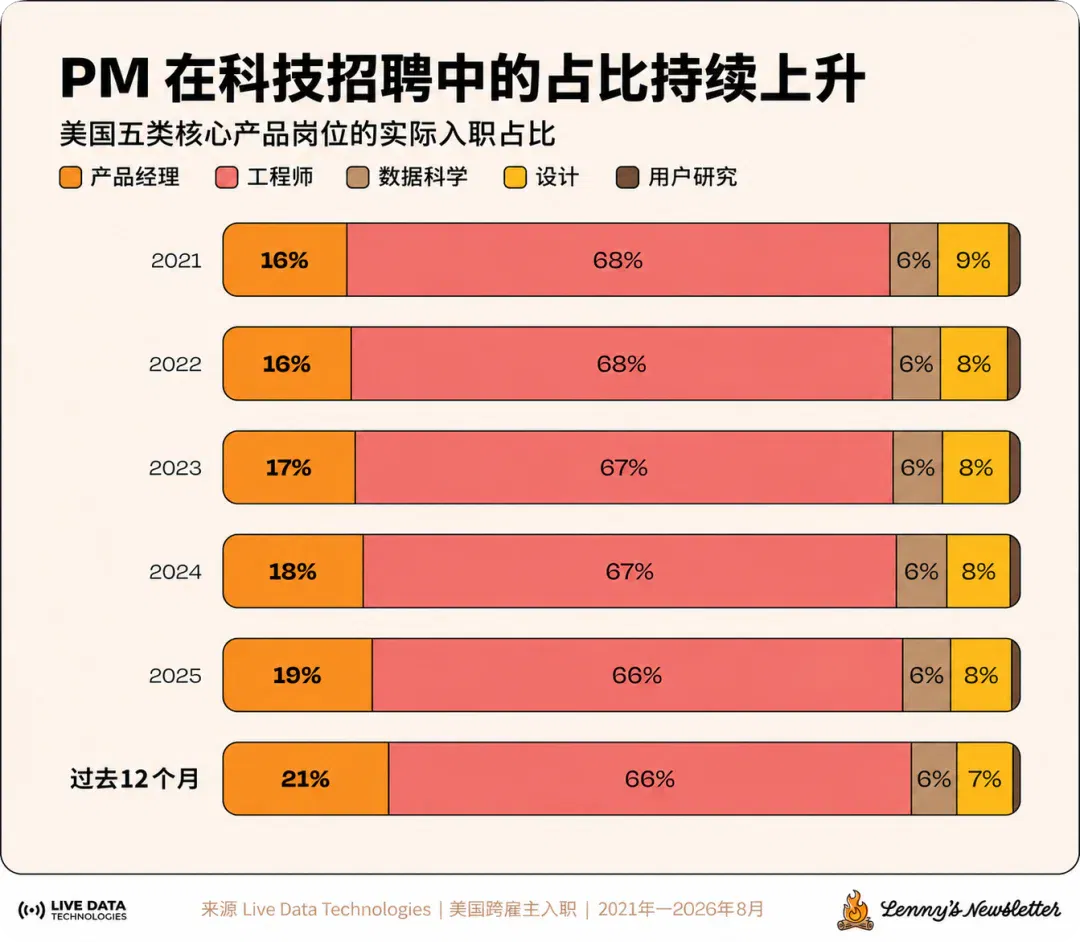
Among the five core product job categories, product managers are the only category whose share of hiring has increased. Their share of people actually starting related jobs in the United States has risen from 16% to 21%.
But this does not mean that the actual number of product managers being hired is growing rapidly. More precisely, product managers have proved relatively resilient to declines while roles in engineering, design, data science and user research have generally weakened.
The pressure facing design and user research is more direct. Technology companies worldwide currently have only about 1,900 product design openings, down 28% year on year and at the lowest level since this dataset began tracking them.
US product-design hires were approximately 12,600 over the past year, versus 27,600 in 2022.
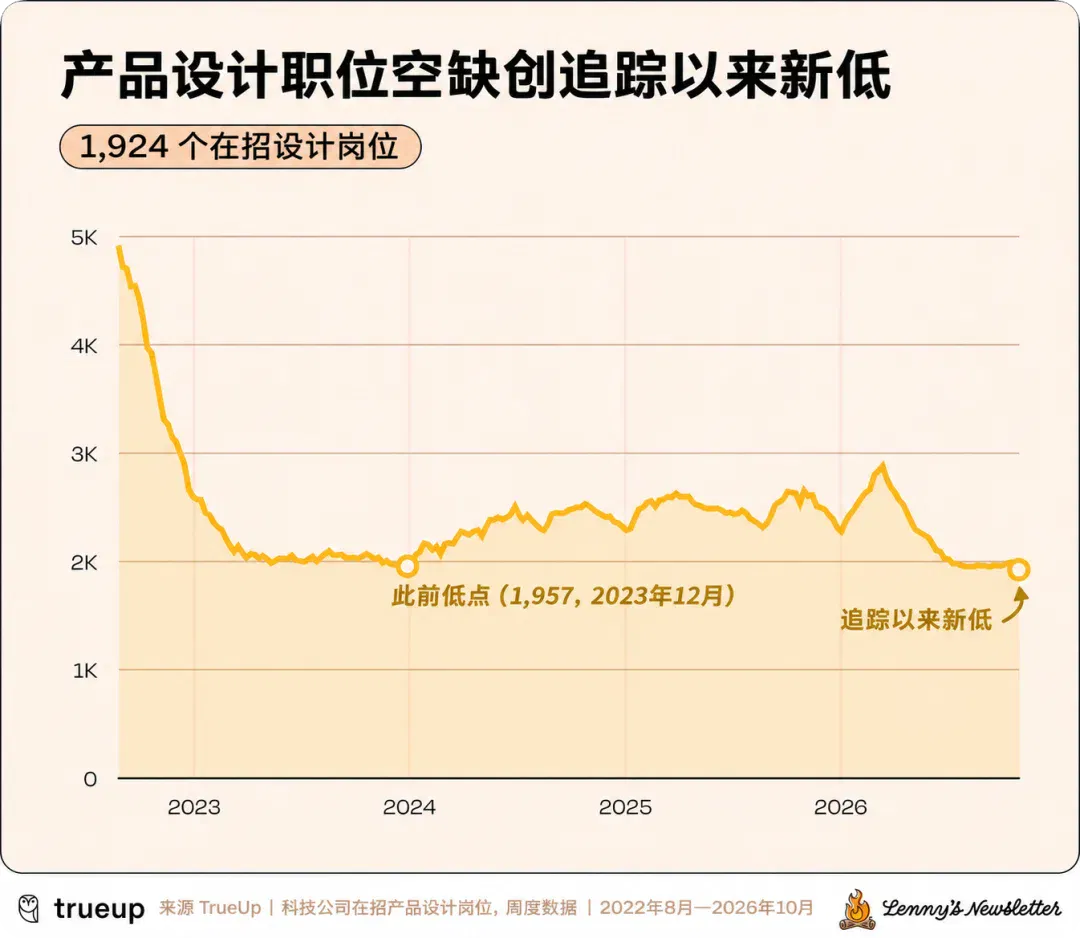
The situation in user research is even more severe. Around 1,800 people started related jobs in the United States over the past year, a decrease of 66% compared with 2022. Technology companies worldwide currently have only about 108 user research openings.
Engineering roles are also beginning to diverge internally. Demand for front-end and mobile engineers is contracting markedly, while security engineering has become one of the faster-growing areas. Of course, these changes cannot all be attributed to AI: technology companies' cost controls, industry cycles and organizational adjustments also affect hiring.
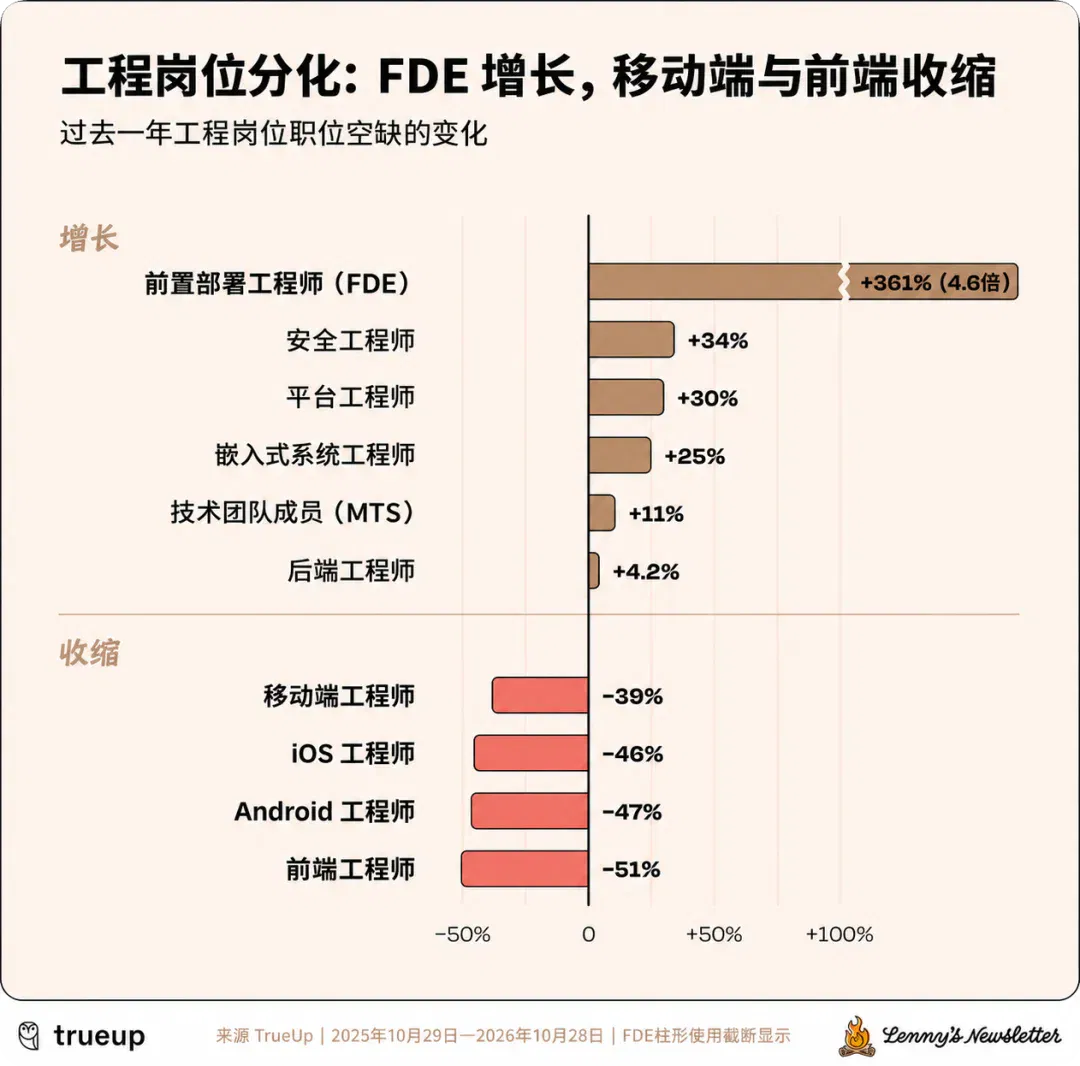
Figure |
But considering the capabilities demonstrated by Fable 5.2 helps explain why some roles would be among the first to feel pressure. In the past, taking a software product from requirements to launch might have required collaboration among several roles, including product managers, designers, front-end engineers and test engineers. Today, AI can already generate prototypes directly from requirements, write front-end code, run tests, and even check for and fix problems on its own.
Businesses can automate more clearly specified, bounded and verifiable tasks.
When one person with AI handles parts of several people’s work, companies reconsider team size and responsibilities.
However, reducing the execution steps does not mean that the entire product development process can be handed over to AI. Code can be generated quickly, but someone still needs to judge what product should be built, what problem it should solve, and whether the final result delivered meets real needs.
That helps explain PM resilience.
It is just that future PMs may need to spend less time coordinating the production of code and prototypes, and devote more effort to judging requirements, checking whether results meet acceptance criteria, and bringing products into real-world use.
Which jobs grow more valuable as AI codes better?
Rapid FDE growth is another notable finding.
This role has become prominent across AI companies. Global openings rose to roughly 4.6 times their year-earlier level, reaching about fifteen hundred. Security engineering is another strong-growth direction.
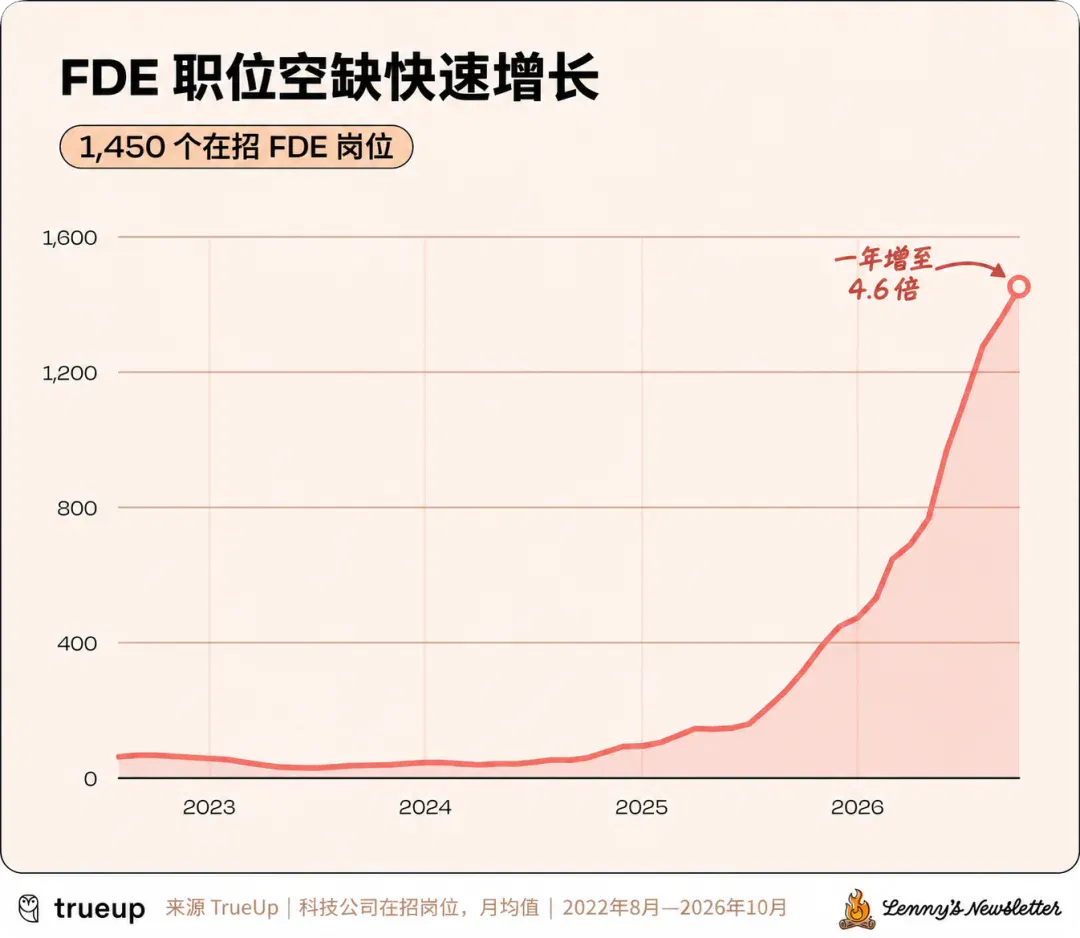
Live Data Technologies recorded over 2,400 external US FDE hires outside Palantir this year through November 6, 2026. Google, Accenture, Salesforce and Databricks appear among employers.
Why do these engineers become more sought-after as AI becomes better at writing code? Much of the reason is that developing software and making software work in practice are two different things. For FDEs, the job usually involves more than writing a piece of code. They also have to enter the customer's real business environment, understand requirements, connect existing systems, handle all kinds of nonstandard processes, and ensure that the product ultimately delivered is actually usable.
A similar change is taking place in security engineering. When agents can autonomously modify code, call tools and access business data, the issues of permissions, security and responsibility that software systems have to handle will only become more complex.
PM, FDE and security engineering appear to be three different occupations, but they have one thing in common: the value of their work is increasingly concentrated in judgment, verification and making technology run reliably in the real world.
Current AI still cannot independently bear full responsibility for these.
Tencent rethinks how its hundred-thousand-strong workforce works
Chinese internet giants face similar changes.
In an internal livestream marking Tencent's 28th anniversary just yesterday, Tencent management discussed organizational change in the AI era, comparing Tencent's existing core businesses to an “army” and its new AI-native businesses to a “navy.”
According to Tencent management, 50% of its people should act like an army, using AI to improve efficiency and defend existing businesses. The other 50% should act like a navy, exploring AI-native businesses and looking for new room for growth.
Rumors interpreted this as 50% layoffs. PR director Zhang Jun clarified that it was a metaphor for reallocating resources to the AI era and that laying off half the workforce was entirely untrue.
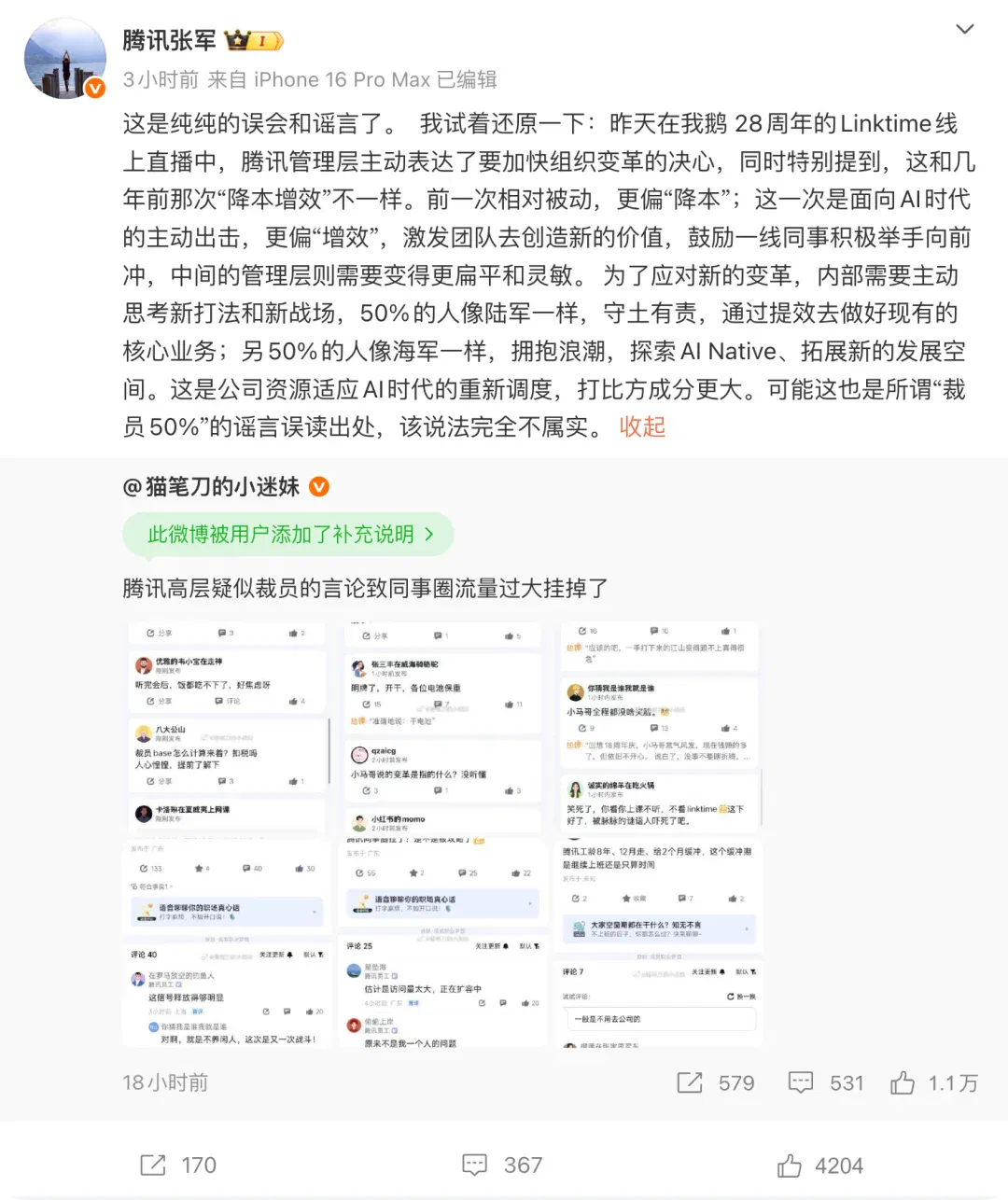
More worthy of attention than whether there will be layoffs is Tencent's attitude toward organizational change. Over the past few years, the most frequent topic among major technology companies has been cutting costs and improving efficiency. Now Tencent hopes to use AI to enable existing teams to create more value while also putting resources into new businesses.
Structures may flatten middle management and encourage frontline staff to take on more.
This neatly echoes the changes in hiring at overseas technology companies. On one side, demand for traditional roles is slowing while emerging roles are growing rapidly. On the other, internet giants with workforces on the order of 100,000 are also beginning to reconsider what their existing people should do and how they should adapt to AI.
For people in the workforce, mastering AI tools may already be only the first step. The bigger challenge is this: as AI can complete more and more tasks that people used to be responsible for, what new value can they themselves still provide?
As work is redistributed, AI use is only the first requirement
The report also tracks job-description changes.
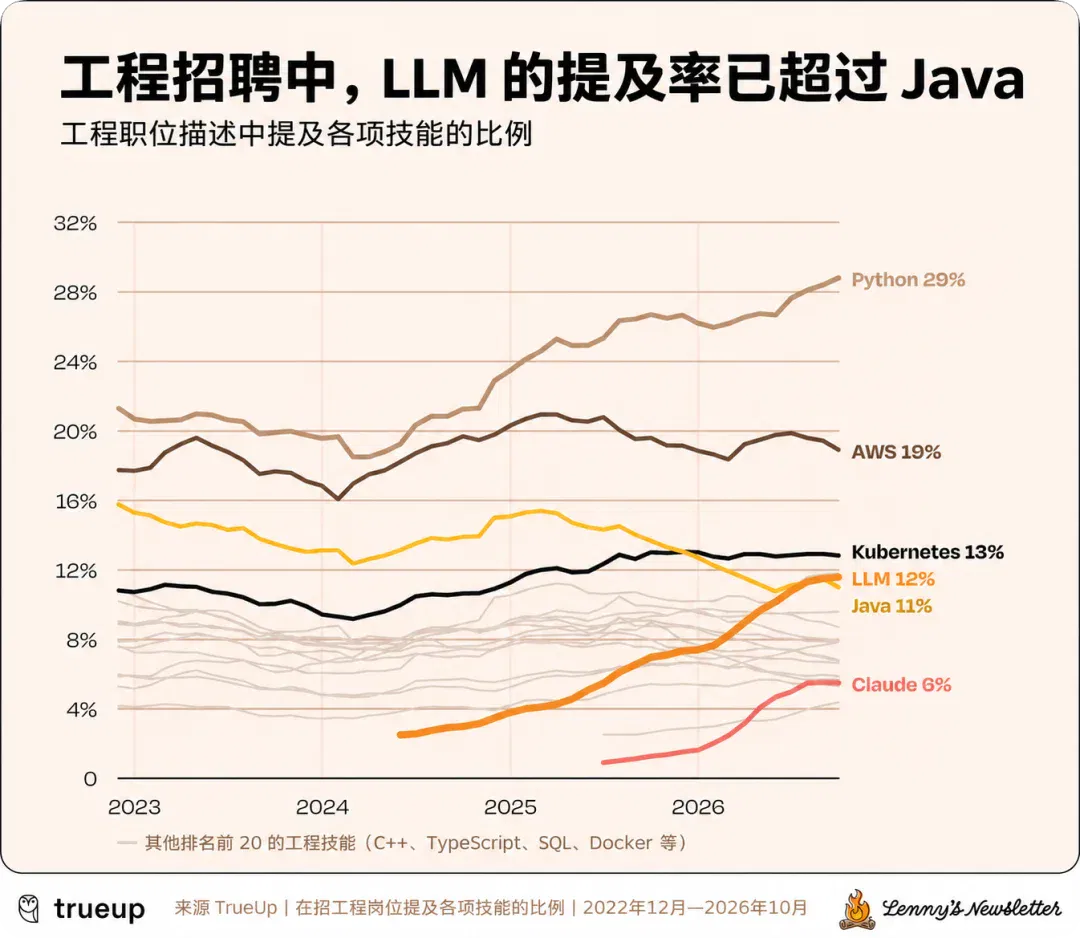
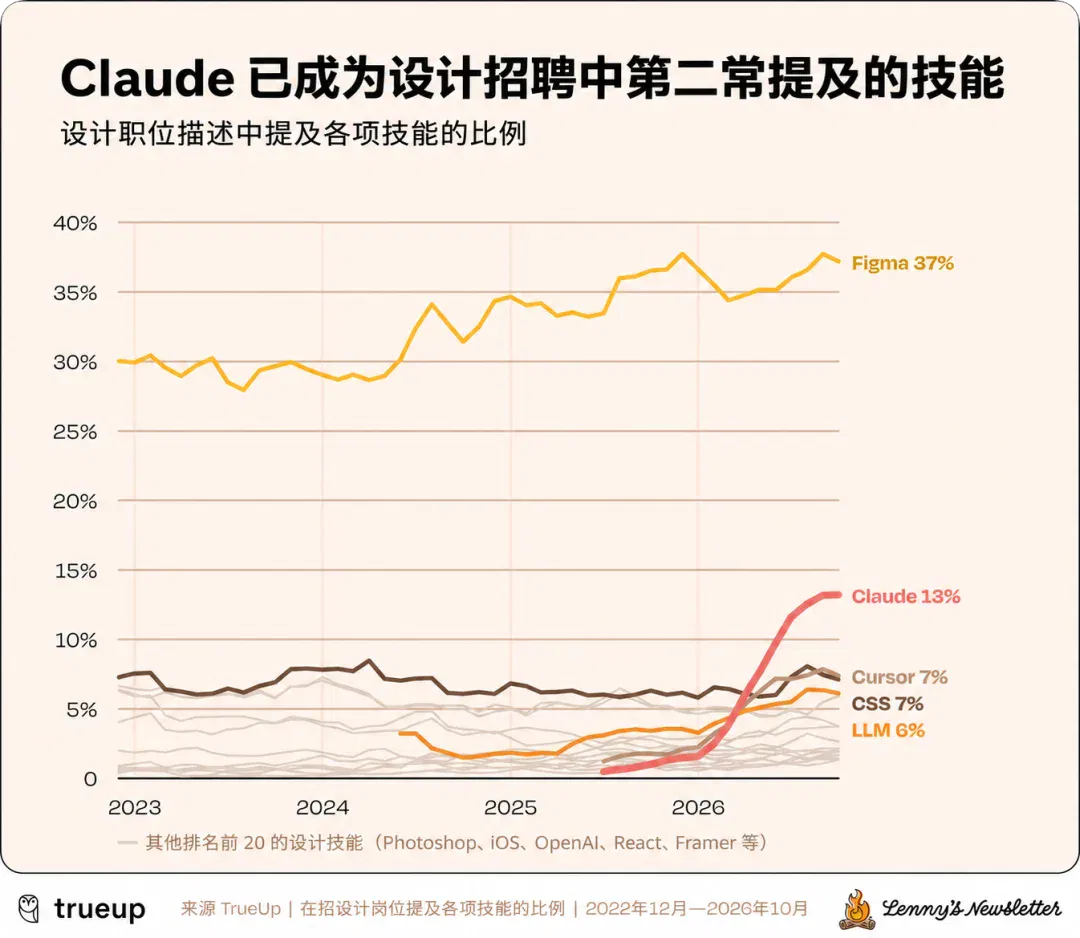
Two years ago, skills commonly required in product manager recruitment were still SQL, Jira, AWS and Python. Today, LLM has risen to first place, and terms such as Claude, Cursor, OpenAI and MCP also appear frequently. Even evals, which are used to check the quality of model outputs, have begun to enter the list of high-frequency skills.
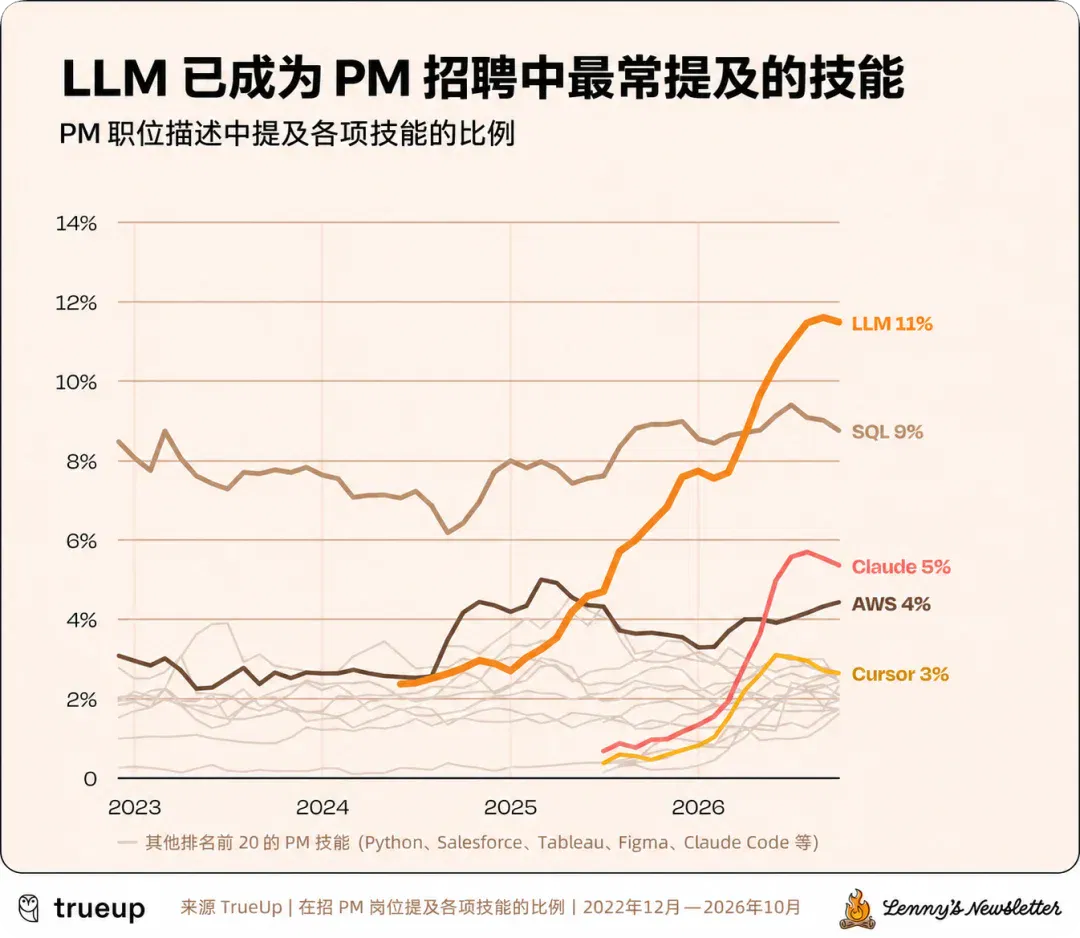
Python still leads engineering, but LLM mentions exceed Java. Design descriptions now pair Claude and Cursor with Figma and CSS.
This also means that mastering AI tools is gradually becoming a basic requirement for people working in the software industry. A feature that might once have taken an engineer several days to complete can now, with AI assistance, have an initial version ready in a few hours or even less.
But as speed increases, new questions follow. Is the code written by a model reliable? Do the generated features meet actual requirements? How should a problem be located when something goes wrong? If an agent is to keep operating enterprise systems, how should permissions be allocated and reviews carried out?
These questions are difficult to resolve with a single prompt alone, and software itself may change as a result. In the past, most software was designed around human operation. We needed to use a graphical interface to find features, click buttons and complete operations.
As agents begin to take over some work, software needs to serve two types of users at the same time. Agents carry out tasks through structured interfaces such as APIs and MCP, while humans use the interface to check results, handle exceptions and retain the final say over critical operations.
Some operations that previously had to be performed manually by people will gradually become tasks that agents execute automatically in the background. But whether a product is reliable, whether users trust it and who takes responsibility when something goes wrong are requirements that will not automatically be satisfied just because AI can write code.
Development gets easier; making reliable products remains complex.
AI writes software, but software engineers have not disappeared
Fable 5.2 arrived too recently to explain years of hiring data. Attributing engineering slowdown, design contraction or reduced remote work entirely to one upgrade is simplistic.
Together, capability and labor-market changes still prompt reconsideration of software work.
Code generation is becoming cheaper and cheaper, prototypes are being delivered faster and faster, and execution work based on narrow skills is being squeezed. Software needs its interfaces redesigned for both agents and humans. Bridging the gap between generated results and actual use is becoming new work in its own right.
That offers a product-level interpretation of occupational shifts.
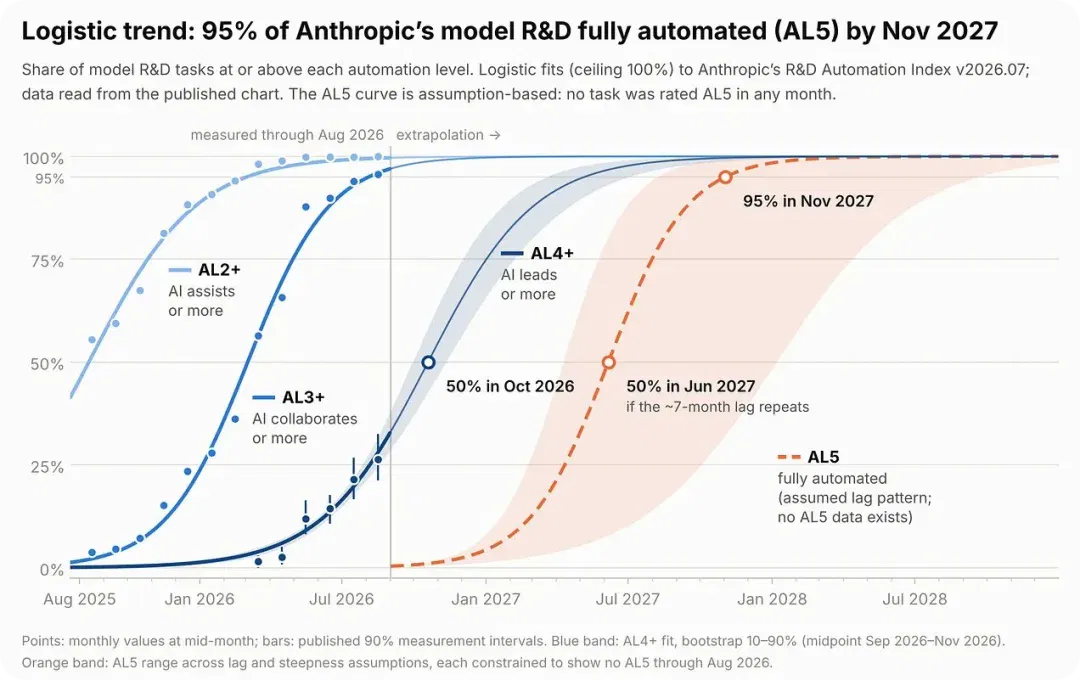
Figure | AI Futures Project says progress is five months ahead of AI 2027
As code implementation becomes abundant, the trade-offs between requirements handled by PMs, the customer environments and delivery handled by FDEs, and the risks and responsibilities handled by security engineering have not disappeared as a consequence. On the contrary, as the supply of software increases rapidly, judging requirements, verifying quality, earning user trust and providing ongoing service will become more important.
This does not guarantee that technology jobs will automatically see net growth, nor does it mean that a new senior role will appear for every execution role that is squeezed. It only shows that AI's impact on employment is not a simple matter of jobs “existing” or “not existing”; rather, it is redefining what people and machines are each responsible for.
Software and code will remain.
What is receding is the era in which technical value was measured mainly by “who can write the code.” Taking its place is a repricing centered on goals, judgment, distribution and responsibility.
This article was originally published by APPSO. Author: APPSO.
Related topics
After reading
Join the AINRK community
Read how to join the community and connect with people working in AI.
Related articles
Continue reading related topics and articles in this category.

Fable 5.2 vending-machine test raises questions about balances and evaluation awareness (opens in a new tab)
Vending-Bench 2 compares account balances after a simulated year of trading. The source discusses Fable 5.2's purchasing and cautious behavior, but a leaderboard cannot establish training-data inclusion, model motives or future collusion.
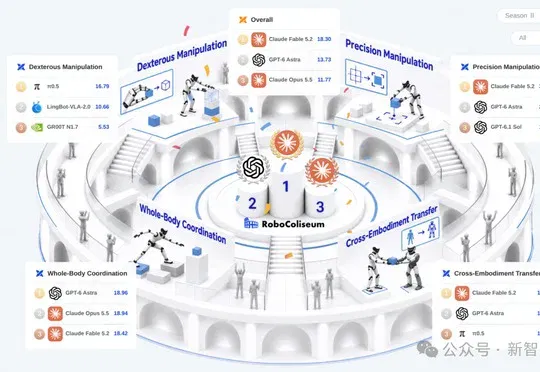
RoboColiseum Updates Simulation Tracks; Fable 5.2 Leads Overall but Struggles With Dexterous Hands (opens in a new tab)
The update covers dexterous manipulation, whole-body coordination, precision tasks and cross-embodiment transfer. Agents and policies are managed separately, with scores reflecting progress and execution efficiency.
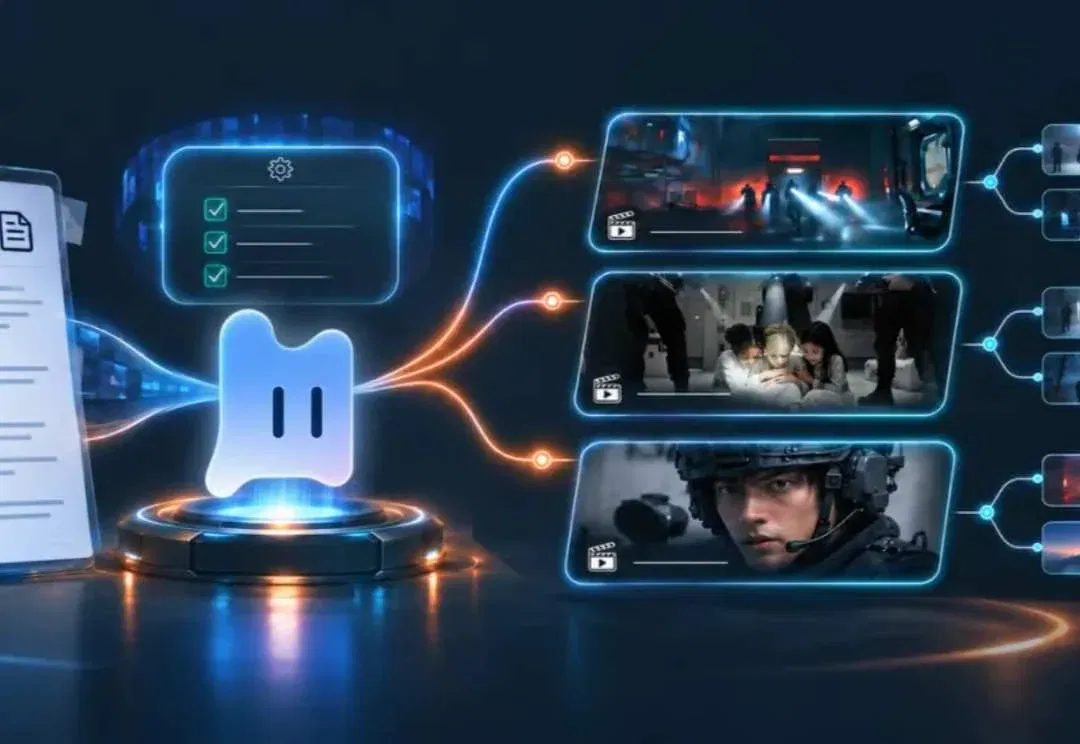
Future Sequence raises several million US dollars in seed funding for AI interactive content tool NEX (opens in a new tab)
Intelligent Emergence interviews the team about branching scripts, gameplay and audiovisual generation, and its plan to move from professional creator tools to an overseas mobile entertainment platform.
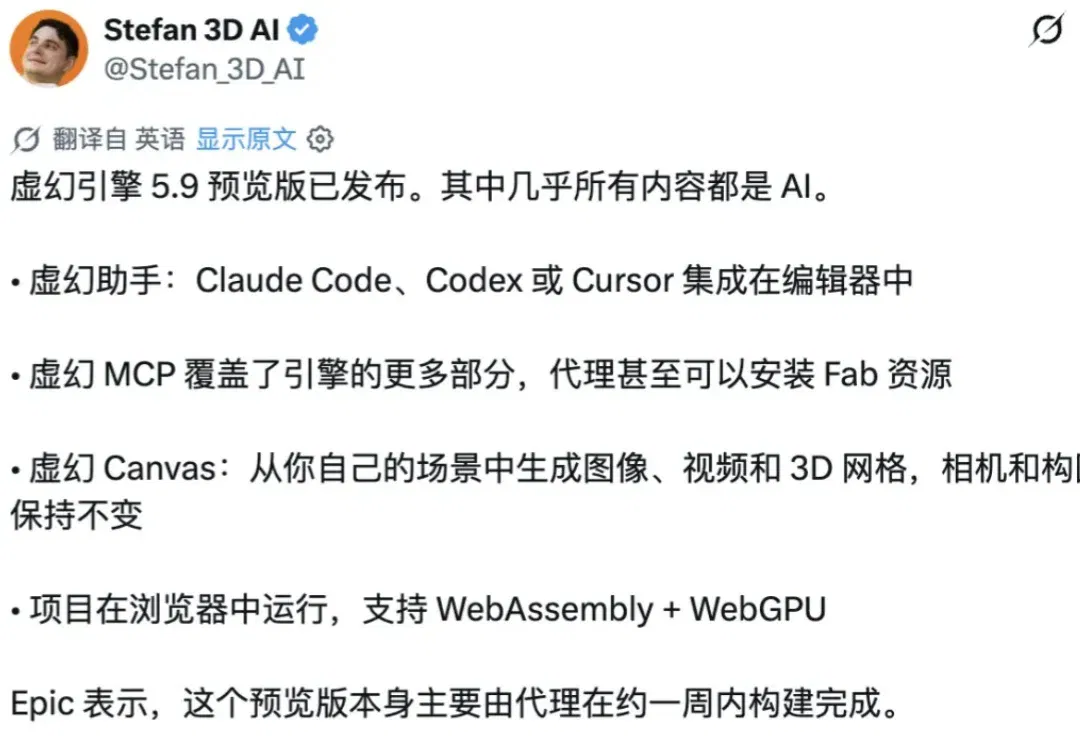
虚幻引擎 5.9 推出 MegaJam 预览版,引入智能体工作流与 Web 支持 (opens in a new tab)
Epic 称,这次预览版主要用智能体工作流移植部分 AI 工具并实现 Web 平台支持。相关功能仍属实验阶段,预览版测试周期短于常规版本。
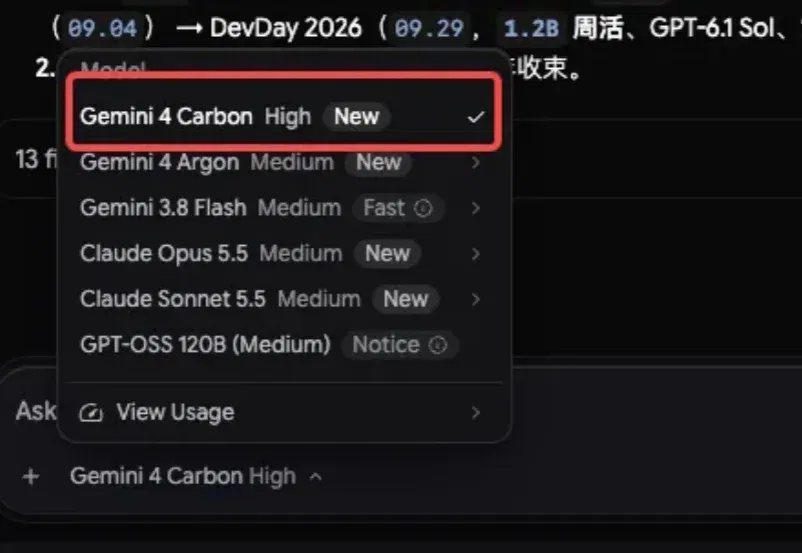
从 Blender 动画到代码绘画,创作者体验 Fable 5.2 的视觉表达 (opens in a new tab)
数字生命卡兹克分享 Fable 5.2 生成动画、三维场景和代码绘画的体验,并与 Carbon 的部分案例比较。文章重点讨论作者对生成作品审美的判断。