Future Sequence raises several million US dollars in seed funding for AI interactive content tool NEX
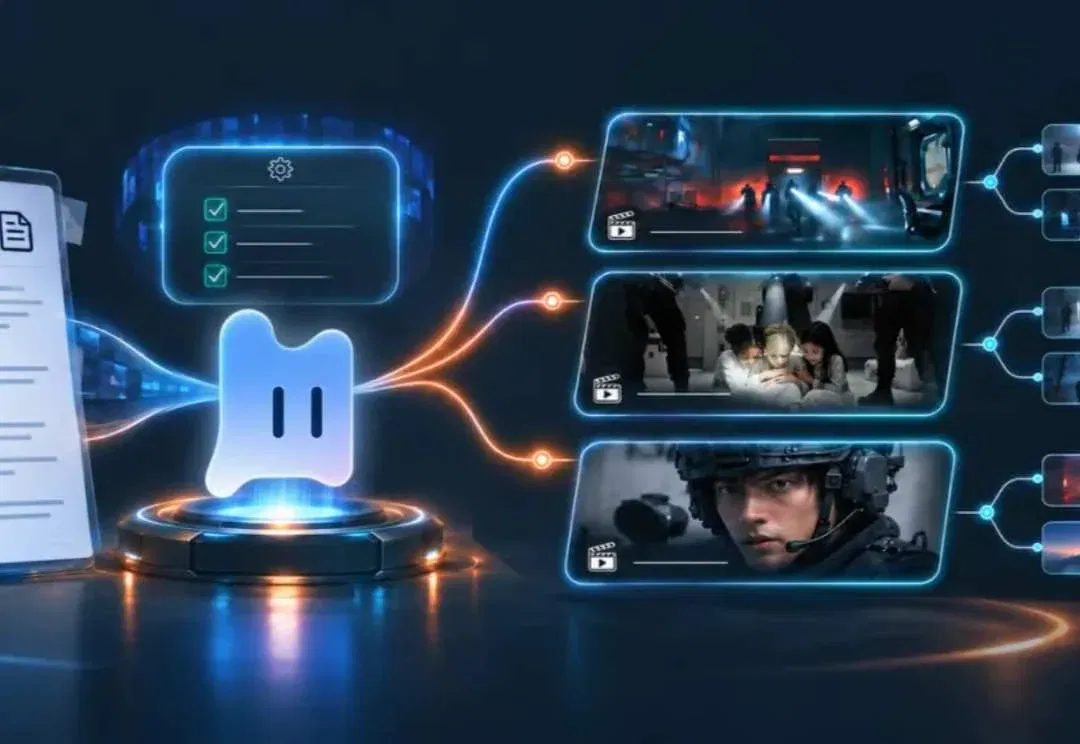
Intelligent Emergence interviews the team about branching scripts, gameplay and audiovisual generation, and its plan to move from professional creator tools to an overseas mobile entertainment platform.
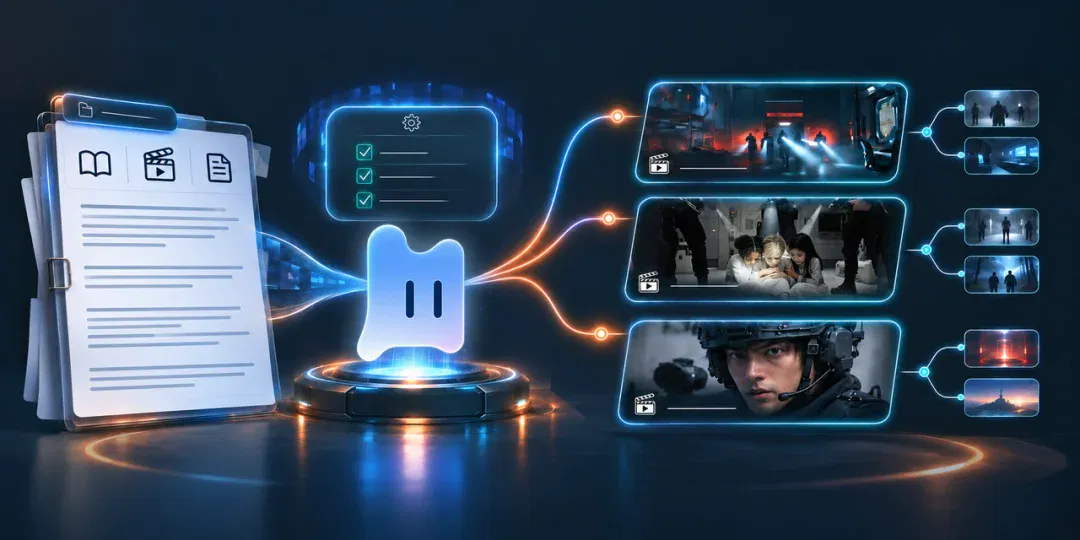
In September, an interactive film game about a "strong heroine's rise against the odds," Yao Zhi Chun Xue, attracted more than 1.2 million players on Douyin's gaming platform within two weeks.
The game was made by a young woman who had just graduated. She had no game-development background and enjoyed writing novels. Using Future Sequence's AI interactive-content creation tool NEX, she turned her own novel into a playable interactive film game. Players make choices at key points in the story, with different choices leading characters toward different fates.

A playable demo of Yao Zhi Chun Xue
Previously, making an interactive film game like this required collaboration across more than ten specialist roles, including game planning, art, and development, with development cycles often measured in years. Every additional story branch also meant hundreds of thousands in production costs.
Generative AI is improving this situation. But lowering the barrier to game production does not mean AI can make a game fun.
Beyond generating characters and scenes, a game needs professional gameplay design, feedback on player actions, and appropriate difficulty working together to keep players engaged. Interactive film games must also balance story appeal with playability. How should each player choice meaningfully affect the plot? How can combat, puzzles, and other mechanics fit naturally into the story?
In October 2025, Kai Qin founded Future Sequence and developed the AI interactive-content creation tool NEX. Starting with interactive film games, the team turns professional game teams' experience in story branching, gameplay design, and audiovisual production into expert models and creative workflows AI can call on, helping ordinary creators make their stories playable.
Kai Qin completed graduate studies in Peking University's computer-science department. Early on, he worked on VR and video-creation tools for ordinary users. As GM of Mini World's content ecosystem, he oversaw the creation engine, creator operations, and content distribution. During his tenure, monthly active creators grew from 20,000 to 1.2 million, while the game's daily active users rose from over 4 million to 22 million. He subsequently became product lead for the GiiNEX engine at Tencent AI Lab, bringing AI creation tools and Agents into actual production workflows. With NEX now, he hopes first to make the creative process for an interactive film game work end to end, then put the tools in more creators' hands.
Future Sequence has now raised several million US dollars in seed funding, led by L2F Guangyuan Entrepreneurs Fund. Its team has nearly 20 people, including former writers and lead planners for games such as The Invisible Guardian and Sheng Shi Tian Xia, as well as members from Tencent AI, Mini World, and other teams. The company plans first to attract creators and build a body of interactive works through NEX, then gradually establish an overseas mobile interactive-entertainment platform connecting creators and users.
Starting with interactive film games to build a fully dynamic AI interactive-content platform
Future Sequence currently focuses mainly on AI interactive film games, a content form between film/television and games. Players can experience a story as if watching a film, but can also influence its ending through story choices, combat, puzzles, and other actions.
These works particularly test branching-story design and the integration of combat, puzzles, and other mechanics into the story to advance it and deepen immersion. The audience is not limited to traditional gamers; it can also include people who enjoy short dramas, novels, and casual minigames.
For this direction, NEX serves novelists, comic creators, screenwriters, and ordinary creative enthusiasts, integrating production processes that previously required specialist collaboration into a set of AI tools. Kai Qin describes it as a "virtual game-development team."
When a user gives NEX a story, AI first adapts the linear narrative into an interactive script with multiple branches, different endings, and changing character relationships. It then designs combat, puzzles, character progression, and other mechanics around that script, so player actions also advance the story. Next, it generates the corresponding storyboards, characters, scenes, and videos, and finally integrates them into the game system. Creators can use an Agent to configure paid-access points that fit the pacing, complete testing, and package the work with one click, with support for release across multiple platforms.
Agents for creation, branch design, art, directing, game development, and other stages collaborate on the different steps. Creators can request changes along the way, adjusting the story, visuals, and gameplay.
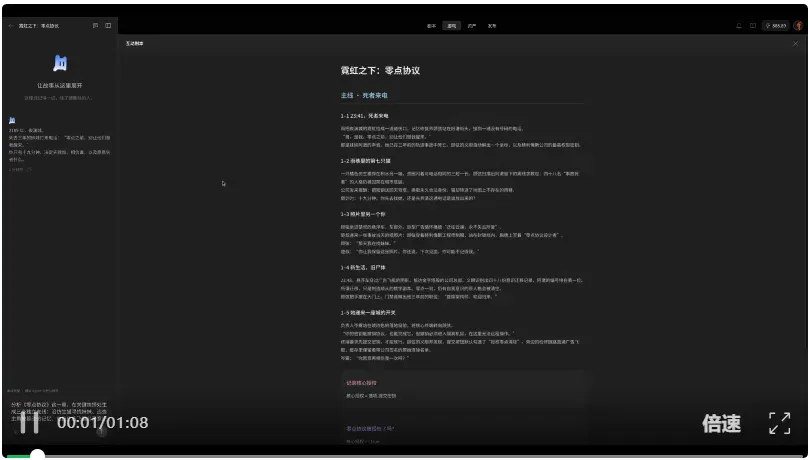
An in-product demonstration of the branching-writing agent at work
Kai Qin says that by the end of October 2026, professional creators working with the company had made more than ten games with NEX, alongside two officially produced IP adaptations, covering historical settings, mystery, fantasy, romance, and other genres.
The company is also trying combinations of different genres and mechanics. For example, Rebirth: Monarch of the Dead, adapted from a well-known overseas comic IP, uses dark fantasy, branching storylines, and combat QTEs. Its Chinese title means "Return! Reborn as the Strongest King of the Dead." According to the company, the game design includes 33 main-story scenes, 34 interaction nodes, and 102 story outcomes.
For Future Sequence, these works need to test two things: will users keep playing to explore another direction for the story, and can creators continually produce works in different genres with the same tools? According to Kai Qin, besides Yao Zhi Chun Xue, five or six works have already received feedback from Douyin and begun discussions about initial releases.
Under Kai Qin's plan, Future Sequence first uses works made officially and by professional creators to test market demand on existing platforms such as Douyin minigames and Steam, focusing on overseas and mobile markets.
Once the product is progressively refined, the company plans to open NEX to more ordinary creators, allowing novelists, comic creators, and others to independently make and release interactive works and earn through paid content, in-app purchases, and advertising. The longer-term goal is to grow from a creation tool into an interactive-entertainment platform combining content production, distribution, consumption, and transactions.
From generating games to making good games
Some current AI-game explorations focus on generating scenes and mechanics, while others adapt novels and scripts into interactive stories. Another direction uses world models to generate and change environments in real time as players play. These technologies remain in research and early application, with challenges in generation cost, long-term consistency, and complex interaction.
For interactive film games, generating visuals still leaves the need to balance compelling stories and playability. A novel may be easily rewritten by AI into several branches, for example, but if choices soon return the story to the same main path or merely change a few lines of dialogue, players will not feel genuinely involved.
Meaningful choices require professional writers and game planners to consider questions in advance: why does a character make this decision? How will different choices change relationships? How will earlier foreshadowing affect later events? And how will these changes draw players into further exploration?
The same applies to gameplay. Adding a few buttons to a video does not make it a fun game. Combat, puzzles, card mechanics, and other forms of play must serve the story, designed around the characters, world, and plot development rather than awkwardly inserting a minigame into the narrative.
For example, adapting a novel into an interactive film game first requires organizing the script's genre, world, the player character's core path, and the main storyline, then rewriting the linear story into a branching plot tree. Choices at key points affect game variables such as character relationships, ability stats, and the player character's personality tendencies, influencing later events. Professional writers and planners need to help design which choices fit a character and which branches deserve further development.
To do this, Future Sequence assembled a team with experience in interactive-content production, AI R&D, and IP operations. Kai Qin says it includes someone who was editor-in-chief for system narrative on Honor of Kings: World, as well as writers and planners involved in The Invisible Guardian and Sheng Shi Tian Xia. Its algorithm partner previously researched multimodal models at Tencent and has experience in model post-training and game-asset generation. Another partner has more than ten years of IP-operation and animation-production experience. During NEX development, writers and planners turn professional production judgments into data, which the algorithm team uses to tune expert models and Agents.
The team is also turning the gameplay experience provided by professional physics engines such as UE into AI capabilities.
When a player makes a character punch an enemy, a good game briefly staggers the enemy, combining animation pauses, sound effects, visual effects, and vibration so the player feels the force of a fist hitting a body. Traditional games can produce this feedback with 3D models and physics engines. But AI interactive film games usually call pregenerated video clips; avoiding stiff motion and abrupt cuts while preserving impact becomes a new production challenge.
To accumulate these capabilities, Future Sequence develops NEX while using it to make works and inviting professional creators to try it. The team collects professional writers' and planners' production experience and records of creators modifying and correcting AI-generated results, masks sensitive information, and summarizes it into a knowledge system for further model training.
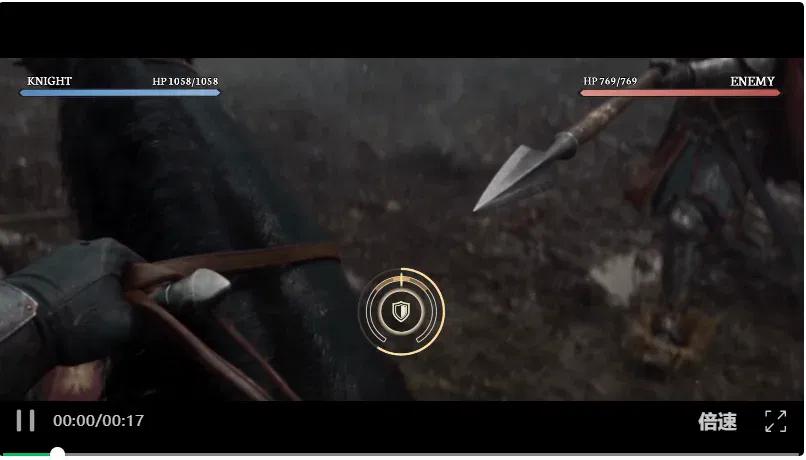
Gameplay video of the NEX-made game "Return! Rebirth of the Strongest Undead"
Kai Qin believes that in a highly specialized area such as interactive film games, high-quality data that answer specific production questions matter more than simply expanding data volume. Beyond story and mechanics, Future Sequence is also trying to integrate components needed for release and monetization into NEX, giving creators an opportunity to bring works to users and earn from them.
From experiencing a story to rewriting it
"Future Sequence" embodies an ideal of Kai Qin's: within seemingly predetermined life outcomes, people can use their own choices to strive for another possibility.
His inspiration for naming the company Future Sequence came from an anime he loved as a student, Steins;Gate. In the story, fate seems fixed, and repeated time travel leads the protagonist to similar endings. But ultimately, through determination and at enormous cost, he finds a timeline leading to his ideal ending.
Reality, in Kai Qin's view, is less ideal. "Limited by all kinds of conditions, people find it difficult to make decisions entirely according to their hearts."
The appeal of stories and games is that they let people temporarily step out of their own lives and experience another situation and fate. Interactive games offer something else: making choices yourself to determine what happens next. Starting with interactive film games, Kai Qin wants to test this question: if a choice truly can change fate, will people play again for a different life?
Previously, even an interactive film game with dozens of endings only let players follow routes arranged in advance by its production team. As models improve, Kai Qin wants stories to remember what users did, whom they formed relationships with, and what decisions they made at crucial moments, letting those experiences change what happens next.
Entering the same story, some people may have adventures, some choose to yield, some sacrifice themselves to help others, and some care more about protecting themselves. Everyone would receive an ending uniquely their own.
Going further, one person's choices could also influence another person's story.
According to Kai Qin, the team is also experimenting with a two-player interactive game in which player A's decisions may change what player B can do next. He hopes this connection can eventually extend to more people: choices players make in their own stories could bring them together at some moment and change each other's experiences. Different players' experiences would intertwine into an ever-changing story world. "Like the OASIS in Ready Player One."
On this basis, Kai Qin hopes Future Sequence can establish a fully dynamic AI interactive-entertainment platform different from traditional short video and games.
NEX has already helped creators without game-development backgrounds make their stories playable. Next, Future Sequence plans to help creators release works and find audiences through a platform, exploring revenue models such as one-time purchases, in-app purchases, and advertising, giving creators an opportunity to earn from their works.
More creators bringing works with different genres and mechanics may also attract people who enjoy novels, comics, and short dramas but rarely play traditional games. Only when creators can earn income and users remain willing to pay for quality content does the platform have a chance to form a stable cycle of content supply and consumption.
Today's short-video platforms recommend the next piece of content based on viewing and like histories. Kai Qin wants to explore whether interactive content can remember choices a person repeatedly makes in different situations and the relationships they build, letting these experiences influence whom they later meet, who trusts them, and what stories they become involved in.
In such a world, people would no longer merely watch others' stories; they would enter and change stories and create new ones together with other people.
This article comes from "Intelligent Emergence," by "Rui Zhao."
Related topics
After reading
Join the AINRK community
Read how to join the community and connect with people working in AI.
Related articles
Continue reading related topics and articles in this category.

As AI coding accelerates, hiring data reveals shifting roles and skills (opens in a new tab)
APPSO combines model demonstrations with a tech-jobs report, distinguishing vacancies from actual hires and comparing engineering, design, FDE and security roles. Historical hiring trends cannot be attributed directly to a newly released model.
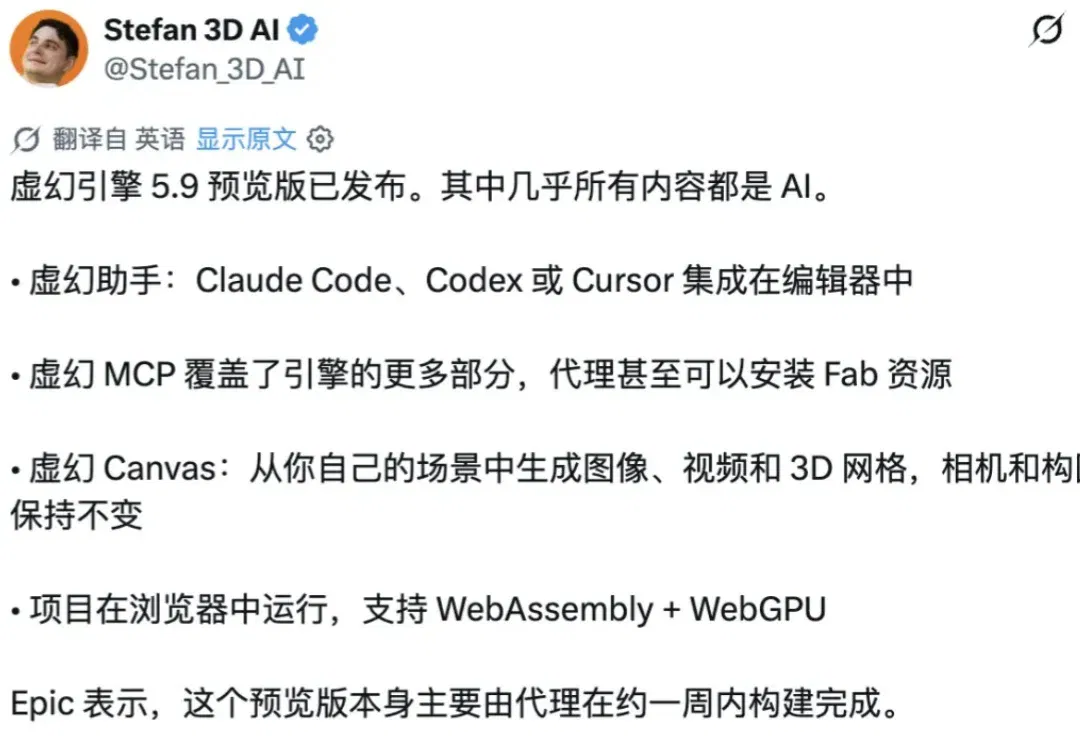
虚幻引擎 5.9 推出 MegaJam 预览版,引入智能体工作流与 Web 支持 (opens in a new tab)
Epic 称,这次预览版主要用智能体工作流移植部分 AI 工具并实现 Web 平台支持。相关功能仍属实验阶段,预览版测试周期短于常规版本。

EvoMeme 创作体验,从网页毛线游戏到本地 3D 赛车 (opens in a new tab)
体验者用盛趣游戏旗下 EvoMeme 网页端制作 2D 毛线游戏,再结合本地编程助手制作 3D 赛车,记录玩法简化、素材制作和内测限制。

Yam 将多角色互动带进 AI 恋爱模拟游戏 (opens in a new tab)
Yam 的网页产品提供赛季、章节和片段三种玩法。玩家可与多个角色发展剧情,创作者也能配置关系、场景并发布作品。

腾讯 Motus AI:把骨骼、蒙皮与动作生成接入游戏动画流程 (opens in a new tab)
读佳介绍腾讯 Motus AI 的角色动画工作台,涉及骨骼和蒙皮生成、文本或视频生动作、精修与资产排错。文章以动作规划和节点画布的体验,讨论它如何接入动画师现有流程及后续落地效率的检验。