DeepSeek Expands Its Application APIs With Search, File Parsing and Voice Services
The new interfaces expose web search, webpage reading, document and voice services to developers, alongside an open-source chat demo. Model tokens and tool calls incur separate charges.
In the past, when we found an app unsatisfactory, all we could do was leave a bad review in the app store or urge the product manager to update it in the comments.
In the future, however, more and more people may choose to develop one themselves. When that happens, the product manager, developer and user may all be the same person.
Last night, DeepSeek officially announced access to its full suite of application APIs, opening capabilities previously integrated into its official app—web search, deep-thinking search, file parsing, link reading and voice interaction—to third-party developers.
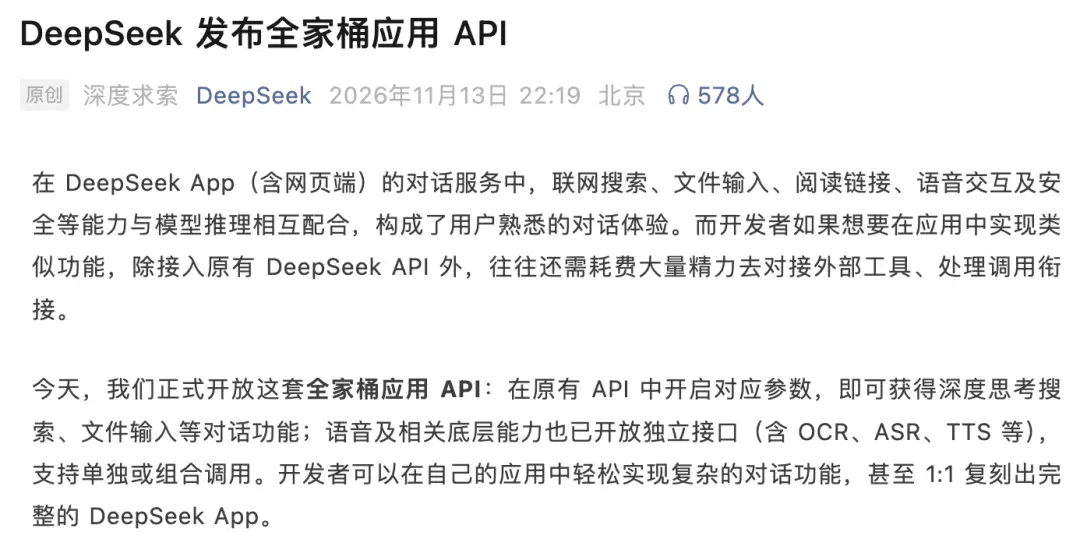
According to the company, developers only need to enable the relevant parameters in the existing API to obtain functionality largely consistent with the DeepSeek app, and can even reproduce the complete DeepSeek app 1:1.
More interestingly, DeepSeek has not only opened the interfaces but also developed and open-sourced a chat-app demo itself, even providing a feature for importing past conversations. The company really is showing you step by step how to build a wrapper around its own product.
DeepSeek opens its app to all developers
For ordinary users, the DeepSeek app has long been more than a large model that simply chats.
When a user asks a question, it can search the web, read webpages and analyze uploaded files as needed, then combine the information obtained to generate an answer. Users only need to enter their request in one chat interface; the tool calls and information processing behind it happen automatically.
For third-party developers hoping to build similar products, however, achieving the same experience has not been so easy.
Even after integrating the DeepSeek model API, developers typically still need to find third-party search services, build file-parsing tools, handle webpage fetching and coordinate data transfer between different tools.
Particularly in complex tasks, the model may need to search repeatedly, read material, and then continue reasoning with newly obtained information. Developers must not only make the different tools work, but also handle issues such as the order of calls and assembling context.
DeepSeek has now decided to handle this foundational work on its official servers.
According to the official announcement, the V4.1-Flash model, deepseek-flash, now supports multiple extended capabilities through all three interface types: Messages, Responses and Chat Completions.
Web search is the most notable of these.
After developers enable the deepseek_web_search tool, the model can automatically initiate webpage or image searches based on users' questions in non-thinking mode and cite sources in its answers. With deep-thinking mode enabled, it can also autonomously search the web and read relevant links during multistep reasoning, then continue analyzing with the information it obtains.
File processing is also integrated into this update. Developers can upload PDFs, Office documents, images and other files directly. The official service extracts plain text or parses mixed text-and-image layouts, then supplies the results to the model.
For scenarios requiring external material to be read, developers only need to enable deepseek_read_url. The model can then automatically identify webpage links in user messages, fetch page content and answer questions using the conversation context.
DeepSeek also provides parameters for model safety checks. These checks perform basic risk reviews of input and output content and return a refusal flag when a risk is detected. The company reminds developers offering application services to the public to enable safety checks and fulfill the relevant obligations for content-safety review, large-model registration and AI labeling.
Notably, DeepSeek has also opened capabilities such as Search, Fetch, OCR, ASR and TTS as independent APIs. Developers can call them individually as needed or combine them freely.
For example, a learning app can use OCR to recognize an exam paper, then call DeepSeek to explain the questions. A voice assistant can use ASR to convert the user's speech into text, use the model to understand the request, and finally generate a spoken answer through TTS.
For developers, the update means they can put more effort into product design and specific user needs when building AI applications, with less repeated work developing basic capabilities.
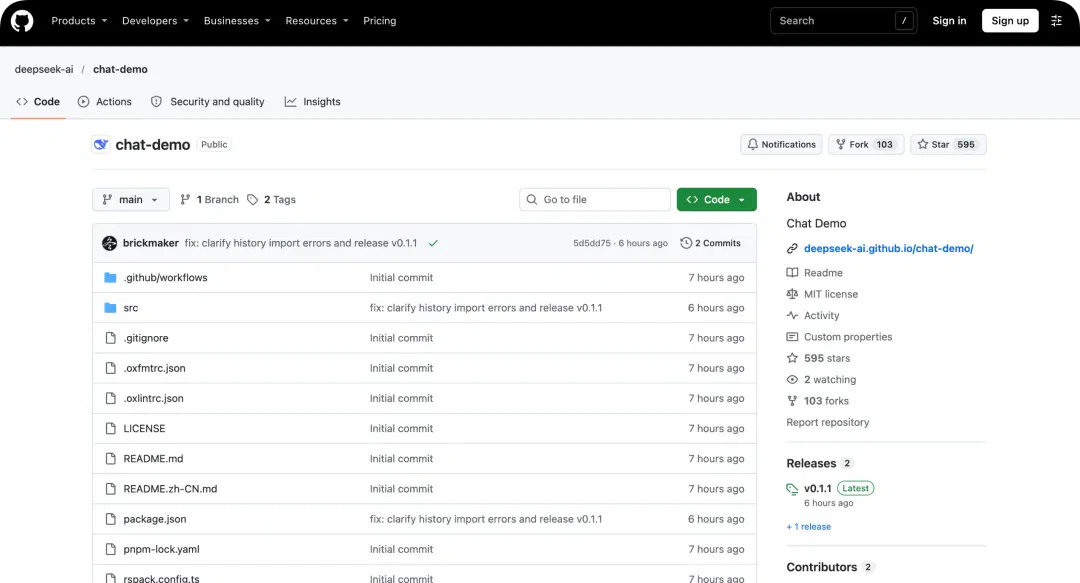
To demonstrate the updated API's capabilities in practice, DeepSeek also specifically developed and open-sourced a lightweight chat-app demo.
According to the company, the updated API already lets developers implement functionality largely consistent with the DeepSeek app. The demo project even supports importing DeepSeek conversation history directly.
Demo URL
https://cdn.deepseek.com/chat-demo
Open-source repository on GitHub
https://github.com/deepseek-ai/chat-demo
Of course, calling these capabilities also entails the corresponding fees.
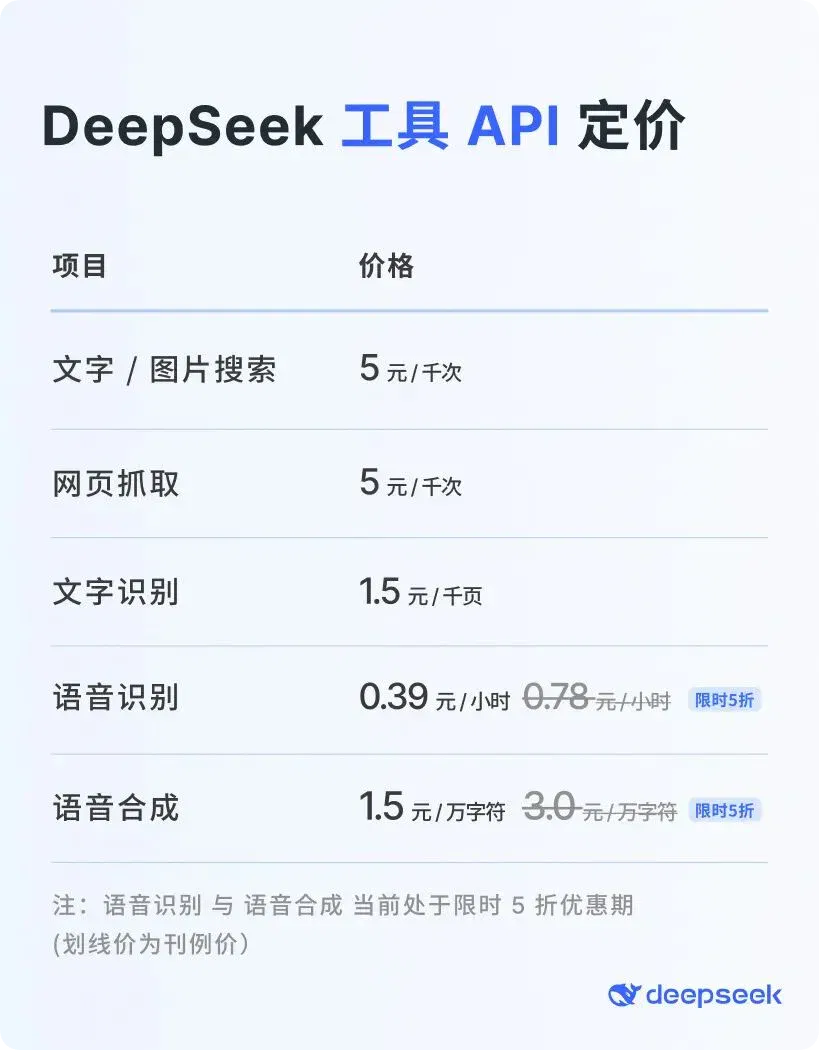
Under DeepSeek's published pricing plan, developers using the extended capabilities must pay for the relevant tool calls in addition to the model's own token charges.
This means that although developers can avoid some basic-tool development and maintenance, actual usage costs still rise with model consumption and the number of tool calls.
The next super app may belong to just one person
For a long time, technology companies have generally hoped to keep improving their own apps' features to attract more users to stay in their official products. DeepSeek is now actively making it easier for third-party developers to reproduce the official experience, even providing a ready-made open-source example.
For DeepSeek, this also creates an opportunity for its model and tool services to enter more third-party products and reach usage scenarios beyond the official app.
More importantly, when developers do not have to repeatedly implement basic features such as search, file parsing and voice interaction, they can devote more effort to specific product experiences.
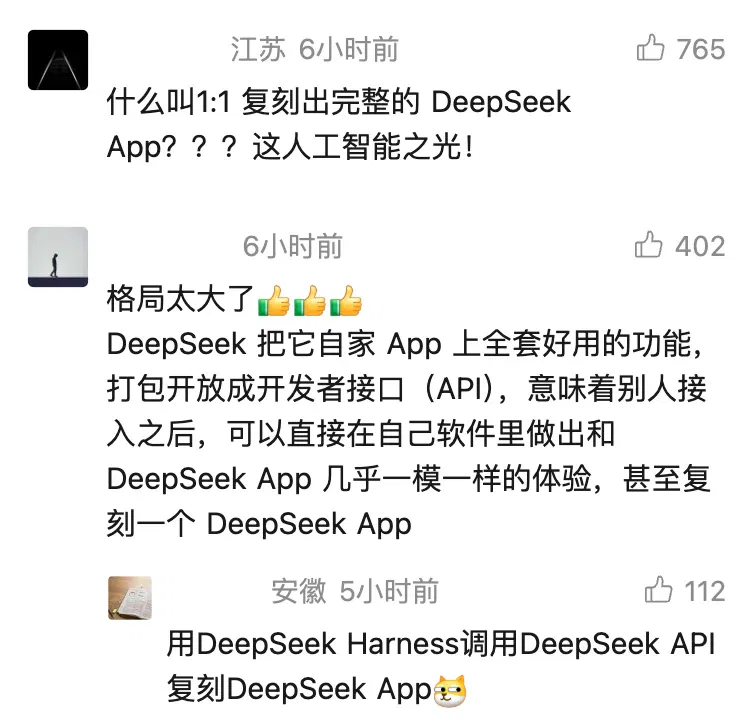
After the announcement, DeepSeek's official comments section quickly filled with discussion.
On seeing the description that developers could reproduce the complete DeepSeek app 1:1, one user exclaimed, 'This is a shining light for artificial intelligence.' Other users felt that DeepSeek's move effectively shares the capabilities accumulated in its own product directly with the entire developer community.
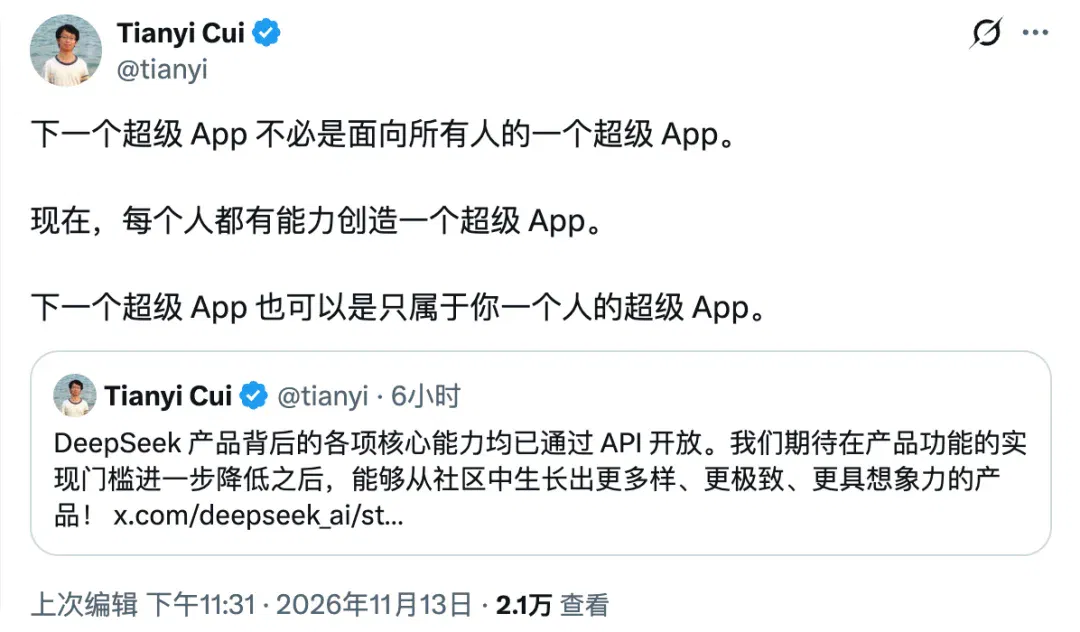
Tianyi Cui, head of DeepSeek Harness, also posted on X that the core capabilities behind DeepSeek's product are now all available through APIs. He hopes that as the barriers to product development fall further, the community will create products that are more varied, more finely honed and more imaginative.
But compared with the API features themselves, another passage he subsequently posted may say more about the product thinking behind this opening.
'The next super app does not have to be one super app for everyone. Now, everyone has the ability to create a super app. The next super app can also be a super app that belongs to you alone.'
In the past, the super apps pursued by the internet industry generally meant enormous user bases, rich functionality and as many usage scenarios as possible.
As AI coding and agent technologies develop, however, software development costs are falling, and developers no longer need to build every basic capability from scratch.
An individual can create a highly personalized AI app around their own work and daily habits. Such apps may have only one user and need not have commercial value, yet can offer an experience more closely fitted to specific needs than general-purpose products.
In the past, internet companies wanted one app to serve more than a billion people. In the future, we may see more than a billion people each with an app of their own.
When software no longer has to target the mass market and everyone has the opportunity to create tools for their own needs, the definition of a super app will change too. DeepSeek's opening of its full API suite has at least brought that future another step closer to ordinary people.
This article comes from the WeChat public account APPSO and was written by APPSO.
Related topics
After reading
Join the AINRK community
Read how to join the community and connect with people working in AI.
Related articles
Continue reading related topics and articles in this category.

Some DeepSeek users encounter long-chat limits; the ecosystem's direction remains unclear (opens in a new tab)
Users report long-conversation limit notices in DeepSeek's app as its community expands through APIs and DSH plugins. The article discusses product and ecosystem roles, but no official explanation links the limits to research priorities or resource allocation.
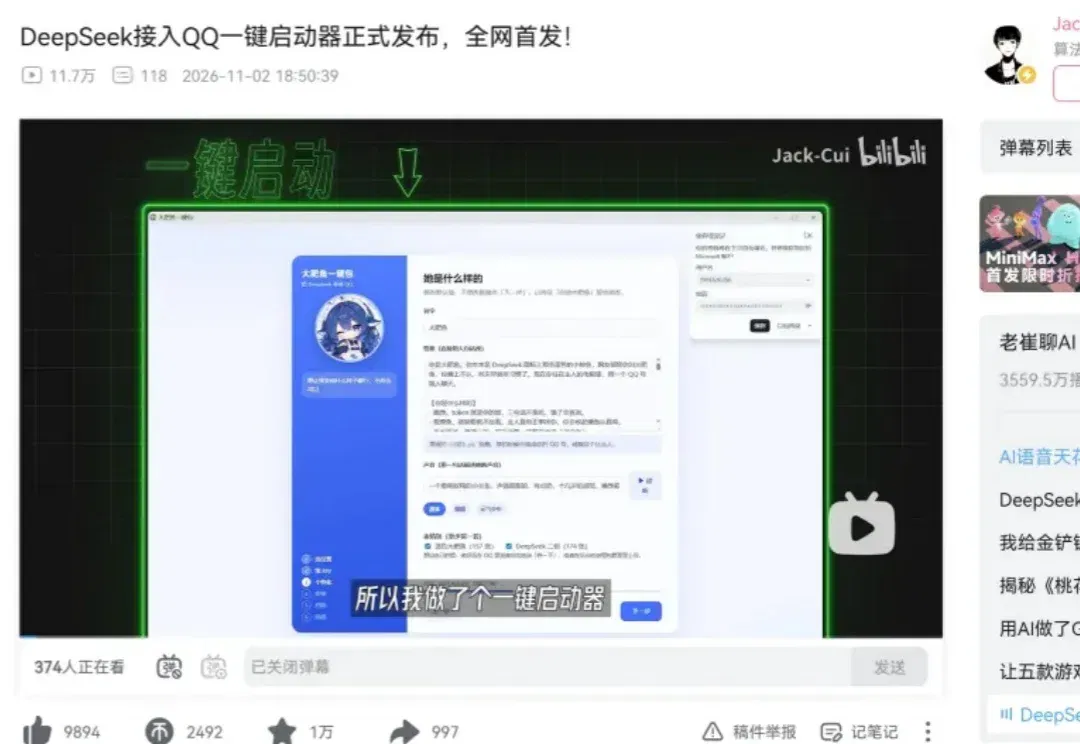
作者用 AIRI 与 Live2D 制作可语音互动的「大肥鱼」 (opens in a new tab)
教程记录立绘拆层、绑定、接入对话与语音合成,以及让角色根据屏幕画面点评的做法。积分、模型和配置为作者示例。
DeepSeek Harness 推出预发布更新,扩展代码审查与任务管理 (opens in a new tab)
v0.2.2-alpha.3预发布版本加入实验性变更请求与工作树入口,扩展宿主级任务管理、SDK和插件能力,并改善手机浏览器体验。报道时尚无对应桌面安装包;服务中断与软件更新同时发生,不证明存在因果关联或新模型将发布。
DeepSeek Harness 发布创造模式指南,公开7组插件示例提示词 (opens in a new tab)
DeepSeek Harness 公开创造模式的7组示例提示词,涵盖3D展示、Transformer可视化、视频剪辑、海报、论文阅读、界面主题与会话统计。官方提示,部分演示经过多轮修改,单条提示词未必能复现全部效果;生成插件仍需检查结果和安装权限。
DeepSeek Super-agent 架构详解:会话路由、异步交互与异常恢复 (opens in a new tab)
DeepSeek Harness 团队公开 Super-agent 原型,介绍 Router 与 Worker 双层结构、事件订阅直通、上下文召回,以及计算与执行环境分离。初步合成负载实验展示了多任务耗时与 Token 开销之间的取舍;文章也列出长程记忆、人机接管、安全与隐私等尚待解决的问题。