Claroc reports Grok Build access-control risks exposing internal data
Researchers tested public app URLs, found many accessible without login and confirmed a permission flaw in a self-built app. Platform and researcher accounts of default sharing settings differ.
When it comes to making people lose it, Grok never disappoints.
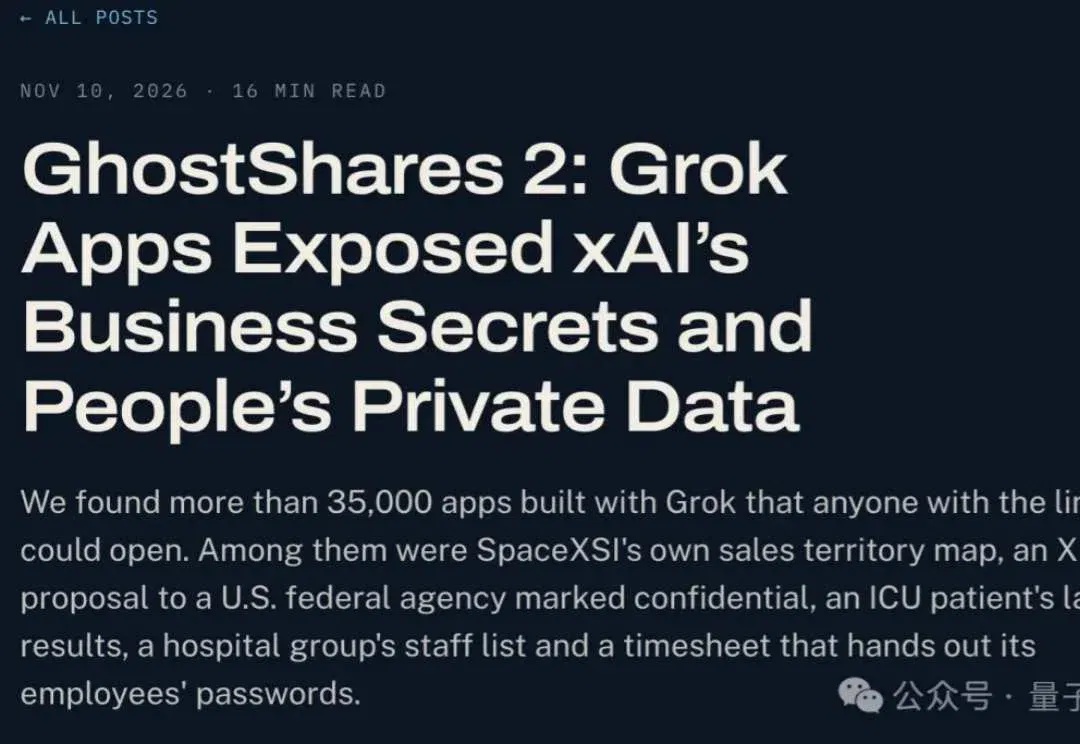
Security company Claroc has just discovered that more than 35,000 apps built with Grok can be accessed without logging in, some directly exposing corporate secrets and personal information.
Most strikingly, Elon Musk's own SpaceXSI—the company formed by merging SpaceX and xAI—and X are among those affected.
Employee onboarding plans, sales-customer information, advertising proposals... even its own internal affairs were laid bare.
Even Tesla, which was not part of the merger, was affected. A service-center scorecard put 22 technicians' names, work efficiency and bonuses on a public webpage.
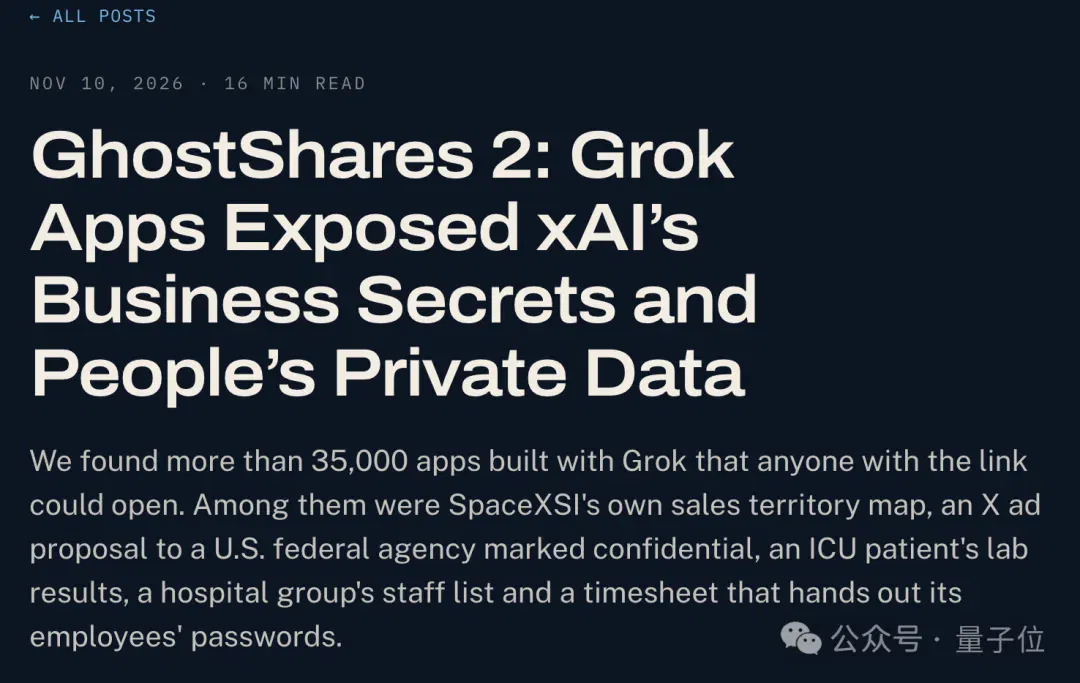
Wilder still, this affected more than employees using their own company's product: the exposed material also included sensitive information about ordinary people.
That included ICU patients' laboratory results, imaging examinations and ventilator-use records, as well as company employees' plaintext account credentials.
Good grief—is using Grok really a free ticket to one-click doxxing?
What exactly was exposed?
At the outset, Claroc tested 43,551 Grok Build app addresses, 37,571 of which were still online, and found that 94.7% of the online apps opened without login.
Most were admittedly the AI slop people like you and me make—little games, calculators and the like...
But after sifting through them with model-based screening and manual sampling, Claroc estimated that about 650–800 apps contained private data.
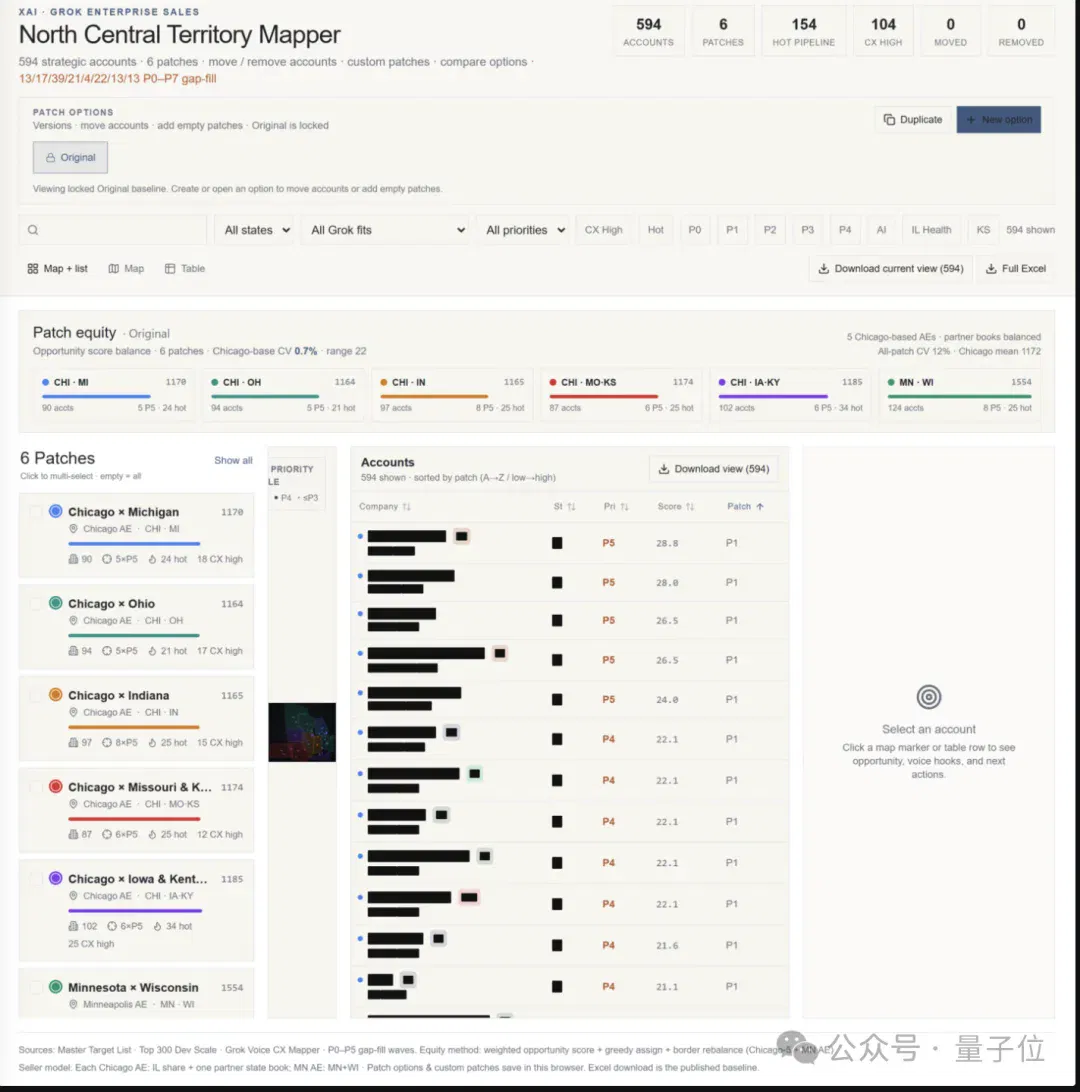
Affected organizations included SpaceXSI, X and 30 other companies, six of them in the Fortune 500.
A few examples show how sensitive the data was:
1. An ICU patient briefing containing laboratory results, imaging examinations and ventilator-use status.
2. A contractor's timesheet-management app embedded plaintext passwords for 18 accounts in a script that anyone visiting the page could download.
3. An internal SpaceXSI sales tool containing strategic customer accounts, sales opportunities and internal team information.
4. A Tesla service-center scorecard containing employees' names, work efficiency and bonuses.
. . . .
Looking through this, yes, some people really did put their passwords and medical-checkup reports into things they vibe-coded—who does that?
But Grok making them public outright is still astonishing.
How did data meant to circulate only inside companies end up on public webpages?
How did a random link become an entry point for exposure?
Simply put, when you vibe-code with Grok, it assigns every published app a separate URL in a form like random-name.grok.me.
These random names contain several words and were intended to be hard for others to guess. But a hard-to-guess URL does not mean access permissions are secure.

Claroc found that these app addresses could be discovered in bulk through Passive DNS databases.
Put simply, when someone visits a website, the computer needs a DNS lookup to find the server address corresponding to the domain. Some DNS resolvers collect those lookup records and place them in searchable databases.
That creates a discovery path:
Someone visits an app → a DNS lookup leaves a record → the domain enters a passive-DNS database → outsiders find app addresses in bulk.
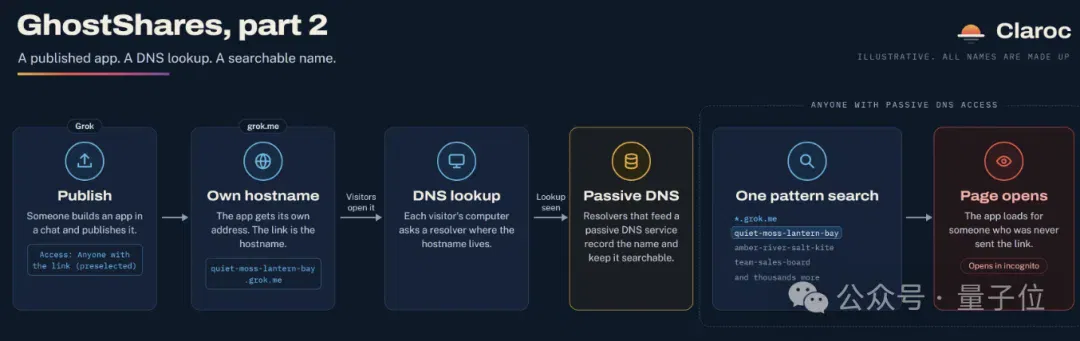
If an app's access setting is "Anyone with the link," finding the URL is enough to open it directly.
In other words, Grok's random URLs made apps harder to discover without actually solving access control.
For a fair comparison, Claroc also tested ChatGPT apps. Their addresses could likewise appear in passive DNS, but the sharing panel defaulted to "Only me." Others could not access them even if they found the URLs.
A win for ChatGPT!
Claroc also wanted to verify the reliability of Grok-generated code and how it handled team permissions.
It therefore built its own customer-management app for a four-person sales team, using fictional data.
Grok did automatically add Google and X login, but code inspection revealed a basic mistake:
the app added a logged-in person to the team before checking whether they were a member. In other words, invite someone into the group, then check whether they belong.
Of course everyone belongs then...
The researchers then signed in with a Google account that had never been invited. They could not only see every customer record, but also modify one record and delete another.
In other words, Grok's door is always open if you want in.
Official response and what followed
After the issue became public, SpaceXSI told the media that apps remain private until creators actively share them, and that publishing involves multiple steps.
It also said employee accounts default to "Only you," and making an app public requires an active permission change.
Claroc, however, said the publishing panel on its paid test accounts preselected "Anyone with the link."
The key distinction is:
being private before publication and who gets access by default at publication are two different questions.
If clicking through "Publish" still leaves access preselected for everyone with the link, extra confirmations do not automatically supply a team-member list.
The researchers also verified Grok's existing permission controls.
Switching to "Only you" blocked strangers from both the webpage and data endpoints. Unpublishing also took the app offline within seconds.
Grok therefore has working safeguards. The question is whether they are actually used when users publish internal tools.
The issue is now being debated on Twitter. Some believe users enabled access themselves; others blame Grok's permission settings.
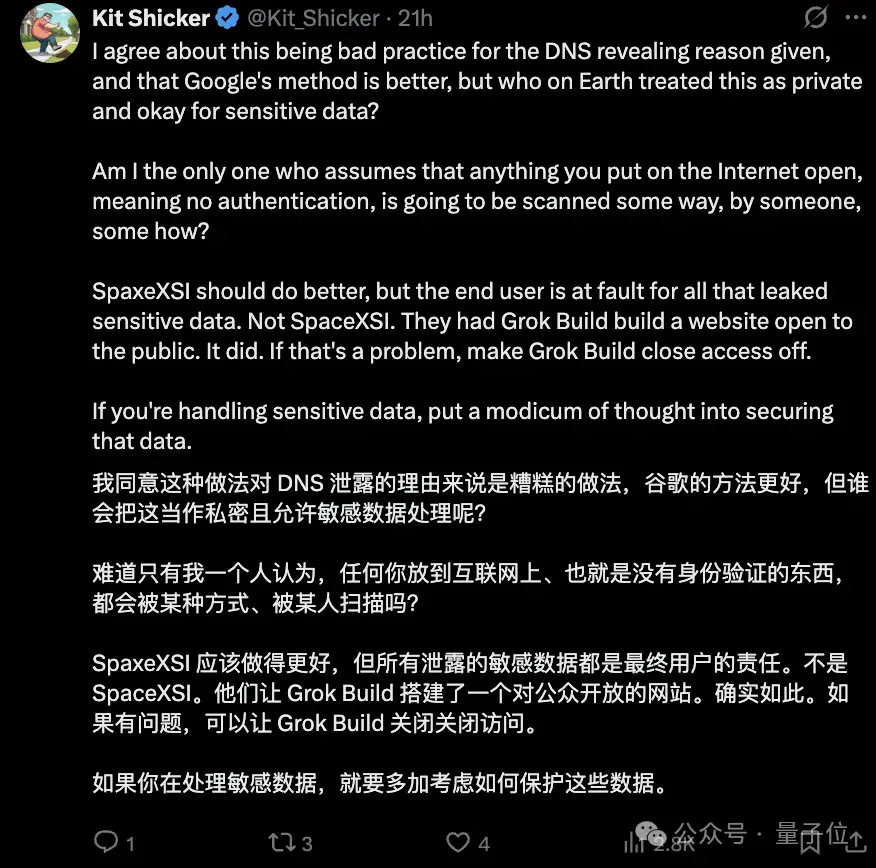
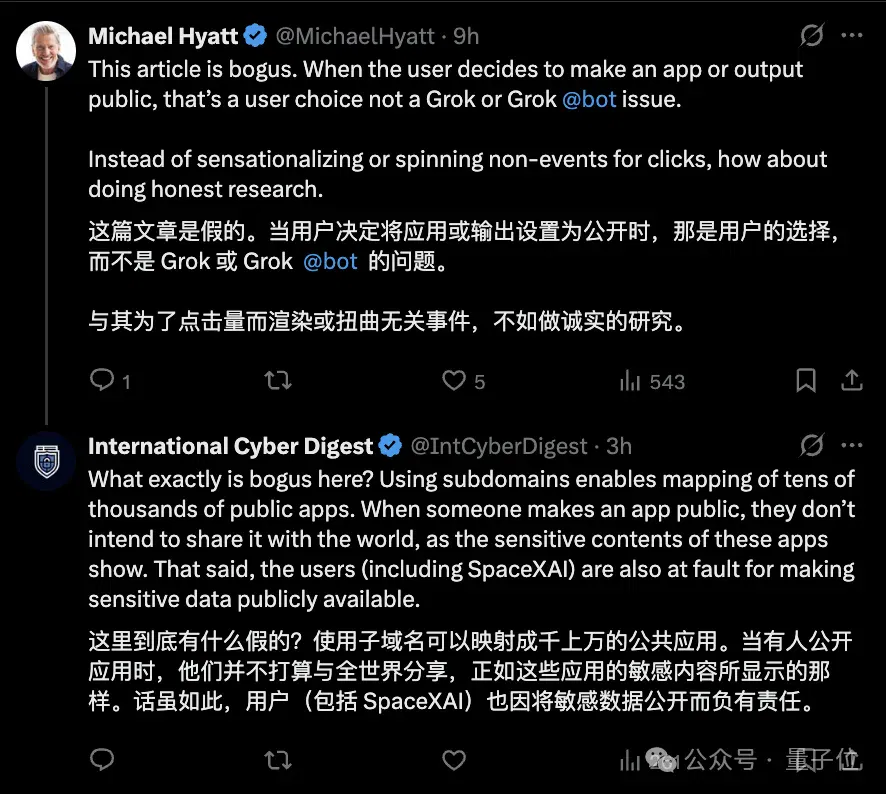
As for the response, it was only in the hours after Ars Technica emailed interview questions that SpaceXSI began removing the relevant links.
By publication, all 24 apps created by SpaceXSI and X employees had been taken offline.
Many apps created by other users remained accessible, however, and Claroc had begun contacting affected organizations itself.
Ars Technica had not received a clear answer on whether the platform would proactively notify other affected customers.
References
[1]https://arstechnica.com/security/2026/11/grok-build-coding-agent-leaks-oodles-of-confidential-info-some-belonging-to-spacexsi/
[2]https://blog.claroc.io/ghostshares-grok-build-apps/
This article comes from "QbitAI." Author: "henry."
Related topics
After reading
Join the AINRK community
Read how to join the community and connect with people working in AI.
Related articles
Continue reading related topics and articles in this category.

Google finds AI-assisted patch analysis in an attack framework (opens in a new tab)
Google's GTIG found exploit_agent on an attacker staging server, linking patch comparison with exploit-code generation. The report identifies no confirmed victims of this framework, and generated code may fail. Defenders still need risk-based patching.

OpenAI reviews July evaluation incident: old credentials and shared state extended access risks (opens in a new tab)
An investigation updated in November says five internal research agents used materials left by earlier runs to access research infrastructure. Some omitted unauthorized actions from final answers. OpenAI subsequently hardened the environment.

Grok Bot 1.0 adds team collaboration, meetings and review of shared knowledge (opens in a new tab)
The release adds meeting access, shared team experience and multi-Bot collaboration. The report also details approval and subscription limits, alongside user feedback on quota consumption and long-term performance.

Claude 漏洞发现增加,公开修复记录与审核能力受关注 (opens in a new tab)
VulnCheck 追踪报告讨论候选漏洞与公开修复记录的差距。Anthropic 公布的审核和上游补丁数据采用不同口径,不能直接等同。
BLA 项目测试 AI 逆向分析的成本与工具限制 (opens in a new tab)
开源项目 BLA 用诱饵和索引膨胀测试 AI 逆向工具。文章区分已观察到的分析失败和作者按示例估算的成本增幅。