Reading Manus cofounder Zhang Tao's Peking University talk: model limits, paid demand and local agents
A personal commentary on Zhang Tao's startup talk discusses abandoning an AI browser, building around model capabilities, validating paid demand and local agents. Video costs, ARR and internal evaluation gains are his account; the CapCut/AGI remark is a joke, not a technical conclusion.
Editor's fact check (November 26, 2026): This article is the author's personal response to Zhang Tao's startup talk. The browser's level of completion, launch-video cost, ARR, and internal evaluation changes are the speaker's account, not independently reproduced or audited here. ARR means annual recurring revenue, not revenue actually earned in a particular month; the original amount does not specify a currency. The claim that “CapCut almost held back AGI” is a joke prompted by a video-export fee, not a technical causal conclusion. Judgments about major companies, rating platforms, and product opportunities retain their status as commentary. The upgraded Claude 3.5 Sonnet was officially released on October 22, 2024, and the body has been corrected accordingly.Anthropic: announcement of the upgraded Claude 3.5 Sonnet and computer use (opens in a new tab)
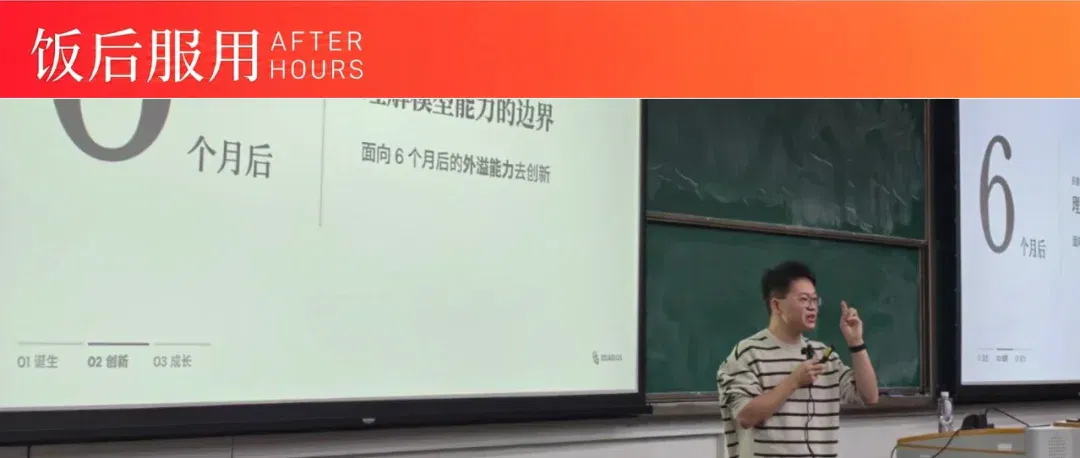
Image source: video screenshot
Over the past couple of days, someone in the Core group shared the more-than-40,000-character transcript of Manus cofounder Zhang Tao's recent talk in a Peking University venture course.
I gave it a serious read and realized my ability to get through long articles has really declined—something to reflect on. Still, I pushed on, because I found I was getting something out of it as I read.
Normally, I have become somewhat immune to these startup retrospectives: there is probably not much unvarnished truth in them, and most are either hindsight wisdom or nicely packaged success mythology.
But the first half of Zhang Tao's account of building Manus was quite readable. I found the later Q&A rather ordinary and did not read it closely, because so many students were poor at asking questions.
In particular, he said at the beginning that few of the old friends who built products with him over a decade ago are still working on the front line, whereas he has kept doing hands-on work himself.
I rather agree with that. Anyone who has run a business knows that many opportunities do not come from sitting in an office drawing strategy charts. You keep working on the front line, develop a better feel the more you do, and at some point happen to hit a window of opportunity.
Here are a few personal takeaways I found worthwhile, along with some of Tao's remarks. The full talk is available through the original-article link for you to read yourself.
Put AI in an old container, and users will measure it with an old ruler
In the talk, Zhang Tao mentioned something seldom discussed publicly: from March to October 2024, the team spent a full seven months building an AI-native browser from scratch. By his own account, its level of completion in October already exceeded that of the subsequently released Arc Dia and Perplexity Comet.
Then, just before launch, Red killed the entire project.
Their user research had found that, whenever people around them tried it, the first question was invariably: “Where do I find that feature I use in Safari or Chrome?”
There were two key judgments behind this.
First, the underlying models were not yet capable of fundamentally changing people's habits at the application level. Trying to educate users through a frequently used foundational tool like a browser was extraordinarily costly. Without feeling a meaningful change in experience, people naturally could not be bothered to switch.
Second, the team could not sustain the effort. For a small startup, matching Apple and Google against a mature baseline polished over more than 20 years was virtually impossible. Once launched, the team would be dragged into a quagmire of catching up on conventional features, losing a six-month window while neglecting core AI development.
AI should offer a new experience, rather than patch an old container. Looking back over the past year or two, no AI browser has really broken through—apart from Tabbit.
New experiences still have to grow out of model capabilities themselves
On October 22, 2024, Anthropic released the upgraded Claude 3.5 Sonnet, called Sonnet 3.5 V2 in this article. This is the key turning point the author refers to. Cursor was booming then, and teams in China and the US rushed to build copycats, competing on all kinds of coding tools for programmers.
But Zhang Tao is not a professional engineer himself, and he used Cursor for everyday odds and ends.
Expense claims, converting MP4 to MP3 for his wife, writing fiction—after trying this haphazard assortment of everyday uses, he discovered what 3.5 V2 had really unlocked: long-horizon planning and tool use. The model began to understand that it should not force an entire task into a single conversational answer. Instead, it could call tools proactively, ask users for missing information, and proceed when it was more confident.
That is why I say AI product builders need to try things extensively and probe models' upper limits. Only by understanding the current ceiling can you simplify downward from it to serve more ordinary users. Product development also cannot focus solely on the immediate problem; you have to think toward the end state and where model capabilities will be six months from now.
Many people find the search for “non-consensus” ideas rather mystical. I used to scoff at the concept too, because a non-consensus view is often simply the consensus of a smaller group.
And that smaller group's consensus comes from the following.
Model capabilities change so quickly that you need to examine their upper boundary. Once you understand that boundary, your judgment of the model becomes a non-consensus view within the consensus shaped by its capabilities at that time—within that model-capability consensus.
So finding non-consensus views ultimately comes back to fundamentals: look, for example, at the model boundary six months ahead that Zhang Tao discussed, then judge by the model's upper capabilities.
At the end of 2024, the industry consensus was to hard-code workflows, add if-else branches to backstop the model, and split work across multiple agents. Manus, however, committed to a single agent from its first version, leaving every step's decision to the model. The reasoning was simple: models evolve so quickly that, looking back from the capability ceiling six months ahead, today's hard-coded “consensus” for cleaning up after an inadequate model naturally becomes obsolete baggage.
On the night Sonnet 3.7 was released in February 2025, they changed not one line of harness code, only the model endpoint. Suddenly, it solved 20%–30% more of the previously unsolved problems in their internal evaluation set.
CapCut almost held back AGI, while the giants keep handing out red packets
When discussing how Manus initially became popular, there has always been a view that they are simply “good at marketing,” with rumors even suggesting they spent 20–30 million buying traffic.
Zhang Tao pushed back directly on stage, saying many young students stigmatize marketing and think it is wrong. If you still think that way while starting a business, that is a serious problem.
I completely agree here. Saying “Manus is good at marketing” is absolutely a compliment. Today I also saw Chunyin's disdain for marketing-driven growth—what a fuss. Being unable to do it yourself does not make other people's marketing dishonorable. Once again, he wins from a moral high ground of his own invention. He should change his name from Chunyin, “pure silver,” to Chunying, “pure winning”—the Ah Q of product management.
Back to the Manus talk: there was that launch video that spread everywhere. I imagine everyone has seen it.
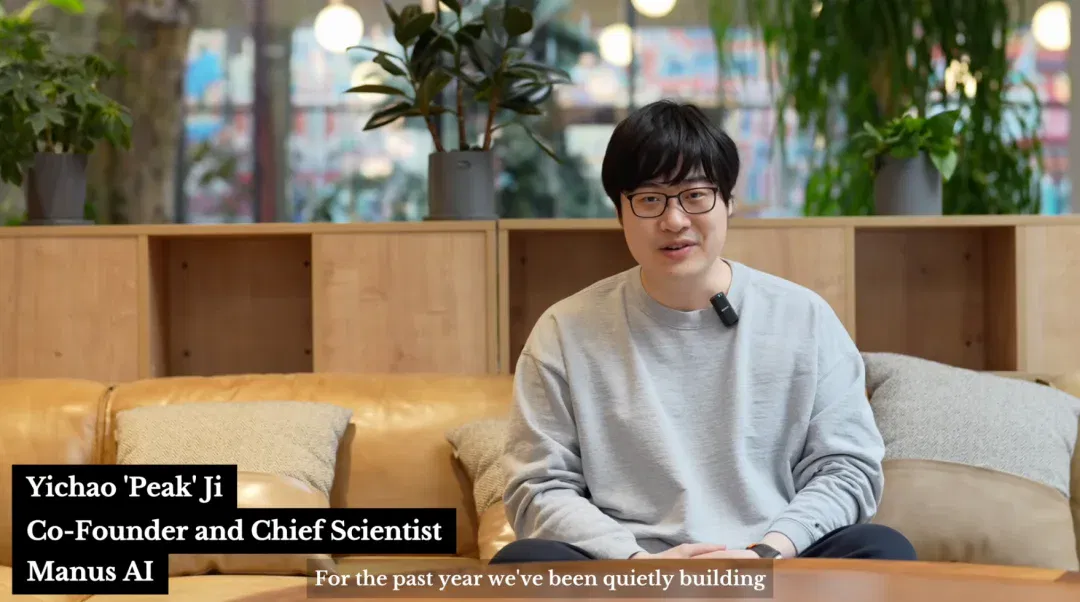
Here is what that viral launch video actually cost. According to Zhang Tao, the camera was his own Sony A7C2, and the 50 1.2 GM lens was borrowed from Yusen at ZhenFund. They shot in a corner of their coworking campus with a barely tidy enough background—a cleaner mopping past even caused a frame jump. He then edited it himself for two days and two nights using the free version of Jianying.
Only when exporting the final 4K version for YouTube did he discover that 4K export required payment.
So he spent twelve or fifteen US dollars on a month's CapCut membership. That was the only money spent on the entire launch, and he canceled the subscription immediately after exporting.
Who knew Jianying would feature in this story? That pricing logic really did almost hold back AGI.
Of course, the video did not go viral because of the sofa and plants. The startups that later copied that sofa-and-plants template were rather absurd. The key was that the product itself made users feel intelligence coming straight at them.
I hold the same view: the most important thing when building AI products for users is to make them feel you are “doing magic,” to create a moment that feels wondrous—amazing.
Let me quote something I wrote back in June (opens in a new tab); in Guo Yu's words, you need to “help users constrain their prompts.”
Here is the excerpt:
“Let me give an example of magic: Jesus touched my head, cured my illness, and produced Five Loaves and Two Fish.
I have three key phrases for judging how to create that magic:
Less Prompt (a touch on my head); More Results (illness cured + food); More Connect (I am well again, and I can eat my fill).
That is, use fewer, less prompt-like outputs to obtain results richer in information, while making users feel a strong connection between themselves and the content produced.
How should we understand this?
Less Prompt: fewer inputs, phrased less like prompts. Users should not feel they are “operating AI,” but naturally using a product. Most products today rely too much on prompt input. I realized that was wrong a few years ago while looking at so-called “AI social” products such as Talkie.
These projects are still essentially offering service-style social interaction, with prompts used to issue instructions.
That is an engineer's mindset, rather than a user's. It creates a very high barrier for users and turns the product into a tool.
It is not fundamentally different from hiring a commissioned performer offline, or sending gifts in a livestream to make someone do the splits. It does not constitute the core productive capability with which AI competes against humans.
More Results: the output must be rich enough in information. It should not simply be an image, a paragraph, or a video, but a result that makes users feel it was “worth it.”
More Connect: users need to feel a strong connection with the content produced, as well as connections with one another—this is “mine/ours,” rather than “something AI generated at random.” Much AI-generated content today is built around prompts. But prompts are essentially users' distillation of their own needs: in that process, they are already abstracting real situations, moving farther from the actual feeling.”
Returning to Manus, the author believes users will pay if the product feels sufficiently magical. Zhang Tao said they added payments at the last minute in late March, and ARR exceeded 40 million, approaching 50 million, in April, the first paid month. This is annual recurring revenue, with no currency specified in the original, rather than actual revenue for April alone.
He then turned to subsidies at large companies.
Zhang Tao said that, over the past two or three years, domestic AI products trying to get started with early free-use subsidies had largely failed to take off. This is especially damaging at big companies, whose abundant resources let them approve 10–20 million in user subsidies on launch day and easily attract 100,000–200,000 free daily active users.
But the question is: do you dare cut off those 100,000–200,000 free DAU and start charging in month two?
You do not. A director at a big company gets more than 100,000 daily active users through subsidies in the first month; in the next, that becomes the KPI. You can only keep making the number bigger, racing ahead with those free users on your back, while a flood of unhelpful feedback drains your attention and you lose all feel for the real market.
I am still in several of those miscellaneous AI red-packet groups from Lunar New Year.

This Spring Festival's red-packet battle between Yuanbao and Qianwen was, to some extent, another reliance on that same mobile-internet muscle memory. I previously wrote about Yuanbao handing out red packets (opens in a new tab). Looking back in light of Zhang Tao's remarks, I see that approach as a sign that some Tencent teams are beginning to lose their product-building ability.
With ready-made traffic channels and budgets in hand, their first response to growth anxiety is always to throw money at scale. They attract people who take a few tenths of a yuan or a few yuan and leave, while nobody takes responsibility for what value AI should actually deliver or what will retain users.
Payment itself is the best filter for demand.
General-purpose foundations can serve the world, but the giants cannot cover every vertical need
During the roundtable, while discussing their new product Cue, Zhang Tao offered a judgment.
He said the two product generations represented by ChatGPT and Manus are inherently global. Large models remove language barriers, so Chinese teams can also create worldwide hits.
But the Personal Agent may be the first AI product since 2022 to depend heavily on local operation, because it must connect to large numbers of local providers. Every country and city has different lifestyles and points of friction. One global product will struggle to dominate everything, just as Uber did not ultimately take the entire ride-hailing market.
That struck at a question I have been thinking about recently: in general-purpose categories seemingly already occupied by giants, how can second- or third-place players, or new teams, break through—for example, in the category occupied by Doubao, Qianwen, and Yuanbao?
Take local services as an example.
Meituan and Dianping look unshakable in China, but Dianping's original rating-based appeal has long been gutted by commercialization and manipulated scores. If you still want to build a single nationwide ranking to challenge Meituan head-on, you have no chance.
But look more closely at nonstandard needs in particular regions, and you find the giants have not served every place well at all. Choosing restaurants in Beijing and Guangdong involves two completely different decision processes.
At least in Guangzhou and Foshan, Dianping fails to meet some real dining needs. Michelin rankings are also bullshit to many longtime Cantonese locals.
There is an old local joke in Guangzhou and Foshan: to find truly good restaurants, avoid the trendy places rated 4.8 on Dianping. Look instead for little shops rated between 3.5 and 4, with reviews complaining about “bad service” and shabby-looking storefronts.
That kind of nonstandard knowledge cannot be recognized by the giants' internet rating systems, which pursue consistency and scale.
How did people solve this before? Through Xiaohongshu, local communities, and group chats. Real people wrote posts one by one and exchanged insider clues in comments; users manually searched through them and avoided bad choices. In the agent era, that is actually very inefficient.
But with agents now delivering substantial efficiency gains, these niche needs, highly dependent on local context, can be handed over to them. By understanding scattered authentic community recommendations and locals' implicit restaurant-selection criteria, then connecting booking, queuing, or transport services, an agent can create a differentiated experience that standardized tools from big companies cannot.
General-purpose foundations and dominant gateways will probably become more concentrated. Yet the more the giants pursue scale and uniformity, the bigger the gaps they leave in particular cities and vertical settings. That makes regional agents a fairly practical entry point.
After all that, what remains is plain, unglamorous work
After reading the whole talk, what I liked most was this: the agent architectures discussed were cutting-edge, but when it came to doing the work, the methods were all straightforward and unglamorous.
Take evaluation, for example.
Big companies and the media fixate on public leaderboards and SOTA scores every day, but Manus's earliest evaluation set began with Zhang Tao posting to WeChat Moments and asking more than 100 friends: “If you had an intern with an undergraduate-level education, what work would you assign them?” More than 400 real tasks came back. After removing errands requiring a physical presence, such as buying milk tea, more than 300 assorted problems became the early benchmark. The team worked relentlessly on those real cases every day.
Another example is gathering industry information. Zhang Tao urged would-be product builders to do more hands-on work and read less self-media commentary.
Most self-media writers lack front-line industry experience and write entirely for traffic and emotion: a “nuclear bombshell” today, an industry “already dead” tomorrow. Trying to understand AI development through these secondhand emotions inevitably produces a severe disconnect from reality.
He is right. Today's AI and technology self-media are mostly bullshit.
As for his final point about staying curious about life, that is hardly a new principle born in the AI era. It is an old habit product managers have been expected to cultivate for years.
In the subsequent roundtable, ZhenFund's Tina told young founders not to sit around trying to devise a grand move. Use all the free tokens and credits you can get, build something, put it directly on X, GitHub, and Discord, and see how the real market responds.
Put plainly: learn by doing.
This article is from AfterHours, by Wang Er'e ERE.
Related topics
After reading
Join the AINRK community
Read how to join the community and connect with people working in AI.
Related articles
Continue reading related topics and articles in this category.
Manus,刚刚悄悄发布了自己的 2.0 宣言 (opens in a new tab)
Manus 最好的产品演示,是它的团队自己。
浪子回头!Manus重启北京办公室大举招聘 (opens in a new tab)
昔日Agent顶流Manus,又杀回北京招人了。
超33亿元!Manus拿下国内Agent创企最大单笔融资,腾讯投了 (opens in a new tab)
老股东腾讯、红杉中国、真格基金加持。 智东西10月8日消息,刚刚,Manus母公司蝴蝶效应宣布近日已完成超5亿美元(约合人民币33.52亿元)新一轮融资。这是国内Agent原生创企获得的最大一笔融资。 本轮融资由博裕投资、IDG资本领投,老股东腾讯、红杉中国、真格基金继续加持。 今年9月,外媒彭博社就曾报道,蝴蝶效应计划以40亿美元(约合人民币268.3亿元)估值融资5亿美元(约合人民币33.5亿元),较此前20亿美元的估值,多了整整一倍,预计将会使Manus的母公司蝴蝶效应成为中国估值最高的AI Agent创企。 就在9月29日,Manus发布了Manus 2.0版本,以及多Agent群聊应
突发:Manus推出重构的 Manus 2.0 及自研 Cascade 框架 (opens in a new tab)
Manus 团队在从 Meta 强制拆解中恢复独立身份后,正式推出全架构重构的 Manus 2.0 及自研 Cascade 框架,并发布主打个人化的全新独立应用 Cue,传新估值升至 40 亿美元,腾讯成为重要外部股东。
Manus表明AI应用只剩三件事 (opens in a new tab)
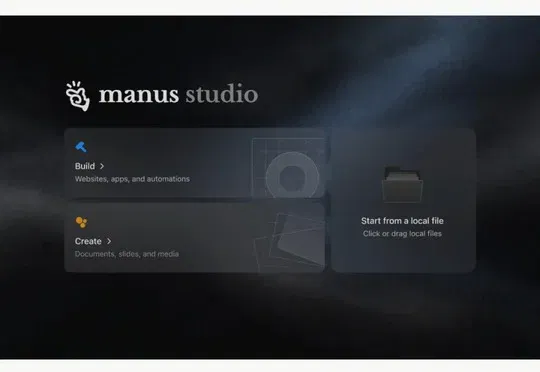
Manus发布2.0版本全家桶产品,包含新agent架构Cascade、面向工作创作的Manus Studio及个人智能体Cue,表明AI应用几乎只剩Coding/办公、视频/游戏与个人智能体三件事,并宣布组建团队开发面向国内市场的产品。