From University Publicity to Online Product Photos: AI Content's Costs, Trust and Aesthetic Debates
Using Kindai University videos, Japanese election posters and AI product photos, the article examines generation costs, authenticity and aesthetics. It distinguishes labeled fiction, survey findings and unproven allegations of improper profit; its aesthetic conclusions are the author's commentary.
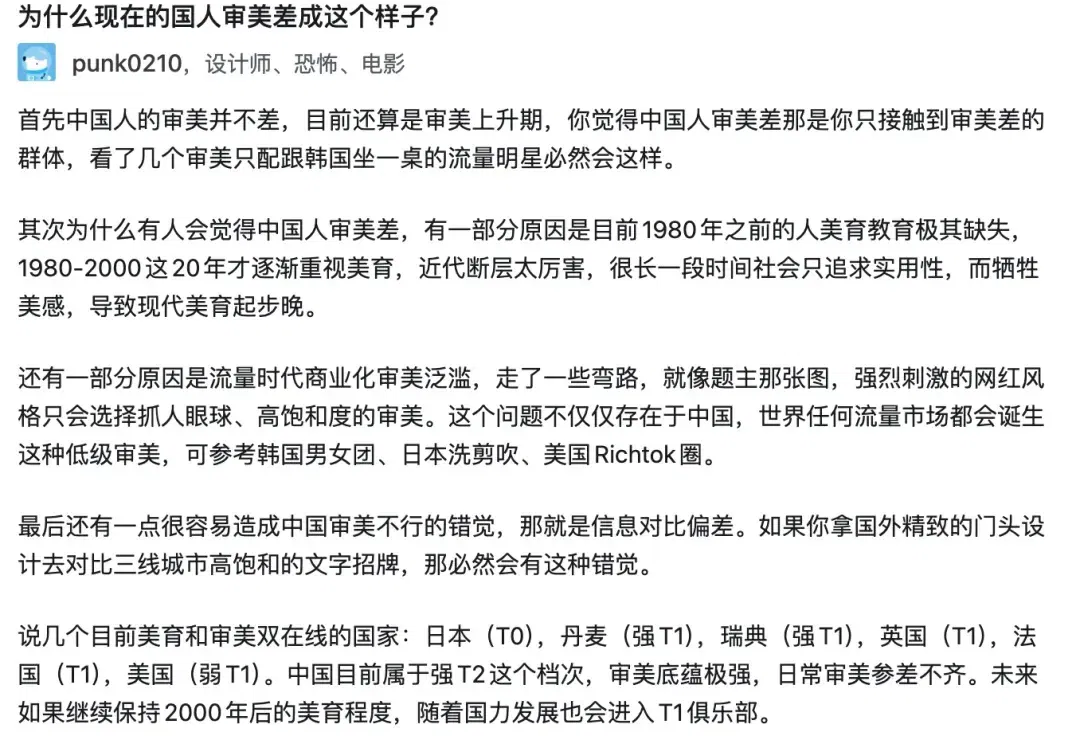
In almost every post discussing aesthetic education in China, you will see commenters drawing comparisons with "Japan."
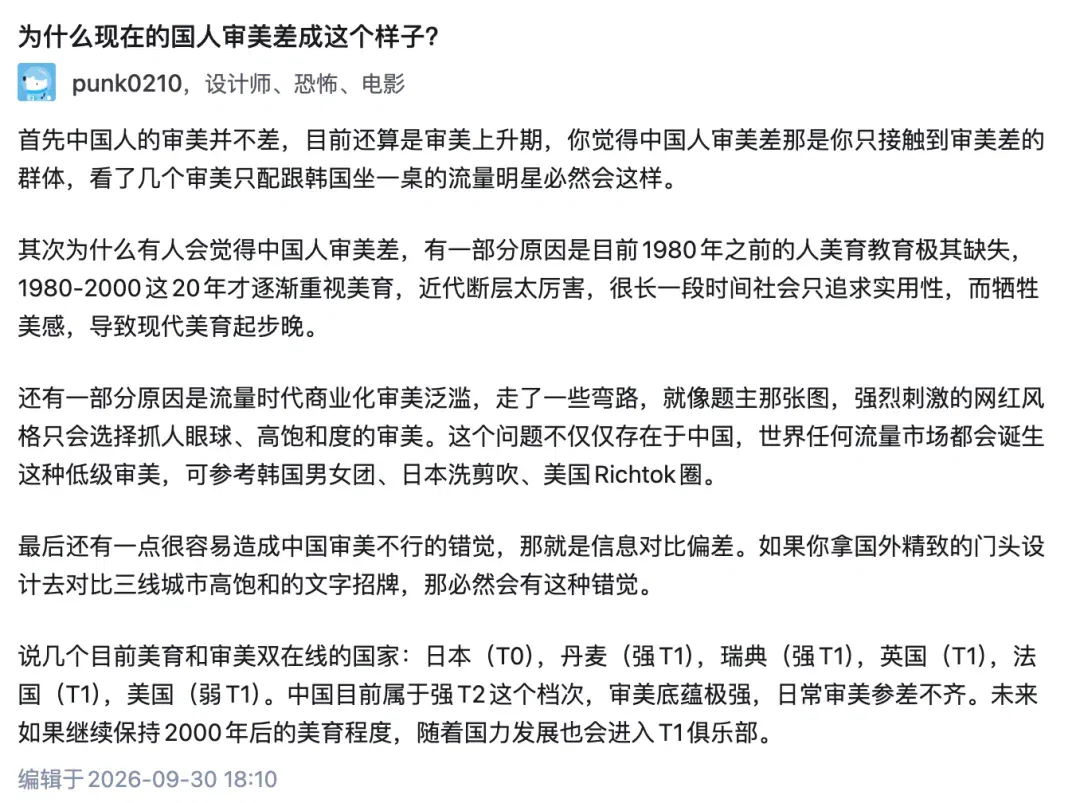
But Japan has started using AI like crazy.
Recently, the official website of Japan's Kindai University suddenly went viral on social media. Open the page, and you are greeted by promotional footage with an unmistakable AI look. The university's website has become a showcase for video-generation models.
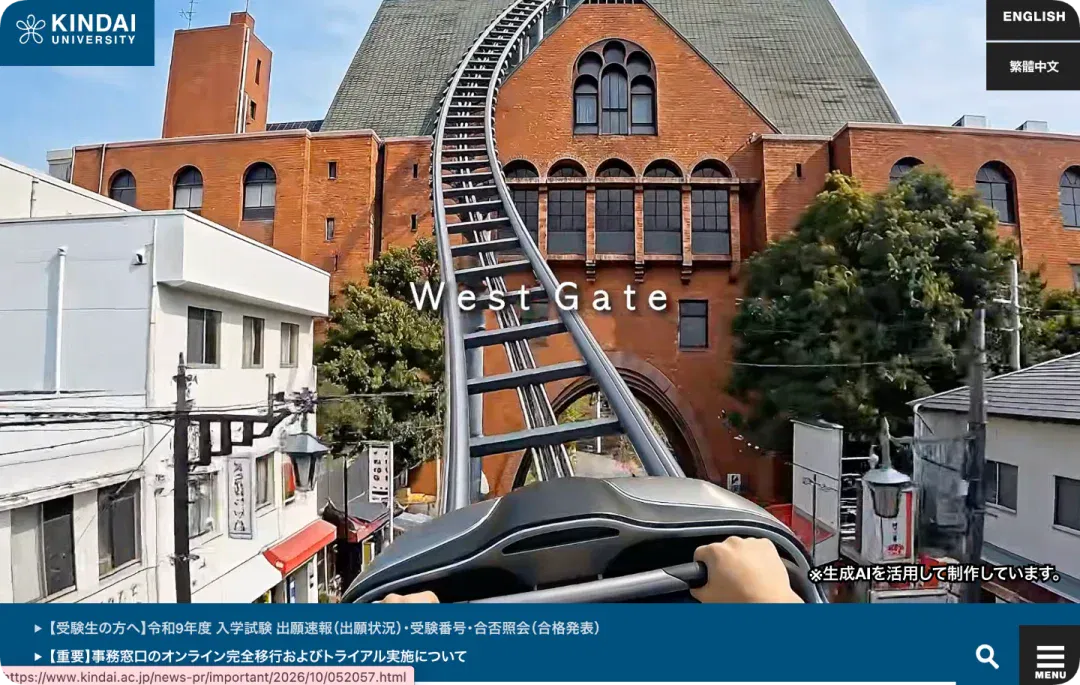
Kindai University's official website 👉: https://www.kindai.ac.jp/
Similarly, AI-fabricated faces of candidates have begun appearing on Japanese election posters.
After Suddenly "Seeing the Light," Japan Goes All In on AI Promotional Posters and Videos
If you have opened Kindai University's website recently, you may have wondered whether you were on the wrong site.
Kindai University has placed AI-generated moving images right on its homepage, full of exaggerated motion and the visual traces distinctive to generative AI. The university makes no attempt to hide this: the homepage explicitly states that the content was made using generative AI.
This April, Kindai University played a similar AI video at its entrance ceremony: students board a fictional roller coaster, set off from urban Osaka, fly over landmarks such as Osaka Castle and Dotonbori, and then follow the tracks into the university campus, finally arriving at the memorial hall where the ceremony is taking place.
The entire video uses a first-person perspective, as if someone had built an amusement-park roller coaster through central Osaka.
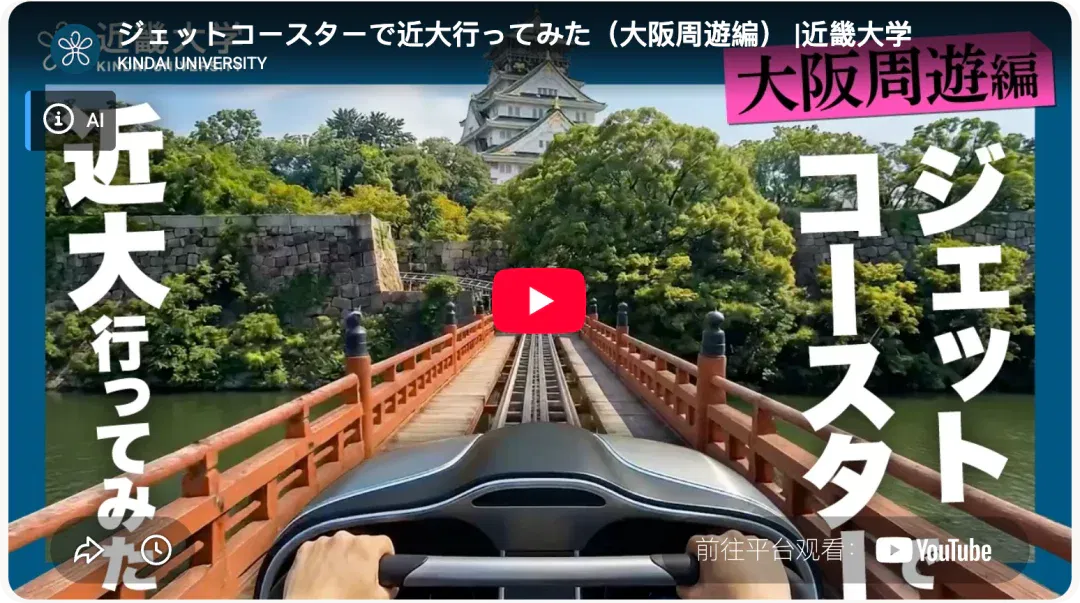
According to an ITmedia interview, the video was made by overseas creator Ssestar. The university provided real footage of the campus and surrounding streets, including some drone footage, which the creator then used to produce the video with AI.
Published reports citing a Yomiuri Shimbun interview state that
the video cost about JPY 400,000 to produce, equivalent to roughly RMB 18,000.
Its reach was quite impressive. By early June this year, the video had received around 470,000 views on Instagram, while related exposure on X exceeded one million. It also attracted coverage from several Japanese technology outlets.
At the entrance ceremony, when the roller coaster in the video hurtled toward the memorial hall, students even instinctively turned around to look for the coaster that did not actually exist.
Of course, the website footage contains textual errors and details that do not quite make physical sense. Some viewers noticed that the landmarks' locations did not match reality, and some signs displayed the errors common to generative AI. The university explained that the film was explicitly labeled as fiction from the outset and that it hoped viewers would enjoy it as entertainment.
In recent years, Kindai University has been advancing its vision of an "AI-native university."
In September 2026, it signed a comprehensive partnership agreement with Google Cloud to provide the paid version of Gemini to around 21,000 people: first- and second-year students across all 16 faculties, along with faculty and staff.
Starting in October, it launched a trial of generative AI features in its student portal app, KDU Mobile, initially covering around 5,151 students in the Faculty of Science and Engineering and the Graduate School of Science and Engineering. Gemini answers questions about timetables, announcements and syllabuses, with the aim of making student support available around the clock as far as possible.
It then introduced Paperpal, an AI English academic-writing support tool, distributing 4,000 licenses to full-time faculty and doctoral students. These moves follow a consistent direction: bringing generative tools from peripheral experiments into the center of daily operations and brand expression.
University publicity has to attract applicants while also communicating a sense of identity to alumni and society.
Kindai University was never particularly concerned with maintaining a traditional image. Back in 2015, it used the advertising line "Who called us Tuna University?" In 2017, it promoted "Waseda, Keio, Kindai," placing itself alongside Japan's famous private universities Waseda and Keio. In 2023, it even joked about itself with "Nowhere on the sophisticated university rankings."
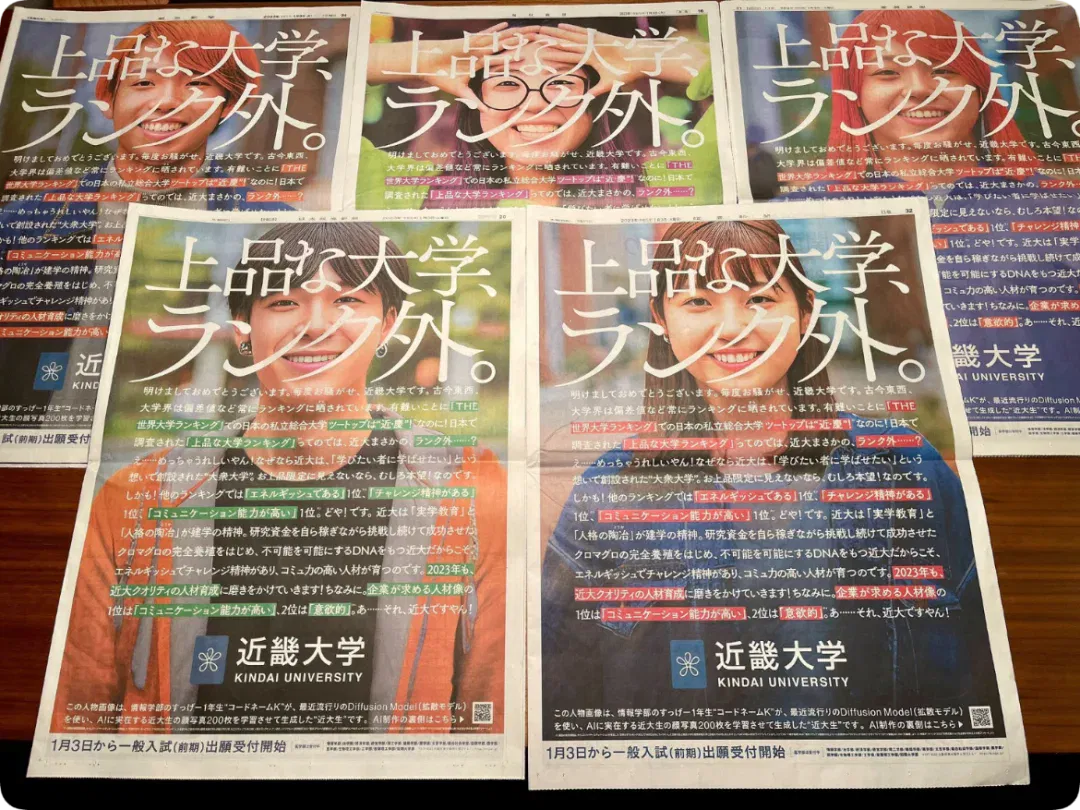
The advertisement used images of virtual Kindai students generated by AI after learning from 200 facial photographs of real Kindai students
This irreverent publicity has instead become a memorable part of the university's brand. Now, the school nicknamed "Tuna University" for its tuna-farming research has found a new formula for promotion.
This month, Kindai University launched another AI promotional series for 2027 admissions, All Aboard! Destination: Kindai University, in which high school students from across Japan travel toward campus in fictional vehicles.
Handsome but Fake Candidates
On November 15, a city council by-election was held in Amagasaki, Hyogo Prefecture, Japan.
Twelve candidates competed for one vacant seat, and the 575 election-poster boards around the streets were filled with candidates' photographs, names and campaign slogans.
Four of the posters looked particularly strange.
One male candidate looked remarkably young, with features so refined they seemed unreal; another man even had tattoos on his arm. Rather than traditional politicians' headshots, these posters looked somewhat like character concept art exported straight from AI illustration software. On social media, some joked, "Are we electing virtual characters?"
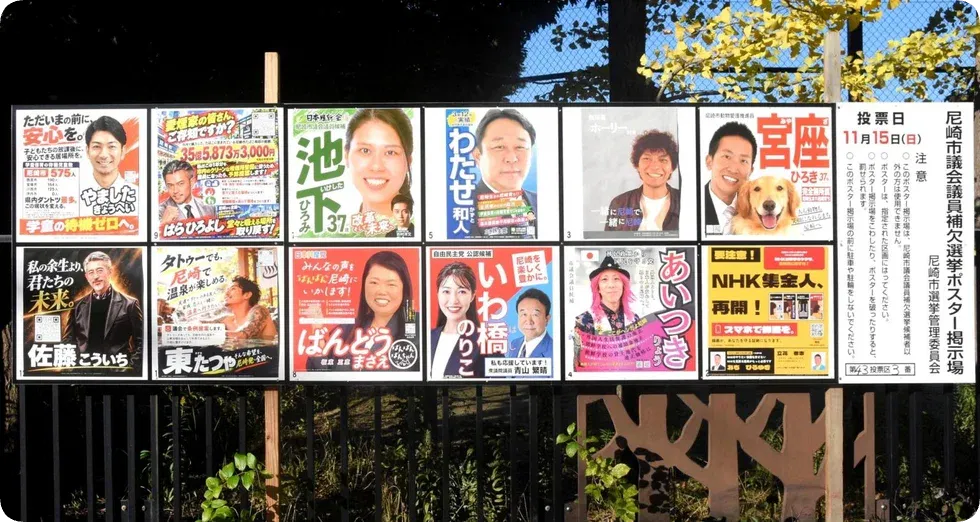
Image source: Kobe Shimbun
Local newspaper Kobe Shimbun noticed the phenomenon and subsequently used AI-content detection tools to investigate, finding that posters for four of the 12 candidates might have used AI generation. Amagasaki's election administration commission said that the man's face on at least one poster was completely different from the actual candidate's.
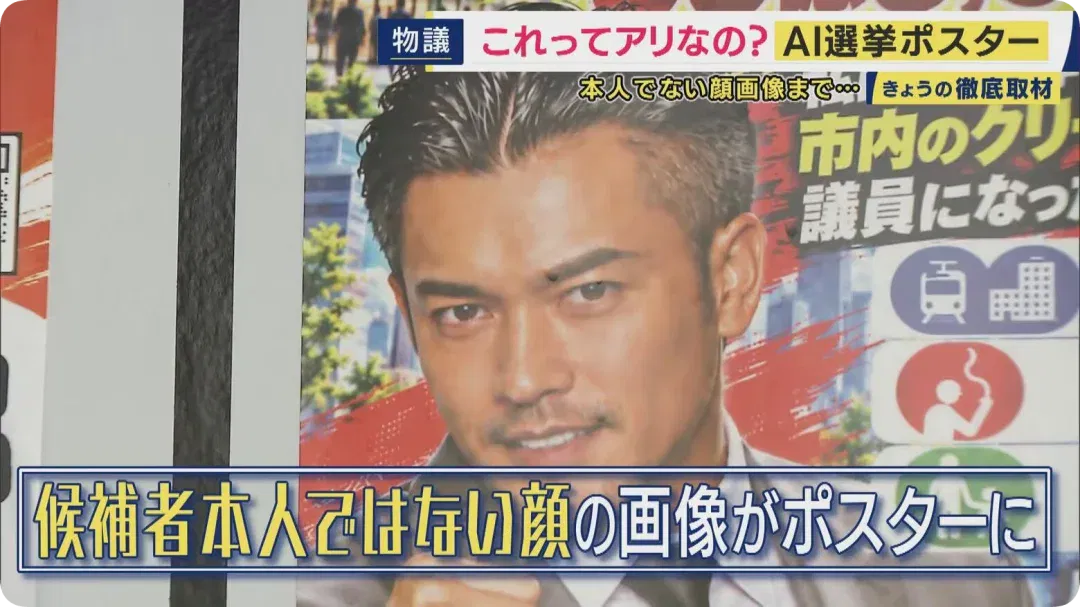
Under Japan's Public Offices Election Act, election posters must meet requirements on dimensions, identification of the responsible person and other matters, but there is no explicit requirement that a person pictured on a poster show the candidate's actual face. Even if election administrators consider a photograph inappropriate, it is difficult to demand its replacement on that basis alone.
The four candidates shared something else too. Their candidacy registrations had all been handled by former Hyogo prefectural assembly member Hikoharu Konishi or his secretary acting on their behalf. Election administrators had not even met some of the candidates in person, and received no cooperation when they requested identity verification.
Kansai Television's news Runner, broadcast on November 16, finally tracked down their representative, Hikoharu Konishi. Asked by a reporter whether the people on the posters were the actual candidates, he admitted using AI and explained that the faces were merely "illustrative images."

Hikoharu Konishi directly admitted on the program that the posters used AI-generated images, saying they were "for reference only"
In other words, voters were seeing a different face that did not exist at all. AI images can turn an ordinary person into an elite-looking figure, and can also put a face that has never existed onto an official election poster.
According to Kobe Shimbun, poster-production costs for this Amagasaki by-election could be publicly funded, up to JPY 612,375 per candidate.
An election-poster production company interviewed by Kansai Television raised a concern: if someone generated images at extremely low cost and then declared a higher production expense, there could be room for profit.
There is currently insufficient evidence that these four people obtained improper benefits this way. Responding to the concerns, Hikoharu Konishi said production costs were a matter between the candidates and their contractors, and that the relevant procedures complied with election rules.
Ultimately, all four candidates who used AI posters lost. However, they received enough votes to qualify under the rules for the return of their election deposits of JPY 300,000 each.
Japan has also begun adding rules for AI election publicity. An amendment to the Public Offices Election Act promulgated in July 2026 will take effect on March 1, 2027, requiring relevant AI-generated or AI-altered imagery distributed over the internet to be labeled as AI content where the specified conditions apply.
But this new rule primarily targets online distribution and cannot directly resolve whether printed posters on Amagasaki's streets use photographs of the actual candidates.
AI Everywhere in Life: Real E-Commerce Photos Are Becoming "Intangible Cultural Heritage"
Chinese consumers may be even more familiar with similar situations.
Three arms, six fingers, two legs crammed into the same trouser leg, or even upper and lower bodies facing different directions—images that once belonged only in horror films now occasionally appear on ordinary product-detail pages.

Image source: Jiangnan Metropolis Daily
A normal product photograph has somehow become a scarce resource that requires careful searching.
On November 3, CCTV News reported on the appearance of "three-legged models" on e-commerce platforms. Industry practitioners explained that AI model images have now developed into a mature commercial workflow. Sellers need only upload clothing images and choose a person and setting to generate what looks like a fairly complete product-display image.
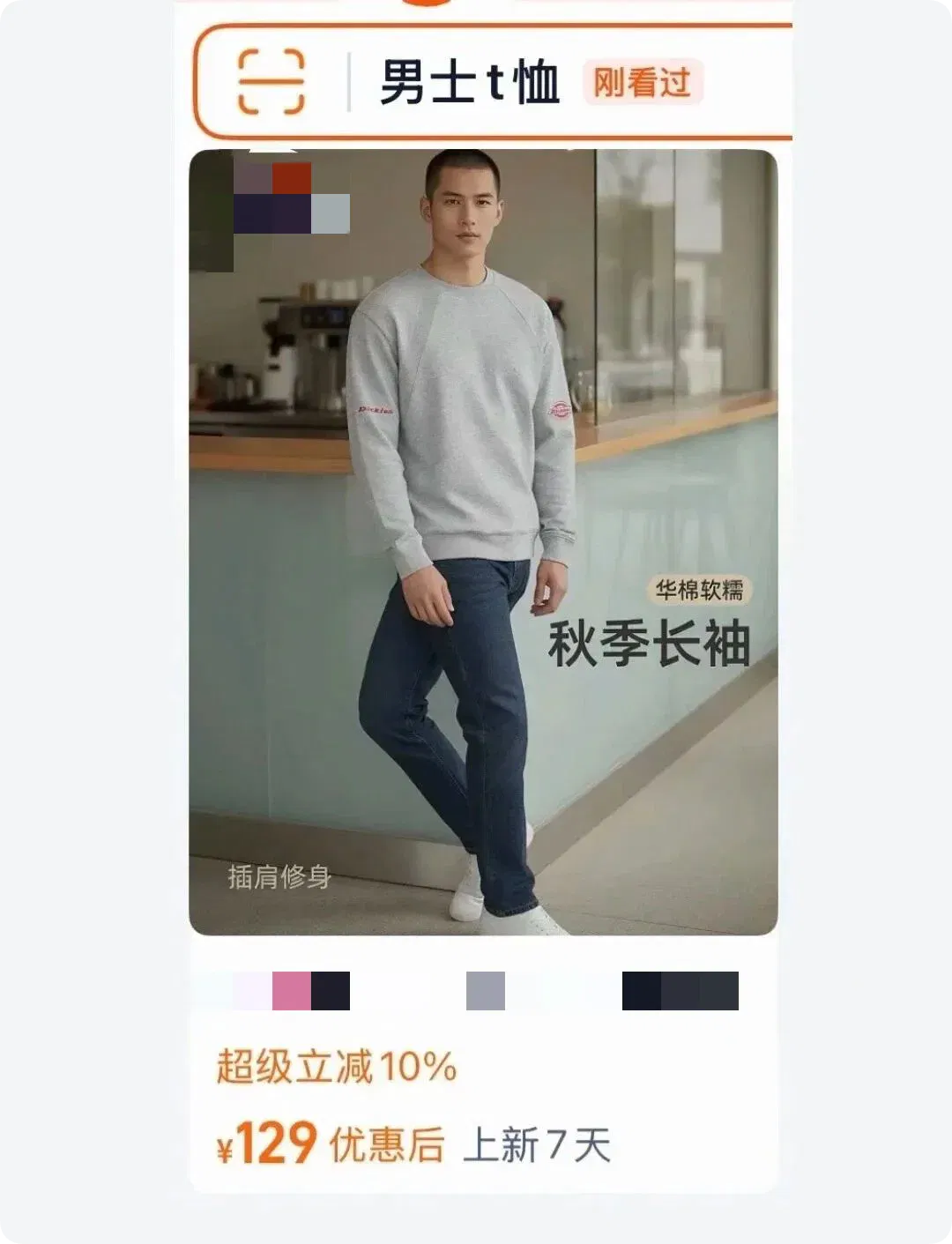
Traditional clothing photography, in which garments are sent out for a shoot, usually takes three to four days and costs around RMB 600–800. Some AI model images take only a few minutes and can cost as little as RMB 30–40. For a store listing dozens of new garments every day, the difference between the two approaches is considerable.
At the end of cost cutting lies a higher cost of trust, and consumers are becoming increasingly uneasy.
During this year's Singles' Day shopping period, the Social Survey Center of China Youth Daily, together with Wenjuan.com, surveyed 1,334 respondents. The results showed that
95.8% of respondents felt that AI seller images increased their uncertainty when placing orders.
Of them, 51.4% explicitly said they had been burned by AI seller images. Another 35.2% suspected that they had encountered similar situations but were unsure whether the images had actually been generated by AI.
Some 58.6% of respondents complained of severe color discrepancies in products, 50.2% had encountered distorted garment cuts and details, and 44.2% had discovered sellers passing off AI images as real photographs.
Beyond e-commerce advertising, you can no longer predict what the music videos played in karaoke venues will look like either.
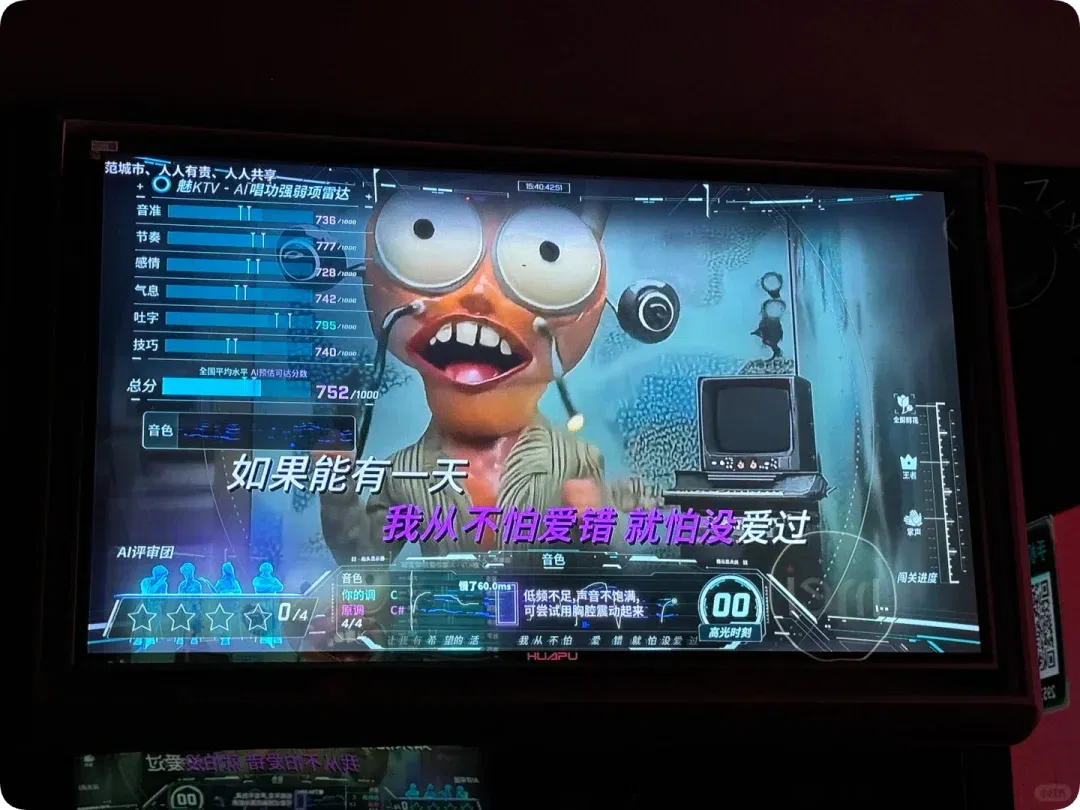
Image source: Xiaohongshu @Jueshi Dakali
Slow love songs such as At Least I Still Have You and Later might be accompanied by music videos showing puppies holding machine guns, kittens piloting fighter jets, or purple octopuses practicing tai chi in space.
These AI music videos are the product of a trade-off between copyright and cost. Because song-selection systems often obtain rights only to lyrics and music, while rights to the original music-video footage are expensive, equipment manufacturers simply use one-click AI generation to fill the gap. Dated footage for old songs is also replaced. Some karaoke chains make the AI version the default; switching back to the original may require an extra payment or repeated requests to the front desk.
The endpoint of cutting costs and improving efficiency is AI everywhere in life. But "AI everywhere" does not necessarily have to mean "making do everywhere."
For a long time, "aesthetic education" has carried a certain elitist air in Chinese educational discourse, as though it were synonymous with piano lessons and art classes. Its long neglect has also indirectly contributed to AI slop being everywhere today.
There is already a ready-made Chinese expression for AI slop: doing a slapdash job. That craft has always existed; AI has now made it dirt cheap.
In The Store Is the Product, ifanr noted that the front of Apple's West Lake store in Hangzhou uses 11 custom glass facade panels, each 14.5 meters tall and costing more than RMB 1 million. No one would advise Apple to replace that wall with a printed banner depicting glass, even if it could save more than RMB 10 million.
Some costs are themselves the product.
Online shoppers cannot enter the store: the product-detail page is the store, and real photographs are that glass wall. When merchants use AI images to save themselves trouble, they are also profiting from consumers' tolerance for poor aesthetics. The higher that tolerance, the greater the room for profit.
If we do nothing but repeatedly experience low-quality content, react to it and forget it, our aesthetic sensitivity will grow numb with fatigue—just as living in noise for a long time gradually makes you stop hearing it.
What drives people to keep choosing what is "good" is the environment they live in. Only when their eyes and ears have been nourished by good things from childhood will they naturally feel uneasy about things that merely make do.
This article comes from "APPSO," written by "APPSO."
Related topics
After reading
Join the AINRK community
Read how to join the community and connect with people working in AI.
Related articles
Continue reading related topics and articles in this category.
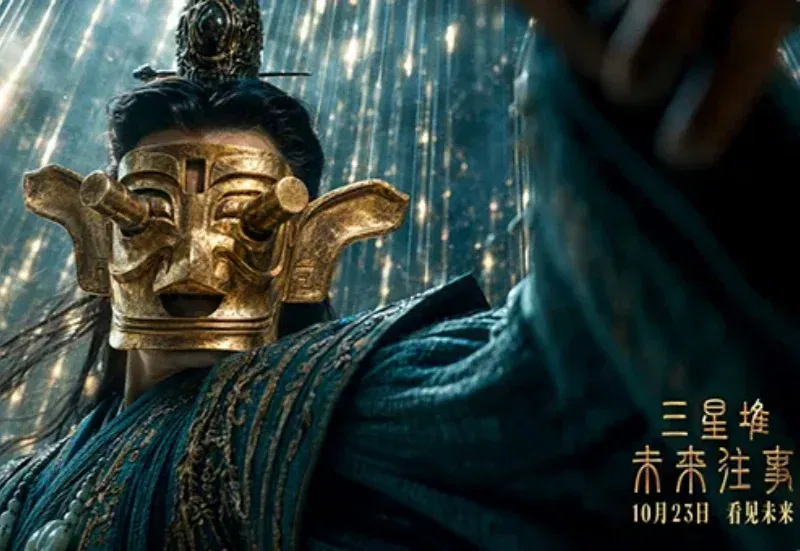
看完《三星堆:未来往事》,我想跟《牛来》道歉 (opens in a new tab)
APPSO 以《三星堆:未来往事》的观影体验为切入点,讨论 AI 电影的叙事衔接、人物塑造与技术表现,提出生成画面的进步仍需转化为连贯、能打动观众的故事。

仅仅半年,6亿人“中毒”AI短剧 (opens in a new tab)
3人核心团队,10万注册资金,手搓半年,连出十二季,保守估计利润600万,乐观2000万……AI短剧《万妖图录传》的“爽文人生”,就如同其所在的行业一样,越冲越猛。
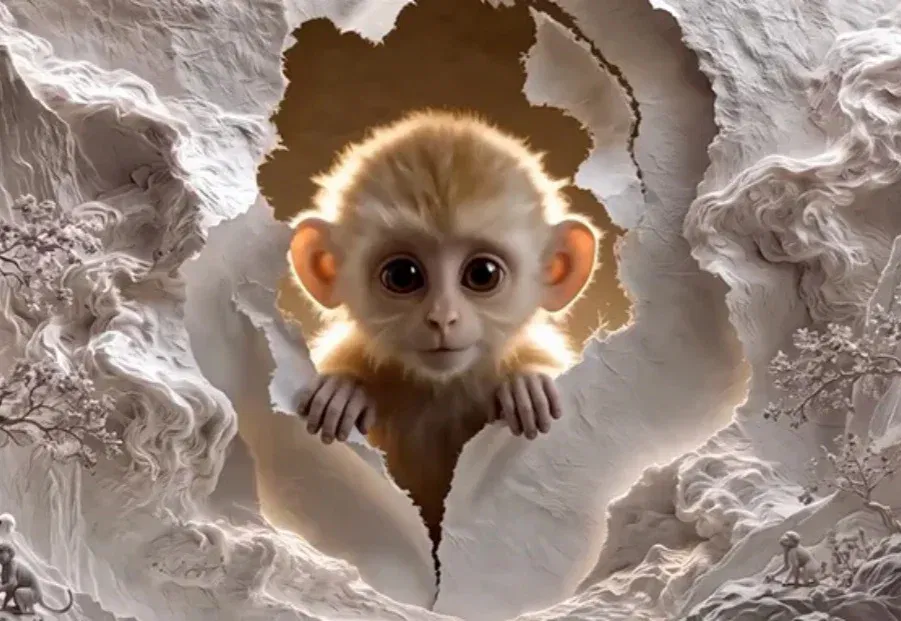
刚刚,国内首部上星AI长剧开播!“猴来”引爆AI短剧概念股 (opens in a new tab)
1小时播放量冲上200万次。 智东西8月31日报道,今日18点整,国内首部上星AI长剧《后西游记》在芒果TV上线,今日20点整将在湖南卫视晚间黄金档播出。 《后西游记》播出这一消息带动芒果TV母公司芒果超媒盘中涨停,今日收涨20%至每股16.98元,多模态AI概念股集体狂飙,截至8月31日收盘,中文在线、华策影视等涨超10%。 ▲多模态AI概念股(图源:同花顺) 《后西游记》共30集,本次上线的是第一季“花果山篇”前5集、每集40分钟,由芒果TV旗下AIGC内容创作平台芒果灵创制作。火山引擎抖音官方账号称,本剧100%由Seedance 2.0、Seedance 2.5提供AI技术支持。 《后

平台们正在用AI对抗AI (opens in a new tab)
自打AI内容生成出现,到现在,已经快3年了。上半场大家比的是谁更会用AI生成内容。现在到了下半场,已经是各家公司开始比谁能用AI来防AI内容了。后面,你会看到一个魔幻的场面:平台先花费重金训练AI,用AI生成海量内容。
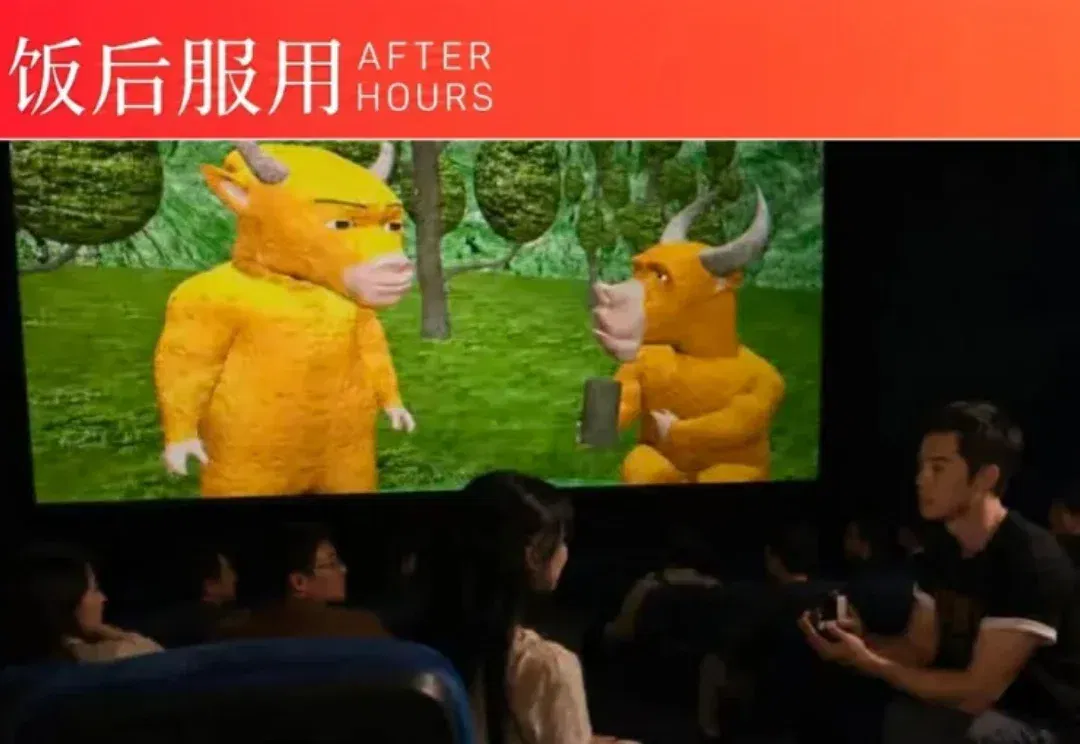
牛来和野生狗奶一样,是羞辱人类和AI 的双重BUG (opens in a new tab)
我是作为坚持媒体老师需要实践的操守,真的看了这部电影的,不然我就不写了