From Yan Zeng to Yonghui Wu: Leiphone Maps ByteDance Seed's Talent and Organizational Changes

Leiphone surveys ByteDance Seed's researchers, reorganizations, and technical priorities, reporting a team of about 1,000. It identifies coordination and training efficiency as challenges; accounts of staffing, pay, and internal remarks remain attributed.
"After spending heavily on hiring and reorganizing teams, can ByteDance realize its AI ambitions for Seed?"
Recently, 29-year-old Yan Zeng has become one of ByteDance's most closely watched young AI researchers.
According to information circulating about her, she has risen to level 4-2 in ByteDance's former grading system, equivalent to a senior director or senior technical expert. Annual compensation packages for comparable positions are estimated to reach several million yuan.
According to information we have obtained, before joining ByteDance, Zeng interned at a major Chinese internet company, then went to Canada's Université de Montréal for a master's degree. There she studied pretrained language models and dialogue systems under Jian-Yun Nie, an established scholar in natural language processing.
Someone familiar with her early career recalled to Leiphone that she was almost fanatical about technology, often burying herself in coding with headphones on. She had an easygoing, somewhat carefree personality and was easy to get along with. In this person's view, Zeng's later achievements in AI may have owed not only to her academic research abilities but also to her early exposure to industry and the practical engineering experience she gained during her internship.
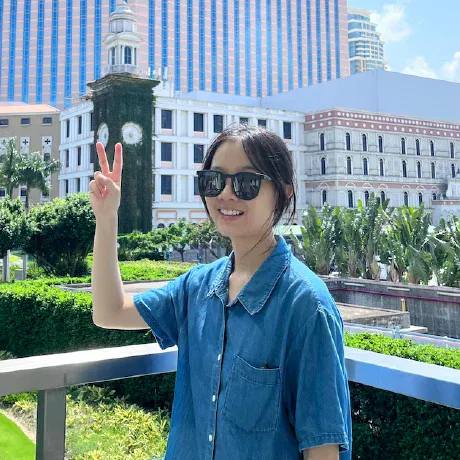
(A photograph circulating online purportedly showing Yan Zeng)
Five years ago, Zeng joined ByteDance's AI Lab research division as a campus recruit. Five years later, she has become a key leader of ByteDance's video generation model Seedance.
Zeng is not the only ByteDance AI researcher to attract attention in recent years.
Since 2023, ByteDance has continued recruiting researchers in China and abroad, building the independent foundation-model team Seed. The team now has about 1,000 people, with research spanning language, vision, speech, agents, robotics, AI for Science, and other areas. Its members include both experienced researchers from technology companies such as Google and Alibaba and younger researchers from universities and startups. ByteDance offers them generous compensation, separate equity incentives, and relatively relaxed research conditions in the hope of securing a place in foundation-model competition.
From AI Lab to Seed, ByteDance has spent nearly a decade bringing together researchers from different backgrounds. Zeng is one of its most closely watched young faces, and around her are many more researchers participating in ByteDance's long-term effort to catch up with the global AI frontier.
The Researchers ByteDance Has Spent Heavily to Recruit
At ByteDance, some employees call members of the Seed team "Seed lords." The nickname carries both a teasing tone and a little envy. In the large-model industry, teams that can take part in pretraining flagship models have long been a destination many researchers aspire to join. Seed not only commands the core resources for ByteDance's foundation-model research and development but also offers more competitive compensation, separate equity incentives, and relatively relaxed research evaluation criteria.
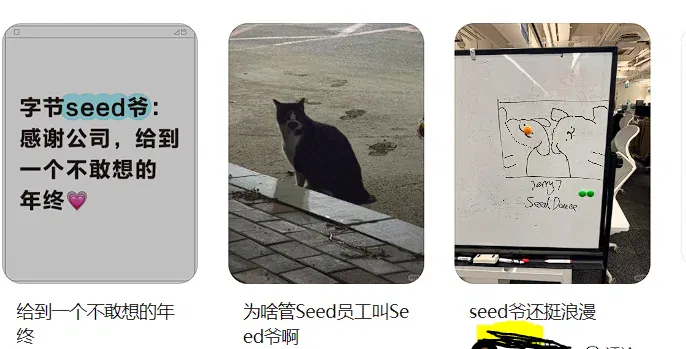
(Discussion on Xiaohongshu about "Seed lords")
ByteDance's AI strategy can be traced back to its establishment of AI Lab in 2016. At the time, its most successful AI applications were still recommendation-driven products such as Toutiao and Douyin, and much of its AI researchers' work revolved around these existing businesses. According to LatePost, before 2023, the natural language processing team at ByteDance's AI Lab had about 100 people, of whom only a small team of about 10 researched large language models, while the rest mainly worked on translation and product optimization.
AI Lab nevertheless conducted frontier research of its own, and Zeng was one of its young researchers.
In 2021, Zeng joined ByteDance's AI Lab as a campus recruit, working with Xinsong Zhang and Hang Li on vision-language models. Their X-VLM paper sought to help AI better understand the relationship between images and text, for example by recognizing whether a sentence describes an entire picture or a particular object within it.
By 2024, Zeng had shifted her research toward video generation. Her PixelDance paper, on which she was first author, investigated how AI could generate videos with richer motion from text and the first and last frames. This work later became part of ByteDance's early technical foundation in video generation.
During this period, ByteDance began rebuilding its large-model team.
In 2023, ByteDance established the independent foundation-model research division Seed, initially led by Wenjia Zhu, a technical manager who had risen through the company and had long worked on recommendation algorithms and internet products. Unlike the original AI Lab, Seed was dedicated to foundation-model research. ByteDance also established the Flow team to develop AI applications such as Doubao.
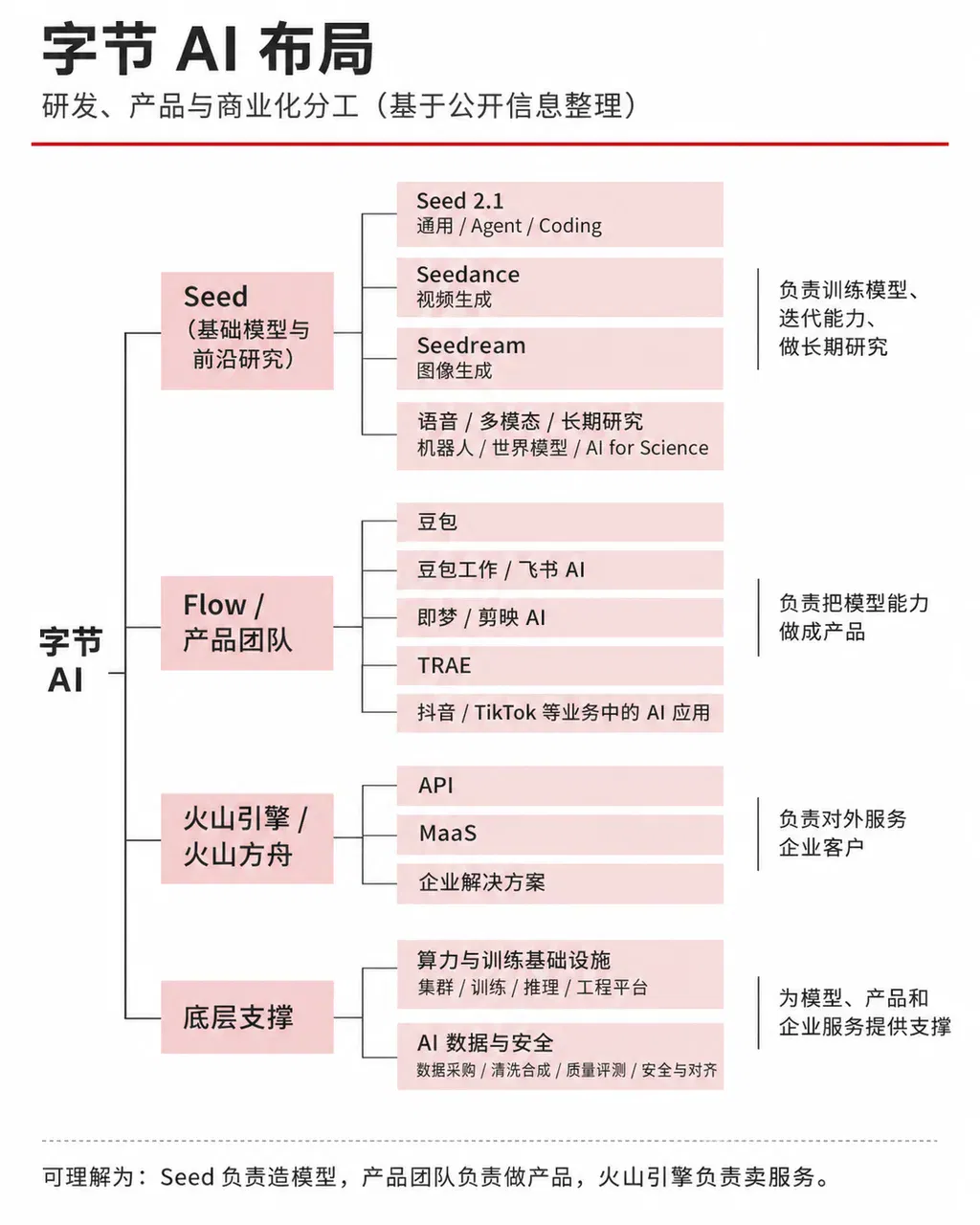
ByteDance subsequently began recruiting researchers globally. Zhang Yiming also became personally involved in hiring. According to LatePost, from the fourth quarter of 2023, he frequently met with AI researchers, including some doctoral students who had not yet graduated. In 2024, ByteDance launched its Top Seed talent program, offering some outstanding new PhD graduates annual salaries of a million yuan or even more.
During this period, ByteDance brought in a succession of researchers from technology companies in China and abroad, including Lu Jiang, who had worked on video generation at Google, and Chang Zhou, a core researcher from Alibaba's Tongyi team.
Jiang had previously been an important researcher on Google's VideoPoet project. After joining ByteDance in 2024, he worked on the Seaweed video model. Meanwhile, the AI Lab team that included Zeng was advancing PixelDance. Both teams were researching video generation, but initially used different technical approaches. Later, as video generation research became more integrated, Zeng moved into Seed, while Jiang left ByteDance in 2025 to join Apple.
Zhou's path was different. After earning his PhD from Peking University in 2017, he joined Alibaba, where he worked on the M6 multimodal pretrained model and Tongyi-related research, becoming one of Tongyi Qianwen's key technical leaders. After joining ByteDance in 2024, Zhou initially oversaw areas such as multimodal interaction and world models. Research on Seedream image generation and Seedance video generation subsequently also came under his management.
Alongside recruiting established researchers from outside, ByteDance has also been developing younger model leaders. In July 2024, Yujia Qin, who had previously participated in research related to ModelBest, joined ByteDance through the Top Seed program and worked on agent projects such as UI-TARS. In August 2026, he began leading Seed's post-training department for office-work and agent tasks.
In early 2025, ByteDance welcomed another important figure: Yonghui Wu.
Wu joined Google after completing his PhD in 2008 and worked there for nearly 17 years, contributing to search ranking, neural machine translation, and large-model research. In 2023, he became a research vice president at Google DeepMind and worked on the Gemini family of large models.
After joining ByteDance, Wu took over Seed's foundation-model research team. Research areas retained by the original AI Lab, including AI for Science, robotics, and responsible AI, were also gradually incorporated into Seed during this period, and Hang Li began reporting to Wu.
According to information we have obtained, Seed has about 1,000 people in total. From researchers and technical managers such as Hang Li and Wenjia Zhu, who have worked at ByteDance for many years, to experienced researchers such as Yonghui Wu and Chang Zhou, recruited from other technology companies, and younger people such as Yan Zeng and Yujia Qin, Seed has gradually brought together AI talent of different ages and research backgrounds. Over the past decade, ByteDance's AI research teams have also gradually moved from supporting content recommendation, translation, and product optimization toward broader areas including foundation language models, video generation, and agents. Models developed with these researchers' involvement have now entered products such as Doubao, Jimeng, and Jianying, while many other projects remain at the frontier research stage.
What Exactly Is Seed Researching?
ByteDance has not devoted substantial resources to building Seed merely to make Doubao smarter.
Since its establishment in 2023, Seed's research has expanded across language, images, video, speech, agents, robotics, AI for Science, and other fields. On Seed's official website, one finds a series of similarly named models—Seed, Seedance, and Seedream—alongside technical work in robotics and scientific research.
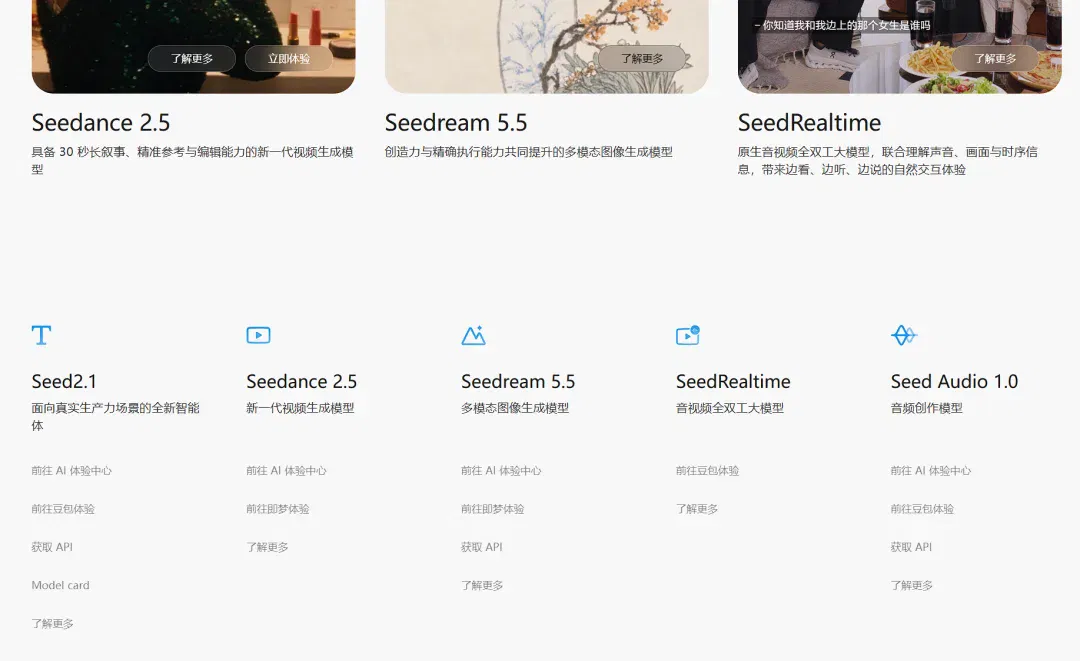
Foundation language models remain an important investment priority for ByteDance. They are the "brain" behind Doubao and must handle reasoning, programming, content writing, and other tasks. In 2026, ByteDance released Seed2.0 and then Seed2.1, continually improving the models' abilities in programming, agents, and complex tasks, and offering them to users through products such as Doubao, TRAE, and Volcano Engine.
Beyond having models answer questions, Seed is studying how to make AI do work directly. UI-TARS, a project in which Yujia Qin has participated, is one example. It seeks to enable AI to understand buttons, menus, and input fields on a computer screen and to click, type, and operate software as a person would. Previously, users could ask a chatbot how to complete a task; agent models of this kind aim to hand the actual operating process over to AI as well.
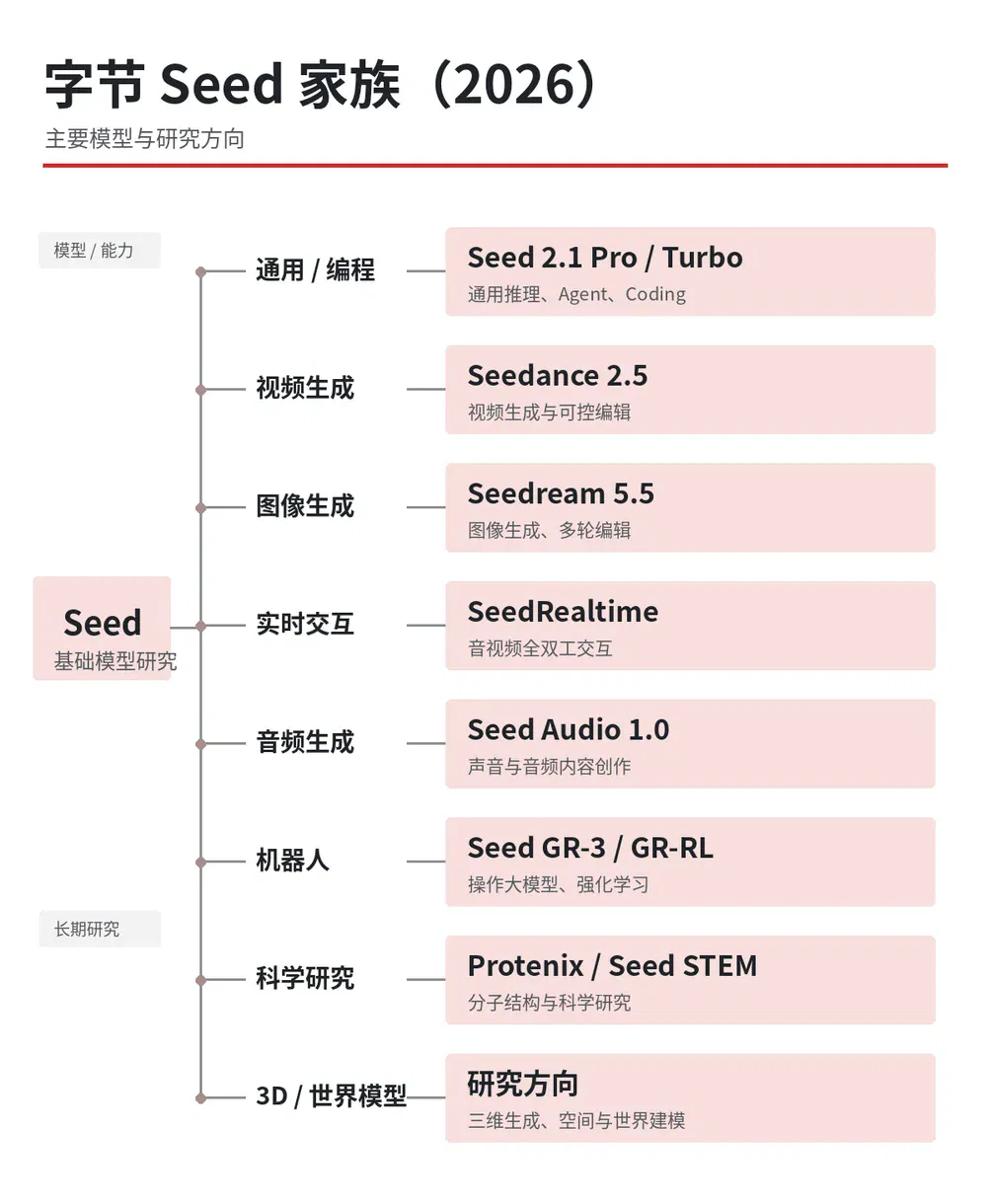
By comparison, Seed has already achieved more prominent results in video generation.
In June 2025, ByteDance released Seedance 1.0, followed by 1.5 Pro, which can generate sound and visuals together. Through multiple iterations, Seedance has gradually improved character motion, visual consistency, and camera control.
Toward the end of 2025, as the team prepared to train its next-generation video model, Zeng had a disagreement with the team over training scale. According to 36Kr, at a model-team dinner, she proposed to the person in charge that they try training a video model with at least 200 billion parameters. Some within the team, however, worried that training costs and the risk of failure were too high and believed it would be safer to first train a model at the 100-billion-parameter scale. Later, during Seed's formal internal review, Yonghui Wu and Chang Zhou, who led visual multimodal generation, supported her proposed larger-scale training plan.
Seedance 2.0 officially launched in February 2026, attracting widespread attention. Despite the model's high profile, video generation remains only one part of Seed's research portfolio.
Alongside Seedance is Seedream, an image generation model mainly used for tasks such as making posters, editing images, and generating design assets. It has already entered content-creation products such as Jimeng. In speech, Seed studies how AI can understand spoken language, generate more natural voices, and even understand sound and images simultaneously during conversation. These capabilities can support Doubao's voice interaction as well as scenarios such as real-time translation and intelligent assistants.
Beyond these technologies already incorporated into consumer products, Seed has a set of projects focused on the real world and scientific research.
For example, the Seed GR series of robotics models seeks to help robots understand their surroundings and follow instructions to grasp objects, move, and perform other actions. Unlike chatting or video generation, robotics requires not only understanding a task but also carrying out operations in real environments, making issues such as spatial perception and action control necessary to solve.
AI for Science seeks to apply large models to scientific problems in biology, chemistry, and other fields. ByteDance's previously released research, including SeedFold and SeedProteo, concerns protein structure prediction and design, with the aim of using AI to improve the efficiency of scientific research. Compared with video generation, these studies have a longer road ahead before large-scale commercial application, and experiments are also needed to verify the models' actual effects.
Seed also has researchers responsible for model-training systems, data processing, and inference efficiency. These technologies do not directly become products that users can download, but they affect whether models can be trained reliably, how far they can scale, and how much they ultimately cost to run.
How Does a 1,000-Person Research Team Work?
When Yonghui Wu joined ByteDance from Google in early 2025, Seed had already brought together researchers from different companies and universities. At the time, its management responsibilities were primarily divided between Wu and Wenjia Zhu: the former oversaw foundation-model research and development, while the latter oversaw model applications. Zhu is a long-serving ByteDance employee who joined in 2015, previously served as Toutiao's CEO, and was one of the key figures in establishing ByteDance's large-model team in 2023.
After joining, Wu began getting to know this research workforce. According to LatePost, he spoke individually with more than 100 core researchers and found that, despite Seed's many outstanding people, collaboration between groups was not particularly smooth. Seed's reporting relationships were also changing. In October 2025, Wenjia Zhu began reporting to Wu, who took on broader responsibility for coordinating foundation-model and multimodal development.
This situation was connected to ByteDance's earlier approach to research and development. Different teams could try different technical routes at the same time, with subsequent investment decisions based on their results. For AI technologies still being explored, this approach could keep more possibilities open. But as Seed grew, the teams' research became increasingly difficult to keep completely separate. Training a large foundation model in particular often involves data, algorithms, and infrastructure from different teams, and a problem in any one area can affect the entire training process.
Wu began pushing for changes. In 2025, Seed divided research into three levels—Edge, Focus, and Base—covering long-term frontier exploration, next-generation model development, and the training and delivery of current models, respectively. He also encouraged internal sharing of data and code so that researchers would discuss progress more frequently. According to LatePost, some teams had previously met only once every three months; later, they began reporting monthly, while some core teams communicated roughly once every two weeks.
Organizational adjustments could not immediately solve every problem, however. In the second half of 2025, ByteDance encountered stability problems while training its next-generation Doubao model. According to LatePost, as model scale increased, training at one point became difficult to continue. Multiple teams spent about three months adjusting areas including the model architecture and training data before Doubao 2.0 could launch ahead of the 2026 Lunar New Year. Quanquan Gu, who left ByteDance in June this year, also said in an interview on the LatePost Chat podcast that some technical approaches had been proposed months earlier. After lengthy discussion and validation, the team ultimately chose the original approach. As technical directions become clearer and competition shifts toward execution efficiency, the organization itself becomes part of a model's capabilities.
In August 2026, Seed underwent another round of organizational changes. This time, the changes concerned the responsibilities of specific research departments. Pretraining data teams previously scattered across text, code, visual understanding, speech, and other areas were integrated into a unified Pretrain Data department, while some reinforcement-learning researchers were brought together in the Horizon RL department. The model post-training team was further divided into Work and Chat, led by Yujia Qin and Wenjia Zhu, respectively. The former focuses on work tasks such as office work, programming, and agents; the latter focuses on the conversational capabilities needed by consumer products such as Doubao.
The integration of research areas also affected some research leaders' responsibilities. According to media reports, part of the vision-language model research previously overseen by Chang Zhou was incorporated into the foundation language-model system, changing the scope of his management. Reports subsequently emerged that Zhou was leaving ByteDance to start a business in Physical AI. Public reporting has differed, however, and it remains unclear whether his destination is directly connected to this round of organizational changes.
Over these years, Seed's researchers have also taken on different roles. Zeng progressed from a campus recruit at AI Lab to an important video-model research and development position; Qin went from agent researcher to head of Work-oriented post-training; and the management scope of Zhou and others changed with organizational adjustments. These individual experiences may not capture all of Seed's personnel changes, but they show that, as ByteDance continues recruiting researchers, it is also continually rearranging the research work for which they are responsible.
By 2026, Seed was no longer just a few relatively independent AI research groups. On the one hand, ByteDance wanted to preserve room for researchers to explore new directions; on the other, it needed different teams to work together on training models at ever larger scales. For a workforce still expanding and adjusting, balancing those two aims has become a challenge that must be addressed after hiring the talent.
Zhang Yiming Says It Will Take Another Three or Four Years
At the end of July this year, Zhang Yiming and Yonghui Wu attended an internal Seed all-hands meeting together. According to LatePost, Zhang said at the time that ByteDance could accept temporarily lagging in foundation models, did not want its research teams to chase only short-term hotspots such as coding, and also opposed using competitors' model outputs for distillation training.
In November, he offered a more specific view of the timetable. Zhang believed ByteDance had the ability to compete with OpenAI and Anthropic, but that truly catching up with the technological frontier would take until 2029 or 2030 at the earliest.
ByteDance's most successful AI application in the past was recommendation algorithms, which helped products such as Toutiao and Douyin acquire large numbers of users. What ByteDance now hopes to master is foundation-model capability that can support more products. This may also explain why it remains willing to invest continually in Seed even while temporarily lagging.
From young researchers such as Zeng to experienced scientists such as Wu, recruited from technology companies abroad, ByteDance has already spent years assembling this talent. Unlike hiring, however, the accumulation of foundational research is difficult to accomplish quickly through funding alone. For ByteDance, accustomed to rapid iteration in internet products, this may be a longer undertaking than any of its previous technology investments.
This article originally appeared on the WeChat account "Leiphone," written by Leiphone.
Related topics
After reading
Join the AINRK community
Read how to join the community and connect with people working in AI.
Related articles
Continue reading related topics and articles in this category.
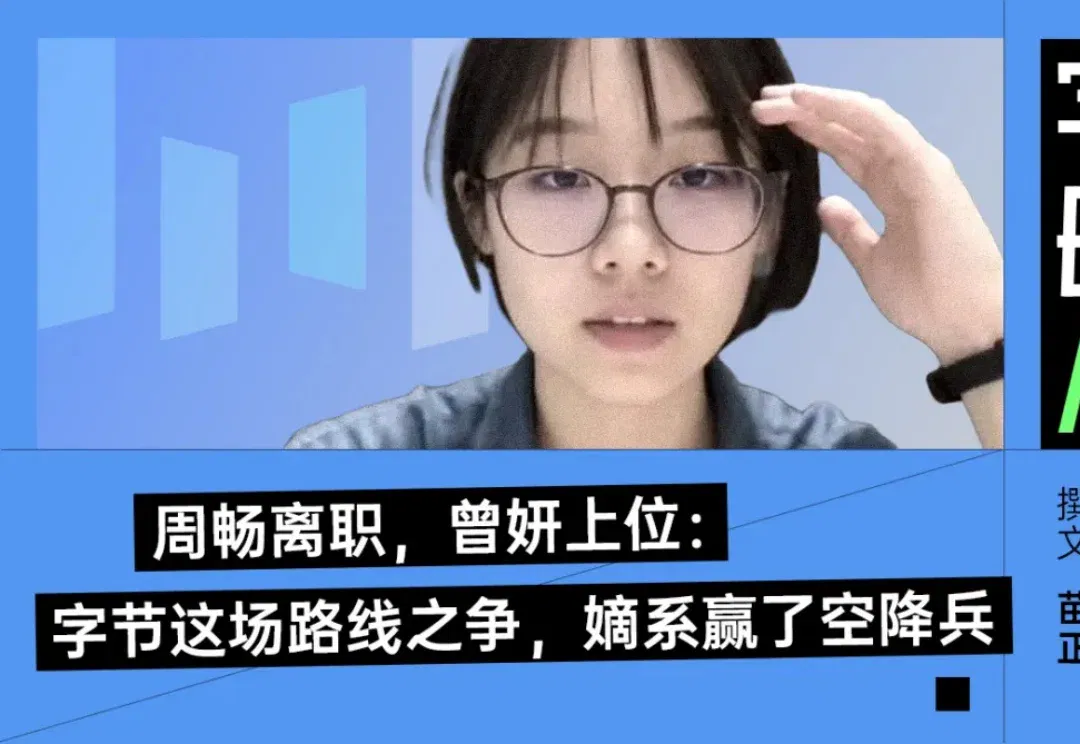
Cola2 explores latent-space language modeling; Zimu AI examines ByteDance's scaling strategy (opens in a new tab)
Cola2 studies semantic compression and co-adaptive language generation. Zimu AI links it to ByteDance Seed's plans using media reports and anonymous sources; the paper does not establish promotions, a 10-trillion-parameter project or internal strategy.
独立建制、招10名顶尖安全人才:字节Seed对AGI的目标可能被低估了 (opens in a new tab)
前沿实验室既在争取下一次模型能力的突破,也在准备应对下一场安全危机。

AI从「造图」卷到「造世界」,这次真有点科幻了。。。 (opens in a new tab)
好家伙,字节这回直接把AI生成玩成开放世界了?!
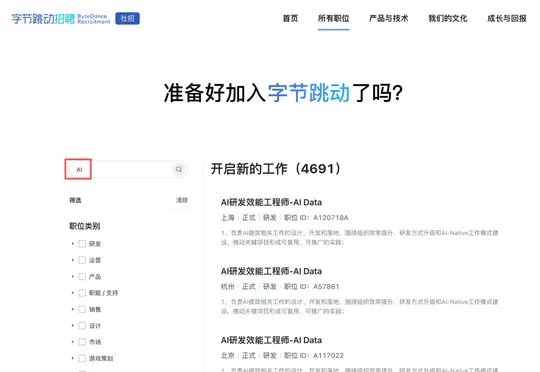
字节凶猛:从招聘看字节AI战略战术背后的逻辑与细节 (opens in a new tab)
字节跳动正依托Seed、火山引擎、飞书、豆包、抖音和TikTok,在芯片、算力、模型、云服务、终端及机器人等AI全产业链布局,但投入分散与关键押注不够坚定仍是风险。
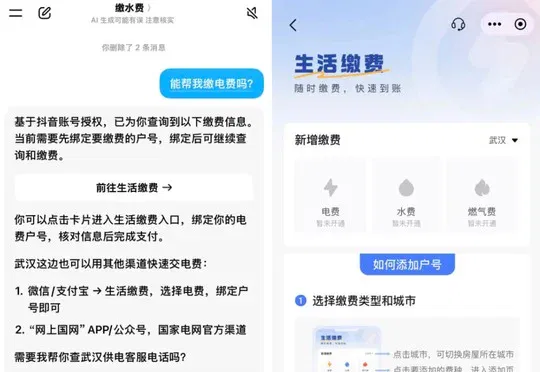
独家 | 豆包新增“生活缴费”,会是下一个超级App吗? (opens in a new tab)
豆包新增“生活缴费”功能,用户可通过语音或文字唤起水、电、燃气缴费服务卡片,但城市覆盖、服务商对接及支付闭环仍在推进。