U.S. technology stocks sell off amid concerns over returns on AI capital spending
The report examines a U.S. technology selloff and debate over AI investment returns: the Nasdaq Composite fell 5.28% in one day, while Anthropic’s listing and NVIDIA’s earnings failed to lift sentiment. Investor views and prediction-market probabilities do not establish that an AI bubble has burst.
Editor's verification (November 22, 2026): Based on NVIDIA's announcement, the body's unattributed causal assertion about Jensen Huang's departure has been replaced with the resignation and interim succession arrangements confirmed on November 12, 2026. The claim about an SEC accounting investigation remains only a media report cited by the original article. Its original source could not be independently verified in this review, and it is not treated as a confirmed investigation or regulatory finding. NVIDIA leadership announcement (opens in a new tab); Nasdaq's market commentary for that week (opens in a new tab)
The AI boom that has lasted for years is facing an unprecedented crisis of confidence.
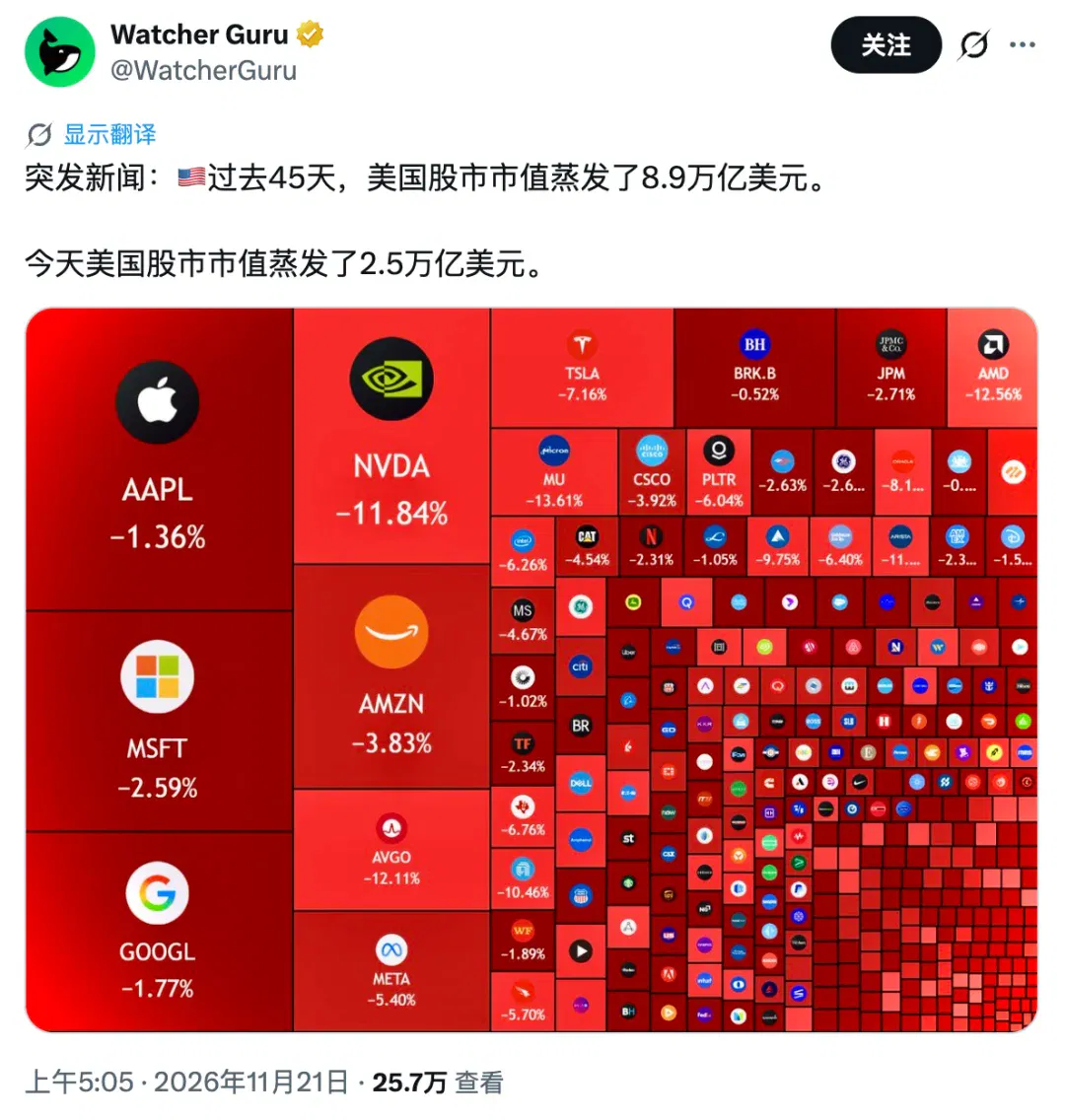
Image | Intraday screenshot
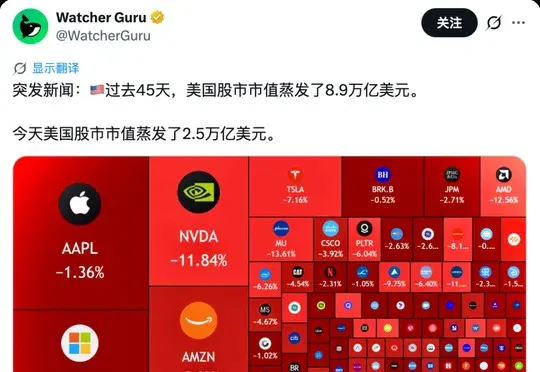
Early this morning, U.S. stocks suffered a fierce selloff, with technology shares plunging across the board. AI-related stocks, once a pillar of the U.S. bull market, have now become a major drag on the entire market.
More intriguingly, the plunge in U.S. stocks came immediately after two major positive developments for the AI industry.
One of the world's most closely watched AI startups successfully went public, while the global leader in AI computing delivered strong financial results. Yet the market seemed unwilling to keep paying for AI's growth story.
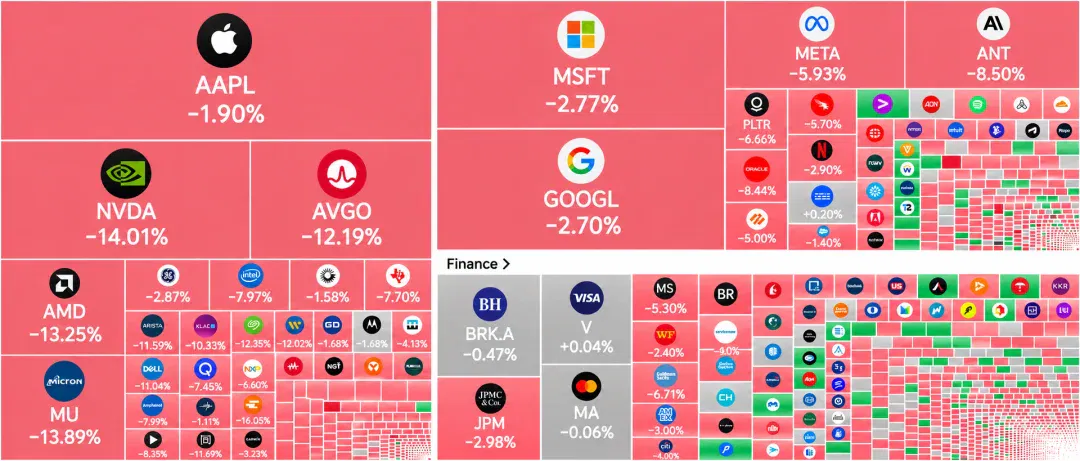
Image | After-hours screenshot
First, consider just how wild the trading session ending early this morning was.
According to the final closing figures published by Reuters, the Dow Jones Industrial Average fell 949.73 points, or 1.93%, to 48,147.33; the S&P 500 fell 3.70% to 6,910.39; and the Nasdaq Composite plunged 5.28% to 22,617.73.
The S&P 500 fell for a seventh consecutive trading session, its longest losing streak since February 2020. Both the Dow and the S&P 500 had retreated more than 10% from their previous record highs, officially entering technical correction territory.
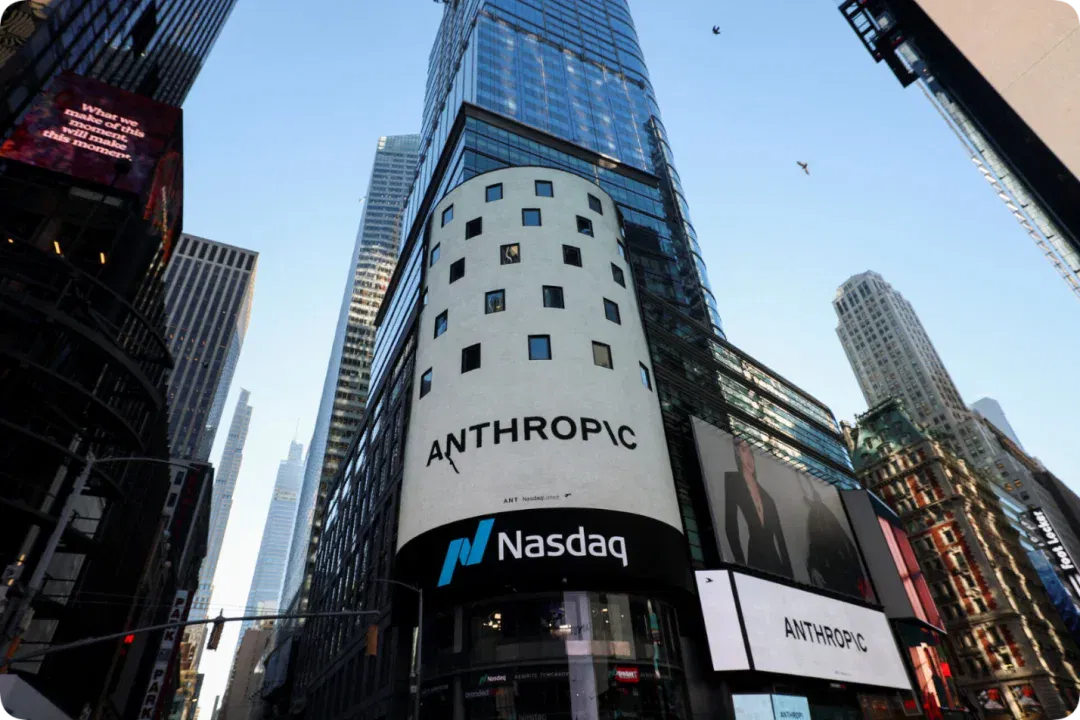
Image | 🔗 https://www.reuters.com/legal/transactional/wall-st-futures-slip-anthropic-debut-fails-reassure-ai-investors-2026-11-20/
Technology stocks fared even worse.
The Nasdaq Composite reached a record high during the trading session spanning the evening of October 6 into the early hours of October 7, Beijing time, with its year-to-date gain at one point reaching 18.7%. Yet in just over a month, the market wiped out all those gains, leaving the index down for the year.
According to CNN, approximately US$8.7 trillion in market capitalization has been wiped out of the Nasdaq Composite since that high.
Meanwhile, the Nasdaq 100 not only closed down 5.6% early this morning but also lost 10.4% over the week, its worst weekly performance in more than six years. It was only a step away from a technical bear market, usually defined by a cumulative decline of 20%.
Fear was also spreading rapidly through the U.S. stock market.
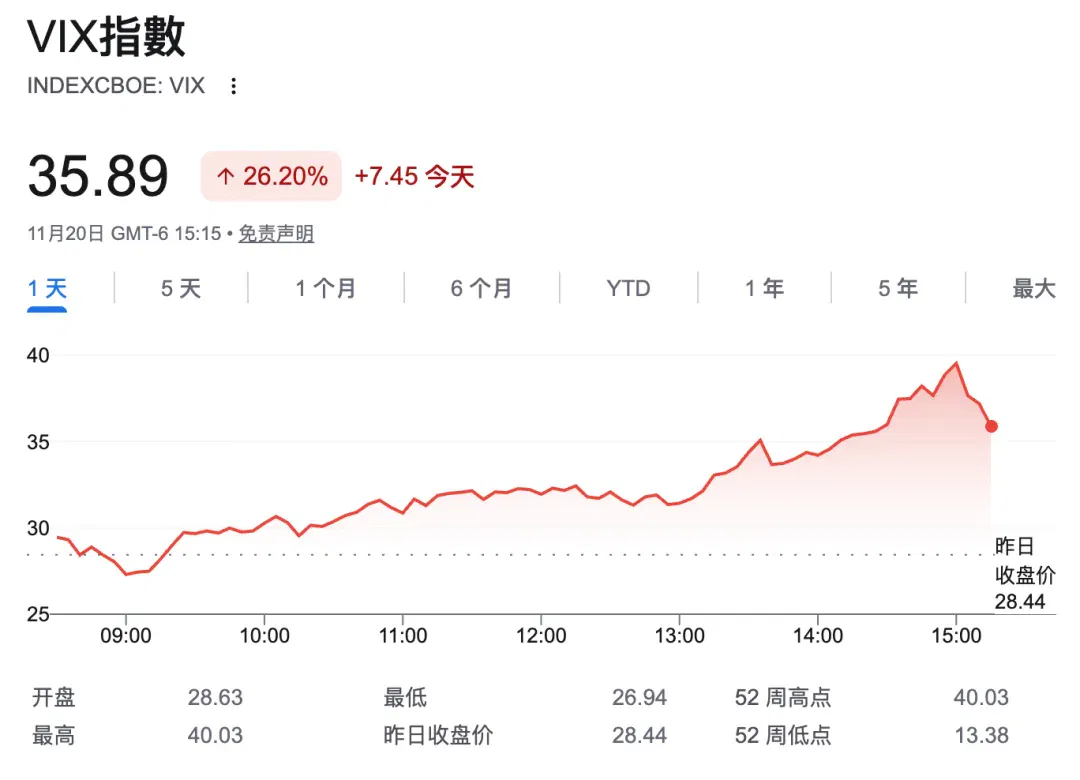
The VIX, known as the market's “fear gauge,” surged this week and most recently closed at 35.89, its highest level in approximately 19 months.
More significantly, the decline has spread beyond a handful of technology giants.
The Philadelphia Semiconductor Index plunged 10.7% in the latest session. SanDisk fell approximately 16%, Micron Technology around 14%, and Broadcom and Marvell Technology roughly 12% each.
Even cloud computing companies whose shares had risen on demand for AI computing power were not spared.
CoreWeave, the AI cloud computing company backed by NVIDIA, fell around 12% that day to US$39.51, even below its US$40 offering price when it went public in 2025. Another emerging cloud company, Nebius, dropped approximately 16%.
The chief investment officer of a U.S. hedge fund told the Financial Times that the market scene before him was practically apocalyptic.
If the plunge across the technology sector was surprising, Anthropic's experience after its listing may be even more symbolic.
On the evening of November 19, Anthropic, the AI company behind Claude, officially debuted on Nasdaq under the ticker ANT. Its IPO was priced at US$83 per share. The first trading day drew enthusiastic demand, and it closed in the early hours of November 20, Beijing time, approximately 17% above its offering price.

Image | Financial Times
Capital markets' enthusiasm, however, lasted only one trading day.
By the early hours of November 21, Anthropic's shares had fallen sharply, closing at US$88.91 per share, only around 7% above the offering price and giving up almost all of their first-day gains.
Previously, the market had hoped Anthropic's blockbuster IPO would provide an important opportunity to bolster confidence in the AI sector and help technology stocks escape their recent sustained decline.
The actual outcome was exactly the opposite.
Chuck Carlson, CEO of Horizon Investment Services, told Reuters that many investors, himself included, had hoped Anthropic's listing would mark a turning point in market sentiment. In the end, those hopes proved unfounded.
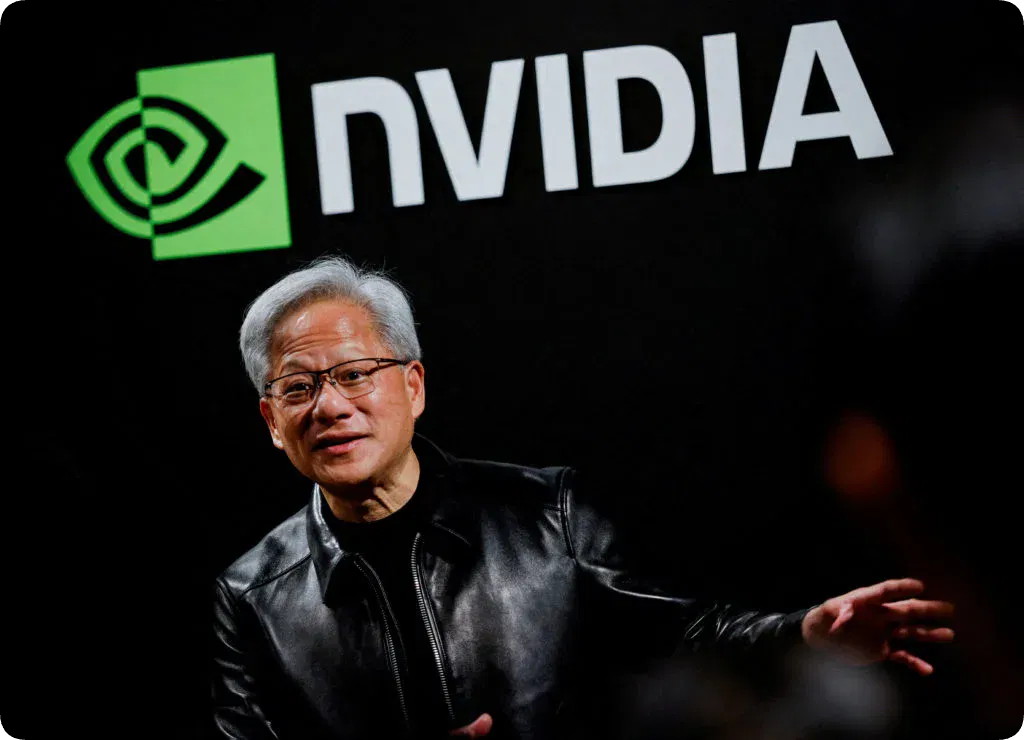
Compared with Anthropic, which has only just entered the public market, NVIDIA may face an even more serious situation.
As one of the biggest beneficiaries of the AI investment boom of recent years, NVIDIA has long been regarded as the most important bellwether for the entire AI industry chain. Global technology giants' construction of data centers, training of large models and expansion of AI computing infrastructure ultimately translate into enormous demand for NVIDIA chips.
Now, however, the market confidence underpinning NVIDIA's high valuation is coming under pressure on multiple fronts.
Early this morning, NVIDIA shares plunged approximately 14%, their largest one-day decline in nearly two years. They lost around 23% over the week, making it their worst week since October 2008.
From the peak reached during the session spanning the evening of October 6 into the early hours of October 7, Beijing time, NVIDIA shares have fallen approximately 47.5%, erasing as much as US$2.7 trillion in market capitalization.
NVIDIA announced on November 12, 2026 that Jensen Huang had resigned as president, chief executive officer and a director, effective immediately. Chief Financial Officer Colette Kress became interim CEO while continuing as CFO. The announcement did not state the reason for his departure.
The original article separately cited Reuters as saying that the U.S. Securities and Exchange Commission was investigating NVIDIA's accounting practices and that NVIDIA declined to comment. The original Reuters source for this report could not be independently verified in this review. It cannot be treated as a confirmed investigation or a finding of wrongdoing; no public conclusion concerning the reported investigation could be verified in this review.
Jones Trading strategist Mike O'Rourke noted that Huang and NVIDIA were virtually synonymous with the entire AI infrastructure boom. When investors begin questioning the transparency and credibility behind that symbol, confidence across the market is shaken.
What puzzles many investors even more, however, is that NVIDIA's fundamentals have not deteriorated nearly as dramatically at the same time.
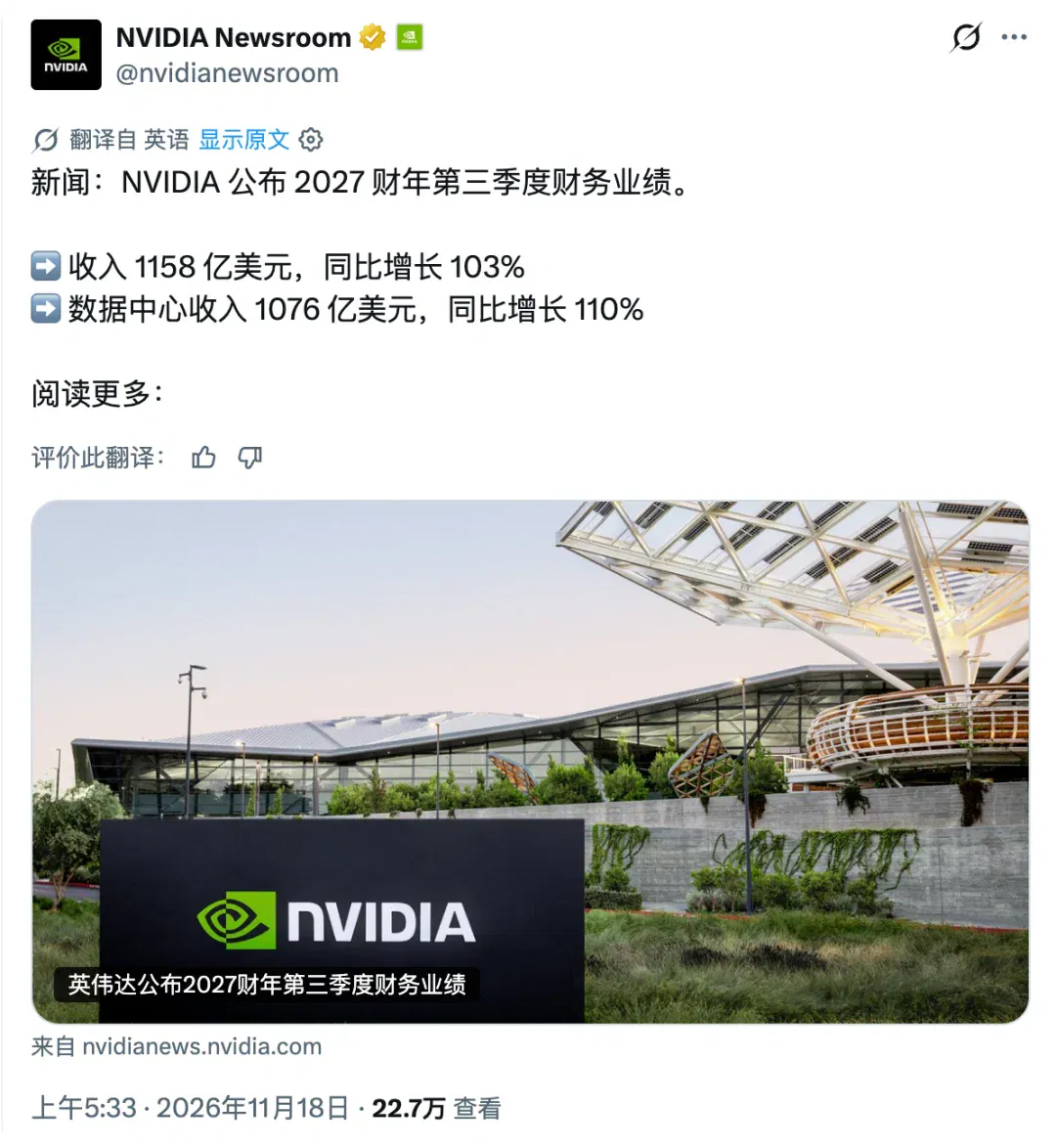
Just this week, NVIDIA delivered strong quarterly financial results. Yet those impressive figures ultimately failed to halt the plunge in its shares. Two major events that should originally have instilled confidence in the AI industry both failed to become market turning points.
From the cool response following Anthropic's listing to NVIDIA's financial results failing to help and the collective plunge across semiconductors, these developments all point to the same question: when exactly will the hundreds of billions of dollars technology giants have invested in AI in recent years pay off?
AI has long been an important growth narrative supporting gains in U.S. stocks.
Technology giants including Microsoft, Google, Amazon and Meta have kept expanding capital expenditure, buying GPUs, building data centers and training more powerful models, driving continued share-price gains for chip, memory, server, power-equipment and cloud computing companies.
Capital markets once believed that as long as AI's technical capabilities kept advancing, demand for the associated infrastructure could continue growing. The problem now is that the pace of construction and scale of investment are already astonishing, while commercial returns remain uncertain.
In particular, as technology giants begin using more debt financing to support AI infrastructure construction, investors are worried not only about future profitability but also about whether enormous funding needs can continue to be met.
The Financial Times noted that market euphoria about AI was rapidly turning into deep anxiety over technology giants' huge capital expenditure and financing volumes.
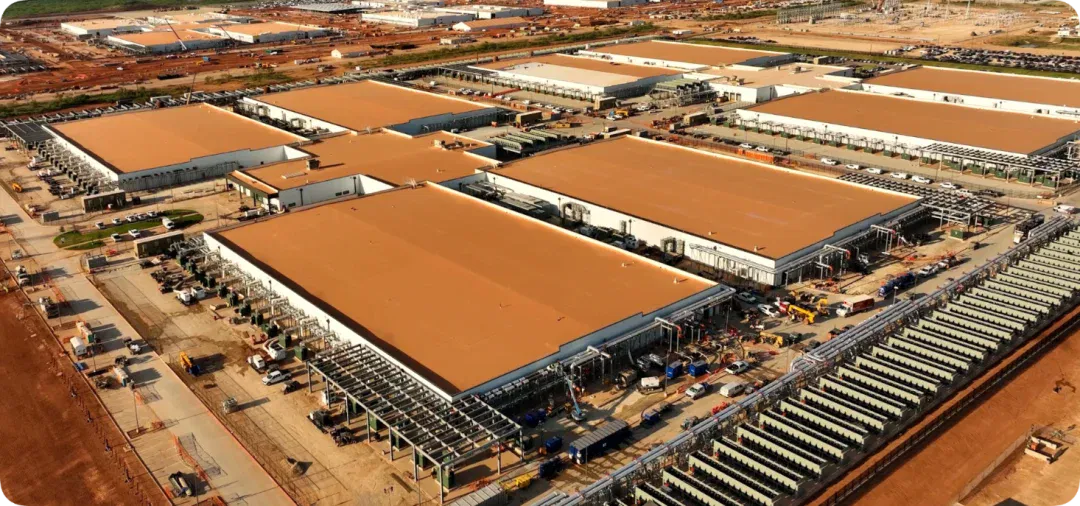
Faced with the most severe technology-stock selloff in the U.S. in six years, American investment institutions have not reached a common assessment.
David Kelly, chief global strategist at J.P. Morgan Asset Management, noted that a technical correction in U.S. stocks was unsurprising after their substantial gains over the past few years. He even likened it to a cold, suggesting the market might simply have a mild cold rather than a more serious systemic problem.
CFRA Research's Arun Sundaram also said he found it difficult to fully explain such a fierce selloff on company fundamentals alone, as investors appeared to have entered a state of selling first and considering fundamentals afterward.
Notably, investors' anxiety about AI has even spread to prediction markets.
As technology stocks plunged across the board, data published by Polymarket showed that the prediction probability of “the AI bubble bursting by the end of 2026” suddenly surged to 62%. Although prediction-market trading probabilities cannot prove that a bubble has already burst, they at least reflect rapidly weakening confidence in AI investment prospects among some market participants.

Looking back at the AI boom of recent years, capital markets have consistently been willing to pay high premiums for stronger models, larger data centers and more extensive computing investment.
But if AI's commercial returns keep failing to catch up with the pace of capital investment, how much of the growth already priced into shares over the past few years can actually materialize?
The historical revolutions in railways, electricity and the internet were all accompanied by capital-market euphoria and bursting bubbles.
Even after the dot-com bubble burst in 2000, the internet profoundly changed the world over the following two decades and more. AI may be approaching a similar historical juncture: the technological revolution continues, but public markets have begun recalculating its price.
After all, even if AI is destined to change the world, that does not mean every dollar paid for it today will earn a return in the future.
This article is from the WeChat account “APPSO,” by “APPSO.”
Related topics
After reading
Join the AINRK community
Read how to join the community and connect with people working in AI.
Related articles
Continue reading related topics and articles in this category.
AI融资遇冷意味着泡沫破裂吗?从债务评级、估值与现金流看争议 (opens in a new tab)
文章围绕 OpenAI 融资报价调整、Anthropic 算力融资与债务评级,以及科技公司财报引发的市场波动展开分析,区分贷款评级与公司评级、融资目标下调与相对上一轮估值下降等概念。对未来 IPO 和投资回报的判断仍属作者观点。

谁是AI的“恒大”? (opens in a new tab)
AI债务危机下篇:未来的五个风险事件 AI影子信贷 上周末发的上篇《AI盛世下的暗雷,藏着下一个“次级债”危机》揭示了AI基建的一个深层风险:2000年互联网泡沫主要靠股权融资,破裂是线性的股市危机;而当前AI基建靠债务驱动,一旦出问题将首先引爆债市,类似2008年次级债危机。 数据中心从拿地、举债建设、签订“照付不议”合同、抵押融资到发行ABS,玩法与房地产开发无异。但AI基建叠加了“半导体快速折旧”的风险,比纯房地产更危险。 目前五大云厂商资本开支增速已超过现金流增速,谷歌、亚马逊自由现金流已转负。只要增速放缓,二阶导下降,就会走上依靠再融资续命的阶段。 文章还提到了表外的“影子贷款”,把

不要凭感觉猜AI泡沫,数据告诉你怎么识别 (opens in a new tab)
三个指标,判断AI产业的位置。很多人喜欢拿现在的AI跟2000年互联网泡沫对比,有人说已经到了,有人说还早,两种说法都不太对。判断产业阶段得看数据,不能凭感觉。第一个指标,大厂资本开支。

AI 泡沫里的硅谷:清醒的赌徒,与疯狂加倍的牌桌 (opens in a new tab)
比AI泡沫更值得关注的,是泡沫里的人。 「距离 AI 泡沫接受考验,还有六个月。」今年 4 月底,一位硅谷投资人平静地对我们说道。 但不到一个月之后,「六个月」就压缩成了「三周」。 把这个时间表提前的,是 SpaceX。5 月 20 日,它公开招股书,募资 750 亿美元,估值 1.75 万亿,这或许是美股史上最大的一笔 IPO。紧随其后,Anthropic 、OpenAI 递交招股书,估值都冲上 1 万亿。而这三家 AI 巨头即将到来的 IPO 要从整个市场上抽走的钱,是去年整个美股 IPO 市场的 10 倍。 一旦上市,账本就摊开在所有人面前。AI 业务的真实成色、续约率、现金流,只要一个
硅谷大空头杀回来了!做空甲骨文,英伟达万亿AI泡沫要崩? (opens in a new tab)
预测到次贷危机的「大空头」Michael Burry看到数万亿美元涌入AI基础设施,产生深深的怀疑。他预言:英伟达的优势并不持久,可能很快就会被对手战胜。而且,如今全球AI算力已经达到1500万H100 GPU当量,即将引爆严重能源危机!