ChinaVenture: Xingchen Haoyu raises a Series B for outcome-based AI workers
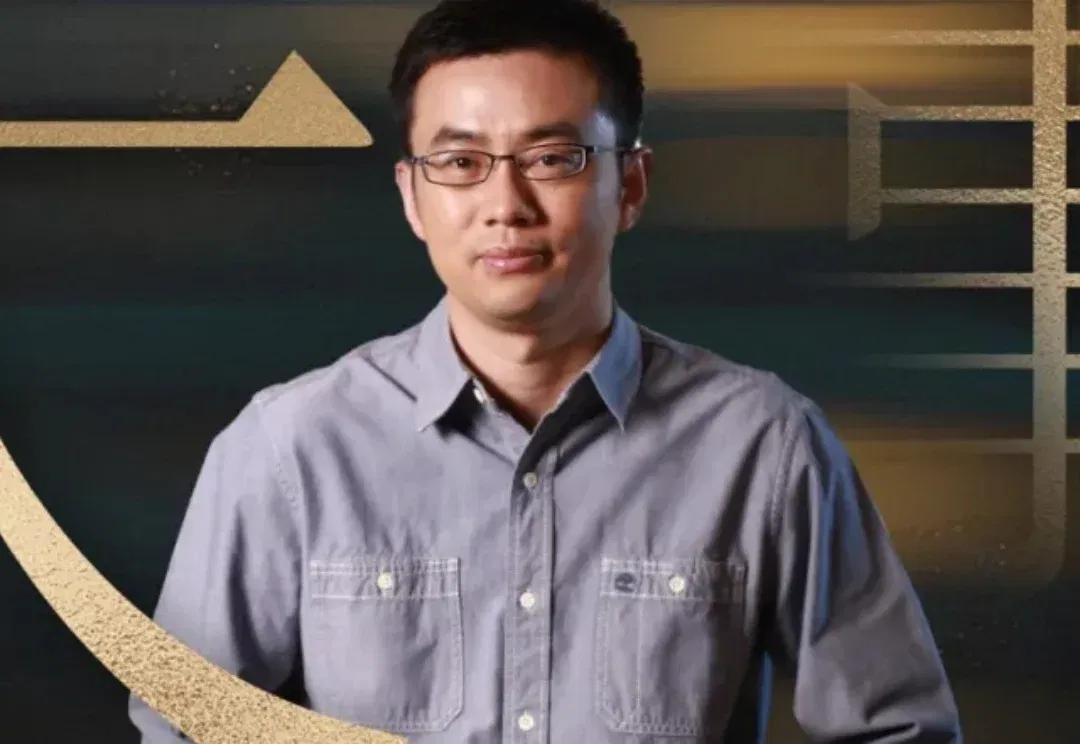
ChinaVenture interviews founder Zhang Lei about enterprise Agent Workers, results-as-a-service and overseas delivery. The reported funding is hundreds of millions of yuan. Revenue and customer claims come from the report and team; growth and robot products remain plans.

"No competitive business is ever planned into existence."
Zhang Lei, born in the 1970s, has caught all three of the most important periods of technological opportunity in the thirty-year history of China's internet industry.
He entered university in 1993 to study computer science. After graduating, he joined Huawei and spent eight years in its carrier technology organization, catching the final boom years of the telecom-equipment industry. In 2008, he resigned and moved to Beijing, first trying his hand at entrepreneurship before joining Baidu to lead its wireless operations. In 2010, he founded Dianxin Mobile, which received investment from Sinovation Ventures. In 2015, he started his third venture, building a global portfolio of consumer tools that reached many tens of millions of daily active users. Thirty years and three career chapters corresponded neatly to three waves: telecommunications, the migration from the PC internet to mobile, and the mobile internet.
Alongside those opportunities, he also grew through difficult challenges. Since 2021, he has focused on Xingchen Haoyu (NeuxMind.AI), an enterprise AI company. To put it more simply, if large-model companies are building the foundation, then companies such as Xingchen Haoyu are needed to complete the last mile of bringing AI into different industries. This is Zhang Lei's fourth venture, arriving with the AI wave. The scale of this technological opportunity far exceeds any of the previous ones.
After repeated refinement, he is more confident than ever about this round's product form and business model. In his view, AI is no longer merely a tool for enterprises, but an employee, and corporate organizational structures will be reshaped. Xingchen Haoyu wants to help enterprises truly become ANOs: AI Native Organizations.
ChinaVenture recently learned exclusively that Xingchen Haoyu had completed a Series B round of hundreds of millions of yuan, led by Saize, with follow-on investment from its US-dollar and renminbi shareholders.
Three technology waves, four ventures
No competitive business is ever planned into existence
Having experienced several rounds of technological change, Zhang Lei often says he was born in a fortunate era. Each of his four ventures came with a different state of mind. He sums them up as four emotions: fear, anxiety and confusion, followed by excitement on the fourth attempt.
Fear belonged to his first venture. Knowing nothing beyond technology, he did everything himself and never knew from one day to the next whether the company would survive. Once the company began to make progress, he faced a second question: how to build a truly outstanding product. With that in mind, he first joined Baidu to lead its wireless operations, then co-founded Dianxin Mobile in 2010. It was an era when carefully building a product brought rewards. But after its tool portfolio grew, the company became indirectly caught up in the 3Q conflict. Its domestic path was blocked, and the entire company was sold back to Baidu.
Whether the seeds of anxiety were planted then cannot be confirmed. What is certain is that he returned to Baidu for another two years, managing its security product line and participating in international expansion, investment and acquisitions, before starting his third venture in 2015. This time he felt relaxed, because everything was a replication of previously successful experience.
By 2018, that replication met systemic risk. The tool portfolio from his third venture was at its peak when it was suddenly banned overseas. In 2019, India also began removing Chinese apps. From 2018 to 2020, the company as a whole was on the verge of collapse. Zhang Lei had never faced a challenge on this scale, and confusion outweighed everything else. While the crisis forced the company onto another path, it also happened to prepare the skills it would need in the AI era:
The company's early technology stack was mainly communications-oriented. One unassuming module was a chatbot, which in the AI 1.0 era could handle only simple tasks using a rules engine. When large models burst onto the scene in 2023, the company first helped customers deploy them, then formed its own large-model team. In 2024, it used large models to revamp multimodal products, improving the efficiency and generalization of computer-vision algorithms. In 2025, it applied AI across all its products and delivered projects for banks, finance and government. In 2026, it upgraded its strategy and explicitly focused on the enterprise market. Looking back, Zhang Lei's conclusion is that no competitive business is ever planned into existence.
This time, setting out brings him more excitement. It comes from two things: first, the wave's scale, with AI simultaneously rewriting product forms, organizational structures and customer needs; second, he is not merely reacting this time. By forming its own large-model team in 2023, the company stepped into the wave early.
One obvious feature of this AI boom is its youth: many people born in the 1990s and 2000s are riding its crest. How much of an advantage does being fifty offer in the AI era?
Zhang Lei's answer is direct: age is no obstacle. Jensen Huang and Elon Musk are no longer young, yet both remain on the front lines. For entrepreneurs, the ability to learn, enthusiasm and experience matter far more than age. He has set rules for the company: everyone must read papers and follow model developments, while the company continually brings in young people and increases its staff turnover rate. "Those who cannot keep up with the times will be eliminated, whether they are twenty or fifty. Those willing to learn and embrace new things can ride the crest of the wave at any age."
Agent Worker ≠ Agent
Results must be measurable
In Zhang Lei's view, AI is evolving from improving individual productivity toward transforming enterprise operations. The first stage, AI Chatting, centers on natural-language interaction, providing knowledge Q&A, content generation and information analysis to improve personal productivity. The second stage, AI Coding, centers on code understanding, generation and execution, automating software-development tasks and improving R&D efficiency. The third stage, AI Working, centers on an enterprise AI brain, using Agent Workers to drive the ongoing participation of digital and physical agents in enterprise operations, automating business processes and enabling them to run without human operators.
How does the term "Agent Worker" differ from the many "Agents" on the market? Zhang Lei says Agent is a technical concept, while Agent Worker is customer language. Many customers are actually confused about what an agent is, but understand immediately when they hear "AI employee": an employee who helps you do the work, except that this employee is AI.
The idea of AI employees is not new in the industry. What distinguishes Xingchen Haoyu is that it needs to make the concept tangible in the accounts and write it into commercial contracts. Its business model is RaaS, results as a service: workers take up assignments on demand, with payment based on outcomes.
The calculation is straightforward: work out the costs saved and the system expenses incurred, then subtract one from the other. In marketing, the business has evolved from advertising revenue toward a share of sales. If it helps a customer generate 100 million yuan in revenue, for example, it takes a 20–30% share.
"Many large-model vendors and office-software companies are also promoting similar agent platforms, but many cannot clearly explain how efficiency gains translate into financial metrics," Zhang Lei says.
The company has simplified enterprise demand. Businesses have countless concerns, but ultimately they come down to three things: increasing revenue, reducing costs and improving efficiency. Every product must address at least one. Requests that meet none, such as projects mainly intended for external presentation, are now generally declined. Internally, the three have an order of priority: revenue growth first, cost reduction second and efficiency third. Efficiency remains under observation, because businesses find it hard to pay for individual productivity gains that do not translate into higher revenue or lower costs.
An experiment at an overseas bank illustrates the intensity of this substitution. Last year, the bank put more than 200 loan and credit-card reviewers to work alongside AI. After actual deployment, only twenty remained, with more than 180 replaced. The bank has over 20,000 employees in total, and management aims to reduce that number to 5,000 by 2030, assigning the vacated positions to AI. Xingchen Haoyu delivered the system.
On the revenue-growth side, this year the company began helping Chinese businesses expanding overseas adopt intelligent systems, from product selection and customer acquisition to advertising. Its goal is to connect these steps into automated transactions in the first half of next year. In Zhang Lei's vision, this would be like giving a business an intelligent employee who sells products online twenty-four hours a day without rest.
According to cited estimates, replacing digital human labor with AI is a $15 trillion market. The first roles to be replaced are those in wholly digital environments, with standardized processes and measurable results: bank reviewers, telephone operators, consultants, remote finance staff and lawyers.
But the prerequisite for this business model is that results must be measurable. "Charging by results when the results themselves are vague is digging yourself into a hole. Risks must therefore be controlled upfront, and contracts must be extremely clear." Reportedly, the company has not yet had a delivery fail to meet its agreed results.
Revenue doubled this year
The technology underpinning this outcome-based model is not a general-purpose large model, but the company's Shenshou Agent OS. It uses enterprises' own data for post-training to build scenario-specific large models. The logic is that general-purpose models aim to score seventy or eighty in every scenario, while an enterprise cares only whether its own scenario can reach one hundred.
Above that foundation sit enterprise knowledge intelligence, token management and a full-lifecycle platform covering agents' creation, operation, termination and evolution. These capabilities ultimately point toward what Zhang Lei calls an "enterprise AI brain," helping businesses evolve into ANOs. It would coordinate human employees, digital agents and robots, continually learning from the enterprise's data and processes.
In his view, future enterprises will have two core hubs. One is an organizational coordination hub centered on the enterprise AI brain, jointly scheduling human employees, digital agents and physical agents. The other is a data hub built on business data and execution feedback from the digital and physical worlds, driving the AI brain's self-learning and self-evolution. People will bear responsibility, make major decisions and handle human-to-human communication. These are humanity's most essential work tasks.
This year, the company also added "robot employees." Last year it received substantial demand for physical AI: customers wanted an AI brain to direct drones, robot dogs and robotic arms to work together, but the potential partners it found had immature technology stacks. Xingchen Haoyu therefore plans to acquire a robotics company founded by a team from a unicorn and bring the whole team in as its physical-AI R&D group. Products are expected to reach the market in the first half of next year. Its positioning is to leave robot hardware to supply-chain partners and build the on-device brain, responsible for intent recognition, scheduling and command.
Zhang Lei describes the market structure as a dumbbell: heavy at the ends and thin in the middle. Here, that means the market and the R&D supply base are in different places. One end is the global market, the other is Chinese R&D and supply chains, connected by coordinated management. Its category A overseas markets are in the Middle East, especially Saudi Arabia, Qatar and the United Arab Emirates, which are receptive to Chinese AI technology and have ample ability to pay. Category B includes mainland China, Hong Kong, Japan, South Korea and Singapore, with less funding than the Middle East but rapid growth. European and US markets are relatively cautious.
Core overseas markets have now become an important competitive barrier for Xingchen Haoyu. The business bans of 2018 once posed systemic risks, but after years of work, the company has built deep relationships with many large local enterprises and government agencies, gradually developing advantages in customer resources, localized delivery and market trust. In Zhang Lei's view, these long-accumulated barriers are difficult for newcomers to replicate within two or three years.
Its approach to the domestic market is different. Zhang Lei believes there is no room for software companies to survive in China, and that only hardware-led and operations-led companies can do so. In China, Xingchen Haoyu acts more like an infrastructure service provider, working with ecosystem partners at the application layer.
Last year, the company's revenue was still in the 100-million-yuan range; this year it has doubled. Zhang Lei expects it to double every year over the next few years. As the business expands, fundraising is also accelerating. He says that with this round completed, work on the next round is already proceeding intensively. For the new round, it would prefer strategic investors from industry to purely financial investors.
Saize Capital, an investor in this round, is a renminbi fund with around 30 billion yuan under management. Choosing a renminbi fund serves two considerations: reorganizing its approach to the Chinese market and preparing for a future stock-market listing.
Saize Capital's investment rationale has three parts. First, Xingchen Haoyu's global capabilities are among the strongest of comparable companies, and its sustained overseas work has created competitive barriers. Second, it has built a complete technology stack for enterprise AI and has strong practical deployment capabilities. Third, its revenue has entered a period of rapid growth, with a clear growth trajectory.
This article was originally published by ChinaVenture. Author: Li Man.
Related topics
After reading
Join the AINRK community
Read how to join the community and connect with people working in AI.
Related articles
Continue reading related topics and articles in this category.
姜宇辉的AI分身:知识助手与“另一个自己”之间 (opens in a new tab)
南方周末通过学者、用户与Second Me创始人的访谈及记者试用,观察AI分身的学术辅助、情感连接和商业化尝试,也呈现知识可靠性、人格边界、版权与隐私方面的疑虑。
智动未来据报完成亿元级Pre-A+融资,资金用于产线与服务机器人部署 (opens in a new tab)
机甲觉醒报道,智动未来宣布完成亿元级Pre-A+轮融资,由中美绿色基金领投、南曦创投联合领投,资金拟用于广州产线、服务场景部署和世界模型研发。“智子世界”仍属技术预览,商业化效果待更多应用数据检验。

范式智能介绍Phai-A1与Phai-M1,强调国产算力后训练优化 (opens in a new tab)
范式智能介绍面向代码与Agent场景的Phai-A1,以及面向真人影视的音画同步模型Phai-M1。公司展示了单卡运行和视频生成能力,并称模型在昇腾平台完成专项后训练优化。
腾讯Q3资本开支814亿元,称WorkBuddy日Token用量居国内首位 (opens in a new tab)
腾讯三季报显示营收2073.36亿元、资本开支814.33亿元。公司称WorkBuddy日活超1000万,按用户每日大语言模型Token消耗总量居国内首位;报道还讨论云业务增收与AI投入对盈利、现金流的影响。
黄仁勋离任后:硅谷101访谈英伟达的技术、供应链与组织挑战 (opens in a new tab)
硅谷101采访半导体、科技与投资人士,讨论黄仁勋离任后CUDA生态、系统整合、供应链、开源投入和组织传承的潜在变化。产业放缓、估值折扣及人才流失判断属于受访者观点。