Kling Image 4.0 hands-on: 8K images, editing and sequential storyboards
Zhidx tests Kling's image model on portraits, posters, text edits and sets of up to ten images. The report also records errors in dense text, excessive detail changes and some plastic-looking results. Output quality depends on the task and the individual generation.

Kling's image-generation capabilities deserve to be taken seriously.
Kling does more than make videos.
Without further ado, look at these images. If you had not been told beforehand, could you tell that they were all AI-generated?
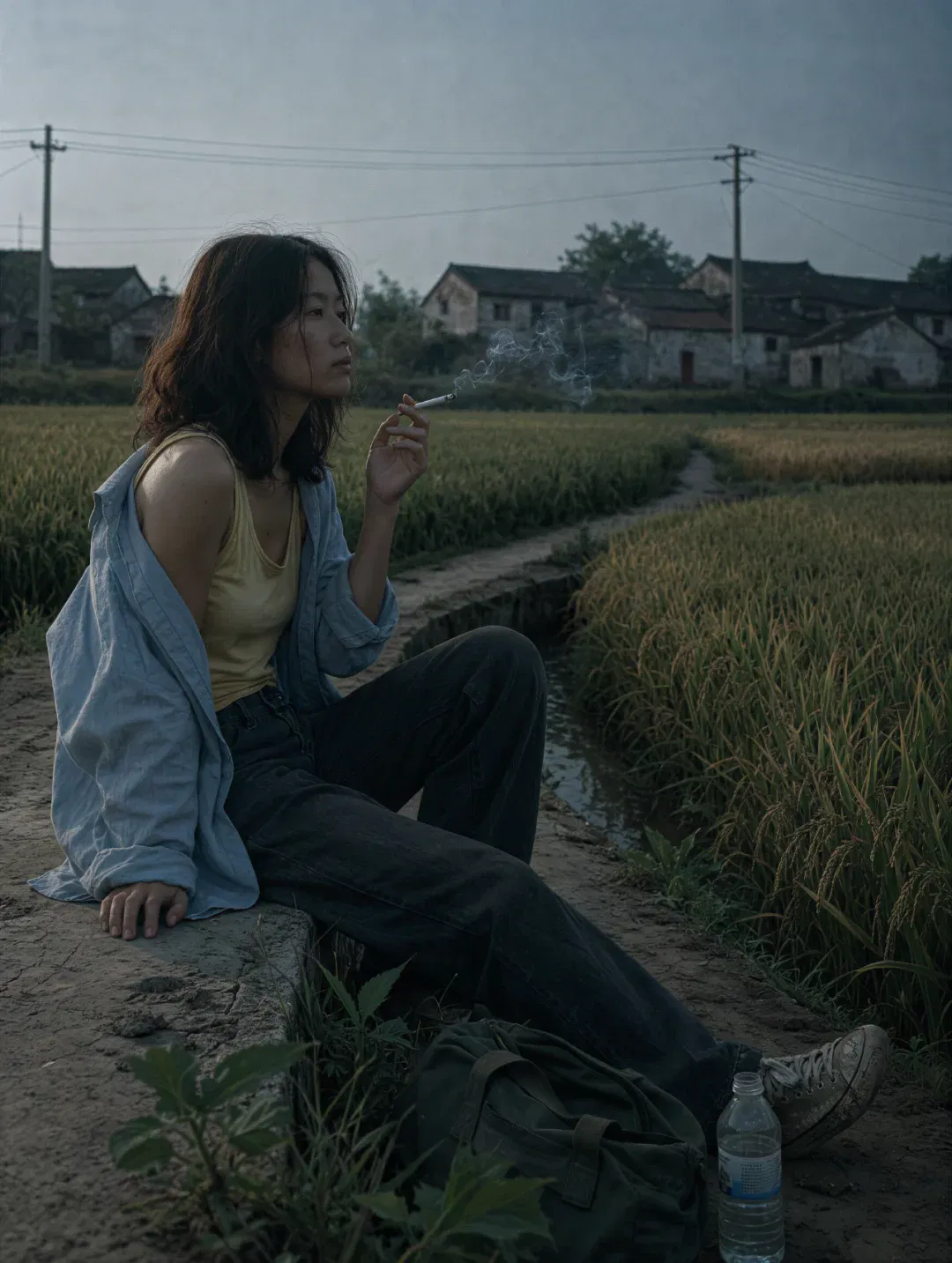


A young woman on a field ridge beneath an overcast sky, a foreign woman buying fruit on a sunny street, children playing in water in summer...
Skin texture, creases in clothing, natural light and shadow, and even the inconspicuous details in the surroundings give these photographs more of the feel of real life.
All these photographs were made with Kling AI's latest image-creation model, Kling Image 4.0.
Yes, the same Kling best known for video generation.
This time, Kling Image 4.0 focuses on improving visual realism, text rendering, complex-instruction comprehension and consistency across images. According to the official description, the new model supports native 8K image generation, up to 2,000 characters of text in a single image, and sets of up to ten coherent images in one generation.
Technically, Kling Image 4.0 uses a unified understanding-and-generation architecture and introduces planning and agentic capabilities to improve its handling of complex visual tasks.
To see how well Kling Image 4.0 performs, Zhidx designed tasks ranging from high-resolution photography and comic creation to storyboard design and game modifications. A look at the results should show whether it really lives up to the hype.
01.
Testing Kling Image 4.0's image quality and editing:
From 8K portraits to game modifications
Starting with image quality, we asked Kling Image 4.0 to act as a photographer and generate a photorealistic portrait of a young Chinese woman, specifying natural skin texture, individual hair detail, and realistic light and shadow.
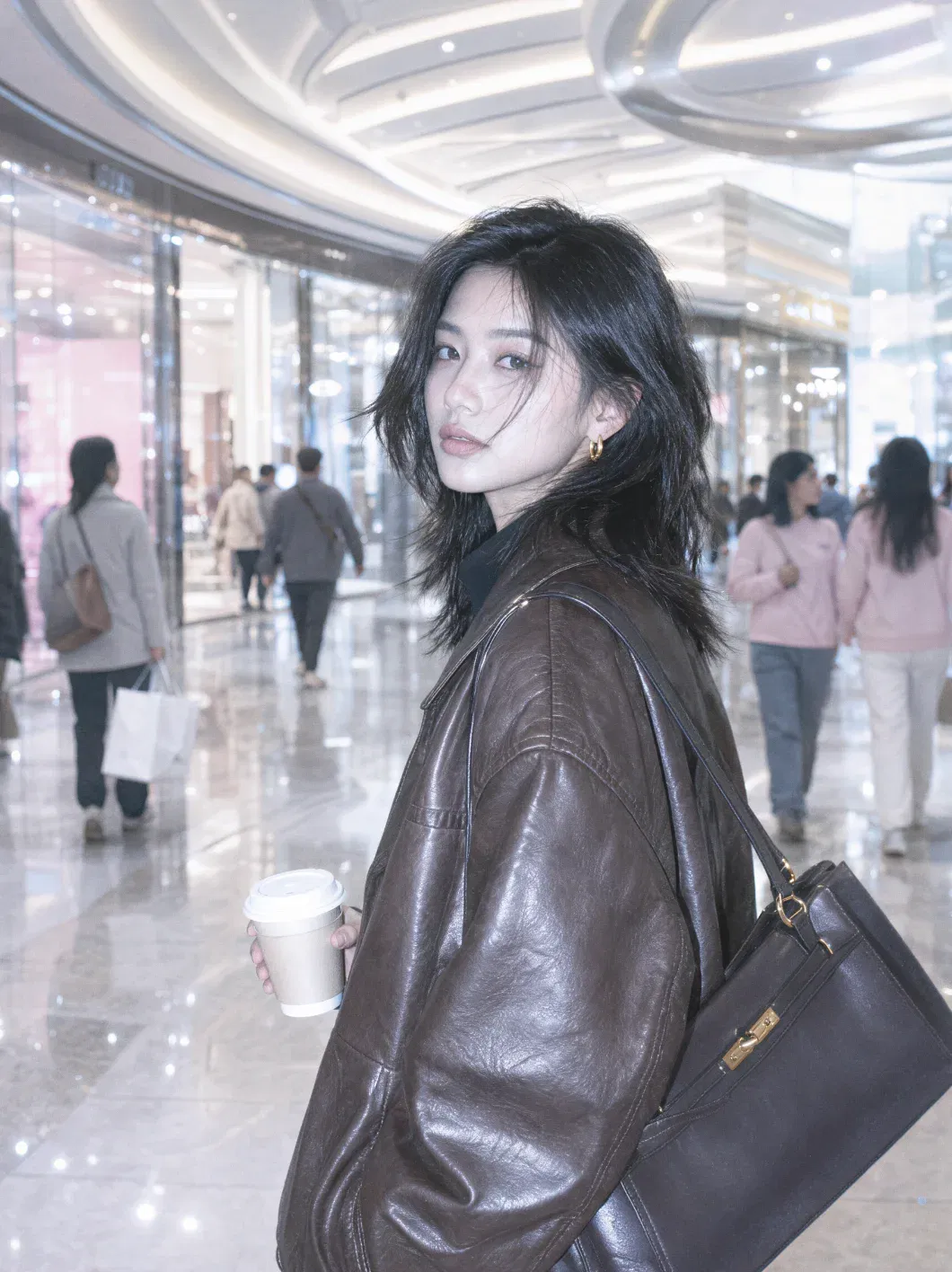
Overall, the image retained a fairly natural photographic quality, with harmonious lighting between the subject and her surroundings and no excessive sharpening or highlights. Still, the realism of both the setting and the person had some flaws.
The advantage of 8K is hard to see in a thumbnail. We enlarged the image and cropped details of the face and leather jacket.
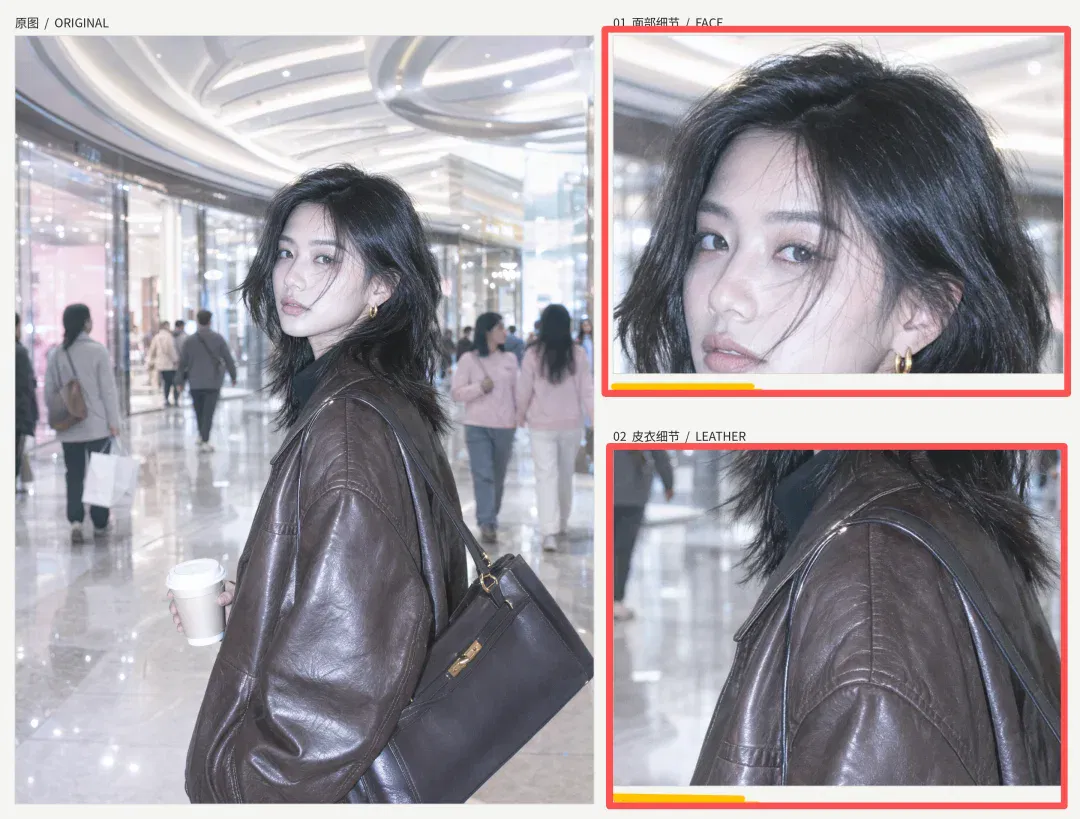
After enlargement, the image still contained fairly rich detail. The eyes, hair and clothing each displayed distinct characteristics, and the skin retained natural variations in light and shade. In particular, the hair strands and clothing textures did not simply dissolve into a blur when enlarged.
Beyond portraits, we prepared landscape-photography tests involving morning mist in a valley, sunrise over snowy mountains and sunset in a desert, taking inspiration from photographer Li Xueliang's approach to light and shadow.
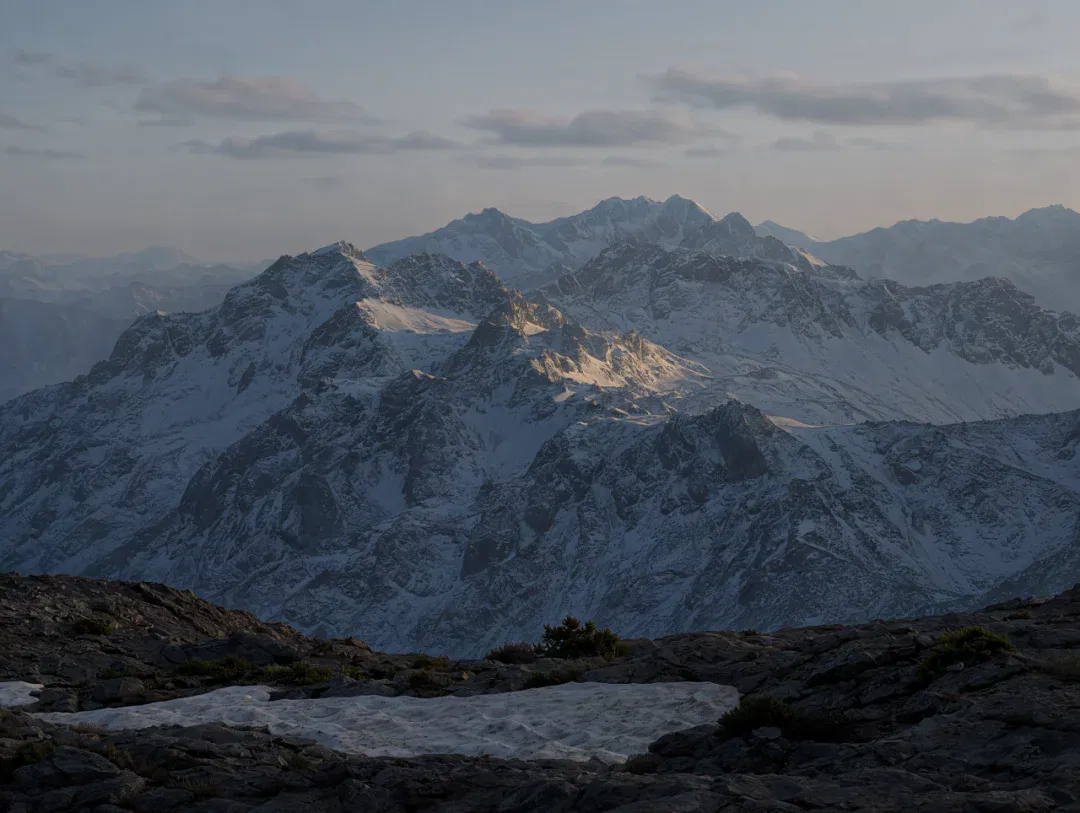
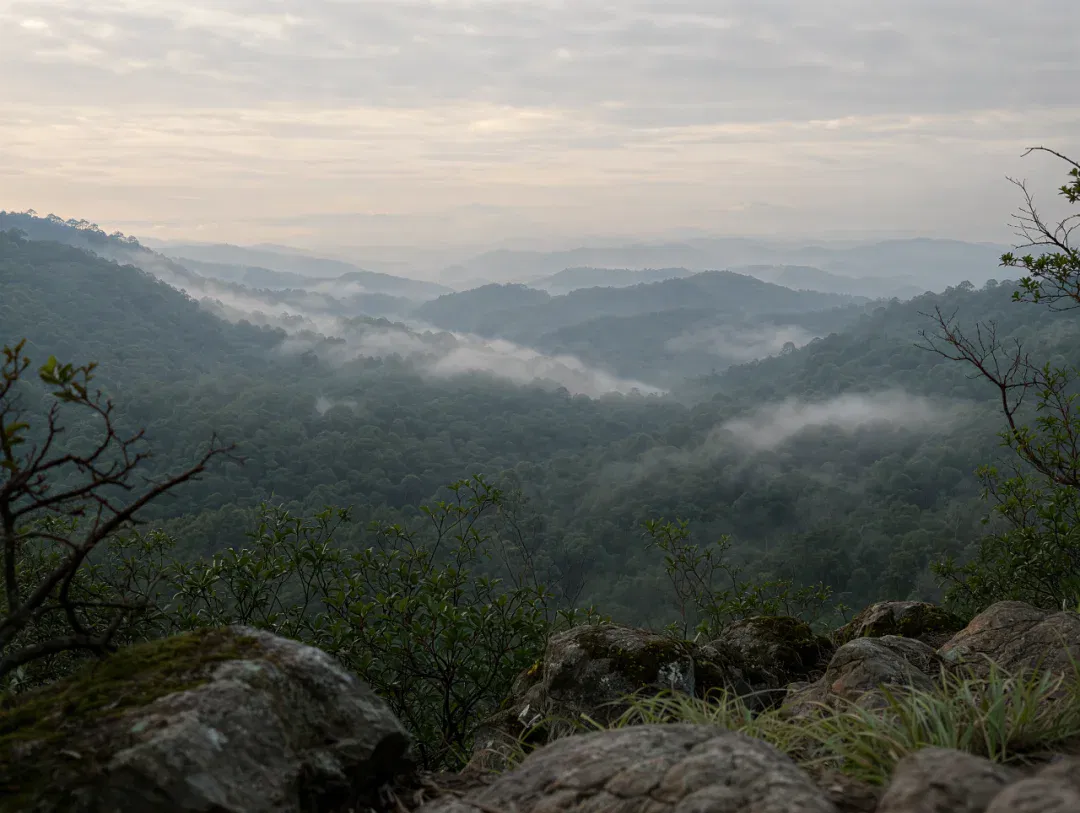

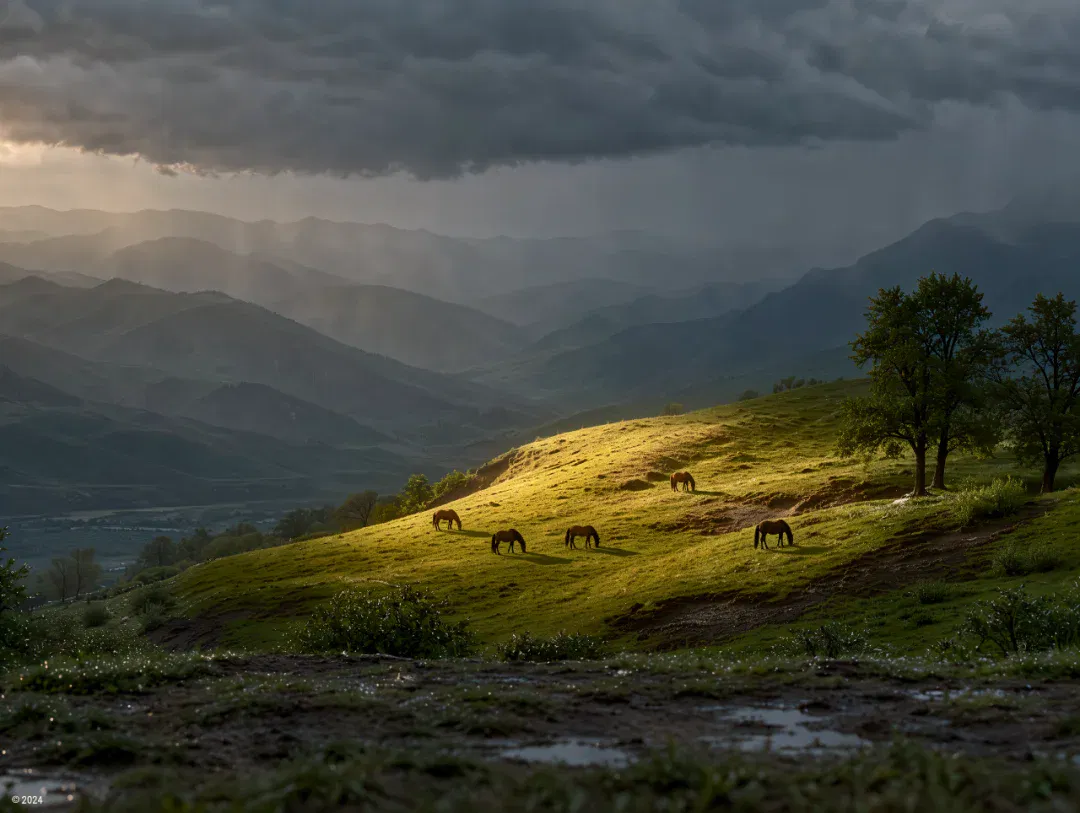
In lighting and spatial depth, the morning mist, ridgelines and sky formed natural tonal transitions, while the snowy-mountain and desert scenes showed different lighting characteristics. The images handled the textures of the natural environment with relative restraint, coming close overall to genuine landscape photographs.
Kling Image 4.0's editing capabilities also held their own alongside its image quality. In the following example, we changed the style of a Western-style wedding group photograph, asking the model to preserve the appearance, positions and clothing of the bride, groom and five relatives and friends while converting the photograph into different artistic styles and changing the backlit setting.
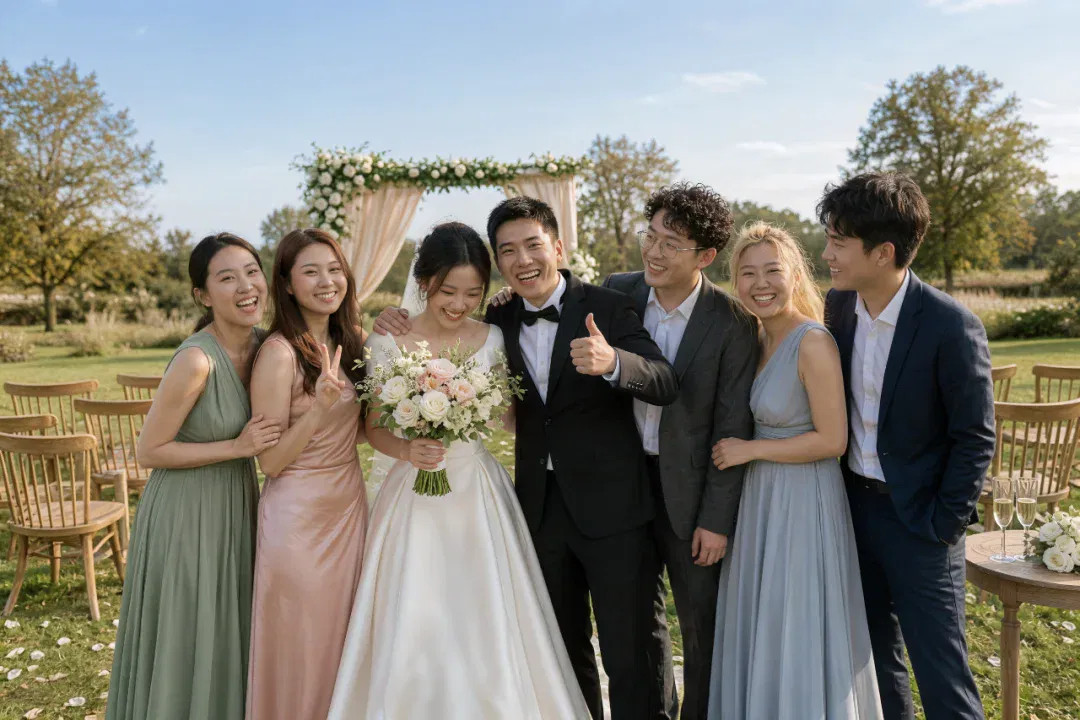
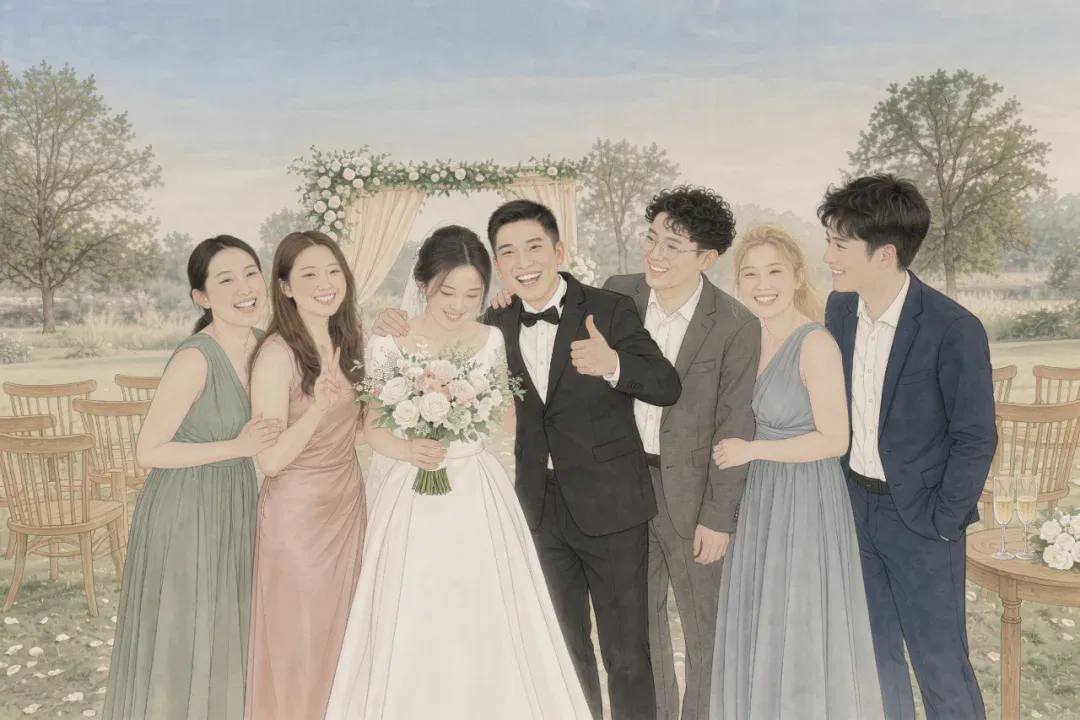
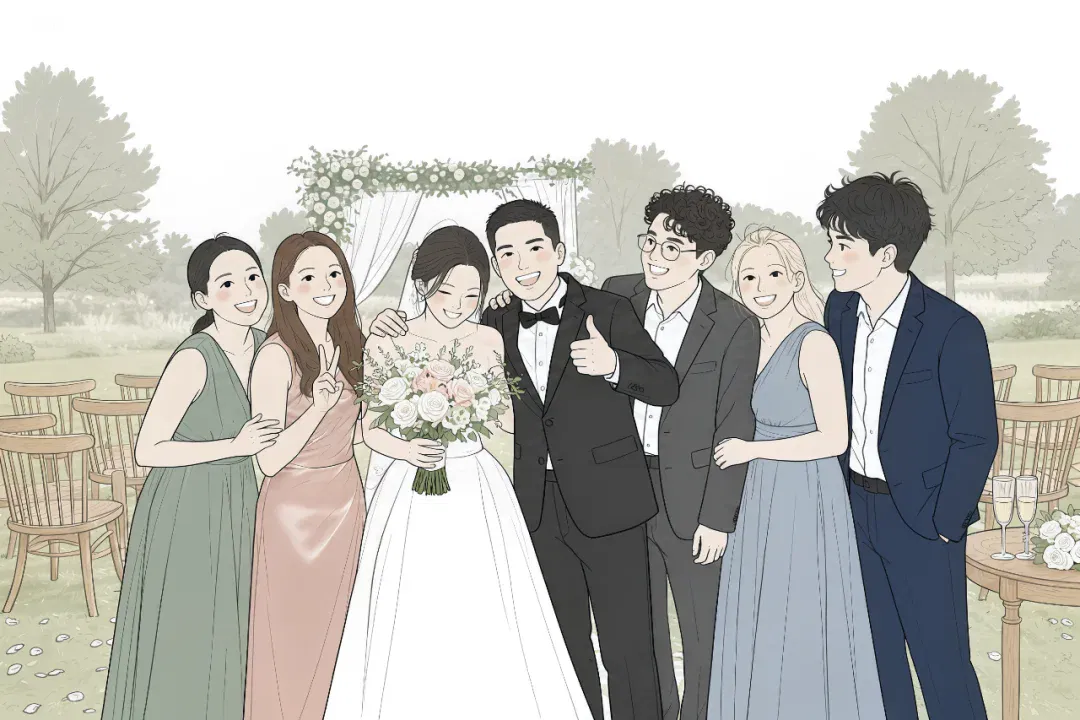
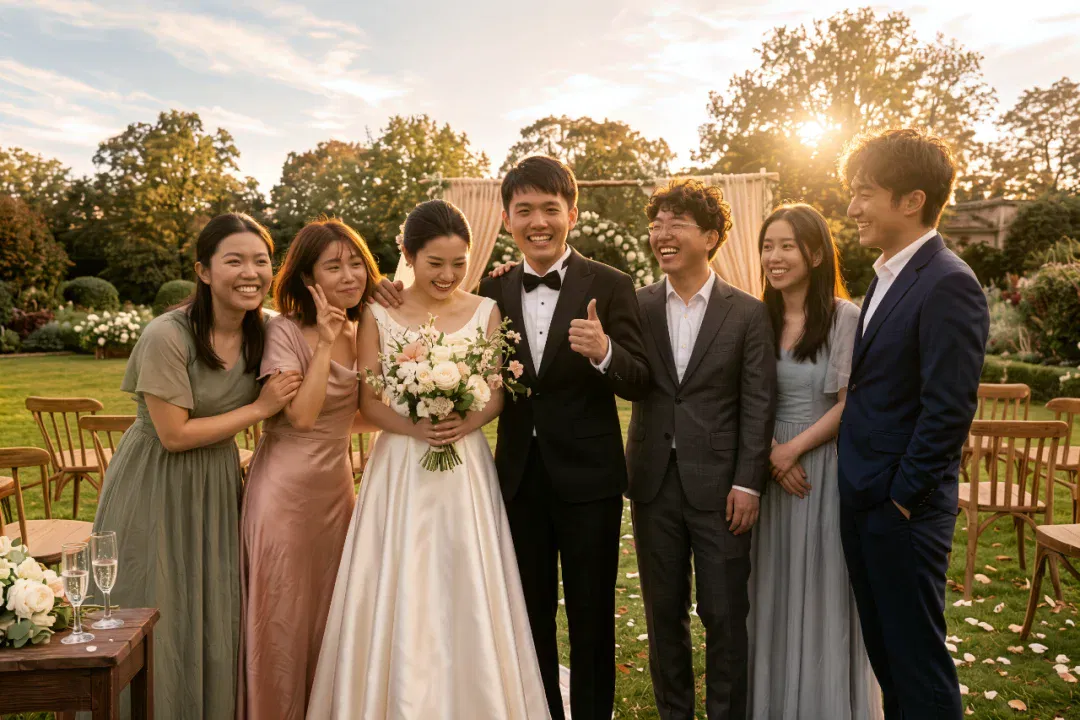
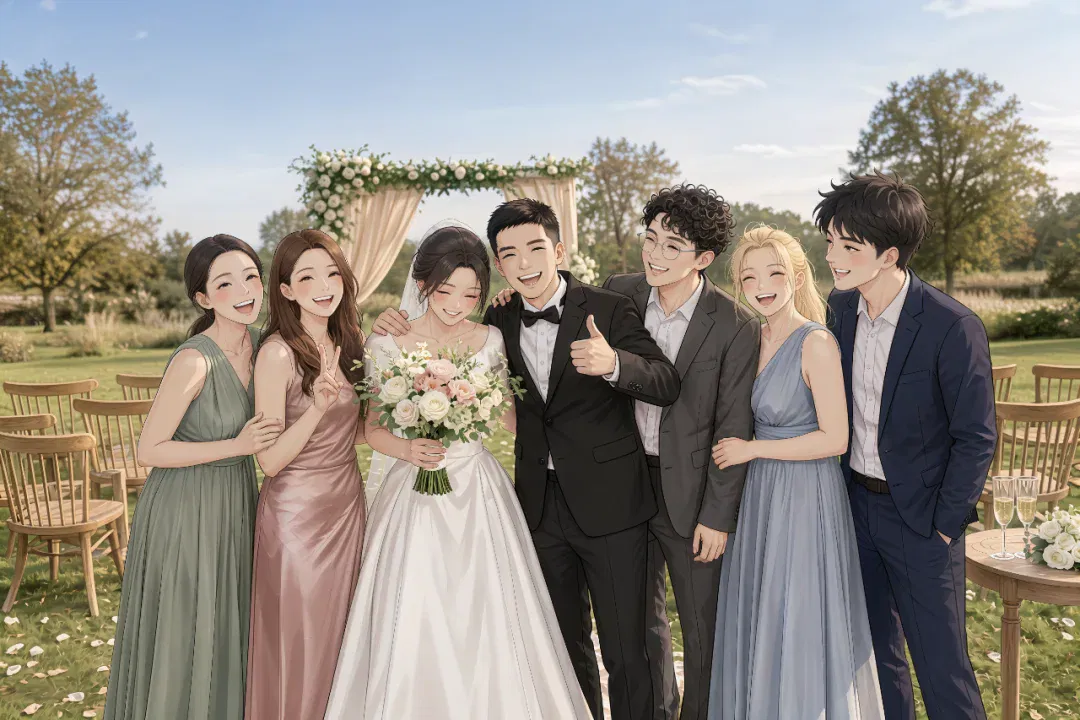
In the generated results, the model transformed the people and their surroundings into a consistent new artistic style and condition, while preserving the original image's main composition and relationships between the people.
Finally, we gave Kling Image 4.0 an entertaining task: dress Soul, the protagonist of Phantom Blade Zero, in Bruce Lee's classic yellow-and-black kung fu outfit, and replace his blades with nunchaku.
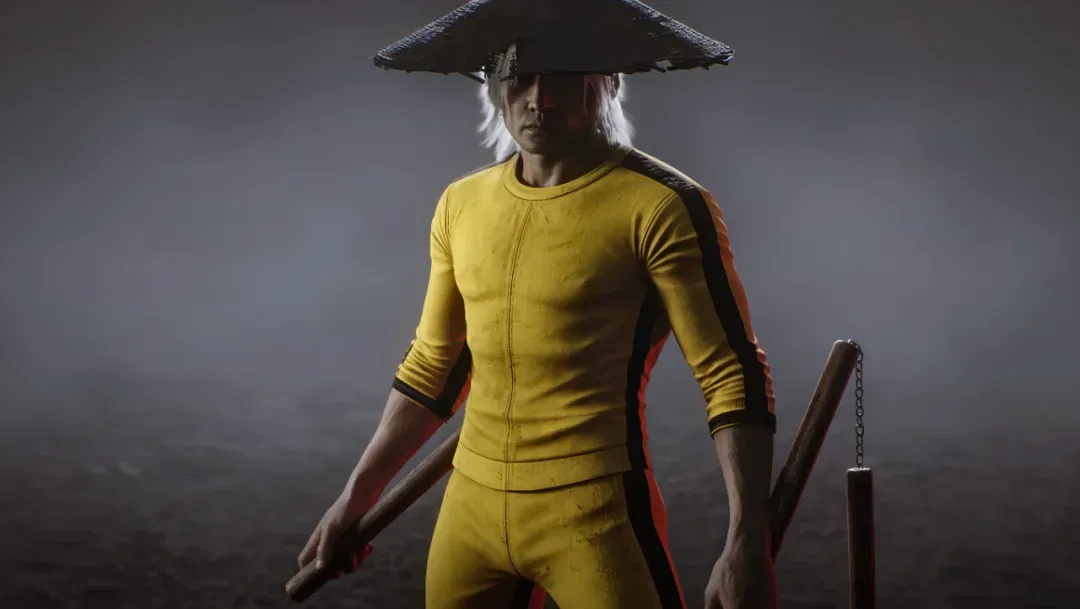
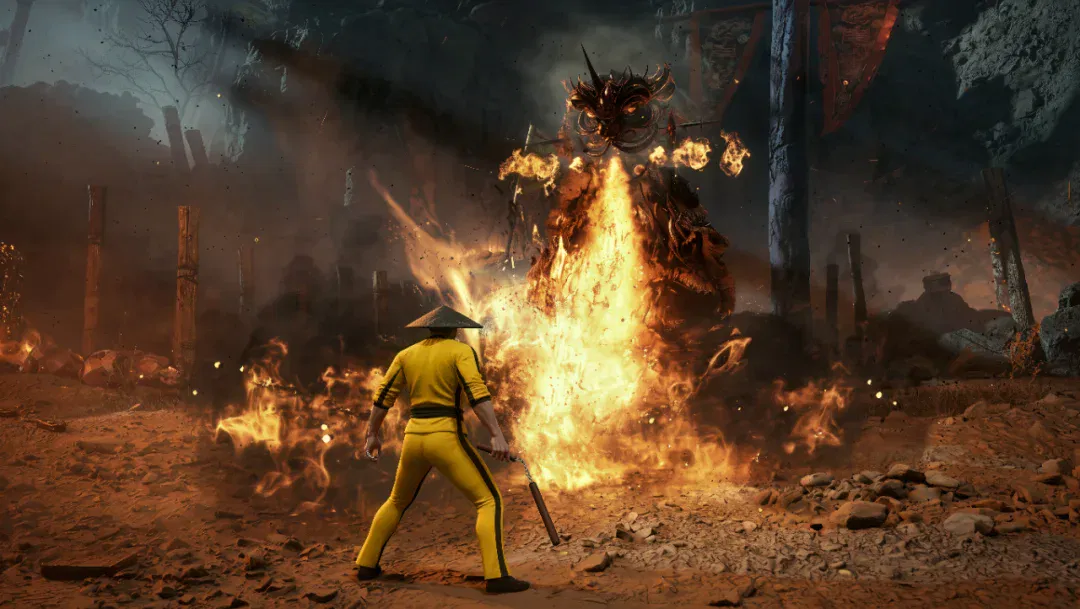
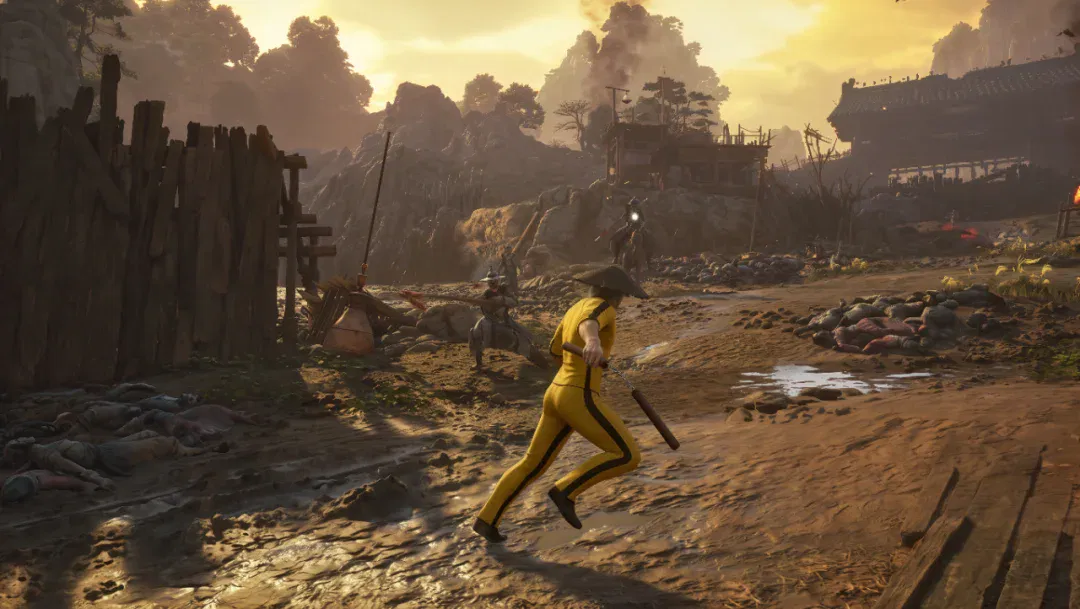
We asked it to preserve the character's original face, hairstyle, movement and game setting, changing only the clothing and weapons.
Overall, the new outfit blended fairly naturally with the original game imagery. Its yellow-and-black coloring created an interesting contrast with the game's existing art style without obviously disrupting the image's visual cohesion.
The weapon replacement also met the core requirement. The nunchaku related reasonably well to the character's movement, producing something close to a game-mod concept design. However, some details remained rough, and certain changes went too far.
02.
Dense Chinese typography and extra-long e-commerce product pages
It can do designers' work too
Next, we asked Kling Image 4.0 to tackle commercial design.
The first task was to create, for a laptop, a complete e-commerce product page.
We uploaded product photographs and asked the model to generate an extra-long product-detail image, including a main product visual, key selling points, exterior details, usage scenarios and specifications, all in a consistent design style.

The model largely succeeded in organizing the information in this long image. The page divided the content into distinct display areas, with a fairly clear hierarchy among the main product, selling-point text and detail images. The overall style was also reasonably consistent.
Typography is another key capability of Kling Image 4.0. We asked it to design a technology-magazine poster on the theme of 'Humans and Machines Working Together,' using cream white, cobalt blue and orange-red, with an oversized headline, an office-scene illustration and roughly 400 Chinese characters of body text.
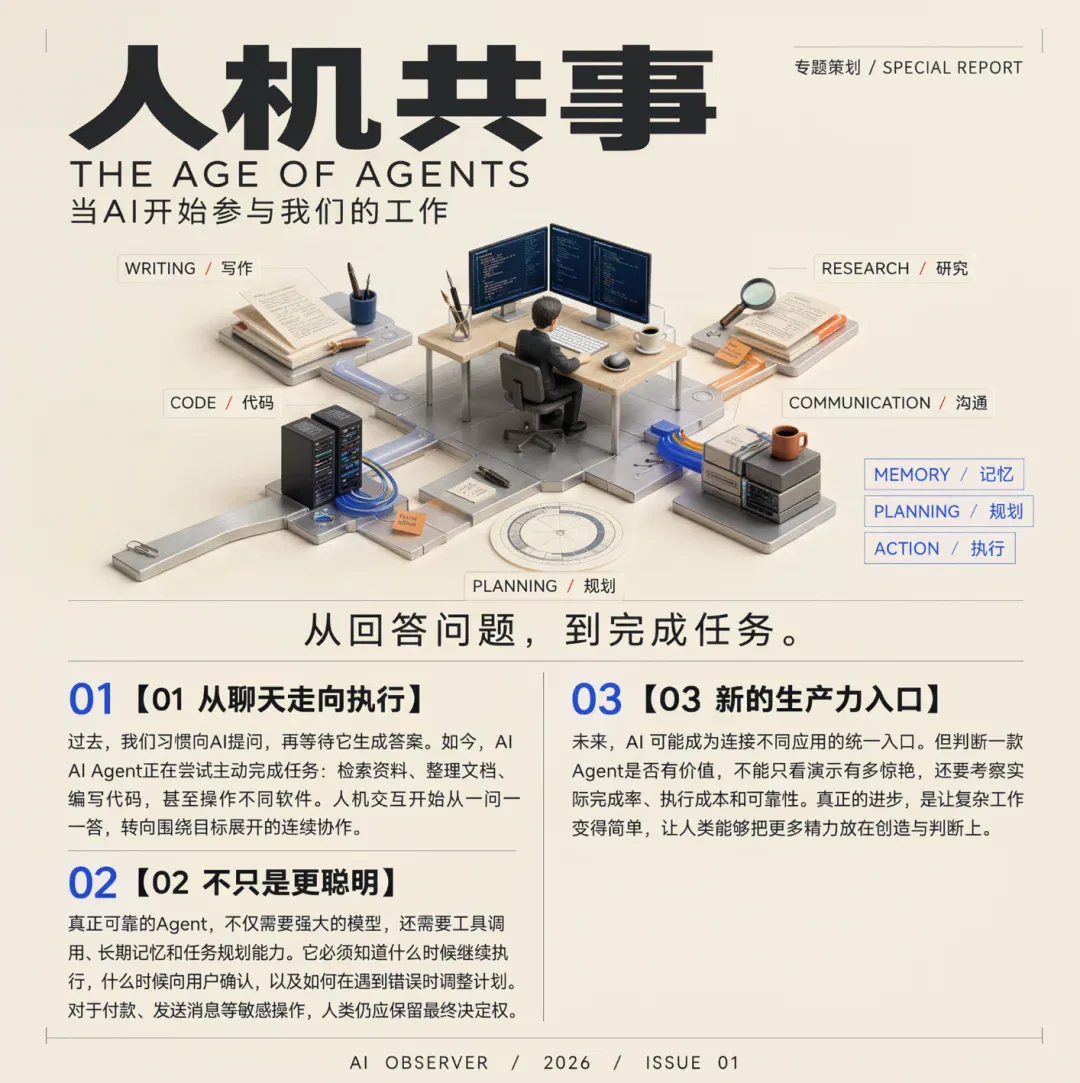
Overall, the headline, body text and illustration occupied separate areas, creating a fairly clear information hierarchy. The colors and typography also formed a reasonably consistent visual style, although the overall layout lacked some design flair. In addition, tests with dense layouts containing more text produced some text errors.
We further tested localized editing by asking Kling Image 4.0 to change the font and some of the text.
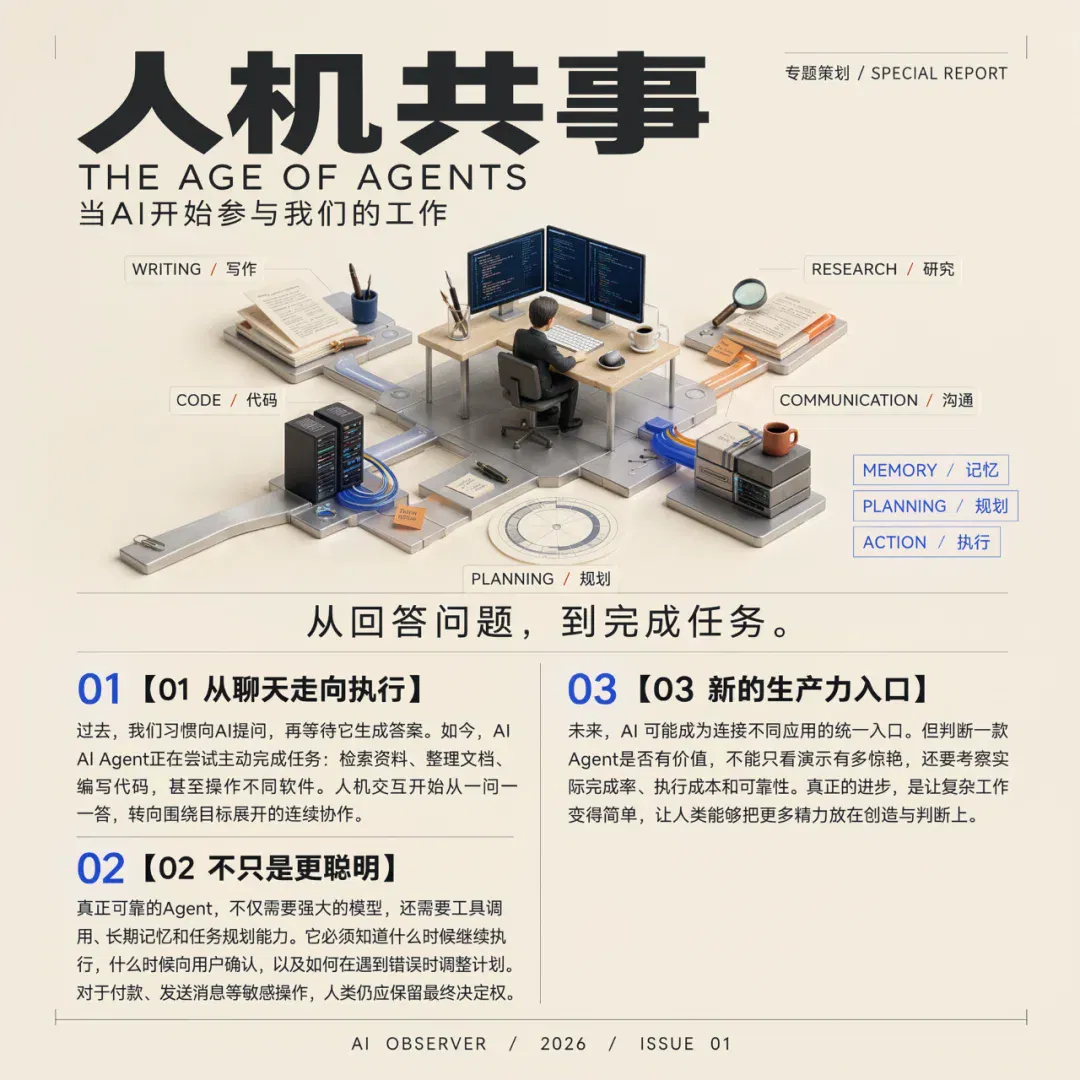
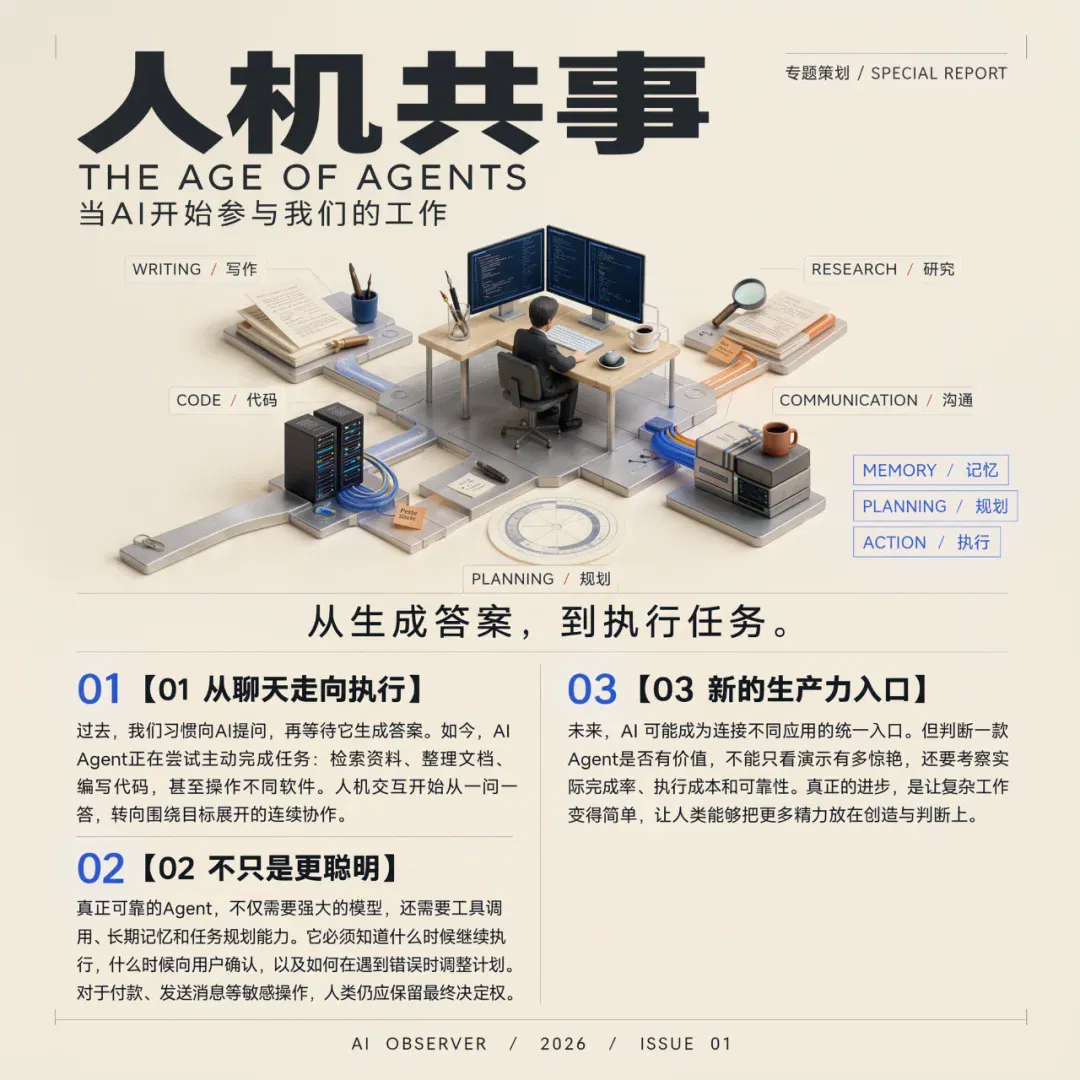
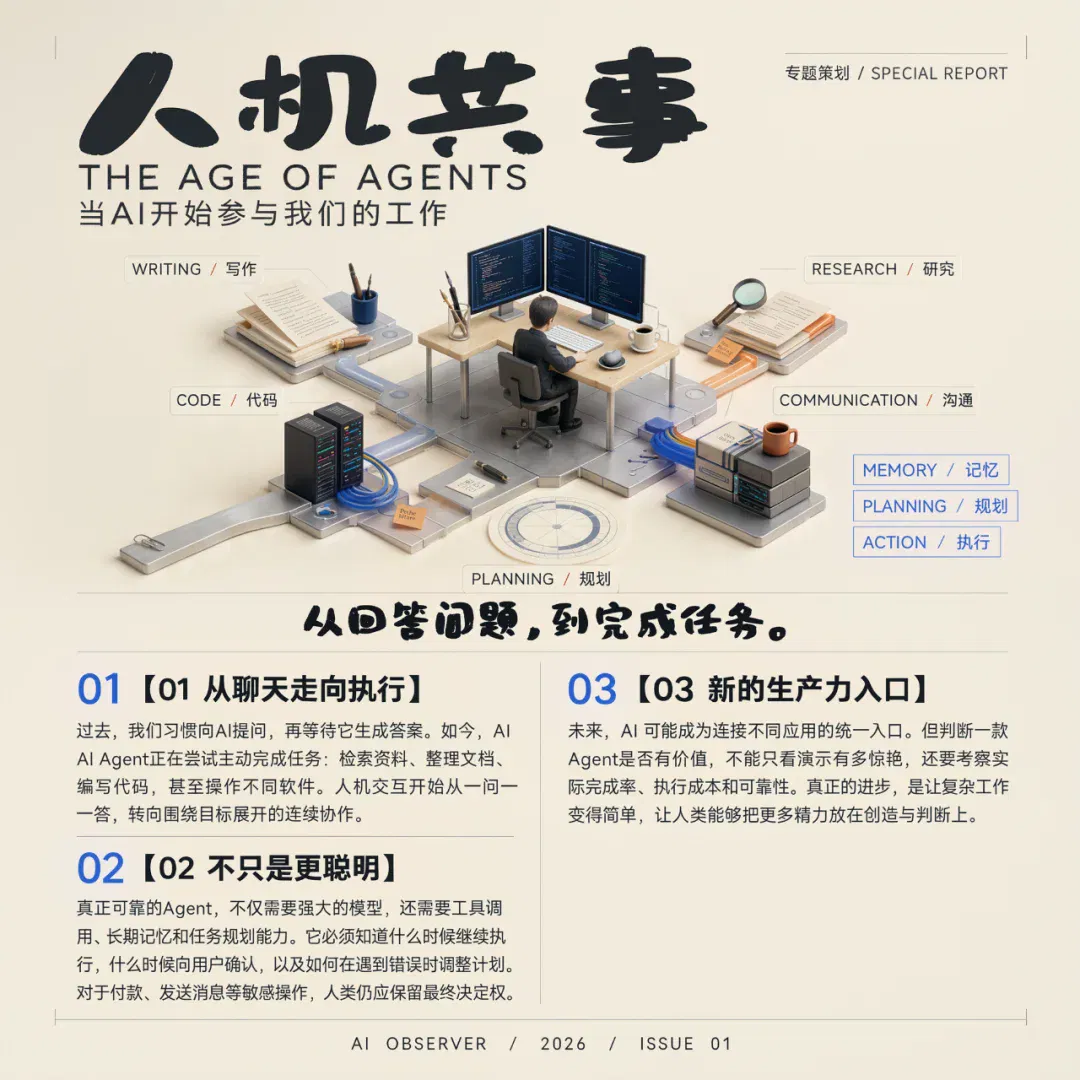
As shown, both the font changes and localized text edits were quite precise. These capabilities are practical in commercial design: changing a headline or adjusting copy after finishing a poster is routine.
For product marketing, we also prepared three product photographs—a sneaker, a wristwatch and a laptop—and asked the model to design an advertising poster in a different style for each.
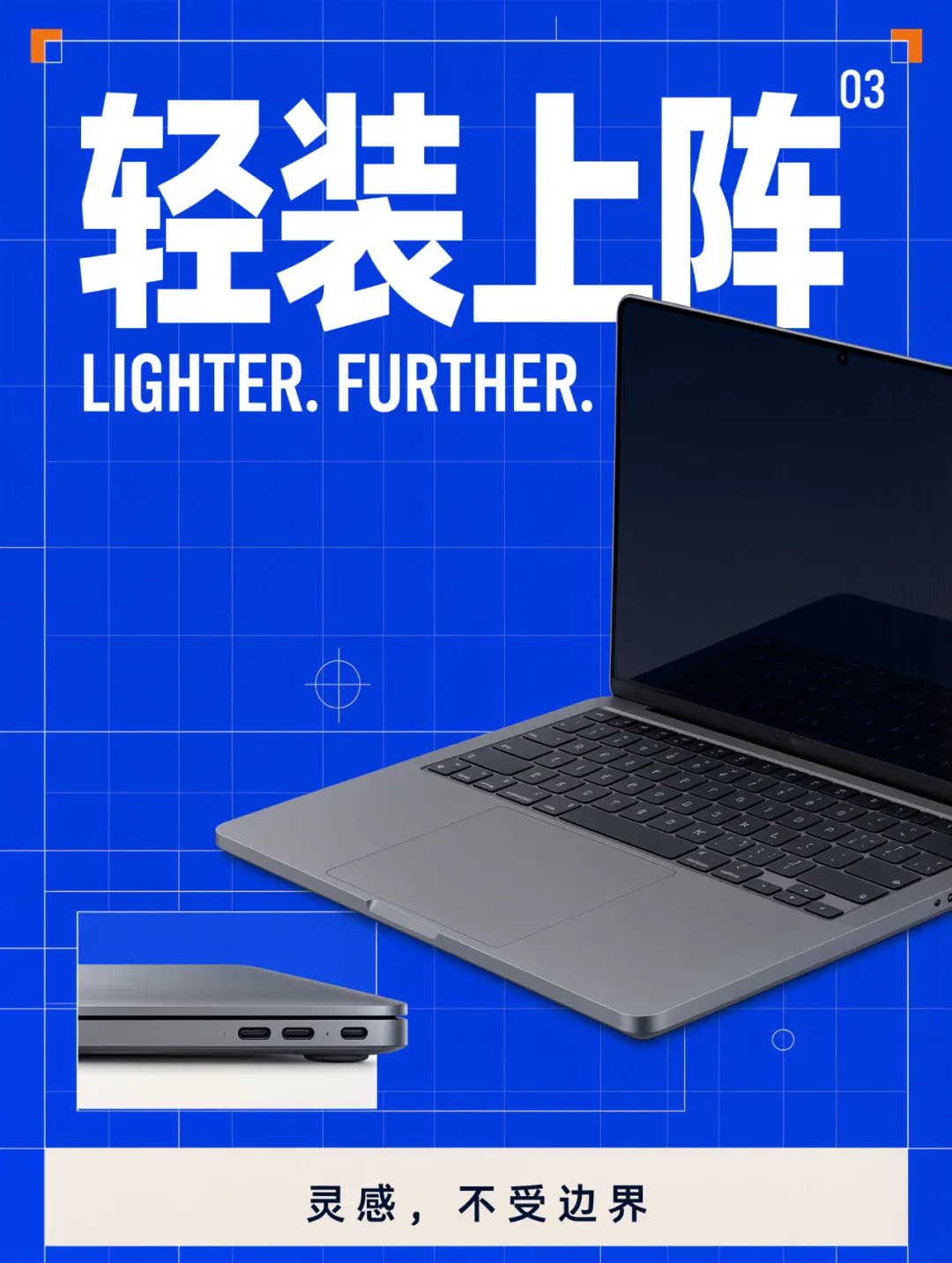
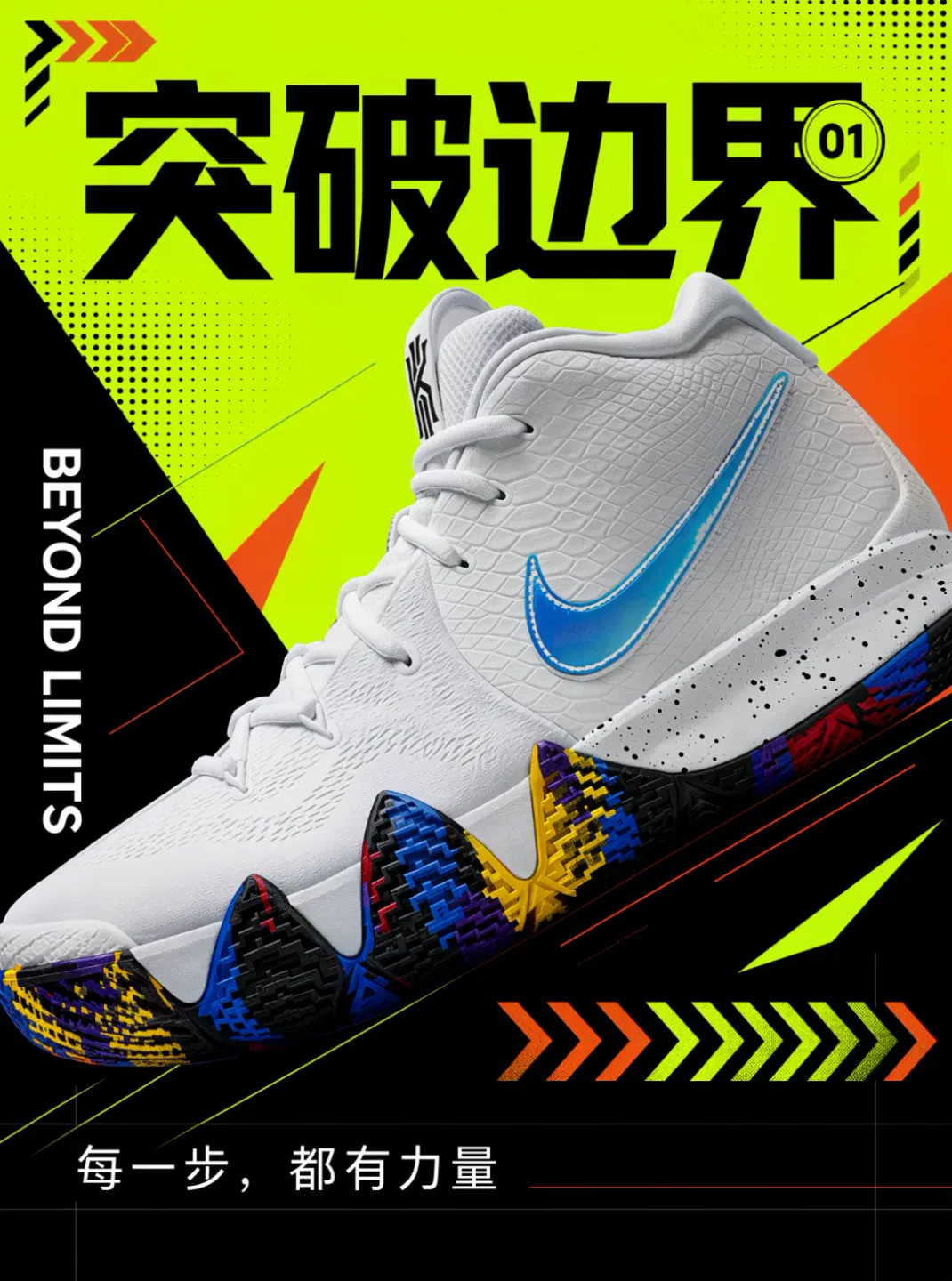
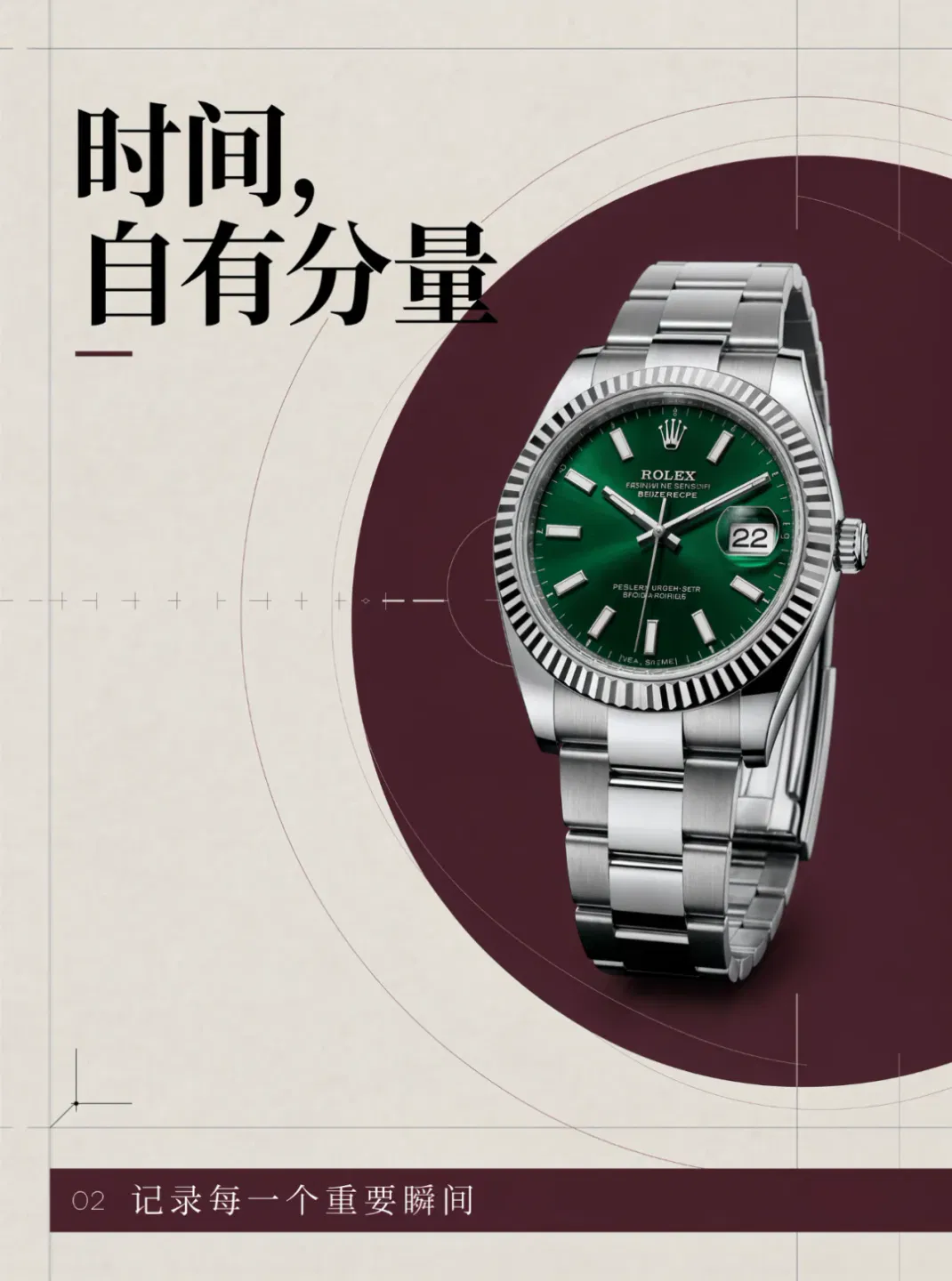
The three posters showed fairly distinct styles. Kling Image 4.0 adjusted their colors, compositions and typography to suit each product. In the displayed results, the products blended fairly naturally with the background elements, and the posters showed a reasonable degree of finish as commercial designs.
Beyond conventional product posters, we tried two sets of more creative artistic designs.
For the first, A SMALL UNIVERSE, we asked the model to build a miniature city inside a cup of coffee, with a magazine-style headline and layout. For the second, Hearing Colors, we asked it to turn abstract sound into a giant orange-red glass sculpture, adding exhibition information in Chinese and English.
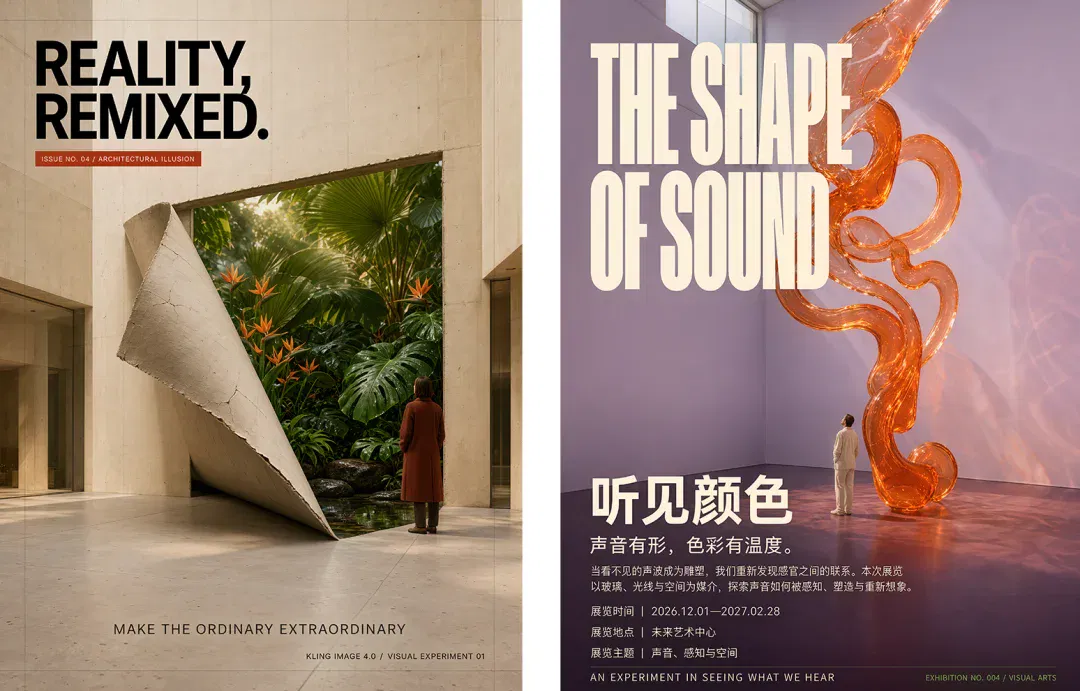
Both sets captured our ideas fairly well. The first naturally combined miniature buildings with a real café setting, using the contrast in scale to create an interesting visual effect. The second conveyed a strong artistic quality through transparent glass, complex curved surfaces, and the refraction of light and shadow.
Overall, Kling Image 4.0 can handle conventional commercial design as well as turn relatively abstract ideas into visual works with complete compositions and layouts.
03.
Ten comic-drama storyboard frames from one sentence
Cinematic imagery straight from the model
Single images are only part of Kling Image 4.0's capabilities. Creating image sets is another focus of this upgrade. In the following tests, we asked Kling Image 4.0 to generate ten storyboard frames at once to see whether it could tell a story well.
The first was a suspense comic drama called Midnight Train. A young woman waiting alone in a subway station late at night finds a red ticket. When the last train arrives, she discovers her own self from ten years in the future standing inside.
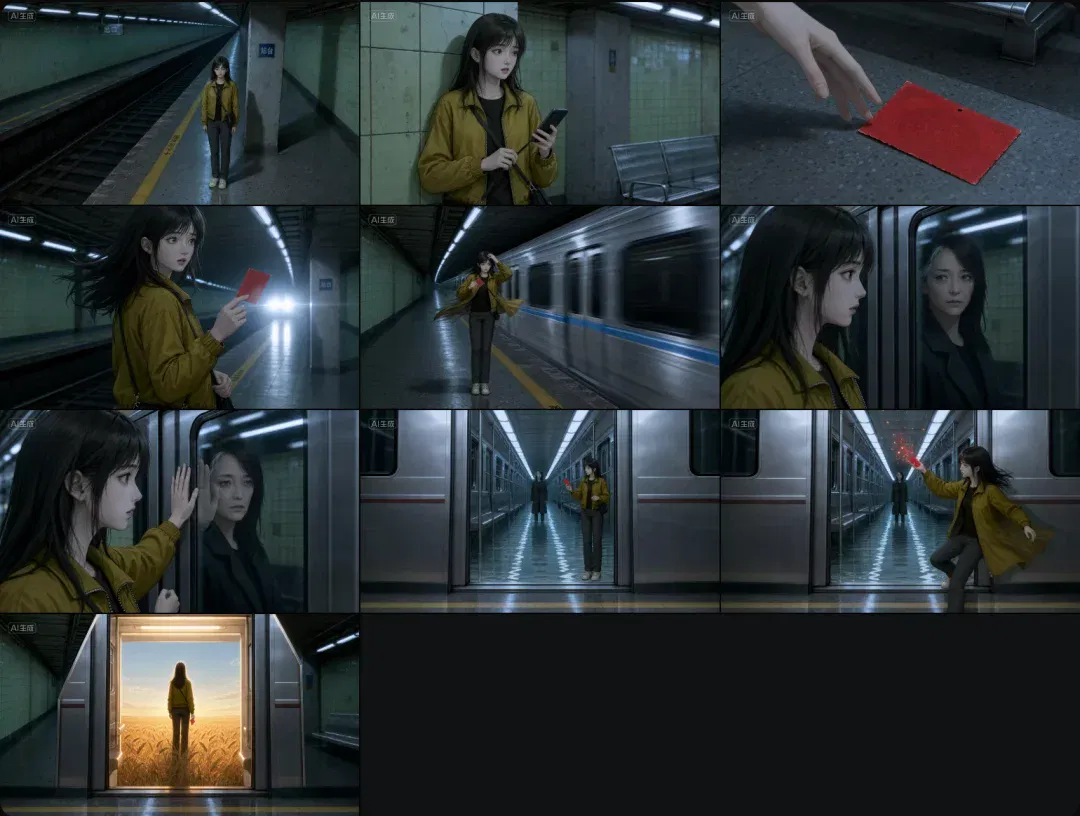
The image set had fairly clear narrative relationships between frames. The shots were not confined to a single scale: wide shots, closer views and character close-ups gradually advanced the plot. The protagonist's clothing and overall appearance remained fairly consistent across the sequence.
The second set was a dream story that rings true after working overtime: An Office Worker's Mental Resignation.
The protagonist is a young Chinese programmer working overtime. His body is at his desk, but his mind has already traveled to the seaside, snowy mountains, a desert and even outer space. Just as he is immersed in his travels, a message suddenly pops up on his computer: 'There's a bug we need you to stay late and fix.'
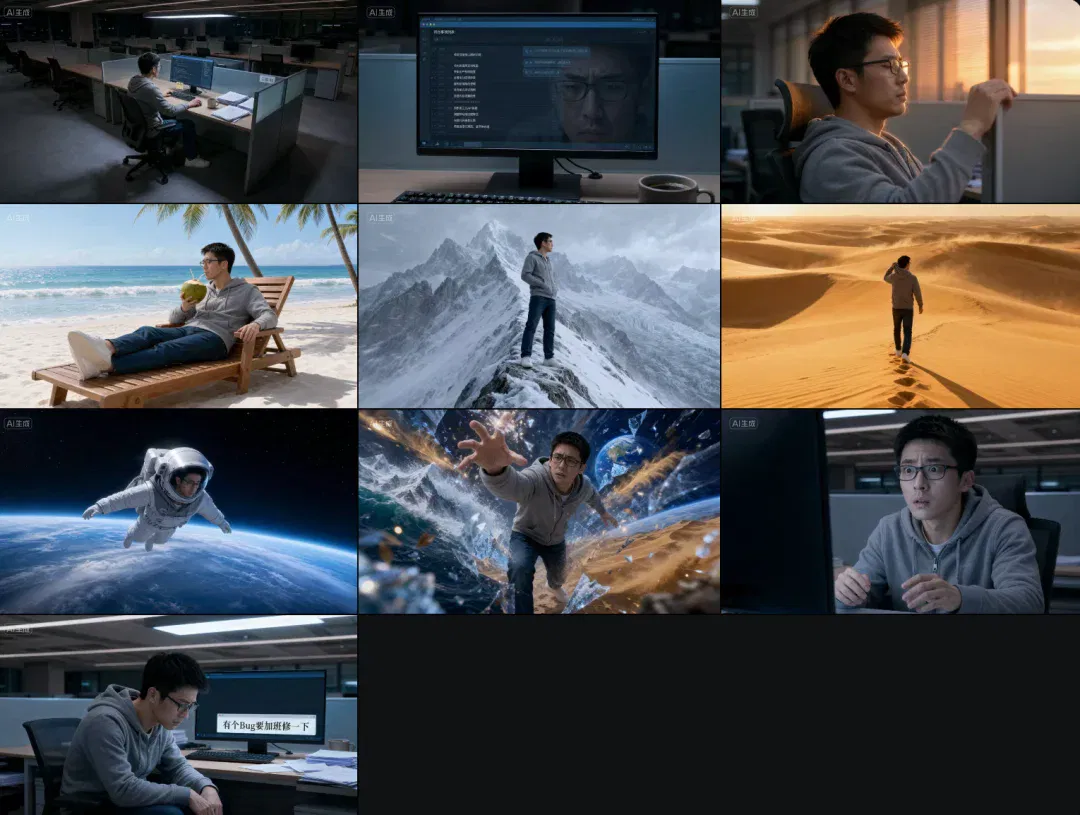
The results showed that it could organize different scenes according to the story outline and move the plot forward, with some variation in pacing between images and distinctive environments. However, some shots still looked rather plastic.
Besides these two stories, we asked Kling Image 4.0 to create a Xinjiang landscape documentary storyboard.
We asked the model to photograph the same valley from dawn to sunset, generating ten landscape photographs from different angles and under different lighting conditions.
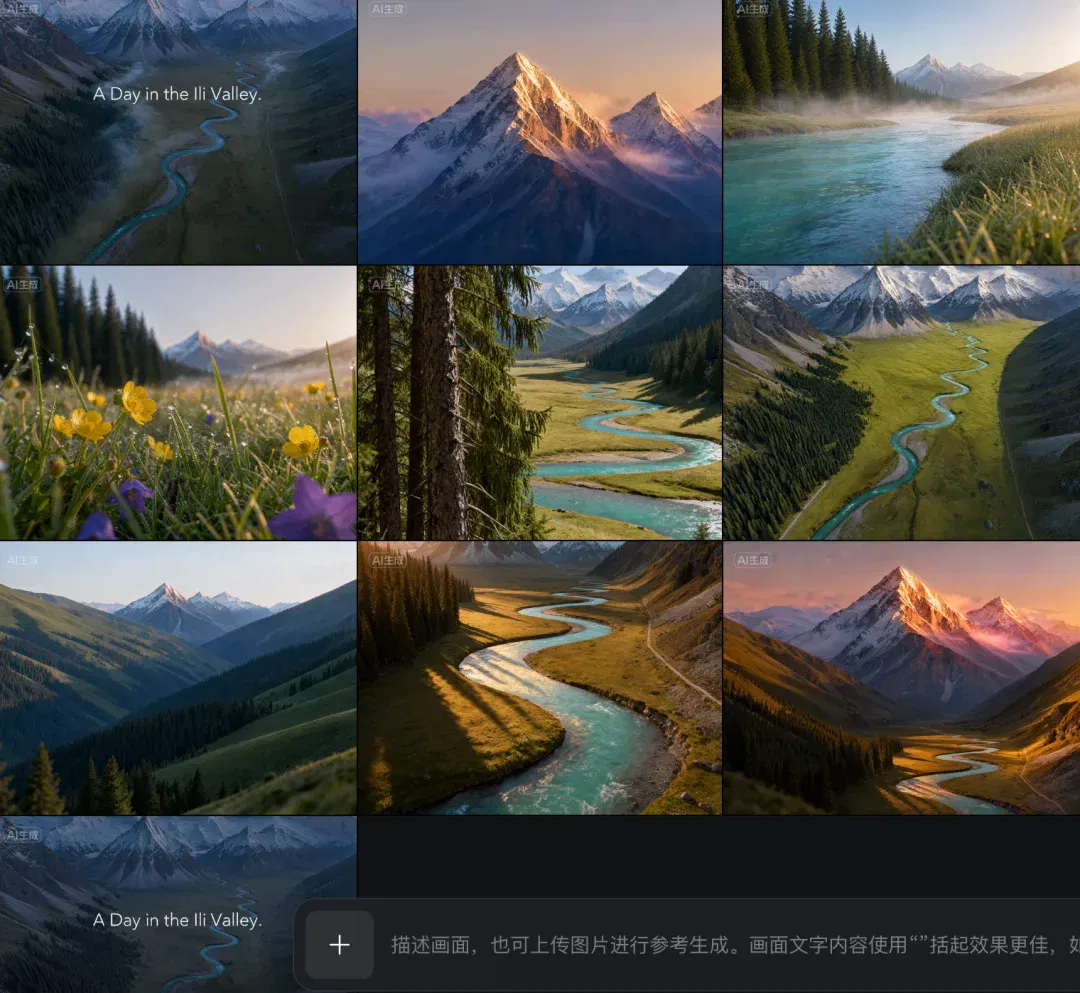
The cool tones of early morning, bright natural light at noon and deepening blue atmosphere in the evening gave the same valley different visual appearances. The shots also differentiated aerial views, wide shots and detail framing. The set maintained a fairly consistent documentary-photography style.
Beyond continuous image sequences, Kling Image 4.0 supports other interesting approaches, such as conveying a cinematic shot with a sense of narrative in a single frame.
We asked the model for a film still about a breakup: late at night in a rented apartment, a young woman sits alone at a dining table. Two unfinished dinners sit on the table, but the other chair is empty.
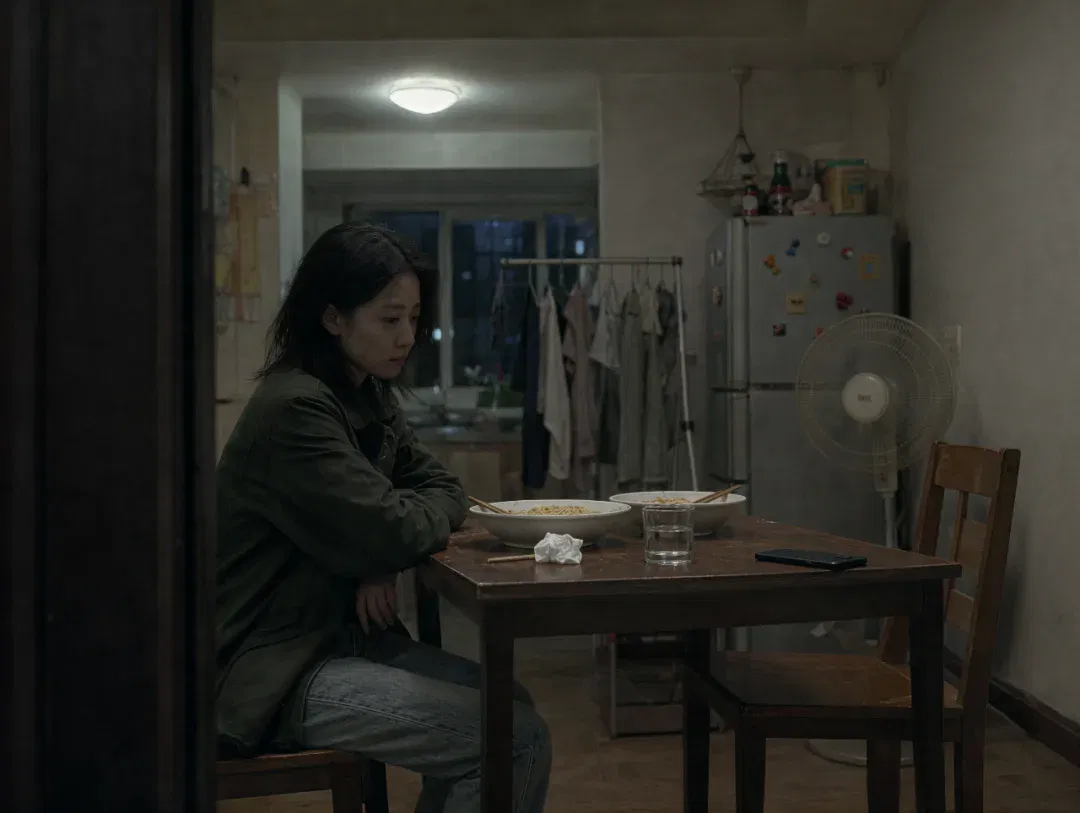
The image's emotional expression was relatively restrained. We did not ask for tears or an exaggerated look of sadness, only for the model to convey the sense of loss after a breakup through the person's expression, shot composition and everyday details.
Another example was replacing a green-screen background. We first generated an actor performing an action in a green-screen studio, then replaced the background with a city at night and Jurassic Park.
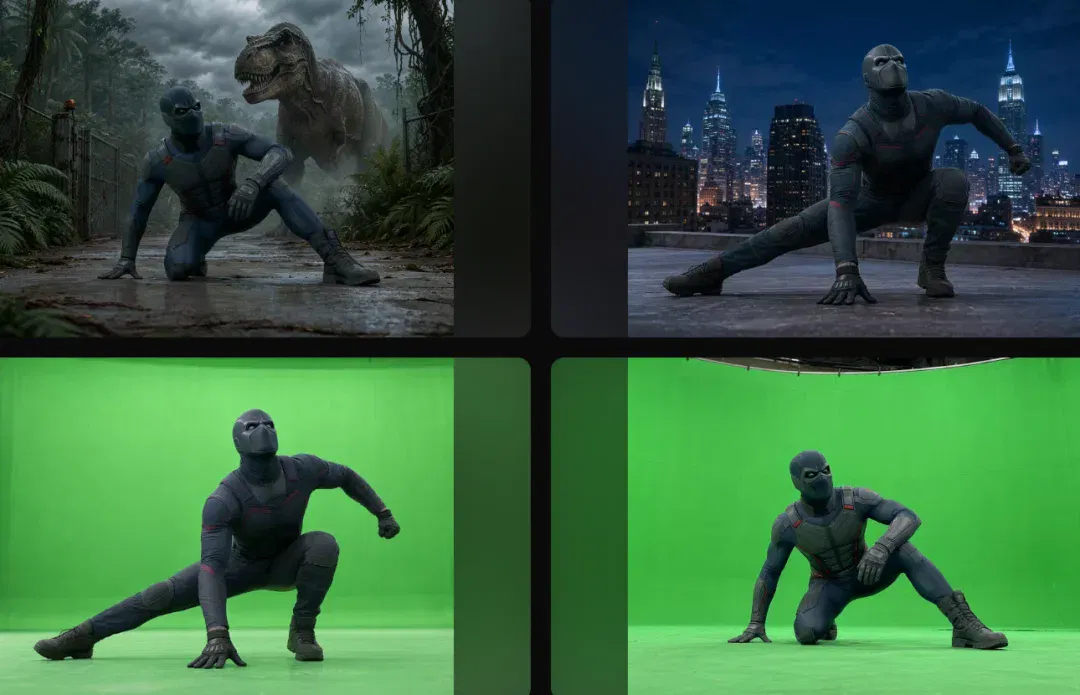
The modified images preserved the actor's main movement and appearance, with fairly consistent lighting between the person and the new background, achieving some of the effect of a composited film scene.
There is also image generation from hand-drawn sketches. We drew a simple Western-style wedding sketch and asked the model to infer the relationships between people from the lines, turning the scene of a bride walking arm in arm with her father toward the groom into a realistic photograph.
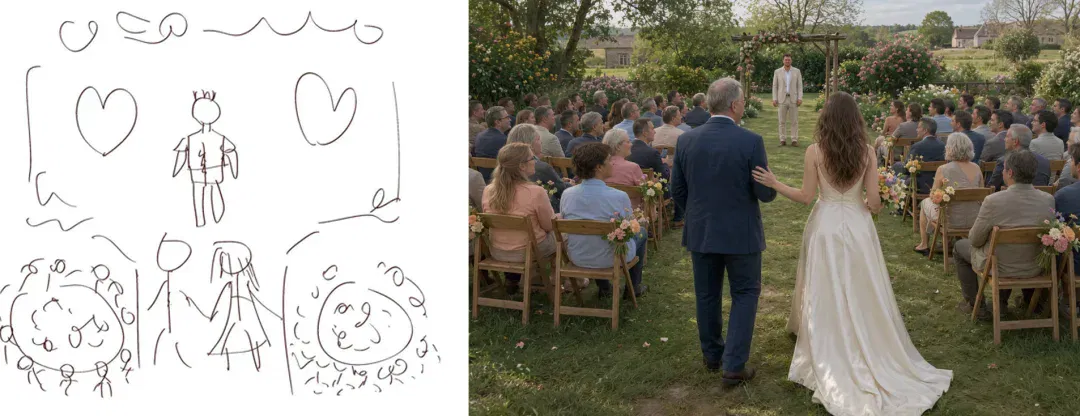
Even though the reference was extremely rough, the model identified the principal people and their spatial relationships, adding wedding details such as chairs, floral arrangements and guests to turn the simple sketch into an image that felt like an actual setting.
From comic dramas and short stories to landscape documentaries, these tasks demand more than attractive images: they also require continuity among characters, settings and shots.
04.
AI image competition moves toward complex creation
Kling's image capabilities deserve attention in their own right
As AI image-generation technology matures, image quality alone is making it increasingly difficult to stand apart in the market.
Mainstream AI image models can now generally produce good-quality portraits, landscapes and creative images. Previously common problems such as deformed people and distorted imagery have also improved markedly.
In actual design, advertising and film production, however, generating an image is usually only one part of the creative process. The model may then need to adjust local details, edit text, or produce a complete body of work around the same theme.
This is also the focus of Kling Image 4.0's technical upgrades.
At the architectural level, Kling Image 4.0 uses an entirely new unified understanding-and-generation architecture, with a single Transformer at the core of both visual understanding and image generation.
Unlike approaches combining a language model with a diffusion model, Kling Image 4.0 uses a unified autoregressive model to bring world knowledge, visual perception and image latent space into the same context, improving its understanding of physical laws, spatial relationships and complex instructions.
Kling Image 4.0 also introduces a structured visual representation mechanism for processing different visual elements, including subjects, spatial layouts, shot lighting and shadow, and temporal relationships across frames.
Combined with support for long instructions of up to 15K tokens, the model can understand numerous detailed constraints at once and apply them to tasks such as complex typography, editing multiple source materials and continuous storyboards.
Kling Image 4.0 has also introduced native agentic capabilities, enabling task decomposition, planning and tool calls around complex visual requirements to organize multiple creative steps.
These technical upgrades correspond to the image editing, complex layouts and continuous image sets covered in the hands-on tests above.
For Kling, however, image generation has another significance.
When Kling AI is mentioned, many people still think first of video generation. Although video has helped Kling build substantial name recognition, image creation also deserves more attention in its own right.
The launch of Kling Image 4.0 can be viewed as an attempt to further strengthen its image products' competitiveness.
There are, in fact, many creative steps that connect image and video generation. An image model might first produce character, setting and storyboard designs, for example, before those assets are used in subsequent video production.
For Kling, image generation can both expand its user base and commercial market as a standalone product and complement its existing video-generation capabilities.
05.
Conclusion: beyond video
Kling broadens its AI visual-creation offering
Overall, Kling Image 4.0 demonstrated fairly comprehensive capabilities across tasks ranging from high-resolution photography and commercial posters to sequential storyboard design.
In practical use, however, whether the output meets creators' requirements, and how much time subsequent revisions require, remain important factors in determining how useful a model is.
Video generation has already earned Kling strong market recognition. The launch of Kling Image 4.0 is an important further step in strengthening its image-creation capabilities.
The complementary image and video paths also give Kling an opportunity to reach a broader group of creators and expand its commercial prospects.
This article comes from Zhidx. Author: Bi Weihao.
After reading
Join the AINRK community
Read how to join the community and connect with people working in AI.
Related articles
Continue reading related topics and articles in this category.
可灵憋了8个月,放出一只“参数怪”:30秒一镜到底,10个关键帧,HDR和双声道也来了 (opens in a new tab)
可灵AI发布时隔8个月大版本更新的旗舰视频生成模型Kling 4.0及轻量版Kling 4.0 Flash,单次原生生成时长提升至30秒,最多支持10个关键帧输入,新增双通道立体声输出,并将很快推出4K 10-bit HDR格式。

开源国产8B模型,比肩闭源Image 2了! (opens in a new tab)
商汤科技这次正式开源的SenseNova U1.5 Lite,其亮点如下:而且啊,SenseNova U1.5 Lite依旧保持了8B的大小,还能在复杂排版与精准编辑等核心的场景上比肩闭源的GPT-Image-2:
晚点独家丨快手计划分拆可灵 AI,融资 20 亿美元参与 (opens in a new tab)
快手计划分拆旗下视频生成大模型业务可灵 AI,以 200 亿美元估值融资——截至今天港股收盘,整个快手公司目前的市值不到 290 亿美元。可灵当前的年化收入(ARR)已经达到 5 亿美元,已比春节前翻倍。
等等,这些图是GPT-Image-2出的?! (opens in a new tab)
使用 GPT Image 2 甚至不太需要过于复杂的提示词,我们的测试都是一两句简单的画面描述,或者再加上图片尺寸要求,如 21:9、16:9、9:16 等。 例如让它生成广州市小学数学试卷。
可灵2.5 Turbo太凶残:30%成本暴降+效果飞跃,生成体操动作可去参赛 (opens in a new tab)
刚刚,快手可灵AI基座模型再升级,推出可灵2.5 Turbo视频生成模型。AI视频玩家抹一把老泪,终于有AI视频模型让运动员们拥有不鬼畜自由了!a16z合伙人在𝕏上分享了一个可灵2.5 Turbo生成的视频: