MiniMax Code lead on why review and task management matter as AI writes code
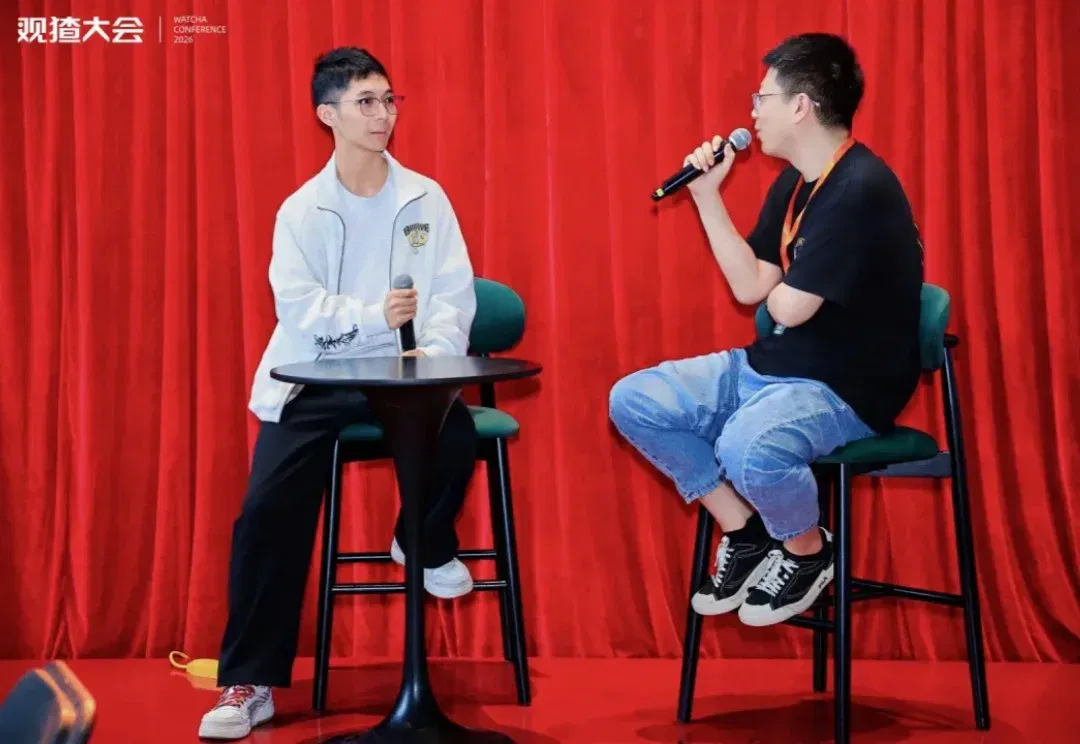
MiniMax Code lead Ronny discusses internal adoption, context management and tool orchestration, then outlines personal-agent collaboration and task management. Figures such as 95% of code and 15% token-efficiency gains are team reports; future product forms are his views.

On the team led by Ronny, head of MiniMax Code development, AI may produce first drafts of more than 95% of the code and even documentation. Multiple agents also participate in review afterward.
But the faster AI writes, the easier people’s jobs do not necessarily become.
A personal agent, for instance, needs someone to maintain its context over time. You must manage requirements, judge development tasks and monitor progress. AI ultimately shares the production work, but people remain accountable for the outcome.
As increasingly powerful AI becomes capable of actively evolving, what should it take off people’s hands next?
What capabilities should a truly valuable personal agent have?
At the second Guancha Conference in 2026, we held an AMA with Ronny. We invited @LiuCongNLP to moderate the discussion of these questions.
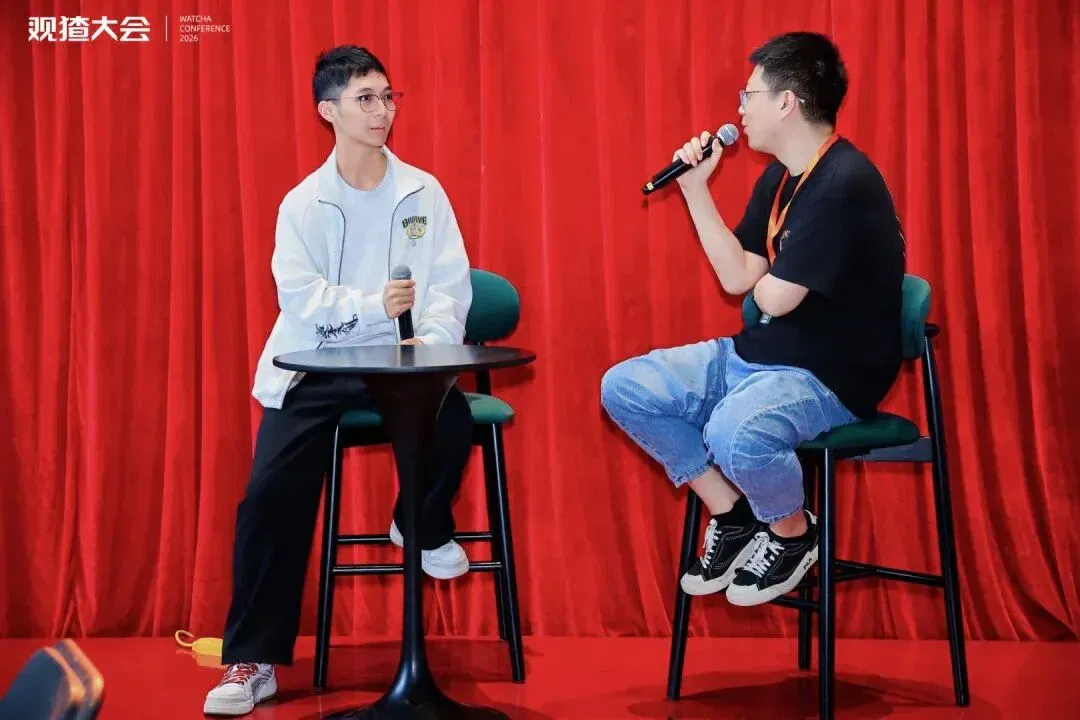
The faster AI writes code, the more important human review becomes
Agent Universe: Does your team use MiniMax Code itself? When developing it internally, roughly what proportion of the code comes from AI versus people?
Ronny: We do. I think anyone building an agent must do one thing:
Have the agent develop itself, achieving self-evolution in a software sense. This is a strict internal standard. We require everyone to use the product, identify friction in their daily work and fix it, making ourselves its first users.
In terms of proportions, more than 95% of our code, and even documentation, may be written by AI. We also use multiple agents for review during this process.
Agent Universe: Does that make coding easier?
Ronny: Writing code itself is indeed becoming easier.
What is becoming harder is something else: reviewing and checking code, and ensuring its architecture remains maintainable over the long term.
Those costs keep increasing. AI has taken over code production entirely, but the costs of quality control and architectural decisions have risen.
Model capabilities are improving, but we must keep a scientific approach
Agent Universe: What pitfalls arise when coding with AI?
Ronny: There are many, but the most fundamental has nothing to do with model capabilities. It concerns people. Often we know in our heads what we want to do but cannot express it.
The first step is therefore to clarify your intent with AI. As when communicating with a person, this requires plenty of back-and-forth.
One skill I often use turns the questioning back on me: why do you want to do this? What is the ROI? Which decisions need to be made in advance?
The second step is to review the proposal.
I have noticed a bad habit among many AI users: handing over requirements and walking away, only returning to inspect the results when AI has finished.
That omits an important step: once AI proposes a technical approach, you need to review and comment on it, judge which option best fits the current context and make an explicit decision. This is important and cannot be left entirely to AI.
The third step is to control the size of deliverables.
AI readily produces tens of thousands of lines of code, far more than a person can review. That would not have been acceptable before AI either. Deliveries must therefore be made in the smallest atomic units. The recently popular Superpowers skill includes this requirement:
Split each change into its own Git commit, with unit, regression and end-to-end tests for each commit. Confirm the smallest step succeeds before moving forward, making rollback easy if a problem occurs.
Agent Universe: As models grow stronger, will these skills become built-in capabilities?
Ronny: Inevitably. Classical software-engineering practices are public information. With enough data and good RL environments, models can learn them.
But many open leaderboards currently focus only on completion rates for one-off tasks, whereas software engineering is not a one-time delivery. We need software engineering that can keep growing and remain maintainable.
You therefore still need skills to set guardrails for agents, so they produce extensible, maintainable code rather than merely completing a requirement.
Agent Universe: Which part of the harness has been hardest to build while developing MiniMax Code?
Ronny: First, what is a harness? Think of it as an agent loop wrapped in tools, prompts and context-management mechanisms. Context is the core resource that needs managing within that loop.
Context is comparable to a computer’s memory. Memory is precious, and so is context. How to prevent context from exploding, manage it efficiently and avoid reducing task completion rates is the central challenge.
For a while, the industry has discussed orchestrating tools through code. The open-source Pi Durable project recently added code mode, while OpenAI and others had previously introduced similar modes. We did not follow blindly.
Our goal is to improve token efficiency as much as possible while maintaining or even improving task completion rates, so people can complete the same work with fewer tokens and less time. We therefore ran extensive experiments on MiniMax Code, trying the industry’s mainstream implementations.
Our eventual conclusion was that orchestrating multiple tools with TypeScript in a QuickJS sandbox, combined with good tool retrieval, can improve token efficiency by more than 15% without lowering task completion rates.
Agent Universe: Why emphasize experiments?
Ronny: Because harness development is gradually becoming an experimental science. Having a good idea does not automatically mean you should implement it; you need systematic evidence. I often tell the team to approach the harness as they would a chemistry experiment.
After writing code correctly, you must also manage the work
Agent Universe: What most distinguishes MiniMax Code from the many coding products available today?
Ronny: Everyone building coding agents is asking how to create something unconventional in use cases everyone agrees on. At present these products still address the most basic problem: writing the code correctly in one go.
What has not yet been solved is that, across the entire software engineering lifecycle, you have to do more than write code. You also have to manage requirements, switch between multiple tasks and handle your own task management. The burden on the human brain is actually very heavy.
Our view is that MiniMax Code should not only help people write good code but also help them manage their work, a little like a project management office in work and life. It should organize tasks and progress, even proactively remind you what to do, freeing you from that mental load.
Agent Universe: What about collaboration between people?
Ronny: That is the second level. Future collaboration between people will essentially become collaboration between your AI and mine. You use one agent and I use another; how can we let the two discuss things?
That requires a new kind of collaborative space. We need infrastructure for AI-to-AI communication: sharing files, context and conversations as needed so both people’s AIs can bring back the necessary information. Eventually, we will even need to discuss payments between agents.
From this perspective, if AI serves only work or coding, it may make people more tired rather than helping them feel that AI has made this era better.
The value of personal agents is to bring AI closer to everyday life, so people truly feel this era is better because of AI.
Initially, people used chatbot interfaces such as ChatGPT and Doubao. But the ultimate interaction I imagine is still a natural interface: people provide multimodal input, and AI produces multimodal output. That has consistently been our company’s direction: building text models alongside models for other modalities, aiming to offer an omni-modal experience.
As in a conversation where people can see and hear each other and express themselves naturally, future AI should participate in communication in the same way.
Agent Universe: Indeed. This multimodal capability also had a concrete application at the Guancha Conference. Its operations lead mentioned on stage that MiniMax generated both the nomination videos and the warm-up videos.
Software’s ultimate form is customization for each person
Agent Universe: With model capabilities progressing so quickly, will harnesses still be necessary?
Ronny: Harnesses will become thinner and more standardized as models improve, but they will not disappear. They bridge the model and the physical world. Giving you a good CPU does not mean you can simply hold it and start coding; you also need a motherboard.
With a motherboard, you can add memory and peripherals, then put it in a case to make a computer. It is extensible. I see the harness as that motherboard, enabling everyone to build their own setup.
Agent Universe: Recursive self-improvement, or RSI, is a popular concept now. Do your models and harnesses iterate on themselves in this way?
Ronny: RSI has many interpretations.
My ideal form of self-evolution still needs a human in the loop. People in every function across the company use the agent and submit positive and negative feedback. The model and harness teams recognize and absorb that feedback to improve the product. The agent can participate in development and production, help with recruitment and prepare everyday work, creating value in real social activities and receiving real feedback.
MiniMax’s M3.1 Flash originally had the anonymous codename Space Bunny (opens in a new tab). At launch it received both positive and negative feedback in China and abroad, but many people later expressed surprise at how it improved with use. The reason is that we listen closely to feedback:
We reinforce positive feedback. Moving in the opposite direction of negative feedback also leads toward positive feedback, and we do that too.
Agent Universe: For ordinary people, what is the eventual shape of these coding products? Will a few companies take the whole market?
Ronny: Looking at the consumer market, we are still a very long way from AGI. People feel so much has happened within a few months, but I often say we may not have finished the first page of the prologue. Predictions made at this stage will not be particularly accurate.
I think harnesses will become an industry standard and shared foundation, like Windows and Linux. Open-source and closed-source versions will coexist, people will collaborate on open-source versions, and foundations will maintain them.
A company aiming for AGI and hoping to bring AI to everyone therefore needs sustained investment and exploration in this area.
Let what can be standardized become standardized. I remember the many approaches people tried in 2023 to make models output structured data reliably: XML, HTML, YAML and various validators. Many open-source projects emerged.
Ultimately, model training solved this, making it reliable and standardized. It is now a foundational capability on which we have built extensive function calling. The standardizable parts of harnesses will follow the same path.
Agent Universe: In February this year people were still discussing chatbots. After OpenClaw became popular, everyone started discussing work agents. How will you build yours?
Ronny: I do not think work agents and coding agents should be separated.
In the previous era, people rebuilt work through programming languages and code. Coding agents therefore form the foundation of general-purpose agents. Work agents should build on that foundation for specific industries and work scenarios rather than start from scratch.
A Mini App is a medium for personal expression and meeting individual needs. It natively exposes an MCP (Model Context Protocol) interface that agents can operate directly. People can also modify it through vibe coding to fit their work habits better.
The relationship is bidirectional: agents can operate Mini Apps, while Mini Apps can use underlying capabilities to create or manage coding-agent sessions, call local agent capabilities and organize work and life.
Agent Universe: Do you have concrete examples?
Ronny: Yes.
A colleague who cannot code used MiniMax Code to build a small program for connecting to a phone and performing phone-use tasks in less than an afternoon. Another colleague thought WeChat Official Accounts’ preview experience could be improved, so had MiniMax Code generate a Mini App to do that.
Previously, a small group of product managers represented many people’s needs in a product.
Now a small group should build the stage, and everyone’s AI should implement their individual requirements, enabling personal customization. Software should no longer be tailored only to an industry; it should be tailored to you.
What makes a personal agent valuable? Ronny shared the perspective of someone leading agent development.
An agent that merely writes code faster is not enough. Once AI can write code and participate in review, it needs to take another step: adapt to your working style and help you manage requirements, switch tasks and follow progress.
It takes over things that consume energy and should not rest entirely on people’s shoulders. People still make judgments, but need not monitor every detail.
AI doing more while people worry less is the real value of a personal agent.
This article was originally published by Agent Universe. Author: Universe Editorial Team.
Related topics
After reading
Join the AINRK community
Read how to join the community and connect with people working in AI.
Related articles
Continue reading related topics and articles in this category.

MiniMax Code 2.0 推倒重来:Agent 底座换成了 Node.js 开源框架 (opens in a new tab)
MiniMax 在发布说明里直接用了两个词:Rebuilt on Pi Agent,基于开源 Pi Agent 框架重构;宣传图上写得更干脆,Rebuilt from the Core,从核心重建。对 Node.js 开发者来说,这件事比又一款 AI 编程工具上线更有意思。

MiniMax 发布 H3-Image 并开放权重,支持 16 张参考图 (opens in a new tab)
H3-Image 支持文生图、参考图生成及编辑。MiniMax 公布了 4K 输出与最多 16 张参考图的能力,权重使用受其社区许可证约束。

MiniMax 闫俊杰谈推理成本、开放权重与多模态模型 (opens in a new tab)
闫俊杰在 Scottish Mortgage 播客解释低推理成本如何支持后训练,并讨论 H3 开放权重和 M3 Pro 的开发进度。访谈亦区分年化收入运行率与财报收入。

MiniMax H3 扩展开源生态:视频增强、蒸馏与商业授权 (opens in a new tab)
据报道,英伟达相关团队及Pika基于MiniMax H3探索高分辨率再生成和少步推理。文章同时分析其社区许可与单独商业授权路径;开放权重并不等于在所有地区、所有商业规模下均可免费使用。

中国的MiniMax,居然成了全日本的希望!? (opens in a new tab)
MiniMax与KAGAMIAI等日本伙伴推出H3 IP Edition,利用H3生成内容,并通过Kagami Gate管理日本IP授权、使用记录和收益分配,已有超60家公司表达采用兴趣。