ARTi raises $1.5M Pre-A to develop investment research through messaging platforms
DL Holdings disclosures and a ChinaVenture interview describe C Capital’s ARTi investment and traceable research through messaging. User figures and pricing plans are team reports; accurate historical judgments do not guarantee investment returns.
AI is becoming a new contact in investors’ address books.
In Hong Kong, AI is becoming a new contact in investors’ address books.
Without downloading an app, users scan a QR code and add a contact called ARTi to ask about markets, individual stocks or even request investment-research reports through chat. Unlike an ordinary chatbot, ARTi also records every stock assessment and checks it against actual market conditions at a later date.
Behind it is an AI startup incubated within a Hong Kong family-office business ecosystem.
In June, Hong Kong-listed DL Holdings (1709.HK) disclosed that ARTi, its strategic investment, had received $1.5 million in Pre-A funding from C Capital at a $30 million pre-money valuation. ARTi launched in July and accumulated seventy thousand users within four months. CEO Eason Zhang recently told us it had begun raising a Series A.
Finance is a competitive field amid the proliferation of AI agents. As more financial agents emerge, how many human analysts will investors still need?
A financial agent emerging from Hong Kong family offices
“ARTi’s first version was my own personal agent.” Its origin was Eason Zhang’s personal need.
Zhang was a strategy-consulting partner at a leading global consultancy, serving financial institutions. After leaving in 2015, he founded a fintech company that was later acquired and spent the following decade participating in technology investments.
Early this year, rapid advances in agents and AI coding led him to build a personal investment-research agent. Initially intended for daily research, it received positive feedback when friends tried it.
In his view, what investors face is often not a shortage of information but an overload of it. After the analyst behind a traditional research report gives a bullish or bearish view, the market continues to change, but the research conclusions may not be systematically tracked and reviewed. Once a report has been delivered, the research work often ends there as well. He therefore hopes to solve two problems: first, using AI to process vast amounts of information that are difficult for people to work through exhaustively; and second, ensuring that every investment judgment can be verified.
Today, users can also obtain investment analysis by opening ChatGPT, Claude, or another general-purpose foundation model. Zhang Qiang believes that the difference between general-purpose foundation models and professional financial agents cannot be understood simply as whether their answers are good or bad; it lies in whether they have sufficient sources of data, an analytical framework suited to financial scenarios, and a mechanism for verifying the results of their judgments. ARTi currently takes a technical approach based on collaboration among multiple models, combining the capabilities of different foundation models and building an engineering system for data retrieval, model orchestration, analytical workflows, and verification of results.
Everyone is talking about foundation models hallucinating. The ARTi team has found that hallucinations in finance have their own distinctive forms: in practical testing, they may appear as treating outdated data as current, confusing companies with the same name or companies listed in two markets, and so on.
A hallucination is fluent, plausible content inconsistent with facts. A 2025 paper by OpenAI researchers offered a simple explanation: training and evaluation reward guessing rather than acknowledging uncertainty, as an exam guess seems better than a blank answer.
In finance, at least four forms appear: fabricated numbers or sources, such as plausible growth rates and research citations; date confusion, using old data as current or quietly inventing plausible missing figures; mistaken identity, confusing same-name companies or A- and Hong Kong-listed entities and invalidating subsequent analysis; and errors disguised as normal results, such as calling an API timeout “no news.”
“Researchers found models are trained to guess rather than admit ignorance, so simply asking for accuracy does not help. We build external mechanisms instead: evidence of sources, timestamps, abstention when evidence is insufficient and reconciliation with actual markets when judgments mature. We do not claim it cannot err, but every error should be discoverable.”
Most mechanisms came from mistakes: cascading report retries and silently skipped migrations led to additional checks. With more than sixteen thousand instruments and nearly ten million daily data records, definitions, currencies and trading calendars vary. “Users see one contact; behind it is an entire financial-engineering system.”
In terms of the team's background, ARTi combines financial professionals with AI technical personnel. Its CTO, Steve, has a deep background in Silicon Valley technology entrepreneurship and AI technology, and is responsible for the product's overall technical architecture. The team also has a senior technical lead with a background in model algorithms. In addition, a chief scientist from a leading AI laboratory in Silicon Valley serves as an expert adviser, collaborating with the team on areas such as model self-evolution and applications of financial data.
The product soon gained support from DL Holdings. DL Holdings is an integrated financial-services group listed in Hong Kong that began with family-office and wealth-management businesses and gradually expanded into securities trading, investment banking, asset management, digital finance, and other areas.
DL gives two main reasons for its interest.
First, there is genuine demand for financial investment research. Users need to continually obtain market information, analyze it, and form judgments. This recurring demand could help AI products accumulate usage data, which in turn could improve model performance.
Second, ARTi chose a relatively lightweight product approach. It did not invest large amounts of money in developing a standalone app from the outset, nor did it directly enter the securities-trade execution stage; instead, it chose to connect its agent to existing messaging platforms such as WhatsApp. After adding the contact, users can ask about market conditions, the price of gold, or the investment value of a particular stock just as they would in a chat. This product format, with its "lightweight entry point," both lowers the barrier for users to get started and enables the team to iterate more quickly while controlling product-development and operating costs.
ARTi therefore starts differently from a typical AI-application startup: it has both a financial use case and existing customer resources for testing.
Who will pay for an AI analyst?
Financial investment depends on trust. Hong Kong is both ARTi’s starting point and a foundation for its business model.
As an international financial center, Hong Kong has mature markets, regulation and licensed institutions connecting mainland and international capital markets. Investors following Hong Kong, US and A-shares need cross-market information and research. Hong Kong is accelerating fintech: the Monetary Authority’s Fintech 2030 lists AI as a strategic direction, while the government’s first five-year plan calls for deeper AI–industry integration.
ARTi hopes to seize this opportunity by combining AI technical capabilities from Silicon Valley with Hong Kong's existing financial-business resources. Meanwhile, the wealth-management business, network of financial-institution partnerships, and relevant licensed resources of its strategic investor, DL Holdings, provide a foundation for reaching professional investors.
At present, ARTi's users fall mainly into two categories. One consists of students at Hong Kong universities, overseas Chinese, and people new to the workforce who are just beginning to explore investing. They lack systematic experience in investment research and hope to use AI to understand the market and learn investment methods. The other category consists of high-net-worth investors, who mainly come through DL Holdings' wealth-management business and ARTi's network of partnerships with other family offices and financial institutions.
In Zhang Qiang's view, the two categories of users offer different kinds of commercial value. Young investors are more receptive to new technologies; through large numbers of real questions and feedback on their use of the product, they can help the team identify shortcomings more quickly and also provide a richer range of real-world scenarios for testing judgments. High-net-worth investors, meanwhile, have clearer investment-research needs and greater ability to pay, and are the core customers ARTi most hopes to win over at this stage.
He acknowledges that financial markets have never lacked people willing to pay for investment information. Whether through buying access to professional databases, subscribing to research reports, or seeking investment-advisory services, high-quality investment research has always had a market. But persuading investors to move from traditional services to new tools requires analysis that is sufficiently reliable and professional. Although many brokerages and securities-trading platforms have already integrated AI assistants, most still treat them as an additional feature of their existing businesses. Simple information summaries and lists of financial data fall far short of meeting professional investors' requirements; what they need more is a research service with a clear analytical framework that can provide continuous tracking and allow historical judgments to be tested.
This is precisely the market ARTi hopes to enter. At present, the company mainly provides the product as a value-added service for family offices and high-net-worth clients, and has not yet formally begun charging on a large scale, but it has already received feedback from some users expressing a willingness to pay.
For individual users, ARTi plans to adopt a subscription model with free and different levels of paid plans. Under the team's current design, the paid tiers include $20, $100, and $200 per month, with users spending the corresponding credits to access investment-research services and virtual-trading features.
Zhang Qiang plans to win more than 50,000 core users in Hong Kong with a strong ability to pay. He acknowledges that this will not be easy, but for a startup whose main selling point is professional investment-research services, finding enough high-value customers is more important than simply pursuing the number of registered users.
Institutions may offer an even larger market.
Family offices, brokerages, asset-management firms, and research institutions already need to undertake large amounts of information gathering, financial analysis, and investment judgment. If ARTi can embed its investment-research capabilities into the workflows of existing financial institutions through APIs and other means, it will not need to build an independent financial-services system from scratch. This also means that ARTi does not necessarily have to become another Futu or Tiger Brokers.
The rationale for financial institutions to buy AI services is, on the one hand, to reduce repetitive labor by automating basic research work; on the other, they can use mechanisms for continuous tracking and the verification of judgments to provide investment managers with more systematic information to inform their decisions.
However, the demands that the financial sector places on AI are also much higher than those of ordinary information services. Even if AI achieves a relatively high rate of correct judgments during a particular period, this does not mean that it can continue to deliver the same performance across different market cycles. Still less do accurate historical judgments mean that users are certain to earn investment returns.
Zhang Qiang maintains relatively restrained expectations on this point. As he sees it, ARTi is currently closer to a junior analyst who has received a good financial education. In the future, he hopes that the system will have research capabilities equivalent to those of a financial analyst with more than five years of work experience, including information gathering, financial analysis, valuation modeling, and forming relatively independent judgments about industries and companies.
“It is not an investment master. Final judgments remain with humans; it only provides continuous, traceable suggestions.”
In Zhang Qiang's view, AI's entry into the financial industry could improve the overall efficiency of investment research. As the barriers to obtaining professional information gradually come down, investors' ability to use AI, the experience they accumulate, and their independent judgment may become new dividing lines.
This article was originally published by the ChinaVenture WeChat Official Account. Author: ChinaVenture.
Related topics
After reading
Join the AINRK community
Read how to join the community and connect with people working in AI.
Related articles
Continue reading related topics and articles in this category.
姜宇辉的AI分身:知识助手与“另一个自己”之间 (opens in a new tab)
南方周末通过学者、用户与Second Me创始人的访谈及记者试用,观察AI分身的学术辅助、情感连接和商业化尝试,也呈现知识可靠性、人格边界、版权与隐私方面的疑虑。
智动未来据报完成亿元级Pre-A+融资,资金用于产线与服务机器人部署 (opens in a new tab)
机甲觉醒报道,智动未来宣布完成亿元级Pre-A+轮融资,由中美绿色基金领投、南曦创投联合领投,资金拟用于广州产线、服务场景部署和世界模型研发。“智子世界”仍属技术预览,商业化效果待更多应用数据检验。
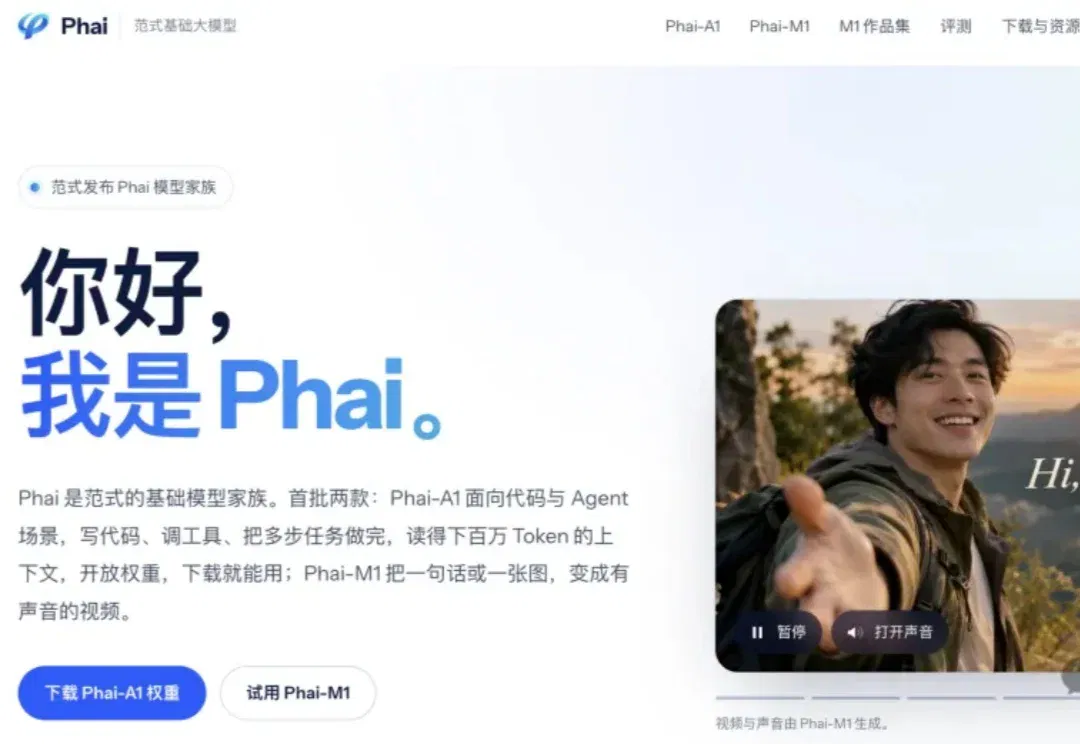
范式智能介绍Phai-A1与Phai-M1,强调国产算力后训练优化 (opens in a new tab)
范式智能介绍面向代码与Agent场景的Phai-A1,以及面向真人影视的音画同步模型Phai-M1。公司展示了单卡运行和视频生成能力,并称模型在昇腾平台完成专项后训练优化。
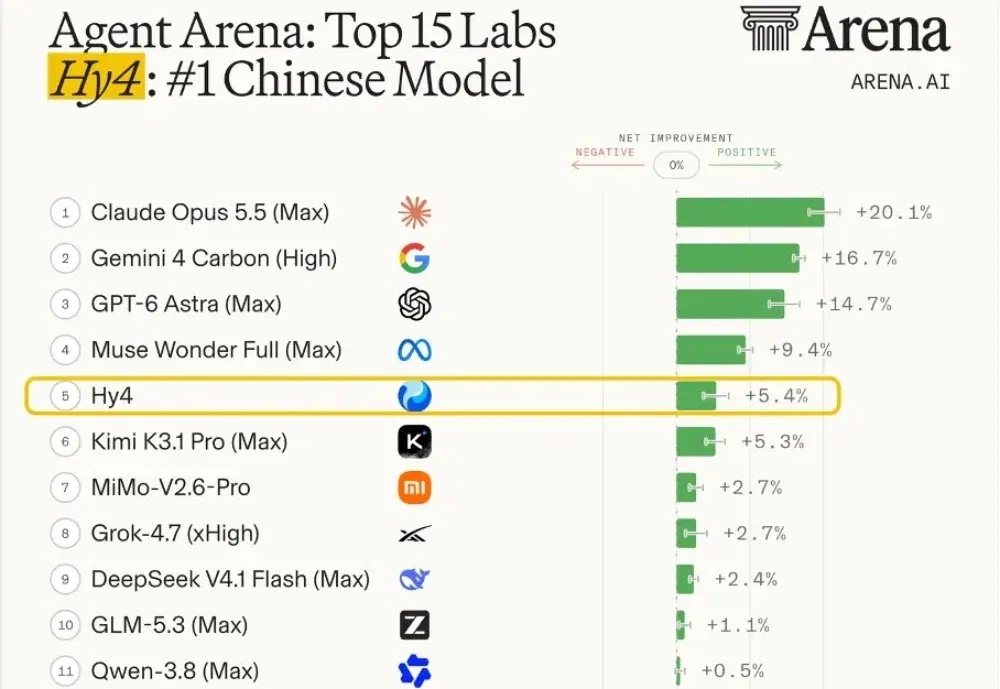
腾讯Q3资本开支814亿元,称WorkBuddy日Token用量居国内首位 (opens in a new tab)
腾讯三季报显示营收2073.36亿元、资本开支814.33亿元。公司称WorkBuddy日活超1000万,按用户每日大语言模型Token消耗总量居国内首位;报道还讨论云业务增收与AI投入对盈利、现金流的影响。
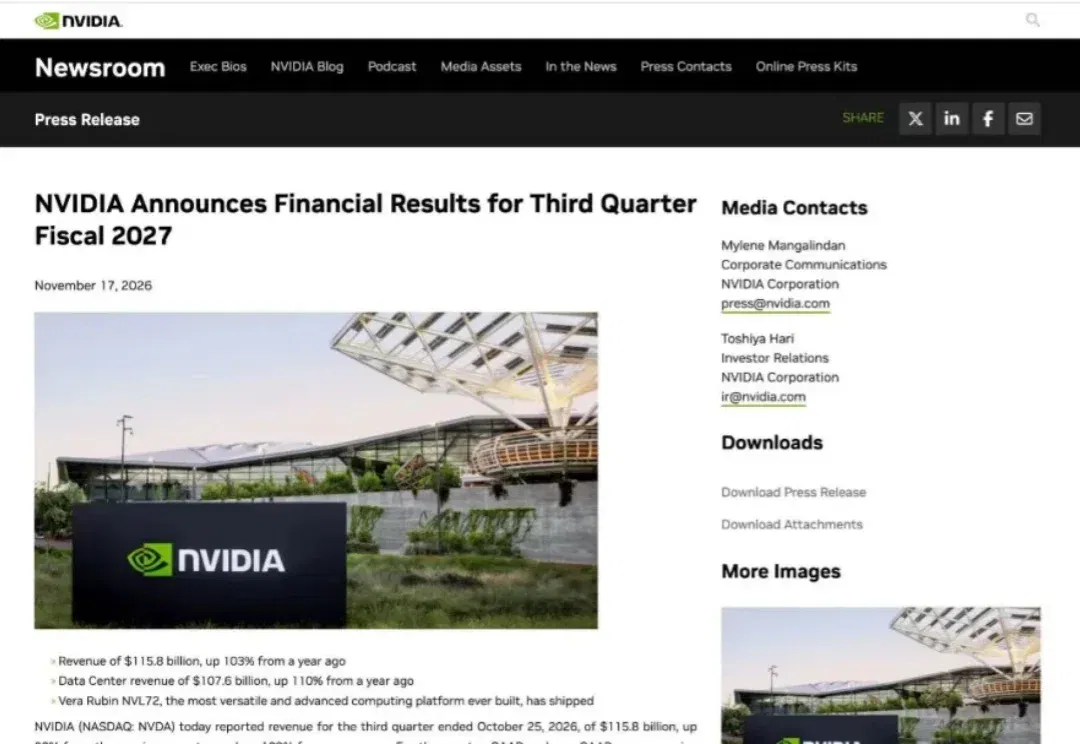
黄仁勋离任后:硅谷101访谈英伟达的技术、供应链与组织挑战 (opens in a new tab)
硅谷101采访半导体、科技与投资人士,讨论黄仁勋离任后CUDA生态、系统整合、供应链、开源投入和组织传承的潜在变化。产业放缓、估值折扣及人才流失判断属于受访者观点。