Pyromind’s EchoMind explores continual enterprise learning from feedback, training and evaluation
Pyromind outlines EchoMind, designed to connect business feedback, data processing, training and model updates. The report covers initial FDE adaptation, human approval and business evaluation; customer metrics reflect interview examples.
Everyone talks about RSI. Who will get their hands dirty for enterprises?
Three days ago, in Crossing’s 2026 year-end AI review, NeoCognition cofounder Gu Yu made an interesting observation:
A genuinely long-horizon agent need not work continuously for a week. It can instead resemble a new employee who, over months or a year, becomes experienced in the company’s business.
Agents already handle increasingly complex tasks, with computer use and coding improving rapidly.
But once an agent enters a company, can it keep improving its model through data and feedback from every execution?
For example, suppose a vision model deployed in a factory misclassifies an acceptable product as defective today. After a human reviews it, the system knows the correct answer. The next time a similar situation arises, can the model learn to make the judgment itself?
That is what Pyromind is exploring.
🚥
Founded in Hangzhou in October 2025, the startup is building AI infrastructure for continual agent learning.
On Crossing’s podcast in August, founder and CEO Kevin Ding described its long-term direction as AutoRL, a concrete route toward RSI.

That requires more than training capability: it needs a long-running system that automatically manages training and updates.
DeepSeek’s recent Super-Agent release intensified interest in long-horizon architectures. Background environmental awareness and asynchronous decomposition and advancement of complex tasks are becoming standard ideas for next-generation AI systems.
EchoMind adopts a similar system-decoupling philosophy, but goes beyond getting an agent to finish the job, addressing how models can continually update their parameters and improve through work.
In a sense, this brings RSI closer to enterprise needs.
How would it work?
Drawing on customer practice, product designs and public technical material, we examine how Pyromind intends to address practical continual-learning problems for enterprise agents.
Agents must not only work, but learn to improve
The year-end RSI discussion mainly considered why continual learning deserves research.
One important reason is that most current agent benchmarks focus only on whether a model can complete a particular task, while rarely examining whether it can learn from the work it has done before.
Agents need previous feedback to understand company rules and perform later tasks.
Gu Yu sees learning while working as the more meaningful long horizon.
Continual learning has different implementations, however.
One writes experience into memory notes for later reading. Another goes further, using real-task data and feedback to train and directly update model parameters.
Pyromind focuses on the latter.
In August, Kevin described foundation models as
“good enough, yet not good enough.”
Good enough because their general capabilities are strong.
Not good enough because production still requires extensive additional work.
For a factory, answering questions and understanding images are only starting points.
The real issue is judging quality by the factory’s own standards and maintaining performance as materials, lighting and equipment change.
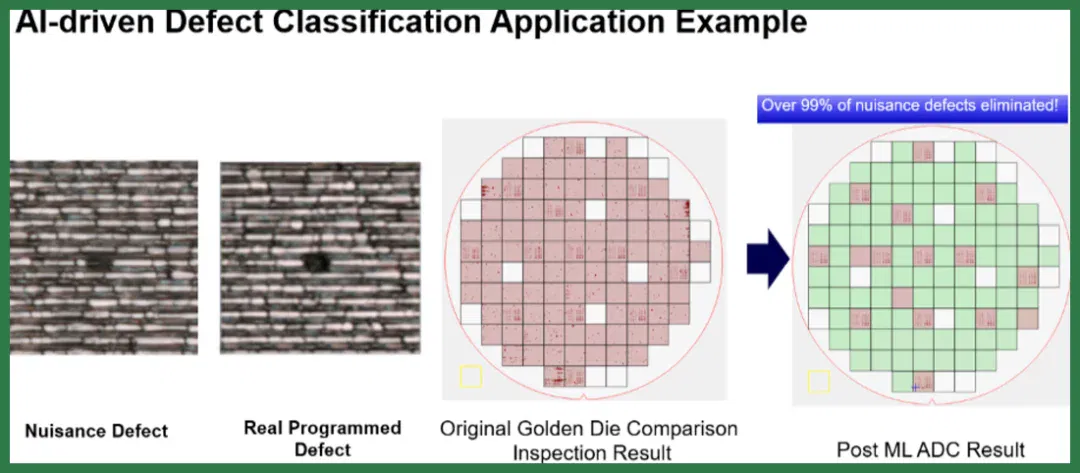
In June, Semiconductor Engineering reported on scaling AI defect detection.
GUI agents face the same issue.
A model may already have learned to click buttons and fill in forms, but every enterprise has its own business processes. Even when customers use the same foundation model, their requirements for the result may be entirely different.
Pretraining alone cannot easily provide all that knowledge.
Back in 2021, Andrew Ng discussed manufacturing AI’s long-tail problem in The Batch.
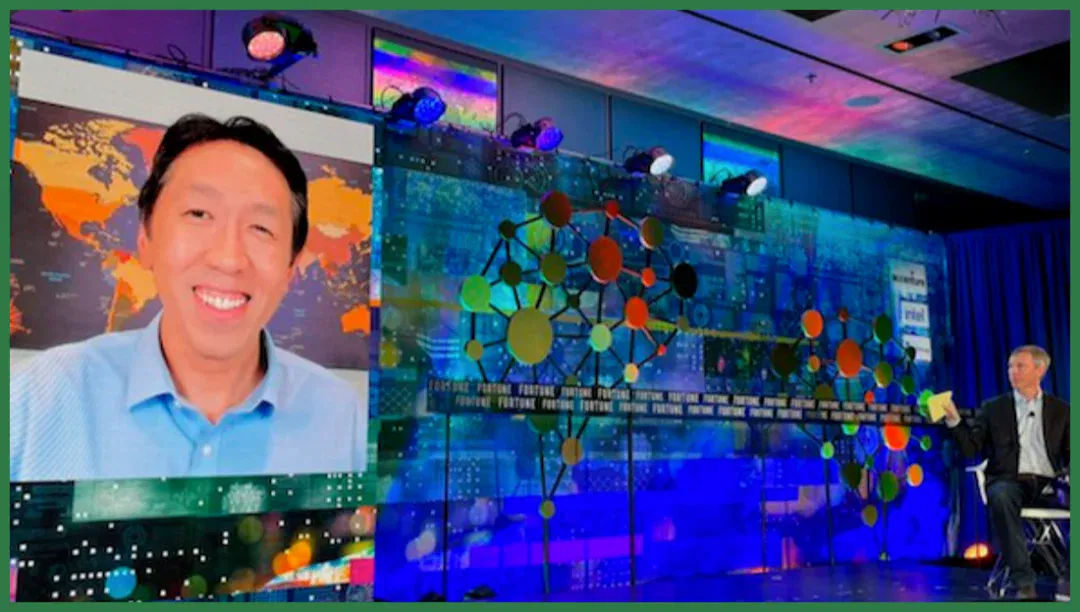
Each factory produces different products and inspects different defects.
Asked how many training images existed for each defect, manufacturers most often answered fifty or fewer.
He asked:
How can a company build, deploy and maintain ten thousand customized models without hiring ten thousand machine-learning engineers?
Five years later, the question remains relevant.
Today's foundation models are much stronger, but enterprises deploying AI still face insufficient data and constantly changing business conditions. Real business does not have coding's clear-cut, objective right and wrong: many scenarios have no ready-made evaluation criteria at all, and different companies define errors and tolerate them in completely different ways.
This also means that enterprise model updates cannot be judged only by whether training loss has decreased. The key questions are whether an update genuinely fits the enterprise's own business metrics and whether business outcomes have actually improved.
Therefore, enterprises need more than an agent that can just about complete a task. They also need an RSI system that enables the model to keep improving through actual use.
This is Pyromind’s chosen entry point.
Handing AI the later stages of FDE work
Forward deployed engineer, or FDE, became a prominent AI role over the past year.
These engineers work at customer sites, understand requirements, connect data and deploy models into business operations. Citing Indeed, KDnuggets reported that in April 2026, FDE openings were over fifty times their January 2025 level.
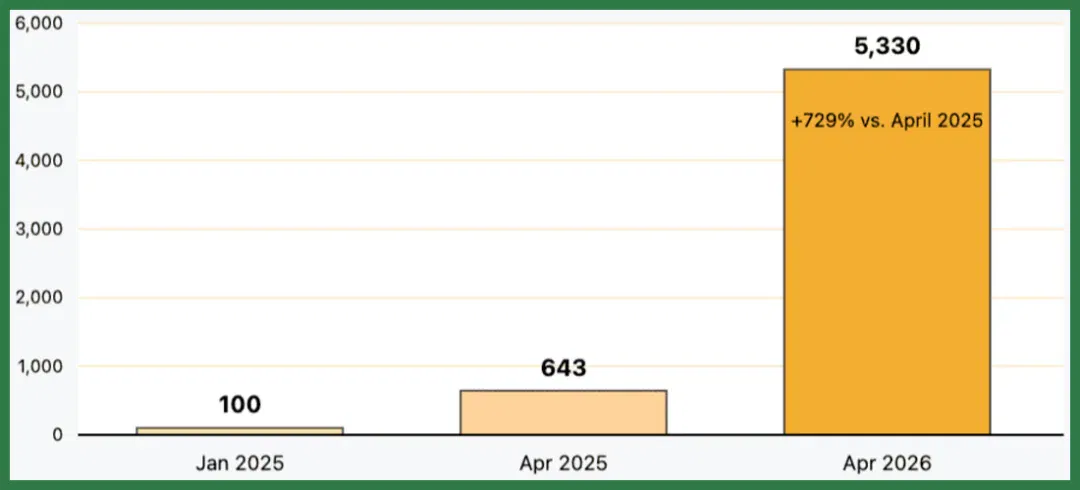
Indeed chart of FDE openings
Companies need these engineers because customers often cannot clearly describe requirements initially.
But a service cannot scale if every company needs a permanent engineering team for tuning and iteration.
Pyromind divides FDE work into initial and subsequent stages.
Kevin said that when first entering a customer's business setting, it is difficult to dispense with FDE work. Engineers must understand the business, translate the customer's vague business standards into clearer data formats and evaluation criteria, and teach the scoring model to understand the specific rules corresponding to that customer's needs.
Afterward, the lengthy work of training, iteration and deployment updates may be handled by an automatically running system.
Kevin said Pyromind then served more than a dozen enterprise clients with only two FDEs.
A GUI-agent customer helped shape this approach.
Its many consumer users create new requests, task data and feedback daily.
Pyromind initially supplied Studio; the second phase developed scoring rules for GUI tasks.
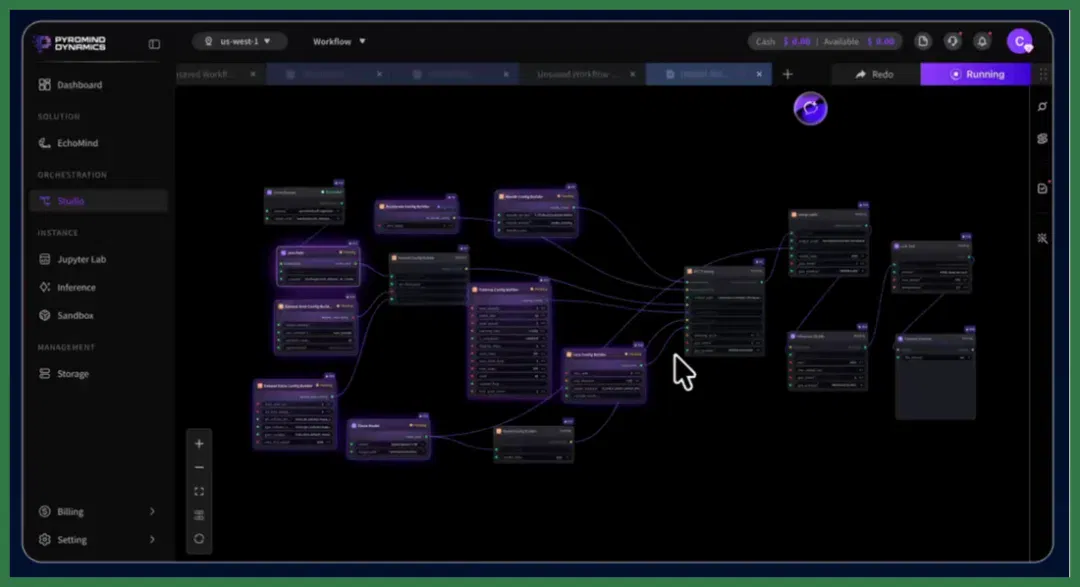
The team found that when an agent can continuously collect user feedback, and that feedback can be converted into explicit scores, the beginnings of a data flywheel emerge.
Models execute and generate data; the system evaluates results and decides the next training round.
Kevin considered that only half the problem solved. Having a training platform and scoring rules is only half the flywheel. To keep the entire pipeline running automatically and without interruption, a completely new system is also needed to truly connect, orchestrate and manage data collection, cleaning, training, evaluation and hot model updates.
Following this line of thought, Pyromind further explored how to combine model post-training capabilities with feedback from enterprises' everyday use, gradually developing the design approach behind EchoMind.
It is called EchoMind:
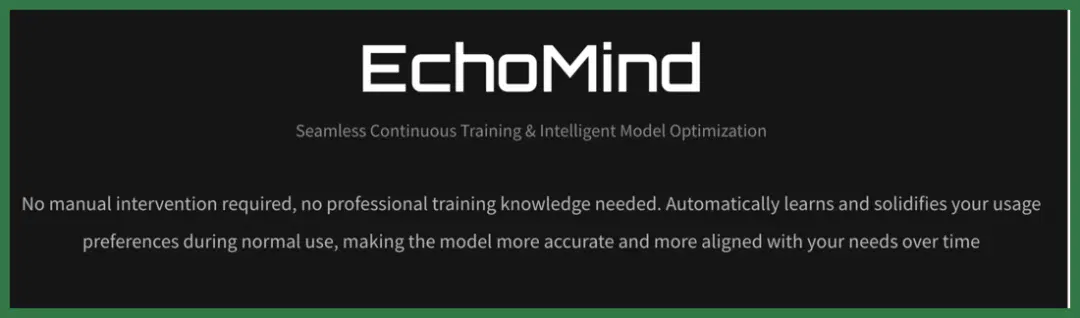
EchoMind aims to improve models through use
According to its public design, EchoMind is Pyromind's product for continual model optimization and self-evolution. It primarily manages training plans, data, training processes and evaluation results across multiple model iterations, allowing the model to improve continuously in response to feedback.
Where Studio addresses how to train a model, EchoMind asks:
After deployment, how can real-use data support repeated training and updates?
The products have distinct responsibilities.
Studio supplies training and evaluation environments. EchoMind is intended to organize data, trigger training, record results and manage subsequent updates.
Two forms are planned.
1. Enterprise edition
For industrial inspection, GUI agents and similar scenarios, FDEs perform initial adaptation, followed by automated continual updates.
2. Personal edition
Planned OpenClaw integration would accumulate everyday conversation data to train more personalized preference models.
In a public personal-edition example, the team measures agreement with user expectations through IoU, described as rendering similarity. The displayed metric rises from 0.2 to 0.65.

How is one update intended to work?
We reconstructed the design from public documentation and open-source code.
1. Connect the agent
Users would create console instances or integrate through the SDK.
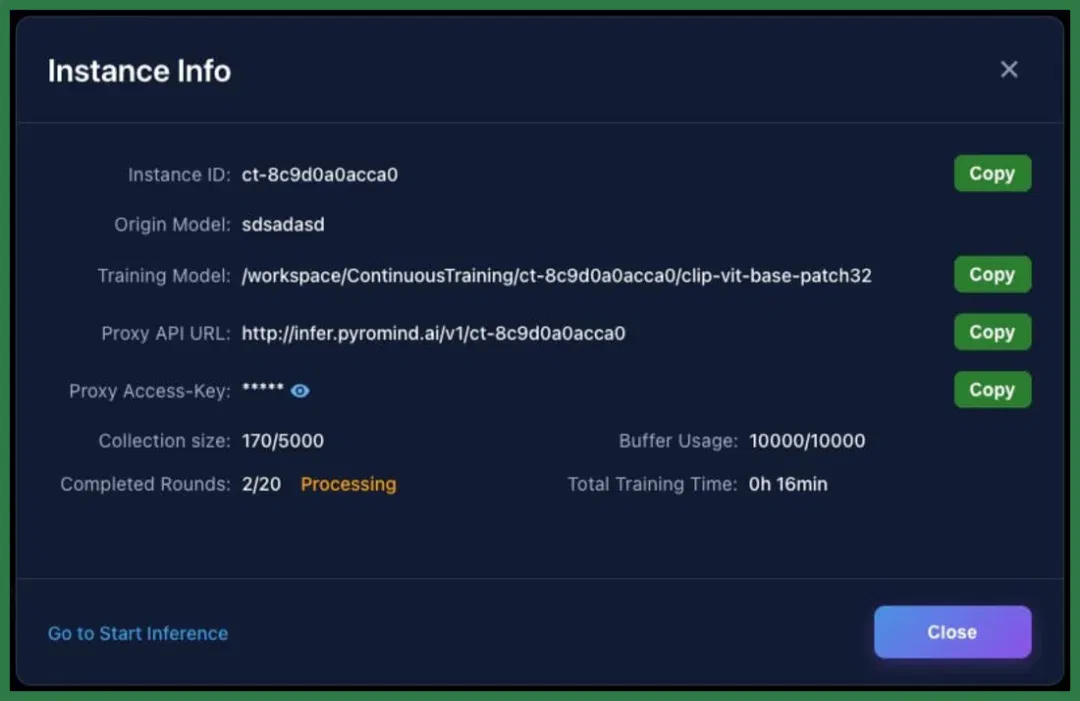
EchoMind instance
One method configures a proxy address for the agent.
Requests passing through EchoMind let it collect actions, results and associated feedback.
Customers can also supply per-step scores and final reference answers.
2. Accumulate data
Task data is continuously collected; reaching a configured batch size can trigger training.
3. Automatic training
The system cleans data, then calls Studio for training and evaluation.
This may take several hours.
EchoMind's design separates task analysis from training execution. The agent responsible for analysis does not need to remain online continuously while waiting. Once training finishes, the system continues its work based on the returned results.
4. Evaluate and replace
Models must pass evaluation requirements before deployment.
Planned hot switching preserves the external model name and allows only part of traffic to reach the new model initially.
The public proposal also includes deleting training data after use to reduce long-term retention.
That matters especially to enterprises.
Factories and financial institutions, for example, often have strict requirements for storing and using business data. Whether those data can be handled as agreed directly affects an enterprise's willingness to connect to a continual-training service.
Three further design choices
An automatic training pipeline is not the whole enterprise challenge.
When a model needs dozens or hundreds of consecutive updates, the system must do more than schedule tasks. It must also judge whether each round of updates is genuinely effective and know how to adjust when the business changes or an anomaly occurs.
The public design emphasizes three areas.
First, separate planning and execution.
The Manager, responsible for understanding objectives and proposing plans, and the subagents responsible for data processing, model training and evaluation are independent of one another, each taking on different tasks.

The system separately persists runtime state, resembling the recently discussed Super-agent approach.
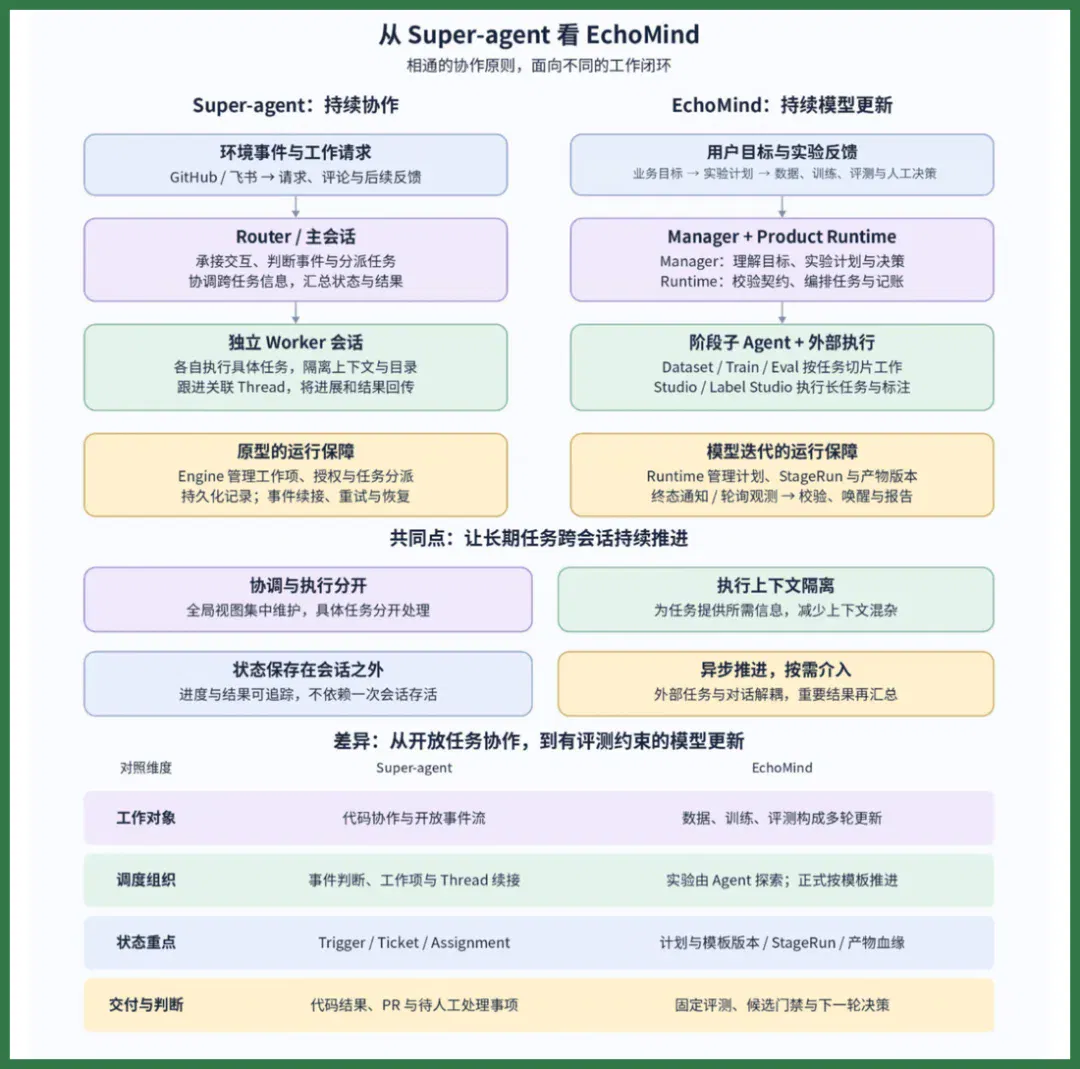
The difference is that EchoMind schedules long-running experiments in model evolution rather than temporary tasks. Consequently, every iteration's data version, training configuration and evaluation results must be rigorously recorded, reproducible and traceable.
Second, experiment before standardizing.
When faced with an entirely new business scenario, EchoMind does not immediately start a fully automatic loop. A new training path must first be explored and validated in Experimental Mode. Only after its effectiveness has been confirmed does the system formalize it into a process that can be executed repeatedly.
When a customer's production line or business rules change substantially and the original approach no longer applies, the system can automatically switch back into experimentation, exploring and validating a new training path again.
Third, retain humans at key points.
Automation does not mean humans withdraw completely; it means keeping them at the most important decision points. In EchoMind's design, people and agents discuss and set optimization objectives together, and humans confirm key experimental plans.
Final deployment especially depends on real business evaluations.
Lower training and validation loss can inform decisions but cannot replace practical evaluation. That distinguishes industrial deployment from ordinary training experiments.
For a factory, an update has no value if improved training metrics do not reduce false alarms or even cause more defects to be missed.
What should industrial continual learning look like?
Beyond automating repeated updates lies a harder problem: how does a company know each model is truly better?
Industrial inspection is a typical example.
Factories use vision models to identify surface defects such as scratches and stains. But as materials, lighting and camera angles change, a previously trained model may begin making new misclassifications.
One training round rarely solves this permanently.
Factories must continually gather false alarms, missed defects and human reviews for retraining.
Kevin described one project on the podcast:
With about ten thousand samples, the team reduced its false-positive rate from 23% to 8%.
Behind that reduction lies a deeper point: new data should calibrate scoring models as well as train business models.
Companies tolerate errors differently.
For the very same fine scratch, Factory A may allow the item through to maintain yield, while Factory B requires it to be stopped for quality control. As the production line accumulates human-review records, the scoring model is also learning and calibrating these subtle business criteria at the same time, gaining a better understanding of the factory's actual standards.
This means enterprise continual learning must solve more than how to train a model. It must address a more fundamental difficulty: when business standards themselves are being adjusted dynamically, how do we judge after each round of training whether the model has truly improved?
This approach of improving the execution model and its evaluation criteria together is, in fact, a direction worth watching in current AI continual-learning research, and potentially even a goal for the next stage.
AI engineer Philipp Schmid described different levels of system improvement this year.
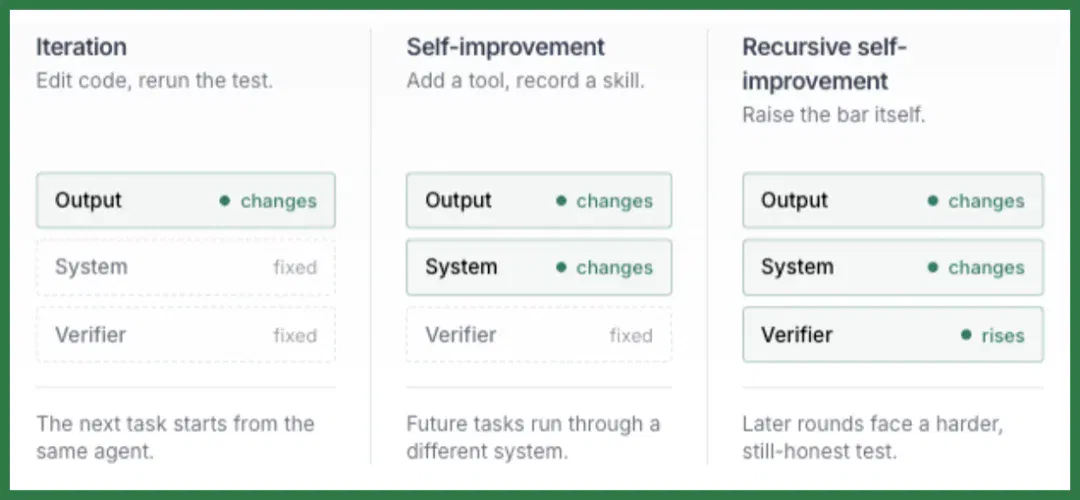
A higher requirement is that evaluation standards improve alongside capabilities, without fake progress from gaming the rules.
In industrial inspection, this becomes concrete.
If a vision model receives a higher score during training but does not actually reduce misclassifications on the production line, or even misses more defects, that update has not achieved its purpose.
Similarly, if a scoring model keeps adjusting to business data but gradually drifts away from the quality metrics the factory genuinely cares about, the system may also optimize in the wrong direction.
Thus, enterprise continual learning must solve two problems at the same time: how a model can keep improving with new data, and how the system can continually judge whether those improvements really meet business needs.
That is one issue EchoMind hopes to address.
It must not only manage one round of model training after another, but also connect business feedback, evaluation standards and update results, giving every model update an explicit basis.
Whether this capability can operate reliably across different enterprises will also determine how far automated continual learning can genuinely replace FDEs' repetitive follow-up work.
🚥
More teams now attempt automated AI self-improvement.
Frontier laboratories use models to participate in training-code development and R&D processes. Research teams are trying to have agents design and execute experiments automatically. Startups focused on enterprise model training and continual optimization have also appeared overseas.
Applied Compute’s AC2, for example, offers training, deployment and continual improvement of enterprise-specific models.
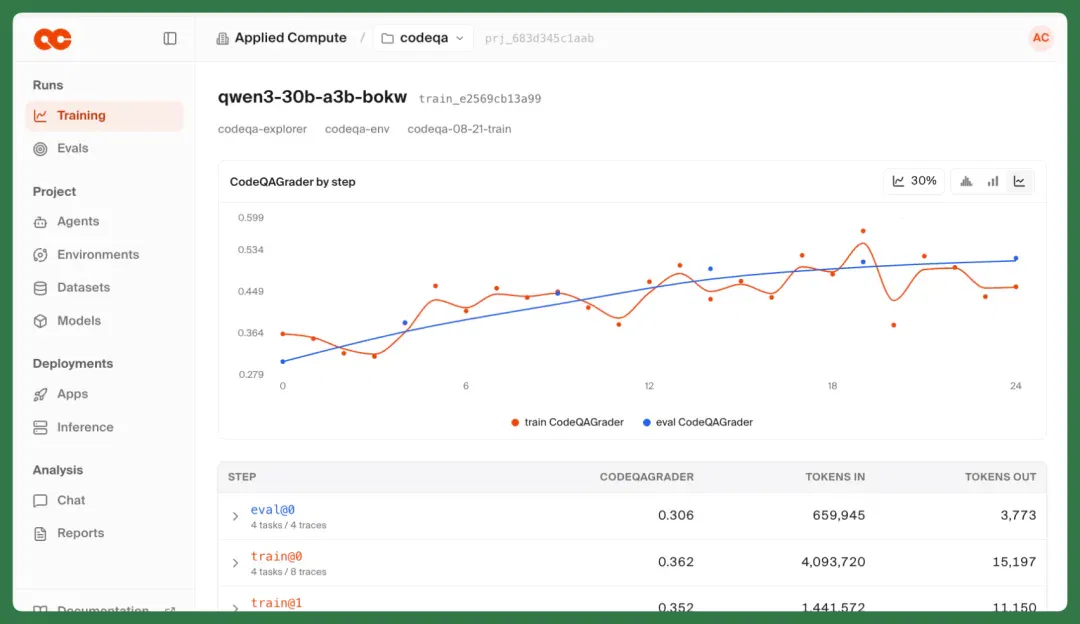
Pyromind faces substantial competition.
But Pyromind has still chosen a very concrete practical path: through products such as Studio and EchoMind, it turns the most tedious dirty and difficult work of enterprise model deployment into automated infrastructure, feeding real-use data and feedback into further training and continual parameter updates.
Send FDEs to customer sites to clarify business standards; distill nonstandard experience into scoring models and evaluation benchmarks that can be calibrated dynamically; and rely on a long-running automated system and training foundation to let real-world feedback inform parameter updates.
EchoMind hopes to connect those steps through nearly frictionless automation.

Perhaps this is a more meaningful industrial realization of RSI.
This article was originally published by the Crossing WeChat Official Account. Author: Crossing.
Related topics
After reading
Join the AINRK community
Read how to join the community and connect with people working in AI.
Related articles
Continue reading related topics and articles in this category.
Tractian announces $130 million Series D to expand industrial equipment health monitoring (opens in a new tab)
The company combines sensor signals with AI diagnoses to recommend maintenance actions. Its team and investors seek broader industrial coverage while facing the risks of real-world operations.

矩侨工业获亿元 A 轮融资,继续拓展织物触觉传感与数据采集 (opens in a new tab)
据 Z Potentials 报道,矩侨工业完成蚂蚁集团领投的亿元 A 轮融资,资金将用于织物电子皮肤量产、触觉技术研发和场景拓展。公司从柔性纤维出发,将压力感知延伸至手套、机器人皮肤和家居康养产品;交付与性能数据采用原报道及企业口径。
4.2米擎天柱引马斯克围观!京东工业的AI野心已经藏不住了 (opens in a new tab)
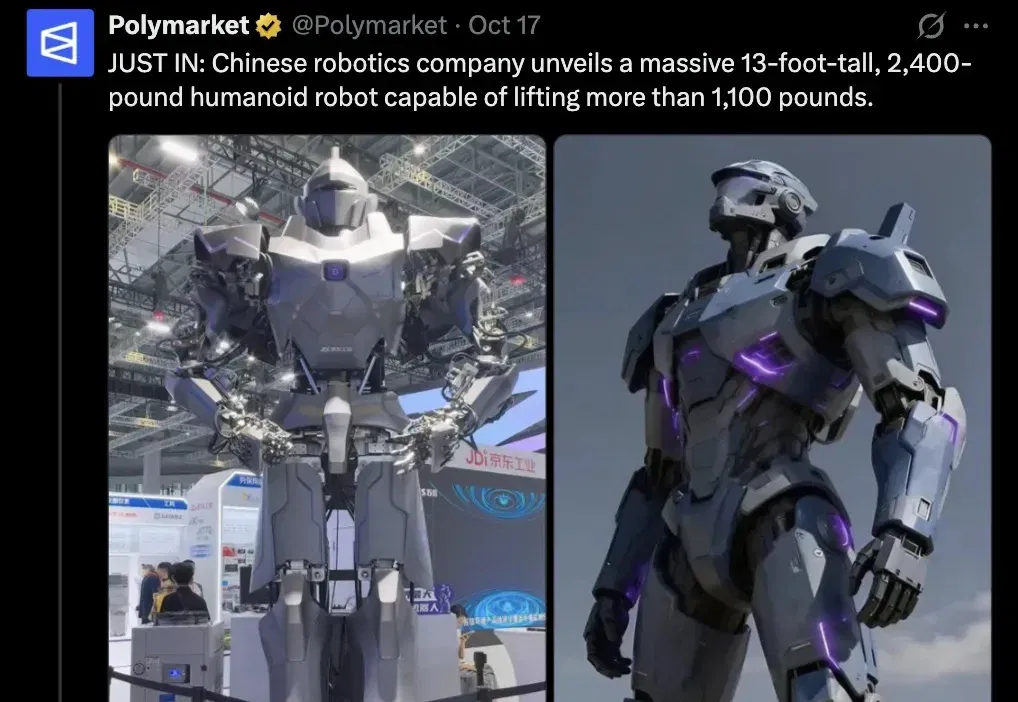
沃德天,这是给我干哪来了?! 最近,有外国网友刷到了咱工博会上的巨型机器人,直接@马斯克,问老马下一步能不能把现实版高达也造出来。 马斯克回他,特斯拉Optimus机器人未来会造出《变形金刚》里的擎天柱。 从马斯克被网友@,到回复画饼,中间只隔了一个多小时~ 咱不好说是世界首富冲浪太快,还是这台4.2米高、重达1.2吨的机器人,激起了马斯克的胜负欲。 但可以确定的是,这台由清卓动力研发的、名叫Neo1的巨型机器人,将要剑指矿山、深海等高风险作业场景。 看到这你可能会问,这么刁钻的场景,到底是谁找到的,又是怎么打通设计-制造-部署链路的? 答案就藏在Neo1背后展台的标志上—— 京东工业。 在N

AI 下半场,不会只剩一个超级模型|对谈 Kevin Ding:Pyromind 创始人/CEO (opens in a new tab)
本周「十字路口」的嘉宾是 Pyromind 创始人 / CEO Kevin Ding。Pyromind 所在的赛道,常被称作 RL as a Service,也就是强化学习即服务、或后训练即服务。公司前不久完成天使轮融资,投资方包括高瓴、百度风投、蓝驰、Atypical 等机构。
硬氪首发 | 同济博士做几何、物理AI重构设计制造,累计获超3亿元融资 (opens in a new tab)
硬氪获悉,工业AI设计研发解决方案供应商「设序科技」于近日正式完成B轮超亿元融资,累计获超3亿元融资,投资方包括深产投、合鼎共及老股东涌铧投资等。融资将用于市场开拓(含出海)及核心模型技术研发。