AMD announces World Labs acquisition closing; Fei-Fei Li becomes EVP and chief scientist
AMD announced completion of its World Labs acquisition on November 16, with Fei-Fei Li reporting directly to Lisa Su. Regulatory filings place closing on November 13 and record approximately 14.98 million common shares issued to former shareholders.
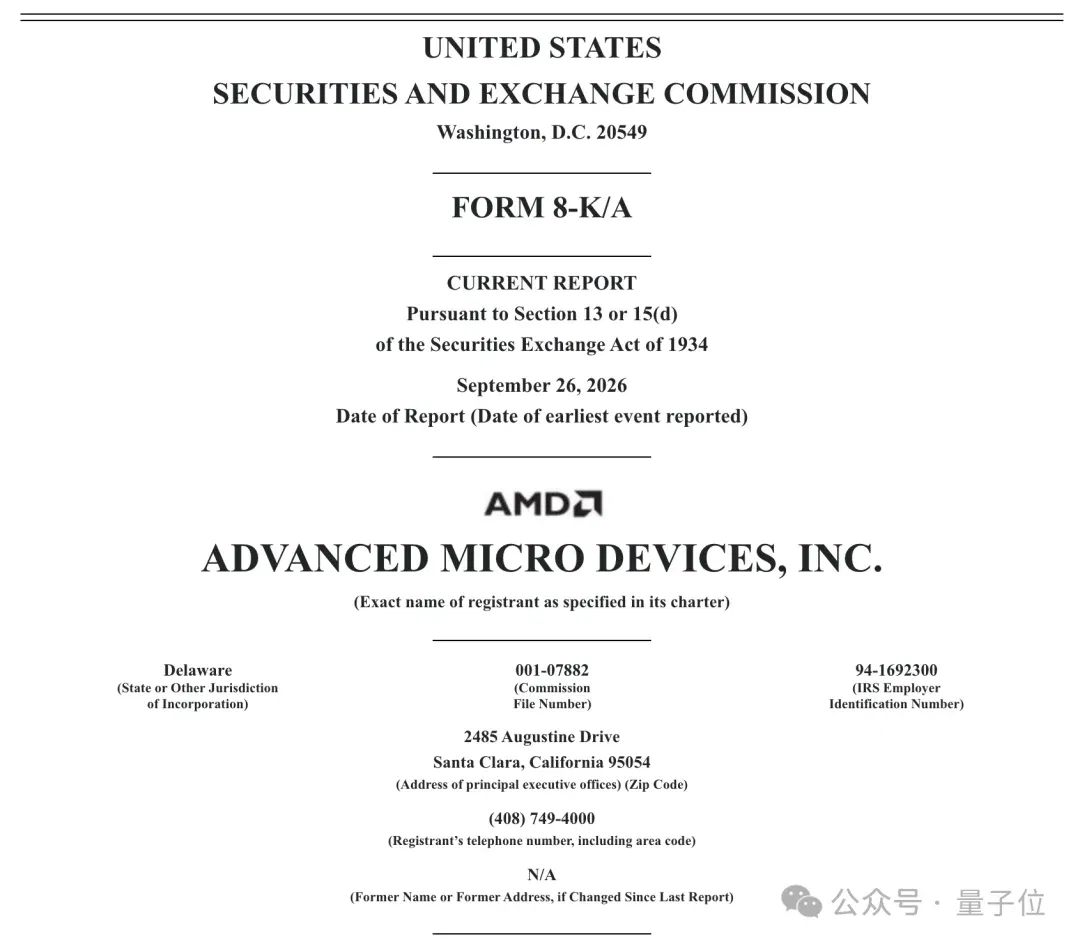
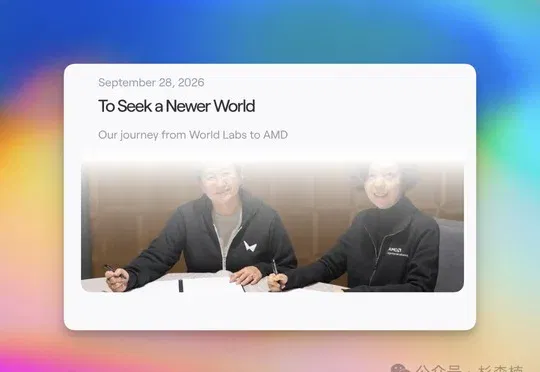
Editorial correction (November 17, 2026): AMD’s announcement and 8-K/A distinguish signing, announcement and closing dates. The agreement was signed September 26 and closed November 13, not signed September 28 and closed forty-six days later. Verification source: https://ir.amd.com/financial-information/sec-filings/content/0001193125-26-462340/d105780d8ka.htm .
Two leading figures have truly come together!
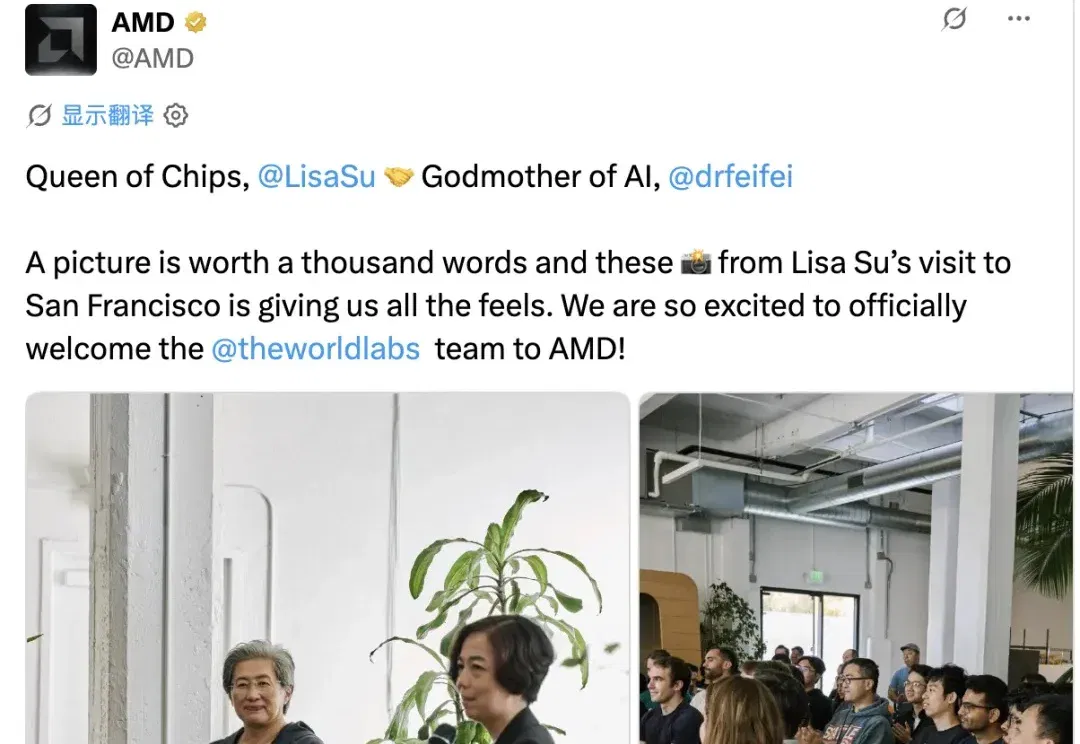
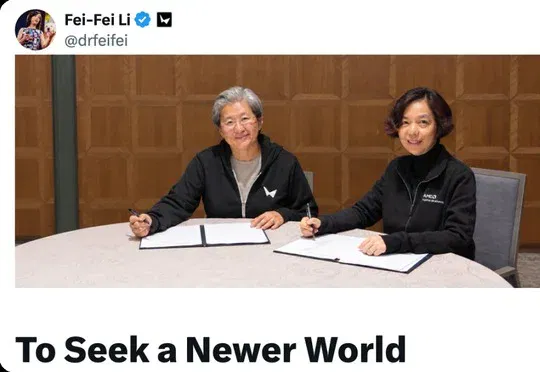
In a San Francisco office, “semiconductor queen” Lisa Su and “AI godmother” Fei-Fei Li sat side by side on stools, before a room of applauding World Labs employees.
On November 16 local time, AMD formally announced completion of its World Labs acquisition, bringing Li’s spatial-intelligence startup fully into AMD.
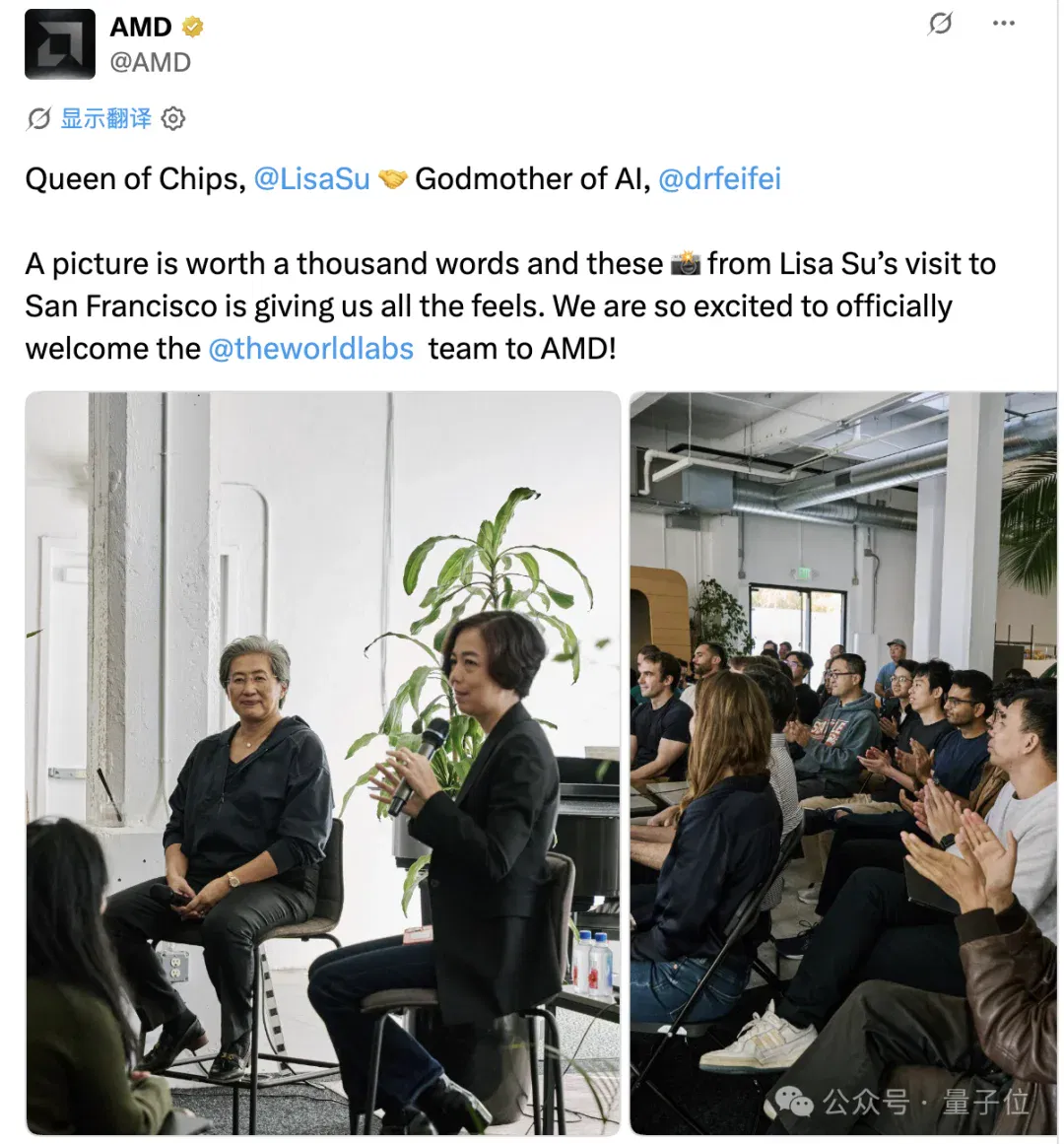
In the announcement video, Su gestures and smiles in a black hoodie. Beside her, Li wears a black jacket bearing AMD’s logo.
White subtitles beneath the celebration adapt AMD’s longstanding slogan to "together we advance_worlds".
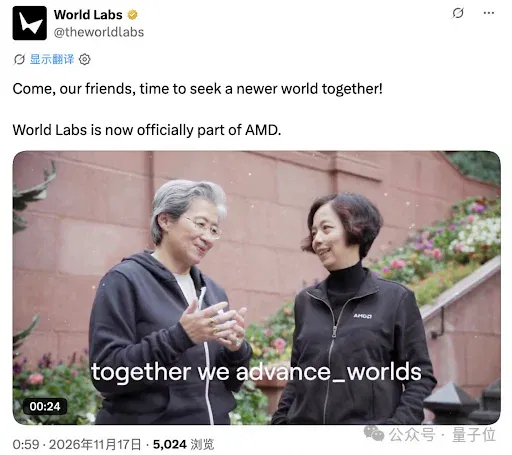
AMD offered approximately $8.2 billion in stock for the two-year-old team.
Following closing, Li became executive vice president and chief scientist, reporting directly to Su.
The 8-K/A states signing on September 26, the original 8-K filing on September 28 and closing November 13. Signing and disclosure are different dates; September 28 cannot be used as the signing date to calculate elapsed time.
14.98 million shares: AMD’s second-largest acquisition closes
AMD’s November 16 Form 8-K/A filing with the SEC confirms completion on November 13.
That was earlier than the originally expected year-end deadline.
The transaction used a private all-stock issuance. AMD issued 14.978 million common shares to former World Labs shareholders, valued around $8.2 billion (approximately 54.6 billion yuan).
In AMD’s acquisition history, the deal ranks second only to Xilinx, completed in February 2022.
Su led that all-stock acquisition of the FPGA leader, worth approximately $49 billion at closing.
It set a semiconductor-acquisition record and underpinned AMD’s subsequent embedded and adaptive-computing portfolio.
Four years later, Su again offers stock, this time $8.2 billion for an AI team specializing in 3D world models.
After closing, World Labs cofounder and CEO Fei-Fei Li joins AMD’s leadership as executive vice president and chief scientist, reporting to Su.
World Labs’ other two cofounders, Justin Johnson and Ben Mildenhall, also remain.
They will continue to advance foundation-model R&D as an independent frontier-research organization within AMD, while also collaborating with AMD's hardware, software and systems engineers.
Both are familiar figures with extensive computer-vision credentials.
Johnson earned his Stanford PhD under Li, helped build the widely followed CS231n course and was central to real-time style transfer and PyTorch3D;
Mildenhall, from Google Research, coinvented the 2020 NeRF paper that energized 3D reconstruction.
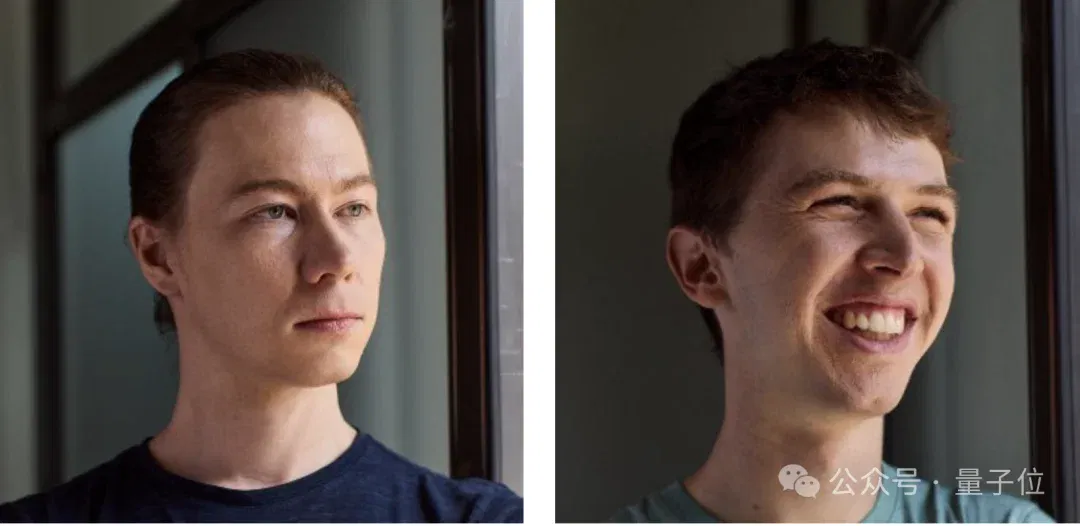
△Left: Justin Johnson. Right: Ben Mildenhall.
In the celebratory posts released simultaneously by the two companies, World Labs also borrowed the line from Tennyson's Ulysses, “Friends, let us seek a newer world together,” echoing the title of Fei-Fei Li's earlier open letter.
Markets reacted more coolly than the companies’ celebrations.
After Monday’s November 16 opening, AMD initially fell around 5% amid a broader semiconductor and AI-infrastructure pullback.
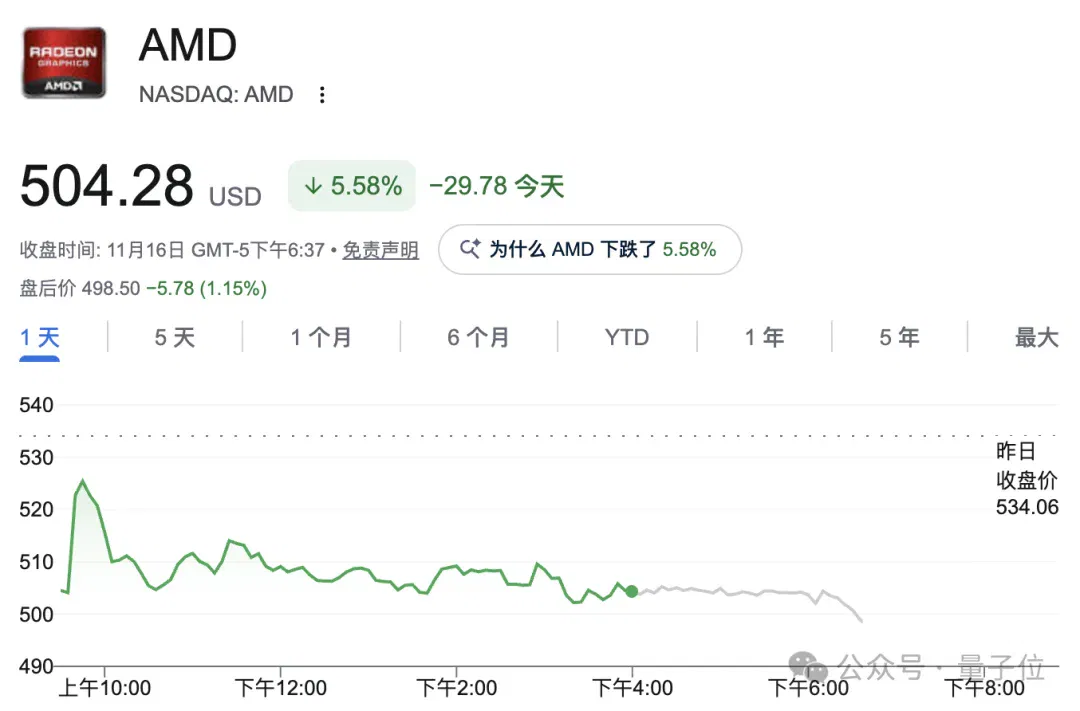
Wall Street evidently awaits the new team’s first hardware–software integration results.
From $230 million to $8.2 billion: what did they build?
Li cofounded World Labs in 2024, bypassing the crowded LLM field for spatial intelligence that understands and simulates the 3D physical world.
On emerging from stealth that year, it raised $230 million at a billion-dollar valuation.
Last November, it released its first multimodal world model, Marble.
Text, images or rough 3D layouts can generate freely explorable, editable and exportable scenes.
In February this year, it raised another $1 billion, with Autodesk contributing $200 million alongside investors including Nvidia and AMD.
The release that most clearly showcased its technology was the September 1 next-generation general-purpose world model Atlas.

Li explained Atlas’s technical foundation at CoRL 2026 a few days earlier.
Where LLMs emphasize next-token prediction, Atlas’s idea is “Viewpoint Is All You Need”: predicting the next viewpoint under precise camera-pose conditions.
During training, Atlas took in text, images, video, depth signals and 3D structural signals together. Under the same autoregressive diffusion Transformer architecture, it can switch among three modes: dense reconstruction, sparse reconstruction and generation from text alone.
In a blind test initiated by the third-party organization RapidData, the evaluators collected around 500,000 human evaluations to compare the camera-controlled generation capabilities of major video and world models.
Atlas ranked first and can generate coherent viewpoint videos exceeding sixty seconds at 1440p.
Robotics applications matter even more.
World Labs also acquired Scenix this year, specializing in real-to-simulation and simulation-to-real robotics pipelines.
In a live demonstration, Fei-Fei Li showed robots completing their training entirely within virtual simulation environments built by Atlas, then being deployed directly to the real physical world in a zero-shot manner.
On November 12, the day before closing, World Labs announced full public and developer access to Atlas.
Competing with Nvidia, AMD develops models in-house
A few days before the closing announcement, Su and Li appeared together at CoRL 2026 for their first onstage conversation.
Su opened with the view that physical AI, particularly robotics, represents a multitrillion-dollar opportunity in coming years.
She disclosed that AMD already has a sizable robotics research team, although the overall strategy remains early-stage.
Li described “AI is computing, and computing is AI” as her view.
That matches Su’s closing-announcement emphasis on jointly optimizing computing platforms and AI models.
Asked earlier why World Labs did not build Atlas immediately, Li half-jokingly answered that Justin’s team needed enormous numbers of chips.
Scaling world models requires substantial GPU resources.
Previously partners, AMD and World Labs had jointly tuned model training and inference on AMD GPUs since 2025.
External partnerships retain commercial boundaries, making it harder to expose and fix fundamental problems before chip tape-out.
With the two companies now part of the same family, Fei-Fei Li's team can directly bring Atlas and subsequent frontier models into the architectural design of AMD's future Instinct-series chips and ROCm software stack. Before the hardware blueprints are even finalized, they can stress-test them with real spatial-intelligence workloads.
AMD has recently expanded rapidly: the $8.2 billion World Labs deal, an announced Taalas acquisition, a planned PsiQuantum investment and a data-center compute-leasing agreement with Core Scientific.
Nvidia, meanwhile, acquired Hugging Face for $12.9 billion in early September and has introduced Cosmos, Omniverse and GR00T for robotics and physical AI.
Facing Nvidia’s integrated hardware–software ecosystem, AMD repeatedly emphasized an open AI ecosystem from September signing through November closing.
It aims to offer developers an alternative combining open hardware, open software and internally developed frontier models.
Competition among chip giants can no longer be settled through one graphics card’s specifications.
This article was originally published by QbitAI. Author: Keleixi.
Related topics
After reading
Join the AINRK community
Read how to join the community and connect with people working in AI.
Related articles
Continue reading related topics and articles in this category.
World Labs 推出 Frameboy 预览,Atlas 在浏览器里实时生成新视角 (opens in a new tab)
Frameboy 将 Atlas 的云端生成画面串流到浏览器,在演示中最高约 15 帧每秒。报道介绍了相机操控、上传图片的封闭测试,以及 AMD 拟收购 World Labs 的背景。
李飞飞百万撤离成功,拿到了「大结果」,然后呢? (opens in a new tab)
AMD以约82亿美元股票收购李飞飞创办的World Labs后,作者认为交易更看重人才与模型理解而非成熟产品,并批评世界模型标签滥用及AI圈压制对低质产品的批评。
刚刚,苏妈550亿元买下李飞飞世界模型,AI 圈两位女王联手了 (opens in a new tab)
AMD 宣布以约 82 亿美元(折合人民币约 550 亿元)全股票方式收购李飞飞创立的 World Labs,交易完成后李飞飞将出任 AMD 执行副总裁兼首席科学家,双方将围绕空间智能模型研究与算力生态展开深度合作。
梅西投了李飞飞 (opens in a new tab)
梅西其实早在为自己的人生下半场铺路。原来,他已经做起VC——2022年联合一群VC大佬在美国硅谷成立了一家风投公司Play Time。打开Play Time官网,赫然看到今年刚投了“AI教母”李飞飞创办的World Labs。
刚刚,李飞飞买下仿真公司SceniX,World Labs首笔收购剑指具身智能 (opens in a new tab)
“AI教母”李飞飞创办的World Labs正式宣布收购美国机器人仿真初创公司SceniX。这笔交易是World Labs成立以来的首笔公开收购,也标志着这家以“空间智能”为旗帜的明星创企,正式将业务边界从3D世界生成推进到物理机器人训练领域。