CAIM1 explores capture-time credentials, with limits to image provenance
The article examines CAIM1's security chip, paper receipts and real-time video-signing goal. The device remains at a prototype/planning stage. Cryptographic credentials can help check origins and modifications, but cannot establish that a photographed scene is true.
Editorial correction (November 16, 2026)The device and real-time video signing remain team goals. Cryptographic credentials help detect changes and verify provenance; they cannot make files physically unchangeable or prove the truth of a scene.
When iPhone 18 Pro first went on sale, we noticed a lesser-known camera feature: sensor-based watermarks signing photographs' authenticity.
Demand to know how real images are is clearly growing. Some enthusiasts decided to build an entire camera around it, dramatically named Counter Artificial Intelligence Machine 1.
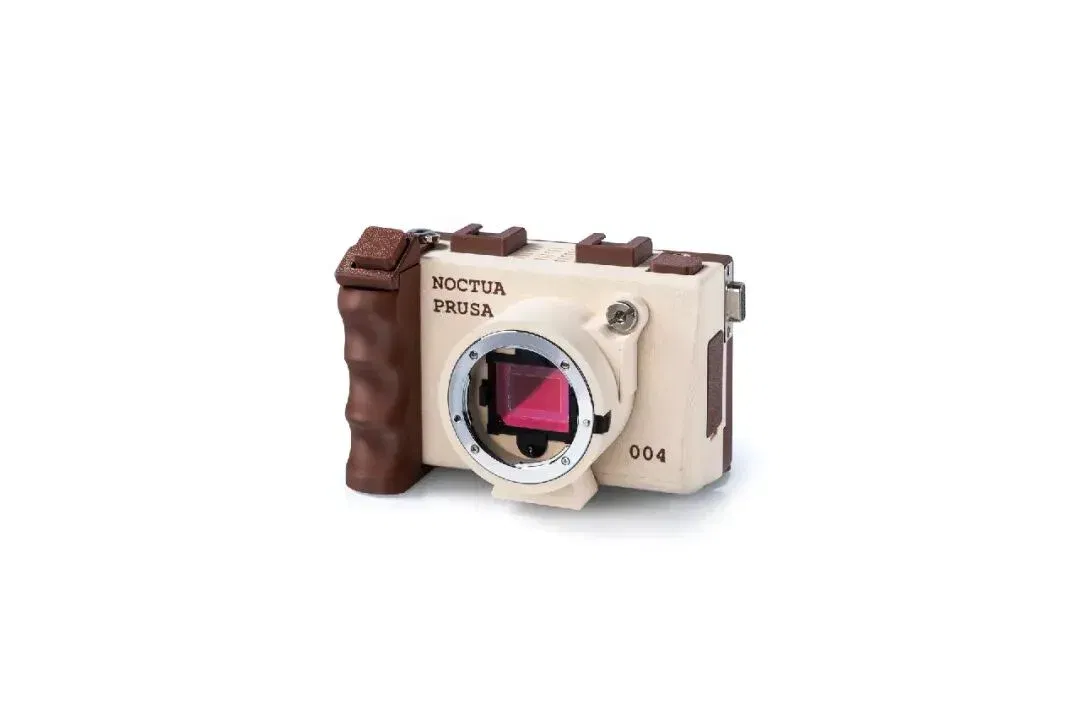
CAIM1 rendering. Image: CAIM1 website.
The anti-AI camera borrows Noctua's beige-and-dark-brown palette familiar to PC builders. The highlight comes after the shutter: beyond displaying the image on its 4.3-inch rear touchscreen, it prints a physical receipt like a checkout register, followed by the date, UTC time accurate to the second and latitude/longitude.
CAIM1 prototype in Noctua beige and dark brown. Image: Noctua.
If someone asks whether your image was photographed or AI-generated, produce the receipt: the sensor proves you captured it.
A camera in anti-AI armor
Such approaches generate verifiable signatures or reference information during capture, helping check origins and later edits. Signatures do not make data unmodifiable; trust also depends on devices, keys and other conditions.
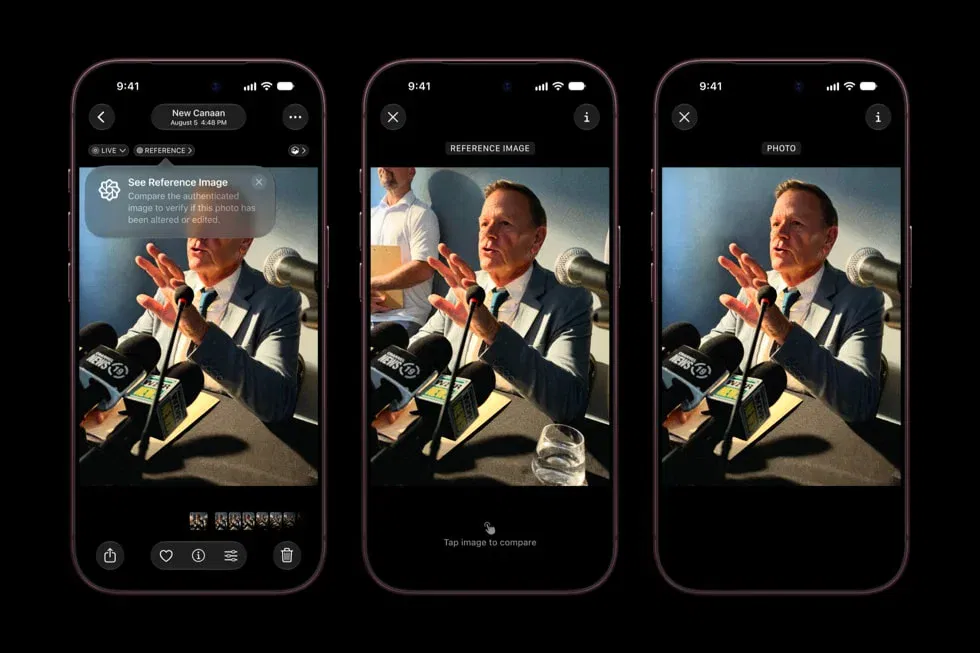
Apple Reference Image displays original, edited and read-only reference images side by side. Image: Apple.
The principle is not unusual, but CAIM1's team is little known. Its founders, earlier projects and manufacturing partners are unclear. How does a startup without optical-lens experience or its own CMOS sensors build this camera?
The answer resembles an assembled PC. Its internal diagram brings together a group of open-source companies:
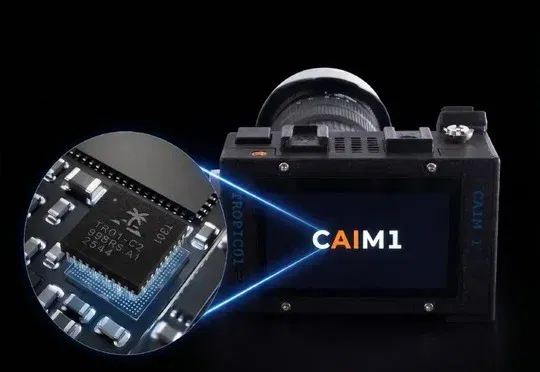
No lens is supplied. Sony E-mount and M4/3-mount versions are supported, with a 4K-capable Micro Four Thirds sensor and built-in 650nm infrared filter. Its `TROPIC01` secure element comes from Prague-based open-security semiconductor startup Tropic Square.
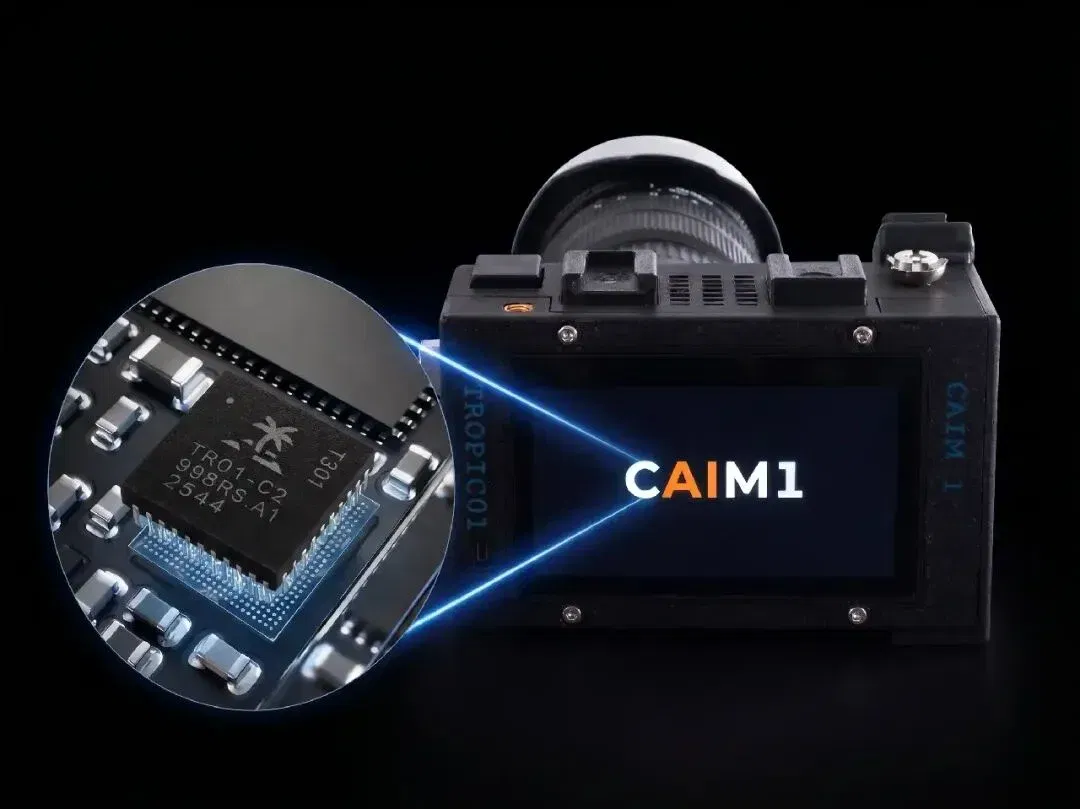
CAIM1 rear and TROPIC01 security chip. Image: CAIM1 website.
Established companies also help. Noctua supplies a quiet fan, while Prusa Research provides Prusament PETG filament with ±0.02mm tolerance. The prototype's enclosure and internal airflow channels are directly 3D-printed.
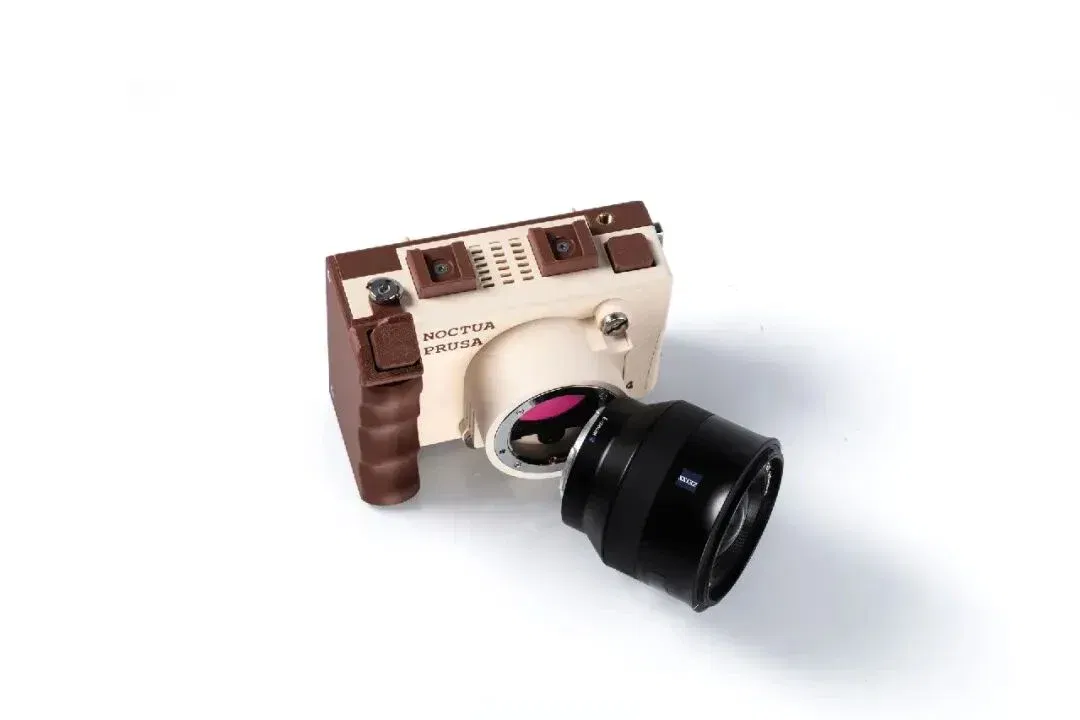
CAIM1 exploded view showing the printed enclosure, sensor and fan assembly. Image: CAIM1 website.
One reason for going around seeking contributions from all sides like this is that the device was initially just a toy that founder Josh Cowell tinkered together for "personal use by a small number of enthusiasts." Later, on a whim, he decided to make a run at the big stage of commercialization.
It also has strong Web3 roots.
Cowell's handle, `@JoshatoshiOnX`, combines his name with Bitcoin creator Satoshi Nakamoto's. The prototype first appeared not at traditional photography shows such as Germany's Photokina or Japan's CP+, but at
crypto-developer events including Ethereum Tokyo and Pragma Tokyo.

Inside the body, the security chip is not only responsible for stamping photographs; it actually also constitutes a complete Web3 hardware wallet. Under the official four-step process, the cryptographic proof generated by each shot is written to a decentralized storage network. The physical "crypto receipt" mentioned earlier is essentially a direct printout, on paper, of the access passphrase for a brand-new wallet containing the authenticity credential for that footage.
CAIM1 therefore does not aim to challenge major camera makers, but to build Web3-oriented on-chain authenticity infrastructure.
Why give this plastic-looking camera a second glance?
With major companies already involved, who buys a niche camera with a printed enclosure rather than molded tooling? Leica implemented C2PA credentials in M11-P, and Apple has iPhone 18 Pro. An independent product needs something different.
CAIM1's greatest ambition is real-time signing of 4K 60fps video. Hash-signing one still is straightforward, something Leica and Apple can silently do in milliseconds. CAIM1's engineering goal is:
compute cryptographic proofs in real time while recording high-bitrate 4K 60fps video
.
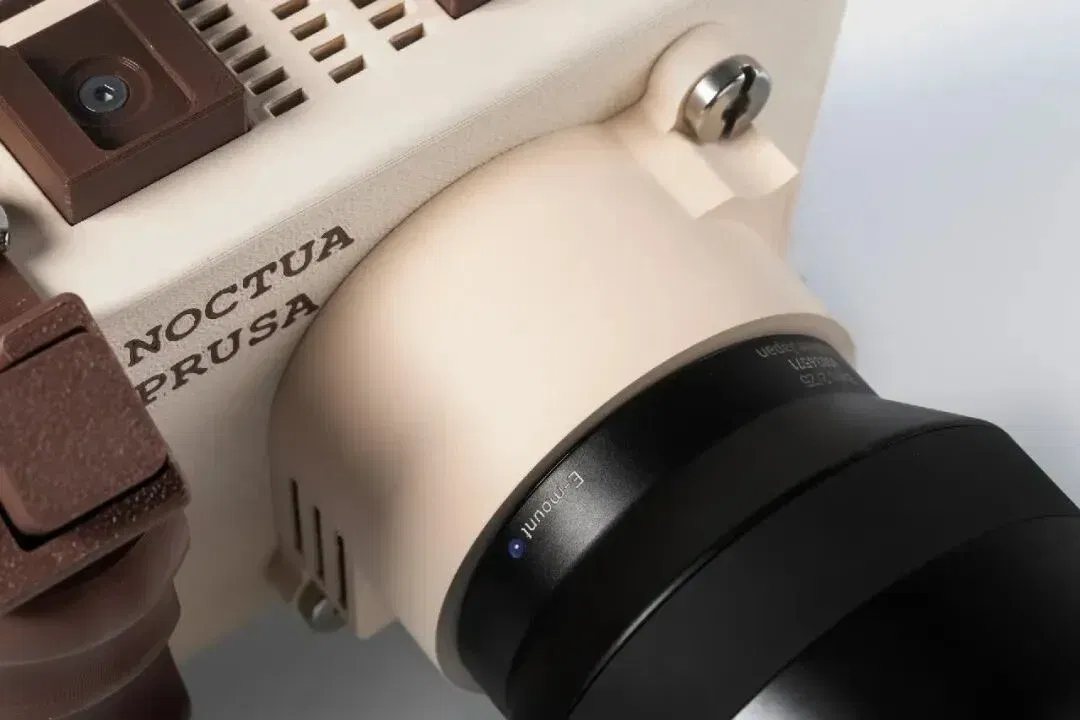
Close-up of CAIM1's printed intake grille. Image: CAIM1 website.
Its edge-computing board must process sixty ultra-high-definition frames per second while running cryptography at full load. Without an airflow path through the front intake, sensor alloy backplate, Noctua fan and CPU heatsink, chips would quickly overheat and throttle.
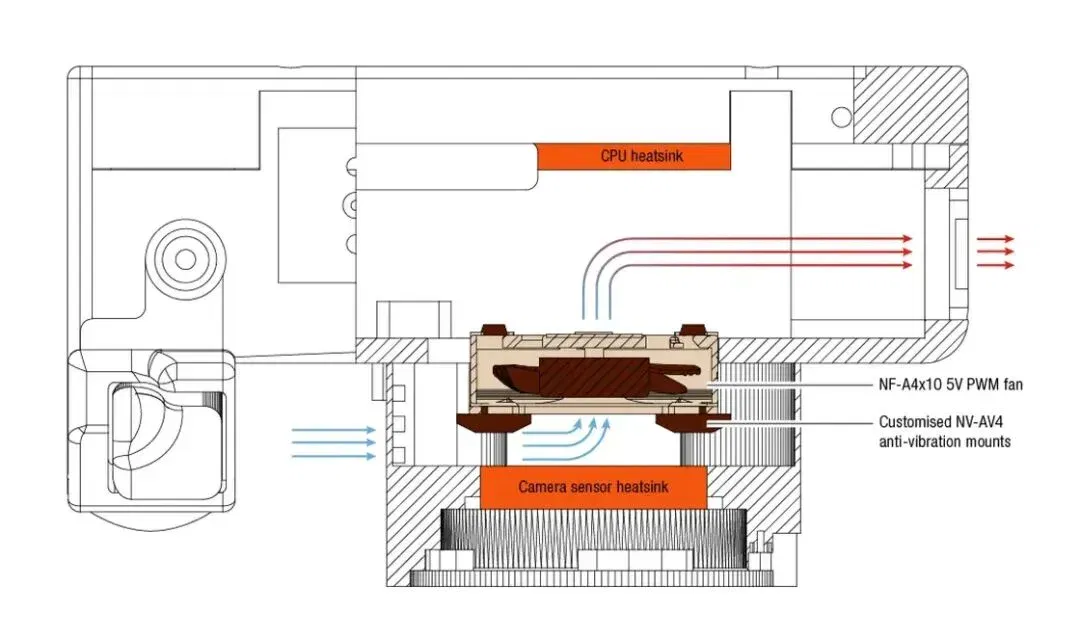
CAIM1's single-fan through-body cooling path. Image: CAIM1 website.
That explains a PC-case-sized fan in a mirrorless-sized camera, and PETG instead of ordinary PLA: its 68–75°C heat resistance helps prevent the enclosure softening.
This is more ambitious than tagging stills. With continuous-video authentication still difficult and AI video increasingly realistic, it is something of a brute-force engineering approach.
A cool concept, but will it reach the market?
The team plans a flagship release in the first quarter of 2027. Yet its website currently offers little beyond renderings: no sample unit, real-shot examples or even price.
However, whether it can reach the market on schedule in 2027 may not be the most important question. Anyone can see how far this device, which still has the unmistakable feel of a prototype, remains from a mature camera. But it has already offered an advance glimpse of a rather absurd future: to prove that a photograph is genuine, people need to cram a security chip, a cooling fan, and a hardware wallet into a camera, and then, after taking the picture, obtain a paper receipt resembling proof of a shopping purchase.
Claims that synthetic content could form a very high share of the internet by late 2026 are forecasts and warnings, not observed statistics showing 90% of online content is AI-generated. Provenance merits research, but predictions are not present facts.
Yet even a concept this cool cannot escape a paradox: a hardware signature can prove that a particular device captured a set of optical information at a particular time, but it cannot prove that the scene in front of the lens was not staged, nor can it judge for us whether the content expressed by a photograph is true. What CAIM1 can prove is the provenance of the imagery; it still cannot prove that an image is the truth itself.
This article was originally published by the WeChat account APPSO. Author: APPSO.
Related topics
After reading
Join the AINRK community
Read how to join the community and connect with people working in AI.
Related articles
Continue reading related topics and articles in this category.

姜宇辉的AI分身:知识助手与“另一个自己”之间 (opens in a new tab)
南方周末通过学者、用户与Second Me创始人的访谈及记者试用,观察AI分身的学术辅助、情感连接和商业化尝试,也呈现知识可靠性、人格边界、版权与隐私方面的疑虑。

智动未来据报完成亿元级Pre-A+融资,资金用于产线与服务机器人部署 (opens in a new tab)
机甲觉醒报道,智动未来宣布完成亿元级Pre-A+轮融资,由中美绿色基金领投、南曦创投联合领投,资金拟用于广州产线、服务场景部署和世界模型研发。“智子世界”仍属技术预览,商业化效果待更多应用数据检验。

范式智能介绍Phai-A1与Phai-M1,强调国产算力后训练优化 (opens in a new tab)
范式智能介绍面向代码与Agent场景的Phai-A1,以及面向真人影视的音画同步模型Phai-M1。公司展示了单卡运行和视频生成能力,并称模型在昇腾平台完成专项后训练优化。
腾讯Q3资本开支814亿元,称WorkBuddy日Token用量居国内首位 (opens in a new tab)
腾讯三季报显示营收2073.36亿元、资本开支814.33亿元。公司称WorkBuddy日活超1000万,按用户每日大语言模型Token消耗总量居国内首位;报道还讨论云业务增收与AI投入对盈利、现金流的影响。

黄仁勋离任后:硅谷101访谈英伟达的技术、供应链与组织挑战 (opens in a new tab)
硅谷101采访半导体、科技与投资人士,讨论黄仁勋离任后CUDA生态、系统整合、供应链、开源投入和组织传承的潜在变化。产业放缓、估值折扣及人才流失判断属于受访者观点。