Inside Silicon Valley's Startup 'Monastery' HF0 and OpenRouter's Early Days
ACE Studio founder Guo Jing recalls his 2024 HF0 residency, the $800,000 monthly revenue peak and subsequent decline, and the focus and growth of OpenRouter's small early team.
Editorial correction (November 16, 2026): The interview preserves the interviewee's recollections. Monthly revenue of $800,000 was a peak, with a lower average afterward. Stripe's public announcement concerned an agreement to acquire the company; the announcement checked did not disclose the transaction price.
HF0, Hacker Fellowship Zero, is becoming the hardest incubator to get into in Silicon Valley.
Unlike Y Combinator's broad-net approach of admitting about 200 teams per cohort and running four cohorts a year, HF0 runs only three cohorts annually, selecting about ten teams each time. The founders who get in move into its residence and spend 12 weeks together in an enclosed, monastery-like way of life. HF0 founder Dave Fontenot aims to remove every external chore and distraction so founders can focus entirely on their products. Many teams have also achieved tenfold growth in those three months.
In autumn 2024, ACE Studio founder and CEO Guo Jing, also known as Joe, entered this mansion with his team. In three months, they took the product's monthly revenue from $80,000 to $800,000. It was also here that he met Louis, cofounder of OpenRouter, which has become hugely popular this year, and witnessed the company's very early state.
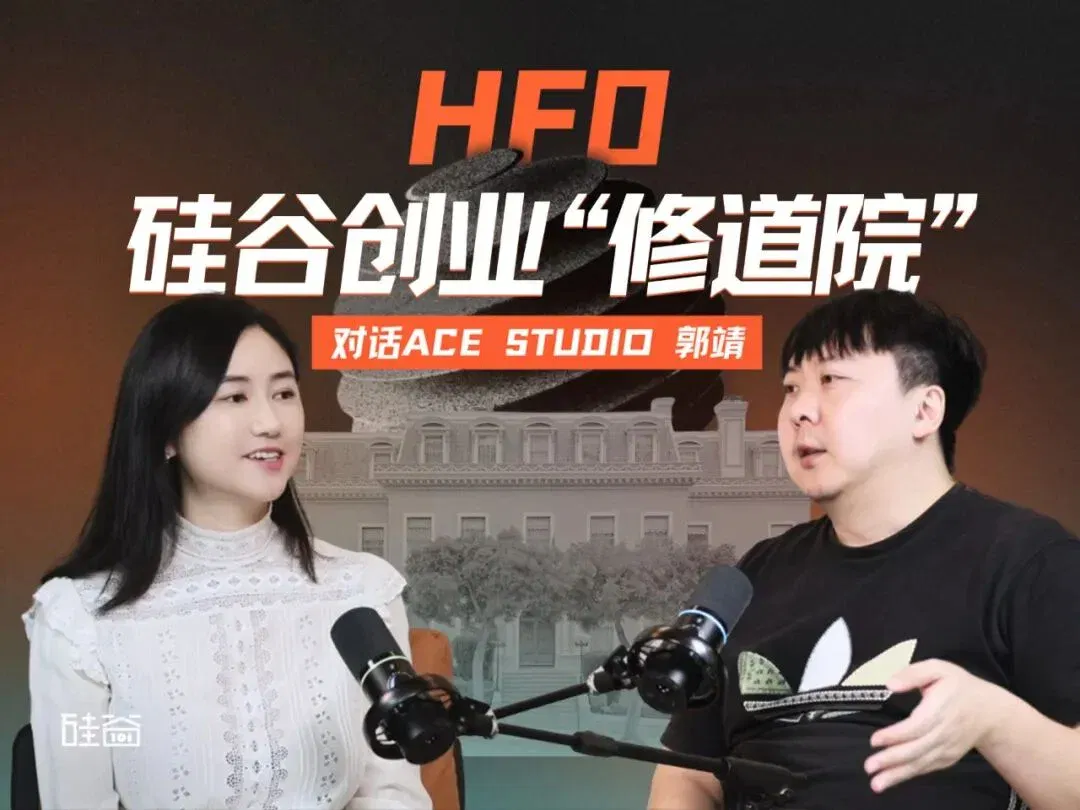
On this episode of the Silicon Valley 101 podcast, Hongjun invites Joe to discuss this unusual startup-acceleration experience, reveal the details behind HF0's growth miracles, and describe how the people he considers some of Silicon Valley's best founders work and think.
Joe believes his biggest gain from HF0 was not a growth technique but a monastic state of mind: continually subtracting, focusing on the single most important goal, and creating an atmosphere of conviction. He has now brought that accelerator model back to his company, repeatedly recreating HF0's growth miracles internally.
Follow the Silicon Valley 101 video channel or audio series to listen to this episode directly. If you like our show, we particularly recommend listening through a podcast app. Silicon Valley 101 is available on all major audio platforms, with channels listed at the end. Please subscribe!
The following are selected highlights from the conversation:

Hongjun: Hello, Joe.
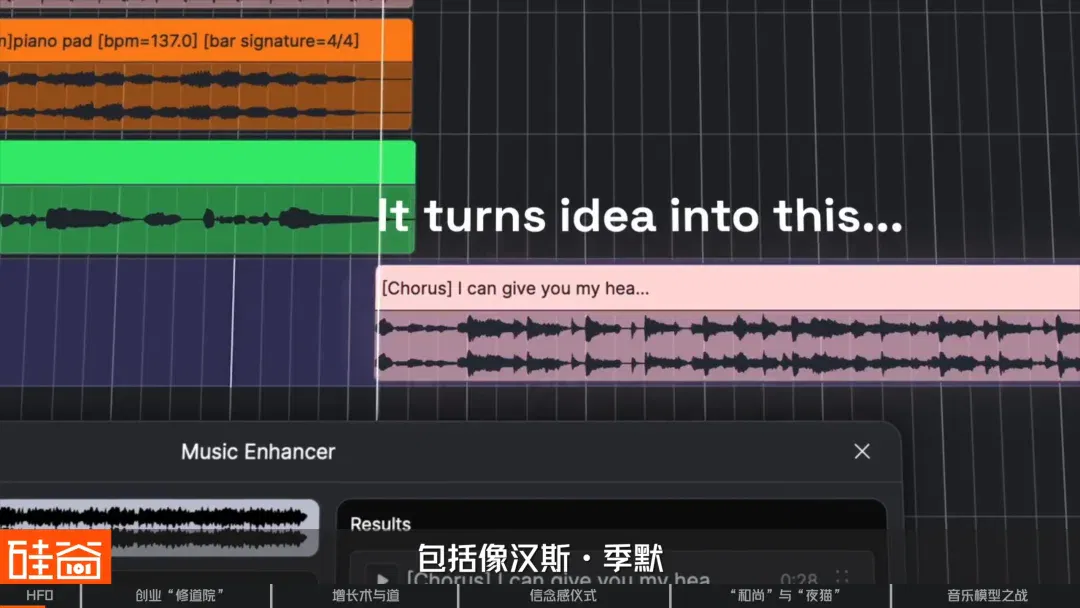
Joe: Hello, everyone. I'm Joe, founder and CEO of ACE Studio. ACE develops its own AI generative models and builds its own professional creative tools. ACE Studio is our relatively mature product, aimed at professionals. Music professionals around the world use it, including top musicians such as Hans Zimmer, the American godfather of R&B Teddy Riley, and many Grammy winners. We are also developing a completely new AI music-creation product for ordinary people.
Hongjun: Tell us about your experience at HF0. It is a very popular Silicon Valley incubator. Has its momentum started to exceed Y Combinator's? Between an HF0 offer and a YC offer, which would founders now rather accept?
Joe: My understanding is that people would choose HF0 without hesitation. YC is certainly a big brand, but each YC batch, meaning each cohort of admitted teams, may have hundreds of teams. You could hardly call that painstaking selection. We joke that its logic is more spray and pray: sprinkle water everywhere and pray that somebody succeeds. Someone always will; fundamentally, it is a matter of probability.
HF0 follows the most classic accelerator logic. The earliest accelerators were residencies: they had a space and brought a group of people in. But the earlier the stage, the lower the probability of success in acceleration, and the more you need a larger denominator and more participants. Physical space, meanwhile, is inherently limited and cannot fit many people. Those two things are in conflict. So HF0 always has only ten teams per batch, which requires an extremely discerning eye. Its acceptance rate is far lower than YC's.
Hongjun: One of HF0's core features is providing space and rooms for all the founders, so everyone eats, sleeps and works together, right? What are its final terms—how much money in exchange for how much equity?
Joe: The terms keep changing because it really is getting better. For our cohort, autumn 2024, it was $1 million for 5%.
Hongjun: Then you were relatively late. I saw that early on it was $250,000 for 2.5%.
Joe: That was a very long time ago. They had just made an adjustment between the cohort before ours and ours. I remember the previous cohort being $625,000 for 3%.
Hongjun: Stripe previously announced that it had reached an agreement to acquire OpenRouter. Was OpenRouter in the same cohort as you?
Joe: OpenRouter was actually a year earlier. They formally took part in autumn 2023. They have two cofounders: Alex is American and Louis is Vietnamese. Louis did not get a visa then, so he could only participate remotely, which was a real shame. By the autumn 2024 cohort, Louis had just sorted out his visa, and HF0 said he might as well come again. But Louis did not take part in Demo Day that time because he was no longer fundraising.
So Louis and I were effectively in the same cohort. HF0 has two work areas, one on the top floor and one in the basement. The basement work area is called Zoom. The idea is that the basement is particularly immersive, with the lights on 24 hours a day. Our team and Louis's were the two that went to bed latest: we went to sleep around 5 a.m., and Louis around 3 a.m., then appeared at our desks at around 11 a.m. or noon. Our team had a reason to stay up late: many of our developers were in China, so we had to coordinate with them. Louis simply worked that late. Zoom has a small room for temporary rests, with a few sofas. At two or three in the morning, he would go there to sleep. But HF0 had actually assigned everyone a very nice room.

Hongjun: Is it famous for taking over a big mansion in San Francisco?
Joe: Yes. The house is beautiful, with excellent facilities. They equipped everyone with Eight Sleep, the smart temperature-controlled mattress cover, which made sleeping very comfortable, and a Whoop fitness band to monitor sleep. But Louis never went back to his room. He took over that little rest room, with his quilt, pillow and toothbrush all inside, and slept there every day. It was very funny.
Hongjun: Where do you think HF0's magic lies? I know its core is helping startups grow. I've talked with companies that attended, and they feel this incubator places particular importance on growth and revenue, creating that atmosphere for you. I also found founder Dave's background interesting. He spent time in a monastery himself, so the idea he advocates is a materially minimalist but spiritually rich life.
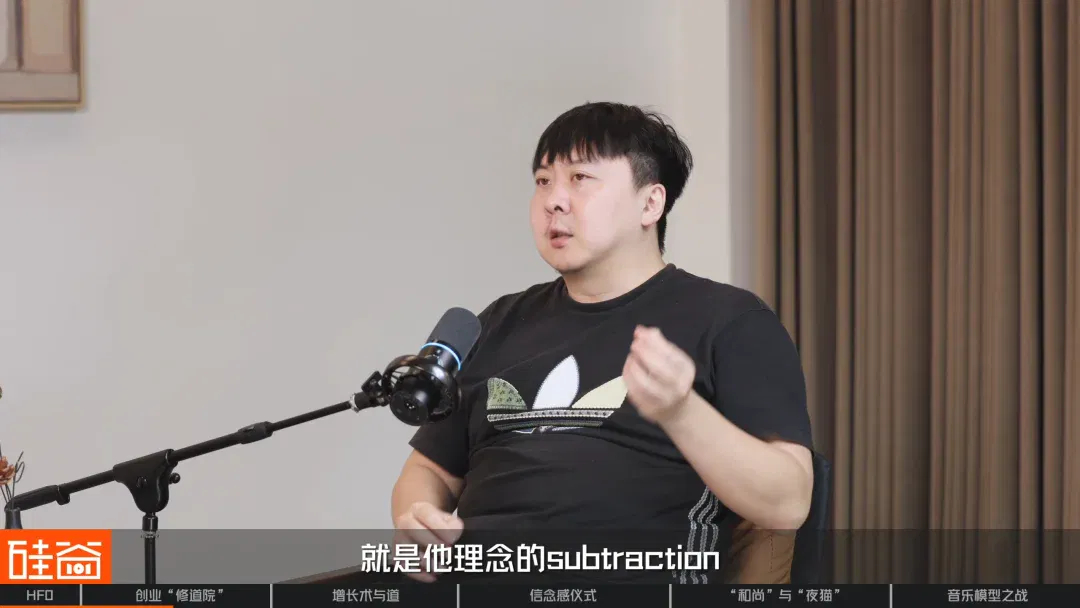
Joe: If I had to describe HF0 in one word, it would be subtraction. What Dave means is not really material minimalism, but removing everything unimportant. HF0's monastic life is not intended to make founders suffer. Your living arrangements are excellent: they hire top chefs who vary the food every day, rotating Chinese and Indian dishes and accommodating vegetarians. All three meals are exceptionally well taken care of.

There are lots of facilities. Cold plunges are popular in Silicon Valley, and those need their own dedicated installation. There are also saunas, a gym, free personal trainers, a dedicated massage therapist and even someone specifically looking after your laundry. His core idea is that apart from the one most important thing, you do not need to worry about anything. Just concentrate on doing your business well.
That is the most monastic part of what HF0 calls its monastery spirit: subtraction. Apart from meals, we spent almost all our time on the basement level. In three months, we may have seen sunlight no more than four times.
Hongjun: How do they get everyone immersed in that atmosphere?
Joe: Before it officially begins, they prepare everyone mentally. They take everyone into the mountains for a retreat, with different forms of meditation and conversation. The point is to bring your mind into a deeply immersive state.
At the end, everyone sets a goal at the meeting, thinking deeply and rehearsing in their mind: how much will I have grown in three months, and what should that look like? First they have everyone visualize it, then work backward to the goal and the weekly targets.
The demo dinner every Monday is HF0's most important activity. Each team goes up for two minutes to explain its progress that week. Did you grow 20% this week? Others grew 20%, so why didn't you?
Hongjun: Is your progress measured in revenue, or something else?
Joe: This is a crucial point. When you arrive, Evan discusses it with every team. He is one of HF0's founders and plays something like a post-investment support role, helping each person identify the number they would choose if there could be only one dimension, one North Star metric. It is not necessarily revenue. For example, our cohort had a team working on biology and frontier R&D, so what they shared every week was naturally different. But Evan helps you find that single point.
Hongjun: He helps you subtract.
Joe: Or, to put it another way, focus on the goal.
Hongjun: Are the vast majority of goals revenue?
Joe: Not necessarily. OpenRouter's goal, for example, was weekly token usage. Every time Louis shared, it was about how much token usage had risen. Each two-minute presentation was followed by one minute of Q&A. People kept asking how revenue was doing and what their business model was. Louis would say, "We do not pay much attention to revenue; our revenue is only enough for a couple of cups of coffee."
Joe recalls that the alumni group shared 'enough for coffee' jokes around news of the agreement to acquire OpenRouter. The Stripe public announcement that was checked did not disclose an amount; $7 billion is not treated here as a confirmed transaction price.
Hongjun: Each company focuses on only one goal. Does that goal change every week, or stay the same?
Joe: It stays the same. Our team's goal, for example, was revenue.

Hongjun: I remember your revenue increasing tenfold after you joined, from $80,000 a month to $800,000.
Joe: Yes. But $800,000 was a peak, and we used plenty of tactics to get there. Afterward, our average was $400,000–$500,000 a month. We measured ARR, annual recurring revenue. Another team in our cohort was Fyxer, which is doing well now too and has appeared on a16z's list of 20 essential productivity tools. They were measuring ARR as well.
HF0 emphasizes making the goal simple enough to explain clearly in under two minutes and show progress. It does not encourage you to list how many things you did that week; it asks only about progress toward that single goal.
Hongjun: How did you multiply it so many times in such a short period?
Joe: Looking back now, after leaving HF0, in late 2024 and early 2025, I was obsessed with all kinds of clever growth tactics—basically tricks and little routines. Apart from several major product-feature updates, we really did use a lot of growth techniques: extensive A/B tests, pricing adjustments and conversion-funnel optimization.
Every Tuesday, someone would come and talk with us. One HF0 alumnus, Blake Anderson, had built a calorie-measurement product called Cal AI. Growth was his strength, especially growth through influencers.
I asked him how to grow through influencers. I always felt it could take off once or twice, but could not be stable. He asked how many influencers I contacted every day. I said I had contacted more than a hundred over several months. He said he contacted 150 every day.
That one sentence woke me up. The specific techniques he described afterward were less important. What mattered was realizing that we differed by orders of magnitude, which meant something in my system had to be wrong and needed rebuilding. After going back, we built an influencer system. It has now reached its fourth generation, with deep AI involvement, and can contact 200 influencers a day.
Hongjun: Do all 200 influencers reply?
Joe: I told Blake at the time that influencers were unpredictable: they might not reply; if they replied, they might not collaborate; if they collaborated, it might not take off. Blake's response was that when you raise something unpredictable to a sufficiently large scale, it becomes predictable.
So how do you make influencer marketing stable? The only thing you can do is increase the number of people you contact. Contact a hundred, and one will take off; if you want ten times as many breakouts, contact a thousand. The funnel can also keep improving: there is room in email templates and conversion rates. These days, when we contact 200 people, around 40 reply.
Hongjun: So you turned it from scattered individual actions into a professional team system that operates continuously.
Joe: Yes. We summed it up at the time as doing growth the way we do products and algorithms. We have always treated products and algorithms as systems and been willing to put substantial effort into them. But when it came to growth, we would take one shot and move somewhere else. Growth, however, is a system just like products and algorithms.
Hongjun: Another growth method was raising prices.
Joe: Raising prices really is a clever trick. We tried it and did pricing A/B tests, which increased revenue by 30%. But looking back today, energy is conserved: higher prices may lose some potential users, along with the word of mouth they would have brought.
Eventually you realize that the best products in the world, such as OpenAI and Anthropic, do not play many pricing tricks. They still spend their energy on how good the models are and whether the product genuinely helps users. We gradually realized this after leaving HF0 too: relying only on clever tricks inevitably hits a ceiling. So in 2025 we developed our own foundation model. Only after actually bringing it into ACE Studio in late 2025 and turning it into ACE Studio 2.0 did the growth curve return.
Hongjun: So you feel HF0 had a positive effect because you learned many new approaches.
Joe: Growth is important, of course. But people often ask what I actually learned there. Their default assumption is that HF0 connected us with resources or taught us methods. Those have never been what I tell people about.
Hongjun: What was it?
Joe: Something that sounds more intangible: it taught us to create this immersive monastic mode, and how to subtract. Or rather, it did not even teach us how to subtract. It simply told us that subtraction is the root of everything and the most important thing. As long as it kept emphasizing that point, we would find the answers about how to do it ourselves.
I remember Dave talking with us in the first week. He said: you are all founders; you do not need me to teach you. At such a crucial stage of your startup, stop going to parties and playing around every day. Subtraction is not about cutting out unimportant entertainment. The hardest part of subtraction is focusing only on the single most important thing for the company, even excluding the second most important thing.
That sentence hit me hard. Sometimes we think we could do this, and that also seems important. For example, big companies would approach us about partnerships. I knew those things moved very slowly and were not the most important thing in the short term, but I would still think: they are a big company, so I need to maintain the relationship.
Hongjun: Couldn't you delegate that to someone else?
Joe: But other people are company resources too. Don't they have their own most important thing? Eventually you realize that if you try to cover every aspect of everything, you cannot do the most important thing. Entrepreneurship is like the bear picking corn: you let one thing go to pick up the next.

Hongjun: I heard your team now rents a big house together and works there.
Joe: We are a fully remote company. After HF0, we tried something new, adding another layer on top of the remote setup: an internal accelerator, or internal HF0. At first we even called it ACE0.
For example, if I think it is time for a major algorithmic breakthrough, I gather a few algorithm engineers somewhere, rent a large sea-view villa, and tell everyone we are running a three-month accelerator with one goal: deliver the next generation's SOTA model.
As at HF0, I first take them through a retreat and meditation to immerse their minds. We also have demo dinners to share progress every week and weekly updates. All of that imitates HF0. We subtract too, hiring someone to take care of cooking and cleaning so everyone can focus on this one thing.
It is an interesting mechanism. We have run it four or five times so far, for algorithms, development and growth.
Hongjun: How effective has it been?
Joe: Very. Right now I am running an accelerator for consumer-product development and another for growth. The two run in parallel with different people. You find that once people enter that state, productivity explodes. We experienced exactly that explosion of productivity and inspiration during our three months at HF0.
It also needs a strong sense of ritual, so we choose beautiful places. We have gone to the seaside in Huizhou, Tianjin Binhai and the mountains around Hangzhou. We even ran one at the foot of Mount Fuji.
Hongjun: But many colleagues have families. Is such extended travel workable? It sounds like several times a year. If it happened four times a year, they would never get home.
Joe: The company has more than thirty people. Four sessions a year does not mean everyone must attend all four. One cohort focuses on algorithms, the next on development, without the same people overlapping. We call the rule "military service": everyone has a three-month obligatory period in every twelve months.
Hongjun: The seaside villa sounds beautiful, with a pool and good food. But those three months must be stressful, because results are required. How do you build that atmosphere?
Joe: By learning from HF0. The pressure there was greater. One element of its culture comes down to two words: hard working. To produce results in the end, you still have to grind.
As for creating the atmosphere, the key is setting higher goals for yourself and turning goal reviews into a ritual. Excellent people motivate themselves. At HF0's weekly demo dinner, for example, everyone goes up to say how much they grew that week. You ask yourself why everyone else is growing and you are not. It does not judge you; it simply creates the atmosphere.
Hongjun: Bring the very best people together to compete and push harder.
Joe: Yes. The most important thing is still the ritual. There has to be a sense of ritual that makes people believe in the atmosphere.
Conviction matters. I always emphasize that conviction is not an empty word. It actually comes from acting: an actor has to believe in what they are performing to perform it well. Once you believe and perform well, the result is good.
We are the same. If you believe you can succeed and deliver results, first simply believe in the atmosphere and environment, believe this is the right place, and believe it can produce results for you. The more you believe, the more you participate, and eventually you discover that it really works.
Hongjun: But some people struggle to get that growth curve however hard they work. You cannot just force it into existence. What happens when failure keeps coming and you cannot finish within the allotted time? Have you had moments of breaking down like that?
Joe: Certainly. Sometimes results fall below expectations, and sometimes they exceed them. But I think most people have not reached the stage of having exhausted every approach. In the vast majority of cases, they think about it, decide it is difficult and stop there, or try once and stop there.
Hongjun: You probably did not have growth from the first day either. How did that curve get going?
Joe: During the first half of our cohort, almost none of the teams had growth. Only two teams were growing. One was OpenRouter, which was already taking off; the other was Fyxer. Every other team had no growth at all in the first half. Dave and the others were almost frightened, wondering what was wrong with this batch and whether they had really misjudged their selections.
But from November 1, everyone collectively began growing like mad. The work and accumulated effort from earlier started paying off.
Hongjun: Which month was that?
Joe: Our program started on September 18, and it began on November 1.
Hongjun: The seventh week?
Joe: Yes. November 1 is especially vivid in my memory. On October 31, Dave gave everyone a talk. He said this point in the cycle is usually a dividing line: some teams break out, while others hang out, going nowhere. On October 30, everyone was still discussing it. When I opened my eyes on November 1, that day's revenue had doubled. From November onward, all the magic started happening.

Hongjun: What is Dave like?
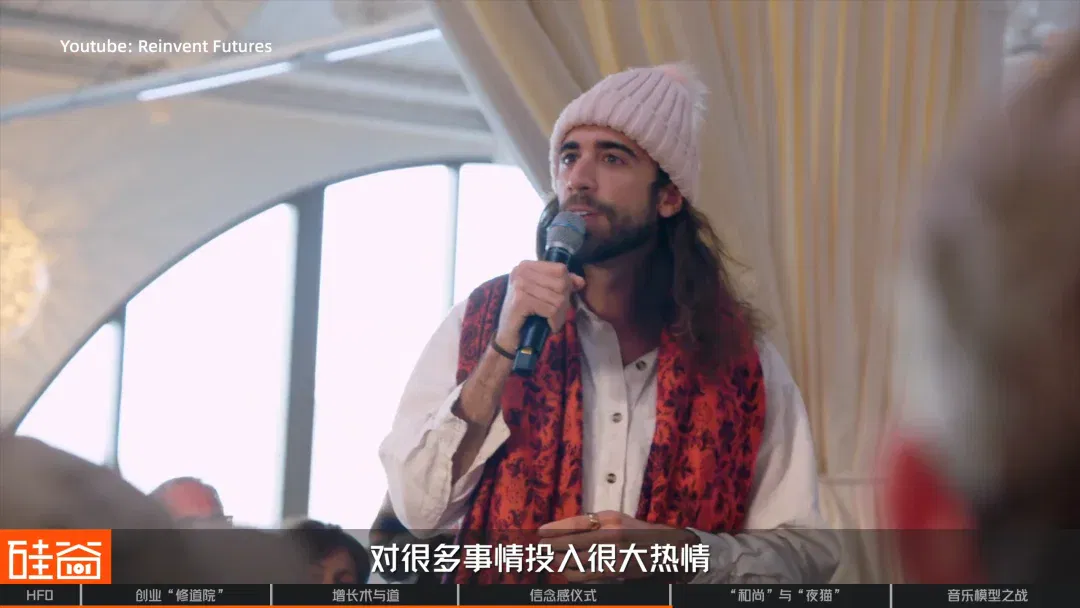
Joe: Dave is incredibly charismatic, even a bit ADHD (attention-deficit/hyperactivity disorder). He is intensely enthusiastic, pouring enormous passion into things and people. He says he replies to more than 500 messages every day. He is very sharp; his replies and introductions are punchy—short and forceful. Meeting him, you feel how infectious his energy is.
Hongjun: Apart from subtraction, what else did he inspire in you?
Joe: He built this system. He put together the whole way HF0 works, drawing on his year and a half as a monk in Taiwan. That experience inspired the monastic model. Did you know HF0's first cohort took place in Taiwan?
Hongjun: I really didn't.
Joe: I was shocked when I heard it too. So HF0 is very fond of Chinese people and has many distinctly Chinese elements, such as a tea table. He is fascinated by Chinese culture and even speaks Mandarin.
Dave is a very loving person. The phrase that immediately comes to me is love and peace. He gives me the feeling of embracing the world with love. After leaving HF0, we stayed for a few days in an Airbnb in San Bruno. Dave went to San Mateo for a bowl of ramen and brought me a takeaway portion. He said these noodles had to go with Lao Gan Ma, and it had to be Lao Gan Ma, or they would not taste good. Lots of little details like that were interesting.

Hongjun: You also met OpenRouter's Louis then. What was OpenRouter like early on?
Joe: When I met Louis, they were still early and just starting to gain momentum. The team had only four people, two of them part-time. Louis felt the two part-timers were not very reliable, and he basically wrote all the code himself.
Hongjun: Apart from the part-timers, it was just Louis and Alex.
Joe: Yes. Our CTO Sean was shocked. He said OpenRouter seemed never to have a testing environment when writing code. They would finish and YOLO—you only live once, meaning ship first and deal with the rest later—straight into production. If a bug appeared in production, they would YOLO again and fix it. It was incredibly wild.
A classic image of Louis is him walking with a laptop cradled in his left arm and typing with his right hand, eating as he walks, coding one-handed and writing code on the move.
Hongjun: He is an excellent programmer.
Joe: Another characteristic is how fast he talks. Every time he finished, I had to ask him again. At first I thought my English was poor; later I discovered that even native speakers struggled to understand what he had said. He talked with us about many things, such as how to do social media.
Hongjun: Louis talked with you about social media? Isn't he the CTO?
Joe: In an early startup, he did everything. For example, he told me, 'Don't overthink it; force yourself to post one video every day.' Louis is extremely friendly. We make music AI, and around three in the morning we often played samples to test new models. Everyone would sit together listening, with the volume very loud. He slept next door and never complained. Sometimes we were still playing samples after two, and at three Louis would get up holding a pillow and start coding, even greeting us. After it happened enough times, we started questioning ourselves: were we the ones waking him up?
Hongjun: Why do you think OpenRouter succeeded? What did it get right?
Joe: They made one thing as simple as possible, and knew very clearly what they did not want. For example, they barely raised funding, taking money only from HF0 and an earlier angel investor. They were not pursuing monetization in that period either. He thought the most important thing was becoming the router for large models, integrating more of them faster, more efficiently and more reliably.
The first-mover advantage became clear. Eventually, model providers were begging to be listed there, rather than OpenRouter asking them to join. It had become the first entry point for developers worldwide to test new models. The number of times each model was called on OpenRouter formed a leaderboard that had acquired authority. Securing that position was important. Once they understood this, they stopped doing unnecessary things: no aggressive monetization and no fundraising.
Hongjun: So what was the core point? We have discussed OpenRouter before. Its price is simply the model's price plus 5%, without any price optimization. Many people in China now run similar models on low prices: buy at 60% of list price, sell at 80%, and earn the spread. But that was never OpenRouter's thinking at the beginning.
Joe: They originally called it Unified Interface for LLMs, meaning a unified interface. Their first idea may have been a unified interface for consumers, a bit like Poe, Quora's multi-model chat tool, where one person could switch between different models in a single interface.
Later he discovered that developer demand was greater. For developers, the interface is the API format. For example, a product may already have interface code for calling a particular LLM. Switching models means changing code and releasing a new version, which is too much trouble. The advantage of OpenRouter is that you can use its interface directly.
Because developers all use it and the markup is small, every model can be tested immediately. That lets it produce reports and leaderboards: how many times this model is called for this scenario, or that model for that scenario. In a sense, it becomes a usage-based benchmark. That is where the scale effect lies.
Of course, could pricing erode this advantage? I think it could. For developers like us, if one service charges a 5% markup and another is 20% cheaper, with the same stability, I would certainly switch.
Hongjun: Did any companies in your cohort inspire you?
Joe: OpenRouter was not actually our biggest inspiration, because its business and growth were completely different from ours. They are excellent founders who chose a very good model, a classic surfing model: the larger the wave, the higher they ride.
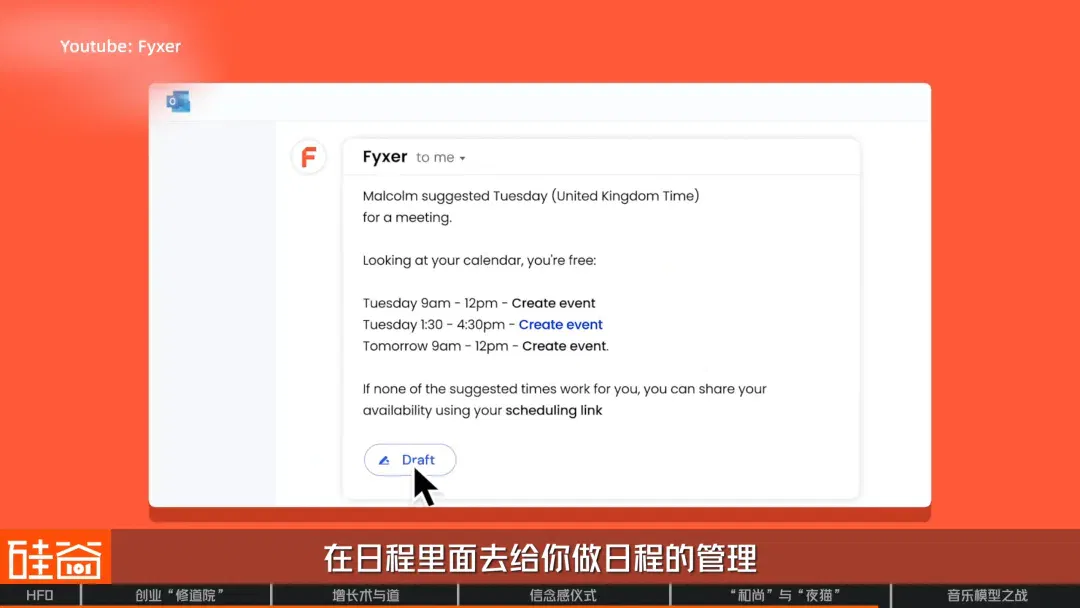
The team that inspired us more was Fyxer. It builds an email agent that helps manage Gmail and Outlook, drafts replies, manages schedules and takes notes in online meetings. Both our teams were targeting ARR. Every week, they shared the number of new paying users, ARPU, average revenue per user, the share of users who pay and how far ARR had grown. So we talked a great deal about growth. For example, when discussing how to prevent churn, he told me we could sell longer membership terms.

Hongjun: Suno is very strong now too. You previously made tools for professionals, and now you also do music generation. How will you compete with Suno?
Joe: We were doing music generation before too, just more for professional scenarios. Fundamentally, the underlying thing is the same: music-generation models. So the most important competition is still at the model level: deliver a SOTA model as quickly as possible and beat Suno on models as quickly as possible.
We have something others cannot easily copy. With users' permission, the complete trajectory data of their edits in ACE Studio is extremely useful for our models' post-training. A system and environment like this cannot be replicated. You cannot build a professional product like ours solely to collect such data and also obtain data from musicians at Hans Zimmer's level.
Hongjun: Suno is doing that too.
Joe: Yes, Suno is doing it too. I am just saying that it is very difficult to replicate and has high barriers. More importantly, everyone is still at the table. If AI music really is something enormous, then let's compete. Imagine it is Mount Everest at 8,848 meters. It is at 50 meters and you are at two, but the long-term destination is 8,848 meters. There is no reason you must remain behind it forever.
We are actually accelerating very quickly. Suno may have trained models for three years to reach its current level; we came close in one year, roughly matching its previous generation, and the gap between its previous and current generations is not large. We also now have the world's best music-generation researchers. Technically, they may even be better than Suno's; we just need time to catch up.
Hongjun: How do you define the world's best music-generation researchers?
Joe: For example, the representation backbone used by almost every music model in the world was developed by our researchers. Suno's models are built on that backbone too. There are many similar examples.
Our researchers are not just enthusiasts, either. Some are even excellent guitarists. A recently joined researcher's undergraduate band almost signed with Warner. The only reason they did not sign was that everyone was too good academically, and they all ended up doing algorithm research at Ivy League universities.
Hongjun: At their highest level today, can models surpass the best human singers, performers or arrangers?
Joe: That is difficult to define. Art has no definitive number one, whereas in martial arts there is no room for second place. Beethoven and Mozart are masters because the public recognizes them as such. Good or bad is ultimately an outcome, something like a public MOS—Mean Opinion Score, an average subjective rating. Only after the public and market recognize it do people know whether it is good. I am not saying subjective things have no good or bad; I am only saying that I am not the person who can make that judgment. I can only speak for my own sensory experience.
Hongjun: I have not used music-generation software for a while. When I first tried it, though, I felt its level was just formulaic pop songs.
Joe: Today it can already reach number one on Billboard. In individual cases, I think it has gone far beyond humans.
Hongjun: What individual cases do you mean?
Joe: I cannot say that AI music as a whole is far beyond humans, because many problems remain unsolved. But there really are certain songs that, when you listen to them, make you realize humans could not do that. For example, human vocal physiology struggles to produce an extremely high, penetrating pitch with a very broad base and raspiness all at the same time.
Hongjun: It can combine all the best characteristics.
Joe: Yes, because it is human preference driven: human preferences guide it. People like something, their preferences keep giving it feedback, and it keeps improving. What emerges may ultimately be something human physiology itself cannot achieve.
But AI music still has a diversity problem today. It is simple: ask it to generate a bad-sounding song and it cannot. Ask it for a rough song that drifts out of tune as it is sung, but has raw vitality and sounds as though someone recorded it live on a phone, and it cannot do that either. Some folk music I really like is exactly like this. For example, Li Zhi's songs recorded in Nanjing bars back then were recorded on phones by people in the audience and had extraordinary vitality. When he later rearranged and produced them, that flavor was gone. Suno cannot generate that. It cannot generate Zuoxiao Zuzhou's songs either.
Hongjun: That is what makes music and art interesting. If it generates an average-level good song, a pleasant song, it is still a version of "good" within the bounds of "good". Even if it can combine different kinds of good singing, it remains inside "good". But what truly moves people is those imperfect moments, those moments of genuine emotion. When Shan Yichun sang A Love Letter to Filmmakers on The Voice of China, she actually stopped singing midway. That was a major mishap, but I love that song. I can feel the sincere emotion before she stopped. So I think those imperfections made the work what it was.
Joe: Or everyone wants something different. Some want perfection; others want precisely imperfection. Some want this kind of perfection, others that kind. Today's AI music distribution is still rather narrow. In certain types and flavors, it can do things even humans cannot. Ask it for something with a pop-electronic sound, for example, and it may be astonishing. I have heard quite a few user-created examples. But ask it for old jazz from the 1970s, and it cannot produce that flavor.
This article comes from the WeChat public account Silicon Valley 101 and was written by Silicon Valley 101.
Related topics
After reading
Join the AINRK community
Read how to join the community and connect with people working in AI.
Related articles
Continue reading related topics and articles in this category.
深度|完成4000万美金融资,ACE成为AI音乐赛道融资额最高的华人团队 (opens in a new tab)
AI音乐公司ACE完成近4000万美元融资,成为AI音乐赛道融资额最高的华人团队之一,资金将用于自研音乐基础模型研发、全球团队扩张及面向大众市场的新产品Miya。
姜宇辉的AI分身:知识助手与“另一个自己”之间 (opens in a new tab)
南方周末通过学者、用户与Second Me创始人的访谈及记者试用,观察AI分身的学术辅助、情感连接和商业化尝试,也呈现知识可靠性、人格边界、版权与隐私方面的疑虑。

智动未来据报完成亿元级Pre-A+融资,资金用于产线与服务机器人部署 (opens in a new tab)
机甲觉醒报道,智动未来宣布完成亿元级Pre-A+轮融资,由中美绿色基金领投、南曦创投联合领投,资金拟用于广州产线、服务场景部署和世界模型研发。“智子世界”仍属技术预览,商业化效果待更多应用数据检验。

范式智能介绍Phai-A1与Phai-M1,强调国产算力后训练优化 (opens in a new tab)
范式智能介绍面向代码与Agent场景的Phai-A1,以及面向真人影视的音画同步模型Phai-M1。公司展示了单卡运行和视频生成能力,并称模型在昇腾平台完成专项后训练优化。
腾讯Q3资本开支814亿元,称WorkBuddy日Token用量居国内首位 (opens in a new tab)
腾讯三季报显示营收2073.36亿元、资本开支814.33亿元。公司称WorkBuddy日活超1000万,按用户每日大语言模型Token消耗总量居国内首位;报道还讨论云业务增收与AI投入对盈利、现金流的影响。