Wei Xiaokang on AI talent: foundation model research, application teams, and changing organizations
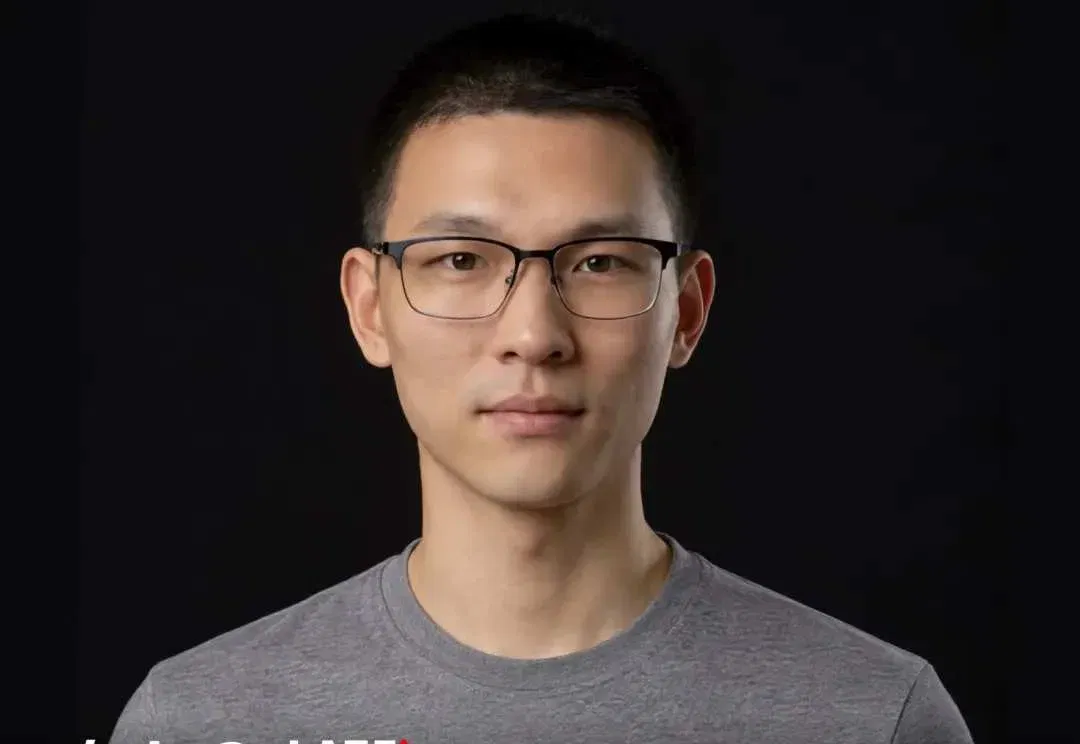
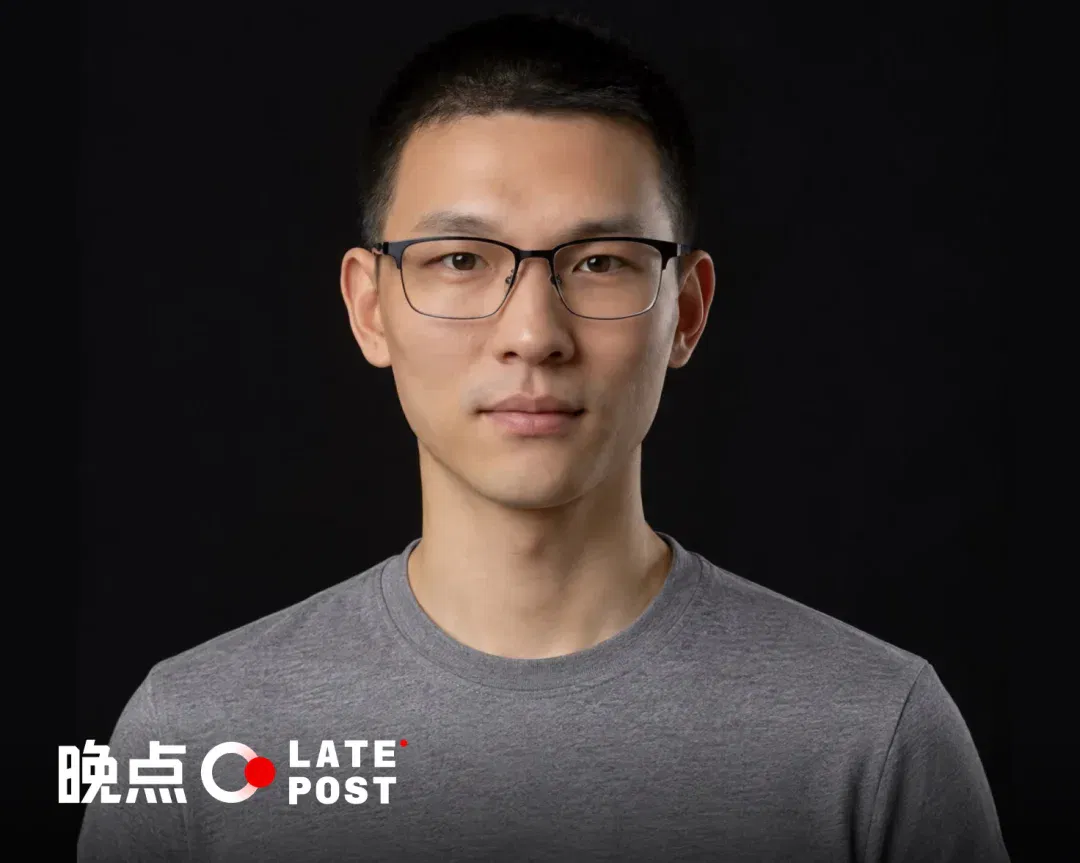
LatePost interviews former ByteDance and Meituan recruiting leader Wei Xiaokang about high salaries, fewer model jobs, and small development teams. Forecasts about employment and organizations are his judgments.
“It is a talent bubble when you pay the money but the problem still cannot be solved.”
In the competition over large models, talent and computing power are two expensive, scarce resources. For Chinese model companies with limited computing power, the hope of catching up with the world’s leaders rests to a large extent on the brightest minds.
In 2024, a PhD graduate whose research had anything to do with AI could potentially receive an annual salary of several million yuan. This was also where the talent bubble began: many companies spent a great deal of money, only to recruit a group of people who could not build large models at all. The following year, Tencent and ByteDance pushed talent prices higher still, with compensation packages for a very small number of top people reaching the RMB 100 million range.
But by 2026, the market had reversed. As large-model competition increasingly concentrated among a handful of companies, demand for talent shrank rapidly. Some outstanding graduates with top-tier papers and internships at leading model companies could not even get an interview.
We recently spoke with AI entrepreneur Wei Xiaokang, a former recruiting leader at ByteDance and Meituan, to look back at the rise and fall of this battle for talent.
Wei has experienced two intense battles for talent in China’s internet industry firsthand. He also has radical opinions and a clearly defined view of talent.
In 2017, he helped build ByteDance’s recruiting system. That was an era when Chinese internet companies established competitive advantages through high salaries, large-scale recruitment, and ever-expanding organizations. ByteDance later assembled thousands of HR staff, competing for outstanding talent across the industry with exceptionally high pay. Wei subsequently helped conduct large-scale campus recruitment at Meituan, hiring 5,000 or 6,000 graduates a year at its peak.
Today, however, Wei believes in a logic almost completely opposite to that of the past.
On the one hand, he believes that the very top geniuses have not been seriously undervalued: “An annual salary of RMB 100 million for large-model talent is not expensive at all.” On the other, he believes that the vast majority of outstanding talent is already in surplus in foundation models and may not even have a chance to enter the field in the future.
For AI application companies, he also cannot understand why more than 20 product and engineering staff would still be needed: “A dozen or so people who are good at using AI can do the work that used to take 200.”
This judgment extends beyond the technology industry. He believes that large numbers of white-collar jobs may disappear in the next few years; that major internet companies’ headcounts will not return to their previous levels after this round of layoffs; and that, whereas previously 100 people entered an industry and ten ultimately stood out, in the future only those ten may have the chance to enter at all.
Behind these seemingly radical judgments is a consistent logic: AI is further separating the economic value of the very best talent from that of ordinary talent, organizations’ need for people is shrinking sharply, and the vast majority of opportunities and rewards may ultimately concentrate in the hands of a tiny number of top people.
If competition among Chinese internet companies over the past 20 years was about who could bring together and organize more smart people, then in the AI era Wei envisions, it will become a contest over who can find a tiny number of geniuses and talented people and free them from dependence on large numbers of others.
A recruiting leader who once helped internet companies compete for talent on a massive scale now believes that AI will end the way of organizing talent that supported the internet industry’s development over the past 20 years.
This is Wei Xiaokang’s judgment about the future. Whether it will become reality still leaves many questions worth discussing.
“If I were ByteDance or Tencent, I would have offered RMB 5 million directly in 2023 and hired a few dozen people. Progress on large models might have been much faster.”
LatePost: Is an annual salary of more than RMB 100 million for one large-model specialist an astronomical price?
Wei Xiaokang: It is well worth it, and not expensive. If you view foundation models as a business, a major tech company spends more than RMB 10 billion a year buying accelerator cards just to train models—tens of billions over a few years. Whether those tens of billions are well spent depends on those few dozen people. With the same money, efficiency can differ severalfold depending on who uses it; it can even determine whether a model can be built at all.
Put it in a traditional business: if you have invested tens of billions and the company’s rise or fall is at stake, how much would you pay the team? You could pay hundreds of millions, or billions.
Besides, last year’s food-delivery war burned through nearly RMB 200 billion. All of China’s foundation model teams combined have not burned through that much.
LatePost: When did China’s battle for large-model talent begin?
Wei Xiaokang: The “battle of a hundred models” in 2023 and 2024 was the first wave, and also the first peak in researcher compensation. A PhD graduate without any experience could be offered an annual salary of RMB 3 million or RMB 4 million. Even someone who had previously worked on the preceding generation of NLP or computer vision could have a chance at RMB 2 million or RMB 3 million as long as their work had some connection to large models.
LatePost: By your earlier standard that “RMB 100 million is not expensive,” those prices actually seem quite reasonable. It sounds as though there was no bubble.
Wei Xiaokang: If you recruited people who genuinely understood foundation models, that was not a bubble. In fact, more than 90% of those people were recruited far too cheaply. If you waited until 2025 or 2026 to try to poach them, you would have to pay several times as much.
At the time, dozens of companies also spent a great deal of money, only to poach groups of people who could not build large models at all. That was clearly a bubble. Of course, those companies did not survive afterward either.
LatePost: In China, 90% of companies cannot beat ByteDance in the competition for talent. How do they remain competitive in recruiting?
Wei Xiaokang: They do not actually need to fight for people. If your goal is to be China’s number one, that is difficult. But if you only want to be “Top 3”—there are actually five or six companies in that group—it is still relatively easy. The broad direction and architecture are settled. Put together a few leaders with sound values to lead a few dozen people who know what they are doing, then get three things right. The core people must genuinely understand the work and have both the authority and the courage to decide the direction; experiments may fail, but the process must be scientific. Integrate algorithms, data, and infrastructure, without territorial attitudes or pointless internal competition for promotions and performance ratings. And get the data right.
With that approach, there are enough people. Every graduating cohort has 300 or 400 people with the ability to rank among the country’s top 100. Hire ten of them, then add a few strong people through experienced hiring, and that is enough.
But what is the point of being “Top 3” in large models in this era? Major tech companies can use it to serve their core businesses. A startup that is merely Top 3 and has no other application business will probably have a difficult time.
LatePost: When did the first wave of competition for talent end?
Wei Xiaokang: In the second half of 2024. Some companies’ models were still alive, but in reality they could no longer keep up with the latest pretraining. A hundred models became ten. Our judgment at the time was that by 2025, the supply of graduating talent at the Top 100 level would already be in surplus.
LatePost: Then Tencent entered in 2025. Why did it push talent prices so high again?
Wei Xiaokang: My understanding is that Tencent had not previously been aggressive or resolute enough about AI and had not attracted enough strong people, so it had to work harder to catch up. Shunyu Yao had just joined, and the company gave his team and HR broad authority at every level. So they went all out on recruiting and made very aggressive offers: for the same person, when others offered RMB 2 million or RMB 2.5 million, they offered RMB 3 million, or even RMB 4 million.
That made 2025 the craziest year. Every company had to bid and raise its offers repeatedly, and many people across the industry were “forced” to see their compensation double.
LatePost: Was there a bubble in the wave Tencent later set off? Did it have any negative effects on the talent market?
Wei Xiaokang: The effects were all positive. If you can achieve technological innovation and master core technologies, this money is a drop in the ocean. For example, today we spend hundreds of billions of yuan buying foreign accelerator cards and model APIs, yet we are still held back by chokepoints. Someone who could previously be hired for RMB 3 million now commands RMB 5 million or RMB 10 million. But the problem that person solves is still worth RMB 100 million.
It is a bubble only when you pay the money but the problem cannot be solved.
We still pay technology talent far too little today. If I were ByteDance or Tencent, I would have offered RMB 5 million directly in 2023 and hired a few dozen people. Progress on large models might have been much faster.
We are now in a transition toward technology application and innovation, so people are not used to this. They will get used to it later.
LatePost: From what you have observed, which of the remaining major tech companies and large-model startups have recruited truly exceptional people?
Wei Xiaokang: Companies with the ambition to be world-class or China’s number one, such as ByteDance and DeepSeek. Kimi has also recruited a few, and Zhipu has some too, although that relies more on Mr. Tang’s personal influence.
LatePost: The battle for talent in China’s mobile internet era began with ByteDance and Didi. They paid 50% more, or even doubled salaries, to hire graduates and poach people from each other. Looking back now, what was the biggest impact of that behavior on the industry?
Wei Xiaokang: The effects were likewise all positive. It shows that Chinese companies increasingly value technology talent.
In the 1990s, people valued sales, not technology. I graduated from Beijing University of Posts and Telecommunications. In the 2000s, whether at BUPT or other strong engineering universities, students still dreamed of going into sales or becoming management trainees. Nobody went into R&D; people who were good at programming were busy switching to sales. Only after 2010, when China began applying technology and pursuing technological innovation on a large scale, did R&D personnel’s income overtake that of salespeople. Later, companies began to value products and user experience and to make a serious effort to hire product managers; only then did product managers’ income rise accordingly. Today, we are beginning to enter the stage of technological innovation.
LatePost: Starting this year, the hiring market for large-model talent has become very different from last year’s. From what we understand, many graduates with papers and internships at major tech companies may not even get interviews at model companies, and even the very best students are receiving fewer offers.
Wei Xiaokang: That is perfectly normal. If we divide people into geniuses, talent, and hands: in a given field, geniuses are the very best among their peers, the Top 10. These 20 or 30 people can open up new directions and new theories, like Hinton and Ilya. They are always scarce.
The next level is talent, the Top 100 each year: several hundred exceptionally capable people who continue innovating along the directions opened by geniuses and make those paths work. But in foundation models, supply already exceeds demand.
There are many more outstanding people who improve and implement the details. They would be excellent in other industries as well, but in foundation models they are just hands. This group has been forced to change direction since 2024.
LatePost: Even people in that “talent” tier, at the Top 100 level, are already in surplus?
Wei Xiaokang: Foundation models really do not need many people. A few dozen strong people are enough. Apart from those geniuses, it does not make much difference which of the remaining few hundred people does the work.
And Tencent’s wave last year drew in people from mathematics, physics, and all sorts of other fields, even though demand was already falling. So in 2026, supply and demand suddenly reversed.
LatePost: Starting next year, how much do you think compensation for large-model talent overall will fall? Can the average remain in the high single-digit millions of yuan?
Wei Xiaokang: Next year, the question is not how much salaries fall, but whether there is still a chance to work on foundation models. The few dozen geniuses whose abilities put them in the Top 10 will not see their compensation fall; it may rise. But the vast majority at the Top 100 level—roughly 300 to 500 people—will no longer have an opportunity.
There are still ten model companies genuinely at the table now. Next year, there will be at most seven or eight. The ones that leave the table will release a few geniuses and a group of talented people. The stronger ones will go to other companies and displace weaker people. Those who are displaced may then be unable to find foundation model jobs.
LatePost: Seen that way, they are talent specific to a particular era, whose value passes when that era passes. As you previously mentioned on Xiaohongshu, the algorithm role will probably disappear too.
Wei Xiaokang: The need for algorithms remains, but pure algorithm roles will disappear. Since 2023, I have argued with many algorithm engineers that you cannot put large amounts of manpower into training small models just because large models are expensive, slow, or temporarily unsuitable for the business. Bigger models will definitely perform better, MoE can increase speed, and prices may fall 90% within six months to a year.
Yet even today, more than 80% of teams at major tech companies continue training small models for the sake of survival, promotions, and performance ratings. I think people will soon realize that, apart from a few search and recommendation use cases at an exceptionally large scale, other text, voice, and vision businesses no longer need dedicated algorithm engineers.
The barrier to post-training is also falling rapidly. Anyone who has studied technology can get started now, and in another two years the barrier will only be lower.
LatePost: Where will this displaced talent and these displaced hands go?
Wei Xiaokang: AI applications will definitely take off in 2027. But very few people today truly understand how to use AI well, so I think they should leave model companies and work on applications right now.
LatePost: If compensation for AI talent shrinks sharply, what will be the biggest effect on the talent market or society as a whole?
Wei Xiaokang: There will not be much effect. These few dozen, or even few hundred people exist only in the news. Their coming and going will not cause much of a ripple in the world.
“Do not feel embarrassed. Join a reliable team and do something big together.”
LatePost: What is the basis for your claim that AI applications will definitely take off in 2027?
Wei Xiaokang: Apart from recruiting, I do not understand other industries. I simply believe in people and basic logic. There are two reasons:
First, product–market fit, or PMF, must already have been found in every industry. GPT-3.5 came out four years ago, and dozens of teams in every industry have been experimenting repeatedly. This year, models’ intelligence has also surpassed that of the vast majority of people. It would be illogical if nobody had found it. It is just that, even if it were right in front of us, we would not recognize which one was the next Toutiao.
Second, the models are good enough. I think the entire industry has underestimated DeepSeek’s October 17 version. It may be AI applications’ iPhone 4 or Xiaomi phone moment: the first model that can meet the needs of the vast majority of industries while also being cheap enough and fast enough. Teams that have found PMF have, for the first time, a prospect of large-scale commercial use.
LatePost: But judging by this year, most application companies are finding it very difficult to raise money. Technology VCs are starting to feel there are no projects to invest in.
Wei Xiaokang: It is normal to feel there are no projects worth investing in. What would be abnormal is everyone agreeing that a particular thing is going to take off.
The successes of the previous era were mostly outside the consensus: ride-hailing, Toutiao, food delivery, short video, and Pinduoduo were all viewed pessimistically and could not raise money in their first few years. Even WeChat was like that in its first year. Even the people building those businesses did not initially know they would become things worth tens or hundreds of billions of US dollars.
What was the consensus back then? The things people were spending big money investing in and buying were mobile security managers, phone assistants, browsers, and maps.
LatePost: How can you judge in advance whether an AI application company has a chance of succeeding?
Wei Xiaokang: I have no way to judge whether a product has a future. I think you should look at the founder and the team. First, the founder should have: 1. Strong learning ability and curiosity. 2. A small ego. 3. Strong motivation. 4. Plenty of energy. Second, the team must have no weak links and be stronger overall than its competitors in the same industry.
I also think the product leaders who succeed in this wave are very likely to come from technical backgrounds.
LatePost: Does product sense not matter?
Wei Xiaokang: Of course product sense is necessary. But in this wave, people with product sense are very likely to emerge from among those with technical backgrounds.
Product sense depends on talent, but even more on practice: talking with users, trying repeatedly, looking at data, and iterating. There are still barriers to AI coding and to applying AI technology in a business, so people who understand the technology can experiment faster. On the other hand, the business window is only these next one or two years. By the time nontechnical people catch up in efficiency, the battle may already be over. In any case, everyone on our team, including me, has a technical background and also does product work.
LatePost: What about industries where PMF has not been found, or teams that are not the first to find it?
Wei Xiaokang: Join a reliable team as quickly as possible, or merge. Businesses in this generation iterate much faster than in the previous one. Once someone in an industry finds PMF, competition among startups will very likely be settled within a year, leaving them to focus on competing with major tech companies.
Do not feel embarrassed. Wang Huiwen, Chen Lin, and Zhang Nan were each doing their own thing back then, but when they saw better teams, they simply joined them. Join a reliable team and do something big together.
LatePost: Will AI application companies also experience fierce competition for talent?
Wei Xiaokang: They are already competing for people. After a year at an AI application company, your compensation may double when you change jobs. But the most intense period has not arrived yet. Once PMF emerges in different industries, the imitators rushing in will bid up industry pay and attract more money as well.
“At a major tech company, there is no prospect of getting ahead below level 3-1.”
LatePost: What would the organizational structure of your ideal AI company look like?
Wei Xiaokang: If the product is not particularly complex, around ten people is ideal for the product and engineering team. I call them “product implementers”: mainly full-stack people, most of whom are also product managers, each with at least two computers and simultaneously using Max subscription accounts for three or four large models.
A dozen or so people like that can support a business with ten million daily active users, or DAU. I cannot think of a reason to need 20 people.
People are now the bottleneck instead. AI does too much, too quickly. We cannot assign it tasks fast enough, or review everything it does.
LatePost: A dozen or so people are enough?
Wei Xiaokang: One strong person who uses AI coding well is equivalent to at least five engineers from the “old days.” Add to that one person doing both frontend and backend work and most of the product work themselves, eliminating meetings, coordination, and scheduling, and efficiency can increase another two- or threefold. A dozen or so people are equivalent to what used to be a 200-person product and engineering team.
For example, once we needed to change, add, or remove some fields on both our business and consumer sides to improve matching between supply and demand. The app, search and recommendation strategies, large-model dialogue strategies, the respective workflows on the business and consumer sides, the database, and so on all had to change accordingly.
At a major tech company, it would take two months, with four or five teams and dozens of people holding meetings. The two of us discussed it for five minutes, then one person did it. He finished the changes and released the update in half a day.
LatePost: It seems that even ByteDance cannot “work miracles through brute force” and monopolize talent.
Wei Xiaokang: That saying has actually been misinterpreted by outsiders. Yiming’s original point was to first think through the direction and calculate that the return on investment is positive, then put in all the resources you can. There are prerequisites.
So when I see some startups pushing hard for growth before their ROI turns positive, I find it absurd. Some people say, “Didn’t ByteDance and Meituan do the same thing back then?” But in my experience, both ByteDance and Meituan first confirmed a positive ROI, then increased their investment.
LatePost: What does someone with the abilities you just described look like?
Wei Xiaokang: There is a necessary but not sufficient condition: the person must use up the quota of at least two large-model Max subscriptions every month. Strong users exhaust three or more. Someone who uses two is able to direct AI to do work; someone who can use three or more is able to use AI to direct AI to work. They are in a different class.
There are probably fewer than 10,000 people in China who can exhaust the quotas of three or more Max subscriptions.
LatePost: What about roles outside product and engineering?
Wei Xiaokang: Ideally, they should know AI coding too. First, they can make their own work several times, or even dozens of times, more efficient. Second, when they need something, they can build it themselves rather than waiting for a slot in the product and engineering schedule. With fewer people, there is less collaboration and management to do as well.
LatePost: Many internet companies have started laying people off this year. Public reports say the cuts at some companies have even reached 30%. How does this differ from the layoffs when major tech companies collectively cut costs and increased efficiency in 2021 and 2022?
Wei Xiaokang: After the previous wave of layoffs, many companies gradually returned to their original size. This wave is different. The headcount will not come back, because they genuinely do not need so many people anymore.
LatePost: But these big companies are not really short of money. Suppose there are 5,000 R&D staff, at an annual cost of RMB 500,000 or RMB 600,000 per person. That is around RMB 3 billion, which is not a decisive expense for them, is it?
Wei Xiaokang: It is mainly not about costs. Most major tech companies’ core businesses are growing only in the single digits, with no growth if you strip out marketing costs, yet headcount is several times what it was a few years ago.
The features were finished long ago. Even without considering AI, they may need only 50%, or even 30%, of the people. Those who are surplus can only engage in internal competition for promotions and performance ratings.
LatePost: I once asked the CEO of an internet company whether he would lay people off. He said no; instead, he would have them do other things. If a company has new businesses, could internal transfers solve the problem?
Wei Xiaokang: My concern is that the vast majority cannot keep up. Take the ByteDance and Meituan teams I previously led: among 200 or 300 people, fewer than 20 used AI coding.
LatePost: I have spoken with senior executives at Alibaba and ByteDance. They believe people below P8 or 3-1 should leave for startups. Generally speaking, R&D staff at those levels already earn over RMB 1 million.
Wei Xiaokang: Below 3-1, there is definitely no prospect of getting ahead. I even think there is little point in someone at 3-2 continuing to stay at a major tech company, with so many people at 4-1 still above them.
LatePost: How will the organizations of big companies such as ByteDance, Alibaba, and Tencent change in the future? Beyond layoffs, will their existing organizational structures be overturned?
Wei Xiaokang: They will, but the change will be slow. Companies that survive may need five or ten years to remake themselves into something closer to startups. Those that do not complete the transformation may not survive.
LatePost: Even companies like Alibaba, Tencent, and ByteDance, with more than 100,000 employees, will become like startups?
Wei Xiaokang: Headcounts will be streamlined substantially, although they may not be as lean as startups, and productivity per employee may not be as high either. Organizations may become flatter and split into small business units. The specifics are still unclear.
I am actually not that interested in what major tech companies ultimately become, because new ways of organizing will not emerge there first. They are more likely to be learners.
Large companies face constraints from compliance requirements, organizational structures, incentive mechanisms, and other factors. It is difficult for them to match startups for speed. That is a reality we have to recognize.
Some middle managers in these companies may understand this perfectly well, but for the sake of promotion and self-preservation, they will still tell their bosses: “We can do this too. We can fight this battle too.”
“For companies in the AI era, the most important thing is getting recruiting right, followed by culture. Sharing the money will be much easier too.”
LatePost: Beyond people working in the internet industry, which groups will suffer the greatest negative impact? Many people think it will be white-collar workers. When will “AI replacing people” become widespread?
Wei Xiaokang: There are two types of white-collar workers: those who need to interact with people offline, such as doctors, teachers, after-sales repair staff, and shop salespeople, and those who work entirely online. For purely online work—such as telephone sales, customer service, and many operations roles—my rough estimate is that there are many tens of millions of people.
Some high-tech companies are already replacing people. Large-scale replacement in other industries may still be two or three years away. The most advanced AI office products may come out next year; then salespeople have to sell them to different companies, and those companies have to make internal adjustments. That will take roughly that long.
People in online white-collar work, apart from a small minority working on AI—possibly not even 5% or 10% of those employed—may all face sustained employment pressure over the next few years. Their positions may disappear permanently.
LatePost: What does this mean for university graduates?
Wei Xiaokang: In the past, perhaps 100 people first entered an industry and 10% ultimately did well. Now, perhaps that 90% will have no chance to enter from the outset, and only the top 10% will still be able to get in.
LatePost: But many of today’s top 10% in different industries also grew step by step from beginners. If companies stop recruiting and training large numbers of newcomers, where will the top talent of ten years from now come from? Or do you believe truly outstanding people do not need to be trained?
Wei Xiaokang: It will work differently from the previous era, but some people should be able to learn from AI and break through. Just as in this era, many outstanding people also got into university through self-study and built their careers that way.
LatePost: You were involved in ByteDance’s large-scale recruitment period. Did ByteDance succeed back then because it found more geniuses than other companies, or because it established an organizational mechanism that let large numbers of outstanding people grow quickly and use their abilities? What proportion did each factor account for?
Wei Xiaokang: It is a cycle. Because there was such a mechanism, and because some people joined it at the very beginning, the cycle could get going and attract more talent and a few geniuses.
LatePost: So when you say today that a dozen or so of the very best people can replace an organization of hundreds, might you actually be underestimating the value created by the organization itself?
Wei Xiaokang: A dozen or so people still need an organization. Organizations remain very important; it is just that their model in this era has changed from that of the previous era. For example, with fewer people, individuals become more important, so the most important thing is getting recruiting right, followed by culture. Sharing the money will also be much easier. Things like 360-degree reviews, performance assessments, and promotions will no longer matter.
LatePost: You believe only a small number of top people will become increasingly valuable, while other outstanding people gradually lose opportunities. But if every company believes this and concentrates resources, compensation, and opportunities on a very small number of people, will that also make those people stronger and stronger while leaving others fewer and fewer chances to prove themselves? At that point, will the enormous ability gap we see reflect differences that originally existed between people, or differences created by the allocation of resources and opportunities?
Wei Xiaokang: Foundation models are for a small number of top geniuses and talented people. Applications, I think, can accommodate many people. But every time a new technology emerges, only a few people can keep up. It then widens the gap between rich and poor, further concentrates resources and wealth, and ultimately creates social tensions, followed by redistribution.
LatePost: You keep dividing people into geniuses, talent, and hands. But does someone become a genius because they were a genius to begin with? Could there be another possibility: a young person with good aptitude happens to join a good team, receives good learning and training, and encounters an important opportunity? Could someone defined as ordinary talent today become a genius tomorrow?
Wei Xiaokang: The geniuses, talent, and hands we are discussing today refer to the particular work of foundation models, which could even be considered mathematical work. What mainly matters is intelligence, the training a person has received, and the opportunities the industry provides.
I think that in mathematics, someone first has to be a genius in terms of intelligence, and only then will they be selected through successive stages.
In business, products, or even engineering R&D, I think both talent and hands have a substantial chance of surpassing people with genius-level intelligence. In mathematics, they do not.
LatePost: From your description, AI is profoundly changing the rules governing the value of talent. But might you be underestimating some things AI finds difficult to change, such as a person’s desire, courage, resilience, and the era and opportunities they encounter? When you assess an entrepreneur, how much weight do these factors carry?
Wei Xiaokang: I have always believed that motivation and ego are decisive. Anyone who can start a business and raise money is already reasonably capable in intelligence and stamina. What mainly separates them is motivation and ego.
LatePost: At the end of October, the State Council issued the “Opinions on Adapting to the Development of Artificial Intelligence Technology to Help Build an Employment-Friendly Approach to Development.” To what extent do you think the “visible hand” can slow the process of AI replacing people?
Wei Xiaokang: It can delay it, but cannot stop it. Large companies will not go too far and will shoulder their social responsibilities, but they will definitely still cut jobs; otherwise, they will not be competitive. Large companies will probably maintain layoffs at 10% a year. Small and medium-sized companies will not consider these things and will cut jobs on a large scale.
Looking on the bright side, our generation may have a chance to come close to communism: everyone has basic living security and can do what they want. But the process of getting there will be painful. I believe our country will solve these problems. Things may be very bad abroad, with tensions and conflicts intensifying.
LatePost: Are there any groups that are unlikely to be affected much by AI?
Wei Xiaokang: Blue-collar workers will be fine within the next ten years. Ten years from now, when robots are widespread and we have communism, most people will definitely still have to work, and most people will still mainly do blue-collar work.
LatePost: So you left major tech companies and chose to start a business in blue-collar recruitment?
Wei Xiaokang: Yes. There are several reasons for choosing blue-collar work. First, there will be more and more blue-collar workers, and both they and recruiters need a platform to transact on; this will not be swallowed up by foundation models. Second, this has considerable social value. Leaving the future aside and looking just at the present, the experience and matching efficiency across the industry are extremely poor. Ninety percent of the information online in this industry is false, and 95% of blue-collar workers are scammed once or twice every year when looking for work. And this is something AI can do—we have already made it work.
LatePost: You said you agreed to this interview because you wanted to meet more AI entrepreneurs. What kinds of people do you want to meet, and what would you like to discuss?
Wei Xiaokang: I would like to meet people whose monthly usage exceeds two large-model MAX subscription accounts, ideally strong users of three MAX accounts.
We have initially made AI blue-collar recruitment work, and want to bring in another one or two strong people as partners. Over the longer term, we also hope to exchange ideas with more outstanding people. So we would like to make friends and talk with entrepreneurs and startup employees whose usage exceeds two MAX subscriptions.
You are welcome to contact me through LatePost or my Xiaohongshu account.
LatePost: One final question: when do you think you will lose your job?
Wei Xiaokang: When the day comes that recruitment no longer requires people to talk face to face. By then, though, I may have changed careers and be doing something else.
Cover image source: supplied by the interviewee
This article comes from “LatePost,” and was written by “Gao Honghao.”
Related topics
After reading
Join the AINRK community
Read how to join the community and connect with people working in AI.
Related articles
Continue reading related topics and articles in this category.
刷LeetCode的时代要过去了?大厂面试正在转向 (opens in a new tab)
程序员面试的时候,终于可以光明正大地打开 AI 了。
前 Claude Code 产品负责人 Cat Wu 宣布加入 OpenAI (opens in a new tab)
据报道,Cat Wu离开Anthropic后宣布加入OpenAI,参与核心产品管理。文章回顾她在Claude Code及Cowork的工作,并讨论团队人员流动;Anthropic公司收入增长不能全部归于单一产品,也不能从离职直接推断内部矛盾。
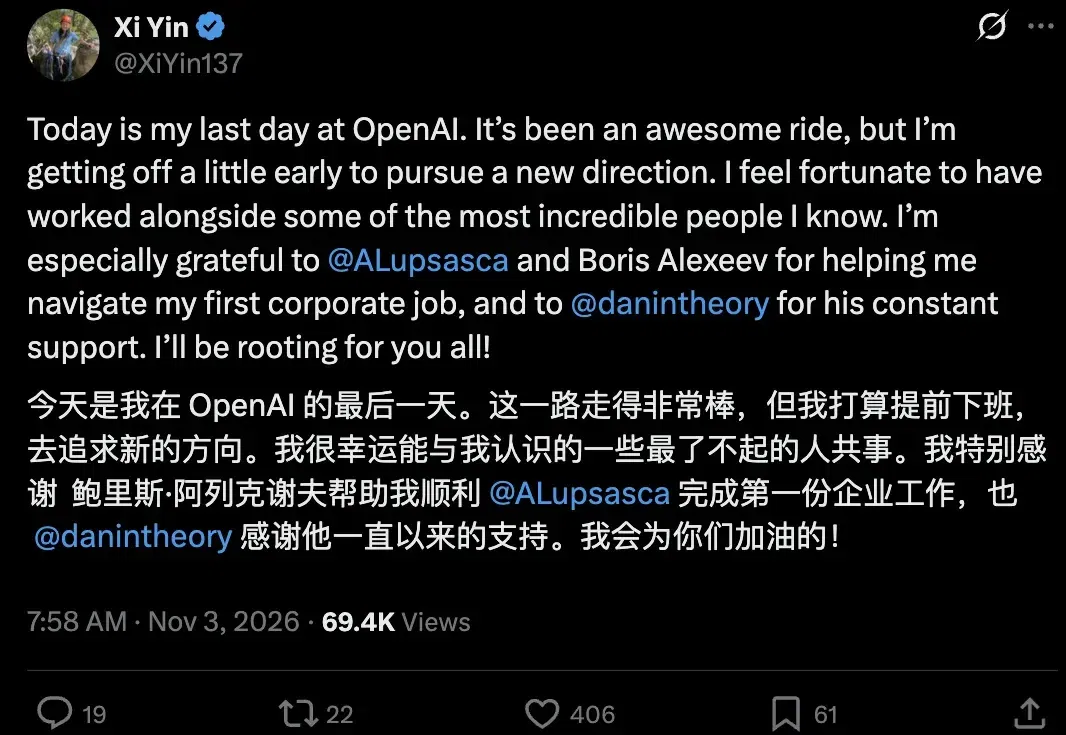
物理学家尹希宣布离开 OpenAI,下一步方向尚未披露 (opens in a new tab)
报道援引尹希告别帖,称其结束在OpenAI的首份企业工作,准备探索新方向,并回顾其物理研究及AI使用观点。离职去向未获本人披露,网友关于新公司的猜测不应作为任职消息;研究提速数字属于个人经历。
“我在Anthropic感到不安全”:一位Anthropic早期员工的回忆 (opens in a new tab)
Anthropic早期员工Ivan Vendrov在《Some Memories of Early Anthropic》中回忆,入职八个月后因AI安全使命与商业化、模型竞赛压力带来的精神重压选择离开,并质疑公司将谨慎服从的助手塑造为“受过创伤的官僚”。
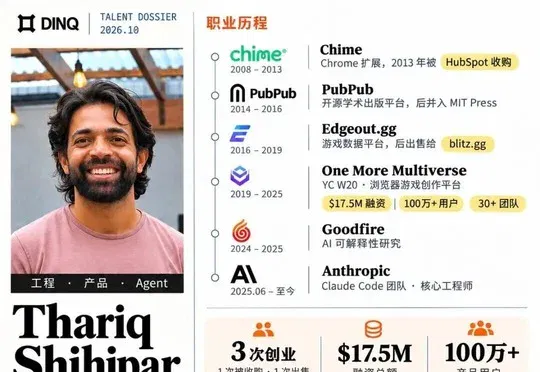
突发,Claude Code灵魂人物Thariq Shihipar宣布离职! (opens in a new tab)
Claude Code核心作者Thariq Shihipar正式离职Anthropic,并在告别信中提出“向上竞赛”,主张强模型时代应减少提示词约束、重塑人机交互并转向高密度HTML界面。