Zleap: from a Token Router to an enterprise agent runtime, with its founder on organizational change

The interview covers unified model access, quota and work-context management, and Zleap OS, which is still in internal testing. Long-term token growth is an estimate by the founder.
Editorial correction (November 13, 2026) The survey denominator has been corrected. Product capabilities and growth potential remain statements made in the report and by the interviewee.
Perhaps what bosses ultimately need is a company where much of the work does not have to wait for them to drive it forward.

"Boss" is a word that sounds somewhat unfamiliar in the AI era. Yet Jomy, founder of Zleap, is already in his second year of building AI for bosses.
At AI launch events over the past two years, people have been more accustomed to calling them “founders,” while employees call one another “classmates.” Few have focused their attention on bosses.
But Jomy believes that a company’s AI transformation must start with the boss and proceed from the top down. That is because buying resources, covering the costs, and changing how work is done all require decisions by the boss.
Bosses also have a few characteristics:
[1] They have little time, focus on results, and move quickly once they commit to something.
[2] They are used to learning about their companies through layers of reporting, yet worry that information is being filtered. They need to see results from a new tool before they will pay for it.
The initial product entry point Jomy chose was precisely what bosses care about:
What is happening across the entire company?
A year ago, Crossing had a conversation with him. At the time, he hoped to use a “CEO Management Box” to get bosses using AI first, helping their companies take the first step toward transformation.
A year later, he has developed a new understanding of enterprise AI transformation.
🚥
What follows is less an analysis of product concepts than an attempt to use Zleap as a case to observe what has actually changed in enterprise AI over the past year.
The article will explore three questions:
[1] Why has the approach to helping bosses see their companies clearly changed?
[2] How can bosses manage their employees’ AI?
[3] How can bosses keep AI working continuously?
Why has the approach to helping bosses see their companies clearly changed?
In last year’s conversation, Jomy’s idea for the CEO Management Box was simple:
Have an AI agent automatically collect information from inside the company, so the boss could open it and see what everyone was doing.
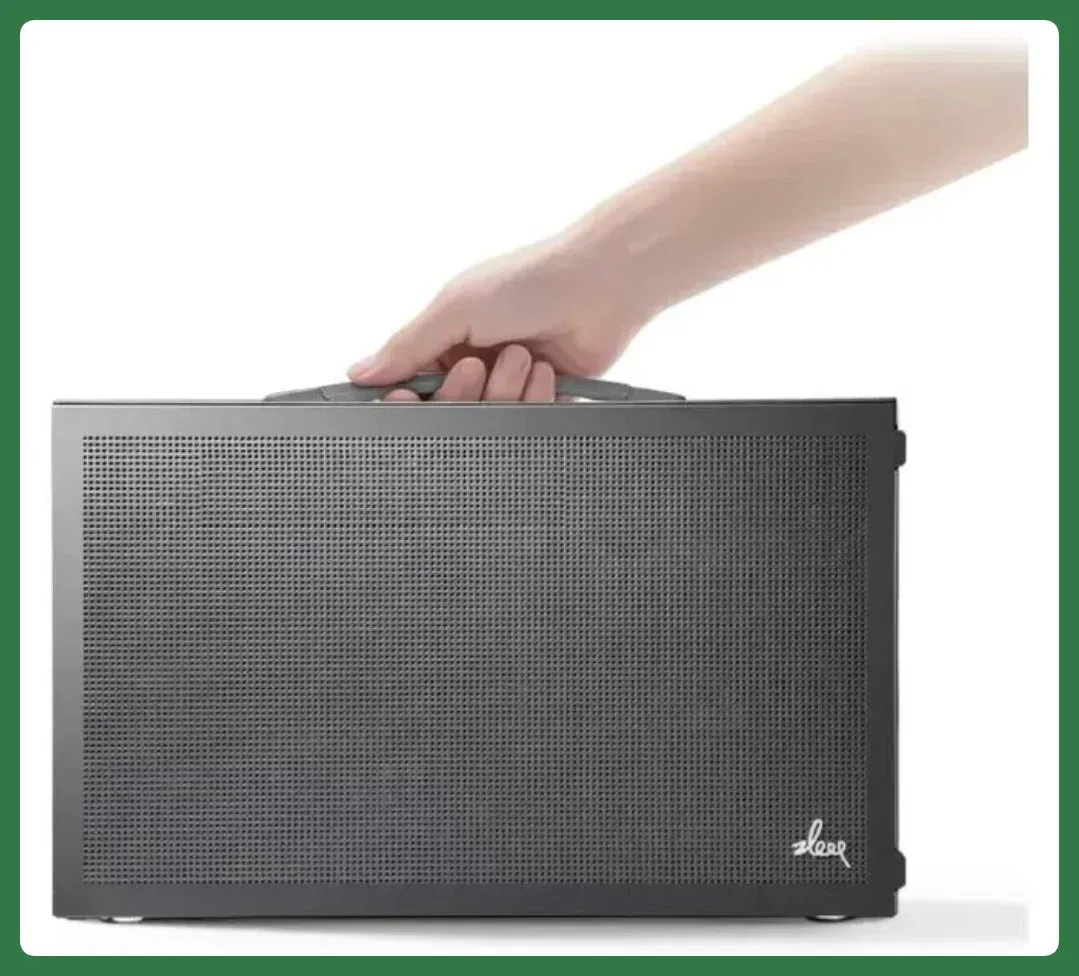
CEO Management Box
This agent appeared mainly in group chats and internal systems, collecting and organizing work information.
Jomy later acknowledged that implementing it had met considerable organizational resistance. Employees would actively avoid it, unwilling to provide work information. Information was also scattered across chat software, documents, email, and project tools, with each channel requiring a separate integration.
The boss’s need had not changed, but information collection was difficult to roll out.
When it is difficult to collect complete, detailed information about work, bosses often look first for quantifiable metrics. In 2026, the growing adoption of agents brought a new opportunity. Employees were increasingly using agents to get work done, making token usage a new metric through which bosses could observe their teams’ work.
After all, token usage is easy to count and convenient to compare.
Companies also began bringing AI use into management.
In April 2025, Shopify CEO Tobi Lütke sent an internal memo requiring employees to make AI use a basic habit and incorporating it into performance evaluations.
Microsoft, Meta, and Coinbase subsequently introduced similar requirements. Coinbase CEO Brian Armstrong said on a podcast that, after the company purchased AI coding tools, he fired engineers who had not started using them by the deadline and could not give a reason.

A clip from Brian Armstrong’s podcast conversation
Leaderboards based on token usage emerged as well.
In April this year, a Meta employee built a leaderboard ranking more than 85,000 employees. It was shut down two days after news of it emerged. A leaderboard built by Amazon employees was also halted because some people were doing meaningless tasks to climb the rankings.
This deliberate consumption of tokens is called tokenmaxxing. In an internal memo in October, Amazon called such metrics “deeply flawed” and shifted to examining how many features had actually shipped.
Looking only at usage often gives bosses numbers without showing them the actual state of the work.
But Jomy saw a new opportunity:
How can bosses manage their employees’ AI?
As employees increasingly work through AI, could bosses begin by managing that AI to see what the employees are doing?
What bosses need to manage is the entire process of employees using AI:
Where the models come from, how costs are settled, where data flows, and what work these calls actually accomplish.
These steps are often spread across different platforms.
Employees may buy AI tools themselves and send contracts and customer information to external models, making it difficult for the company to track their use.
Microsoft’s 2024 report said that 78% of respondents who used AI at work brought their own AI tools. IBM’s Cost of a Data Breach Report 2025 studied organizations that had already experienced a breach; 20% of those organizations reported breaches involving shadow AI. This cannot be generalized into an incidence rate for all organizations.
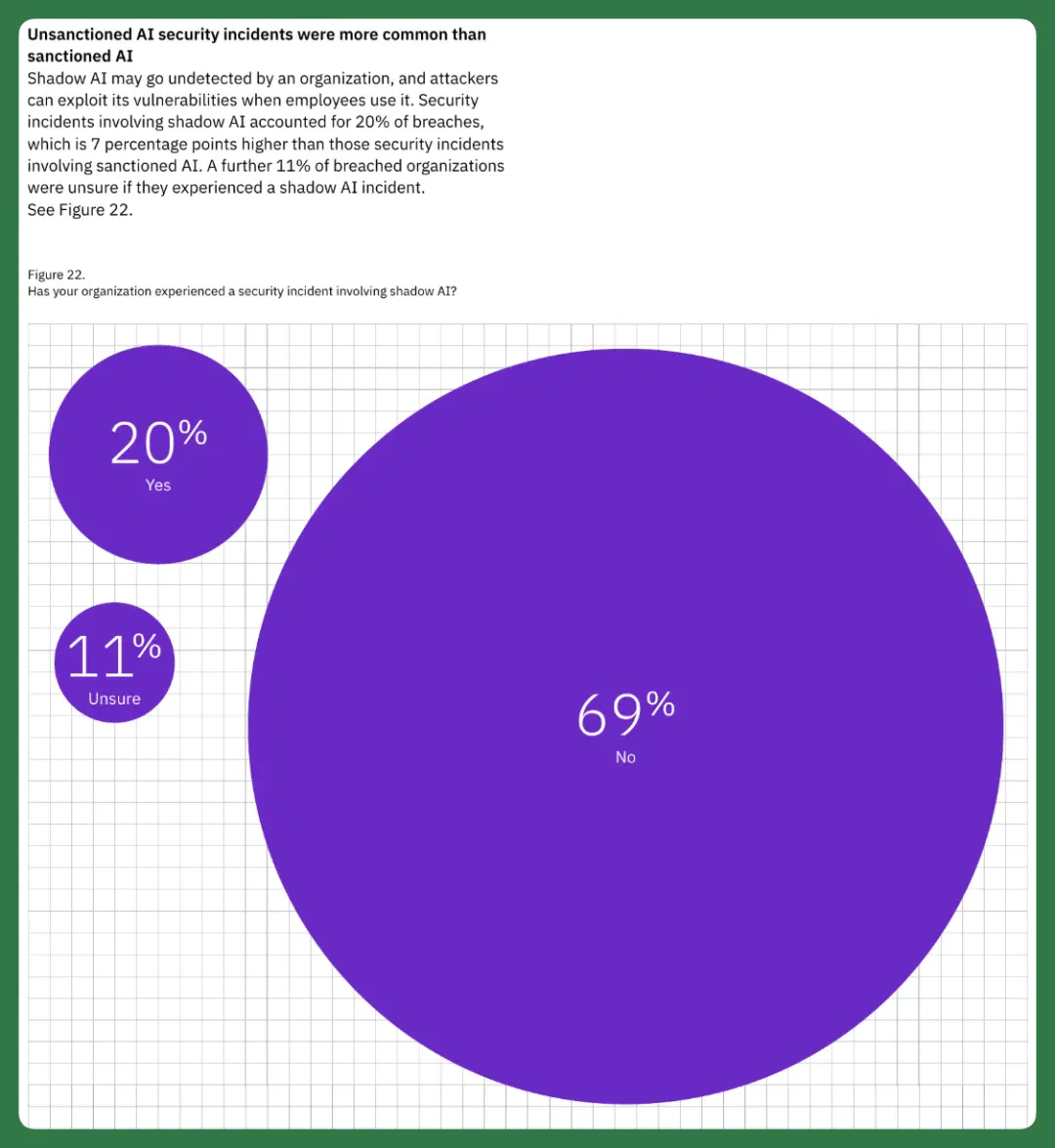
IBM’s “Cost of a Data Breach Report 2025”
Even if a company decides to centralize purchasing, it still needs to address costs and vendor selection.
In Jomy’s view, OpenRouter offers a comprehensive selection of models but is not particularly cost-effective. Model relay services on the market vary in quality, and identifying reliable suppliers also presents a barrier for companies.
Connecting separately to model providers, meanwhile, requires opening accounts and configuring keys, with costs scattered across different places. How to route models becomes another difficulty.
Zleap’s entry point is to give companies a unified management interface:
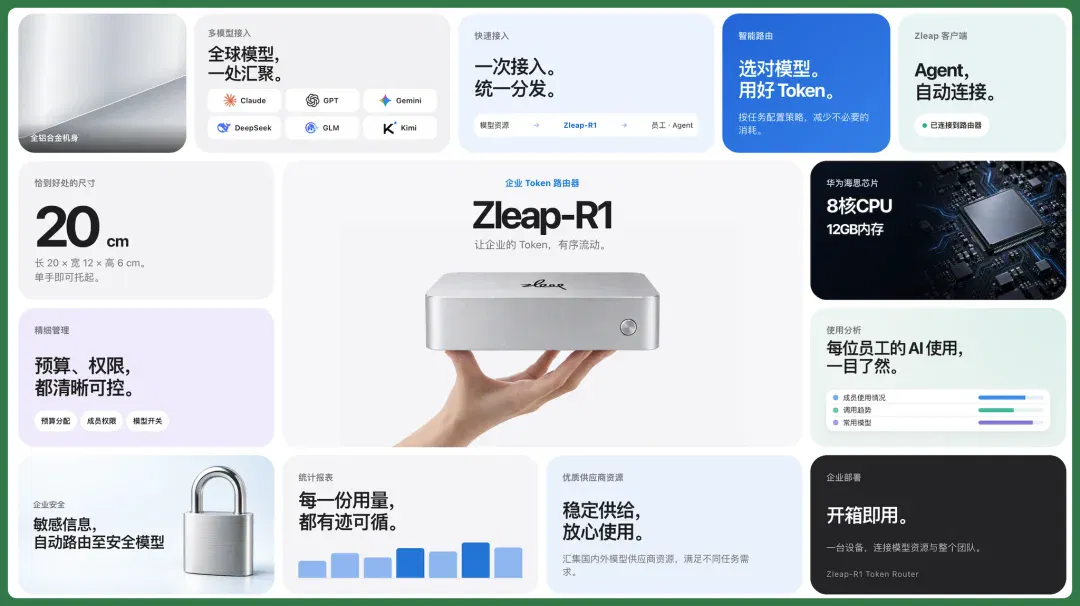
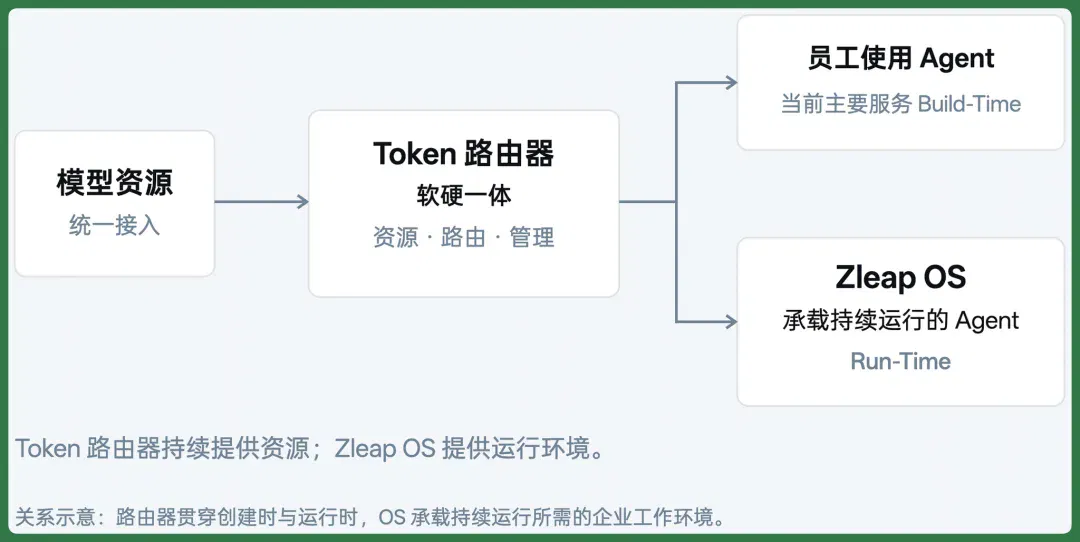
Token Router
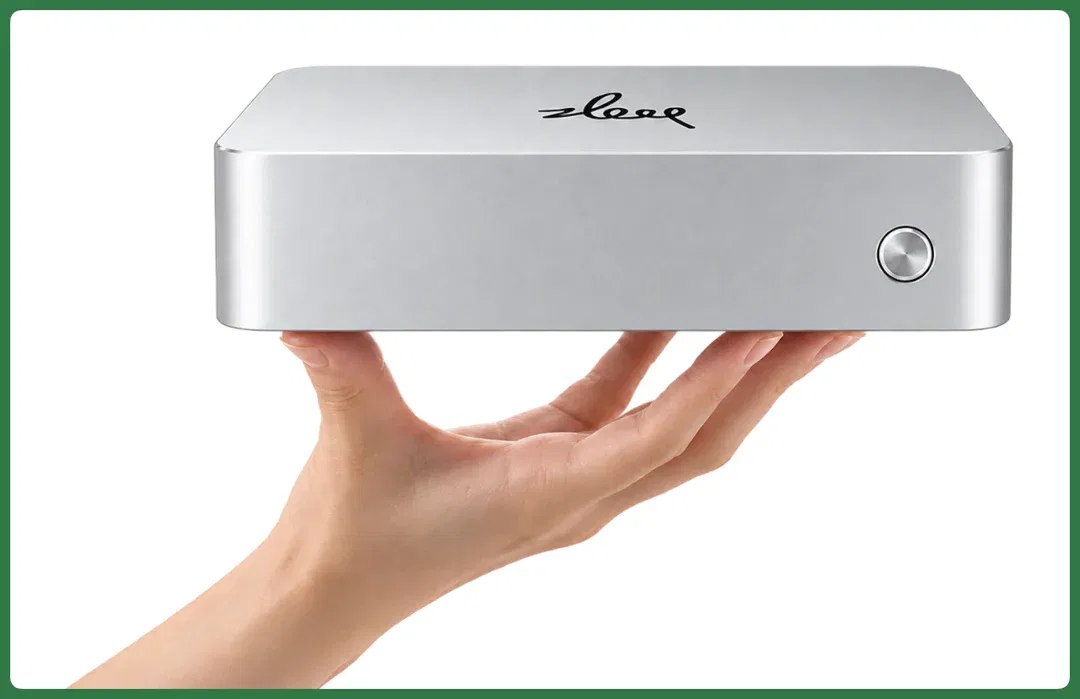
It is an integrated hardware-and-software product that works out of the box. The hardware provides a unified access point on the internal network, while the software distributes and manages model resources.
Automatic routing between large and small models, sensitive-information masking, budget management, and work-content summaries are all integrated into the product.
Tokens are a paid resource. Zleap screens and recommends high-quality suppliers of model resources, then provides unified access and supply through the router, reducing the work companies must do to vet suppliers themselves and connect to each one separately.
Employees can now install the client themselves, which automatically discovers and connects to the router on the internal network. This removes the need for individual configuration, and employees do not have to pay themselves.
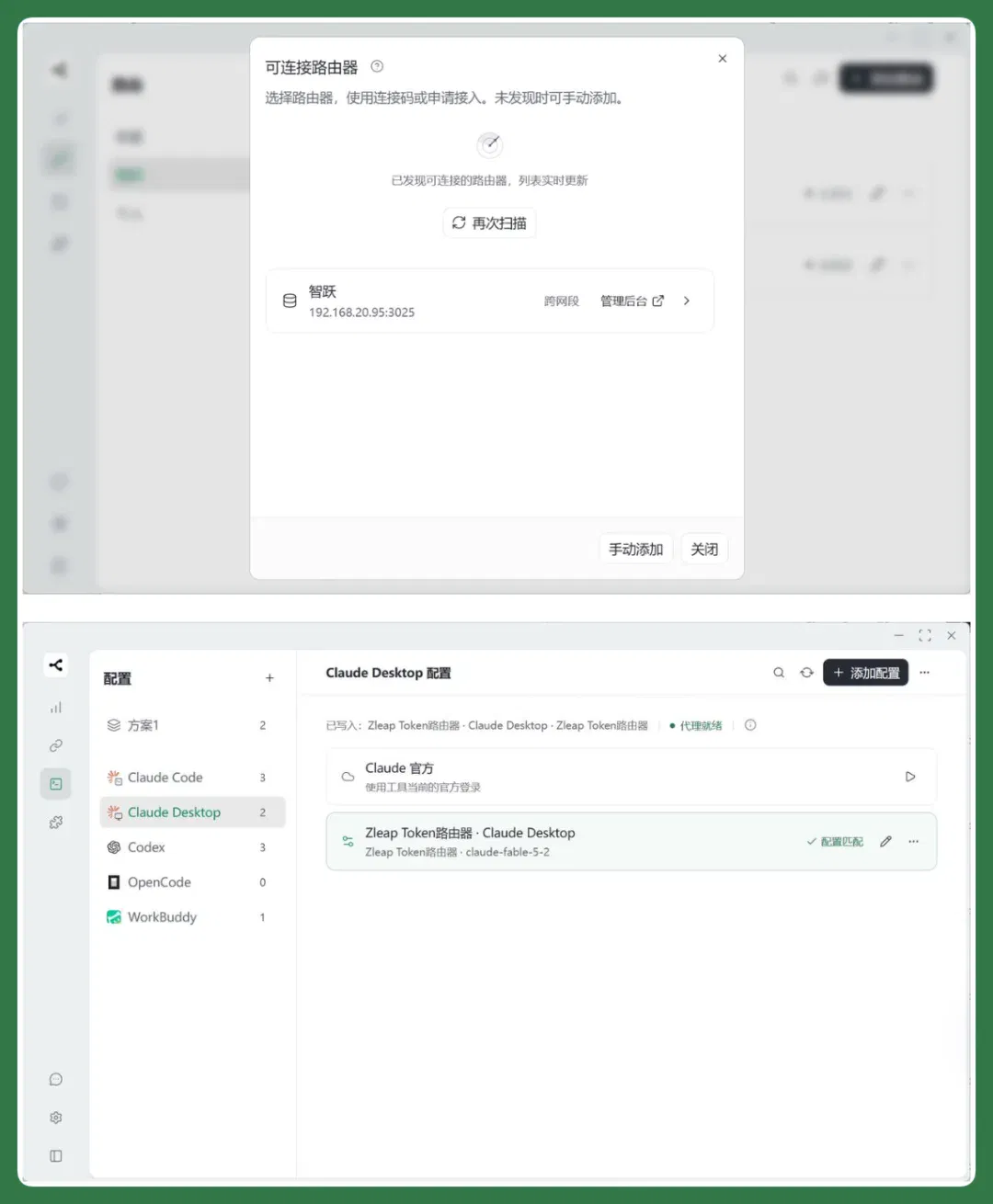
Greatly simplifying access makes it easier to roll the product out from the top down. When employees use these tokens, their calls naturally pass through the company’s gateway.
Of course, a prerequisite for products of this kind is that “employees are informed and willing to share context with the company’s AI.”
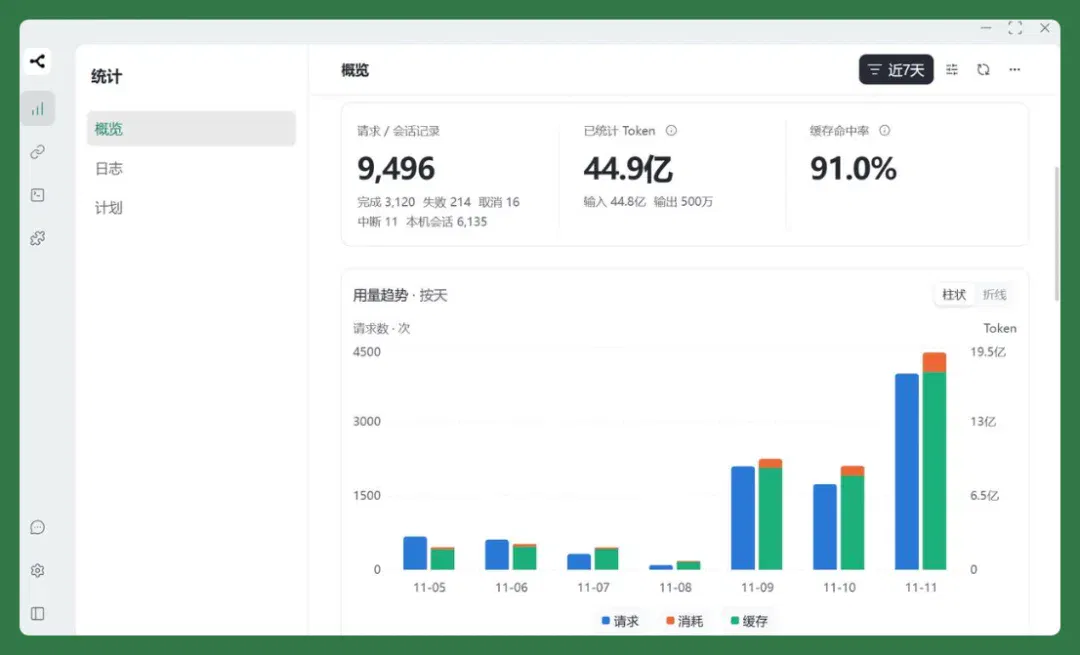
Client usage shown on the official website
According to Jomy, all these capabilities come from the experience he has accumulated over the past three years operating the 302.AI model relay platform.
From the supply of model resources to call management, he has integrated the capabilities honed in the relay service into a hardware-and-software product that enterprises can use out of the box.
Similar “AI gateways” are also developing overseas. They sit between companies and models, allocating models, recording usage, controlling budgets, and filtering sensitive information.
Gartner published a dedicated market guide for this category in October last year.
In May this year, Palo Alto Networks acquired AI gateway company Portkey. AI usage management is becoming part of enterprise security procurement.
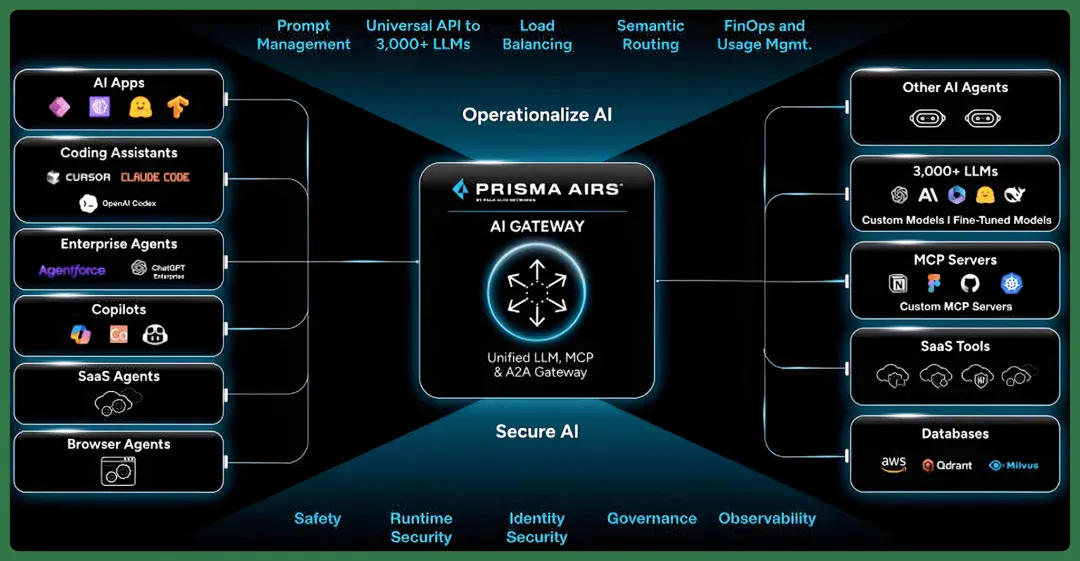
An architecture diagram of Prisma AIRS AI Gateway after the acquisition, connecting applications and agents on one side and more than 3,000 models on the other
Gateways overseas are mostly offered as software, and deployment and configuration generally depend on a company’s technical team. Zleap chose integrated hardware and software for companies without dedicated technical teams; the hardware format makes out-of-the-box use easier to achieve.
According to Zleap, the router went on sale and was delivered to customers in November this year, with positive market feedback.
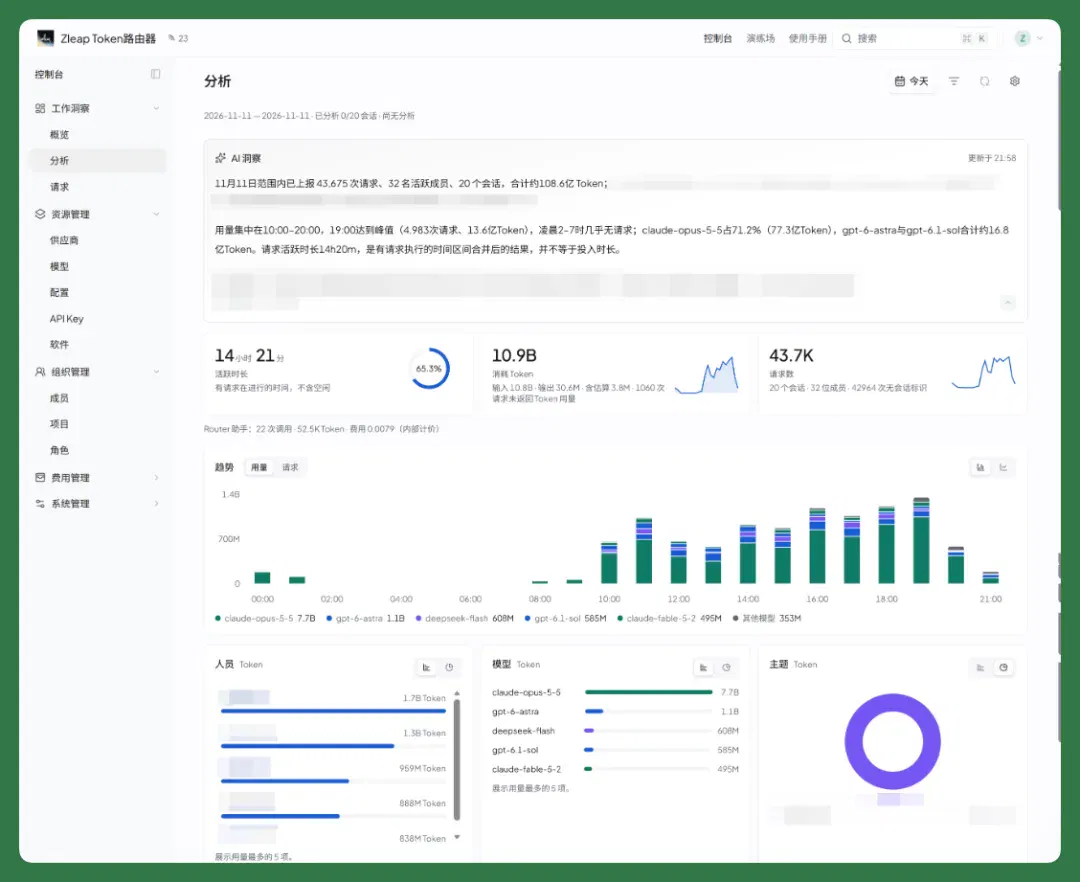
By centrally managing AI use, Token Router achieves the original goal of the CEO Management Box: letting bosses see what their employees are doing.
Employees call models through a unified interface, bringing their work records together as well. Zleap then uses its independently developed SAG2 information-processing technology to extract key content from the vast volume of records and summarize progress.
SAG-Wiki, an open-source project based on SAG2, also gained more than 1,000 GitHub stars in a single day:
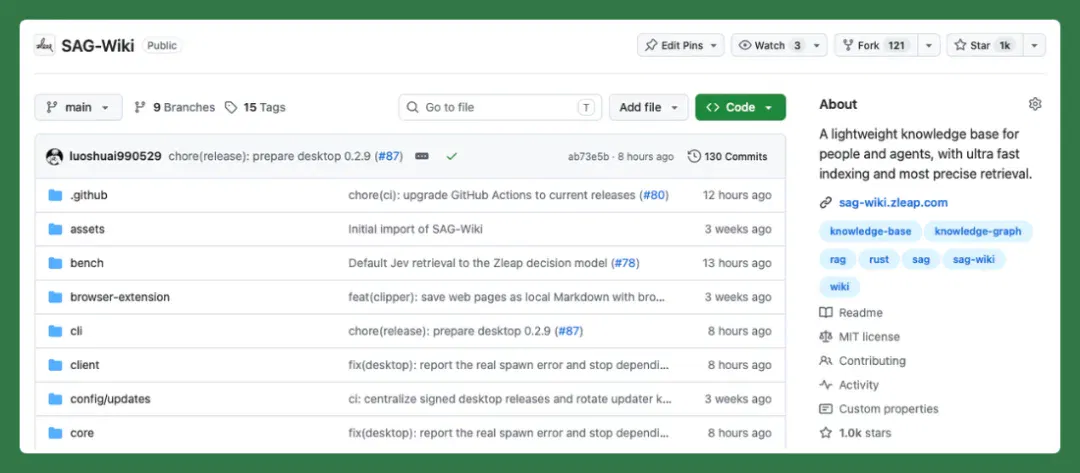
The records contain both task requirements and model-generated content, helping bosses understand progress on actual work.
Understanding companies through work records is also being discussed overseas.
In March this year, Block founder Jack Dorsey and Sequoia partner Roelof Botha published an article arguing that corporate hierarchies primarily serve to transmit information.
Sequoia’s “From Hierarchy to Intelligence”: a hierarchical tree evolves into a ring-shaped network
When decisions, discussions, code, and progress are all recorded, AI can maintain a “company world model,” reducing much of the work of middle management.
Jomy himself uses Token Router to get a quick understanding of progress in different departments.
In his words:
It is like having the context of the entire company.
How can bosses keep AI working continuously?
Providing unified supply and access so employees actually use AI is the first step a company takes toward AI transformation.
An employee states a need, and an agent delivers code, a document, or a proposal, ending after completing that one task. Jomy calls this way of working Build-Time.

In his judgment, the vast majority of existing AI tools serve this phase, with people driving the work cycle. Most Chinese companies are only beginning to enter this phase.
What about the next phase?
In Jomy’s view, the second step in AI transformation is to gradually free work from the constraint of people repeatedly initiating tasks.
He calls this Run-Time:
Agents work continuously toward business goals, accumulating experience from feedback, adjusting their actions, and improving results. People can set goals and intervene when necessary.
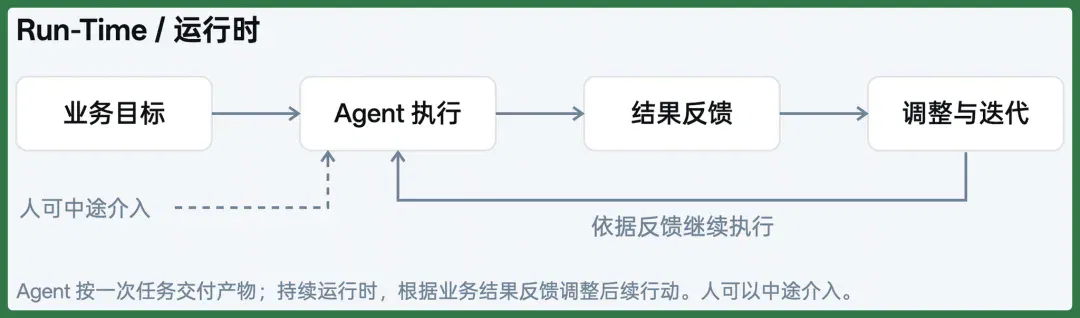
The AI community overseas has been discussing this direction for nearly two years.
In early 2025, LangChain CEO Harrison Chase proposed ambient agents: agents that listen for business events and act automatically. An a16z article in October this year said that a new generation of agents would wake themselves up in response to events or deadlines and learn continuously while working.
At the earnings call in August this year, Jensen Huang said that future agents would run all the time and collaborate with other agents that were also running all the time.
We can also clearly see products developing in this direction. Claude Code, Codex, and Cursor have all deployed coding agents in the cloud. Even when users turn off their computers, the agents continue working on servers.
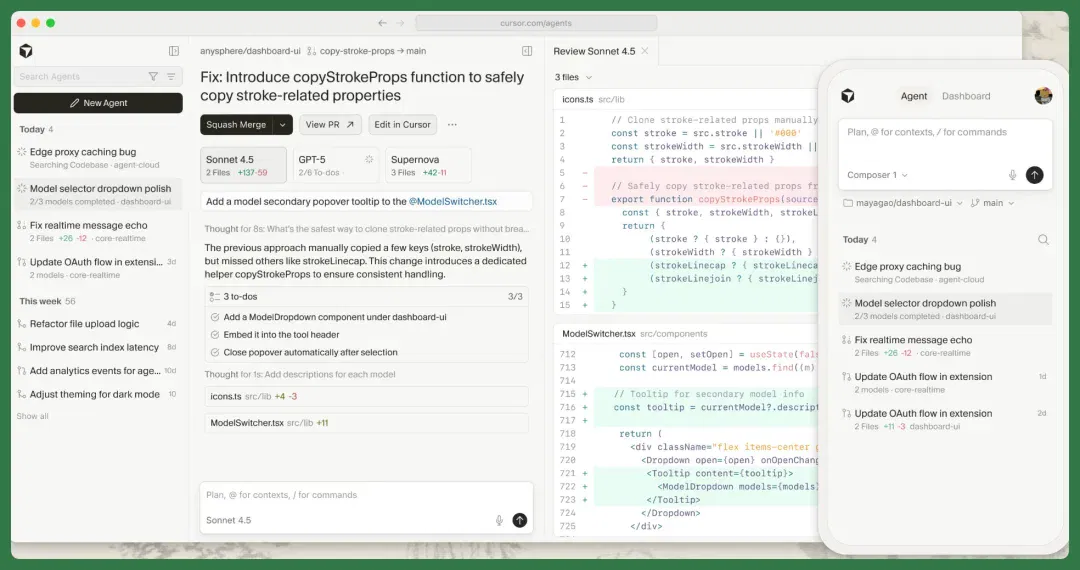
Cursor Cloud Agents running in the cloud
From a certain perspective, however, most of these products remain in an intermediate state. They are triggered automatically by schedules or events, but each run still completes only one task and makes one delivery.
Most capabilities for running toward a goal over the long term and improving continuously through feedback are still in preview. Former OpenAI founding team member Andrej Karpathy takes a more conservative view, believing this will be the “decade of agents.”
Jomy’s theory is that today’s companies are like harnesses in which people and agents coexist.
In the agent field, a harness is the runtime environment outside the model, including tools, data, permissions, and feedback mechanisms. There are already many excellent examples in practice on the market.
If a company is viewed as a larger harness, agent harness design can also offer ideas for connecting the company’s goals, data, execution environment, and feedback mechanisms, allowing people and agents to collaborate within the same system.
Based on this theory, Zleap is developing its second product—Zleap OS. It is positioned as a server operating system for enterprise agents to run continuously:
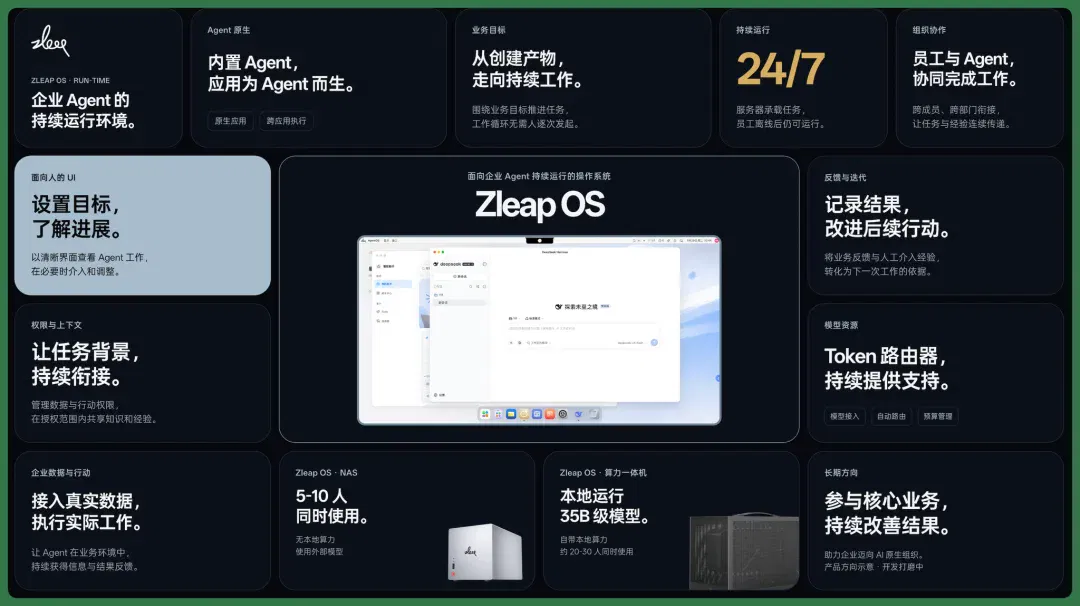
Jomy lists several requirements for it, which can be grouped into three categories:
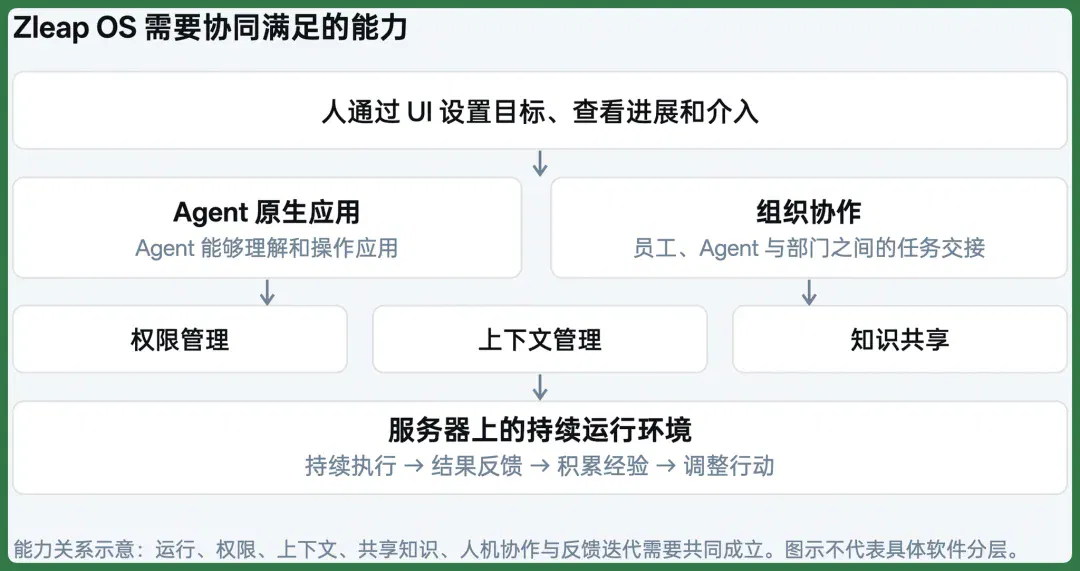
[1] Agents can work continuously across applications
All applications are designed for agents. The agents run on servers and keep working after employees leave for the day and their computers are turned off.
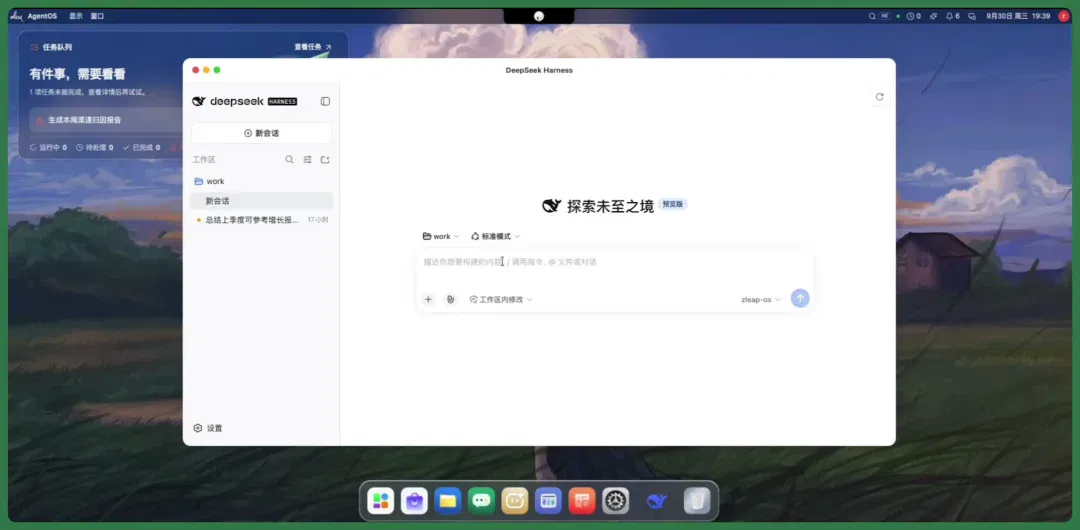
Agent work interface
[2] Organizational collaboration has boundaries
Employees, agents, and departments can collaborate and hand off tasks. Permissions determine who can read information and perform actions, while context and knowledge are shared within the scope of authorization.
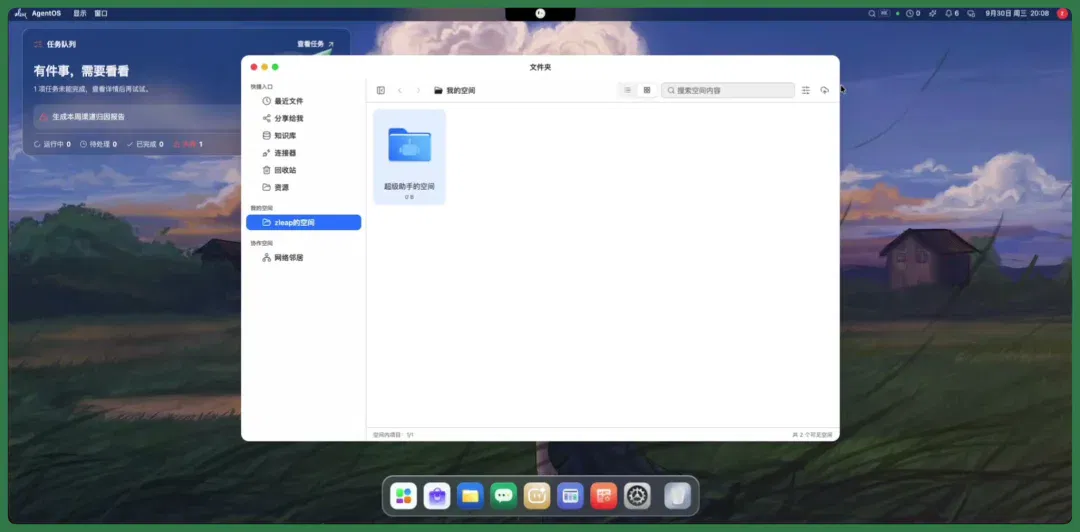
Team cloud drive
[3] Both people and agents can use it, and it can iterate on itself
People use an interface to set goals, check progress, and intervene along the way. Agents execute continuously, receive feedback, and judge whether adjustments have improved business outcomes.
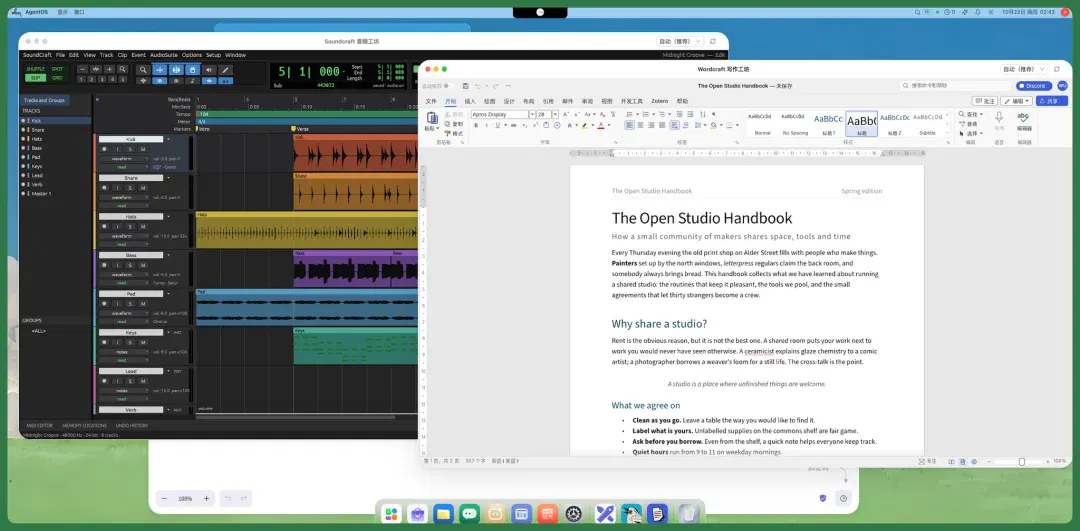
Desktop workspace
There are already quite a few participants in this direction. Anthropic, OpenAI, Microsoft, and Kimi have all launched enterprise agent hosting services this year.
For some time previously, the response to such services was lukewarm. Four explanations are common in the industry: agents are not stable enough, enterprise data is difficult to connect, permissions and governance have not been thought through, and costs are difficult to predict.
The requirements proposed for Zleap OS largely correspond to those problems. The real difficulty is how to integrate these capabilities into a product that enterprises can use out of the box.
At present, Zleap OS’s entire basic framework has been completed. It is undergoing internal testing and being refined for vertical industries, with an official release planned for the end of December this year.
Token Router now provides model resources, routing, and management, while Zleap OS provides a complete system for agents to run continuously.
Jomy also predicts that token demand will grow substantially as agents begin running continuously and autonomously.
OpenRouter’s data shows that, in August this year, agents were already consuming approximately five times as many tokens as human users. Goldman Sachs projects a 24-fold increase in token consumption from 2026 to 2030.
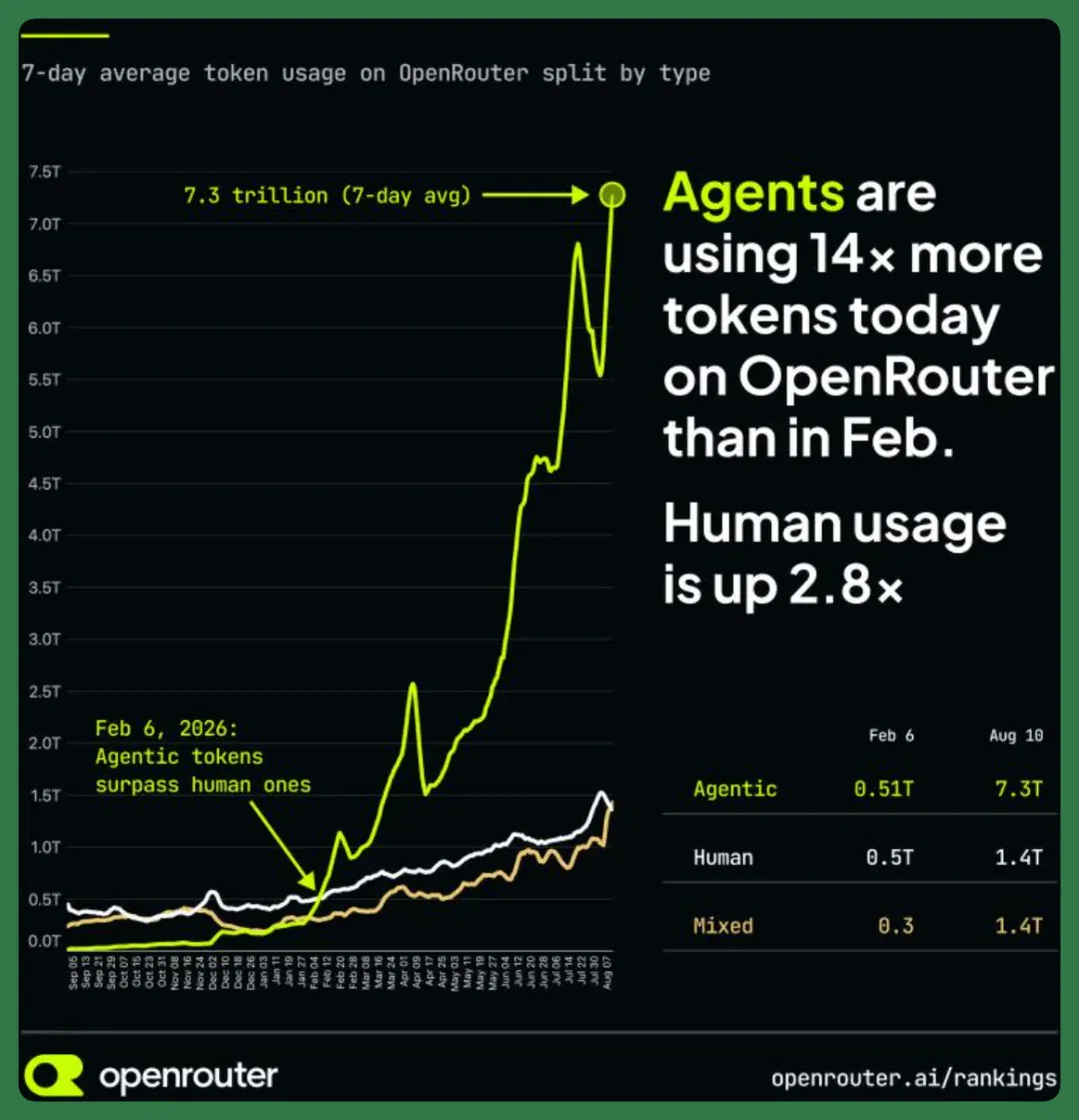
However, these figures do not distinguish between Build-Time and Run-Time consumption.
Jomy’s judgment is:
At present, the ratio of token consumption between the two is approximately 100:1, with the development phase still accounting for the vast majority. In the future, Run-Time will reach ten times the scale of Build-Time. Assuming the scale of Build-Time remains unchanged, Run-Time token usage would have potential for long-term growth on the order of 1,000-fold.
In his words:
Scaling agents is far easier than scaling people.
🚥
Helping companies transform into AI-native organizations has always been Zleap’s vision.
What began with CEOs’ management needs now reaches into employees’ daily work, and in the future will further change how the entire organization operates.
In Jomy’s view, a company only truly becomes an AI-native organization when it has its own AI runtime and lets it continuously handle core business operations.
But beneath his grand vision, we seem to see a small personal wish:
Perhaps what bosses ultimately need is a company where much of the work does not have to wait for them to drive it forward.

This article comes from “Crossing,” and was written by “GaKi.”
Related topics
After reading
Join the AINRK community
Read how to join the community and connect with people working in AI.
Related articles
Continue reading related topics and articles in this category.

AI用了一堆、钱没赚到?阿里瓴羊放话:AI员工得直接扛KPI (opens in a new tab)
在2026云栖大会上,阿里云智能集团瓴羊CEO朋新宇提出企业AI需从效率革命走向增长革命,瓴羊AgentOne推出营销、销售、客服和运营四类AI员工,并以Data+Agent+FDE=AI员工的公式和AI员工7日上场计划,推动AI进入岚图汽车、联合利华、飞鹤、安踏和星星充电的真实业务流程,直接承担企业经营KPI。
Emma 完成 7700 万美元融资,估值翻超 4 倍:AI 员工接管企业 SaaS丨News (opens in a new tab)
AI 初创公司 Ema 完成 7700 万美元 B 轮融资,估值较 2024 年增长超 4 倍,该公司通过协调多个 AI 智能体组成的"AI 员工"系统,逐步接管企业内部的 HR、IT 和财务等业务流程,过去两年收入增长 50 倍,客户包括 NTT DATA、日立、ADP、普华永道、谷歌、毕马威等大型企业。

实测央企出品数字员工,它的强大远超预期! (opens in a new tab)
实测显示,中国联通元景数字员工基于自研Agent Harness架构,具备全渠道触达与超千项技能,在深度研究、全时助理等办公场景中表现稳定可靠,并已在政务、工业、文旅等领域实现行业落地。
马斯克杀入Copilot主场!Grok Bot接管微软账号,你睡觉它上班 (opens in a new tab)
Grok Bot,能替你上班了。 9月1日,Grok Bot悄悄官宣了一条让科技圈炸锅的消息: Grok Bot现在可以直接接入你的微软账号,实现读取、写入和执行动作。 通过全新插件,你的AI助手能够直接连通Outlook、Calendar和OneDrive。 几小时后,马斯克转发,只配了一句话:Grok Bot已升级。 没有发布会,也没有演示视频。但这条帖子背后却是实打实的变化: 一个不下班的AI员工Grok Bot,正式拿到了你邮箱、日历和网盘的钥匙。它能替你发邮件、改会议,还能往OneDrive里传文件。 评论区很快热闹起来。 「Copilot慌了」「微软给马斯克开门了」,这类说法迅速刷

扎克伯格想让 AI 接管 Meta 真人工作,几个月后他自己叫停了 (opens in a new tab)
扎克伯格在Meta内部启动Project OT项目让AI Agent接管员工工作、压缩团队规模,但数月后数据显示代码变更量增长220%、产品功能仅增36%、安全事故增加40%、员工满意度跌至55%,扎克伯格于5月叫停原定11月的第二轮调整,并承认AI Agent发展速度未达预期。